





Integrating Custom LED Lights with DMX & RDM Systems
- Why DMX and RDM Matter for Custom LED Lighting
- Understanding the control layer
- and real outcomes
- Designing a Reliable Custom LED Lighting System
- System architecture and control topology
- Choosing drivers and fixtures for compatibility
- Implementation: Wiring, Addressing, and Commissioning
- Wiring best practices and electrical considerations
- Addressing, RDM commissioning, and workflows
- Troubleshooting, Performance Tuning, and Maintenance
- Common problems and measurable checks
- Preventive maintenance with RDM
- Protocol Comparison and Selection Guide
- Key protocol differences (practical view)
- When to use each protocol
- Practical Checklist: Integrating Custom LED Lighting with DMX & RDM
- Pre-installation checklist
- Commissioning checklist
- Vello Light: Manufacturer Experience and Capabilities
- Company profile and capabilities
- Products, strengths, and competitive advantages
- Case Example: Deploying RDM-Enabled LED Wash Lights for a Touring Production
- Scenario and objectives
- Execution highlights
- FAQ
- 1. What is the difference between DMX and RDM?
- 2. Do I need RDM for a small venue?
- 3. Can RDM coexist with Art-Net or sACN?
- 4. How do I handle pixel-mapped installations with RDM?
- 5. What are practical maintenance benefits of RDM?
- Contact and Next Steps
- References
Why DMX and RDM Matter for Custom LED Lighting
Understanding the control layer
Custom LED lighting projects—whether stage, studio, or architectural—rely on robust control protocols to deliver color, intensity, effects, and remote management. DMX512 (commonly shortened to DMX) remains the industry backbone for real-time channel control. RDM (Remote Device Management) extends DMX with bi-directional device telemetry and configuration, enabling remote addressing, status monitoring, and troubleshooting without physical access to fixtures.
and real outcomes
For integrators and production houses evaluating custom led lighting solutions, choosing DMX vs. RDM impacts installation labor, maintenance budgets, and system resiliency. Properly implemented RDM can reduce onsite commissioning time, minimize downtime, and streamline asset management—directly translating into lower total cost of ownership for large-scale deployments.
Designing a Reliable Custom LED Lighting System
System architecture and control topology
Start design by defining control domains: how many DMX universes, which fixtures require RDM, and where gateways or pixel controllers are needed. Common topologies include: centralized console -> DMX splitters -> fixtures, and networked architectures using Art-Net/sACN with DMX/RDM endpoints. For stage lighting, allocate at least one DMX universe per 512 channels; factor in extra channels for effects and future expansion.
Choosing drivers and fixtures for compatibility
Select LED drivers and fixtures that explicitly support DMX512-A and, if required, RDM (E1.20). For custom led lighting, ensure drivers offer:
- Linear or logarithmic dimming curves configurable to match theatrical needs.
- Stable PWM frequency to avoid flicker at camera frame rates.
- RDM support for remote addressing and firmware updates if maintenance accessibility is limited.
Implementation: Wiring, Addressing, and Commissioning
Wiring best practices and electrical considerations
Use shielded twisted-pair cable (DMX cable or CAT5/6 for Art-Net with DMX endpoints) with proper grounding. Keep data cables away from mains power to avoid noise. DMX lines should be daisy-chained with a single 120-ohm terminator at the end of the line. For long runs, factor in signal amplifiers or opto-isolated splitters every 300-400 meters (or sooner depending on cable quality).
Addressing, RDM commissioning, and workflows
Without RDM, addressing custom led lighting fixtures is a manual process—set dip switches or onboard menus. RDM changes that: use an RDM-enabled console or software to discover devices, set addresses, and update configuration centrally. Typical commissioning workflow with RDM:
- Discover all devices on a universe (RDM discovery).
- Assign permanent or project-specific device labels and DMX addresses.
- Upload firmware if needed and verify device parameters (temperature, voltage, lamp hours).
Troubleshooting, Performance Tuning, and Maintenance
Common problems and measurable checks
Frequent issues in custom led lighting setups include incorrect addressing, cable faults, signal reflections (missing terminator), and incompatible dimming curves. Use these tests:
- Continuity and shielding test with a multimeter for cable faults.
- Measure line termination: correct end-to-end resistance should be about 120 ohms when a terminator is attached.
- Use an RDM controller to read fixture telemetry (supply voltage, temperature, error states).
Preventive maintenance with RDM
RDM enables scheduled checks: read operating hours, detect early overtemperature events, and collect firmware versions across fleets. This reduces reactive maintenance and improves uptime—particularly important for touring or outdoor installations where physical access is costly.
Protocol Comparison and Selection Guide
Key protocol differences (practical view)
Choosing between DMX-only, DMX with RDM, or networked control (Art-Net/sACN) depends on project scale and maintenance strategy. For single-room installations, DMX may suffice. For large venues or distributed installations, RDM and a networked solution provide substantial benefits.
When to use each protocol
Use this quick guide:
- Small custom fixtures or simple rigs: DMX512.
- Installations needing remote monitoring, remote addressing, or regular firmware updates: DMX + RDM.
- High-channel pixel arrays, distributed rigs, or integration with building control: Art-Net or sACN with DMX endpoints and RDM-enabled fixtures where needed.
| Protocol | Primary benefit | When to choose |
|---|---|---|
| DMX512 | Simple, deterministic control of channels | Small theatres, basic stage rigs, single-universe setups |
| RDM (E1.20) | Bi-directional management and diagnostics | Large installs, touring, fixtures in hard-to-reach places |
| Art-Net / sACN | Network scalability and high channel counts | Pixel mapping, distributed venues, remote routing |
Practical Checklist: Integrating Custom LED Lighting with DMX & RDM
Pre-installation checklist
- Define number of DMX universes and mapping plan for each fixture.
- Select fixtures/drivers with required DMX/RDM support and correct photometric performance.
- Plan cabling runs, splitter locations, and power distribution with headroom for future expansion.
Commissioning checklist
- Verify continuous cable shielding and correct termination on each universe.
- Perform RDM discovery; record device IDs, firmware versions, and set labels.
- Run color calibration and dimming curve tests under representative loads and camera conditions if used for broadcast.
Vello Light: Manufacturer Experience and Capabilities
Company profile and capabilities
Vello Light Co., Ltd., established in 2003, is a comprehensive technology enterprise integrating R&D, manufacturing, and sales. Over the years, Vello has consistently adhered to principles of quality first and sincere service. With the support of numerous domestic and international customers, Vello has developed into a unique and outstanding team in stage lighting.
Products, strengths, and competitive advantages
Vello's registered brand VELLO focuses on moving head stage lights, LED wash lights, theatrical lights, LED bar lights, LED par lights, studio lights, LED effect lights, and outdoor stage lighting. Key advantages:
- End-to-end R&D and manufacturing: faster iteration between design and production for custom led lighting requirements.
- Strong overseas market reputation: proven export experience and after-sales service network.
- Professional talent pool delivering systematic services: product R&D, manufacturing, marketing, engineering installation, and maintenance.
- Product durability and materials: fixtures engineered for touring and outdoor conditions, with consistent photometric performance.
Vello positions itself as a competitive partner for projects that require both standard products and tailored LED solutions. Their vertical integration enables quicker customization cycles—from modified optical assemblies to RDM-enabled firmware updates—making them suitable for clients who need both off-the-shelf reliability and bespoke features.
Case Example: Deploying RDM-Enabled LED Wash Lights for a Touring Production
Scenario and objectives
A touring production requires 200 LED wash fixtures distributed across trusses and flown positions. Fixtures must be addressable remotely and report thermal warnings to reduce downtime between venues.
Execution highlights
Using RDM-enabled LED wash fixtures from a manufacturer such as Vello, the integrator performed remote discovery and batch-addressing before the first tech rehearsal. Firmware alignment and dimming curve calibration were completed over the DMX backbone using an RDM-capable console, reducing manual onsite configuration time by an estimated 60% compared to non-RDM workflows.
FAQ
1. What is the difference between DMX and RDM?
DMX512 is a one-way protocol for real-time control of lighting channels. RDM (Remote Device Management, E1.20) overlays bi-directional communication enabling consoles to discover devices, read telemetry, and change settings remotely.
2. Do I need RDM for a small venue?
Not always. For small venues with easy physical access to fixtures, DMX-only systems may be sufficient. RDM becomes valuable when devices are hard to reach, when remote status is required, or when you want faster commissioning.
3. Can RDM coexist with Art-Net or sACN?
Yes. RDM operates at the DMX level. In networked topologies, Art-Net or sACN can carry DMX universes across IP, and RDM can be tunneled to devices via gateways that support RDM over IP or RDM-to-DMX conversion.
4. How do I handle pixel-mapped installations with RDM?
Pixel installations commonly use network protocols (Art-Net/sACN) for high channel counts and use DMX/RDM endpoints or nodes at the fixture or pixel controller level. Ensure nodes support RDM if you want remote device management.
5. What are practical maintenance benefits of RDM?
RDM offers remote firmware updates, temperature and voltage telemetry, and device hour counters—allowing preventive maintenance schedules and reducing unplanned downtime, especially for touring and outdoor installations.
Contact and Next Steps
If your project requires reliable custom led lighting integrated with DMX and RDM systems, Vello Light offers turnkey solutions from product selection to on-site commissioning. Contact Vello for product catalogs, custom firmware options, and installation support, or visit our product pages to view moving head stage lights, studio lights, LED effect lights, LED bar lights, LED par lights, and outdoor stage lighting.
References
- DMX512 — Wikipedia. https://en.wikipedia.org/wiki/DMX512 (accessed 2026-01-11).
- Remote Device Management (RDM) — Wikipedia. https://en.wikipedia.org/wiki/Remote_Device_Management (accessed 2026-01-11).
- PLASA Technical — RDM. https://www.plasa.org/technical/rdm/ (accessed 2026-01-11).
- Grand View Research — LED Lighting Market Size. https://www.grandviewresearch.com/industry-analysis/led-lighting-market (accessed 2026-01-11).
- ESTA / TSP — Technical Standards Program. https://tsp.esta.org/tsp/ (accessed 2026-01-11).
For a consultation or to request customized product specs and quotations, contact Vello Light Co., Ltd. or request a demo of our RDM-enabled fixtures and integration services.
How to Choose Reliable Stage Lighting Suppliers and Manufacturers
Case Studies: Custom LED Lighting Solutions for Concerts
Safety, Certifications and Compliance for LED Stage Lights
Energy-Efficient Custom LED Stage Lighting for Theaters
Major categories
Do you ship internationally?
Yes. We offer sea, air, and express delivery to many countries and regions worldwide.
What is the warranty period for your products?
Most products come with a standard 1–2 year warranty. Please refer to product details or contract terms for specifics.
Do you offer samples?
Samples are available for certain models. Please confirm with our sales team for details.
Do your products support customization?
Yes. We offer OEM and ODM services tailored to project needs, including design, optics, and control compatibility.
What is the usual lead time?
Standard models are typically shipped within 7–15 working days after payment. Customized items may vary.
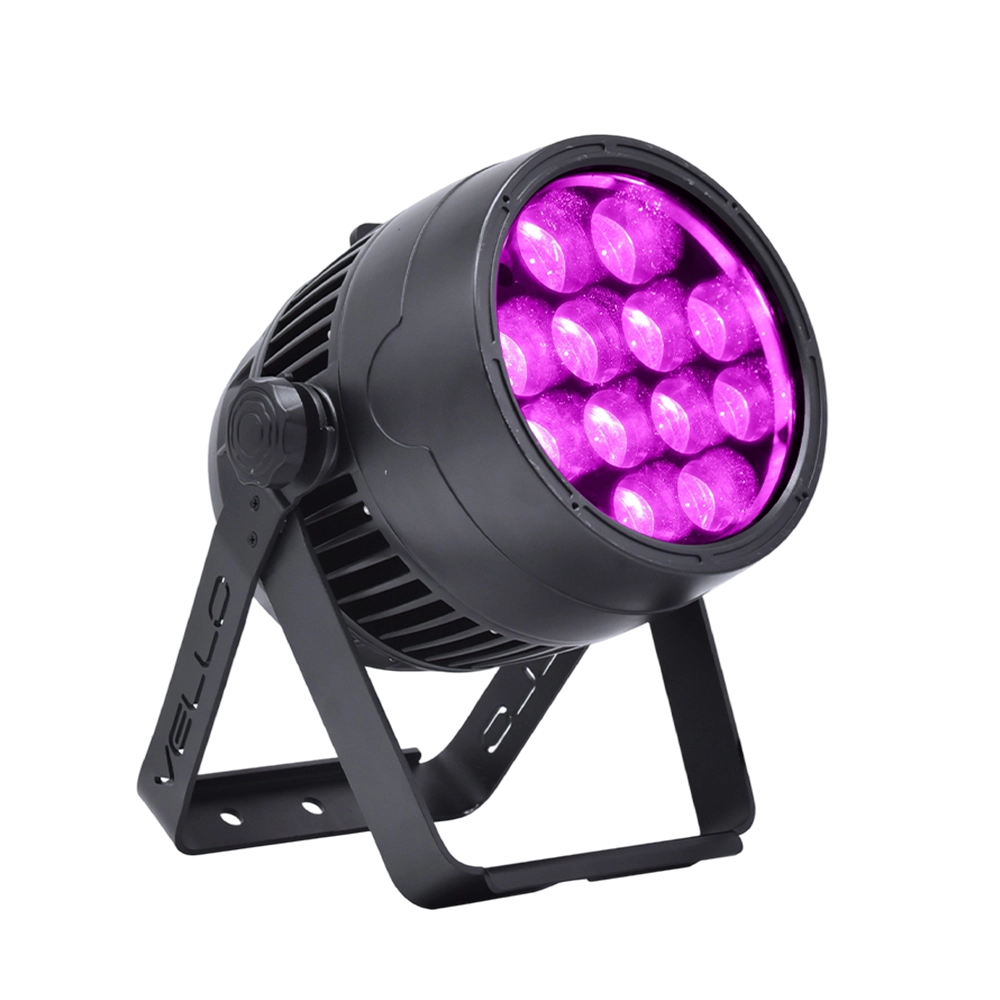
Stage LED Par Light LED ZOOMPAR 40
The Vello Zoom Par 40 IP is a powerful outdoor LED wash light equipped with 12x high-power 7-in-1 RGBACL LEDs. Designed for durability and rich color rendering, it features a wide motorized zoom (6°–50°), smooth dimming, and adjustable CTO presets (3200K–7500K), with 90+ CRI. With an IP66-rated die-cast aluminum body, it’s ideal for both indoor and outdoor applications, including stage lighting, architecture, live events, and installations.
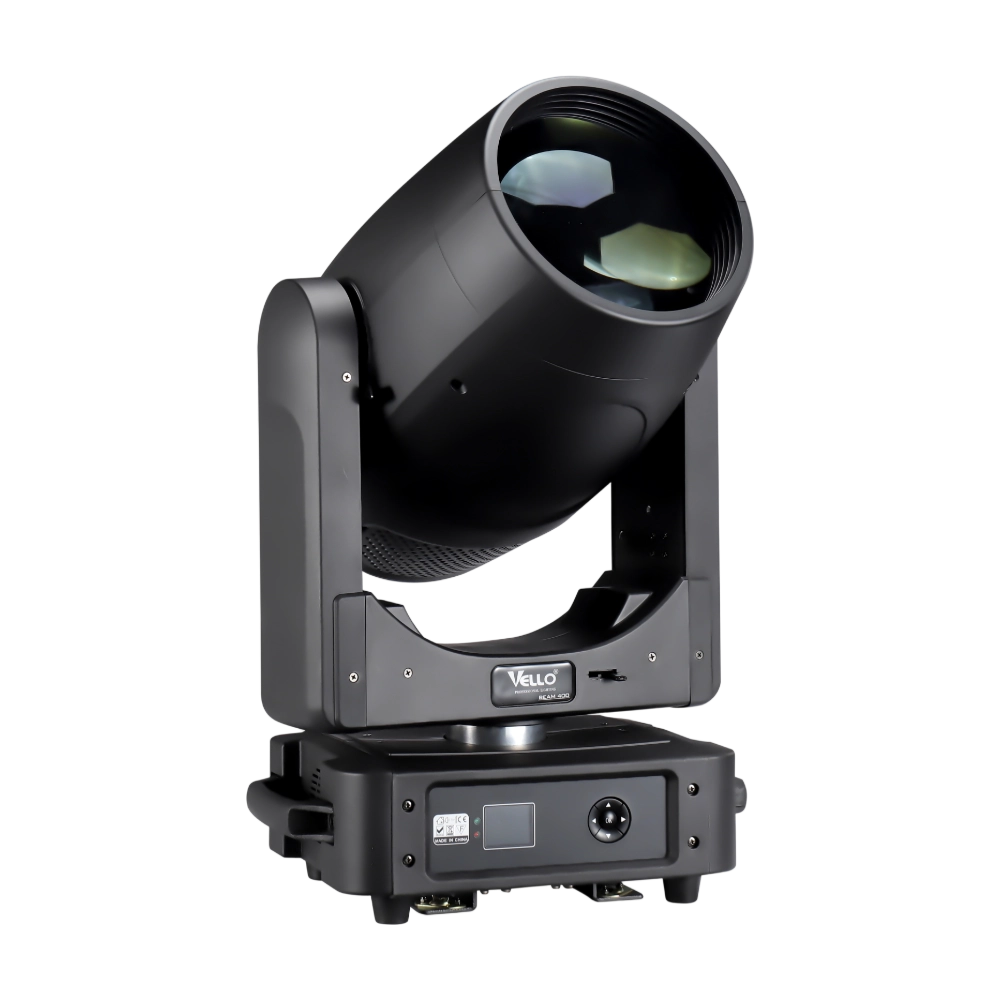
Moving Head Stage Light BEAM 400
BEAM400 is a 500W professional moving head beam powered by an OSRAM SIRIUS 371W discharge bulb, delivering a super-bright 1.8° sharp beam with impressive punch. It features 12 fixed gobos + open, a 14-color wheel, and a 16-facet circular rotating prism with multiple-facet effects, enabling dynamic aerial visuals. With 540° pan / 270° tilt, 16-bit movement resolution, and linear frost and focus, BEAM400 ensures precise and versatile performance. Comparable to traditional 750W moving heads, it combines high efficiency, smooth dimming, and reliable operation—ideal for concerts, tours, and large-scale stage productions.
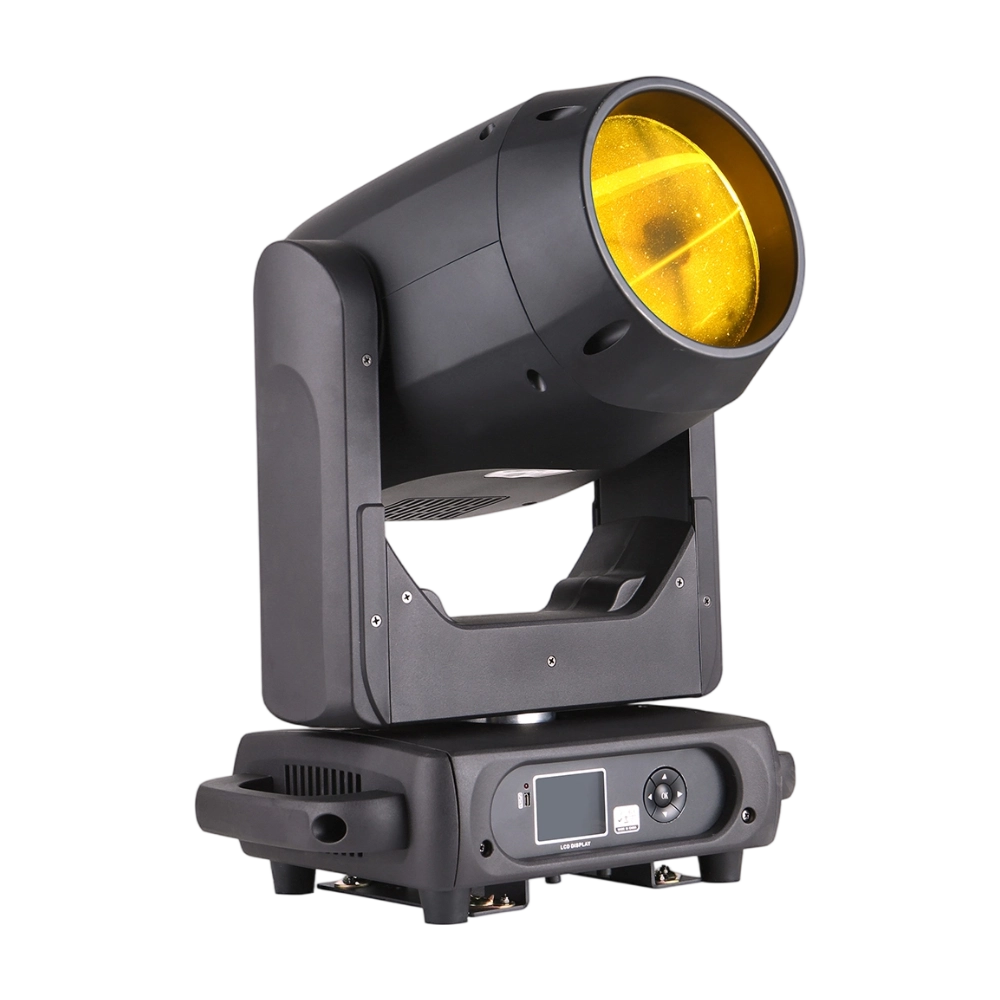
Moving Head Stage Light BEAM 360
BEAM360 is a 400W high-power moving head beam equipped with an OSRAM SIRIUS 311W discharge lamp, delivering a sharp 1.8° beam with super brightness. It features 14 colors + open, 12 fixed metal gobos + open, and dual prisms (8-facet circular + 8+16 multi-facet combination) for dynamic aerial effects. With 540° pan / 270° tilt, 16-bit movement, and linear frost and focus, BEAM360 ensures precision and versatility. Compact yet powerful, it rivals traditional 575W moving heads, making it ideal for concerts, clubs, and large-scale stage productions.
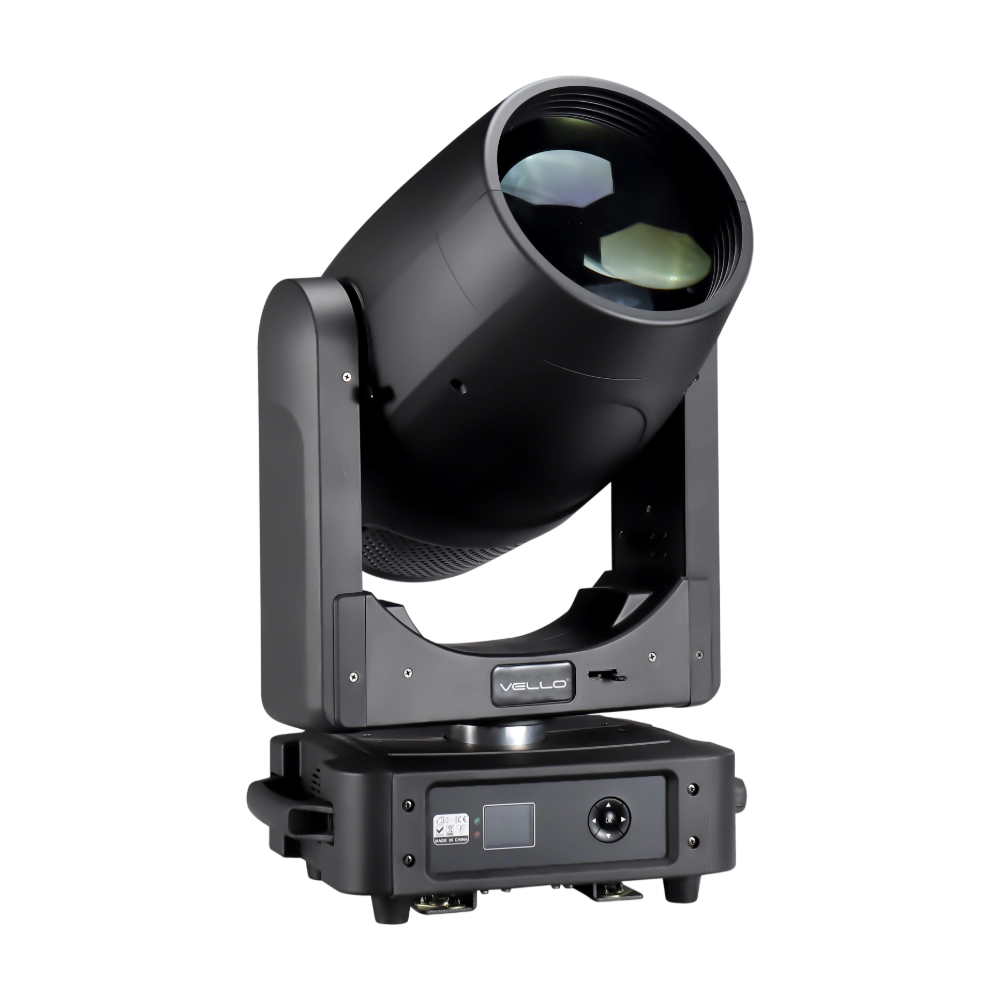
Moving Head Light BEAM 450
The BSW450 is a high-performance moving head fixture equipped with an original Osram 420W bulb, delivering exceptional brightness, precision, and versatility. Designed for professional stage applications, it seamlessly combines beam, spot, and wash functions in one compact unit, making it a powerful all-in-one lighting solution.
Over 20 Years of Innovation in Stage & Studio Lighting
© 2026 VELLO. All Rights Reserved. 粤ICP备20023734号
Join our socials
VELLO
Whatsapp: +8613902276704
Vello Lighting
VelloLights