





Installation Tips for Custom LED Stage Lighting Systems
- Planning and Design Considerations
- Understand the creative brief and technical requirements
- Calculate power and load correctly
- Plan cable runs and DMX/network topology
- Installation: Power, Control, and Cabling
- Best practices for power distribution
- Choosing and implementing control protocols
- Cable management and labeling
- Mechanical Installation and Safety
- Rigging, load ratings, and safety factors
- Mounting positions and optical considerations
- Thermal management and ventilation
- Commissioning, Testing, and Maintenance
- Initial system checkout
- Firmware, addressing, and documentation
- Routine maintenance and troubleshooting
- Cost, ROI, and Choosing Fixtures
- Comparing fixture types and lifecycle costs
- Vendor selection and warranty considerations
- Why choose durable, serviceable fixtures
- Vello Light: a partner for custom LED installations
- Real-world troubleshooting and lessons learned
- Case: intermittent flicker during PX show
- Case: network congestion on a large pixel wall
- Checklist before first show
- Frequently Asked Questions (FAQ)
- Q1: What is the main difference between DMX512 and Art-Net?
- Q2: How do I size power distribution for an LED rig?
- Q3: What safety measures are essential for rigging lights?
- Q4: How often should LED fixtures be maintained?
- Q5: Can I mix LED fixture brands in a single system?
- Q6: What are common causes of LED flicker and how to fix them?
I design and install custom led lighting systems for live events, theaters, and corporate productions. Over years of projects I learned that successful installations balance creative intent with robust engineering: correct power distribution, reliable control architecture, safe rigging, thermal management, and maintainability. Below I outline practical, verifiable tips and checklists that help you reduce downtime, improve visual outcomes, and future-proof your lighting system.
Planning and Design Considerations
Understand the creative brief and technical requirements
Before specifying fixtures I always begin with the creative brief: what moods, colors, and effects are required? Will the design call for pixel-mapped LED walls, moving head spot effects, or wide-area wash? Translating artistic needs into technical requirements lets you choose between moving head stage lights, LED wash lights, LED effect lights, LED bar lights, and LED Par lights. For example, pixel mapping favors fixtures with individual LED control and robust data addressing.
Calculate power and load correctly
Custom led lighting systems often fail because power was underestimated. I calculate expected maximum current per circuit (using fixture datasheets), apply 20% headroom, and use appropriately sized breakers and cabling. For safety and compliance, follow local electrical codes and good practice; when in doubt, consult a certified electrician familiar with stage loads. Many LED fixtures have inrush currents higher than their steady-state draw—account for that when sizing distribution equipment.
Plan cable runs and DMX/network topology
Control signal integrity is fundamental. For traditional control I use DMX512, and for larger pixel or venue-wide systems I favor Art-Net or sACN (E1.31). These protocols are standardized and widely supported (see DMX512 and Art-Net references below). I plan cable runs to minimize length of daisy-chains and to allow for maintenance loops. Where possible I design a network with redundancy and use Ethernet switches with IGMP snooping for Art-Net/sACN traffic.
Installation: Power, Control, and Cabling
Best practices for power distribution
Use dedicated circuits for lighting where feasible and distribute load across phases to maintain balance. Install local distribution boxes (road cases or permanent distro) close to fixtures to minimize long runs of low-voltage cabling. Always provide clearly labeled spares for future expansion. I recommend using powerCON or etherCON-rated connectors for touring gear to ensure locking connections.
Choosing and implementing control protocols
Decide early between DMX512, Art-Net, or sACN depending on scale:
| Protocol | Best for | Notes |
|---|---|---|
| DMX512 | Small to medium setups | Simple, reliable; limited to 512 channels per universe. Reference: DMX512 on Wikipedia |
| Art-Net | Large pixel/dense fixtures, distributed networks | Runs over Ethernet; flexible for many universes. Reference: Art-Net on Wikipedia |
| sACN (E1.31) | Professional networked lighting | Standardized by ESTA; scalable and robust. Reference: sACN / E1.31 info |
For high-density pixel fixtures I prefer Art-Net or sACN with managed switches and careful IP planning. If using DMX over long runs, use opto-isolators and properly terminated runs to avoid data reflections and noise.
Cable management and labeling
Label every cable at both ends using durable tags. I implement color coding for different systems (power, DMX, Ethernet) and route cables in accessible trays or conduits. Good cable management dramatically reduces troubleshooting time and prevents accidental unplugging during events.
Mechanical Installation and Safety
Rigging, load ratings, and safety factors
Rigging LED fixtures safely is non-negotiable. Always verify truss and points are rated for the actual load including fixtures, clamps, safety cables, and chain motors. I apply industry-standard safety factors; when in doubt, follow local regulations and guidance from organizations like OSHA (OSHA). Use secondary safety bonds (safety cables) on every fixture and inspect attachments before each event.
Mounting positions and optical considerations
Placement affects color mixing, beam overlap, and audience comfort. I test angles to avoid blinding sightlines while ensuring even coverage. LED wash fixtures require overlapping beams for homogeneous color; moving head fixtures need unobstructed vertical and horizontal travel. Consider fixture tilt and pan limits during programming to avoid collisions.
Thermal management and ventilation
LED fixtures produce heat at drivers and LEDs. Allow adequate airflow around fixtures, avoid enclosing fixtures unless specifically rated for that environment, and use temperature monitoring in permanent installs. Overheating shortens LED life and can cause color shift or driver failures; design heat dissipation into enclosures and racks.
Commissioning, Testing, and Maintenance
Initial system checkout
My commissioning checklist includes: verifying power phases; continuity and polarity of cabling; DMX/network addressing and termination; fixture firmware updates; and a full function test of all channels and pan/tilt movement. Use a protocol analyzer or console to verify Art-Net/sACN traffic and confirm no packet loss on switches.
Firmware, addressing, and documentation
Keep a record of fixture firmware versions, DMX addresses, and network config. Firmware updates can fix bugs but should be performed in a controlled environment and with backups of current settings. I maintain a lighting plot and an asset register to simplify future changes and troubleshooting.
Routine maintenance and troubleshooting
Schedule regular inspections: check connectors, fans, lenses, and mounting hardware. For common issues like flicker or intermittent connectivity, I isolate power vs. data by testing fixtures on a clean supply and direct DMX run. For networked installations, test switch health and replace cheap unmanaged switches with professional models when necessary.
Cost, ROI, and Choosing Fixtures
Comparing fixture types and lifecycle costs
Choosing the right fixtures for custom led lighting means balancing upfront cost, lifetime energy consumption, maintenance, and creative flexibility. LED fixtures typically reduce lamp replacement costs and consume less power than conventional discharge lamps. Below is a simple comparison:
| Fixture Type | Upfront Cost | Maintenance | Best Use |
|---|---|---|---|
| Moving Head (LED) | High | Low to moderate (motors, fans) | Dynamic shows, concerts |
| LED Wash | Medium | Low | Color washes, theaters |
| LED Bar / Pixel Strips | Low to medium | Low | Pixel mapping, stage accents |
Vendor selection and warranty considerations
Buy from manufacturers with transparent warranties and documented support. I evaluate spare-parts availability, local service, and firmware update policies. Certifications and quality-management systems (e.g., ISO 9001) are indicators of consistent manufacturing processes; see ISO's overview for reference (ISO 9001).
Why choose durable, serviceable fixtures
Durability reduces lifecycle cost. For touring rigs, rugged connectors and modular components (replaceable fans, driver modules) speed repairs and reduce downtime. I recommend standardized spare kits and hot-swapable parts where possible.
Vello Light: a partner for custom LED installations
As someone who specifies and installs lighting, I've worked with many suppliers and I place high value on manufacturers who combine R&D, manufacturing, and responsive service. Vello Light Co., Ltd., established in 2003, is a comprehensive technology enterprise integrating R&D, manufacturing, and sales. Over the years, they have adhered to 'quality first' and 'sincere service'. With strong domestic and international customer support, Vello has built a capable team providing product R&D, manufacturing, marketing, engineering installation, and product maintenance.
Vello's registered brand VELLO focuses on moving headlights, LED wash lights, and theatrical lights. Their strengths include professional technology, unique styling, high-quality materials, and durability—attributes I look for when specifying fixtures for custom led lighting systems. Vello products are exported widely and have a solid reputation overseas. Their vision is to become a world-leading stage lighting manufacturer. For product details and support, visit https://www.vellolight.com or contact info@vellolight.com.
Real-world troubleshooting and lessons learned
Case: intermittent flicker during PX show
At one festival, intermittent flicker occurred on a set of LED pars. After isolating power and control, I discovered the venue's power distribution had significant harmonic distortion affecting LED drivers. Adding line conditioning and replacing long runs with better-gauge wiring eliminated the flicker. This underlines the need to verify incoming mains quality on important installs.
Case: network congestion on a large pixel wall
On a stadium install using Art-Net to control a pixel surface, the network switch flooded due to broadcast-heavy traffic. Moving to a segmented VLAN approach with IGMP snooping and dedicated Art-Net switches solved packet loss and increased frame reliability. Managed switches are worth the investment for large-scale pixel systems.
Checklist before first show
- Verify power circuits and label live spares.
- Confirm DMX/network addressing and firmware versions.
- Run full intensity/color tests and record baseline readings.
- Inspect rigging and safety cables.
- Provide a rapid-replacement plan and spares list.
Frequently Asked Questions (FAQ)
Q1: What is the main difference between DMX512 and Art-Net?
A1: DMX512 is a serial protocol that handles up to 512 channels per universe and is simple and reliable for smaller setups. Art-Net runs DMX data over Ethernet, scales to many universes, and is better for pixel-mapped fixtures and large distributed systems. See DMX512 and Art-Net for more details.
Q2: How do I size power distribution for an LED rig?
A2: Sum the maximum current draw from fixture datasheets, include 20% headroom, account for inrush current, and distribute load across phases. For permanent installs, adhere to local electrical codes and consult a licensed electrician for final designs.
Q3: What safety measures are essential for rigging lights?
A3: Verify truss ratings, use appropriate clamps, always attach secondary safety cables to each fixture, and inspect mounting hardware regularly. Follow relevant local regulations and OSHA guidance (OSHA).
Q4: How often should LED fixtures be maintained?
A4: For high-use fixtures (touring/concerts), inspect monthly and perform cleaning and fan checks quarterly. For installed theater fixtures, bi-annual checks are typical. Always check lenses, connectors, and firmware status during maintenance.
Q5: Can I mix LED fixture brands in a single system?
A5: Yes—provided you standardize control protocols (DMX channel assignments, RDM, or Art-Net/sACN settings) and confirm color calibration. Mixing brands may require color-matching gels or software correction to ensure consistent output.
Q6: What are common causes of LED flicker and how to fix them?
A6: Common causes include poor power quality, driver defects, loose connectors, and incompatible dimming methods. Troubleshoot by isolating power and data, testing fixtures on known-good supplies, and checking for firmware updates or driver replacements.
If you need design help, product recommendations, or installation support for custom led lighting, contact Vello Light Co., Ltd. for fixtures and technical service at info@vellolight.com or visit vellolight.com. I also offer consultation and can help review your lighting plot, power calculations, and control architecture to ensure a smooth installation.
Energy Savings and ROI of Custom LED Stage Lighting
Stage Lighting Design Principles for Live Events
Stage Light Color Temperature and White Balance Explained
Safety, Certifications and Compliance for LED Stage Lights
Major categories
Do you offer samples?
Samples are available for certain models. Please confirm with our sales team for details.
What is the warranty period for your products?
Most products come with a standard 1–2 year warranty. Please refer to product details or contract terms for specifics.
Do you ship internationally?
Yes. We offer sea, air, and express delivery to many countries and regions worldwide.
What is the usual lead time?
Standard models are typically shipped within 7–15 working days after payment. Customized items may vary.
Do your products support customization?
Yes. We offer OEM and ODM services tailored to project needs, including design, optics, and control compatibility.
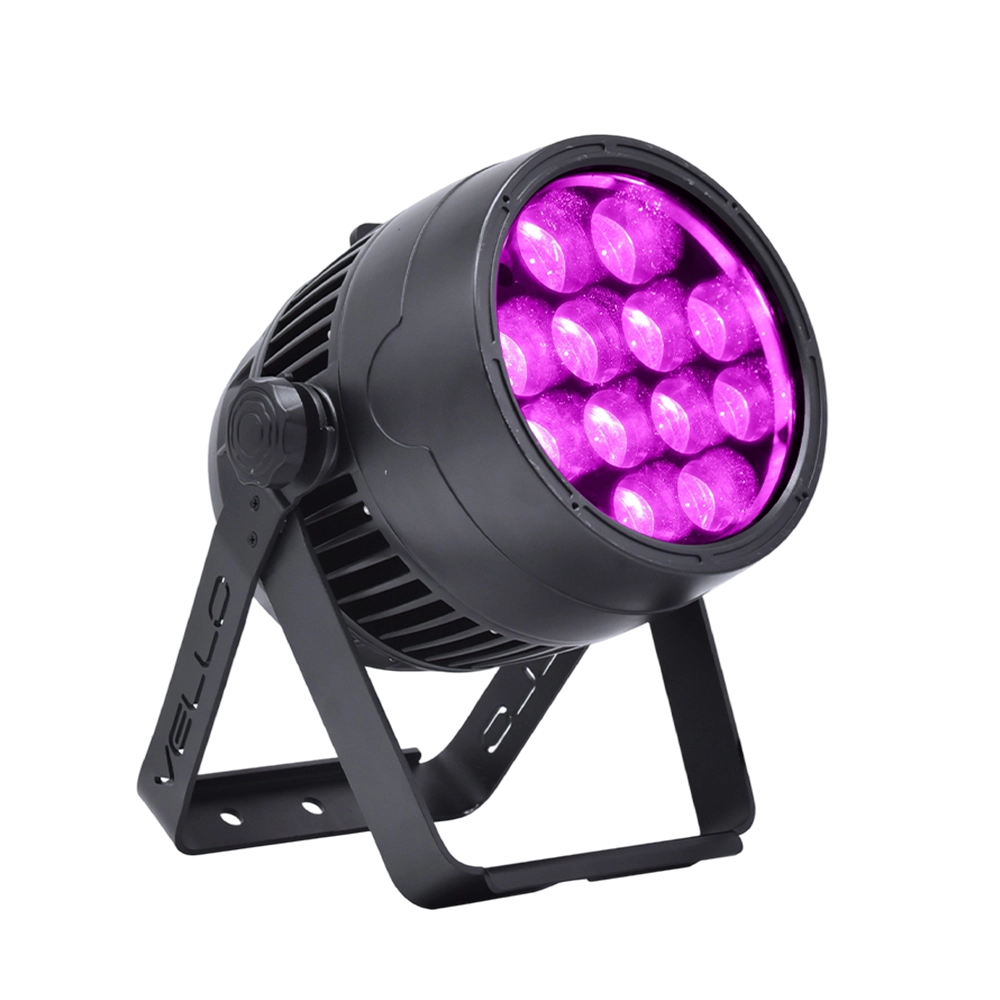
Stage LED Par Light LED ZOOMPAR 40
The Vello Zoom Par 40 IP is a powerful outdoor LED wash light equipped with 12x high-power 7-in-1 RGBACL LEDs. Designed for durability and rich color rendering, it features a wide motorized zoom (6°–50°), smooth dimming, and adjustable CTO presets (3200K–7500K), with 90+ CRI. With an IP66-rated die-cast aluminum body, it’s ideal for both indoor and outdoor applications, including stage lighting, architecture, live events, and installations.
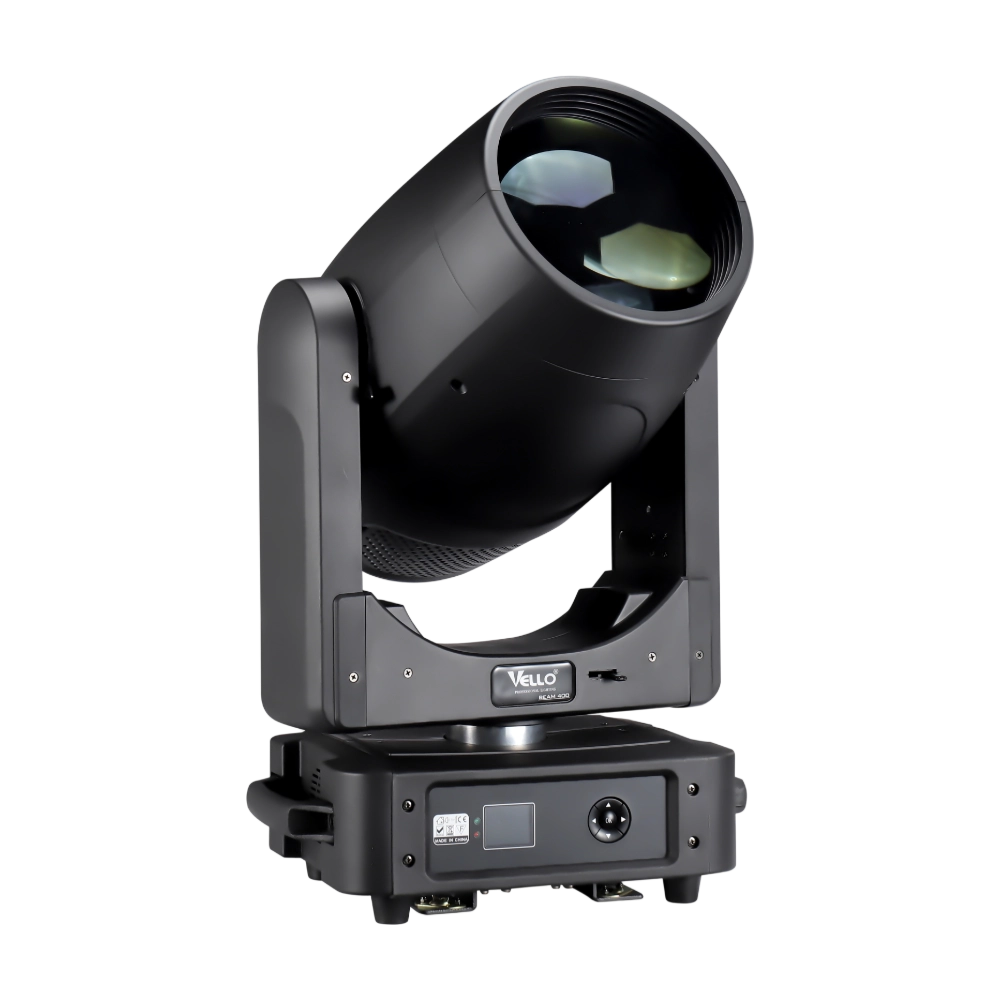
Moving Head Stage Light BEAM 400
BEAM400 is a 500W professional moving head beam powered by an OSRAM SIRIUS 371W discharge bulb, delivering a super-bright 1.8° sharp beam with impressive punch. It features 12 fixed gobos + open, a 14-color wheel, and a 16-facet circular rotating prism with multiple-facet effects, enabling dynamic aerial visuals. With 540° pan / 270° tilt, 16-bit movement resolution, and linear frost and focus, BEAM400 ensures precise and versatile performance. Comparable to traditional 750W moving heads, it combines high efficiency, smooth dimming, and reliable operation—ideal for concerts, tours, and large-scale stage productions.
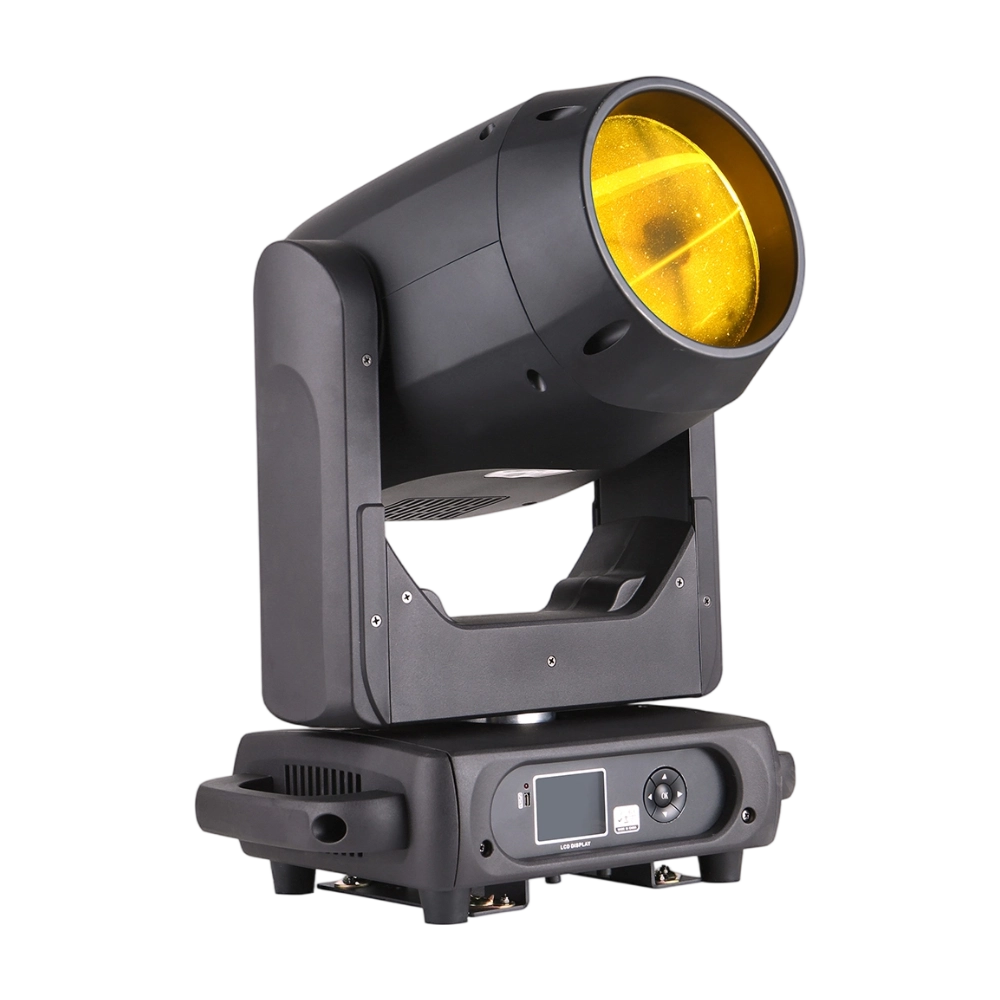
Moving Head Stage Light BEAM 360
BEAM360 is a 400W high-power moving head beam equipped with an OSRAM SIRIUS 311W discharge lamp, delivering a sharp 1.8° beam with super brightness. It features 14 colors + open, 12 fixed metal gobos + open, and dual prisms (8-facet circular + 8+16 multi-facet combination) for dynamic aerial effects. With 540° pan / 270° tilt, 16-bit movement, and linear frost and focus, BEAM360 ensures precision and versatility. Compact yet powerful, it rivals traditional 575W moving heads, making it ideal for concerts, clubs, and large-scale stage productions.
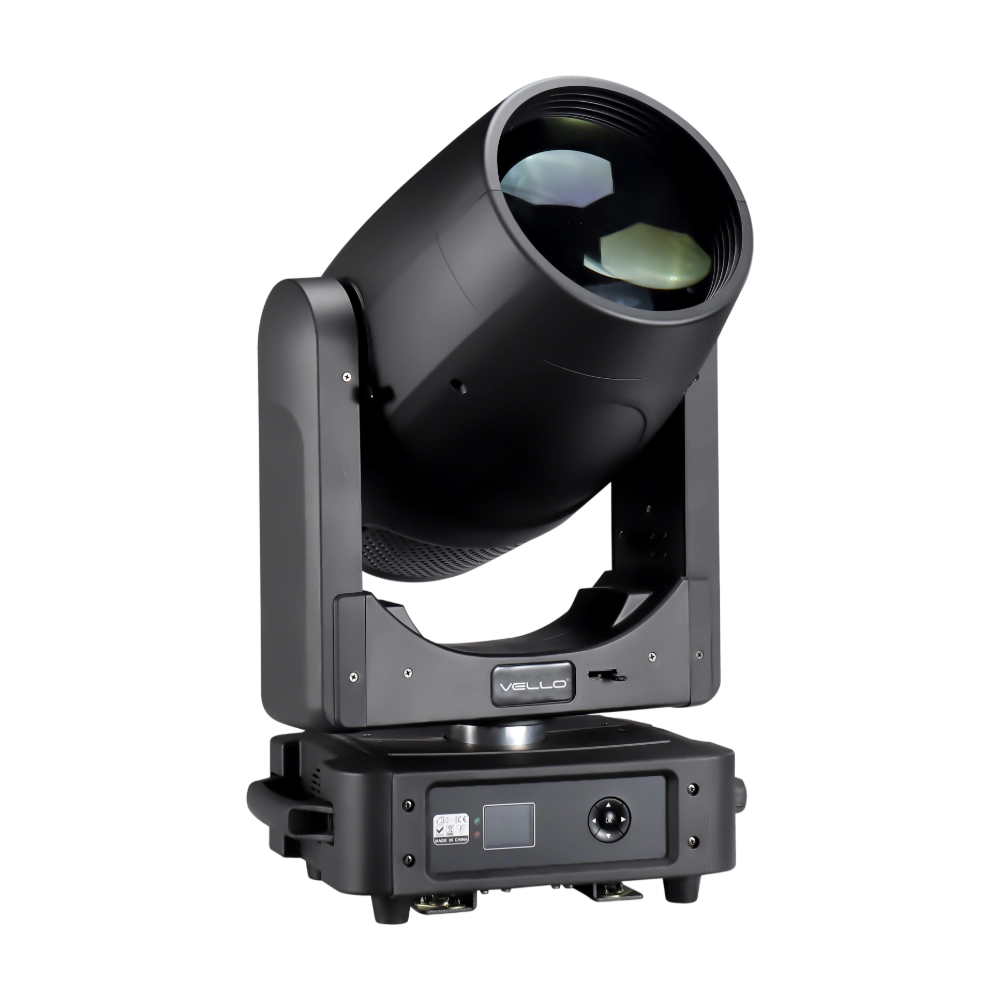
Moving Head Light BEAM 450
The BSW450 is a high-performance moving head fixture equipped with an original Osram 420W bulb, delivering exceptional brightness, precision, and versatility. Designed for professional stage applications, it seamlessly combines beam, spot, and wash functions in one compact unit, making it a powerful all-in-one lighting solution.
Over 20 Years of Innovation in Stage & Studio Lighting
© 2026 VELLO. All Rights Reserved. 粤ICP备20023734号
Join our socials
VELLO
Whatsapp: +8613902276704
Vello Lighting
VelloLights