





Installation Checklist for Custom LED Lighting Systems
- Start with a comprehensive site survey and project brief
- Define objectives and usage scenarios
- Perform environmental and physical site checks
- Assess electrical capacity and infrastructure
- System architecture: power, control, and addressing
- Power distribution and cable schedules
- Control protocols and network topology
- Addressing, channel allocation and labeling
- Mechanical installation and safety
- Rigging, mounts and structural checks
- Cable management and connector selection
- Thermal management and placement
- Commissioning, testing, and documentation
- Pre-power checklist and safety verification
- Functional testing and programming
- Documentation, commissioning handover and training
- Long-term maintenance, spare parts, and lifecycle planning
- Maintenance schedule and preventive checks
- Stocking spares and consumables
- Upgrade pathway and firmware management
- Fixture comparison and selection (quick reference)
- Standards, safety and references
- Why choose VELLO for custom LED lighting solutions
- Typical project checklist (quick actionable items)
- Frequently Asked Questions (FAQ)
- 1. How do I choose the right IP rating for outdoor custom led lighting?
- 2. What’s the difference between DMX, Art-Net and sACN, and which should I use?
- 3. How many spare fixtures or drivers should I keep on-site?
- 4. What are common causes of color inconsistency between fixtures?
- 5. How should I plan for emergency power and safety lighting for a stage installation?
- 6. What documentation should I expect from a supplier like VELLO?
I write this installation checklist from years of on-site lighting design, system integration, and project management experience. This guide is optimized for indexing and provides a concise, practical path to plan, install, test, and maintain custom led lighting installations — whether for theatre, live events, television studios, architectural façades, or outdoor stages.
Start with a comprehensive site survey and project brief
Define objectives and usage scenarios
First, clarify what the custom led lighting system must achieve. Is the installation primarily for theatrical cues, TV/studio color accuracy, concert effects, or architectural wash? Each use-case demands different fixture types (moving head stage lights, LED wash lights, LED effect lights, LED Bar Lights, LED Par Light, outdoor stage lighting), control complexity, and photometric targets. Document lumen levels, color rendering (CRI), correlated color temperature (CCT), and dynamic needs like pixel-mapping or synchronized effects.
Perform environmental and physical site checks
Measure mount points, sightlines, ceiling heights, rigging points, and access for installation/maintenance. Record ambient temperature ranges and exposure to moisture or dust — these define required IP ratings (e.g., IP20 for indoor vs. IP65 for outdoor fixtures). For reference on LED lamp fundamentals, see the LED lighting overview on Wikipedia.
Assess electrical capacity and infrastructure
Survey available mains distribution, breaker capacity, and distance to panels. For each fixture run, calculate expected current draw including inrush characteristics of LED drivers. Plan for protected circuits, earth bonding, and emergency power if required. Consult local electrical codes and standards; for industry best-practice lighting design guidelines see the Illuminating Engineering Society (IES).
System architecture: power, control, and addressing
Power distribution and cable schedules
Create a power schedule listing fixture counts, nominal wattage per fixture, circuit assignments, and cable lengths. Include voltage drop calculations for long runs, and derating for ambient temperature. Where multiple fixtures share a circuit, ensure breaker sizing allows for simultaneous start-up currents.
Control protocols and network topology
Decide on control protocol(s): DMX512 remains the field standard for stage fixtures (see DMX512), while Art-Net/sACN are common for Ethernet-based installations and large pixel-mapped displays. Map universe requirements early — a pixel LED wall can consume dozens of universes. Document IP addressing, switch requirements (managed switches with IGMP for sACN), and backup/control redundancy.
Addressing, channel allocation and labeling
Create a channel map and physical labeling system that will be applied to fixtures and cables. Labeling should include fixture ID, DMX address, circuit number, and mounting point. A consistent naming convention prevents programming errors and speeds up troubleshooting during commissioning.
Mechanical installation and safety
Rigging, mounts and structural checks
Verify that all rigging anchor points and trusses have been engineered for the actual load plus safety factors. Comply with local occupational safety guidance (see OSHA) and industry rigging standards. Use certified clamps, safety bonds, and secondary safety cables for every fixture. For outdoor fixtures, account for wind loading in the structural calculations.
Cable management and connector selection
Use stage-grade multicore cables for DMX and power runs, and sealed waterproof connectors (e.g., IP-rated connectors) for outdoor applications. Implement dedicated cable trays or raceways and avoid running low-voltage control cables in parallel with high-voltage mains when possible to reduce noise and interference.
Thermal management and placement
LEDs are heat-sensitive. Ensure adequate ventilation for fixture housings and avoid enclosing fixtures in small recesses unless fixtures are rated for it. Plan service access locations for fans, heatsinks, and replaceable drivers. For high-density arrays, model thermal dissipation or consult manufacturer thermal specifications.
Commissioning, testing, and documentation
Pre-power checklist and safety verification
Before energizing, verify earth continuity, polarity, breaker labeling, and that surge protection and RCDs/GFIs are installed where required. Confirm that all rigging safety cables are in place, and that fixtures are secured to mounts. Test emergency circuits and lighting isolation per local regulations.
Functional testing and programming
Power up systems in a staged manner: lights off, then control network, then dimmer/LED circuits. Check DMX/Art-Net addressing, confirm firmware versions and driver settings, and test color mixing and calibration. For pixel-mapped installations, run mapping tests and look for dead pixels, incorrect palettes, or latency issues.
Documentation, commissioning handover and training
Deliver a commissioning report that includes as-built drawings, channel maps, power schedules, test logs (e.g., continuity, insulation, DMX signal levels), firmware versions, and spare parts list. Conduct on-site operator training and provide written maintenance schedules. Proper documentation reduces operational downtime and preserves system value.
Long-term maintenance, spare parts, and lifecycle planning
Maintenance schedule and preventive checks
Establish a regular maintenance cadence: visual inspections monthly, electrical checks annually, and full commissioning tests after any significant change. Replace LEDs/drivers in matched batches to maintain color consistency. Keep cleaning logs for optical surfaces and fans.
Stocking spares and consumables
Maintain spares for drivers, lenses, power supplies, fuses, and a small set of fixtures for critical shows. For pixel systems, stock common LED modules and connectors. Having spares on hand shortens MTTR (mean time to repair).
Upgrade pathway and firmware management
Plan a firmware management policy. Test firmware upgrades on a staging unit before site-wide deployment. Consider modular systems that allow upgrading LED engines or control modules without full fixture replacement.
Fixture comparison and selection (quick reference)
| Fixture Type | Typical Power | Beam/Use | Outdoor Rating | VELLO Examples |
|---|---|---|---|---|
| Moving head | 300–2000 W | Spot, gobo, beam effects | IP20–IP65 variants | Moving head stage lights |
| LED wash | 100–1200 W | Wide color wash, stage coverage | Indoor & outdoor options | LED wash lights |
| LED bar / linear | 20–400 W | Uplights, effect bars, pixel mapping | Often IP65 for façade work | Led Bar Lights |
| LED par | 10–200 W | Fills, stage front, color accents | Indoor & IP-rated outdoor pars | Led Par Light |
| Outdoor stage | Varied — robust drivers | High-lumen flood, truss-mounted | IP65+ | Outdoor stage lighting |
Note: Typical power ranges are provided as installation planning guidance. Refer to manufacturer datasheets for exact specifications and inrush current figures.
Standards, safety and references
I base my safety and installation recommendations on industry standards and best practices. For example, DMX512 protocol documentation and general principles are summarized on Wikipedia. For lighting design and illuminance standards consult the Illuminating Engineering Society (IES). For general electrical and workplace safety requirements, refer to national authorities (for example, OSHA in the United States) and applicable IEC/ISO standards available via IEC.
Why choose VELLO for custom LED lighting solutions
As an integrator, I look for partners capable of consistent R&D, manufacturing quality, and reliable after-sales service. Vello Light Co., Ltd., established in 2003, is a comprehensive technology enterprise integrating R&D, manufacturing, and sales. Over the years, we have consistently adhered to the principles of quality first and sincere service. With the support and help of numerous customers both domestically and internationally, we have continued to grow and develop, gradually becoming a unique and outstanding team in our field.
In recent years, with the rapid development of the LED lighting market, Vello Light has gathered a large number of professional talents to provide comprehensive and systematic services, including product R&D, manufacturing, marketing, engineering installation, and product maintenance. Through the joint efforts of Vello people, we remain true to our original aspirations and persevere in innovation, leveraging our unique advantages to stand out in the fierce competition. Currently, our products are exported both domestically and internationally and have a strong brand reputation, especially in overseas markets. VELLO is our registered brand, specializing in moving headlights, LED wash lights, and theatrical lights. Our products are highly praised and loved by many customers for their professional technology, unique style, high-quality materials, and durability.
Our vision is to become a world-leading stage lighting manufacturer. Explore our product range and project references at https://www.vellolight.com or contact the team directly at info@vellolight.com. VELLO's competitive strengths include end-to-end R&D to manufacturing control, deep experience with moving head stage lights and LED effect light systems, and a proven global export footprint for outdoor stage lighting and studio applications. When specifying fixtures, I favor suppliers who publish detailed photometrics, IP ratings, and driver specs to make commissioning predictable and repeatable — capabilities VELLO demonstrates consistently.
Typical project checklist (quick actionable items)
- Site survey complete with photos, access diagrams, and rigging point loads.
- Electrical load calculations and panel schedules finalized.
- Control system architecture documented (protocols, universes, IP plan).
- Fixture list with part numbers, firmware versions, and spare quantities.
- Rigging hardware, cable trays, and connectors ordered and staged.
- Labeling scheme defined and labels printed for fixtures and tails.
- Pre-power checks and safety verification signed off.
- Commissioning test plan and functional test scripts prepared.
- Operator handover, O&M manuals, and training scheduled.
Frequently Asked Questions (FAQ)
1. How do I choose the right IP rating for outdoor custom led lighting?
Choose IP ratings based on exposure. IP65 is a common baseline for outdoor fixtures that face rain and dust. For submerged or jet-water exposure select higher ratings. Also consider connector IP ratings and enclosure material. Manufacturer datasheets provide tested IP classifications; do not assume spot IP protection from a single gasket alone.
2. What’s the difference between DMX, Art-Net and sACN, and which should I use?
DMX512 is the traditional 512-channel serial protocol widely used for fixtures. Art-Net and sACN run lighting data over Ethernet and are better for large-scale pixel and fixture counts (multiple universes). Use DMX for simple setups; choose Art-Net or sACN when you have dense pixel mapping or large distributed networks. Ensure managed switches and proper network segmentation to prevent packet loss.
3. How many spare fixtures or drivers should I keep on-site?
Stock at least 5–10% spares for large inventories, or 1–2 fixtures for small-to-medium critical shows. Keep common consumables such as power supplies, drivers, lenses, and fuses. The exact quantity depends on lead time from suppliers and the criticality of the event schedule.
4. What are common causes of color inconsistency between fixtures?
Color mismatch can come from mixed LED binning, different driver firmware, aging LEDs, or thermal differences. Mitigate by buying fixtures from the same production bin, updating firmware to a consistent revision, and ensuring uniform thermal conditions. Calibrate in-situ and, if necessary, adjust color macros in the console.
5. How should I plan for emergency power and safety lighting for a stage installation?
Plan separate emergency circuits for egress and safety lighting as required by local code. Critical systems (e.g., house lights, exit signs, some safety wash lights) should be powered by UPS or generator-backed circuits with automatic transfer. Verify with local authorities and include emergency scenario tests in commissioning.
6. What documentation should I expect from a supplier like VELLO?
Expect full datasheets, photometric files (IES files), wiring diagrams, mounting instructions, IP/IK ratings, firmware notes, and recommended maintenance schedules. For complex projects, request sample fixtures for on-site photometric verification before final procurement.
If you need support creating a site-specific installation checklist, product selection assistance, or full turn-key installation services, contact VELLO at info@vellolight.com or visit vellolight.com. I’m available to review your scope and provide a tailored installation and commissioning plan to ensure your custom led lighting project performs reliably and safely.
Ultimate B2B Buying Guide for LED Moving Head Light
LED Wash vs. Spot Lights: Choosing the Right Type
Color Mixing and Temperature for LED Stage Lighting
Top 10 LED Stage Lights for Concerts and Clubs
Major categories
What is the usual lead time?
Standard models are typically shipped within 7–15 working days after payment. Customized items may vary.
Do your products support customization?
Yes. We offer OEM and ODM services tailored to project needs, including design, optics, and control compatibility.
What is the warranty period for your products?
Most products come with a standard 1–2 year warranty. Please refer to product details or contract terms for specifics.
Do you offer samples?
Samples are available for certain models. Please confirm with our sales team for details.
Do you ship internationally?
Yes. We offer sea, air, and express delivery to many countries and regions worldwide.
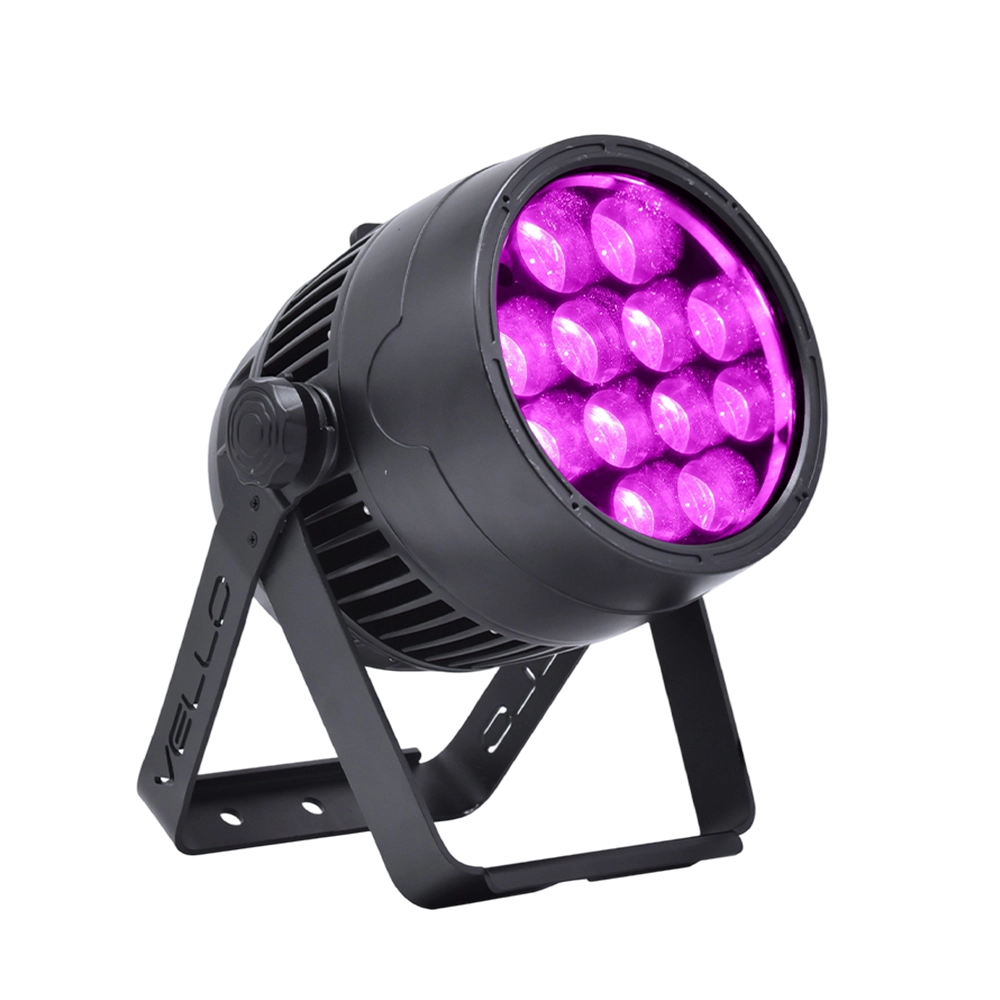
Stage LED Par Light LED ZOOMPAR 40
The Vello Zoom Par 40 IP is a powerful outdoor LED wash light equipped with 12x high-power 7-in-1 RGBACL LEDs. Designed for durability and rich color rendering, it features a wide motorized zoom (6°–50°), smooth dimming, and adjustable CTO presets (3200K–7500K), with 90+ CRI. With an IP66-rated die-cast aluminum body, it’s ideal for both indoor and outdoor applications, including stage lighting, architecture, live events, and installations.
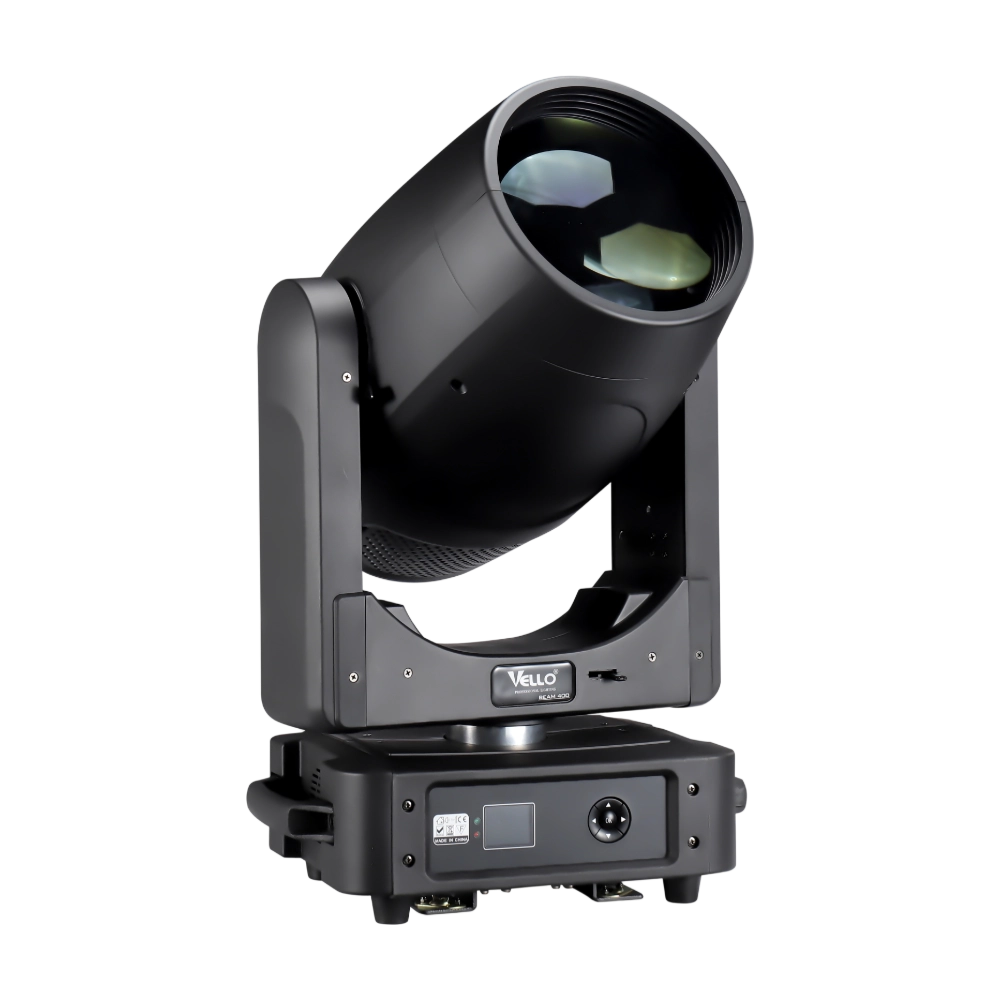
Moving Head Stage Light BEAM 400
BEAM400 is a 500W professional moving head beam powered by an OSRAM SIRIUS 371W discharge bulb, delivering a super-bright 1.8° sharp beam with impressive punch. It features 12 fixed gobos + open, a 14-color wheel, and a 16-facet circular rotating prism with multiple-facet effects, enabling dynamic aerial visuals. With 540° pan / 270° tilt, 16-bit movement resolution, and linear frost and focus, BEAM400 ensures precise and versatile performance. Comparable to traditional 750W moving heads, it combines high efficiency, smooth dimming, and reliable operation—ideal for concerts, tours, and large-scale stage productions.
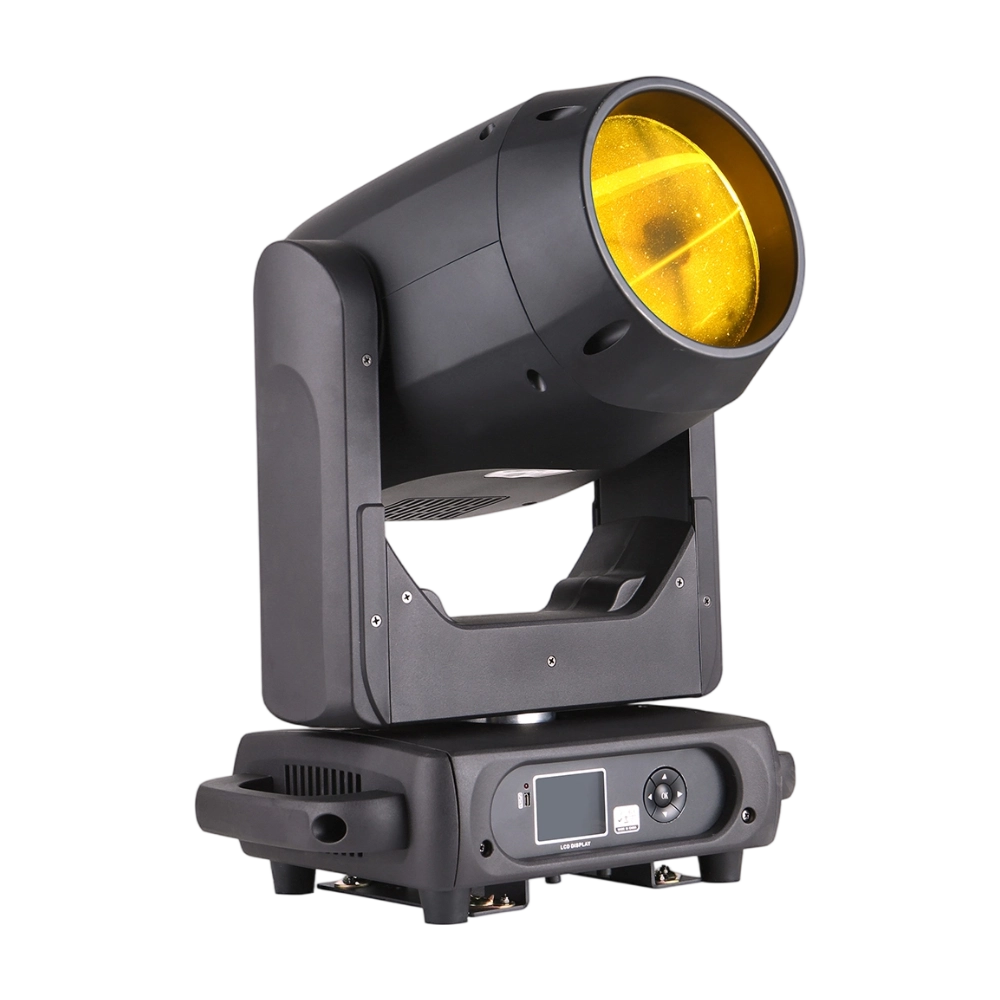
Moving Head Stage Light BEAM 360
BEAM360 is a 400W high-power moving head beam equipped with an OSRAM SIRIUS 311W discharge lamp, delivering a sharp 1.8° beam with super brightness. It features 14 colors + open, 12 fixed metal gobos + open, and dual prisms (8-facet circular + 8+16 multi-facet combination) for dynamic aerial effects. With 540° pan / 270° tilt, 16-bit movement, and linear frost and focus, BEAM360 ensures precision and versatility. Compact yet powerful, it rivals traditional 575W moving heads, making it ideal for concerts, clubs, and large-scale stage productions.
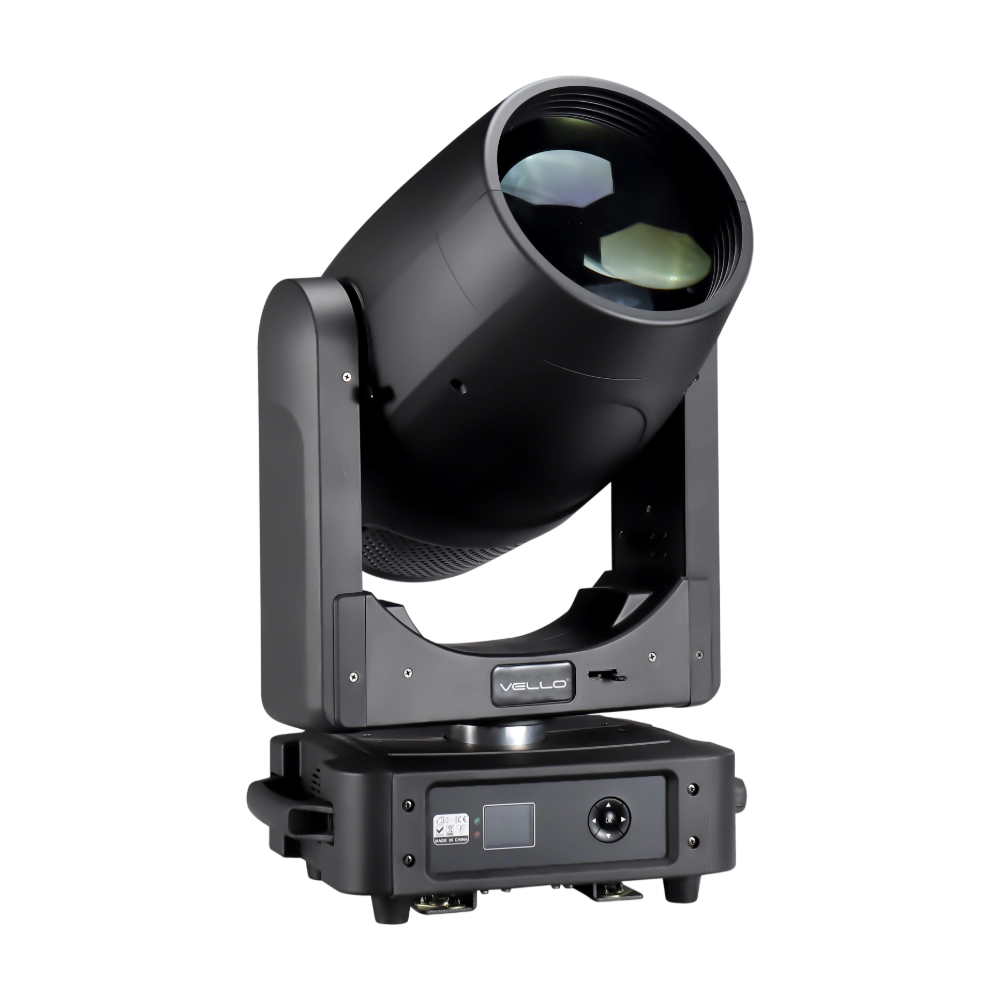
Moving Head Light BEAM 450
The BSW450 is a high-performance moving head fixture equipped with an original Osram 420W bulb, delivering exceptional brightness, precision, and versatility. Designed for professional stage applications, it seamlessly combines beam, spot, and wash functions in one compact unit, making it a powerful all-in-one lighting solution.
Over 20 Years of Innovation in Stage & Studio Lighting
© 2026 VELLO. All Rights Reserved. 粤ICP备20023734号
Join our socials
VELLO
Whatsapp: +8613902276704
Vello Lighting
VelloLights