





How to Rig and Safely Mount Stage Lights
- Essential Guide to Rigging and Mounting Stage Equipment
- 1. Define the load and performance requirements for your stage light setup
- 2. Choose truss, grid, and structural supports fit for the job
- 3. Hardware selection: clamps, shackles, safety cables and hoists
- 4. Calculate loads, load distribution, and apply safety factors
- 5. Rigging methods: clamps, truss plates, motorized fly systems
- 6. Electrical and signal safety for each stage light
- 7. Inspection, testing, and pre-show checks
- 8. Maintenance, lifecycle and replacement criteria
- 9. Emergency procedures, rescue and redundancy
- 10. Step-by-step rigging checklist for mounting a stage light
- 11. Comparison table: Common clamp and truss choices
- 12. Vello Light Co., Ltd. — supplier capabilities and why choose VELLO for your stage light needs
- FAQs — Common questions about rigging and mounting stage lights
- Q1: What safety factor should I use when rigging stage lights?
- Q2: Do I always need a safety cable for each stage light?
- Q3: Can I use the electrical ground as a safety restraint?
- Q4: How often should rigging hardware be inspected?
- Q5: What should I do if a hoist or motor fails during a show?
- Contact, Consultation and Product Support
- References
Essential Guide to Rigging and Mounting Stage Equipment
Rigging and mounting a stage light requires a combination of structural understanding, correct hardware, electrical safety, and documented procedures. Whether you are hanging a single moving head or a full truss of LED wash and profile fixtures, this guide gives you the practical knowledge to plan, execute, inspect, and maintain safe installations that meet professional standards.
1. Define the load and performance requirements for your stage light setup
Before any hardware is chosen or any height is set, document what you need the stage light installation to do. Key questions:
- How many fixtures and what type (moving head, LED wash, par, followspot)?
- What is the weight of each fixture and any accessories (barndoors, barn doors, lens tubes, safety yokes)?
- Is pan/tilt or additional dynamic loading expected (moving heads introduce dynamic forces)?
- What is the mounting height and working radius for maintenance access?
- Are fixtures indoor only or exposed to weather (affecting IP rating)?
Document the gross weight per mounting point (fixture + clamp + safety cable + any adaptor). Always use manufacturer weights and add a contingency of at least 10% for ancillary items.
2. Choose truss, grid, and structural supports fit for the job
Truss systems (triangular box truss like F34/29 or proprietary), permanent grids, and flown battens each have published load ratings. Match the applied load to the published working load limit (WLL) and apply industry-standard safety factors.
- Use truss rated for the expected distributed load. For cluster loads, verify local bending and deflection limits with manufacturer data.
- For flown systems, use certified motor points and ensure the structure (roof, rigging points) is engineered for the total load with appropriate load paths.
3. Hardware selection: clamps, shackles, safety cables and hoists
Select hardware rated to industry standards (e.g., ASME/ANSI B30 series for rigging hardware). When in doubt, choose hardware with a higher WLL and traceable certification.
| Item | Typical WLL (example) | When to use |
|---|---|---|
| M10 Clamp (steel C-clamp) | ~300–500 kg (manufacturer-specific) | Small moving heads, pars on truss |
| M12 Clamp | ~500–800 kg | Heavier fixtures, medium loads |
| Shackle (bow or dee, Grade 6) | From 1t upwards | Permanent rigging points, chain attachments |
| Safety Cable (steel, 5mm–8mm) | ~300–1000 kg depending on construction | Mandatory backup for every clamped fixture |
| Chain Hoist / Motor (electric) | Capacity 250 kg–2000 kg+ | Flown truss or heavy clusters |
Always use two independent attachment methods for any flown or suspended stage light: the primary clamp and a secondary restraint (safety cable or redundant shackle). For moving heads and motorized bars, the secondary must be independently secured to the truss or structure.
4. Calculate loads, load distribution, and apply safety factors
Industry practice uses safety factors (typically 5:1 or greater for temporary entertainment rigging, depending on local codes). That means the minimum breaking strength of hardware should be five times the maximum expected load. For overhead human safety, some jurisdictions and organisations recommend higher factors for permanent installations.
Example calculation (worked):
- Fixture weight: 25 kg (moving head)
- Clamp + safety cable + accessories: 5 kg
- Dynamic factor (movement, wind, handling): ×1.5
- Total applied load per fixture = (25 + 5) × 1.5 = 45 kg
- Required WLL at 5:1 safety factor = 45 kg × 5 = 225 kg minimum
Interpretation: choose clamps and hardware rated at or above 225 kg WLL, ideally higher to give margin.
| Recommendation | Rationale |
|---|---|
| Use hardware with traceable certification | Ensures rated WLL and manufacturing quality |
| Apply 5:1 safety factor minimum | Industry standard for temporary rigging to protect people |
| Perform a full load plan | Confirms distributed loads and motor capacities |
5. Rigging methods: clamps, truss plates, motorized fly systems
Common rigging methods include:
- Direct clamp to truss (using rated M10/M12 clamps). Use two clamps for redundancy on long fixtures.
- Shackle or D-ring to permanent structural points for theatrical battens.
- Motorized hoists for flown truss systems — always program limits and use load-sensing where available.
- Chain hoists for static lifts; taglines should be used to control swing during installation.
When using motorized systems, document the software limits, test run under load, and log the hoist runtime and servicing schedule.
6. Electrical and signal safety for each stage light
Electrical safety is as critical as mechanical. Follow local electrical codes and these practical rules:
- Use PDU or dimmer racks with appropriately rated breakers and ground leakage protection. For LED stage light fixtures, ensure drivers are compatible with the supply and protective devices.
- Use proper cable management and strain relief at fixtures. Never carry power by DMX or data cables.
- Protect outdoor fixtures with weatherproof connectors and respect IP ratings (e.g., IP65 for exposed fixtures).
- Terminate DMX lines properly with a 120-ohm terminator and follow wiring best practice (e.g., use shielded twisted pair for long runs where required).
7. Inspection, testing, and pre-show checks
Pre-installation and pre-show inspections reduce risk and catch wear before failure. Key checks:
- Inspect clamps, bolts, shackles, and safety cables for deformation, corrosion, threads, and certifications.
- Check truss sections for cracks, paint blistering, and loose spigots. Measure deflection if load is near truss limits.
- Perform a test lift of flown systems to working height then to maximum load and back; verify limit switches and emergency stops.
- Confirm electrical continuity, earth connection, and correct polarity where applicable; verify DMX addressing and function of each stage light.
Record inspections in a log (date, inspector, findings, corrective actions). Many venues require this record for insurance and compliance.
8. Maintenance, lifecycle and replacement criteria
Rigging hardware and stage light fixtures are consumables with finite service life. Recommendations:
- Replace safety cables and clamps every few years or when any defect is found.
- Service hoists according to manufacturer intervals (hours of operation). Replace worn chain or rope per the service manual.
- Re-lubricate moving parts of fixtures and perform thermal checks on LED drivers and power supplies annually.
9. Emergency procedures, rescue and redundancy
All operations at height should have written emergency procedures and trained staff. Important elements:
- Define rescue steps if a technician is stuck on a ladder or platform.
- Know how to lower flown systems manually if power to hoists fails.
- Maintain redundant attachment points for critical loads and ensure quick-release procedures are controlled and trained.
10. Step-by-step rigging checklist for mounting a stage light
- Document fixture weight and accessories.
- Confirm truss or rigging point capacity and review load plan.
- Select clamp and safety cable with appropriate WLL; inspect hardware certification.
- Attach the clamp; torque to manufacturer torque spec and fit secondary safety cable to independent point.
- Perform electrical connection with strain relief; test power and data signals.
- Power up and do an operational test (pan/tilt, lamp/LED output) and check for noise, vibration or abnormal heat.
- Log the installation, note next inspection date and responsible person.
11. Comparison table: Common clamp and truss choices
| System | Best for | Typical Advantages | Notes |
|---|---|---|---|
| M10 Swivel Clamp | Light fixtures on round truss | Compact, adjustable angle | Check manufacturer WLL for swivel |
| M12 Heavy Clamp | Heavier fixtures and long yokes | Higher WLL, more secure | Requires correct torque and regular inspection |
| Box Truss (290/340 mm) | Concerts, heavy clusters | High stiffness, large load capacity | Heavier, needs motorised hoists for flown usage |
| Aluminium Touring Truss | Mobile productions | Lightweight, modular | Check cumulative load ratings for long spans |
12. Vello Light Co., Ltd. — supplier capabilities and why choose VELLO for your stage light needs
Vello Light Co., Ltd., established in 2003, is a comprehensive technology enterprise integrating R&D, manufacturing, and sales. With a long-term focus on quality-first and sincere service, Vello has grown into an experienced team serving domestic and international markets. In recent years, Vello has expanded its professional talent pool to deliver comprehensive services including product R&D, manufacturing, marketing, engineering installation, and product maintenance.
Key competitive advantages and product highlights:
- Product range: moving head stage lights, studio lights, LED effect lights, LED bar lights, LED par lights, and outdoor stage lighting.
- Technical strength: in-house R&D with an emphasis on durable mechanical housings, quality optical engines, and robust thermal management for LED fixtures.
- Quality and service: VELLO is a registered brand, with products praised for professional technology, unique style, and high-quality materials.
- Export experience: established reputational presence in overseas markets, supported by solid after-sales and engineering installation services.
For procurement or complex rigging projects, Vello can supply fixture specifications, mounting accessories, and pre-configured truss kits that match your load plan. Their product lines are particularly strong where reliability, thermal performance, and professional optics are required—key factors when planning safe permanent or touring installations.
FAQs — Common questions about rigging and mounting stage lights
Q1: What safety factor should I use when rigging stage lights?
A1: Use at least a 5:1 safety factor for temporary entertainment rigging. For permanent installations or where local codes require, higher factors may apply. Always confirm with venue engineering or a structural engineer.
Q2: Do I always need a safety cable for each stage light?
A2: Yes. Every suspended or clamped fixture should have a secondary independent restraint (safety cable or secondary shackle) sized to handle the applied load.
Q3: Can I use the electrical ground as a safety restraint?
A3: No. The electrical ground is not a substitute for mechanical safety hardware. Use dedicated rated safety cables and attachment points.
Q4: How often should rigging hardware be inspected?
A4: At minimum: pre-install inspection before each tour/season and a full inspection annually. High-use hardware should be inspected more frequently and logged.
Q5: What should I do if a hoist or motor fails during a show?
A5: Stop the movement immediately, engage the hoist brakes, and follow emergency lowering procedures. If people are at risk, enact the venue's rescue plan and contact trained rigging technicians. Do not attempt unsafe manual handling.
Contact, Consultation and Product Support
If you need professional assistance planning your stage light rigging or to select appropriate fixtures and rigging hardware, contact VELLO for product details, installation support, and engineered solutions. For tailored quotes on moving head stage lights, LED wash fixtures, LED par lights, and outdoor stage lighting, reach out to Vello Light Co., Ltd. to discuss specifications, load plans, and installation services.
References
- Occupational Safety and Health Administration (OSHA) — Fall Protection and Rigging Guidance. https://www.osha.gov/fall-protection (accessed 2025-12-07).
- Entertainment Services and Technology Association (ESTA) — Technical resources and rigging standards. https://esta.org/ (accessed 2025-12-07).
- PLASA & ETCP — Rigging certification and best practices. https://etcp.plasa.org/ (accessed 2025-12-07).
- The Crosby Group — Rigging hardware technical resources. https://www.thecrosbygroup.com/ (accessed 2025-12-07).
- IP Code — Ingress Protection (IP) ratings overview. https://en.wikipedia.org/wiki/IP_Code (accessed 2025-12-07).
For further assistance or to request a product datasheet and rigging kit from VELLO, contact Vello Light Co., Ltd. or visit their product pages to explore moving head stage lights, studio lights, LED effect lights, LED bar lights, LED par lights, and outdoor stage lighting solutions.
Wireless Control Options for Stage Lighting
Energy-Efficient LED Stage Lights: Save Costs Now
LED Moving Head vs Static PAR: Which for Stage?
Custom Branding and OEM Options for Moving Head Manufacturers
Major categories
What is the usual lead time?
Standard models are typically shipped within 7–15 working days after payment. Customized items may vary.
Do you offer samples?
Samples are available for certain models. Please confirm with our sales team for details.
What is the warranty period for your products?
Most products come with a standard 1–2 year warranty. Please refer to product details or contract terms for specifics.
Do you ship internationally?
Yes. We offer sea, air, and express delivery to many countries and regions worldwide.
Do your products support customization?
Yes. We offer OEM and ODM services tailored to project needs, including design, optics, and control compatibility.
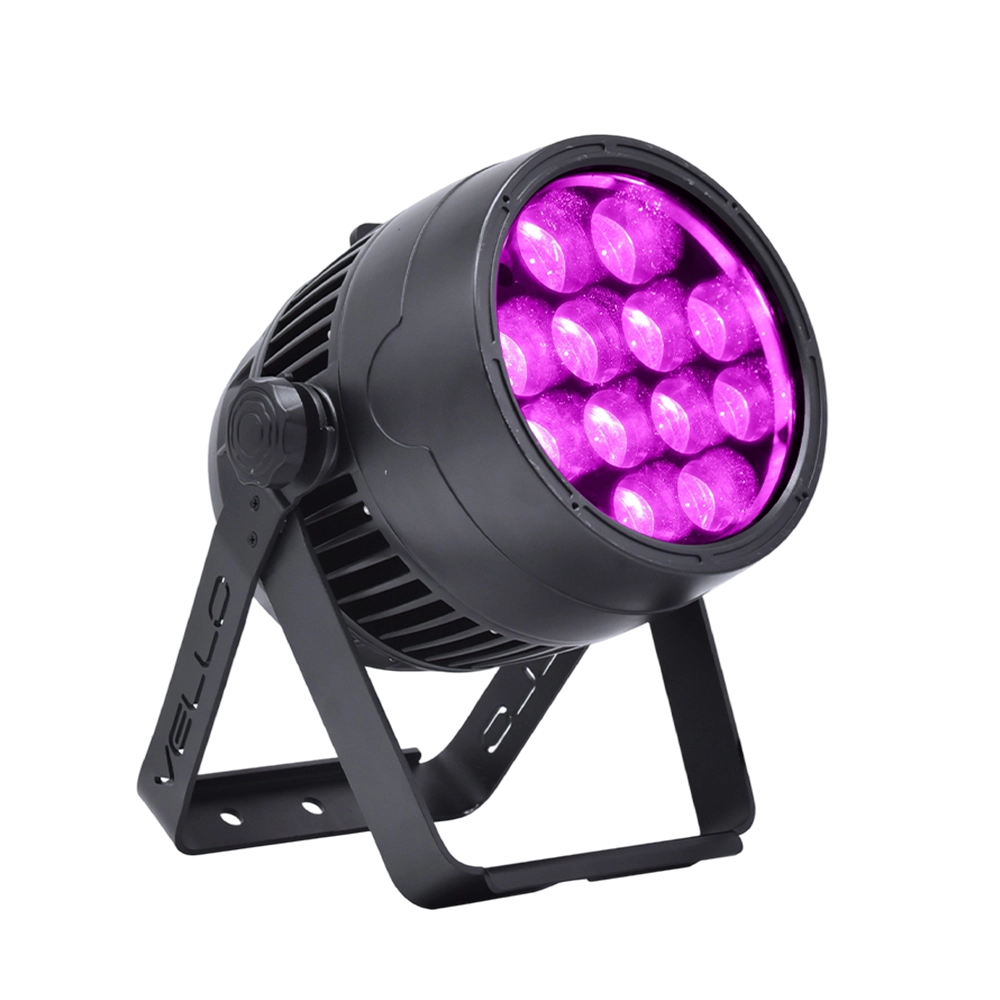
Stage LED Par Light LED ZOOMPAR 40
The Vello Zoom Par 40 IP is a powerful outdoor LED wash light equipped with 12x high-power 7-in-1 RGBACL LEDs. Designed for durability and rich color rendering, it features a wide motorized zoom (6°–50°), smooth dimming, and adjustable CTO presets (3200K–7500K), with 90+ CRI. With an IP66-rated die-cast aluminum body, it’s ideal for both indoor and outdoor applications, including stage lighting, architecture, live events, and installations.
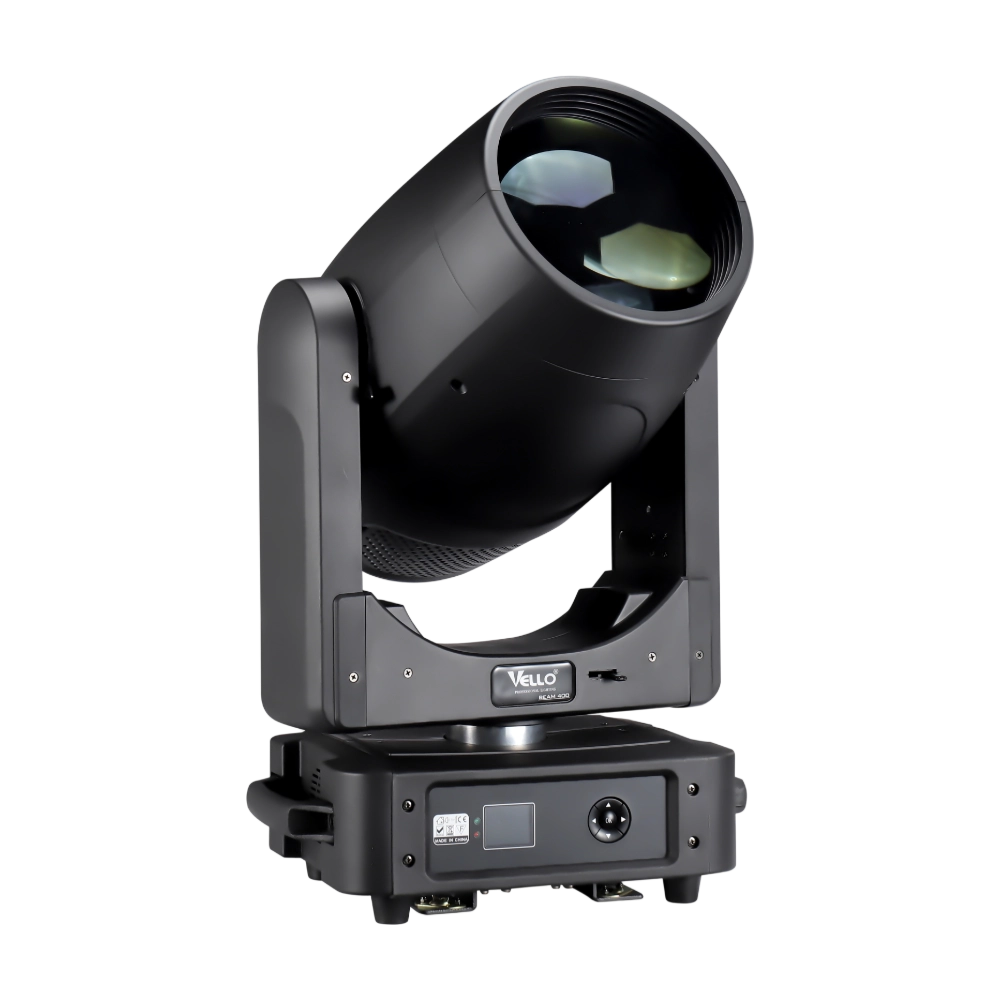
Moving Head Stage Light BEAM 400
BEAM400 is a 500W professional moving head beam powered by an OSRAM SIRIUS 371W discharge bulb, delivering a super-bright 1.8° sharp beam with impressive punch. It features 12 fixed gobos + open, a 14-color wheel, and a 16-facet circular rotating prism with multiple-facet effects, enabling dynamic aerial visuals. With 540° pan / 270° tilt, 16-bit movement resolution, and linear frost and focus, BEAM400 ensures precise and versatile performance. Comparable to traditional 750W moving heads, it combines high efficiency, smooth dimming, and reliable operation—ideal for concerts, tours, and large-scale stage productions.
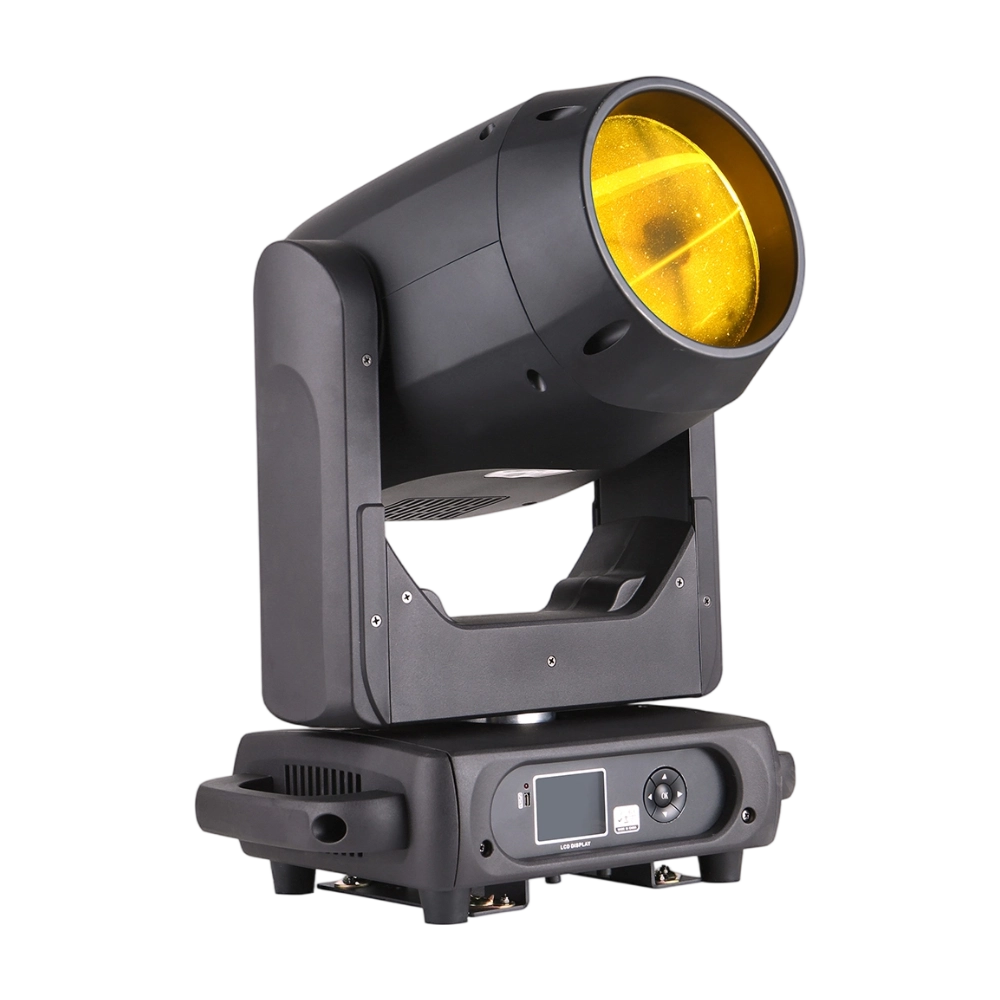
Moving Head Stage Light BEAM 360
BEAM360 is a 400W high-power moving head beam equipped with an OSRAM SIRIUS 311W discharge lamp, delivering a sharp 1.8° beam with super brightness. It features 14 colors + open, 12 fixed metal gobos + open, and dual prisms (8-facet circular + 8+16 multi-facet combination) for dynamic aerial effects. With 540° pan / 270° tilt, 16-bit movement, and linear frost and focus, BEAM360 ensures precision and versatility. Compact yet powerful, it rivals traditional 575W moving heads, making it ideal for concerts, clubs, and large-scale stage productions.
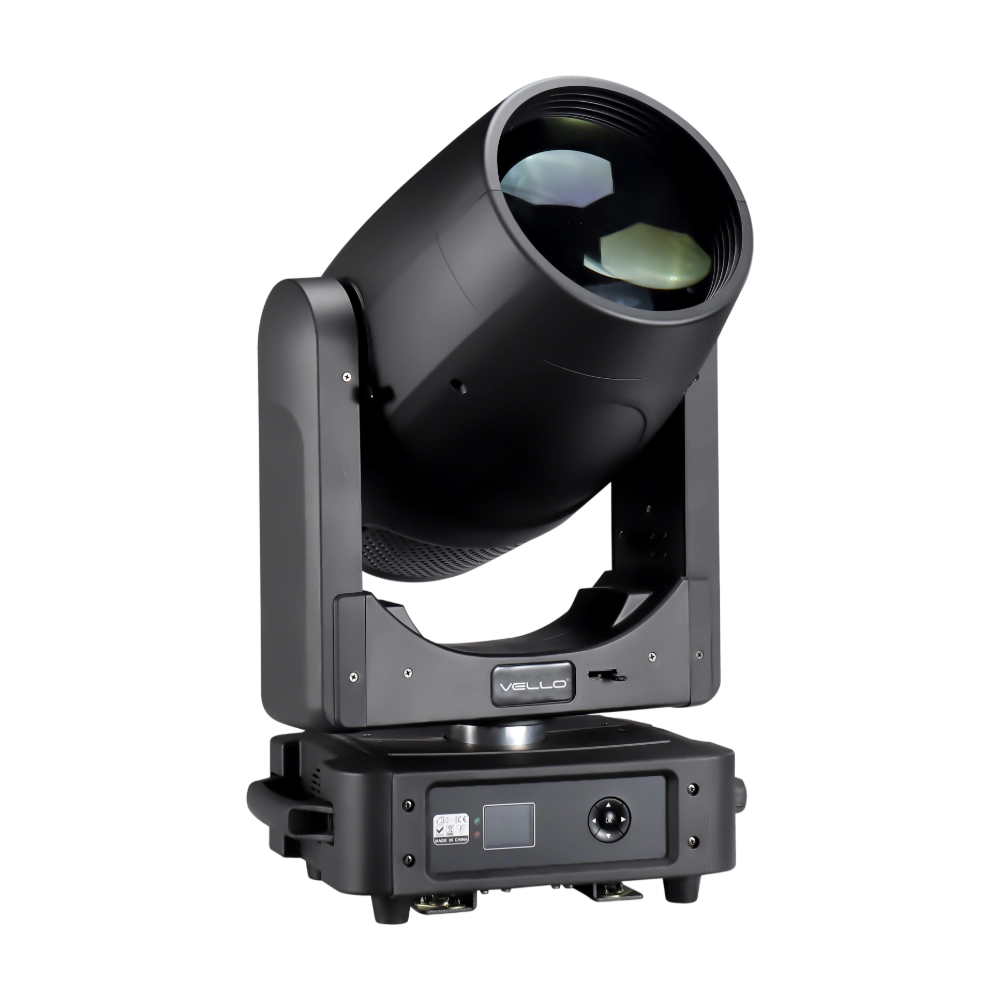
Moving Head Light BEAM 450
The BSW450 is a high-performance moving head fixture equipped with an original Osram 420W bulb, delivering exceptional brightness, precision, and versatility. Designed for professional stage applications, it seamlessly combines beam, spot, and wash functions in one compact unit, making it a powerful all-in-one lighting solution.
Over 20 Years of Innovation in Stage & Studio Lighting
© 2026 VELLO. All Rights Reserved. 粤ICP备20023734号
Join our socials
VELLO
Whatsapp: +8613902276704
Vello Lighting
VelloLights