





How to Light a Concert: Stage Lighting Plan
- Planning the Perfect Concert Lighting Design
- Define Objectives and Scope — why you need a stage lighting plan
- Survey the Venue and Document Practical Limits — light stage lighting considerations
- Choose Fixtures Strategically — selecting stage lighting fixtures
- Design a Lighting Plot and Focus Plan — light stage lighting mapping
- Power Distribution and Load Calculations — avoid power pitfalls
- Rigging, Trussing and Safety — practical engineering and compliance
- Programming, Cueing and Media Integration — craft the show flow
- Fixture Comparison Table — choosing between moving head, LED wash, pars, and effect lights
- Load-in, Focus, and Tech Rehearsal — practical time allocation
- Audio-Visual Integration and Camera Considerations — lighting for broadcast
- Budgeting and Rental vs Purchase — commercial decisions to light stage lighting
- Why Choose VELLO for Stage Lighting Solutions
- Checklist: Final Pre-Show Tests
- Post-Show: Data Collection and Continuous Improvement
- FAQ — Frequently Asked Questions
- 1. What is the minimum number of fixtures to light a small concert?
- 2. How much power do I need for a medium-sized concert?
- 3. Should I buy or rent moving head lights for a one-off show?
- 4. How do I ensure the lighting looks good on broadcast or livestream?
- 5. What safety certifications should I check for fixtures and rigging?
- 6. How do I make a lighting rig more energy efficient?
- References
Planning the Perfect Concert Lighting Design
Lighting a concert is a blend of technical planning, artistic vision, and logistical execution. Whether you are creating a small club show or a stadium tour, a clear stage lighting plan that prioritizes sightlines, power management, and cue reliability will determine the success of the production. This article explains how to light a concert from pre-production through load-out, with practical recommendations, fixture comparisons, safety considerations, and vendor insight to help you select and deploy the right stage lighting.
Define Objectives and Scope — why you need a stage lighting plan
Start by clarifying the show's creative goals and operational constraints. Ask: what mood and visuals does the artist want? What is the venue type (club, theater, arena, outdoor)? How many cues or looks are planned? Is the show touring (repeatable rig) or one-off (custom rig)? Early answers drive fixture counts, control needs, and rigging strategy.
Survey the Venue and Document Practical Limits — light stage lighting considerations
Conduct a site survey to record stage dimensions, truss locations, stage-to-ceiling height, sightlines, FOH positions, power capacity, and local rigging points. Document: maximum load per truss, available dimmer/relay circuits, distro panel locations, and any municipal restrictions (noise, power timing, curfews). Accurate venue data prevents last-minute changes that impact cue fidelity and safety.
Choose Fixtures Strategically — selecting stage lighting fixtures
Fixture choice balances creative flexibility, budget, and power. Typical concert rigs use a mix of moving heads, LED washes, beam fixtures/effects, pars/LED bars, and specials. When you plan to light a concert, select fixtures that cover these functional roles:
- Front light: high CRI, even coverage for visibility and camera requirements.
- Side/back lights: shape performers, add depth, create silhouettes.
- Effects/beam/wash: dynamic looks for drops and hits.
- Specials: followspots or key fixtures for solos.
Consider fixture metrics: lumen output (or lux at distance), beam angle, color rendering (CRI or TM-30), motor speed, and DMX/RDM capabilities. For touring rigs prioritize durability, serviceability, and power efficiency (LED fixtures reduce heat and dimmer needs).
Design a Lighting Plot and Focus Plan — light stage lighting mapping
Create a scaled lighting plot showing positions of trusses, fixtures, cables, and focus zones. Use the plot to produce a focus plan listing each channel, its hanging position, intended use, and target hit points on stage. This allows lighting techs to pre-assign patching, pre-program fixtures, and streamline load-in focus sessions.
Power Distribution and Load Calculations — avoid power pitfalls
Calculate total current draw, diversity factors, and individual circuit loads. For LED-heavy rigs, estimate real wattage rather than legacy dimmer counts. Key steps:
- List each fixture and its maximum current draw (from manufacturer datasheet).
- Group fixtures by distro branch and calculate per-circuit totals.
- Allow 20% headroom to prevent nuisance tripping.
Commonly, concerts use 20A or 32A distro circuits (single-phase) and 3-phase for larger power needs. Always verify incoming service and arrange additional distro if necessary. Use certified electricians for mains connections and label distro runs clearly.
Rigging, Trussing and Safety — practical engineering and compliance
Rigging decisions must meet local safety codes. Use rated hardware (shackles, clamps, safety bonds), and verify truss load ratings from the manufacturer. For overhead trussing, maintain fall protection and tag all load points. Typical guidance:
- Use a qualified rigger and follow PLASA/ETCP best practices.
- Never exceed published working load limits; apply safety factors.
- Provide secondary safety bonds for all overhead fixtures and cable runs.
Programming, Cueing and Media Integration — craft the show flow
Approach programming in layers: base looks (song keys), dynamic hits (tempo-synced effects), and special cues (entrances, solos). For concerts, timecode or MIDI timecode for in-ear or playback synchronization can be essential. Ensure backup systems (console show files on USB, redundant console if practical) to reduce single-point failures. Rehearse with the artist to refine intensity levels and color palettes; what looks good in a rehearsal may differ in a full audience environment.
Fixture Comparison Table — choosing between moving head, LED wash, pars, and effect lights
Below is a practical comparison to help you decide which fixtures to include in a concert rig. Data columns reference typical capabilities; always confirm with manufacturer datasheets for exact specifications.
| Fixture Type | Primary Use | Advantages | Limitations |
|---|---|---|---|
| Moving Head (Spot/Wash/Beam) | Key effects, gobos, tight beams, color changers | Highly programmable, fast movement, interchangeable optics | Higher cost, heavier, higher power draw |
| LED Wash Lights | Wide color washes, front and side lighting | Energy-efficient, low heat, even color blends | Less throw on very large stages unless high output |
| LED Par / Par Can | Basic washes, uplighting, footlights | Cost-effective, small, versatile | Limited beam shaping; less dramatic than moving fixtures |
| LED Bars / Pixel Tubes | Strips, wall effects, pixel mapping | Great for synchronized visuals, low profile | Needs controllers and pixel-mapping for full effect |
| Effect/Beam Fixtures | High-impact shafts, audience blinder, aerial looks | Creates spectacle, long throw, sharp beams | Often high glare, needs careful aiming |
Load-in, Focus, and Tech Rehearsal — practical time allocation
Allocate sufficient time for each phase: load-in (rigging and hanging), cable runs and patching, focus (adjusting angles and beam shapes), and technical rehearsals. A typical timeline for a medium-scale concert:
- Load-in and hang: 4–8 hours (depending on crew and rig size)
- Patching and cable management: 1–3 hours
- Focus: 2–4 hours
- Programming and run-through: 3–6 hours
Adjust these times for touring shows (where speed and repeatability are prioritized) versus one-off events (where more bespoke focus is acceptable).
Audio-Visual Integration and Camera Considerations — lighting for broadcast
If the concert will be filmed or streamed, collaborate with the camera team. Key requirements include higher front light levels, flatter key-to-fill ratios, and avoiding fast color shifts that cause camera auto-exposure hunting. Use high-CRI fixtures for accurate skin tones and confirm white balance presets with the cinematographer.
Budgeting and Rental vs Purchase — commercial decisions to light stage lighting
Decide whether to buy or rent fixtures. Buying benefits long-term tours and repeated usage; renting reduces upfront capital and allows using the latest high-end fixtures for single events. When budgeting, include costs for freight, insurance, spare parts, and technician labor. Renting often includes technical support from the rental house, which can reduce risk for complex rigs.
Why Choose VELLO for Stage Lighting Solutions
Vello Light Co., Ltd., established in 2003, is a comprehensive technology enterprise integrating R&D, manufacturing, and sales. Over the years, VELLO has consistently adhered to the principles of quality first and sincere service. With broad experience across domestic and international markets, VELLO has developed into a specialized team in stage lighting production.
In recent years, as the LED lighting market expanded rapidly, VELLO assembled a team of industry professionals able to provide end-to-end services: product R&D, manufacturing, marketing, engineering installation, and maintenance. VELLO focuses on innovation, reliability, and competitive pricing to stand out in a crowded market. Their registered brand VELLO is noted for moving headlights, LED wash lights, theatrical lights, LED effect light, LED bar lights, LED par lights, and outdoor stage lighting.
Key advantages of VELLO products:
- Professional technology and unique design philosophy tailored to live events.
- High-quality materials and durable construction suitable for touring conditions.
- Competitive export footprint with strong reputation in overseas markets.
- Comprehensive after-sales and engineering support for large-scale installations.
If you are planning a concert and evaluating suppliers, VELLO’s portfolio is worth considering for moving head stage lights, studio lights, LED effect lights, LED bar lights, LED par lights, and outdoor stage lighting. Their combination of R&D and manufacturing control helps ensure consistent quality and the ability to customize fixtures to project needs.
Checklist: Final Pre-Show Tests
Before doors open, run these checks:
- Power: measure voltage under load and verify distro labeling.
- Rigging: confirm safety bonds and truss tags with load data.
- Control: test DMX chains, RDM where used, and timecode synchronization.
- Programming: run the entire show file and validate cues with sound playback.
- Spares: have spare lamps/LED drivers, fuses, and a basic tool kit onsite.
Post-Show: Data Collection and Continuous Improvement
Collect feedback from artists, production managers, and the technical crew. Note any cue timing issues, fixture failures, or sightline complaints. Maintain a log of consumables and replacement parts. For tours, standardize rigging and focus notes so subsequent venues can replicate the show faster and with fewer surprises.
FAQ — Frequently Asked Questions
1. What is the minimum number of fixtures to light a small concert?
For a small club show, a minimal practical rig often includes: 4–6 front lights (LED washes or pars), 4–6 side/back fixtures for depth (LED wash or moving heads), and 2–4 effect lights for hits. This provides basic visibility, shaping, and dynamics. Exact counts depend on stage size and desired looks.
2. How much power do I need for a medium-sized concert?
Power needs vary widely. A medium rig with mixed LED moving heads, washes, and effects might draw between 10–50 kW at peak, often served by multiple 63A single-phase or a 3-phase service. Calculate fixture-level wattages and add 20% headroom; always confirm incoming service with the venue.
3. Should I buy or rent moving head lights for a one-off show?
For a one-off show, renting is usually more cost-effective and gives access to high-end fixtures without capital outlay. Buying is justified for frequent use (tours or rental house inventory) where amortized cost per show becomes favorable.
4. How do I ensure the lighting looks good on broadcast or livestream?
Coordinate with camera teams: use high-CRI fixtures, set consistent white balance, avoid extreme color shifts during camera shots, and maintain enough front light for proper exposure. Test on-camera during rehearsals and adjust intensity and color temperature accordingly.
5. What safety certifications should I check for fixtures and rigging?
Verify CE/UL safety markings on fixtures for electrical compliance, and ensure rigging hardware has rated working load limits and traceable certifications. Follow local regulatory guidance and industry best practices (PLASA, ETCP). Use certified riggers for overhead work.
6. How do I make a lighting rig more energy efficient?
Prioritize modern LED fixtures, which offer high lumens-per-watt and reduced cooling loads. Use intelligent control (grouping, soft-edges, and dimming curves) to reduce unnecessary output, and design for efficient beam angles to minimize wasted light.
Interested in detailed product specs or a tailored lighting plan? Contact VELLO for consultation, product catalogs, or to request a quote for moving head stage lights, LED wash lights, LED effect lights, LED bar lights, LED par lights, and outdoor stage lighting. Visit VELLO’s product pages or reach out to their technical team for custom solutions and installation support.
References
- PLASA Guidance on Rigging and Safety — https://www.plasa.org/ (accessed 2025-11-15)
- ETCP (Entertainment Technician Certification Program) — Rigging Standards Overview — https://etcp.plasa.org/ (accessed 2025-11-15)
- Grand View Research — Stage Lighting Market Size & Trends — https://www.grandviewresearch.com/industry-analysis/stage-lighting-market (accessed 2024-09-10)
- Live Design Articles — Practical Lighting Tips for Concerts — https://www.livedesignonline.com/ (accessed 2025-02-20)
- OSHA Fall Protection and Rigging Safety Guidance — https://www.osha.gov/ (accessed 2025-03-05)
Stage Lighting Basics: Beginner's Guide to LED Fixtures
IP Rating and Durability Guide for LED Moving Head Light
How to Choose IP-Rated LED Stage Lights for Outdoor Use
How to Specify Custom LED Lighting for Concert Venues
Major categories
Do you offer samples?
Samples are available for certain models. Please confirm with our sales team for details.
Do you ship internationally?
Yes. We offer sea, air, and express delivery to many countries and regions worldwide.
Do your products support customization?
Yes. We offer OEM and ODM services tailored to project needs, including design, optics, and control compatibility.
What is the usual lead time?
Standard models are typically shipped within 7–15 working days after payment. Customized items may vary.
What is the warranty period for your products?
Most products come with a standard 1–2 year warranty. Please refer to product details or contract terms for specifics.
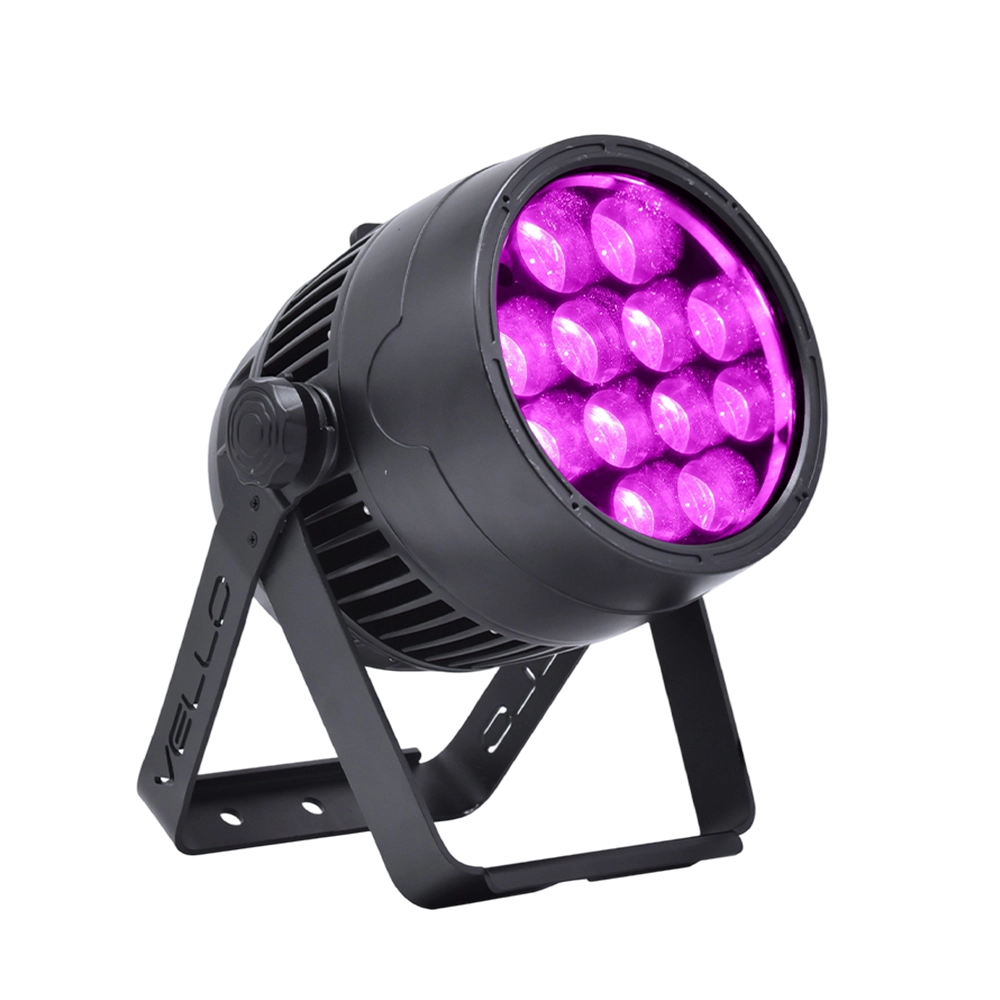
Stage LED Par Light LED ZOOMPAR 40
The Vello Zoom Par 40 IP is a powerful outdoor LED wash light equipped with 12x high-power 7-in-1 RGBACL LEDs. Designed for durability and rich color rendering, it features a wide motorized zoom (6°–50°), smooth dimming, and adjustable CTO presets (3200K–7500K), with 90+ CRI. With an IP66-rated die-cast aluminum body, it’s ideal for both indoor and outdoor applications, including stage lighting, architecture, live events, and installations.
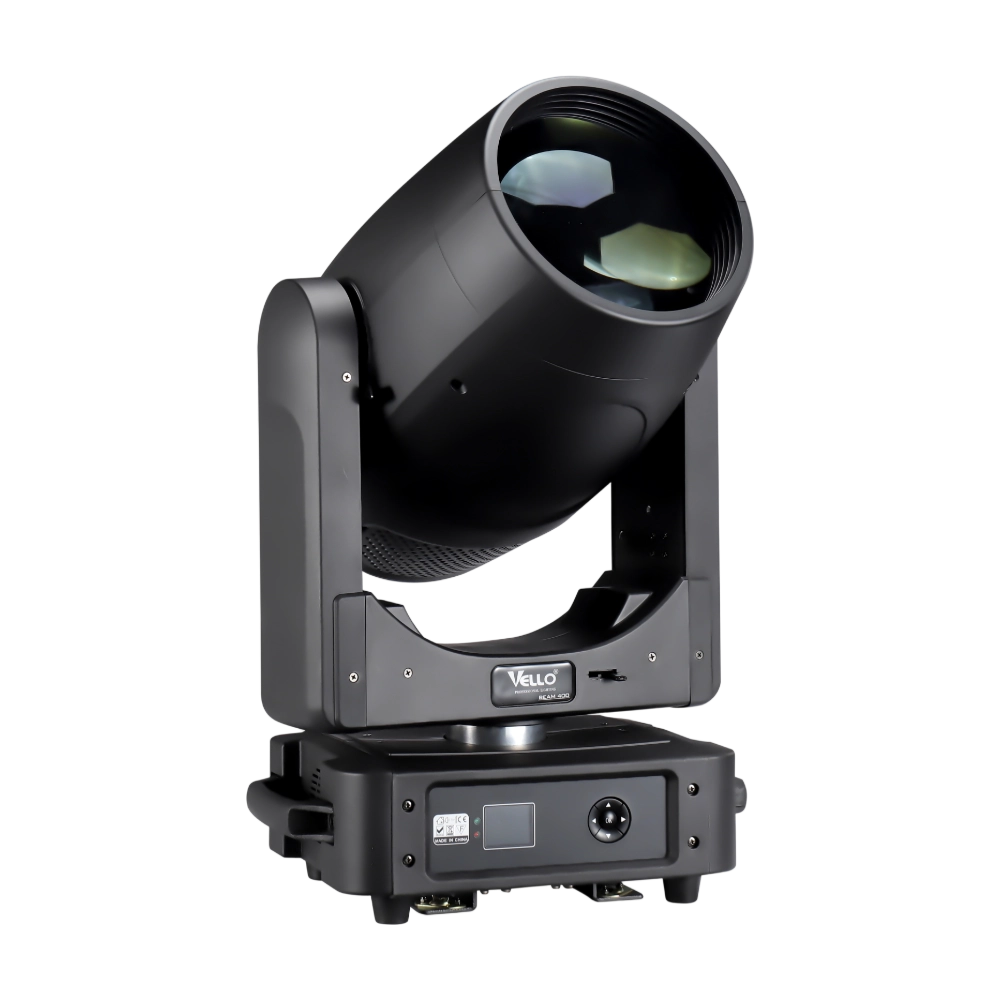
Moving Head Stage Light BEAM 400
BEAM400 is a 500W professional moving head beam powered by an OSRAM SIRIUS 371W discharge bulb, delivering a super-bright 1.8° sharp beam with impressive punch. It features 12 fixed gobos + open, a 14-color wheel, and a 16-facet circular rotating prism with multiple-facet effects, enabling dynamic aerial visuals. With 540° pan / 270° tilt, 16-bit movement resolution, and linear frost and focus, BEAM400 ensures precise and versatile performance. Comparable to traditional 750W moving heads, it combines high efficiency, smooth dimming, and reliable operation—ideal for concerts, tours, and large-scale stage productions.
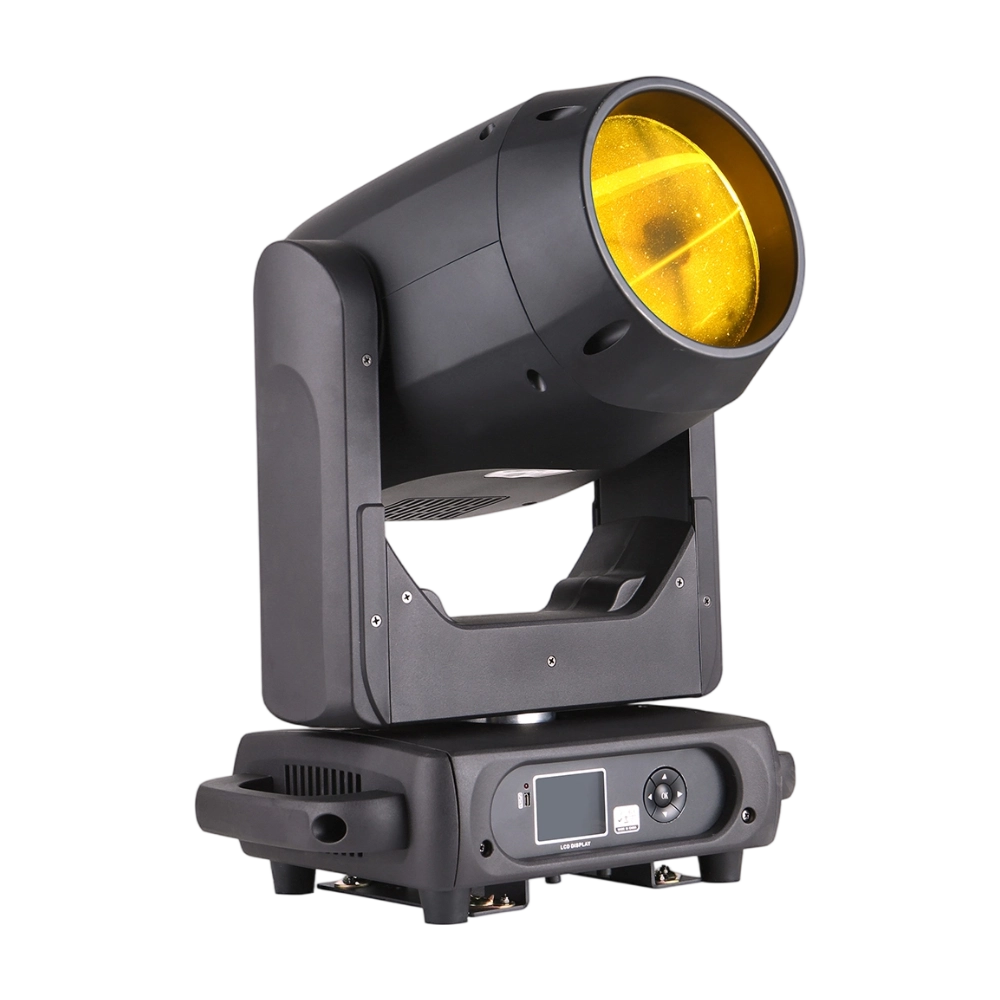
Moving Head Stage Light BEAM 360
BEAM360 is a 400W high-power moving head beam equipped with an OSRAM SIRIUS 311W discharge lamp, delivering a sharp 1.8° beam with super brightness. It features 14 colors + open, 12 fixed metal gobos + open, and dual prisms (8-facet circular + 8+16 multi-facet combination) for dynamic aerial effects. With 540° pan / 270° tilt, 16-bit movement, and linear frost and focus, BEAM360 ensures precision and versatility. Compact yet powerful, it rivals traditional 575W moving heads, making it ideal for concerts, clubs, and large-scale stage productions.
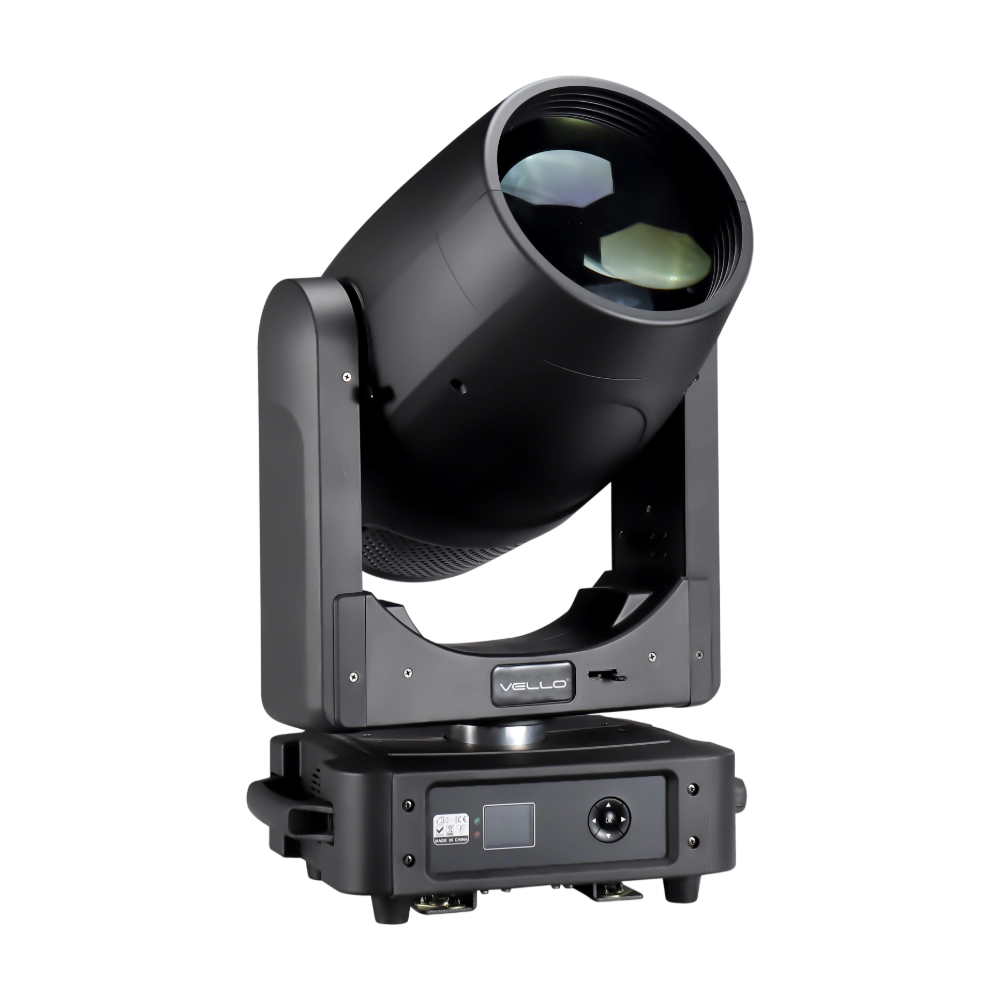
Moving Head Light BEAM 450
The BSW450 is a high-performance moving head fixture equipped with an original Osram 420W bulb, delivering exceptional brightness, precision, and versatility. Designed for professional stage applications, it seamlessly combines beam, spot, and wash functions in one compact unit, making it a powerful all-in-one lighting solution.
Over 20 Years of Innovation in Stage & Studio Lighting
© 2026 VELLO. All Rights Reserved. 粤ICP备20023734号
Join our socials
VELLO
Whatsapp: +8613902276704
Vello Lighting
VelloLights