





How to Choose the Best LED Moving Head Light for Your Venue
- Understand Your Venue's Lighting Needs
- Assess Venue Size and Sightlines
- Define Programming and Visual Goals
- Budget, Operation & Maintenance Constraints
- Key Specifications to Compare for LED Moving Head Lights
- Light Engine: Power, Lumens and Lumen Maintenance
- Optics: Beam Angle, Zoom Range and Gobo Options
- Color Quality: CRI, CCT, and Color Mix
- Installation, Control and Operational Considerations
- Control Protocols and Integration
- Power, Heat and Duty Cycle
- Mounting, Rigging and IP Rating
- Comparing Fixture Types: Spot, Wash and Beam
- Vendor Selection, Test Procedures and Warranties
- What to Test Before Buying or Renting
- Warranty, Spare Parts and Service Network
- Cost of Ownership: Energy, Maintenance and Resale
- Vello Light: Capabilities, Differentiation and Product Focus
- Company Overview and Strengths
- Product Range and Technical Focus
- Why Consider Vello for Your Venue?
- Practical Buying Checklist
- Pre-Purchase Questions
- During Purchase
- Post-Purchase / Deployment
- FAQ — Frequently Asked Questions
- 1. What is the difference between LED moving head spot, wash, and beam fixtures?
- 2. How important is LM-80/TM-21 data when choosing LED moving heads?
- 3. Do I need IP-rated moving heads for semi-outdoor stages?
- 4. What control protocols should I require?
- 5. How do I decide between higher output or more fixtures?
- 6. What documentation should I request from the manufacturer?
- References & Standards
Choosing the right led moving head light can transform a venue’s atmosphere, improve audience experience, and reduce operating costs. This guide helps venue managers, lighting designers, rental companies, and technical buyers evaluate fixtures objectively — from beam characteristics, lumen output, and optics to control protocols, IP rating, and long-term serviceability. Practical comparisons, standards-based references (LM-80/TM-21 for LED lifetime, DMX512 for control), and vendor selection criteria are provided to help you make a verifiable, value-driven decision.
Understand Your Venue's Lighting Needs
Assess Venue Size and Sightlines
Start by mapping the physical space: stage dimensions, ceiling height, audience seating layout, and any obstructive architecture. A narrow-beam moving head (beam fixture) works well in arenas or outdoor stages where long throw is required; a wider-beam wash moving head suits theaters and houses of worship with low ceilings. Consider sightlines — fixtures with excessive glare or improper aiming can distract audiences and impair camera capture.
Define Programming and Visual Goals
List the types of events you host: live music, corporate presentations, theater, broadcast, or DJ nights. Spot/beam fixtures with adjustable gobo and framing shutters are essential for theatrical and high-end concert looks. For video capture and broadcast, prioritize lights with stable color temperature, high CRI, and low strobing artifacts. Event programming complexity (pixel mapping, fast movement, elaborate effects) will affect how many DMX channels and features you require.
Budget, Operation & Maintenance Constraints
Balance capital expense with operating costs. LEDs typically consume less power and require less lamp replacement than discharge fixtures, but initial fixture costs vary widely depending on optics, engine power, and feature sets. Factor in maintenance access, expected duty cycles, and whether you need rental-robust housings. Also account for rigging points, power distribution, and local electrical capacity.
Key Specifications to Compare for LED Moving Head Lights
Light Engine: Power, Lumens and Lumen Maintenance
Compare LED wattage and reported lumen output, but use lumen values alongside beam angle to understand useful intensity (lux at distance). For lifetime expectations, request LM-80 test reports and TM-21 projections for lumen maintenance — these are industry-recognized methods for predicting LED depreciation. The U.S. Department of Energy explains LM-80/TM-21 practices and why they matter for longevity and warranty verification (DOE LM-80 page).
Optics: Beam Angle, Zoom Range and Gobo Options
Beam angle determines spread: narrow (1–6°) for beams, medium (6–20°) for spots, and wide (>20°) for washes. Fixtures with a zoom feature allow flexibility between spot and wash modes. Consider gobo wheels (static/rotating), prisms, and framing shutters for creative shaping. If high-resolution aerial gobos or projection is required, verify lens quality and focal sharpness.
Color Quality: CRI, CCT, and Color Mix
For accurate skin tones and natural colors (critical in theater and broadcast), seek fixtures with high Color Rendering Index (CRI) or TM-30 metrics. Many performance fixtures offer RGBW or CMY mixing and selectable correlated color temperatures (CCT). For consistent multi-fixture rigs, choose fixtures that can reproduce a matched white point—request measured spectral data where possible.
Installation, Control and Operational Considerations
Control Protocols and Integration
DMX512 remains the standard control protocol for moving heads; for networked control and larger installations, consider Art-Net/sACN support. Technical references on DMX512 describe address and channel arrangements necessary for fixtures with many attributes (DMX512 - Wikipedia). If you plan pixel-mapping or media-server integration, verify compatibility with your console and whether the fixture supports RDM (remote device management) for remote addressing and status monitoring.
Power, Heat and Duty Cycle
Review power draw (W), inrush current, and cooling methods (forced air vs. passive). High-output LED engines may require significant airflow; consider noise levels from fans if used in drama theatres or studio environments. Verify duty cycle ratings and recommended continuous operation limits from the manufacturer. For outdoor venues, check power protection features and whether fixtures support PowerCON or similar rugged connectors.
Mounting, Rigging and IP Rating
Assess rigging hardware compatibility — clamps, omega brackets, and safety cables. For outdoor or semi-outdoor venues, IP ratings (e.g., IP65) indicate protection from dust and water; indoor-only fixtures may be IP20. Standards for enclosure protection (IP) are defined by IEC; consult IEC 60529 descriptions for correct interpretation (IP Code - Wikipedia).
Comparing Fixture Types: Spot, Wash and Beam
| Type | Main Uses | Typical Beam Angle | Key Features |
|---|---|---|---|
| Spot (Profile) | Theatre, precise gobo projection, front/key lighting | 6–20° | Framing shutters, gobos, crisp focus, zoom |
| Wash | Stage wash, color blending, house lights | >20° (often 20–40°) | Wide field, soft edges, often RGB/CMY mixing |
| Beam | Concert effects, aerial beams, long-throw spots | 1–6° | Very narrow, high intensity, haze-friendly |
Source and further reading on fixture roles in stage lighting: Stage lighting - Wikipedia.
Vendor Selection, Test Procedures and Warranties
What to Test Before Buying or Renting
Perform a hands-on demo or request sample fixtures for in-situ testing. Key test items: color consistency across units, beam edge quality, gobo projection clarity, pan/tilt speed and accuracy, strobe performance, and thermal behavior under full load. If buying at scale, insist on LM-80 data, a parts list for key consumables (fans, LEDs), and typical MTBF or service intervals.
Warranty, Spare Parts and Service Network
Evaluate warranty coverage length and what it includes (LED engine vs. electronics vs. mechanical parts). Check availability of spare parts locally or through your supplier; long lead times on parts can turn small failures into extended downtime. For rental companies, supplier repair turnaround and depot support are critical operational factors.
Cost of Ownership: Energy, Maintenance and Resale
Estimate total cost of ownership, not just purchase price. Use measured power consumption, estimated annual operating hours, and expected lumen maintenance to calculate replacement cycles and energy bills. For resale value, fixtures from established brands with global support tend to hold value better in the rental market.
Vello Light: Capabilities, Differentiation and Product Focus
Company Overview and Strengths
Vello Light Co., Ltd., established in 2003, is a comprehensive technology enterprise integrating R&D, manufacturing, and sales. Over the years, the company has adhered to quality-first and sincere service principles. With strong domestic and international customer support, Vello has grown into a capable team in stage lighting. In recent years, Vello has expanded its professional talent pool to offer systematic services including R&D, manufacturing, marketing, engineering installation, and after-sales maintenance.
Product Range and Technical Focus
VELLO (registered brand) specializes in moving head stage lights, studio lights, LED effect lights, LED bar lights, LED PAR lights, and outdoor stage lighting. Vello emphasizes professional technology, unique styling, high-quality materials, and durable construction. Their product line includes fixtures suitable for theatres, live concerts, broadcast studios, and outdoor events — covering spot, wash, and beam moving head variants.
Why Consider Vello for Your Venue?
Key competitive advantages include an integrated R&D and manufacturing capability that allows customization and iterative improvements, proven export experience with strong overseas reputation, and a focus on providing end-to-end solutions from product design to installation and maintenance. Vello positions itself toward becoming a world-leading stage lighting manufacturer. For more information, visit vellolight.com or contact info@vellolight.com.
Practical Buying Checklist
Pre-Purchase Questions
- What is the primary use case (theatre, concert, corporate, broadcast)?
- Do you need outdoor/IP-rated fixtures?
- Will fixtures be integrated into an existing DMX or networked control system?
- What is the required throw distance and beam spread?
- Are LM-80 reports and TM-21 projections available for the LED engines?
During Purchase
- Request a live demo or loan units for in-venue testing.
- Obtain parts lists, local service/repair contacts, and warranty terms in writing.
- Confirm compatibility with rigging, power infrastructure, and control consoles.
Post-Purchase / Deployment
- Schedule firmware updates and configuration before first use.
- Document DMX addressing and backup configuration files for quick recovery.
- Set preventive maintenance intervals for fans, bearings, and connectors.
FAQ — Frequently Asked Questions
1. What is the difference between LED moving head spot, wash, and beam fixtures?
Spot fixtures focus on crisp gobos, framing and adjustable zoom for precise shaping; wash fixtures prioritize wide, even color coverage for stage illumination; beam fixtures create narrow, intense shafts of light for aerial effects. Choose based on desired visual impact and throw distance.
2. How important is LM-80/TM-21 data when choosing LED moving heads?
Very important. LM-80 documents LED lumen maintenance measurement; TM-21 projects long-term lumen depreciation. Asking for these reports helps estimate how long the fixture will maintain useful output and verify manufacturer claims. See DOE guidance on LM-80 (energy.gov).
3. Do I need IP-rated moving heads for semi-outdoor stages?
Yes. For semi-outdoor or outdoor use, choose fixtures with appropriate IP ratings (e.g., IP65 for dust and water jets). Indoor-only fixtures (typically IP20) are not suited for rain or dusty outdoor environments. Reference the IP Code definitions (IP Code - Wikipedia).
4. What control protocols should I require?
DMX512 is the standard. For larger, networked installations, ensure the fixture supports Art-Net or sACN and offers RDM for remote device management. For broadcast or complex pixel mapping, confirm protocol compatibility with your console or media server.
5. How do I decide between higher output or more fixtures?
Higher-output fixtures reduce the number of units but increase point costs, power, and heat. More fixtures give redundancy and flexible coverage. Evaluate throw distance, beam angle, and control complexity to find the best mix; run a mock lighting plot and lux calculations for accurate decisions.
6. What documentation should I request from the manufacturer?
LM-80/TM-21 data, photometric files (IES files) for lux calculations, electrical specifications (power, inrush current), control mode charts, mounting and weight data, and recommended maintenance schedules. Photometric IES files are especially useful for pre-visualization and rig planning.
References & Standards
- Stage lighting overview: Stage lighting - Wikipedia.
- DMX512 control protocol: DMX512 - Wikipedia.
- IP Code (ingress protection): IP Code - Wikipedia.
- LM-80 / TM-21 LED lumen maintenance guidance: DOE - LM-80.
Choosing the right led moving head light requires balancing creative intent, venue constraints, operational budgets, and long-term serviceability. Use the checklist and comparison guidance above to shortlist fixtures, perform hands-on tests, and verify manufacturer documentation before committing.
If you want tailored recommendations for your venue, product demos, or pricing, contact Vello Light Co., Ltd. — visit vellolight.com or email info@vellolight.com to discuss moving head stage lights, studio lights, led effect light, Led Bar Lights, Led Par Light, and outdoor stage lighting. Our team can help specify fixtures, provide photometric calculations, and support installation and maintenance planning.
Top 10 LED studio lights Manufacturers and Supplier Brands in 2026
Programming Chases and Cues for Live Shows
Programming Tips for LED Stage Light Controllers
Stage Light Buying Guide for Small Venues and Theaters
Major categories
Do your products support customization?
Yes. We offer OEM and ODM services tailored to project needs, including design, optics, and control compatibility.
What is the usual lead time?
Standard models are typically shipped within 7–15 working days after payment. Customized items may vary.
Do you ship internationally?
Yes. We offer sea, air, and express delivery to many countries and regions worldwide.
Do you offer samples?
Samples are available for certain models. Please confirm with our sales team for details.
What is the warranty period for your products?
Most products come with a standard 1–2 year warranty. Please refer to product details or contract terms for specifics.
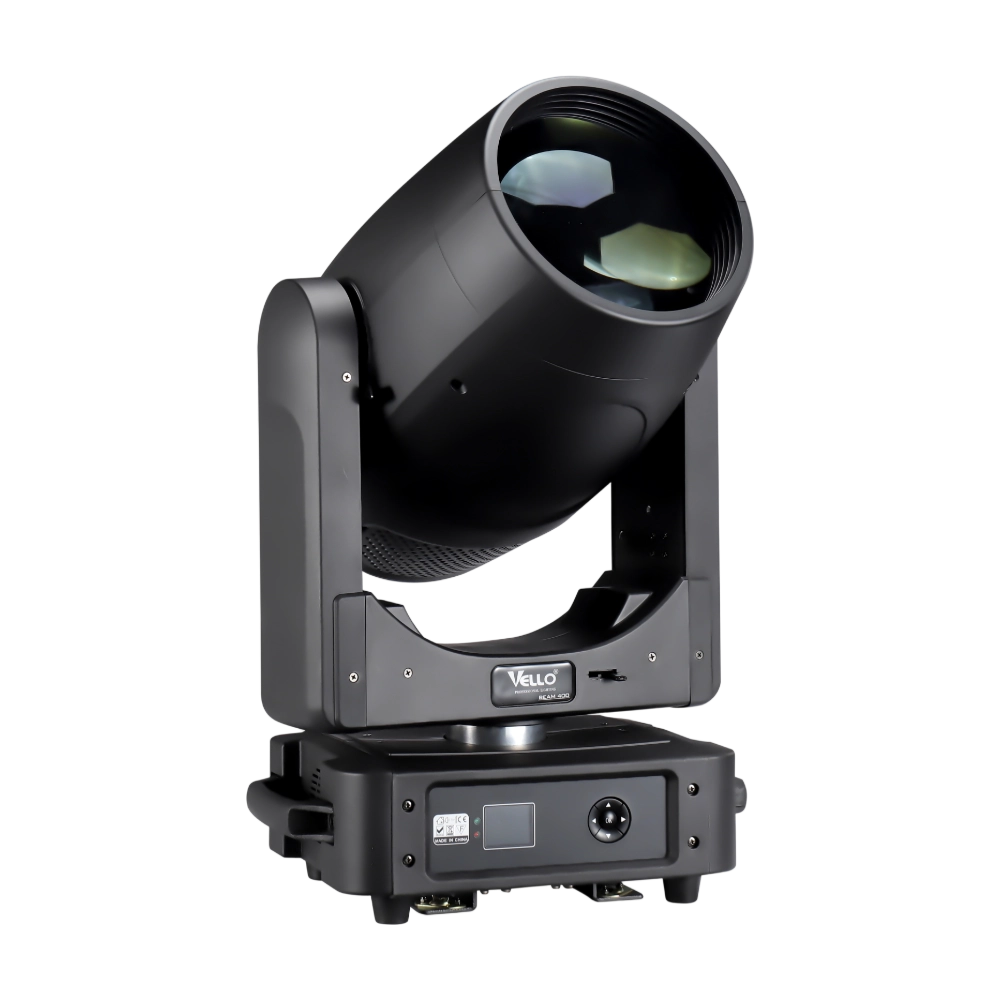
Moving Head Stage Light BEAM 400
BEAM400 is a 500W professional moving head beam powered by an OSRAM SIRIUS 371W discharge bulb, delivering a super-bright 1.8° sharp beam with impressive punch. It features 12 fixed gobos + open, a 14-color wheel, and a 16-facet circular rotating prism with multiple-facet effects, enabling dynamic aerial visuals. With 540° pan / 270° tilt, 16-bit movement resolution, and linear frost and focus, BEAM400 ensures precise and versatile performance. Comparable to traditional 750W moving heads, it combines high efficiency, smooth dimming, and reliable operation—ideal for concerts, tours, and large-scale stage productions.
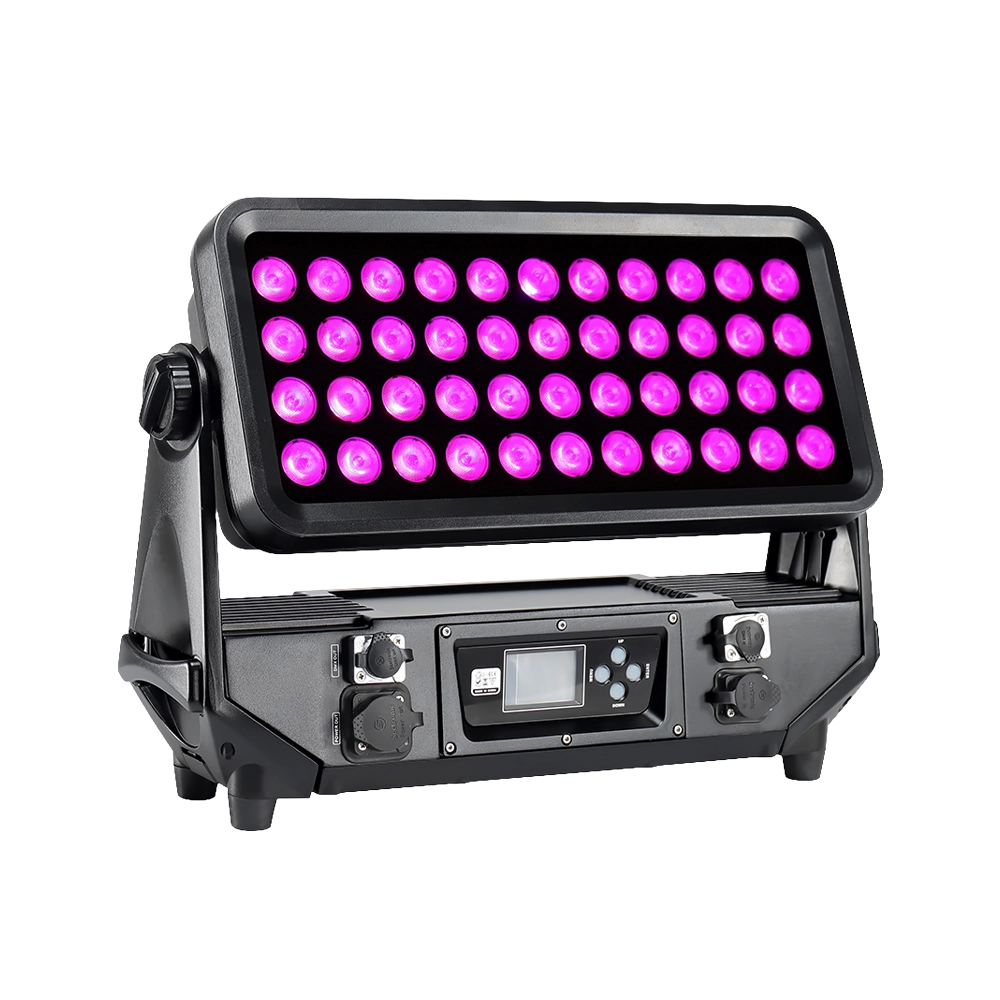
LED Light LED TOP P4
The Vello LED TOP P4 is a robust, high-output LED flood wash light designed for outdoor stages, architecture, and large-scale event lighting. Powered by 44x 15W RGBW LEDs from Cree, it delivers consistent brightness, smooth color mixing, and selectable beam angles of 20° or 40°. Built with a rugged IP65-rated die-cast aluminum housing, it withstands harsh weather conditions while offering smooth 0–100% dimming and flexible DMX control.
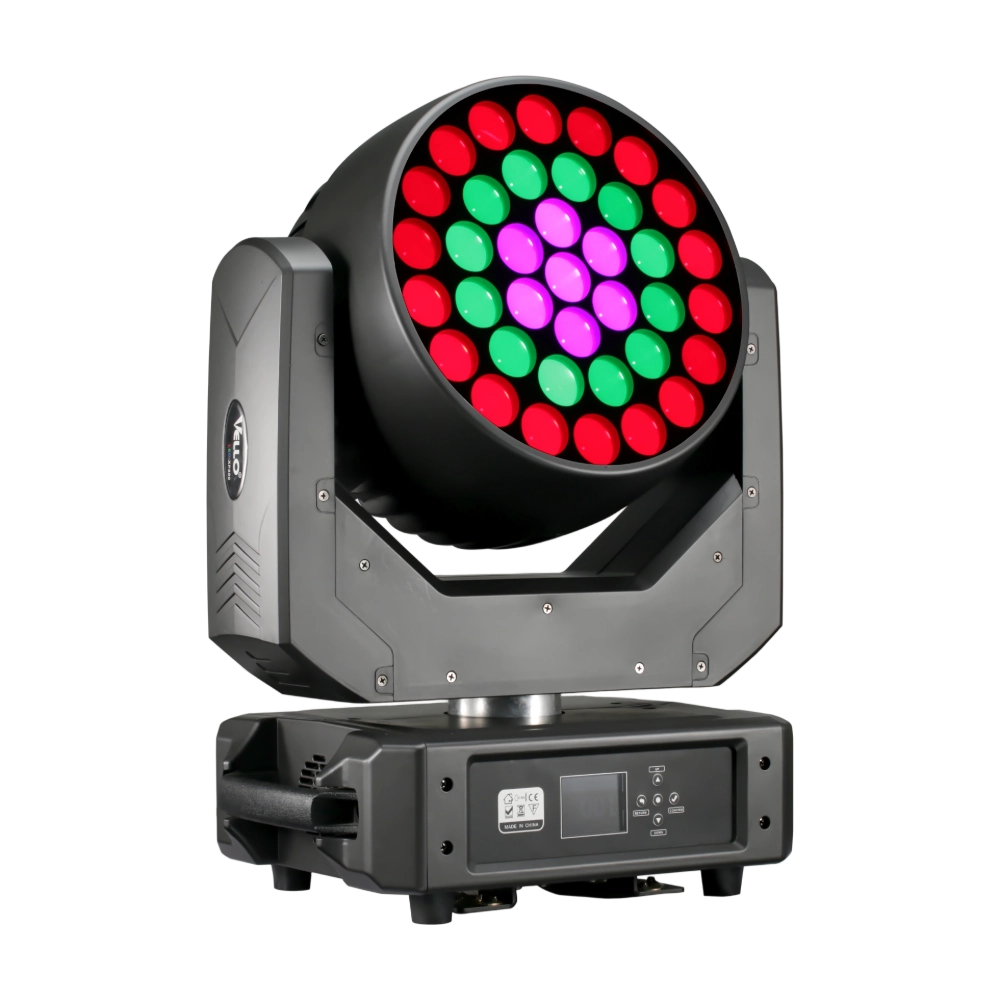
LED Moving Head Light XP800 (4in1)
The LED XP800 is a 600W moving head wash fixture, equipped with 37 × 20W Osram RGBW LEDs for brilliant color mixing and high output. With a wide 6°–50° electronic zoom, it easily transitions from sharp beams to smooth washes. The fixture supports 3-ring pixel control and an adjustable CTO range (2800K–8500K) for versatile applications. Featuring 540° pan / 310° tilt, high-speed 3-phase motors, and multiple DMX modes (16/28 channels), XP800 delivers powerful, precise, and dynamic performance. Compact and durable, it is an excellent choice for stages, theaters, and large-scale events requiring high brightness and flexibility.
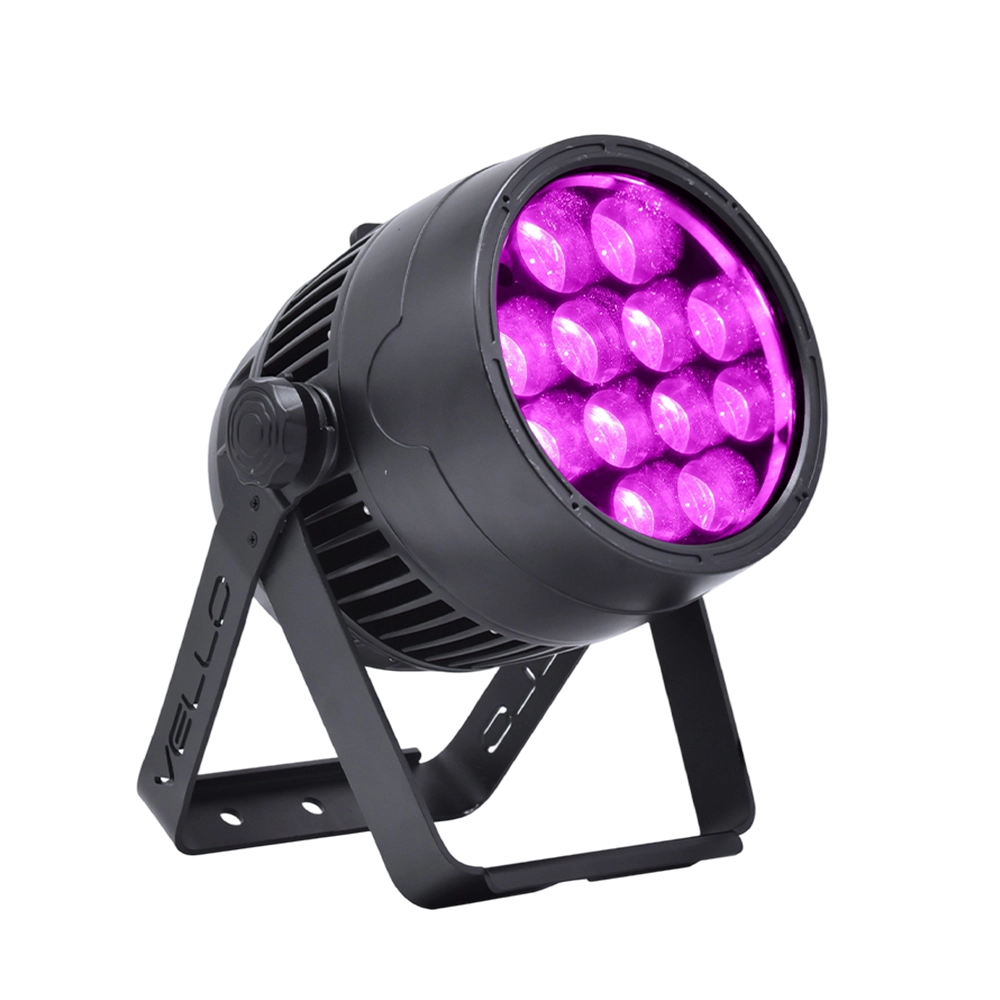
Stage LED Par Light LED ZOOMPAR 40
The Vello Zoom Par 40 IP is a powerful outdoor LED wash light equipped with 12x high-power 7-in-1 RGBACL LEDs. Designed for durability and rich color rendering, it features a wide motorized zoom (6°–50°), smooth dimming, and adjustable CTO presets (3200K–7500K), with 90+ CRI. With an IP66-rated die-cast aluminum body, it’s ideal for both indoor and outdoor applications, including stage lighting, architecture, live events, and installations.
Over 20 Years of Innovation in Stage & Studio Lighting
© 2026 VELLO. All Rights Reserved. 粤ICP备20023734号
Join our socials
VELLO
Whatsapp: +8613902276704
Vello Lighting
VelloLights