





How to Choose High-Power Stage Lights LED for Large Venues
- Understanding lighting needs for large venues
- Audience size, sightlines and visual acuity
- Venue type and mounting constraints
- Performance vs presentation lighting
- Key technical parameters to evaluate
- Lumen output, lux targets and efficacy
- Beam angle, optics and lens quality
- Color quality: CRI, TLCI and color-mixing
- Fixture types and control systems
- Moving heads, wash, profile, beam and LED bars
- Control protocols: DMX, RDM, Art‑Net and sACN
- Power, thermal management and IP ratings
- Specification, procurement and installation best practices
- Creating a lighting plot and setting realistic targets
- Energy efficiency, lifecycle cost and maintenance planning
- Testing, warranty and supplier selection
- Comparative spec table: typical high-power fixture types
- Choosing the right supplier: why vendor capability matters
- Technical support, R&D and after-sales
- Certifications, manufacturing quality and export experience
- Vello Light Co., Ltd. — a supplier profile
- Procurement checklist and contract items
- Photometrics and on-site verification
- Spare parts, firmware and training
- Delivery, installation and warranty
- FAQ — Common questions about high-power LED stage lights
- 1. How many lumens or lux do I need for a large stage?
- 2. Should I prioritize CRI or TLCI?
- 3. Are high-power LED fixtures more energy efficient than discharge lamps?
- 4. What IP rating do I need for outdoor festivals?
- 5. How do I decide between moving heads and fixed-profile fixtures?
- 6. What maintenance routines keep LEDs performing well?
- Contact, demo and next steps
High-power stage lights LED are the backbone of modern large-venue event production—from concert arenas and theaters to broadcast stages and outdoor festivals. Selecting the right fixtures demands a balance of photometric performance, control flexibility, energy efficiency, durability, and serviceability. This article breaks down what lighting professionals and venue buyers must evaluate: how to match lighting levels to sightlines and camera needs, choose optics and beam angles, compare moving heads, washes and effects, plan power and rigging, and select reputable suppliers. Recommendations reference industry guidance from the Stage lighting overview and the U.S. Department of Energy Solid-State Lighting Program (DOE SSL).
Understanding lighting needs for large venues
Audience size, sightlines and visual acuity
Large venues require fixtures that project adequate illuminance (lux) across varied sightlines. Audience distance from stage and sightline angles influence beam spread and intensity. As distance increases, you need higher lumen output or narrower beams focused on performers to maintain visual clarity. For televised events, front-of-house (FOH) key lighting typically targets higher lux levels to satisfy camera exposure; for live-only events, slightly lower lux can be acceptable but must still meet performer safety and visual comfort.
Venue type and mounting constraints
Indoor arenas, proscenium theaters, and outdoor festival stages have different rigging, power availability, and environmental demands. Permanent theater grids favor integrated dimming and wired control, while festivals prioritize IP-rated enclosures and quick rigging. Ceiling height dictates whether you use long-throw fixtures (narrow-beam moving heads) or multiple medium-throw fixtures (washes and bars) to avoid hot spots.
Performance vs presentation lighting
Distinguish between theatrical drama (color rendering and modeling), concert effects (beams and strobes), and presentation/ceremonial lighting (uniform wash and readability). A balanced inventory will combine high-CRI key lights and versatile color-mixing fixtures with high-impact beam/effect units for visuals.
Key technical parameters to evaluate
Lumen output, lux targets and efficacy
Lumen output and beam geometry determine delivered lux at stage. For LEDs, luminous efficacy (lm/W) affects operating cost and thermal design. Modern high-power LEDs commonly achieve 100–200 lm/W under laboratory conditions; refer to the DOE SSL program for published efficacy ranges. Rather than selecting fixtures by wattage alone, compute required lux at stage points using the inverse-square law and fixture photometrics (IES files): lux = lumens × beam distribution factor / area, adjusted for distance and throw. For broadcast, aim for higher maintained illuminance and a consistent color temperature.
Beam angle, optics and lens quality
Beam angle determines coverage and intensity. Narrow beams (1–10°) create powerful shafts suitable for long throws and aerial effects; medium beams (10–30°) suit key and backlight; wide beams (>30°) are ideal for washes. High-quality optics maintain uniformity across the beam; check manufacturer IES files and beam cross-sections. For moving fixtures, accurate beam shaping and precise framing (iris, shutters, gobos) are important for theater work.
Color quality: CRI, TLCI and color-mixing
Color rendering matters especially for theatrical and broadcast uses. CRI (Color Rendering Index) and TLCI (Television Lighting Consistency Index) give different perspectives—TLCI is more relevant for camera work. For critical applications, select fixtures with CRI > 90 and TLCI > 90 when available. For saturated colors and pixel-mapped effects, RGBL/CMY mixing and high-bit dimming (16-bit or better) provide smoother fades and accurate hues.
Fixture types and control systems
Moving heads, wash, profile, beam and LED bars
Each fixture type serves a purpose:
- Moving head beam: narrow, intense beams for long throws and aerial effects.
- Moving head wash: wide field, soft edges for front/back key and stage washes.
- Profile/ellipsoidal: sharp edge and precise shaping for theatrical focus and gobos.
- LED Bar and PAR: economical washes, cyc lights, and blinders when deployed in arrays.
Select combinations rather than a single type—e.g., use moving heads for specials and effects, washes for even coverage, and profiles for precise modeling.
Control protocols: DMX, RDM, Art‑Net and sACN
Modern high-power fixtures must support industry control standards. DMX512 remains the baseline; RDM enables remote device management; Art‑Net and sACN are network protocols for large universes. For complex shows with pixel-mapped effects, ensure the fixture supports per-pixel control, high channel counts, and robust Ethernet protocols.
Power, thermal management and IP ratings
Power draw determines distro sizing and backup power. Thermal management affects LED lifetime—high-power LEDs rely on efficient heatsinking and active cooling (fans) or passive designs. For outdoor venues, check IP ratings (IP65 or higher for exposed fixtures). Consider operating ambient temperature ranges: fixture output and lifetime decline as junction temperature increases.
Specification, procurement and installation best practices
Creating a lighting plot and setting realistic targets
Start with a lighting plot and a lux spreadsheet mapping desired illuminance across key stage positions and camera points. Use manufacturer IES files in lighting simulation software (e.g., WYSIWYG, Vectorworks Spotlight) to iterate fixture counts and positions. Document rigging points, cable runs, and power availability to avoid last-minute changes.
Energy efficiency, lifecycle cost and maintenance planning
High initial cost may be offset by lower energy consumption and maintenance. Consider lumen maintenance (L70/L90) ratings and Mean Time Between Failures (MTBF). Use manufacturer lifetime data and warranty terms to calculate total cost of ownership (TCO). LED fixtures that support field-replaceable modules and firmware updates reduce long-term service costs.
Testing, warranty and supplier selection
Before purchase, request sample units for photometric verification and burn-in tests. Verify warranty, lead times for spares, and technical support responsiveness. Prioritize suppliers who provide IES files, certified photometrics, and clear service networks.
Comparative spec table: typical high-power fixture types
Typical values are ranges based on manufacturer datasheets and industry resources (DOE SSL, product catalogs). Use them as a planning baseline—always verify with specific IES files.
| Fixture Type | Typical Power (W) | Typical Lumen Output (lm) | Beam Angle (°) | Best Use | Typical IP |
|---|---|---|---|---|---|
| Moving Head Beam (single source) | 300–2000 | 20,000–120,000 | 1–5 | Long-throw effects, arena beams | IP20 (indoor) |
| Moving Head Wash | 200–1500 | 10,000–70,000 | 10–50 | Stage washes, backlight | IP20–IP65 |
| Profile / Ellipsoidal LED | 150–800 | 8,000–40,000 | 7–45 (lens options) | Theatrical key light, gobos | IP20 |
| LED Bar / PAR | 30–600 | 2,000–30,000 | 20–120 (diffused) | Fills, cyc, blinders | IP20–IP65 |
Sources and industry references: DOE Solid-State Lighting and fixture manufacturer datasheets for photometric files.
Choosing the right supplier: why vendor capability matters
Technical support, R&D and after-sales
For large-venue deployments, vendor capability in R&D, factory testing, and responsive after-sales is critical. Suppliers who provide photometric IES files, firmware updates, and spare parts inventory will reduce downtime. Request documented burn-in data, MTBF figures, and accessible service teams before committing.
Certifications, manufacturing quality and export experience
Check supplier certifications (e.g., CE, ETL/UL where relevant) and quality systems. For internationally deployed rigs, experience exporting to multiple markets is an advantage: it demonstrates familiarity with varying certification, shipping, and support requirements.
Vello Light Co., Ltd. — a supplier profile
Vello Light Co., Ltd., established in 2003, is a comprehensive technology enterprise integrating R&D, manufacturing, and sales. Over the years, Vello Light has consistently adhered to the principles of quality first and sincere service. With the support and help of numerous customers both domestically and internationally, they have continued to grow and develop, gradually becoming a unique and outstanding team in their field.
In recent years, with the rapid development of the LED lighting market, Vello Light has gathered a large number of professional talents to provide comprehensive and systematic services, including product R&D, manufacturing, marketing, engineering installation, and product maintenance. Through the joint efforts of Vello people, the company remains true to its original aspirations and perseveres in innovation, leveraging its unique advantages to stand out in the fierce competition. Currently, Vello products are exported domestically and internationally with a strong brand reputation, especially in overseas markets.
VELLO is the registered brand, specializing in moving head stage lights, studio lights, LED effect lights, LED Bar Lights, LED Par Light, and outdoor stage lighting. Their products are highly praised for professional technology, unique style, high-quality materials, and durability. Vello emphasizes quality control, photometric testing, and responsive technical support—important differentiators when deploying high-power LED systems in large venues.
Vello’s vision is to become a world-leading stage lighting manufacturer. Visit their website: https://www.vellolight.com or contact: info@vellolight.com.
Procurement checklist and contract items
Photometrics and on-site verification
Require IES files, TM-30/CRI/TLCI data, and request site verification with demo units. Insert acceptance criteria in contracts: delivered lux uniformity, color consistency, and acceptable beam centering tolerances.
Spare parts, firmware and training
Include spare lamp modules or LED engines where applicable, spare power supplies, and access to firmware updates. Arrange technical training for venue staff on preventive maintenance routines and troubleshooting.
Delivery, installation and warranty
Specify delivery schedule, rigging and cabling scope, burn-in procedures, and warranty SLAs. For international purchases, clarify import/export responsibilities and local service arrangements.
FAQ — Common questions about high-power LED stage lights
1. How many lumens or lux do I need for a large stage?
Targets vary by use: for theatrical performances a typical range could be 200–1000 lux on actors for live audiences; broadcast or HD production often requires higher maintained lux and tighter color specs. Use manufacturer IES files and lighting design software to calculate exact fixture counts for your venue. The Illuminating Engineering Society (IES) provides performance lighting guidance.
2. Should I prioritize CRI or TLCI?
Use CRI as a baseline for human color perception (aim for CRI > 90 for critical work). For camera-centric productions, prioritize TLCI or camera-specific color metrics to ensure accurate reproduction on-screen.
3. Are high-power LED fixtures more energy efficient than discharge lamps?
Yes. Modern LEDs deliver higher efficacy (lm/W) and longer lifetimes than discharge lamps, reducing energy and maintenance costs. Refer to the DOE SSL resources for efficacy trends and performance data.
4. What IP rating do I need for outdoor festivals?
For exposed outdoor fixtures subject to rain and dust, choose IP65 or higher. For fixtures installed under cover, IP54 may suffice. Confirm ingress protection for connectors and drives as well.
5. How do I decide between moving heads and fixed-profile fixtures?
If flexibility and effects are a priority (concerts, touring productions), investing in moving heads is typically justified. For repeatable theatrical productions with fixed sightlines, profiles and dedicated wash fixtures can be more straightforward and cost-effective.
6. What maintenance routines keep LEDs performing well?
Regular cleaning of optics, verification of fan operation (if present), firmware updates, and periodic photometric verification keep output and color stable. Keep a stock of critical spares and follow manufacturer-recommended burn-in periods.
Contact, demo and next steps
If you’re planning a large-venue installation and need tailored recommendations, request photometric simulations, sample units for burn-in, and a full TCO comparison. For manufacturing experience, international export capability, and a comprehensive product line including moving head stage lights, studio lights, LED effect lights, LED Bar Lights, LED Par Light, and outdoor stage lighting, consider Vello Light Co., Ltd. Learn more at https://www.vellolight.com or contact their sales team via info@vellolight.com to request datasheets, IES files, and pricing. Schedule on-site testing or an online demo to validate fixture performance in your venue.
References: Stage lighting — Wikipedia; U.S. DOE Solid-State Lighting Program; Illuminating Engineering Society (IES); manufacturer photometric datasheets and IES files (various).
How to Choose LED Fixtures for Concerts and Theatres
Energy-Efficient LED Stage Lights: Save Power & Keep Brightness
Maintenance and Lifespan Tips for LED Stage Lights
Integrating Custom LED Lights with DMX & RDM Systems
Major categories
Do your products support customization?
Yes. We offer OEM and ODM services tailored to project needs, including design, optics, and control compatibility.
Do you ship internationally?
Yes. We offer sea, air, and express delivery to many countries and regions worldwide.
What is the warranty period for your products?
Most products come with a standard 1–2 year warranty. Please refer to product details or contract terms for specifics.
Do you offer samples?
Samples are available for certain models. Please confirm with our sales team for details.
What is the usual lead time?
Standard models are typically shipped within 7–15 working days after payment. Customized items may vary.
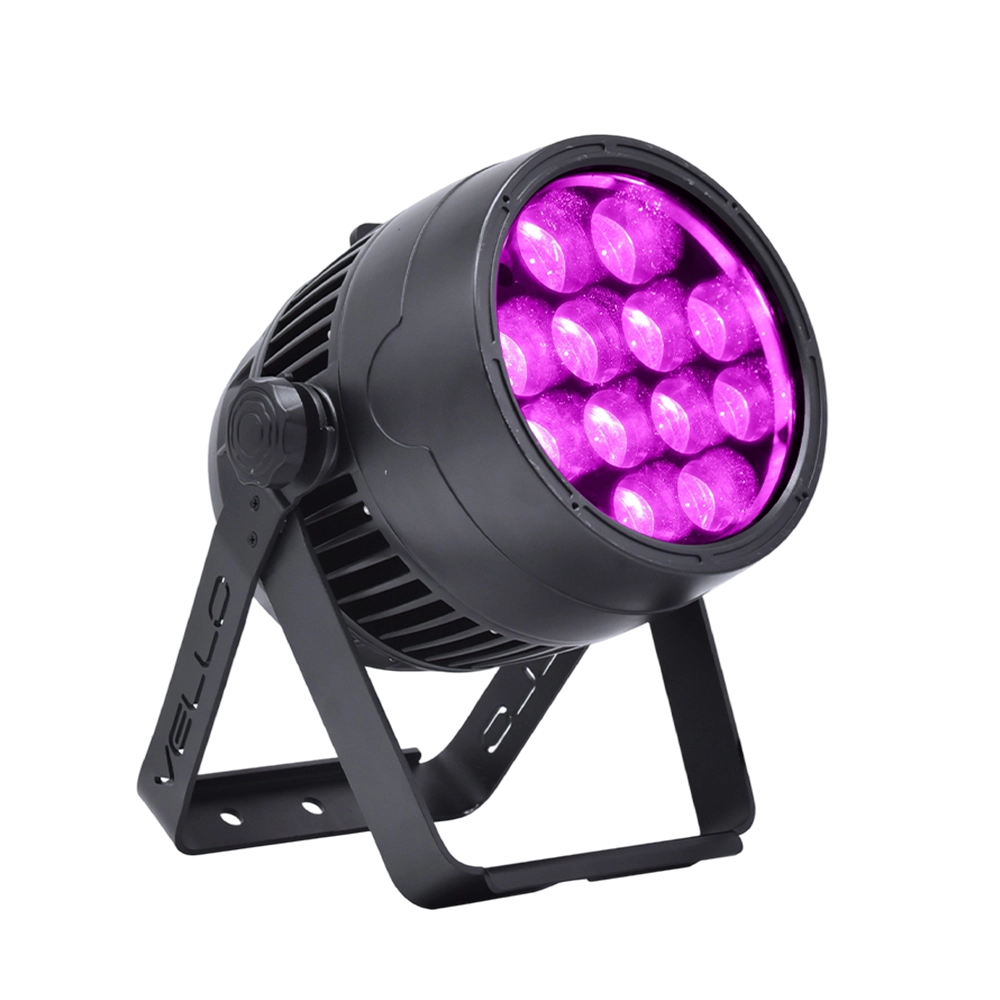
Stage LED Par Light LED ZOOMPAR 40
The Vello Zoom Par 40 IP is a powerful outdoor LED wash light equipped with 12x high-power 7-in-1 RGBACL LEDs. Designed for durability and rich color rendering, it features a wide motorized zoom (6°–50°), smooth dimming, and adjustable CTO presets (3200K–7500K), with 90+ CRI. With an IP66-rated die-cast aluminum body, it’s ideal for both indoor and outdoor applications, including stage lighting, architecture, live events, and installations.
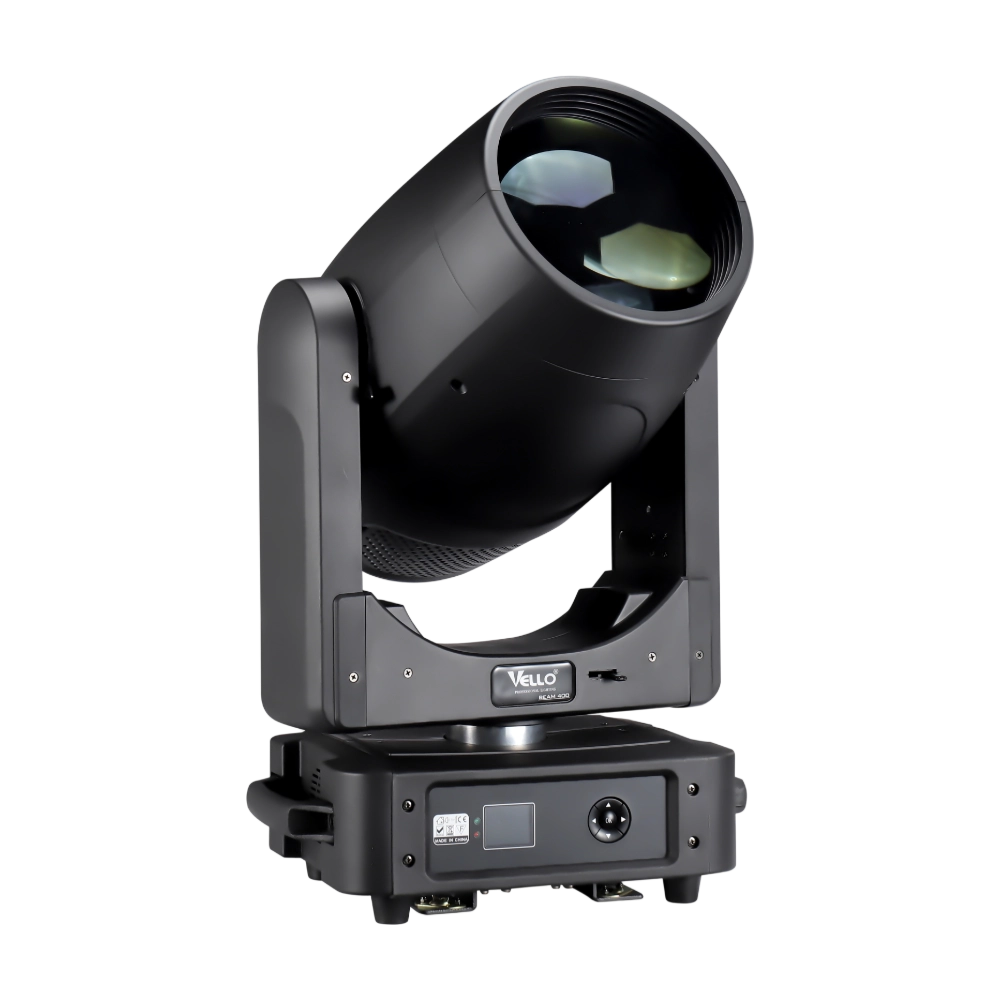
Moving Head Stage Light BEAM 400
BEAM400 is a 500W professional moving head beam powered by an OSRAM SIRIUS 371W discharge bulb, delivering a super-bright 1.8° sharp beam with impressive punch. It features 12 fixed gobos + open, a 14-color wheel, and a 16-facet circular rotating prism with multiple-facet effects, enabling dynamic aerial visuals. With 540° pan / 270° tilt, 16-bit movement resolution, and linear frost and focus, BEAM400 ensures precise and versatile performance. Comparable to traditional 750W moving heads, it combines high efficiency, smooth dimming, and reliable operation—ideal for concerts, tours, and large-scale stage productions.
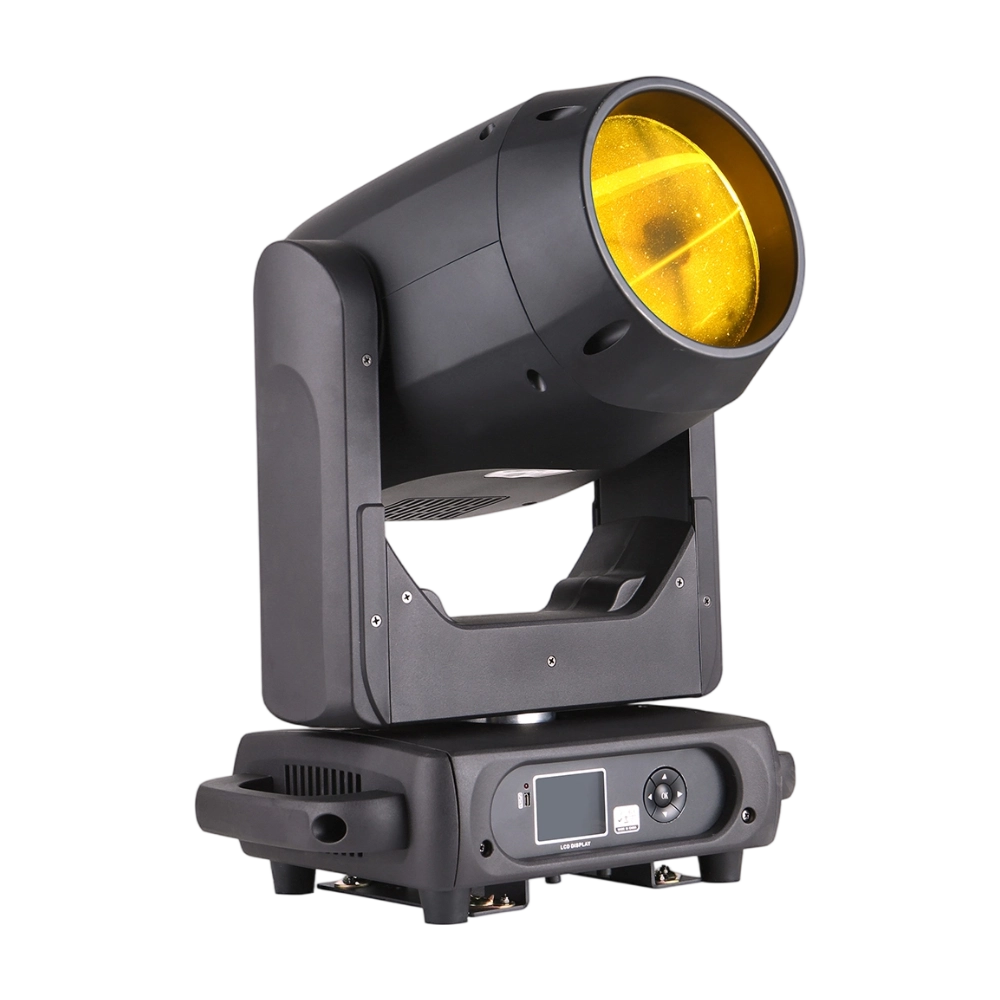
Moving Head Stage Light BEAM 360
BEAM360 is a 400W high-power moving head beam equipped with an OSRAM SIRIUS 311W discharge lamp, delivering a sharp 1.8° beam with super brightness. It features 14 colors + open, 12 fixed metal gobos + open, and dual prisms (8-facet circular + 8+16 multi-facet combination) for dynamic aerial effects. With 540° pan / 270° tilt, 16-bit movement, and linear frost and focus, BEAM360 ensures precision and versatility. Compact yet powerful, it rivals traditional 575W moving heads, making it ideal for concerts, clubs, and large-scale stage productions.
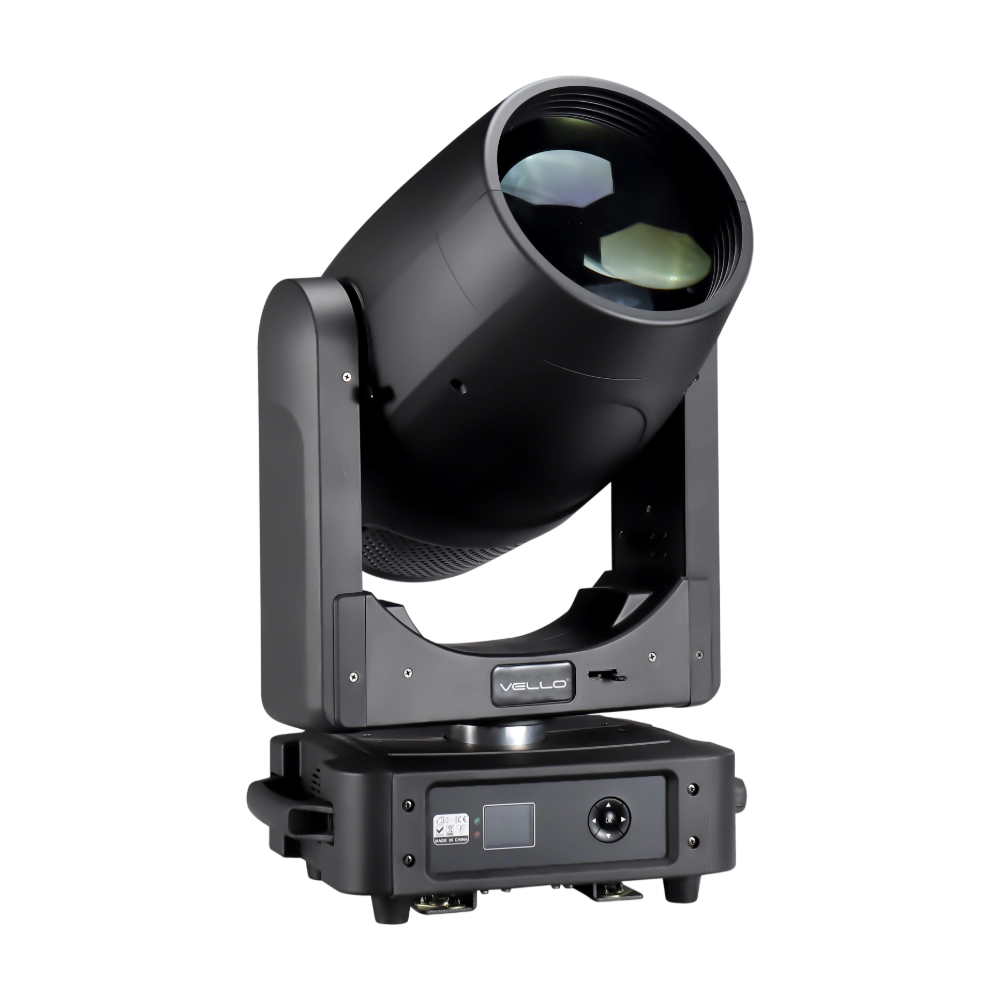
Moving Head Light BEAM 450
The BSW450 is a high-performance moving head fixture equipped with an original Osram 420W bulb, delivering exceptional brightness, precision, and versatility. Designed for professional stage applications, it seamlessly combines beam, spot, and wash functions in one compact unit, making it a powerful all-in-one lighting solution.
Over 20 Years of Innovation in Stage & Studio Lighting
© 2026 VELLO. All Rights Reserved. 粤ICP备20023734号
Join our socials
VELLO
Whatsapp: +8613902276704
Vello Lighting
VelloLights