





High-Power LED Stage Lights for Large Arenas
- Why arena lighting needs high-power LED fixtures
- Performance demands in large venues
- Why LEDs are the practical choice today
- Key metrics I always evaluate
- Fixture types, roles and selection criteria
- Fixture categories and arena roles
- Comparing fixture types — what to prioritize
- Practical selection checklist I use on projects
- Photometrics, rigging and operational reliability
- Calculating throw and lux: a practical approach
- Heat management and lumen maintenance
- Rigging, safety and standards
- Control, maintenance and lifecycle costs
- Control systems — modern expectations
- Maintenance planning and total cost of ownership
- Case comparison: discharge vs LED in arenas
- Choosing vendors and validating claims
- What I require from manufacturers
- Why I recommend Vello Light for arena projects
- How to validate a supplier on a project
- Deployment tips and operational best practices
- Pre-rig testing and site integration
- Tours and fixed installs — differences to consider
- Energy and sustainability considerations
- FAQ
- 1. How many high-power LED fixtures do I need for a typical arena stage?
- 2. Are LED stage lights bright enough to replace traditional discharge fixtures in arenas?
- 3. What CRI or color spec should I require for arena fixtures?
- 4. How do I ensure reliable operations during long events or tours?
- 5. What are the most important specs to compare when selecting high-power LED fixtures?
- 6. Can outdoor arenas use the same fixtures as indoor arenas?
- Contact & next steps
I write from years of hands-on experience in lighting design, manufacturing collaboration, and live-event production. In this article I explain how to choose and deploy high-power LED stage lights for large arenas, balancing luminous output, beam control, thermal management, control integration, and operational reliability. I focus on measurable criteria (lumens, lux, beam angle, CRI, IP rating, DMX/RDM compatibility, power draw) and cite authoritative technical references to make recommendations that are verifiable and practical for venue owners, rental houses, and production teams.
Why arena lighting needs high-power LED fixtures
Performance demands in large venues
Large arenas impose unique demands on stage lighting. Distances from fixture to performer commonly exceed 15–30 meters, which makes luminous intensity and beam collimation critical. Broadcast-quality events require consistent color rendering, stable color temperature, and powerful fixtures that maintain output under continuous operation. The inverse-square law governs illuminance falloff with distance, so delivering adequate lux on stage at long throws requires high luminous intensity per fixture (inverse-square law).
Why LEDs are the practical choice today
LED technology now offers high efficacy and controllability compared with legacy discharge lamps. Modern LEDs provide superior energy efficiency (many applications benefit from 100–200 lm/W systems), faster color control without dichroic filters, and longer maintenance intervals. For technical background on LED luminous efficiency, see the LED overview at Wikipedia.
Key metrics I always evaluate
When I specify fixtures for arena projects I prioritize measurable specs: lumen output, beam candela (for throw), beam angle, Color Rendering Index (CRI) or TM-30 scores, correlated color temperature (CCT), power consumption, thermal dissipation capability, IP rating for outdoor elements, and DMX/Art-Net control compatibility. Photometric testing per industry standards such as IES LM-79 is essential for comparing product claims.
Fixture types, roles and selection criteria
Fixture categories and arena roles
Large-arena rigs normally combine several high-power fixture types to meet visual and broadcast needs: moving head spot/spotlights for tight beams and gobos; moving head beam/laser-style fixtures for aerial beams; LED wash lights for broad stage coverage; LED pars and battens for cyc and up-lighting; and followspots for critical performer highlights. Each category has different photometric and control priorities.
Comparing fixture types — what to prioritize
Below I summarize how I prioritize specifications by fixture type for arena use:
| Fixture Type | Typical LED Power | Typical Output (lm) | Primary Use | Key Spec to Check |
|---|---|---|---|---|
| Moving head spot | 300–1500 W | 20,000–70,000 lm | Sharp beams, gobos, profile | Peak candela & beam angle |
| Moving head beam | 200–1200 W | 15,000–60,000 lm | Aerial beams, effects | Lux at 30 m & narrow beam angle |
| LED wash | 150–1000 W | 10,000–40,000 lm | Stage coverage, color mixing | Color mixing quality (CRI/TM-30) |
| LED batten/bar | 50–600 W | 3,000–20,000 lm | Linear effects, cyc lighting | Pixel control capability |
Note: ranges above are typical for modern high-power fixtures and should be verified in datasheets. Photometric testing results per IES LM-79 are the most reliable way to compare claimed lumen outputs.
Practical selection checklist I use on projects
- Confirm lux targets at performer positions using throw-distance calculations and verified candela values.
- Validate color quality (CRI & TM-30) and spectral distribution for broadcast.
- Check thermal specs and fan/heat-sink design for continuous operation; MTBF and lumen maintenance (L70) ratings matter.
- Confirm control: DMX, RDM, Art-Net, sACN compatibility; pixel-mapping needs for effects.
- Confirm IP rating for any outdoor or rig-exposure fixtures (IP65 for exposed outdoor use).
Photometrics, rigging and operational reliability
Calculating throw and lux: a practical approach
I always start with the required lux (illuminance) on stage and calculate how many fixtures are needed given their candela or lumen output. Use the inverse-square law as a base and consult manufacturer candela charts for beam profiles. For example, a fixture with a narrow beam concentrated at 50,000 cd placed 20 m away will produce approximately:
Illuminance (lux) = candela / distance^2 = 50,000 cd / (20 m)^2 = 125 lux.
For higher target lux (e.g., 1000–2000 lux for broadcast-focused close-ups) you either need more fixtures, narrower beams with higher candela, or closer positions.
Heat management and lumen maintenance
LEDs are sensitive to junction temperature. Good thermal design delays lumen depreciation and prolongs lifespan. I require L70 (hours to 70% initial lumen output) data and MTBF values. Where long events or tours are expected, favor fixtures with passive cooling or robust, serviceable active cooling systems. Independent photometric reports are best for confirming lumen maintenance; manufacturers referencing LM-79/LM-80 testing provide credible data.
Rigging, safety and standards
Rigging in arenas must comply with local codes and industry guidance. Best practice includes redundant safety attachments, load calculations by a structural engineer, and adherence to entertainment technology standards (see general guidance at Stage lighting overview). I always verify fixture weight, torque at different pan/tilt angles, and the recommended clamp points before specifying truss configurations.
Control, maintenance and lifecycle costs
Control systems — modern expectations
Today's arena productions expect fine-grained pixel control, Art-Net/sACN network-based routing, and reliable backup paths. When I design control architecture I insist on RDM-capable fixtures for remote addressing and diagnostics, and SNMP or similar telemetry where possible for proactive maintenance.
Maintenance planning and total cost of ownership
LED fixtures reduce lamp replacement costs compared with discharge lamps, but operational costs remain in power, replacement parts (fans, optics), and labor. I use a 5–10 year life-cycle model: initial capital + expected maintenance + energy costs. Typical LED moving-head rigs save power but may require more advanced cooling maintenance. I also factor in serviceability — modular designs with easy access to LED modules and drivers reduce downtime.
Case comparison: discharge vs LED in arenas
| Criteria | Discharge (HMI/Arc) | High-Power LED |
|---|---|---|
| Initial luminous intensity | High (per fixture), very intense point sources | Comparable for modern high-power fixtures |
| Energy efficiency | Lower | Higher (better lm/W) |
| Color control | Dichroic filters, limited on-the-fly flexibility | Fast electronic color mixing, presets |
| Maintenance | Frequent lamp changes and ballast servicing | Lower lamp maintenance but electronics cooling parts may need service |
References: IES standards and industry literature including the general stage lighting practice overview at Wikipedia help frame these comparisons. For precise photometric comparisons, consult manufacturer LM-79 reports.
Choosing vendors and validating claims
What I require from manufacturers
I insist on independent photometric reports (LM-79), clear warranty terms, and accessible spare parts. For arena-scale projects I prefer vendors who provide engineering support for rigging plans, heat load calculations, and integration with venue systems. I also value a consistent global supply chain for touring productions.
Why I recommend Vello Light for arena projects
Vello Light Co., Ltd., established in 2003, is a comprehensive technology enterprise integrating R&D, manufacturing, and sales. Over the years, Vello has consistently adhered to the principles of quality first and sincere service. With the support and help of numerous customers both domestically and internationally, the company has continued to grow and become an outstanding team in the field.
In recent years, with rapid LED lighting market development, Vello Light has gathered a large number of professional talents to provide comprehensive services, including product R&D, manufacturing, marketing, engineering installation, and product maintenance. Through continued innovation, VELLO has built a strong reputation, especially in overseas markets. VELLO is a registered brand specializing in moving head stage lights, studio lights, LED effect lights, LED bar lights, LED PAR lights, and outdoor stage lighting. Their products are praised for professional technology, unique style, high-quality materials, and durability. Our vision is to become a world-leading stage lighting manufacturer.
Visit Vello Light at https://www.vellolight.com or email info@vellolight.com for product datasheets and engineering support. VELLO's product focus — moving head stage lights, studio lights, LED effect light, LED bar lights, LED PAR light, and outdoor stage lighting — matches the fixture types I recommend for large-arena installations. They provide global export experience and engineered solutions for both fixed installations and touring inventories.
How to validate a supplier on a project
For any chosen vendor I perform these verification steps:
- Request LM-79/LM-80 photometric and LED lumen maintenance data.
- Ask for references of past arena projects and site photos showing actual installs.
- Review warranty scope and response times for international service.
- Assess control and integration capabilities — confirm DMX/Art-Net/sACN and RDM support.
Deployment tips and operational best practices
Pre-rig testing and site integration
Before any arena installation I perform shop testing of representative units for color matching, beam alignment, and firmware stability. I also verify networked control paths and backups for mission-critical events.
Tours and fixed installs — differences to consider
Tours demand fixtures that are rugged, quick to service, and consistent between units. Fixed installs allow more permanent cabling, larger cooling allowances, and tailored maintenance windows. For both, ensure spare unit strategy and trained local technicians.
Energy and sustainability considerations
LED adoption reduces energy consumption and cooling loads but may increase electronic waste issues at end-of-life. For sustainability, choose vendors with clear recycling or take-back policies and fixtures with modular replaceable LED modules and driver components.
FAQ
1. How many high-power LED fixtures do I need for a typical arena stage?
It depends on your lux targets, throw distances, fixture candela, and beam angles. Start by defining target lux at performer positions and consult LM-79 candela charts. As a rule of thumb, broadcast close-ups may require 1000+ lux and often tens to hundreds of high-power fixtures depending on configuration; perform a photometric layout based on manufacturer candela charts to get precise counts.
2. Are LED stage lights bright enough to replace traditional discharge fixtures in arenas?
Yes — modern high-power LED fixtures can match or exceed the useful luminous intensity of discharge fixtures for many arena applications, with the added benefits of energy efficiency and color control. Verify using manufacturer photometric data and independent LM-79 reports.
3. What CRI or color spec should I require for arena fixtures?
For broadcast and high-fidelity color reproduction, aim for CRI 90+ and strong TM-30 color fidelity scores when available. Also specify stable CCT presets (e.g., 3200 K, 5600 K) and minimal color shift under dimming.
4. How do I ensure reliable operations during long events or tours?
Select fixtures with proven thermal management and serviceable components. Maintain a spare inventory, require RDM and telemetry, and use pre-event bench tests to catch firmware or lamp issues early.
5. What are the most important specs to compare when selecting high-power LED fixtures?
Compare real photometric data (lm, cd distribution), beam angle, CRI/TM-30, L70 lumen maintenance, power draw, IP rating, control protocols, weight and rigging points, and warranty/service options. Insist on LM-79 reports for objective comparison.
6. Can outdoor arenas use the same fixtures as indoor arenas?
Only if the fixtures meet appropriate IP ratings (typically IP65 or higher for exposed outdoor use). Outdoor environments also demand corrosion-resistant hardware and sealed optics; specify outdoor-rated fixtures for exposed rigging.
Contact & next steps
If you are planning an arena project, I recommend starting with a site survey and a short-list of fixtures that provide LM-79 photometric reports. For engineered proposals, product datasheets, and turnkey project support, contact Vello Light Co., Ltd. at info@vellolight.com or visit https://www.vellolight.com. I can also assist with photometric layouts, rigging reviews, and lifecycle cost modeling to ensure you select the right high-power LED stage lights for your arena.
DMX, RDM and Control Protocols for Professional Stage Lights
LED Moving Head Spot vs Wash: Which Is Right for You?
Wireless DMX and Bluetooth Control for Stage Lights
Programming Tips for LED Stage Light Controllers
Major categories
What is the usual lead time?
Standard models are typically shipped within 7–15 working days after payment. Customized items may vary.
Do you offer samples?
Samples are available for certain models. Please confirm with our sales team for details.
Do your products support customization?
Yes. We offer OEM and ODM services tailored to project needs, including design, optics, and control compatibility.
What is the warranty period for your products?
Most products come with a standard 1–2 year warranty. Please refer to product details or contract terms for specifics.
Do you ship internationally?
Yes. We offer sea, air, and express delivery to many countries and regions worldwide.
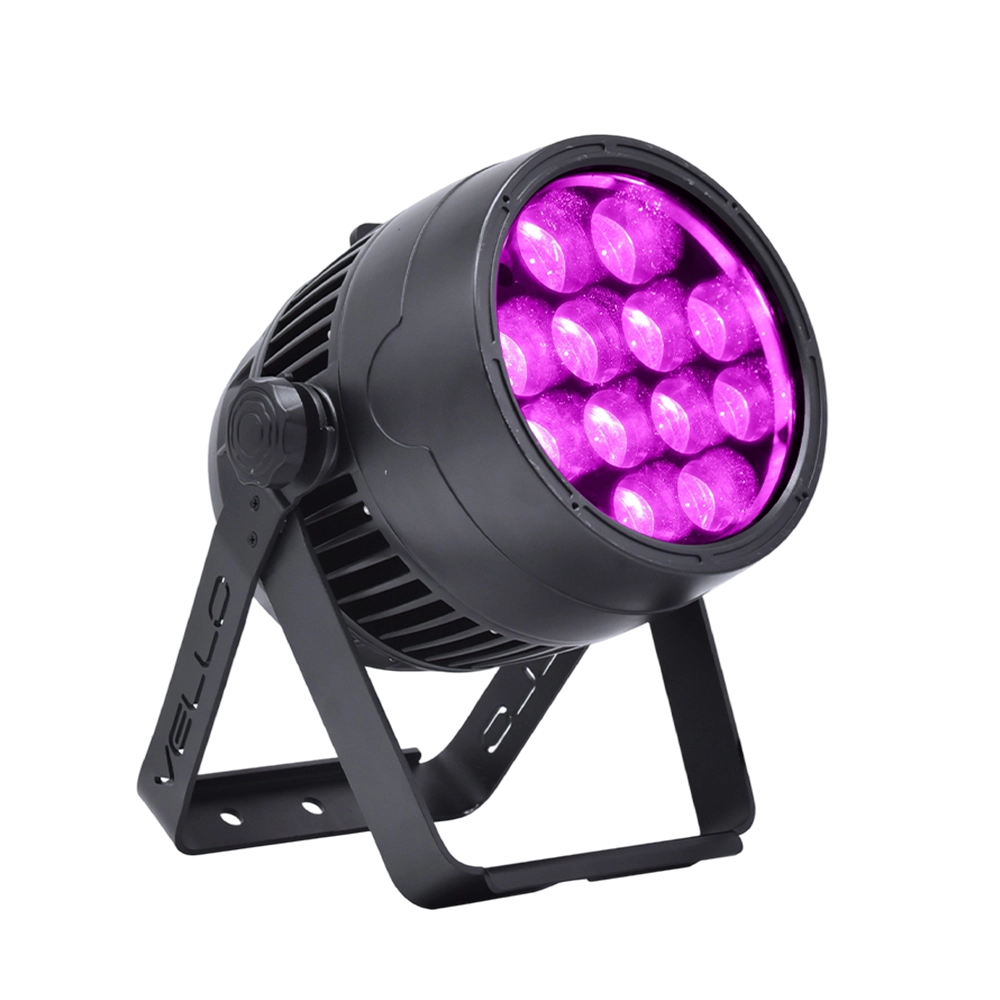
Stage LED Par Light LED ZOOMPAR 40
The Vello Zoom Par 40 IP is a powerful outdoor LED wash light equipped with 12x high-power 7-in-1 RGBACL LEDs. Designed for durability and rich color rendering, it features a wide motorized zoom (6°–50°), smooth dimming, and adjustable CTO presets (3200K–7500K), with 90+ CRI. With an IP66-rated die-cast aluminum body, it’s ideal for both indoor and outdoor applications, including stage lighting, architecture, live events, and installations.
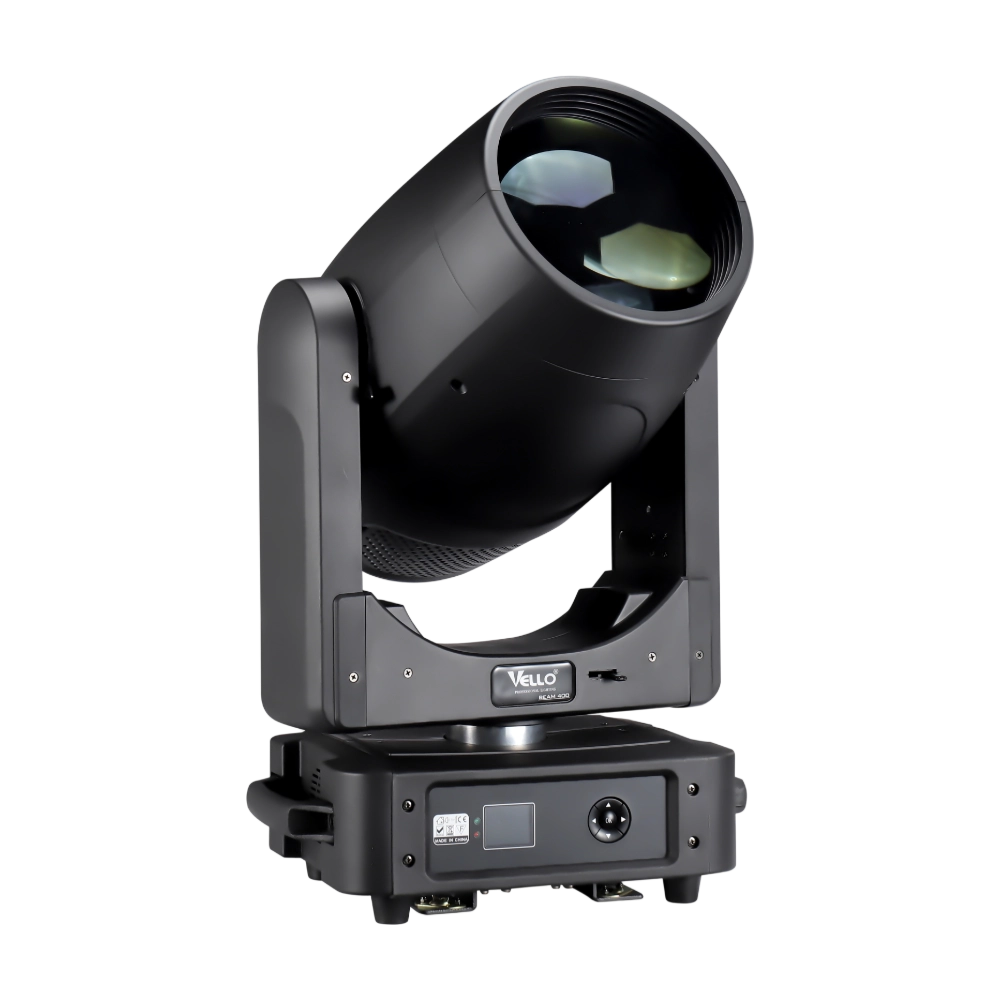
Moving Head Stage Light BEAM 400
BEAM400 is a 500W professional moving head beam powered by an OSRAM SIRIUS 371W discharge bulb, delivering a super-bright 1.8° sharp beam with impressive punch. It features 12 fixed gobos + open, a 14-color wheel, and a 16-facet circular rotating prism with multiple-facet effects, enabling dynamic aerial visuals. With 540° pan / 270° tilt, 16-bit movement resolution, and linear frost and focus, BEAM400 ensures precise and versatile performance. Comparable to traditional 750W moving heads, it combines high efficiency, smooth dimming, and reliable operation—ideal for concerts, tours, and large-scale stage productions.
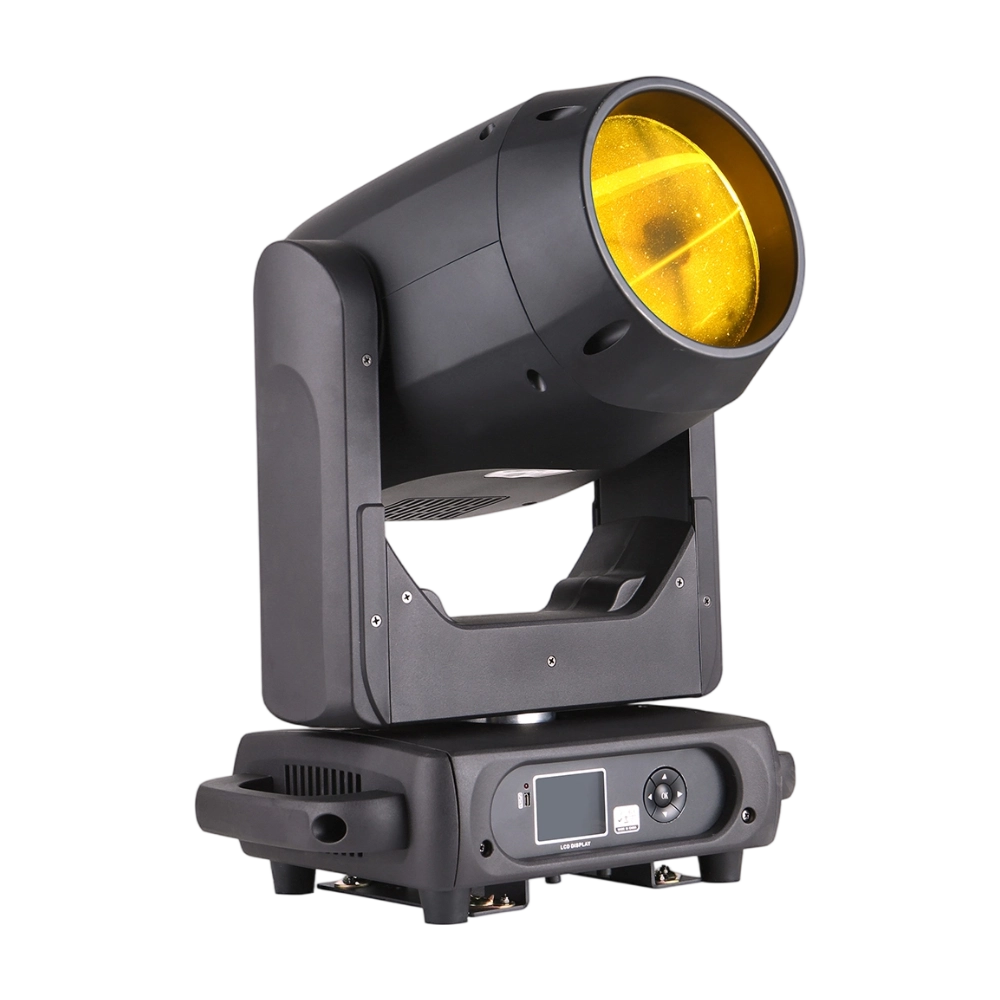
Moving Head Stage Light BEAM 360
BEAM360 is a 400W high-power moving head beam equipped with an OSRAM SIRIUS 311W discharge lamp, delivering a sharp 1.8° beam with super brightness. It features 14 colors + open, 12 fixed metal gobos + open, and dual prisms (8-facet circular + 8+16 multi-facet combination) for dynamic aerial effects. With 540° pan / 270° tilt, 16-bit movement, and linear frost and focus, BEAM360 ensures precision and versatility. Compact yet powerful, it rivals traditional 575W moving heads, making it ideal for concerts, clubs, and large-scale stage productions.
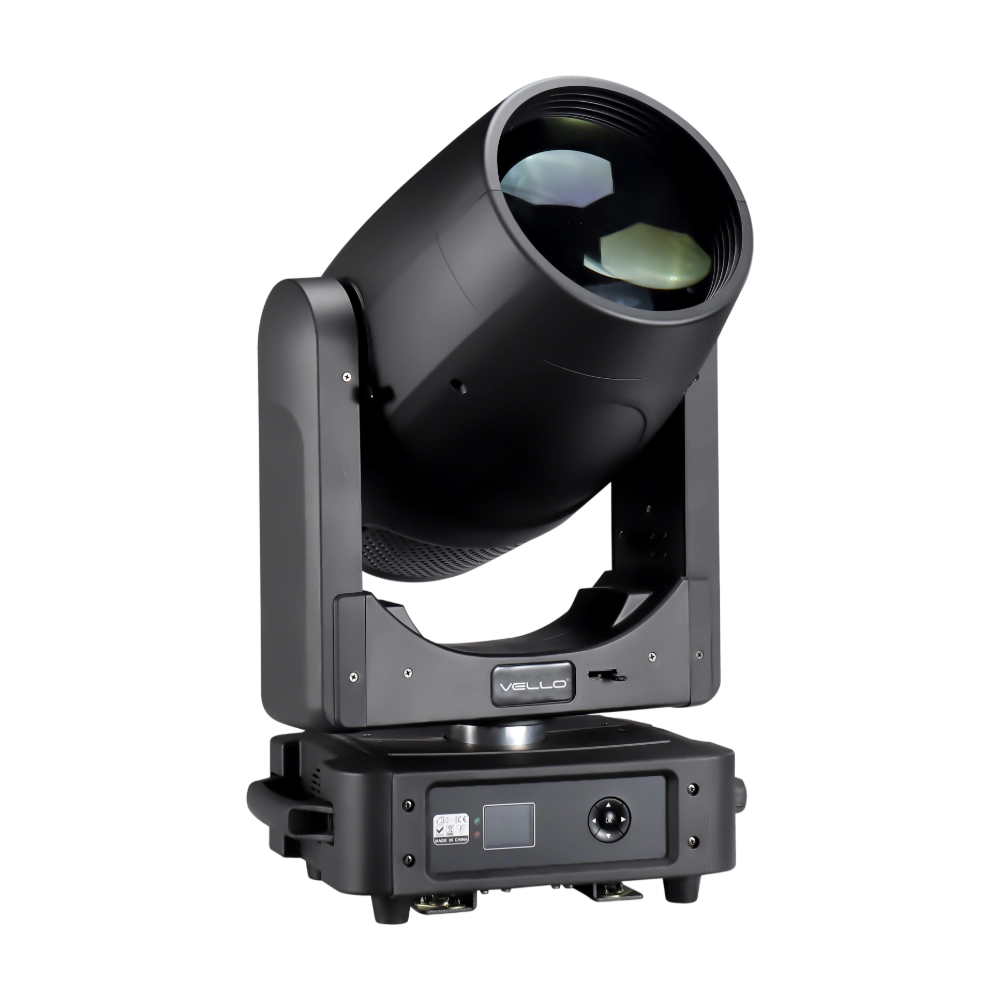
Moving Head Light BEAM 450
The BSW450 is a high-performance moving head fixture equipped with an original Osram 420W bulb, delivering exceptional brightness, precision, and versatility. Designed for professional stage applications, it seamlessly combines beam, spot, and wash functions in one compact unit, making it a powerful all-in-one lighting solution.
Over 20 Years of Innovation in Stage & Studio Lighting
© 2026 VELLO. All Rights Reserved. 粤ICP备20023734号
Join our socials
VELLO
Whatsapp: +8613902276704
Vello Lighting
VelloLights