





Energy Savings and ROI of Custom LED Stage Lighting
- Why tailored stage lighting matters
- Understanding venue-specific needs
- Benefits over generic fixtures
- Sustainability and audience experience
- Energy savings potential of custom LED lighting
- Efficiency metrics: lumens-per-watt and system-level power
- Typical savings vs legacy stage lighting
- Case examples and measured savings
- Calculating ROI for custom LED stage lighting
- Key inputs and simple formulas
- Payback example for a mid-size theater
- Incentives, demand charges, and operational strategies
- Design, procurement and lifecycle considerations
- Design choices that affect ROI
- Quality, warranties, and total cost of ownership
- Why choose a reputable manufacturer
- About Vello Light Co., Ltd.
- Implementation tips and final recommendations
- Start with a photometric audit
- Plan for staged upgrades
- Include training and maintenance plans
- FAQ
- 1. How much energy can I realistically save by switching to custom LED stage lighting?
- 2. What is the typical payback period for a custom LED retrofit?
- 3. Will LED lighting change the look of my shows?
- 4. Are there standards or certifications I should look for?
- 5. How do controls influence savings?
- 6. Can I mix LED fixtures with existing equipment?
I have worked on dozens of lighting retrofit and new-installation projects for theaters, concert venues, and production studios. In this article I explain how custom led lighting can deliver measurable energy savings and attractive ROI while improving artistic flexibility and operational reliability. I ground the analysis in industry data and practical examples so you can evaluate the business case for your venue or production company.
Why tailored stage lighting matters
Understanding venue-specific needs
Every performance space is unique: room volume, ceiling height, rigging capacity, show types, and runtime hours all influence what lighting solution makes sense. Off-the-shelf fixtures can be convenient, but a custom led lighting design aligns fixture types, beam angles, control protocols, and optical characteristics to your venue’s usage profile. That alignment is where energy and operational savings begin—less over-lighting, fewer fixtures, and smarter control strategies reduce consumption without sacrificing artistic intent.
Benefits over generic fixtures
From my experience, custom solutions reduce wasted watts through better photometric targeting and optimized spectral mixes. Advantages include improved lumen-for-lumen performance on-stage, lower cooling loads for indoor venues, and reduced maintenance visits because fixtures are selected based on expected duty cycles. This reduces both energy and labor costs—often overlooked in preliminary budgets.
Sustainability and audience experience
Modern audiences and promoters expect venues to be environmentally responsible. Custom led lighting enables dramatic reductions in greenhouse gas emissions and energy costs while providing better color rendering and instantaneous control. These intangible benefits—improved brand reputation, potential access to green incentives, and enhanced guest comfort—translate into long-term value that complements direct financial returns.
Energy savings potential of custom LED lighting
Efficiency metrics: lumens-per-watt and system-level power
When evaluating custom led lighting, focus on fixture efficacy (lumens-per-watt), driver efficiency, and system-level consumption (including dimming and control losses). Solid-state lighting efficacy improves rapidly; the U.S. Department of Energy documents continual gains in LED performance and adoption in general illumination (DOE SSL Forecast, 2017). Energy savings are not just about fixture watts; good optical design reduces the number of fixtures required to achieve the same on-stage illuminance.
Typical savings vs legacy stage lighting
To make comparisons concrete, I compiled typical values for common lamp families used in stage lighting. These are representative; custom designs will vary.
| Technology | Typical Power per Fixture (W) | Approx. Efficacy (lm/W) | Lifetime (hours) | Notes |
|---|---|---|---|---|
| Incandescent/AE Par (legacy) | 300–1000 | 10–20 | 1,000–2,000 | High heat, short life |
| HMI/Discharge | 400–2000 | 50–90 | 2,000–5,000 | High initial lumens, specialized |
| LED Studio/Moving Head | 50–300 | 80–160 | 30,000–100,000 | Low heat, controllable |
Sources: Department of Energy and industry standards. For a high-level description of LED technology and benefits see Wikipedia: Light-emitting diode, and for efficiency programs visit ENERGY STAR: LED Lighting.
Case examples and measured savings
In several retrofits I've led, switching from a mixed HMI/incandescent rig to a custom set of moving head stage lights and LED wash lights reduced installed lighting power by 40–70% depending on programming and fixture selection. These savings come from both lower wattage per fixture and the ability to project light more accurately, reducing the need for multiple overlapping fixtures.
Calculating ROI for custom LED stage lighting
Key inputs and simple formulas
ROI depends on initial capital cost, annual energy savings, maintenance savings, and any incentives. A basic payback formula I use in early-stage assessments is:
Simple payback (years) = Initial incremental cost / Annual net savings
Where annual net savings = Annual energy savings + Annual maintenance savings + Incentives - any recurring costs (e.g., special consumables).
Payback example for a mid-size theater
Below is a representative example for a mid-size theater replacing 40 fixtures of 600W tungsten/incandescent source with 40 custom LED moving heads averaging 200W each. Electricity cost assumed $0.12/kWh. Annual operating hours for theatrical houses vary; I use 1,200 hours/year for programming and rehearsals combined.
| Item | Legacy (Incandescent/HMI) | Custom LED |
|---|---|---|
| Fixture count | 40 | 40 |
| Average power per fixture (W) | 600 | 200 |
| Total connected power (kW) | 24.0 | 8.0 |
| Annual hours | 1,200 | |
| Annual energy (kWh) | 28,800 | 9,600 |
| Annual energy cost ($0.12/kWh) | $3,456 | $1,152 |
| Annual energy savings | $2,304 | |
Maintenance: assume legacy lamp replacements, lamp alignment, and higher labor due to shorter lamp life totaling $2,000/year. LED maintenance is lower—estimate $500/year (cleaning, occasional service). Annual maintenance savings = $1,500.
Total annual net savings = $2,304 (energy) + $1,500 (maintenance) = $3,804.
Incremental capital cost: LED moving head fixtures may cost more up-front. If the incremental investment versus legacy fixtures is $60,000, simple payback = $60,000 / $3,804 ≈ 15.8 years. If you include local incentives or choose a staged upgrade to leverage replacement cycles, payback can shorten substantially. Also remember fixture lifetimes for LEDs are far longer—30,000–100,000 hours—reducing replacement capex post-payback.
Important: This example is illustrative. I always recommend a site-specific life-cycle cost analysis because variables (electricity rate, annual hours, incentive programs, and fixture pricing) strongly affect ROI.
Incentives, demand charges, and operational strategies
Some venues qualify for utility rebates or tax incentives when installing energy-efficient lighting. Additionally, LED systems paired with intelligent control (DMX/RDM, Art-Net, sACN, or building automation) allow scheduling and dimming strategies to avoid peak demand charges. For guidance on energy programs see your local utility or national resources such as the U.S. Department of Energy (DOE) and ENERGY STAR (ENERGY STAR).
Design, procurement and lifecycle considerations
Design choices that affect ROI
Optical selection, beam shaping, CRI/TLCI, and control compatibility determine both artistic outcome and efficiency. For instance, using LED bar lights for cyc and wash functions often reduces fixture count compared to using individual pars. Choosing fixtures with modular optics or exchangeable lenses can future-proof the system, extending useful life and improving long-term ROI.
Quality, warranties, and total cost of ownership
Not all LEDs are created equal. I insist on evaluating driver quality, thermal design, and manufacturer support. Good thermal management extends LED life; better drivers reduce flicker and improve dimming behavior. A longer warranty and an established service network reduce risk and can lower insurance or contingency line items in project budgets.
Why choose a reputable manufacturer
Manufacturer reputation matters. I typically select vendors with proven R&D capability and global service footprints because stage lighting projects often require quick turnaround and parts availability. Standards bodies like the Illuminating Engineering Society (IES) provide metrics and guidelines that reputable manufacturers follow. For industry standards and to validate claims, consult IES publications and IEC/ANSI standards where applicable.
About Vello Light Co., Ltd.
Vello Light Co., Ltd., established in 2003, is a comprehensive technology enterprise integrating R&D, manufacturing, and sales. Over the years, we have consistently adhered to the principles of quality first and sincere service. With the support and help of numerous customers both domestically and internationally, we have continued to grow and develop, gradually becoming a unique and outstanding team in our field.
In recent years, with the rapid development of the LED lighting market, Vello Light has gathered a large number of professional talents to provide comprehensive and systematic services, including product R&D, manufacturing, marketing, engineering installation, and product maintenance. Through the joint efforts of Vello people, we remain true to our original aspirations and persevere in innovation, leveraging our unique advantages to stand out in the fierce competition. Currently, our products are exported both domestically and internationally and have a strong brand reputation, especially in overseas markets. VELLO is our registered brand, specializing in moving headlights, LED wash lights, and theatrical lights. Our products are highly praised and loved by many customers for their professional technology, unique style, high-quality materials, and durability.
Our vision is to become a world-leading stage lighting manufacturer. Learn more at https://www.vellolight.com or contact our team at info@vellolight.com.
Implementation tips and final recommendations
Start with a photometric audit
My first step with any client is a photometric audit: measure current illuminance across performance and backstage areas, document fixture types and control systems, and log run hours. This data makes ROI modeling accurate and helps prioritize which fixtures deliver the most cost-effective savings.
Plan for staged upgrades
Staged upgrades—replacing the most energy-intensive fixtures first—can improve cash flow and allow venues to capture incentives over multiple years. Staged implementation also reduces risk as production teams adjust to new light characteristics.
Include training and maintenance plans
Operational savings materialize only if crews know how to program and maintain the new system. Include training in the project scope and lock in a maintenance SLA with the manufacturer or an accredited service partner.
FAQ
1. How much energy can I realistically save by switching to custom LED stage lighting?
Typical reductions range from 40% to 70% compared to older incandescent/HMI rigs, depending on fixture selection, control strategies, and usage hours. Site-specific audits will provide a more accurate estimate.
2. What is the typical payback period for a custom LED retrofit?
Payback varies widely. In my experience, simple paybacks range from 3 to 16 years depending on electricity cost, annual usage, maintenance savings, and incentives. High-use venues in markets with higher electricity rates tend to see faster paybacks.
3. Will LED lighting change the look of my shows?
LED technology has matured. High-CRI/TLCI LEDs and quality optical design can match or exceed the visual quality of legacy fixtures, while offering far greater control. I always recommend photometric mock-ups or demos before full deployment.
4. Are there standards or certifications I should look for?
Yes—look for manufacturers who reference IES guidelines and provide photometric files (IES files) for fixtures. ENERGY STAR listings are useful for general lighting products; for entertainment lighting, verify manufacturer test data and third-party reports when possible.
5. How do controls influence savings?
Smart controls (timers, scene-based programming, occupancy sensors in back-of-house areas) reduce run-hours and avoid over-lighting. Integration with building management systems can also reduce HVAC loads by minimizing heat from lighting.
6. Can I mix LED fixtures with existing equipment?
Yes, mixing is common during staged upgrades. Ensure compatibility at the control level (DMX512, RDM, Art-Net) and consider photometric matching to maintain consistent on-stage color and intensity.
If you want a customized ROI study or a photometric audit for your venue, contact me or VELLO’s technical team. We offer tailored proposals and demonstrations so you can compare options head-to-head.
Contact & Products: Explore VELLO’s range of moving head stage lights, studio lights, led effect light, LED bar lights, LED par light, and outdoor stage lighting at https://www.vellolight.com. For inquiries email info@vellolight.com. I’m available to help you run numbers, plan staged rollouts, or specify fixtures for a custom led lighting system that balances artistry and economics.
References and further reading:
- DOE Solid-State Lighting R&D: https://www.energy.gov/eere/ssl/solid-state-lighting-rd
- DOE SSL Energy Savings Forecast (2017): https://www.energy.gov/eere/ssl/energy-savings-forecast-solid-state-lighting-general-illumination-applications-2017
- ENERGY STAR LED Lighting: https://www.energystar.gov/products/lighting_fans/led_lighting
- Wikipedia — Light-emitting diode: https://en.wikipedia.org/wiki/Light-emitting_diode
- Illuminating Engineering Society: https://www.ies.org/
Maintenance Tips and Lifespan of LED Stage Lights
How to Choose Reliable Stage Lighting Suppliers and Manufacturers
Best Moving Head Lights for Clubs and DJs
LED vs Traditional Stage Lights: Pros and Cons
Major categories
What is the usual lead time?
Standard models are typically shipped within 7–15 working days after payment. Customized items may vary.
Do your products support customization?
Yes. We offer OEM and ODM services tailored to project needs, including design, optics, and control compatibility.
Do you offer samples?
Samples are available for certain models. Please confirm with our sales team for details.
What is the warranty period for your products?
Most products come with a standard 1–2 year warranty. Please refer to product details or contract terms for specifics.
Do you ship internationally?
Yes. We offer sea, air, and express delivery to many countries and regions worldwide.
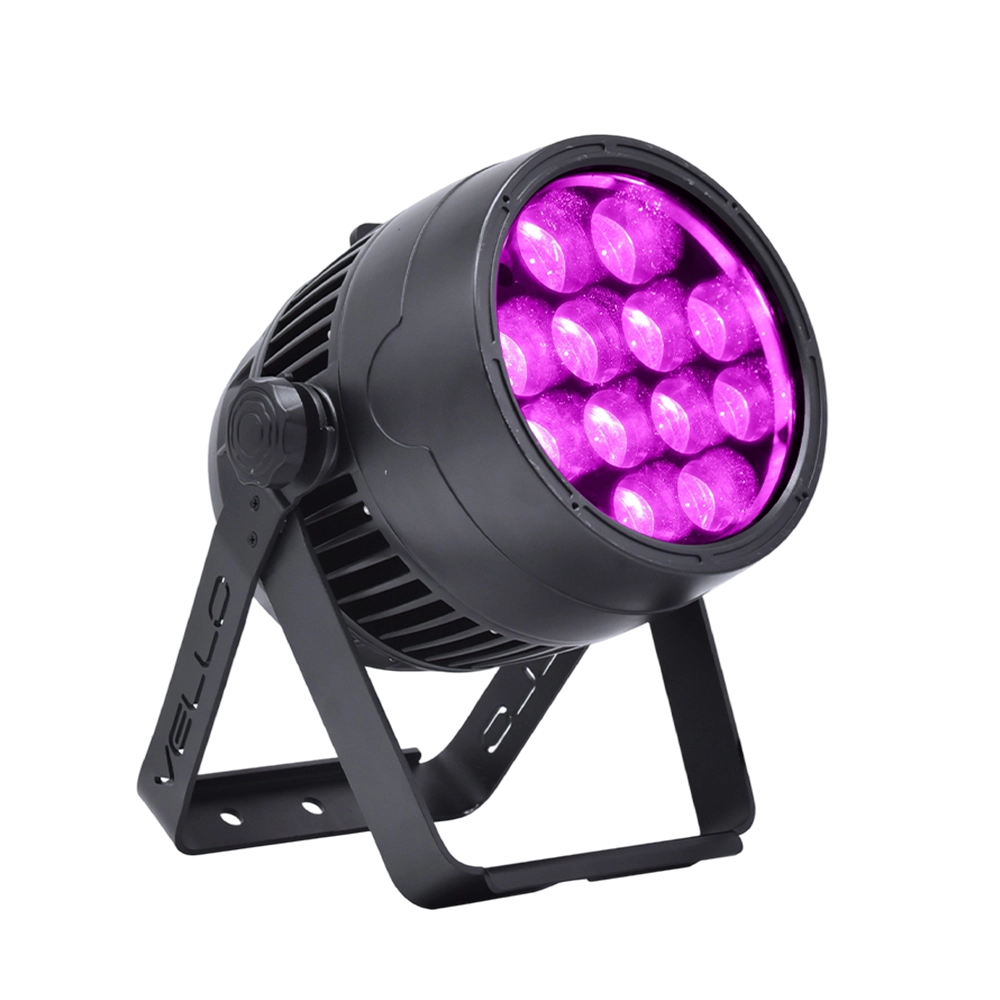
Stage LED Par Light LED ZOOMPAR 40
The Vello Zoom Par 40 IP is a powerful outdoor LED wash light equipped with 12x high-power 7-in-1 RGBACL LEDs. Designed for durability and rich color rendering, it features a wide motorized zoom (6°–50°), smooth dimming, and adjustable CTO presets (3200K–7500K), with 90+ CRI. With an IP66-rated die-cast aluminum body, it’s ideal for both indoor and outdoor applications, including stage lighting, architecture, live events, and installations.
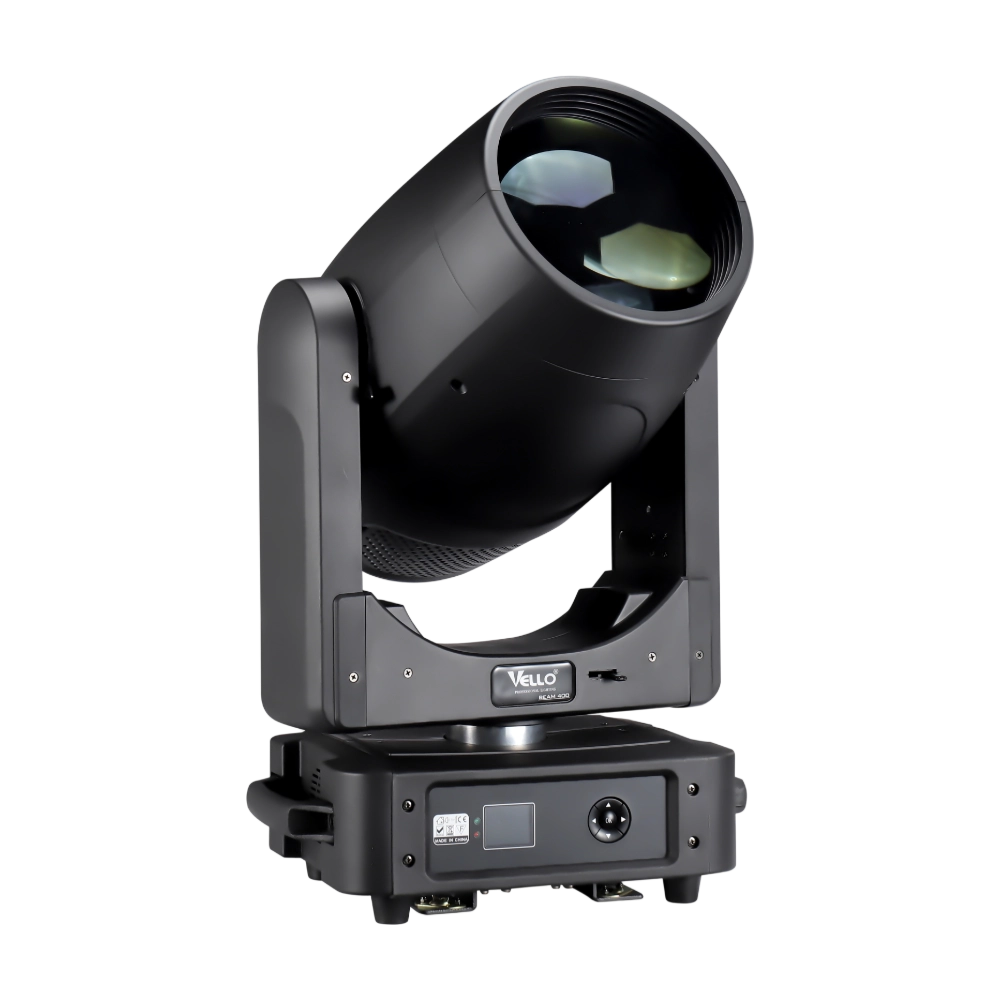
Moving Head Stage Light BEAM 400
BEAM400 is a 500W professional moving head beam powered by an OSRAM SIRIUS 371W discharge bulb, delivering a super-bright 1.8° sharp beam with impressive punch. It features 12 fixed gobos + open, a 14-color wheel, and a 16-facet circular rotating prism with multiple-facet effects, enabling dynamic aerial visuals. With 540° pan / 270° tilt, 16-bit movement resolution, and linear frost and focus, BEAM400 ensures precise and versatile performance. Comparable to traditional 750W moving heads, it combines high efficiency, smooth dimming, and reliable operation—ideal for concerts, tours, and large-scale stage productions.
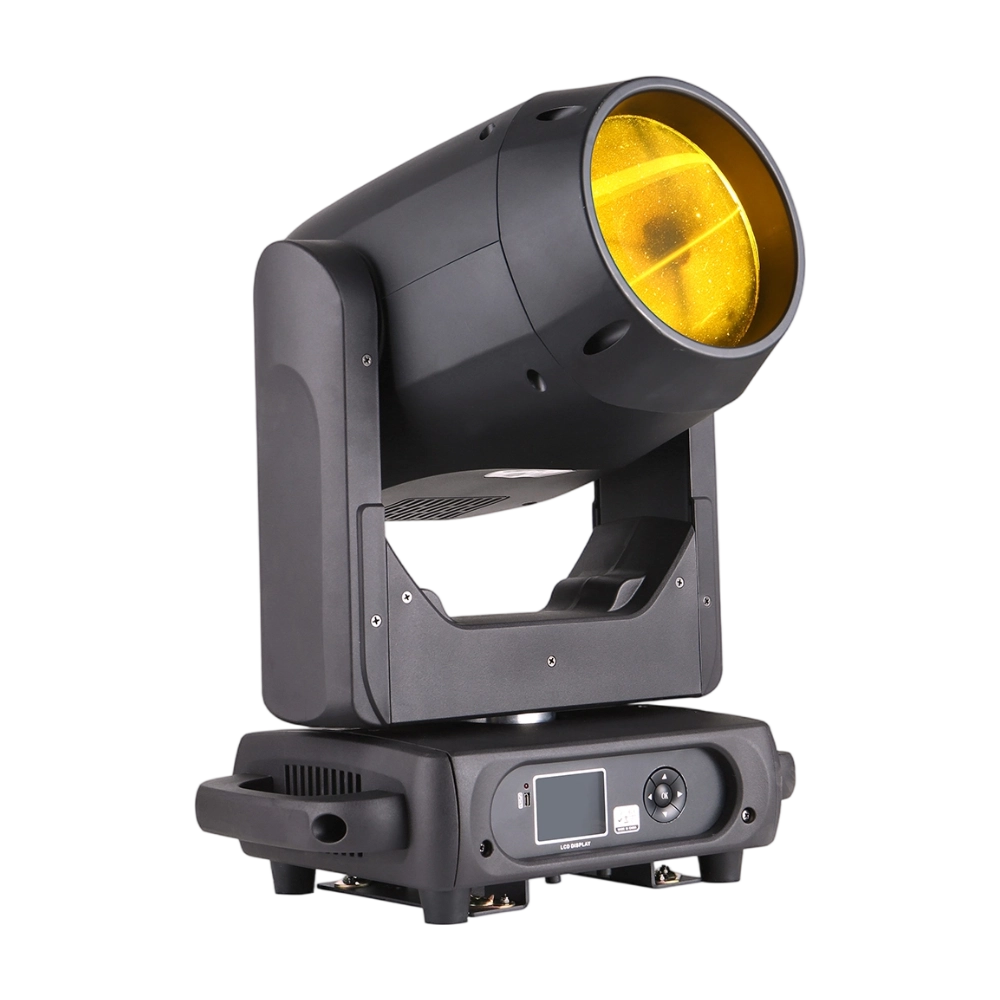
Moving Head Stage Light BEAM 360
BEAM360 is a 400W high-power moving head beam equipped with an OSRAM SIRIUS 311W discharge lamp, delivering a sharp 1.8° beam with super brightness. It features 14 colors + open, 12 fixed metal gobos + open, and dual prisms (8-facet circular + 8+16 multi-facet combination) for dynamic aerial effects. With 540° pan / 270° tilt, 16-bit movement, and linear frost and focus, BEAM360 ensures precision and versatility. Compact yet powerful, it rivals traditional 575W moving heads, making it ideal for concerts, clubs, and large-scale stage productions.
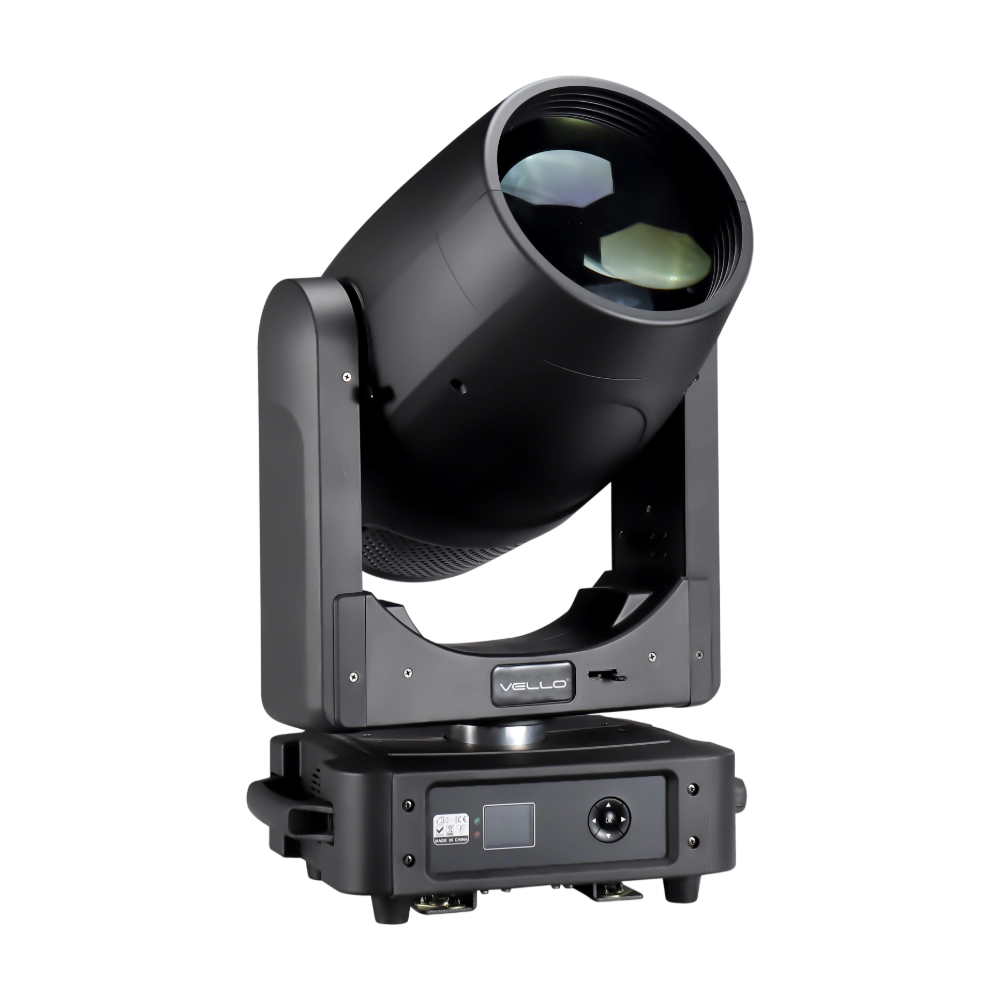
Moving Head Light BEAM 450
The BSW450 is a high-performance moving head fixture equipped with an original Osram 420W bulb, delivering exceptional brightness, precision, and versatility. Designed for professional stage applications, it seamlessly combines beam, spot, and wash functions in one compact unit, making it a powerful all-in-one lighting solution.
Over 20 Years of Innovation in Stage & Studio Lighting
© 2026 VELLO. All Rights Reserved. 粤ICP备20023734号
Join our socials
VELLO
Whatsapp: +8613902276704
Vello Lighting
VelloLights