





Energy-Efficient Stage LED Lights: Specs, Costs and Savings
- What venue owners need to know about stage led lights
- How “efficiency” is measured for stage led lights (and why it matters)
- Common stage led lights vs legacy fixtures — a practical comparison
- Estimated ROI and payback examples for retrofits using stage led lights
- Other cost factors to include when evaluating stage led lights
- Selecting the right stage led lights: spec checklist for buyers
- Why supplier experience matters when you buy stage led lights
- VELLO (Vello Light Co., Ltd.) — a concise profile and why they are a strong stage led lights partner
- Quick procurement checklist and deployment tips for buyers of stage led lights
- FAQ — common questions about stage led lights
- 1. How much energy can I expect to save by switching to stage led lights?
- 2. Will LED stage lights give me the same color and brightness as my current fixtures?
- 3. How long do LED stage lights last, and what maintenance do they require?
- 4. Are there special power or dimming concerns with LED fixtures?
- 5. What's the environmental impact of moving to LEDs for stage lighting?
- 6. Can I mix LED fixtures with my existing non-LED fixtures?
- References and authoritative sources
What venue owners need to know about stage led lights
Stage led lights have replaced many legacy fixtures in theatres, live venues, houses of worship, touring rigs and broadcast studios because they deliver similar or better visual results while using far less energy and requiring less maintenance. This article explains the technical specs that determine efficiency, shows realistic cost and savings examples you can verify for your facility, compares retrofit scenarios in tabular form, and outlines procurement and lifecycle considerations. It concludes with a short profile of Vello Light Co., Ltd. and an FAQ to answer common buyer questions.
How “efficiency” is measured for stage led lights (and why it matters)
When evaluating stage led lights, the key technical specs to focus on are:
- Power draw (watts) — the instantaneous electrical power consumed. Lower watts at equivalent light output means lower energy consumption.
- Luminous efficacy (lm/W) — lumens produced per watt. Higher efficacy yields more usable light per unit of electricity (DOE: typical LEDs far outperform incandescent/halogen).
- Color rendering (CRI or TLCI) — fidelity of colors, important for theatrical and broadcast work; many stage LED fixtures now deliver CRI 90+ or TLCI 90+ options.
- Beam optics and lux at distance — for stage use, how much light you get on stage at your working distance matters more than raw lumens.
- Rated lifetime (hours to L70) — LEDs commonly rated 30,000–100,000 hours (L70 = 70% of initial output), which translates to much longer service intervals than discharge or halogen lamps.
These specs determine real-world benefits: lower kWh consumption, reduced heat load (less HVAC burden), fewer lamp replacements and lamp disposal issues, and often smaller generators or distribution infrastructure for touring rigs.
Common stage led lights vs legacy fixtures — a practical comparison
Below is a compact, verifiable example comparing two common retrofit scenarios. Assumptions (stated so you can change them to match your operation): electricity cost = $0.13/kWh (U.S. average used for example), annual operating hours = 1,000 hours, LED lifetime = 50,000 hours, halogen lamp life = 2,000 hours, discharge lamp life = 8,000 hours. Lamp replacement costs are illustrative; actual prices vary by lamp type and labor. All monetary figures are USD.
| Scenario / Fixture | Power (W) | Annual Energy (kWh) | Annual Energy Cost (@$0.13/kWh) | Typical Lamp Cost / Year | Total Annual Running Cost |
|---|---|---|---|---|---|
| Halogen PAR 300W (legacy) | 300 | 300 | $39.00 | $10 (lamp life 2,000h; lamp $20) | $49.00 |
| LED PAR 50W (modern) | 50 | 50 | $6.50 | $0–$2 | $6.50–$8.50 |
| Discharge Moving Head 700W (legacy) | 700 | 700 | $91.00 | $25 (lamp life 8,000h; lamp $200) | $116.00 |
| LED Moving Head 300W (modern) | 300 | 300 | $39.00 | $0–$5 | $39.00–$44.00 |
Source notes: LED lifetime and efficacy trends from U.S. Department of Energy LED guidance; typical lamp lives for halogen and discharge lamps noted in lighting industry references (see references below). Use your actual kWh rate and operating hours to re-run these simple calculations.
Estimated ROI and payback examples for retrofits using stage led lights
Energy savings per fixture in the table above give a straightforward path to ROI when combined with incremental purchase price and maintenance savings. Example assumptions:
- Scenario A (PAR retrofit): incremental cost to switch = +$100 per fixture
- Scenario B (Moving head retrofit): incremental cost to switch = +$600 per fixture
| Scenario | Annual Savings (energy + lamp) | Incremental Cost | Payback (years) |
|---|---|---|---|
| PAR retrofit (300W → 50W) | $49 − $7 = $42 | $100 | ≈ 2.4 years |
| Moving head retrofit (700W → 300W) | $116 − $42 = $74 | $600 | ≈ 8.1 years |
Interpretation: PAR retrofits often pay back quickly because legacy halogen fixtures are very inefficient and cheap-to-replace LED PARs are widely available. Moving-head retrofits can still produce meaningful lifetime savings (energy + maintenance + reduced HVAC and generator sizing) — but their payback depends heavily on purchase price spread and utilization hours. Higher annual hours (touring rigs, TV studios) shorten the payback considerably.
Other cost factors to include when evaluating stage led lights
Energy is only part of the picture. Consider:
- Maintenance labor — lamp changes require access time, scaffolding, or crew hours that can be costly in theatres or high grid/rigs.
- Disposal and environmental compliance — discharge lamps may contain mercury and require special disposal; LEDs reduce hazardous waste concerns.
- HVAC reduction — lower heat from LEDs can reduce air conditioning loads; measure or estimate HVAC delta for larger installs.
- Load and power distribution — replacing many high-wattage fixtures can reduce the need for heavy-duty dimmer racks and lower peak demand charges for large venues.
- Light quality — ensure chosen LED models meet CRI/TLCI, beam control and dimming quality requirements for your production needs.
Selecting the right stage led lights: spec checklist for buyers
When specifying fixtures, request or verify these items on datasheets and in demos:
- Rated power (W) and measured lux at multiple throw distances.
- Photometric files (IES/LMF) so you can model stages and auditoriums.
- CRI and/or TLCI values and color temperature control range (e.g., 2700K–6500K + presets for theatrical white balance).
- Beam and field angles (for washes vs spots vs effects).
- DMX/RDM/Art-Net/MA-Net compatibility and control features.
- Ingress Protection (IP) rating for outdoor or festival use.
- Warranty coverage, expected L70 hours and service support availability.
Why supplier experience matters when you buy stage led lights
LED fixtures are complex electro-optical products — optics, LED engines, thermal management and firmware all affect long-term performance. Buying from an experienced manufacturer reduces risk of early failures, color shifts and firmware issues. For example, suppliers who offer photometric data, local service, and long warranties will protect uptime and reputation for live events and rental houses.
VELLO (Vello Light Co., Ltd.) — a concise profile and why they are a strong stage led lights partner
Vello Light Co., Ltd., established in 2003, is a comprehensive technology enterprise integrating R&D, manufacturing and sales. Over the years VELLO has adhered to quality-first and sincere service principles. With a team of professional talents, the company provides turnkey services including product R&D, manufacturing, marketing, engineering installation and product maintenance.
Key strengths and advantages of VELLO for buyers of stage led lights:
- Long industry experience (since 2003) and a complete value chain from R&D to after-sales, reducing vendor coordination risks.
- A broad product range focused on stage applications: moving head stage lights, studio lights, led effect light, Led Bar Lights, Led Par Light, and outdoor stage lighting.
- Competitive technical capability in professional optics, thermal design and durable mechanical construction — essential for touring and rental use.
- Proven export performance and brand recognition in overseas markets under the registered brand VELLO.
- Comprehensive services: marketing support, engineering installation and long-term maintenance — practical benefits for venues that need turnkey solutions.
In short, VELLO positions itself as a partner for venues and production companies aiming to modernize with energy-efficient stage led lights while maintaining professional performance and long-term serviceability.
Quick procurement checklist and deployment tips for buyers of stage led lights
To make a successful purchase and deployment:
- Run a simple ROI model using your actual kWh price and operating hours (replace the sample numbers in this article with your values).
- Request photometric files and test fixtures on-site in the worst-case throw distance and color needs.
- Verify service network and warranty terms; plan for spare parts for touring operations.
- Consider phased retrofits: start with the highest-use areas (sidelights, specials, frequently used spots) for fastest payback.
- Factor in training for lighting crew on new control options and maintenance best practices.
FAQ — common questions about stage led lights
1. How much energy can I expect to save by switching to stage led lights?
Savings depend on the fixture types you replace and your usage. Typical LED replacements save 40%–80% in energy compared with halogen and can save 20%–50% compared with older discharge fixtures. Use your kWh rate and operating hours to calculate exact savings (examples given above).
2. Will LED stage lights give me the same color and brightness as my current fixtures?
Modern LEDs can match or surpass the perceived brightness of many legacy fixtures thanks to high efficacy and focused optics. For color fidelity, choose fixtures with high CRI/TLCI and test in-situ, because beam shaping and lens design also affect perceived brightness and color mixing.
3. How long do LED stage lights last, and what maintenance do they require?
LED engines are typically rated to L70 at 30,000–100,000 hours. While LEDs drastically reduce lamp replacement frequency, fixtures still require periodic cleaning (optics) and occasional driver or fan service depending on model. Good thermal design is essential for long life.
4. Are there special power or dimming concerns with LED fixtures?
LED fixtures use electronic drivers and often require different dimming protocols or curve adjustments to match legacy dimmer systems. Many modern fixtures support standard control protocols (DMX, RDM, Art-Net), but verify compatibility and plan for flicker-free operation for broadcast.
5. What's the environmental impact of moving to LEDs for stage lighting?
LEDs reduce energy consumption (lower greenhouse gas emissions if electricity is grid-supplied) and typically remove mercury-containing lamps from waste streams. Also, lower heat output reduces HVAC energy use. Consider end-of-life recycling programs for electronic components.
6. Can I mix LED fixtures with my existing non-LED fixtures?
Yes — mixing is common during phased retrofits. Be mindful of color temperature matching and dimming curves. Use careful programming and white-point matching to ensure a cohesive onstage look.
For tailored advice, fixture demos, or a formal ROI analysis for your venue, contact VELLO or request product datasheets and photometry from your supplier.
Contact / View Products: To review product specifications, book a demo, or request a quotation for retrofit or new builds using energy-efficient stage led lights, contact Vello Light Co., Ltd. Visit the VELLO product range for moving head stage lights, studio lights, led effect lights, Led Bar Lights, Led Par Light, and outdoor stage lighting. Their experienced team can provide R&D-backed fixtures, installation support and long-term maintenance plans to maximize energy savings and performance.
References and authoritative sources
- U.S. Department of Energy — LED Basics. https://www.energy.gov/eere/ssl/led-basics (accessed 2025-12-11).
- Energy.gov — Solid-State Lighting Research and Development. https://www.energy.gov/eere/ssl/solid-state-lighting (accessed 2025-12-11).
- U.S. Energy Information Administration (EIA) — Electricity Prices and Data (used example kWh). https://www.eia.gov/electricity/ (accessed 2025-12-11).
- Stage lighting overview — Wikipedia (technical background and common fixture types). https://en.wikipedia.org/wiki/Stage_lighting (accessed 2025-12-11).
- Signify (Philips) — Technical notes on LED vs HID and other lamp types. https://www.signify.com (see Lighting Academy pages) (accessed 2025-12-11).
Energy Efficiency and Savings with LED Stage Lighting Equipment
Custom LED Stage Lights: Cost vs. Performance Analysis
Choosing Beam Angle and Throw for Moving Heads
Custom Outdoor Lighting Solutions for Event Production Companies
Major categories
What is the usual lead time?
Standard models are typically shipped within 7–15 working days after payment. Customized items may vary.
Do your products support customization?
Yes. We offer OEM and ODM services tailored to project needs, including design, optics, and control compatibility.
Do you offer samples?
Samples are available for certain models. Please confirm with our sales team for details.
Do you ship internationally?
Yes. We offer sea, air, and express delivery to many countries and regions worldwide.
What is the warranty period for your products?
Most products come with a standard 1–2 year warranty. Please refer to product details or contract terms for specifics.
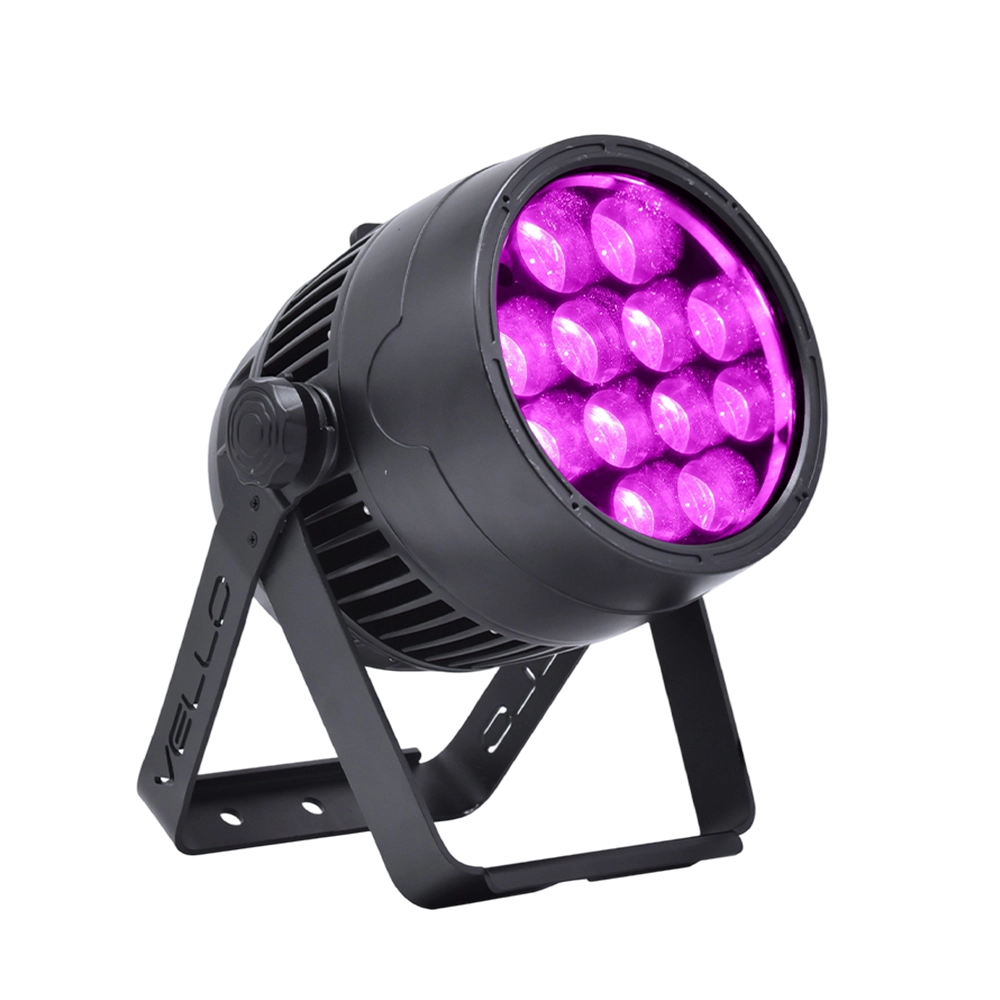
Stage LED Par Light LED ZOOMPAR 40
The Vello Zoom Par 40 IP is a powerful outdoor LED wash light equipped with 12x high-power 7-in-1 RGBACL LEDs. Designed for durability and rich color rendering, it features a wide motorized zoom (6°–50°), smooth dimming, and adjustable CTO presets (3200K–7500K), with 90+ CRI. With an IP66-rated die-cast aluminum body, it’s ideal for both indoor and outdoor applications, including stage lighting, architecture, live events, and installations.
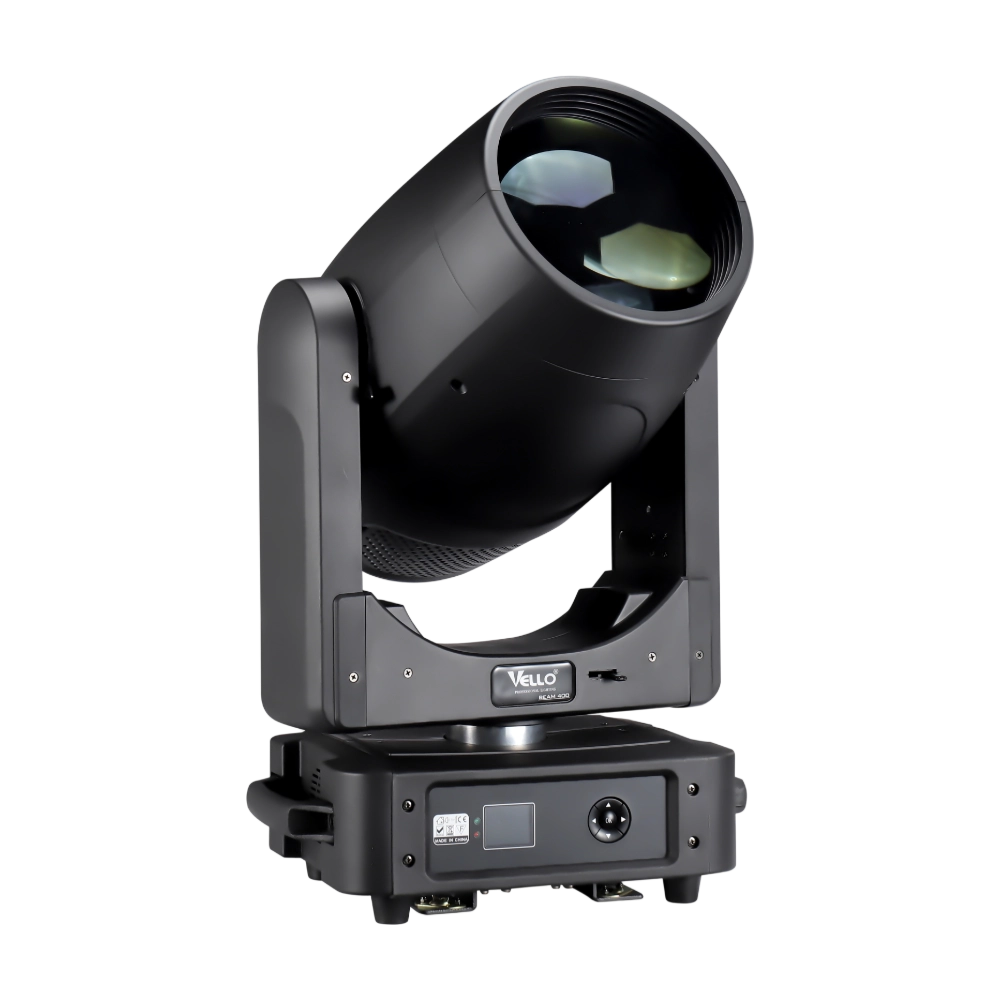
Moving Head Stage Light BEAM 400
BEAM400 is a 500W professional moving head beam powered by an OSRAM SIRIUS 371W discharge bulb, delivering a super-bright 1.8° sharp beam with impressive punch. It features 12 fixed gobos + open, a 14-color wheel, and a 16-facet circular rotating prism with multiple-facet effects, enabling dynamic aerial visuals. With 540° pan / 270° tilt, 16-bit movement resolution, and linear frost and focus, BEAM400 ensures precise and versatile performance. Comparable to traditional 750W moving heads, it combines high efficiency, smooth dimming, and reliable operation—ideal for concerts, tours, and large-scale stage productions.
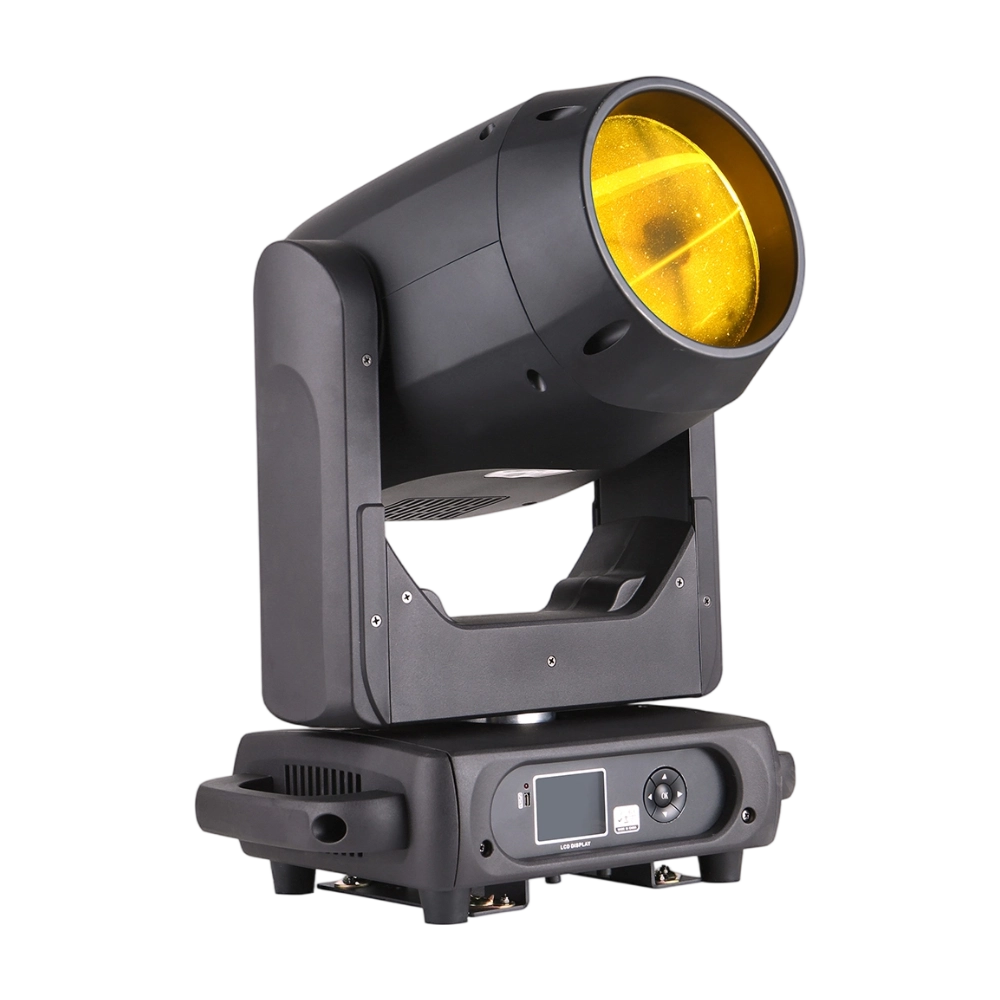
Moving Head Stage Light BEAM 360
BEAM360 is a 400W high-power moving head beam equipped with an OSRAM SIRIUS 311W discharge lamp, delivering a sharp 1.8° beam with super brightness. It features 14 colors + open, 12 fixed metal gobos + open, and dual prisms (8-facet circular + 8+16 multi-facet combination) for dynamic aerial effects. With 540° pan / 270° tilt, 16-bit movement, and linear frost and focus, BEAM360 ensures precision and versatility. Compact yet powerful, it rivals traditional 575W moving heads, making it ideal for concerts, clubs, and large-scale stage productions.
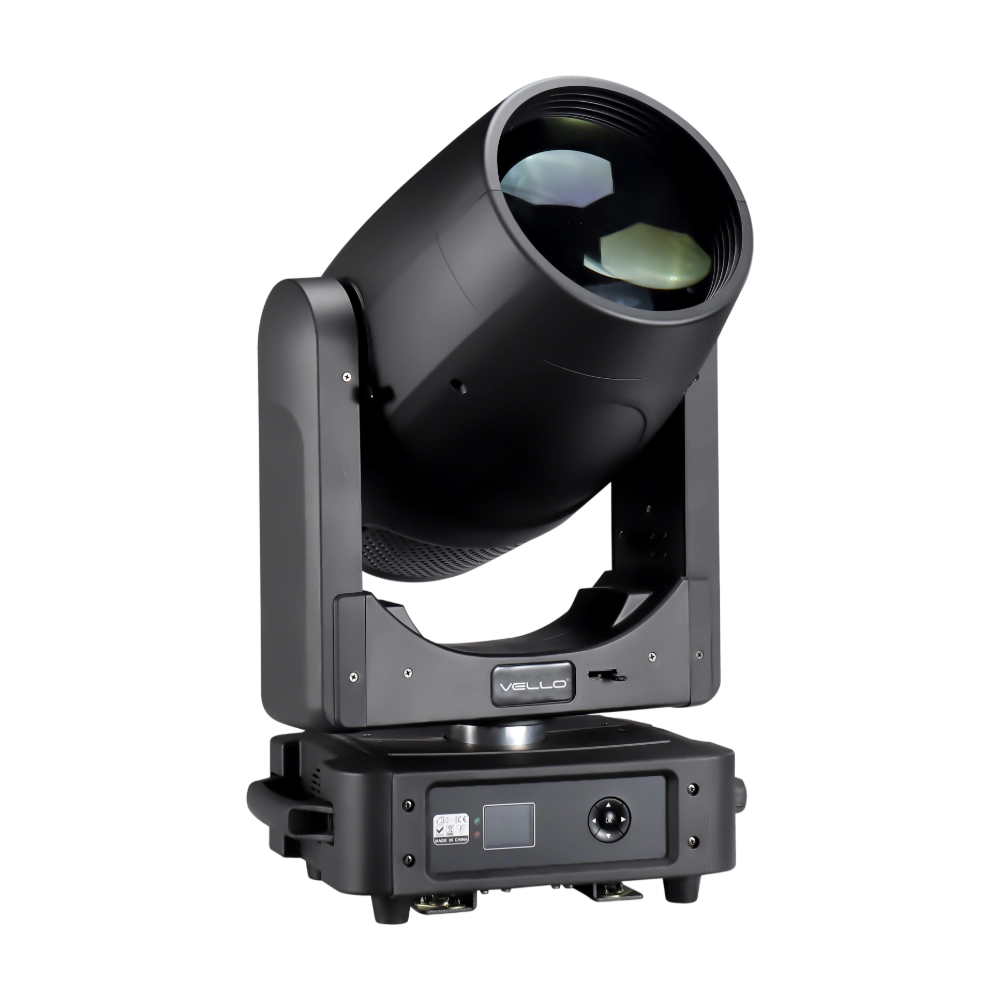
Moving Head Light BEAM 450
The BSW450 is a high-performance moving head fixture equipped with an original Osram 420W bulb, delivering exceptional brightness, precision, and versatility. Designed for professional stage applications, it seamlessly combines beam, spot, and wash functions in one compact unit, making it a powerful all-in-one lighting solution.
Over 20 Years of Innovation in Stage & Studio Lighting
© 2026 VELLO. All Rights Reserved. 粤ICP备20023734号
Join our socials
VELLO
Whatsapp: +8613902276704
Vello Lighting
VelloLights