





Energy-Efficient LED Stage Lights: Save Power & Keep Brightness
- Why energy efficiency matters in modern stage lighting
- Operational cost and sustainability drivers
- Venue constraints, code and reliability considerations
- How LED stage lights deliver brightness with less power
- LED fundamentals: lumens, efficacy and spectrum
- Fixture optics and beam control
- Thermal design and lumen maintenance
- Choosing the right energy-efficient LED stage lights
- Key specifications I evaluate
- Comparing LED and conventional fixtures: practical numbers
- Lifecycle cost and simple ROI example
- Implementation best practices, controls and verification
- Control strategies to maximize savings
- Installation, electrical and thermal considerations
- Measurement, verification and standards
- Working with manufacturers: why supplier choice matters
- What I look for in a manufacturer partner
- About Vello Light Co., Ltd. — capabilities and products
- Choosing between off-the-shelf and custom solutions
- FAQs
- 1. Will switching to LED stage lights reduce brightness?
- 2. How much energy can I realistically save?
- 3. Are LED fixtures suitable for outdoor stage events?
- 4. How do I compare color quality between LED fixtures?
- 5. What maintenance differences should I expect when switching to LED?
- 6. How do I validate manufacturer performance claims?
- Final recommendations and next steps
As a lighting professional and consultant, I’ve seen venue managers and production teams transform their operations by switching to energy-efficient LED stage lights. This article summarizes practical, verifiable guidance on how LED technology saves power while maintaining or improving brightness, what technical metrics to trust, how to choose and install fixtures, and how to quantify real savings. I combine industry standards, authoritative references, and hands-on experience to help you make decisions that reduce energy use, lower maintenance, and keep your shows visually compelling.
Why energy efficiency matters in modern stage lighting
Operational cost and sustainability drivers
Lighting is a major operating expense for theaters, live-event companies, houses of worship, and touring productions. Switching to LED stage lights reduces electricity use dramatically: the U.S. Department of Energy notes that LEDs can use at least 75% less energy and last many times longer than incandescent lamps (DOE — LED lighting basics). Lower power draw translates directly into smaller electrical demand charges, lower HVAC loads (less heat to remove), and reduced maintenance costs because LED luminaires have much longer rated lifetimes.
Venue constraints, code and reliability considerations
Many venues are constrained by existing electrical capacity or have intermittent access to power for pop-up events. Efficient LED fixtures let you achieve high lux levels without upgrading building power infrastructure. In addition, following testing and measurement standards such as the IES/ANSI LM-79 protocol for solid-state lighting measurements helps ensure fixtures perform to published specifications (IES — LM-79 reference).
How LED stage lights deliver brightness with less power
LED fundamentals: lumens, efficacy and spectrum
When assessing fixtures I look first at luminous efficacy (lumens per watt). Higher efficacy means more visible light for each watt consumed. Unlike traditional lamp-based fixtures where much energy becomes heat and infra-red, LEDs convert a much larger fraction into visible light. For general background on LED efficiency and lifetimes, see the LED lamp overview on Wikipedia and consolidated research on solid-state lighting from the DOE SSL program.
Fixture optics and beam control
Brightness perceived on stage is a function not just of raw lumens but of optics, beam angle, and photometric distribution. Modern LED moving head stage lights and wash lights use precision lenses and reflectors to concentrate output where you need it, maximizing on-stage lux while wasting less light. In practice, an LED source with similar lumens but tighter optics can deliver higher usable lighting levels on performers than a higher-wattage lamp-based fixture with poor beam control.
Thermal design and lumen maintenance
Thermal management impacts both efficiency and long-term brightness (lumen maintenance). High-quality fixtures use dedicated heatsinks, thermal paths, and drivers to keep junction temperatures low, which preserves output and color stability. For quantifiable lifetime metrics, manufacturers should publish L70 values (hours until 70% lumen maintenance) measured according to recognized methods — this is where I check for LM-79/LM-80 related data or equivalent independent testing.
Choosing the right energy-efficient LED stage lights
Key specifications I evaluate
- Power consumption (W) at full output and typical operating levels
- Lumens (or lux at distance) and luminous efficacy (lm/W)
- Color quality: CRI and TM-30 metrics, and whether the fixture offers variable CCT or RGB mixing
- Lumen maintenance (L70/L80) and manufacturer test references
- Control protocols supported (DMX/RDM, Art-Net/sACN) and dimming curve behavior
- Ingress protection (IP) for outdoor use and physical durability for touring
Comparing LED and conventional fixtures: practical numbers
To illustrate typical differences, here are representative figures you can expect when comparing common fixture types. These are approximate typical values; always check the actual product datasheet for precise numbers.
| Fixture type | Typical input power | Typical useful output | Notes |
|---|---|---|---|
| Halogen/Incandescent Fresnel / PAR | 500–1000 W | High center lux, poor efficacy | High heat, frequent lamp changes |
| Discharge lamp moving head (e.g., metal-halide) | 600–1200 W | High output, slower color/warm-up | Higher electrical demand, lamp replacement |
| LED moving head / LED wash | 150–800 W | Comparable on-stage lux with better efficacy | Lower heat, consistent color, long life |
Sources: energy efficiency guidance and typical product specifications; see DOE and manufacturer datasheets for exact models.
Lifecycle cost and simple ROI example
I always run a lifecycle cost comparison rather than just purchase price. Here’s a simple example for one fixture replacement over a 5-year period (numbers illustrative):
| Item | Conventional lamp (750W) | LED fixture (300W) |
|---|---|---|
| Average run hours/year | 1,000 | 1,000 |
| Energy cost (USD/kWh) | 0.12 | |
| Yearly energy (kWh) | 750 | 300 |
| Yearly energy cost (USD) | 90 | 36 |
| 5-year energy cost | 450 | 180 |
| Maintenance (lamps, labor) | Estimated 200 | Estimated 50 |
| Total 5-year cost (energy + maintenance) | 650 | 230 |
In this example the LED fixture saves roughly $420 over five years before accounting for any differences in capital cost, control integration savings, or HVAC reductions. Real savings are often larger when factoring in demand charges and reduced labor for lamp changes.
Implementation best practices, controls and verification
Control strategies to maximize savings
Dimming, scene programming, and network control (DMX/Art-Net/sACN) let you use fixtures more efficiently. For example, intelligent use of gobos, color mixing, and targeted beam placement can reduce the need for multiple high-output fixtures. Protocol information and interoperability are well documented; for control standards see the DMX512 overview (DMX512 — Wikipedia).
Installation, electrical and thermal considerations
Correct installation is essential to preserve efficiency gains. Over-driving fixtures or restricting airflow increases junction temperatures and reduces lumen maintenance. Ensure fixtures have adequate ventilation, follow manufacturer mounting recommendations, and verify power supplies and dimmer racks are compatible with LED drivers.
Measurement, verification and standards
To verify vendor claims, request photometric data measured according to recognized standards (e.g., IES LM-79/LM-80 where available). Independent third-party test reports are especially valuable for touring and rental houses that require predictable performance. For general guidance on standards and professional practice, the Illuminating Engineering Society (IES) provides industry resources (IES).
Working with manufacturers: why supplier choice matters
What I look for in a manufacturer partner
Reliability, consistent quality control, transparency in specifications, and post-sale support are critical. I prefer suppliers who publish measured photometric data, performance curves, and clear maintenance guidance. Warranty terms and international service networks matter for touring productions.
About Vello Light Co., Ltd. — capabilities and products
In my work I have observed companies that balance product engineering with practical service. Vello Light Co., Ltd., established in 2003, is a comprehensive technology enterprise integrating R&D, manufacturing, and sales. Over the years, they have adhered to principles of quality first and sincere service, growing through domestic and international customer support. Vello Light has assembled professional teams across product R&D, manufacturing, marketing, engineering installation, and product maintenance to offer systematic services and remain innovation-focused.
VELLO is a registered brand specializing in moving head stage lights, studio lights, LED effect lights, LED bar lights, LED PAR lights, and outdoor stage lighting. The company emphasizes professional technology, durable materials, and unique styling. If you are evaluating LED stage lights, Vello’s product range can be a practical choice—particularly where overseas distribution and after-sales support are required. Visit their site at https://www.vellolight.com or contact them at info@vellolight.com for product specs and samples.
Choosing between off-the-shelf and custom solutions
For many venues off-the-shelf LED moving head fixtures and washes meet needs perfectly. For specialized productions (e.g., unique beam shaping, extra-high output, or integrated rigging), factory customization or working directly with an R&D-capable manufacturer like Vello can yield fixtures better matched to your technical and logistical constraints.
FAQs
1. Will switching to LED stage lights reduce brightness?
No — properly specified LED stage lights can match or exceed the perceived brightness of traditional fixtures because of better efficacy, tighter optics, and more consistent color control. Check lm/W, lux at a given throw distance, and photometric distribution when comparing fixtures.
2. How much energy can I realistically save?
Savings commonly range from 50% to 80% on lighting energy compared with incandescent or discharge lamp fixtures, depending on fixture types and usage patterns. The U.S. Department of Energy provides accessible summaries on LED savings (DOE — LED lighting basics).
3. Are LED fixtures suitable for outdoor stage events?
Yes. Select fixtures rated with appropriate IP protection (e.g., IP65) for outdoor use. Outdoor LED moving heads and wash fixtures are widely available. Ensure cables, connectors, and power distribution are specified for weather exposure and grounding requirements.
4. How do I compare color quality between LED fixtures?
Look beyond CRI. For stage lighting, examine gamut, color rendering across saturated colors, and whether fixtures offer fine color temperature control or color-mixing profiles. TM-30 metrics and manufacturer-provided color mixing charts are useful if available.
5. What maintenance differences should I expect when switching to LED?
LED fixtures reduce lamp replacement frequency dramatically, but they still require cleaning, firmware updates, occasional driver replacements (lower frequency), and thermal-path maintenance. Proper installation and cooling greatly extend service intervals.
6. How do I validate manufacturer performance claims?
Ask for photometric reports measured to IES/ANSI LM-79 or equivalent, lumen maintenance data (LM-80 or manufacturer test references), and independent third-party test results when possible. Use consistent measurement distances and conditions when comparing fixtures.
Final recommendations and next steps
If you manage a venue or production rig, start by auditing your current lighting inventory and energy bills to establish baseline energy use. Prioritize replacing the highest-wattage, highest-maintenance fixtures first for fastest payback. When evaluating new LED stage lights, require published photometric data, check lumen maintenance claims, and verify control compatibility with your lighting console or network.
For practical next steps, contact trusted manufacturers for sample units and ask for on-site demonstrations where possible. If you want a reliable partner that combines R&D, manufacturing scale, and service, consider reaching out to Vello Light Co., Ltd. (est. 2003). Their registered brand VELLO covers a wide range of stage lighting products including moving head stage lights, studio lights, LED effect lights, LED bar lights, LED PAR lights, and outdoor stage lighting. Visit https://www.vellolight.com or email info@vellolight.com for catalogs, datasheets, and quotations. I’m happy to consult on fixture selection, ROI modeling, or pilot installations to ensure your upgrade delivers the expected energy and performance benefits.
References & resources: U.S. Department of Energy — LED lighting basics (energy.gov), Wikipedia — LED lamp (wikipedia), IES — standards information (ies.org), DMX512 overview (wikipedia).
Moving Head vs Wash vs Spot: What to Choose
Understanding Beam Angle in Stage Lighting
Lead Times, MOQ and Pricing for Custom LED Lighting Orders
Best Stage LED Lights for Small Venues and Theaters
Major categories
What is the usual lead time?
Standard models are typically shipped within 7–15 working days after payment. Customized items may vary.
Do you offer samples?
Samples are available for certain models. Please confirm with our sales team for details.
Do you ship internationally?
Yes. We offer sea, air, and express delivery to many countries and regions worldwide.
What is the warranty period for your products?
Most products come with a standard 1–2 year warranty. Please refer to product details or contract terms for specifics.
Do your products support customization?
Yes. We offer OEM and ODM services tailored to project needs, including design, optics, and control compatibility.
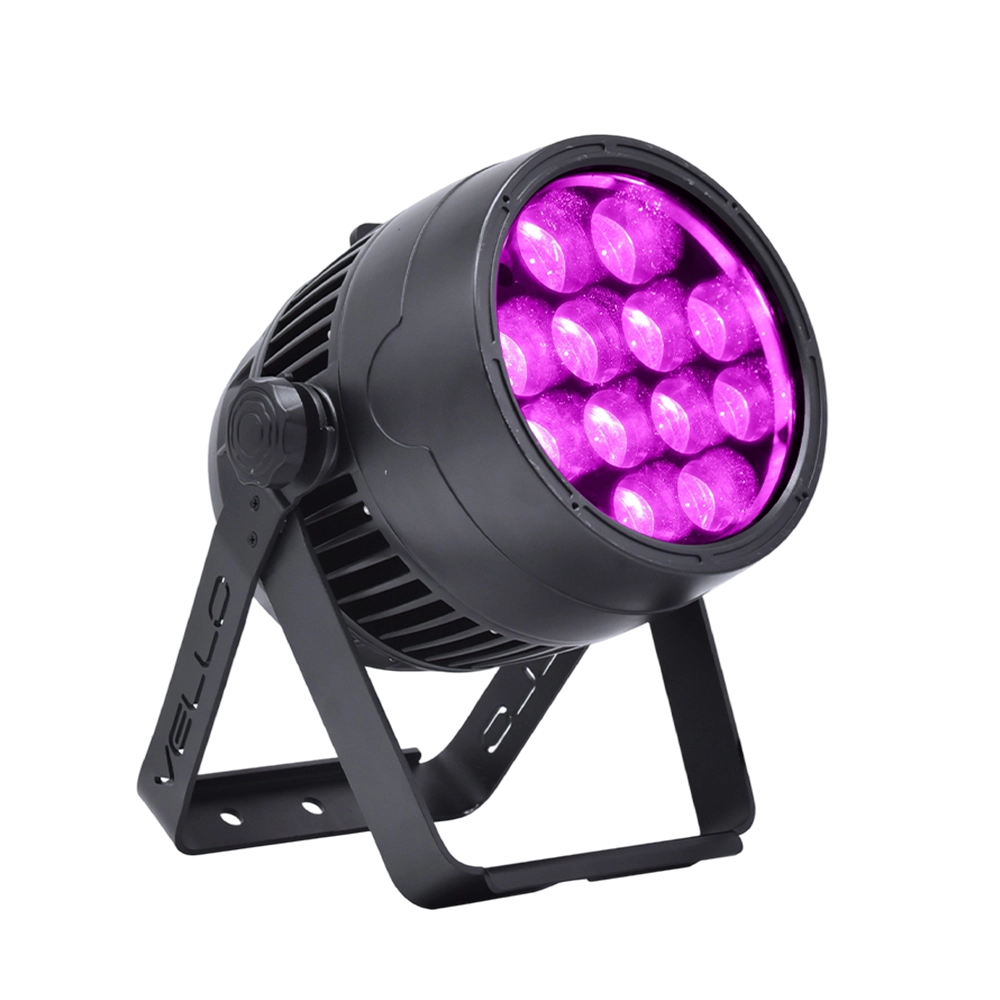
Stage LED Par Light LED ZOOMPAR 40
The Vello Zoom Par 40 IP is a powerful outdoor LED wash light equipped with 12x high-power 7-in-1 RGBACL LEDs. Designed for durability and rich color rendering, it features a wide motorized zoom (6°–50°), smooth dimming, and adjustable CTO presets (3200K–7500K), with 90+ CRI. With an IP66-rated die-cast aluminum body, it’s ideal for both indoor and outdoor applications, including stage lighting, architecture, live events, and installations.
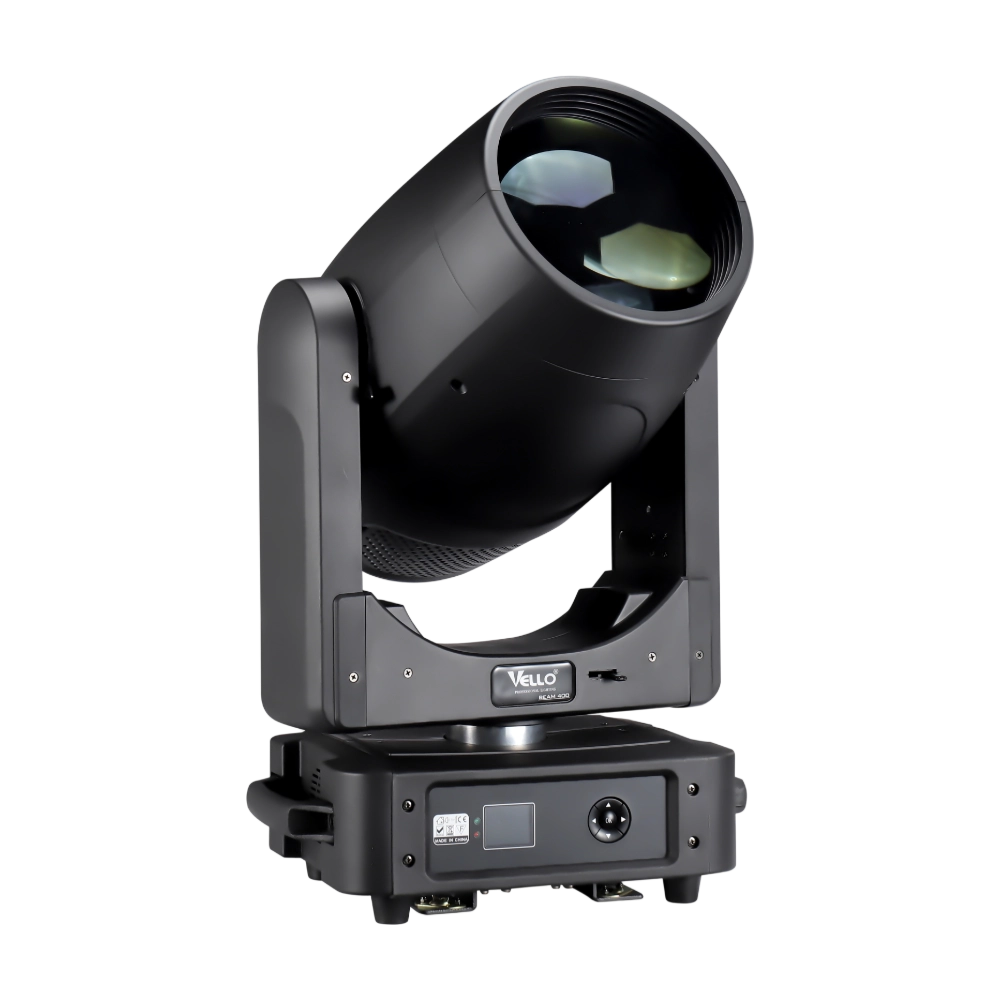
Moving Head Stage Light BEAM 400
BEAM400 is a 500W professional moving head beam powered by an OSRAM SIRIUS 371W discharge bulb, delivering a super-bright 1.8° sharp beam with impressive punch. It features 12 fixed gobos + open, a 14-color wheel, and a 16-facet circular rotating prism with multiple-facet effects, enabling dynamic aerial visuals. With 540° pan / 270° tilt, 16-bit movement resolution, and linear frost and focus, BEAM400 ensures precise and versatile performance. Comparable to traditional 750W moving heads, it combines high efficiency, smooth dimming, and reliable operation—ideal for concerts, tours, and large-scale stage productions.
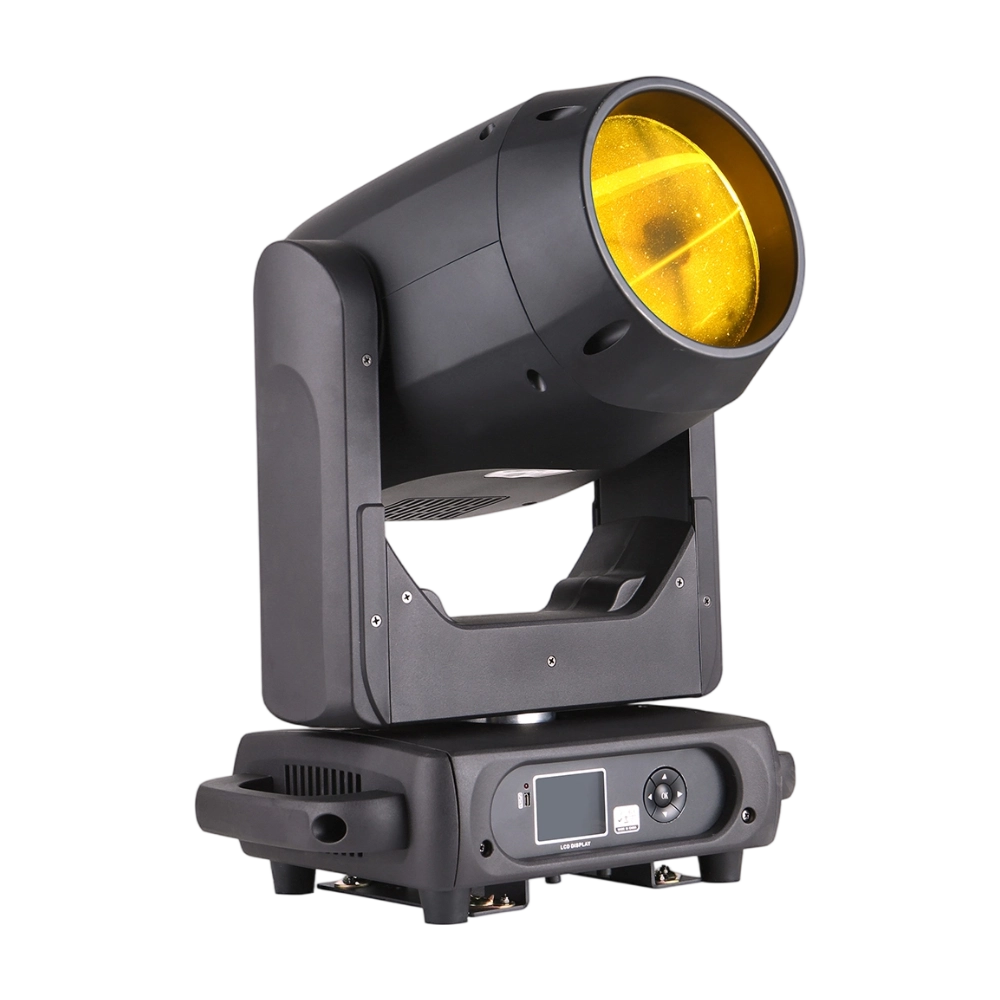
Moving Head Stage Light BEAM 360
BEAM360 is a 400W high-power moving head beam equipped with an OSRAM SIRIUS 311W discharge lamp, delivering a sharp 1.8° beam with super brightness. It features 14 colors + open, 12 fixed metal gobos + open, and dual prisms (8-facet circular + 8+16 multi-facet combination) for dynamic aerial effects. With 540° pan / 270° tilt, 16-bit movement, and linear frost and focus, BEAM360 ensures precision and versatility. Compact yet powerful, it rivals traditional 575W moving heads, making it ideal for concerts, clubs, and large-scale stage productions.
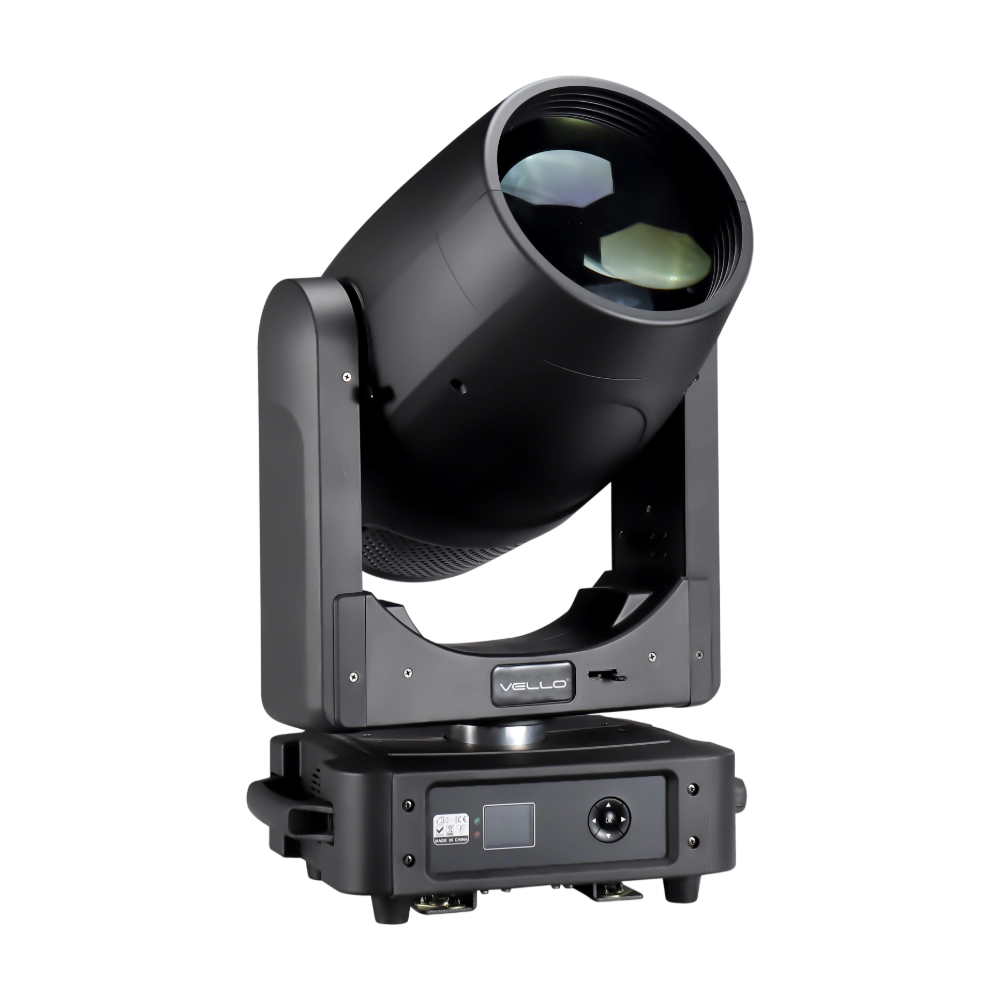
Moving Head Light BEAM 450
The BSW450 is a high-performance moving head fixture equipped with an original Osram 420W bulb, delivering exceptional brightness, precision, and versatility. Designed for professional stage applications, it seamlessly combines beam, spot, and wash functions in one compact unit, making it a powerful all-in-one lighting solution.
Over 20 Years of Innovation in Stage & Studio Lighting
© 2026 VELLO. All Rights Reserved. 粤ICP备20023734号
Join our socials
VELLO
Whatsapp: +8613902276704
Vello Lighting
VelloLights