





Energy Efficient LED Stage Lighting: Save Power and Costs
- Cut Costs with Smarter Stage Lighting Choices
- Why energy-efficient stage light matters
- How LED stage lights save energy: the technical differences
- Quantifying savings: a transparent example calculation for stage rigs
- Maintenance, heat and lifecycle cost comparisons
- Design strategies to maximize energy efficiency for stage light systems
- What to compare when selecting LED stage light fixtures
- Vello Light: manufacturer profile and why it matters for efficient stage light systems
- Case study — ROI for a mid-sized theatre upgrading to Vello LED fixtures (illustrative)
- Sustainability, rebates and compliance for stage light projects
- Practical steps to implement an efficient LED stage light upgrade
- FAQ — Energy Efficient LED Stage Lighting
- 1. How much energy can I realistically save by switching to LED stage light?
- 2. Will LEDs give me the same light quality and color rendering for theatre skin tones?
- 3. How long do LED stage light fixtures last in production use?
- 4. Do LEDs reduce cooling loads and HVAC costs?
- 5. Are there incentives to help pay for LED stage lighting upgrades?
- 6. How do I ensure my LED fixtures won’t flicker on cameras?
- Contact & Product Inquiry
- References
Cut Costs with Smarter Stage Lighting Choices
Why energy-efficient stage light matters
Stage lighting is one of the largest controllable electricity loads in theatres, concert venues, event spaces and production studios. Switching to energy-efficient LED stage light technology is not only about lower utility bills — it improves onsite heat load, reduces lamp maintenance, increases programming flexibility and supports sustainability goals that venues and promoters increasingly require. This article breaks down the practical, verifiable ways LED stage lighting saves power and costs, and how to plan an efficient transition.
How LED stage lights save energy: the technical differences
LEDs convert more electrical energy into visible light and less into heat when compared to halogen, incandescent or discharge lamps. Key technical factors that produce savings include higher luminous efficacy (lumens per watt), long service life of light engines, stable dimming performance, and intelligent drivers that reduce wasted power. For entertainment fixtures, the use of modern LEDs plus efficient optics and thermal management yields fixtures that often consume 60–90% less power than legacy equivalents while delivering comparable or superior visual output and control.
Authoritative guidance from the U.S. Department of Energy notes that LEDs can use at least 75% less energy and last 25 times longer than incandescent lighting in general applications — these broad figures also apply directionally to many stage lighting replacements, though entertainment fixtures have unique optics and power electronics that affect real-world numbers.
Quantifying savings: a transparent example calculation for stage rigs
Practical decisions require numbers. Below is an illustrative comparison between a traditional 1000 W fixture rig (commonly used in older par/ellipsoidal setups) and modern 300 W LED moving-head/LED wash equivalents. All figures are examples; project estimates should use real fixture specs and local energy prices.
| Item | Traditional Rig (10 × 1000 W fixtures) | LED Rig (10 × 300 W fixtures) |
|---|---|---|
| Installed power (kW) | 10.0 kW | 3.0 kW |
| Energy use per hour | 10.0 kWh | 3.0 kWh |
| Difference | 7.0 kWh saved per hour | |
| Assumed electricity price | $0.15 / kWh (example) | |
| Hourly energy cost saved | 7.0 kWh × $0.15 = $1.05 / hour | |
| Annual hours of use (example) | 500 hours | |
| Annual energy cost saved | 7.0 kWh × 500 h × $0.15 = $525 | |
Energy cost savings alone can look modest depending on hours and rates. However, the full operational savings picture includes lamp/arc replacement costs, maintenance labor, cooling load reductions, and grant or rebate incentives — all of which often make the payback period much shorter than energy cost alone implies.
Maintenance, heat and lifecycle cost comparisons
Maintenance and HVAC interactions are where LED stage light often yields the largest ongoing savings. LEDs typically last tens of thousands of hours, dramatically reducing or eliminating frequent bulb changes and associated downtime — a critical advantage for venue operations.
| Factor | Traditional (halogen/discharge) | LED stage light |
|---|---|---|
| Typical lamp life | 1,000–2,000 hours (incandescent/halogen) / 1,000–6,000 (discharge) | 25,000–50,000+ hours (LED engines) |
| Replacement parts & lamp cost | Moderate to high (frequent replacements; discharge lamps costly) | Low (long-life LEDs; occasional driver or module replacements) |
| Heat output | High — increases HVAC cooling load | Low — reduces cooling energy and improves comfort |
| Maintenance labor | Frequent lamp and alignment work | Reduced labor; more predictable scheduled service |
Source material from the U.S. Department of Energy and ENERGY STAR supports the general lifecycle advantages of LEDs for commercial and performance environments (see References).
Design strategies to maximize energy efficiency for stage light systems
Choosing LEDs is only the first step. To maximize efficiency and cost-effectiveness, apply these design practices:
- Right-size fixtures: select output and beam angles appropriate for the task — overspecifying wattage wastes energy.
- Zoning and local control: implement submasters and zoned power control so only required fixtures draw full power during rehearsals and partial cues.
- Use modern control protocols: DMX/RDM combined with intelligent controllers enables power limiting, soft starts and fixture diagnostics.
- Consider optical efficiency: high-quality optics can reduce the number of fixtures required for a given effect.
- Account for power factor and inrush: choose fixtures with good power factor correction to reduce apparent power demand on mains.
What to compare when selecting LED stage light fixtures
When evaluating moving heads, LED wash lights, par lights or studio fixtures, compare these technical specs rather than wattage alone:
- Luminous efficacy (lumens per watt) for the fixture or LED engine.
- Measured output at the aperture (Lux at distance) or photometric distribution curves.
- Color rendering index (CRI) and ability to mix color accurately for theatrical skin tones.
- Beam angle, zoom range and optical control.
- Flicker performance at camera frame rates for broadcast/studio use.
- Thermal design, IP rating for outdoor use, and warranty/service terms.
Vello Light: manufacturer profile and why it matters for efficient stage light systems
Vello Light Co., Ltd., established in 2003, is a comprehensive technology enterprise integrating R&D, manufacturing, and sales. Over the years, Vello Light has consistently adhered to the principles of quality first and sincere service. With the support and help of numerous customers both domestically and internationally, the company has continued to grow and develop, gradually becoming a unique and outstanding team in its field.
In recent years, with the rapid development of the LED lighting market, Vello Light has gathered a large number of professional talents to provide comprehensive and systematic services, including product R&D, manufacturing, marketing, engineering installation, and product maintenance. Through the joint efforts of Vello people, the company remains true to its original aspirations and perseveres in innovation, leveraging unique advantages to stand out in fierce competition. Currently, Vello Light products are exported both domestically and internationally and have a strong brand reputation, especially in overseas markets. VELLO is a registered brand specializing in moving head stage lights, LED wash lights and theatrical lights. The products are praised for professional technology, unique style, high-quality materials and durability.
Vello Light’s product lines relevant to energy-efficient stage lighting include:
- Moving head stage lights — versatile LED moving heads with efficient LED engines and compact thermal designs.
- Studio lights and LED effect lights — stable color and low flicker for broadcast and rental companies.
- LED Bar Lights and LED Par Lights — high efficacy wash fixtures for theatres and fixed installations.
- Outdoor stage lighting — IP-rated LED fixtures designed for touring and festivals with robust housings.
Competitive differentiators of Vello Light: strong R&D history since 2003, in-house manufacturing that enables quality control and customization, a service network covering engineering installation and maintenance, and a product portfolio geared to durability and overseas market standards. For venues seeking efficient, long-lasting stage light systems, partnering with an established manufacturer such as Vello Light reduces integration risk and accelerates operational savings.
Case study — ROI for a mid-sized theatre upgrading to Vello LED fixtures (illustrative)
This sample scenario uses conservative inputs and assumes the theatre replaces 10 traditional fixtures with Vello LED moving heads. Numbers are illustrative — use real quotes for final planning.
- Incremental capital cost per fixture for LED vs legacy fixture: $1,000 (High Quality for LED fixture capabilities)
- Total incremental capital: 10 × $1,000 = $10,000
- Estimated annual energy cost savings: $525 (from earlier example)
- Estimated annual maintenance savings (lamp replacements + labor): $1,100
- Total annual O&M + energy savings: $1,625
Estimated simple payback = $10,000 / $1,625 ≈ 6.2 years. Many venues observe shorter paybacks when factoring in rebates, higher local electricity costs, or additional savings from reduced HVAC load and reliability gains that avoid lost revenue from cancellations.
Sustainability, rebates and compliance for stage light projects
Many utilities and government programs offer incentives for energy-efficient lighting upgrades. Before purchasing, consult local utility rebate programs, national incentive portals, and regional grant schemes for cultural institutions. Additionally, selecting fixtures that meet recognized test standards (photometric reports, power quality, and flicker tests) helps ensure compliance with broadcast and local building codes and reduces risk during inspections.
Practical steps to implement an efficient LED stage light upgrade
- Inventory existing fixtures and measure actual usage hours and power draws.
- Define visual and technical requirements: beam angles, color rendering, control needs, and IP ratings.
- Request photometric data and IEC/ANSI test results from manufacturers; compare real output at fixture aperture rather than wattage alone.
- Calculate total cost of ownership including purchase price, energy, maintenance, HVAC impact, and downtime.
- Check for rebates and financing options that improve payback.
- Plan staged rollouts to preserve cashflow: replace high-use fixtures first for fastest returns.
FAQ — Energy Efficient LED Stage Lighting
1. How much energy can I realistically save by switching to LED stage light?
Typical energy savings range from 60% to 90% per fixture compared to legacy halogen/incandescent units depending on fixture type and usage patterns. The U.S. Department of Energy cites LEDs can use at least 75% less energy for common lighting conversions — use your rig’s measured wattage and hours to model expected savings precisely.
2. Will LEDs give me the same light quality and color rendering for theatre skin tones?
Yes — modern LED stage light fixtures are designed with high-CRI LEDs and accurate color-mixing systems to reproduce skin tones and theatrical color palettes. Compare CRI/TLCI specifications and ask for photometric and camera-flicker test reports before purchase.
3. How long do LED stage light fixtures last in production use?
LED engines commonly last 25,000–50,000 hours or more, but actual lifetime depends on thermal management and duty cycles. Fans, drivers, and other accessories may have shorter service lives; choose fixtures with good warranties and service support plans.
4. Do LEDs reduce cooling loads and HVAC costs?
Yes. Because LEDs emit less radiant and convective heat than equivalent-output legacy lamps, the building or rig’s cooling demand falls. The HVAC savings vary by venue size and climate but can be significant for indoor theatres with many high-wattage fixtures.
5. Are there incentives to help pay for LED stage lighting upgrades?
Often yes. Many utilities and national programs provide rebates or incentives for energy-efficient lighting upgrades. Contact local utility program administrators or use national incentive search portals to identify eligible rebates.
6. How do I ensure my LED fixtures won’t flicker on cameras?
Ask manufacturers for flicker test results at relevant frame rates and dimming levels (e.g., 24/30/60/120 fps). Choose fixtures designed for broadcast/studio versus simple architectural LEDs. Proper driver design and PWM frequency matter.
Contact & Product Inquiry
For tailored guidance, ROI modeling, or to evaluate Vello Light fixtures for your venue (moving head stage lights, studio lights, LED effect lights, LED bar lights, LED par lights, and outdoor stage lighting), contact Vello Light’s sales and engineering team. They can provide photometric reports, energy savings estimates, and site-specific proposals to accelerate savings and minimize risk.
References
- U.S. Department of Energy — LED Lighting (Energy Saver): https://www.energy.gov/energysaver/save-electricity-and-fuel/lighting-choices-save-you-money/led-lighting (accessed 2025-12-02).
- U.S. Department of Energy — Solid-State Lighting Program: https://www.energy.gov/eere/ssl/solid-state-lighting (accessed 2025-12-02).
- ENERGY STAR — LED Lighting Information: https://www.energystar.gov/products/lighting_fans/led_lighting (accessed 2025-12-02).
- U.S. Energy Information Administration (EIA) — Average Retail Price of Electricity (for pricing context): https://www.eia.gov/ (accessed 2025-12-02).
- U.S. Environmental Protection Agency — Greenhouse Gas Equivalencies Calculator: https://www.epa.gov/energy/greenhouse-gas-equivalencies-calculator (accessed 2025-12-02).
LED Moving Head Spot vs Wash: Which Is Right for You?
DMX Control Basics for Moving Head Lights
Stage LED Lights Maintenance, Cleaning and Lifespan Tips
Cost-Benefit Analysis: Custom Outdoor Lighting for Venues
Major categories
Do you ship internationally?
Yes. We offer sea, air, and express delivery to many countries and regions worldwide.
What is the warranty period for your products?
Most products come with a standard 1–2 year warranty. Please refer to product details or contract terms for specifics.
Do you offer samples?
Samples are available for certain models. Please confirm with our sales team for details.
What is the usual lead time?
Standard models are typically shipped within 7–15 working days after payment. Customized items may vary.
Do your products support customization?
Yes. We offer OEM and ODM services tailored to project needs, including design, optics, and control compatibility.
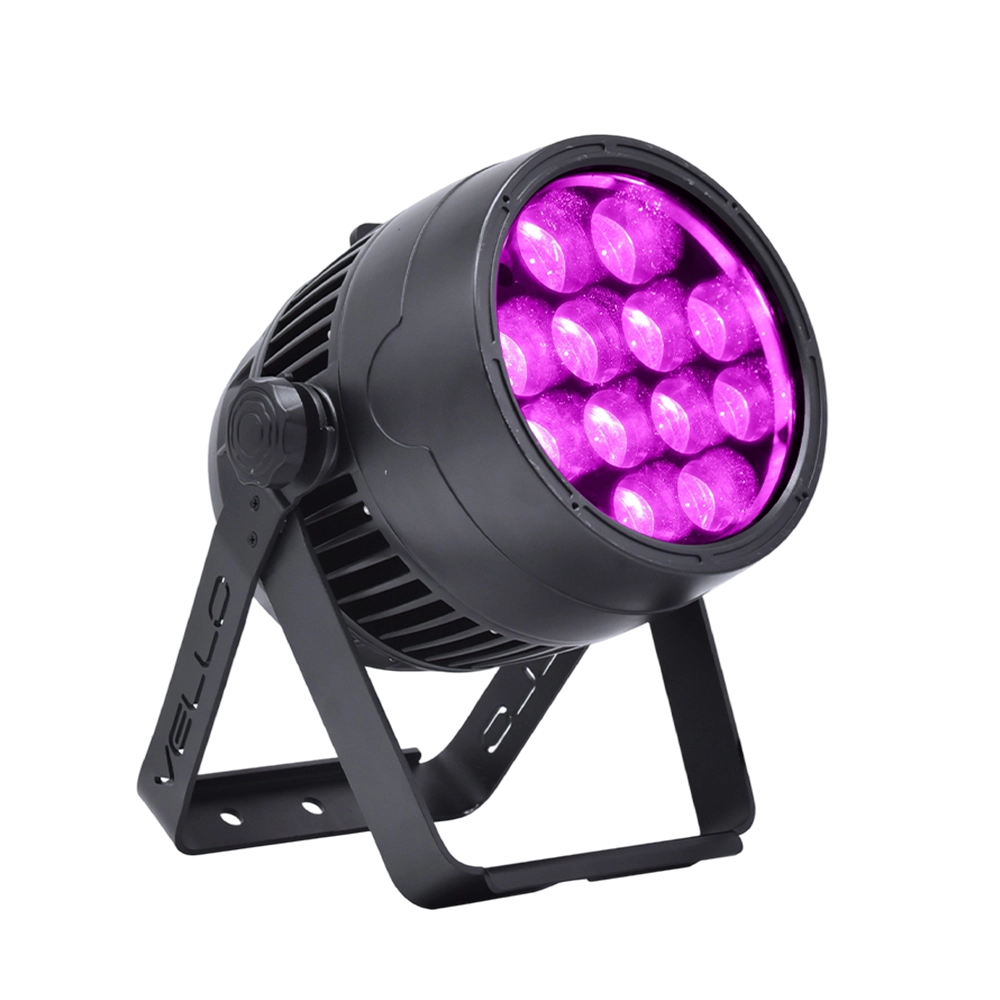
Stage LED Par Light LED ZOOMPAR 40
The Vello Zoom Par 40 IP is a powerful outdoor LED wash light equipped with 12x high-power 7-in-1 RGBACL LEDs. Designed for durability and rich color rendering, it features a wide motorized zoom (6°–50°), smooth dimming, and adjustable CTO presets (3200K–7500K), with 90+ CRI. With an IP66-rated die-cast aluminum body, it’s ideal for both indoor and outdoor applications, including stage lighting, architecture, live events, and installations.
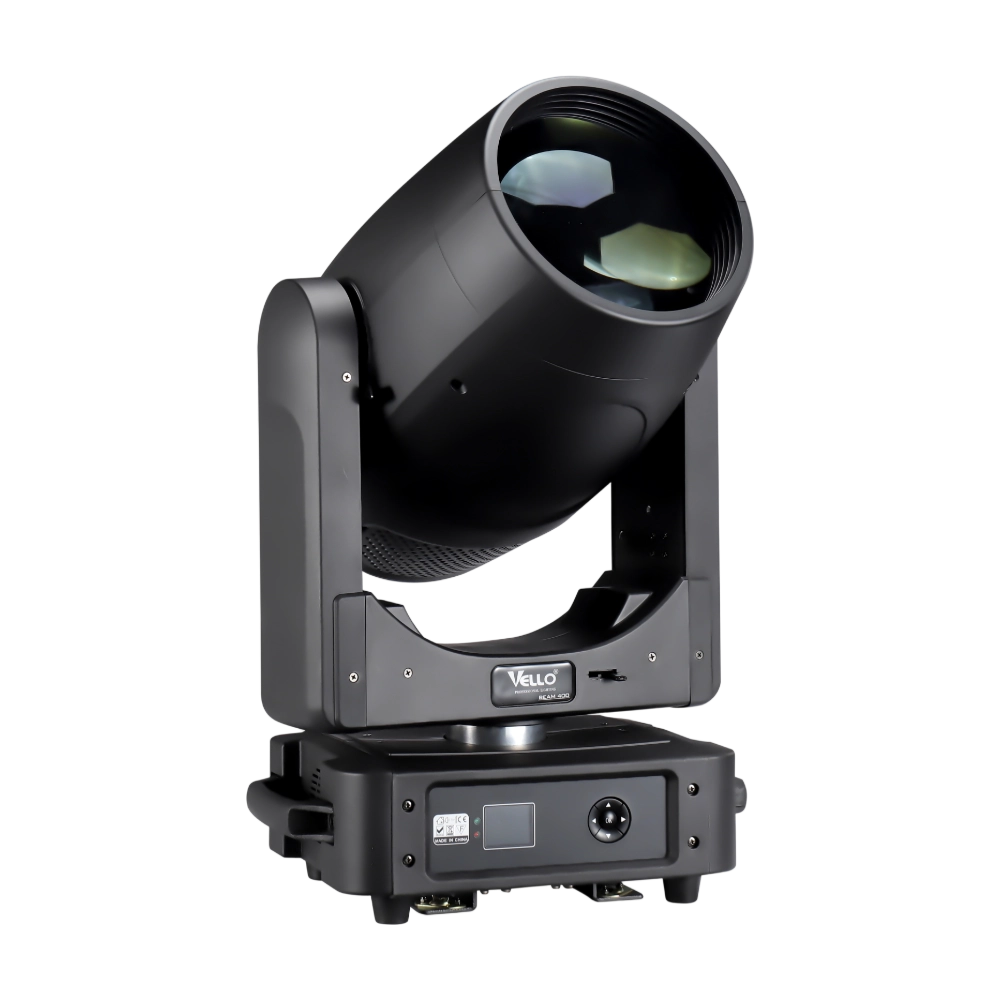
Moving Head Stage Light BEAM 400
BEAM400 is a 500W professional moving head beam powered by an OSRAM SIRIUS 371W discharge bulb, delivering a super-bright 1.8° sharp beam with impressive punch. It features 12 fixed gobos + open, a 14-color wheel, and a 16-facet circular rotating prism with multiple-facet effects, enabling dynamic aerial visuals. With 540° pan / 270° tilt, 16-bit movement resolution, and linear frost and focus, BEAM400 ensures precise and versatile performance. Comparable to traditional 750W moving heads, it combines high efficiency, smooth dimming, and reliable operation—ideal for concerts, tours, and large-scale stage productions.
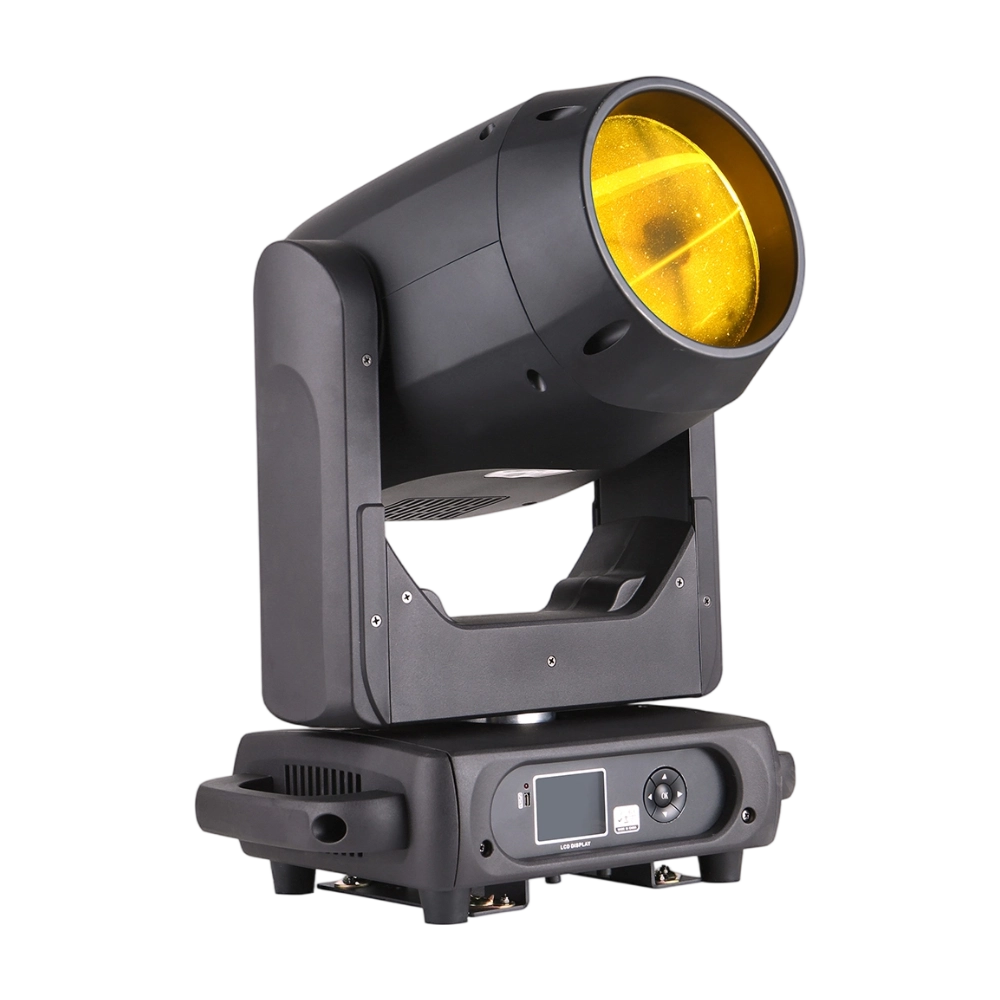
Moving Head Stage Light BEAM 360
BEAM360 is a 400W high-power moving head beam equipped with an OSRAM SIRIUS 311W discharge lamp, delivering a sharp 1.8° beam with super brightness. It features 14 colors + open, 12 fixed metal gobos + open, and dual prisms (8-facet circular + 8+16 multi-facet combination) for dynamic aerial effects. With 540° pan / 270° tilt, 16-bit movement, and linear frost and focus, BEAM360 ensures precision and versatility. Compact yet powerful, it rivals traditional 575W moving heads, making it ideal for concerts, clubs, and large-scale stage productions.
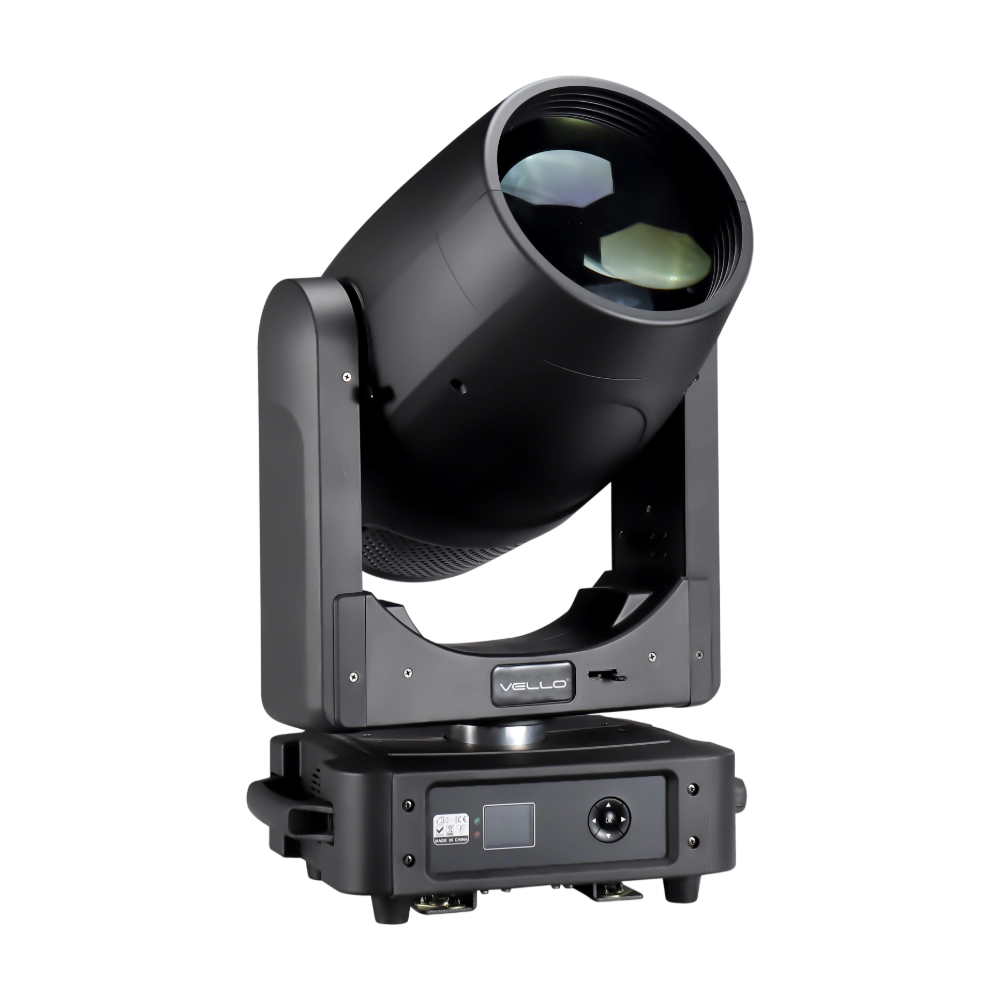
Moving Head Light BEAM 450
The BSW450 is a high-performance moving head fixture equipped with an original Osram 420W bulb, delivering exceptional brightness, precision, and versatility. Designed for professional stage applications, it seamlessly combines beam, spot, and wash functions in one compact unit, making it a powerful all-in-one lighting solution.
Over 20 Years of Innovation in Stage & Studio Lighting
© 2026 VELLO. All Rights Reserved. 粤ICP备20023734号
Join our socials
VELLO
Whatsapp: +8613902276704
Vello Lighting
VelloLights