





Energy Efficiency: Reducing Power Use with LED Lights
- Why Energy Efficiency Matters for Live Production
- How LED Technology Changes Stage Lighting Fundamentals
- Quantifying Energy Savings for Stage Lighting
- Comparing Technologies: LED vs. Traditional Stage Fixture Types
- Lifecycle Cost Analysis: Energy, Maintenance, and Cooling
- Design & Control Strategies to Maximize Stage Lighting Efficiency
- Real-world Examples and Operational Benefits in Stage Lighting
- Implementation Steps: Upgrading to LED Stage Lighting
- Vello Light — Experience and Product Support for Efficient Stage Lighting
- Practical Checklist for Buying Energy‑Efficient Stage Lighting
- Environmental and Regulatory Considerations
- Frequently Asked Questions (FAQ)
- 1. How much energy can I expect to save by switching my stage rig to LED stage lighting?
- 2. Will LED stage lights provide the same color quality and beam characteristics as traditional fixtures?
- 3. What are the main hidden costs in LED retrofits?
- 4. How do LEDs affect HVAC and audience comfort?
- 5. How long before I see a return on investment when upgrading to LED stage lighting?
- 6. Are there tradeoffs when choosing LED fixtures for touring productions?
- Contact Vello for Consultation and Product Details
- References
Why Energy Efficiency Matters for Live Production
Stage lighting is one of the most energy‑intensive systems in a live production or fixed venue. Reducing power use with LED lights not only cuts utility bills but also reduces cooling loads, maintenance, and logistical complexity. For production managers, venue owners, and lighting designers, understanding the technical, operational, and financial tradeoffs of LED stage lighting is essential to plan upgrades that deliver measurable savings without compromising artistic intent.
How LED Technology Changes Stage Lighting Fundamentals
LED technology transforms stage lighting because LEDs convert a higher percentage of electrical energy into usable light (lumens) and generate less radiant heat compared with incandescent, halogen, and many discharge lamp sources. In practical terms this allows designers to achieve similar or better visual results while drawing significantly less power. The U.S. Department of Energy and ENERGY STAR report that LEDs can use up to 75% less energy and last substantially longer than traditional incandescent lamps .
Quantifying Energy Savings for Stage Lighting
When evaluating energy efficiency, you should compare not only instantaneous wattage but also lumen output, beam/optical efficiency, and system losses (dimming, power supplies, cabling). Typical reductions observed when moving from halogen/incandescent or discharge fixtures to LED fixtures are in the 50%–85% range depending on fixture type and usage patterns.
Key measurable metrics to track:
- Input power (W) — real measured draw under production conditions.
- Luminous efficacy (lm/W) — how much visible light is produced per watt.
- Color rendering (CRI/TLCI) — to ensure visual quality is maintained.
- Fixture lifetime (hours) and maintenance interval.
- Cooling/air conditioning energy changes due to reduced radiant heat.
Comparing Technologies: LED vs. Traditional Stage Fixture Types
The table below summarizes typical characteristics and lifecycle considerations for representative fixture classes used in stage lighting. Numbers are typical ranges and should be validated against specific product datasheets.
| Fixture Type | Typical Power Draw | Typical Luminous Efficacy | Lamp/LED Lifetime | Relative Energy Use vs LED |
|---|---|---|---|---|
| Traditional Halogen/Incandescent PAR / Fresnel | 300–1,000 W | 10–20 lm/W | 1,000–2,000 h | ~4–10× higher |
| HMI / Discharge Moving Head | 400–1,000 W | 50–90 lm/W | 1,000–2,000 h (lamp change) | ~2–5× higher |
| LED Moving Head / LED Wash | 100–600 W | 50–150 lm/W (system) | 25,000–50,000+ h (LED engine) | Baseline (most efficient) |
| LED Par / Bar / Spot | 20–300 W | 60–140 lm/W | 25,000–50,000+ h | Baseline (most efficient) |
Sources: DOE and industry technical pages detailing LED advantages and HMI/discharge lamp characteristics . Note that moving-head LED products often integrate optics and color/beam engines to further increase usable light on stage, improving effective efficacy compared to raw lumen counts.
Lifecycle Cost Analysis: Energy, Maintenance, and Cooling
Decisions about upgrading fixtures should be based on total cost of ownership (TCO) not just purchase price. LEDs typically cost more up-front per fixture but pay back through lower energy use, fewer lamp replacements, and reduced labor for maintenance and rigging. They also reduce HVAC costs because of lower heat output.
Example annual TCO factors to model:
- Annual operating hours (performances, rehearsals, load-in/out)
- Electricity price ($/kWh)
- Maintenance labor cost per lamp change
- Lamp/consumables cost for discharge fixtures
- Capital cost amortization and financing
Simple rule of thumb: replacing a bank of 1,000 W halogen fixtures with LED equivalents that use ~200 W can cut fixture energy by ~80%. With electricity at $0.12/kWh and 1,000 annual hours, energy savings per fixture are approximately $96/year; scale that across dozens or hundreds of fixtures and HVAC savings and maintenance reduction can create a payback often less than 3–5 years depending on the venue and usage .
Design & Control Strategies to Maximize Stage Lighting Efficiency
Beyond choosing LED fixtures, implementing smart control and design practices yields additional savings:
- Pixel and zone zoning — control only the zones required rather than full rig at full intensity.
- Dimming curves and intelligent preheat — use control profiles that avoid over‑powering fixtures.
- Scene optimization — reuse looks and optimize cue lists to minimize simultaneous high-power states.
- Power distribution planning — use DC distribution or remote power supplies where appropriate to reduce losses.
- Use of optics — better lenses and reflectors increase usable on-stage lux per watt.
Integration with venue building systems (BMS) can allow lighting states to communicate with HVAC to avoid unnecessary cooling during low-output scenes, further increasing net energy savings .
Real-world Examples and Operational Benefits in Stage Lighting
When touring productions migrate to LED moving heads and LED washes, they see benefits beyond energy savings: lighter rigs reduce freight and truck weight; longer lifetimes reduce lamp changes on the road; reduced heat increases performer and audience comfort which can lower HVAC demands. Fixed venues benefit from predictable maintenance schedules and smaller inventory of replacement lamps and ballasts.
Case studies from venues and rental houses repeatedly report lower downtime and higher fixture availability after LED adoption, supporting smoother productions and fewer technical interruptions .
Implementation Steps: Upgrading to LED Stage Lighting
A practical roadmap for venues and production teams:
- Audit current inventory and run hours to identify highest-energy fixtures and usage patterns.
- Prioritize replacements where LED options provide similar theatrical quality (e.g., front light, washes, moving-head beams).
- Model TCO including energy prices, labor, and financing to estimate payback.
- Pilot a small subset of shows to test color rendering, beam quality, and control integration.
- Train technical staff on LED maintenance and DMX/remote control specifics.
- Implement controls and BMS integration to maximize operational savings.
Vello Light — Experience and Product Support for Efficient Stage Lighting
Vello Light Co., Ltd., established in 2003, is a comprehensive technology enterprise integrating R&D, manufacturing, and sales. With a long history of quality and customer service, VELLO has grown into a team recognized domestically and internationally. Their product range and services are well suited to venues and production houses pursuing energy efficiency and durability.
Vello's strengths relevant to energy‑efficient stage lighting:
- Broad LED product portfolio including moving head stage lights, studio lights, LED effect lights, LED bar lights, LED PAR lights, and outdoor stage lighting.
- Emphasis on product R&D and quality materials ensuring long LED engine lifetimes and reliable electronics.
- Capability to support engineering installation, on-site maintenance, and lifecycle service, which reduces downtime and total ownership cost.
- Proven export track record and brand recognition, particularly in overseas markets, backed by technical support and product customization.
Choosing manufacturers with integrated R&D, like Vello, can simplify retrofit projects because product specifications, photometric data, and control integration are consolidated under a single supplier. That reduces project risk and helps guarantee performance targets for energy and visual quality.
Practical Checklist for Buying Energy‑Efficient Stage Lighting
Before committing to fixtures, request the following documentation and test items:
- Photometric files (IES/LDT) for fixture layouts and lux calculations.
- Power factor, inrush current, and measured RMS current under DMX control.
- TM-30 / CRI / TLCI color metrics for accurate skin tones and color mixes.
- Manufacturer lifecycle (L70) data and warranty terms.
- Service network or on‑site support and spare parts availability.
Environmental and Regulatory Considerations
Many jurisdictions offer incentives, rebates, or accelerated depreciation for LED upgrades in commercial and public buildings. Check local utility commercial programs and national energy efficiency incentives to reduce initial capital cost. Additionally, lower energy consumption contributes to reduced CO2 emissions — a relevant metric for venues publishing sustainability reports or applying for green certifications.
Frequently Asked Questions (FAQ)
1. How much energy can I expect to save by switching my stage rig to LED stage lighting?
Savings vary by fixture type and usage, but common ranges are 50%–85% reduction in fixture energy compared with halogen/incandescent and significant reductions versus older discharge fixtures. Include HVAC reductions and maintenance savings when calculating total savings .
2. Will LED stage lights provide the same color quality and beam characteristics as traditional fixtures?
High-quality LED fixtures can match or exceed color rendering and offer precise beam control through improved optics. Look for TLCI/CRI and photometric data; test fixtures under real stage conditions to confirm visual compatibility with your design goals .
3. What are the main hidden costs in LED retrofits?
Hidden costs can include control system upgrades, required training, initial photometric rework of plots, and potential changes to rigging or power distribution. These are typically offset by long-term energy and maintenance savings but must be budgeted into the project plan.
4. How do LEDs affect HVAC and audience comfort?
LEDs emit less radiant heat, which lowers heat gain on stage and reduces HVAC demand. In many venues this results in notable cooling energy savings and improved comfort for performers and audiences .
5. How long before I see a return on investment when upgrading to LED stage lighting?
Typical payback periods range from 1 to 7 years depending on electricity costs, operational hours, number of fixtures replaced, and any available incentives. Running larger rigs or venues with high annual hours sees faster ROI.
6. Are there tradeoffs when choosing LED fixtures for touring productions?
Touring benefits include lighter weight and lower maintenance, but choices must consider durability, IP rating for weather, and consistency between units. Choose ruggedized fixtures with proven service networks for touring reliability.
Contact Vello for Consultation and Product Details
If you are planning a retrofit or spec’ing a new rig, Vello Light offers product families and technical services to help you model savings, select fixtures, and implement controls. Contact Vello Light for customized solutions, photometric data, and quotes on moving head stage lights, studio lights, LED effect lights, LED bar lights, LED PAR lights, and outdoor stage lighting. Start with an energy audit of your venue to identify highest-impact upgrades.
References
- U.S. Department of Energy — LED Lighting: Energy Savings, Characteristics, and Resources. https://www.energy.gov/energysaver/led-lighting. Accessed 2025-12-15.
- ENERGY STAR — LED Lighting Basics. https://www.energystar.gov/products/lighting_fans/light_bulbs/led_basics. Accessed 2025-12-15.
- Wikipedia — HMI Lamp (overview of discharge lamps used in stage lighting). https://en.wikipedia.org/wiki/HMI_lamp. Accessed 2025-12-15.
- ASHRAE & building controls integration whitepapers — Benefits of integrated control of lighting and HVAC systems. Example resource: ASHRAE technical guidance. https://www.ashrae.org. Accessed 2025-12-15.
- Industry case studies and trade press (Live Design, Lighting & Sound America) — reporting on venue and tour energy savings after LED adoption. Example archive: https://www.livedesignonline.com. Accessed 2025-12-15.
- TLCI and CRI standards overview: European Broadcasting Union and industry measurement pages. https://www.ebu.ch. Accessed 2025-12-15.
For personalized guidance on energy-efficient stage lighting design and to explore Vello Light's LED product line, contact Vello Light Co., Ltd. for consultation, samples, and detailed specifications.
Custom Outdoor Lighting Solutions for Event Production Companies
Safety, Certifications and Compliance for LED Stage Lights
Maintenance and Cleaning Guide for LED Stage Lights
Certifications and Compliance for Outdoor LED Lighting
Major categories
Do you offer samples?
Samples are available for certain models. Please confirm with our sales team for details.
What is the warranty period for your products?
Most products come with a standard 1–2 year warranty. Please refer to product details or contract terms for specifics.
What is the usual lead time?
Standard models are typically shipped within 7–15 working days after payment. Customized items may vary.
Do you ship internationally?
Yes. We offer sea, air, and express delivery to many countries and regions worldwide.
Do your products support customization?
Yes. We offer OEM and ODM services tailored to project needs, including design, optics, and control compatibility.
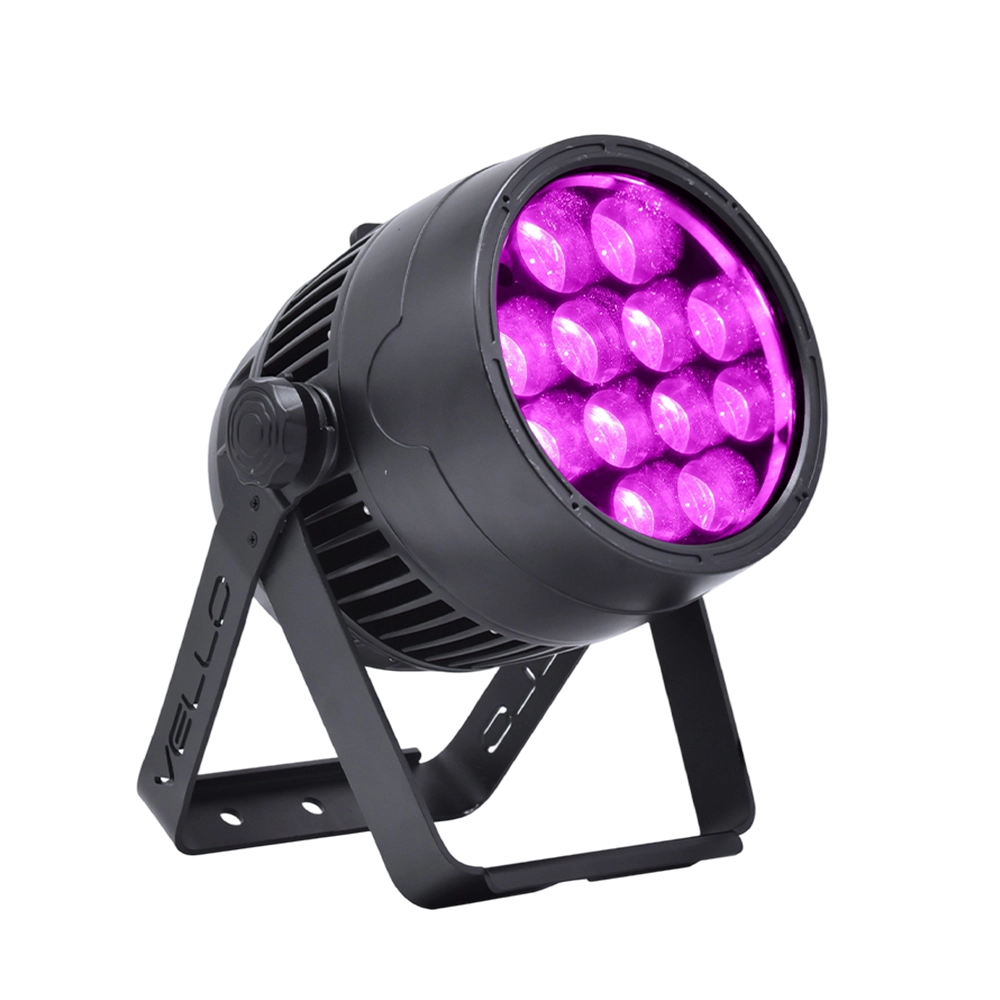
Stage LED Par Light LED ZOOMPAR 40
The Vello Zoom Par 40 IP is a powerful outdoor LED wash light equipped with 12x high-power 7-in-1 RGBACL LEDs. Designed for durability and rich color rendering, it features a wide motorized zoom (6°–50°), smooth dimming, and adjustable CTO presets (3200K–7500K), with 90+ CRI. With an IP66-rated die-cast aluminum body, it’s ideal for both indoor and outdoor applications, including stage lighting, architecture, live events, and installations.
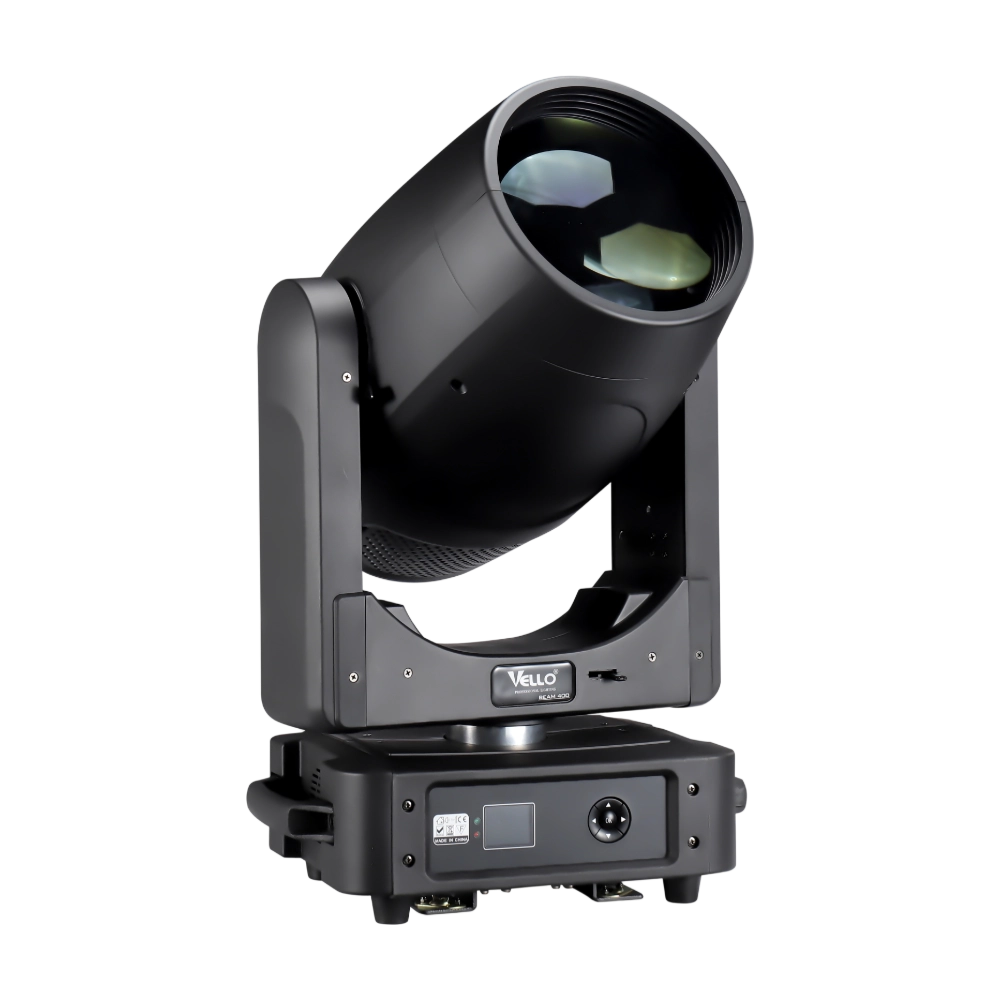
Moving Head Stage Light BEAM 400
BEAM400 is a 500W professional moving head beam powered by an OSRAM SIRIUS 371W discharge bulb, delivering a super-bright 1.8° sharp beam with impressive punch. It features 12 fixed gobos + open, a 14-color wheel, and a 16-facet circular rotating prism with multiple-facet effects, enabling dynamic aerial visuals. With 540° pan / 270° tilt, 16-bit movement resolution, and linear frost and focus, BEAM400 ensures precise and versatile performance. Comparable to traditional 750W moving heads, it combines high efficiency, smooth dimming, and reliable operation—ideal for concerts, tours, and large-scale stage productions.
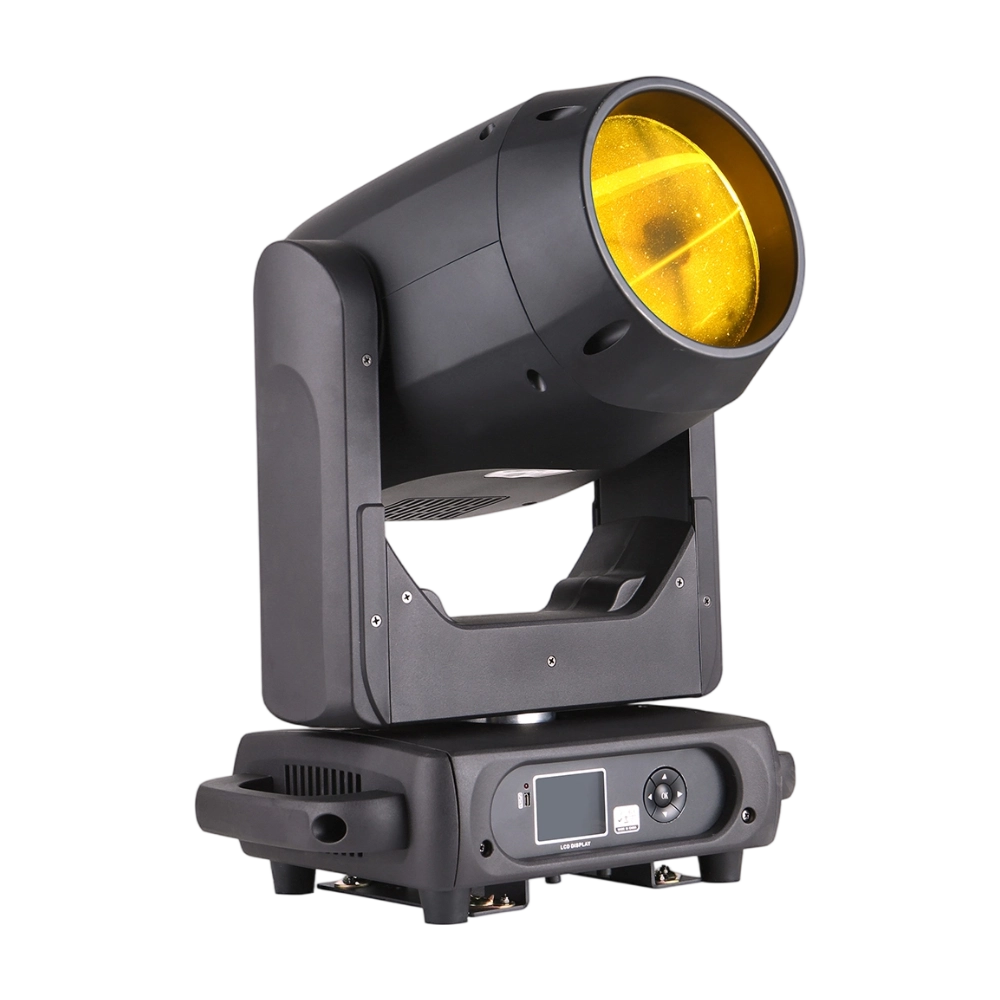
Moving Head Stage Light BEAM 360
BEAM360 is a 400W high-power moving head beam equipped with an OSRAM SIRIUS 311W discharge lamp, delivering a sharp 1.8° beam with super brightness. It features 14 colors + open, 12 fixed metal gobos + open, and dual prisms (8-facet circular + 8+16 multi-facet combination) for dynamic aerial effects. With 540° pan / 270° tilt, 16-bit movement, and linear frost and focus, BEAM360 ensures precision and versatility. Compact yet powerful, it rivals traditional 575W moving heads, making it ideal for concerts, clubs, and large-scale stage productions.
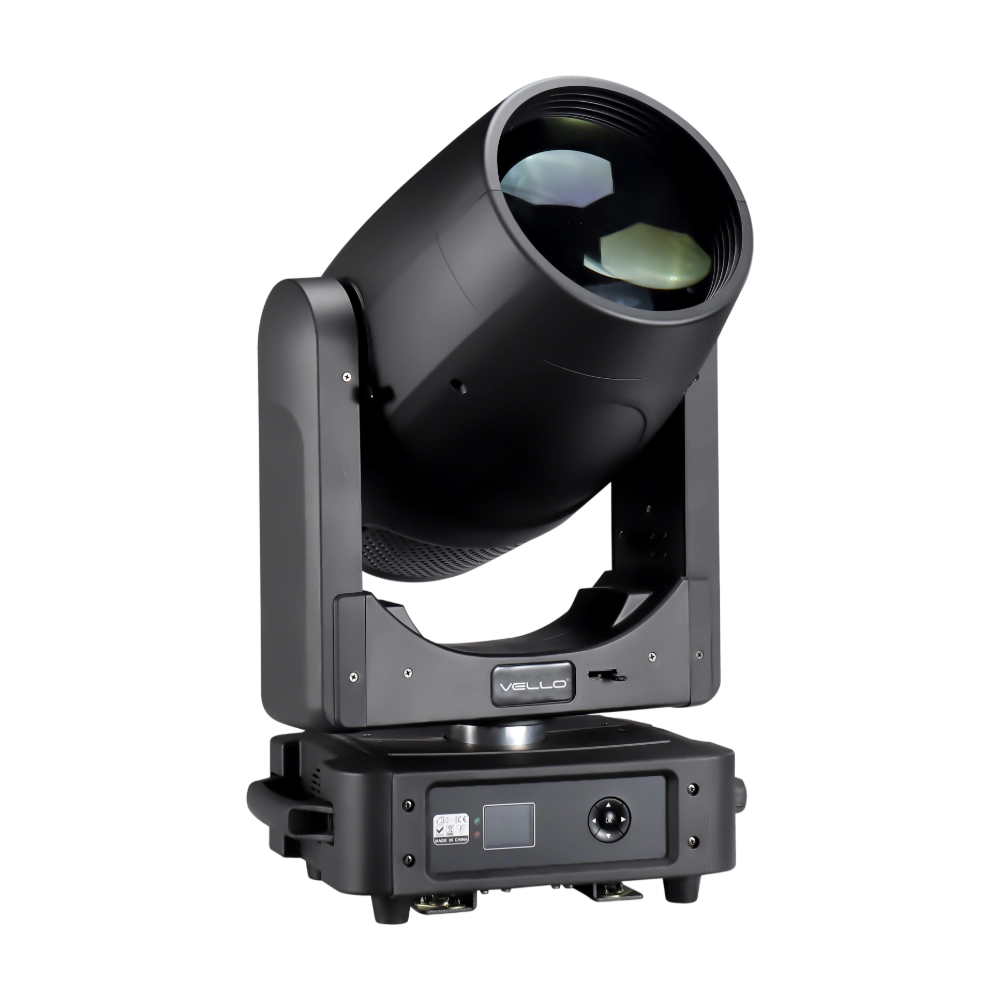
Moving Head Light BEAM 450
The BSW450 is a high-performance moving head fixture equipped with an original Osram 420W bulb, delivering exceptional brightness, precision, and versatility. Designed for professional stage applications, it seamlessly combines beam, spot, and wash functions in one compact unit, making it a powerful all-in-one lighting solution.
Over 20 Years of Innovation in Stage & Studio Lighting
© 2026 VELLO. All Rights Reserved. 粤ICP备20023734号
Join our socials
VELLO
Whatsapp: +8613902276704
Vello Lighting
VelloLights