





Energy Efficiency of LED Moving Head Lights
- Why energy efficiency matters in stage lighting
- How LED moving head lights save energy compared to traditional fixtures
- Typical performance ranges: LED vs. discharge moving head lights
- Quantifying energy and cost savings for venues and rental houses
- Cooling and HVAC implications
- Optical and photometric considerations that affect perceived efficiency
- Reliability, maintenance, and real-world lifecycle
- Environmental impact and regulatory trends
- Compliance and safety
- Selecting the right energy-efficient moving head lights for your needs
- Buy vs. rent considerations (: buying moving head lights)
- Case study and real-world example: projected savings for a mid-size venue
- Vello Light Co., Ltd — manufacturer profile and how VELLO addresses efficiency
- Technical checklist before purchasing energy-efficient moving head lights
- FAQ — Common questions about energy efficiency of moving head lights
- 1. Are LED moving head lights always more energy-efficient than traditional moving heads?
- 2. How much can I expect to save on electricity by switching to LED moving head lights?
- 3. Do LEDs reduce maintenance costs?
- 4. Will LED moving head lights produce the same visual quality (color, beam) as traditional fixtures?
- 5. Are there any scenarios where traditional fixtures are still preferable?
- 6. How should I estimate lifecycle costs when comparing fixtures?
- Contact and next steps
- References and further reading
Why energy efficiency matters in stage lighting
Energy costs, venue sustainability goals, equipment reliability, and operator convenience increasingly drive lighting specification decisions. For anyone specifying, buying, renting, or operating moving head lights, understanding energy efficiency is not just a technical exercise — it directly affects operating budgets, maintenance cycles, cooling needs, and carbon footprint. This article explains how LED moving head lights perform on those fronts, presents verified comparisons to traditional lamp-based fixtures, and gives actionable guidance for purchasers and technical managers.
How LED moving head lights save energy compared to traditional fixtures
Moving head lights historically used discharge lamps (metal halide, discharge arc lamps) or halogen sources. Modern LED moving head lights use arrays of high-power LEDs and optical systems to reproduce beams, spots, and washes. The primary energy advantages are:
- Lower rated lamp power for equivalent perceived output.
- Higher system luminous efficacy (lumens per watt) in many LED designs.
- Reduced need for frequent lamp replacement and associated downtime.
- Lower heat output to the venue, reducing HVAC load in many installations.
These translate into lower operational costs and reduced total cost of ownership (TCO) over the life of a fixture.
Typical performance ranges: LED vs. discharge moving head lights
Below is a consolidated comparison using representative values from industry datasheets and independent lighting research. Values are ranges because fixtures differ by design and manufacturer.
| Metric | LED Moving Head Lights (typical) | Discharge / Metal Halide Moving Head |
|---|---|---|
| Fixture Power (W) | 100–700 W (common: 150–400 W) | 400–2000 W (common: 575–1200 W) |
| Luminous Efficacy (lm/W) | 60–150 lm/W (system) | 40–90 lm/W (system) |
| Lamp/LED Life (hours) | 25,000–50,000+ hours (L70) | 2,000–6,000 hours (lamp replacement required) |
| Typical CRI / Color Options | High CRI options; tunable color output | Good white quality but limited color control without gels |
| Maintenance frequency | Low — cleaning, occasional driver checks | High — lamp changes, ignitor replacement, alignment |
Sources and datasets used to derive these ranges include manufacturer datasheets, DOE solid-state lighting summaries, and independent lighting research centers (see references).
Quantifying energy and cost savings for venues and rental houses
Operators often ask: How much will I save if I switch X fixtures to LED moving head lights? The answer depends on usage hours, local electricity cost, and fixture wattage. Example calculation below compares one 1000 W metal-halide moving head to a 300 W LED moving head producing comparable stage effects.
| Parameter | Metal-halide 1000 W | LED 300 W |
|---|---|---|
| Rated Power (W) | 1000 | 300 |
| Operating Hours / Year | 1,200 hours (example: active season or rental utilization) | |
| Energy Use / Year (kWh) | 1,200 kWh | 360 kWh |
| Electricity Cost ($0.15/kWh) | $180 / year | $54 / year |
| Annual Energy Savings | $126 per fixture per year (66% energy reduction) | |
| Replacement Lamp Cost (per lamp) | $200–$600 (plus labor) | Typically none for LED within first 5–7 years |
In this example, the LED fixture offers approximately two-thirds energy savings. Multiplied across a rig of dozens of fixtures and several seasons, savings become significant. For rental companies and fixed venues, the reduced maintenance downtime and fewer lamp-change expenses further improve TCO.
Cooling and HVAC implications
LED fixtures produce less radiant heat than high-wattage discharge lamps. In enclosed venues, reduced heat load can decrease HVAC runtime and costs. While exact HVAC savings depend on venue size and occupancy patterns, lighting heat reduction should be included in lifecycle cost models for installations where climate control is a major budget item.
Optical and photometric considerations that affect perceived efficiency
Energy efficiency is not just about raw lumens per watt — optical design, beam control, and color mixing influence the perceived brightness and usefulness of a fixture. Manufacturers achieve practical efficiency by using:
- Advanced collimation and reflectors to direct light where it's needed.
- Efficient LED arrays with binning and thermal design to maintain lumen output.
- Precision lenses and prisms to minimize losses in effects mode.
When comparing moving head lights for purchase, look at measured beam lux at a given distance (photometric chart), not just LED wattage. Two fixtures with similar wattage can have different usable output depending on optics and color mixing efficiency.
Reliability, maintenance, and real-world lifecycle
Lifecycle reliability is a major part of energy efficiency in the broader sense. LED moving head lights reduce labor and replacement part costs. Key points to evaluate:
- Driver and thermal management quality — long-lived LEDs need robust drivers and heat dissipation.
- Modular design — fixtures that allow easy access to fans and drivers lower service downtime.
- Manufacturer support and spare parts availability — affects MTTR (mean time to repair).
Fixtures from manufacturers with sustained R&D and manufacturing capabilities typically offer better long-term value. Warranty length and documented failure rates (when available) should be considered in procurement decisions.
Environmental impact and regulatory trends
LED moving head lights contribute to carbon reduction goals by using less electricity and reducing waste from spent lamps and disposables. Many jurisdictions incentivize energy-efficient lighting through rebates or faster depreciation schedules. For large-scale installations (touring rigs, arenas, convention centers), the environmental benefits can be material and align with corporate sustainability reporting.
Compliance and safety
LED fixtures typically avoid hazardous materials found in some discharge lamps (e.g., mercury). They also incorporate electronic ballasts/drivers complying with EMC and safety standards. When specifying moving head lights, verify certifications (CE, ETL/UL, RoHS) to ensure compliance with local regulations.
Selecting the right energy-efficient moving head lights for your needs
Selection depends on application: touring, theatre, houses of worship, TV studios, corporate events, outdoor stages. Consider these steps:
- Define required beam types (spot, wash, beam) and relevant lux values at working distances.
- Estimate annual runtime and calculate energy cost scenarios using local kWh rates.
- Evaluate photometric data (lux @ distance), color rendering (CRI/TLCI), and dimming behavior.
- Include maintenance workflows — can your tech team service fixtures, or will you rely on vendor support?
- Assess TCO, including initial price, energy, maintenance, and expected lifespan.
Buy vs. rent considerations (: buying moving head lights)
Rental houses should prefer fixtures with fast ROI (lower energy + lower lamp costs + proven market demand) and robust flightworthiness. Fixed venues often prioritize long-term efficiency, ease of programming, and low maintenance. For purchasing, ask suppliers for total cost projections tailored to your expected usage.
Case study and real-world example: projected savings for a mid-size venue
Example: A 500-seat theatre replaces 30 metal-halide moving heads (700 W each) with 30 LED moving heads (300 W each). Assuming 1,000 operating hours/year and $0.12/kWh:
| Item | Old (700 W) | New (300 W) |
|---|---|---|
| Total fixture power (30 units) | 21,000 W | 9,000 W |
| Annual energy (kWh) | 21,000 kWh | 9,000 kWh |
| Annual energy cost | $2,520 | $1,080 |
| Annual savings | $1,440 (57% reduction) | |
Over five years, energy savings alone approach $7,200; adding reduced lamp replacement and maintenance improves ROI substantially.
Vello Light Co., Ltd — manufacturer profile and how VELLO addresses efficiency
Vello Light Co., Ltd., established in 2003, is a comprehensive technology enterprise integrating R&D, manufacturing, and sales. Over the years, Vello has consistently adhered to the principles of quality first and sincere service. With the support and help of numerous customers both domestically and internationally, the company has continued to grow and develop, gradually becoming a unique and outstanding team in the stage lighting field.
In recent years, with the rapid development of the LED lighting market, Vello Light has gathered a large number of professional talents to provide comprehensive and systematic services, including product R&D, manufacturing, marketing, engineering installation, and product maintenance. Through the joint efforts of Vello people, the company remains true to its original aspirations and perseveres in innovation, leveraging its unique advantages to stand out in fierce competition. Currently, Vello's products are exported both domestically and internationally and have a strong brand reputation, especially in overseas markets. VELLO is the company's registered brand, specializing in moving headlights, LED wash lights, and theatrical lights. Vello products are highly praised and loved by many customers for their professional technology, unique style, high-quality materials, and durability.
Vello's vision is to become a world-leading stage lighting manufacturer. The company's competitive advantages relevant to energy efficiency include:
- Integrated R&D and manufacturing allowing optimized LED thermal design and driver tuning.
- Experienced engineering teams that design optics to maximize delivered lux while minimizing wasted photons.
- Durable materials and modular design reducing downtime and lifecycle costs.
- Product range covering moving head stage lights, studio lights, LED effect lights, LED bar lights, LED par lights, and outdoor stage lighting — providing integrated, energy-efficient solutions for venues and production companies.
For buyers and specifiers seeking energy-efficient moving head lights, evaluating products from manufacturers like VELLO — who combine design, production, and after-sales service — can simplify procurement and lifecycle management.
Technical checklist before purchasing energy-efficient moving head lights
Before buying, request or verify:
- Photometric files (IES/LM-63) for the exact fixture model.
- Driver efficiency and power factor data.
- Thermal specifications and L70 lumen maintenance projections.
- Warranty terms and spare parts availability.
- Certifications: CE/ETL/UL, RoHS, and any local compliance marks.
- Sample programs or demo units to verify color, beam, and dimming performance in your space.
FAQ — Common questions about energy efficiency of moving head lights
1. Are LED moving head lights always more energy-efficient than traditional moving heads?
Generally yes — LEDs consume less electrical power for comparable usable output and have higher system efficacy. However, comparisons should use photometric measurements (lux at distance) rather than raw wattage.
2. How much can I expect to save on electricity by switching to LED moving head lights?
Savings vary by fixture and usage, but typical energy reductions of 50–70% per fixture are common when replacing high-wattage metal-halide heads with modern LED moving heads.
3. Do LEDs reduce maintenance costs?
Yes — LEDs have much longer rated lifespans (often 25,000–50,000+ hours) compared to discharge lamps (2,000–6,000 hours), reducing lamp replacements and associated labor.
4. Will LED moving head lights produce the same visual quality (color, beam) as traditional fixtures?
Modern LED moving head lights can match or exceed traditional fixtures in color control (RGBW/tunable whites), and many fixtures offer high CRI/TLCI options. Beam quality depends on optics; review photometric charts and demos to confirm suitability.
5. Are there any scenarios where traditional fixtures are still preferable?
Some vintage lighting looks or very specific color temperatures may favor lamp-based fixtures. Also, if a production requires a particular beam characteristic only offered by an existing lamp-based unit, conversion may be delayed. But for most commercial and theatrical applications, LEDs are now the preferred choice for efficiency and flexibility.
6. How should I estimate lifecycle costs when comparing fixtures?
Include initial purchase price, energy cost (kWh × hours), maintenance (lamp/parts + labor), expected useful life, and any disposal costs. For venues, include potential HVAC savings due to lower heat output.
Contact and next steps
If you are evaluating energy-efficient moving head lights for purchase or specification, Vello Light Co., Ltd. can provide product datasheets, photometric files, and demo units. Contact your VELLO representative to discuss system design, ROI modeling, and product options, or view the VELLO catalog to compare moving head stage lights, studio lights, LED effect lights, LED bar lights, LED par lights, and outdoor stage lighting.
References and further reading
- U.S. Department of Energy — Energy Saver: LED Lighting — https://www.energy.gov/energysaver/led-lighting (Accessed: 2025-12-20)
- U.S. Department of Energy — Solid-State Lighting R&D — https://www.energy.gov/eere/ssl/solid-state-lighting (Accessed: 2025-12-20)
- Lighting Research Center, RPI — Solid-State Lighting resources — https://www.lrc.rpi.edu (Accessed: 2025-12-20)
- Wikipedia — Stage lighting — https://en.wikipedia.org/wiki/Stage_lighting (Accessed: 2025-12-20)
- Grand View Research — LED Lighting Market Analysis (industry overview) — https://www.grandviewresearch.com/industry-analysis/led-lighting-market (Accessed: 2025-12-20)
- Manufacturer datasheets and product photometrics (representative): consult vendor pages for current IES files and luminaire technical sheets (various manufacturers) (Accessed: 2025-12-20)
For personalized guidance on selecting energy-efficient moving head lights and system-level cost modeling, contact VELLO's sales and technical team to request datasheets, photometrics, and demo units.
Maintenance Checklist for Commercial LED Moving Head Light
How to Choose LED Stage Lights for Different Venues
How to Rig and Safely Mount Stage Lights
Custom LED Lighting Buyer’s Guide for Stage and Events
Major categories
Do you ship internationally?
Yes. We offer sea, air, and express delivery to many countries and regions worldwide.
Do your products support customization?
Yes. We offer OEM and ODM services tailored to project needs, including design, optics, and control compatibility.
What is the usual lead time?
Standard models are typically shipped within 7–15 working days after payment. Customized items may vary.
Do you offer samples?
Samples are available for certain models. Please confirm with our sales team for details.
What is the warranty period for your products?
Most products come with a standard 1–2 year warranty. Please refer to product details or contract terms for specifics.
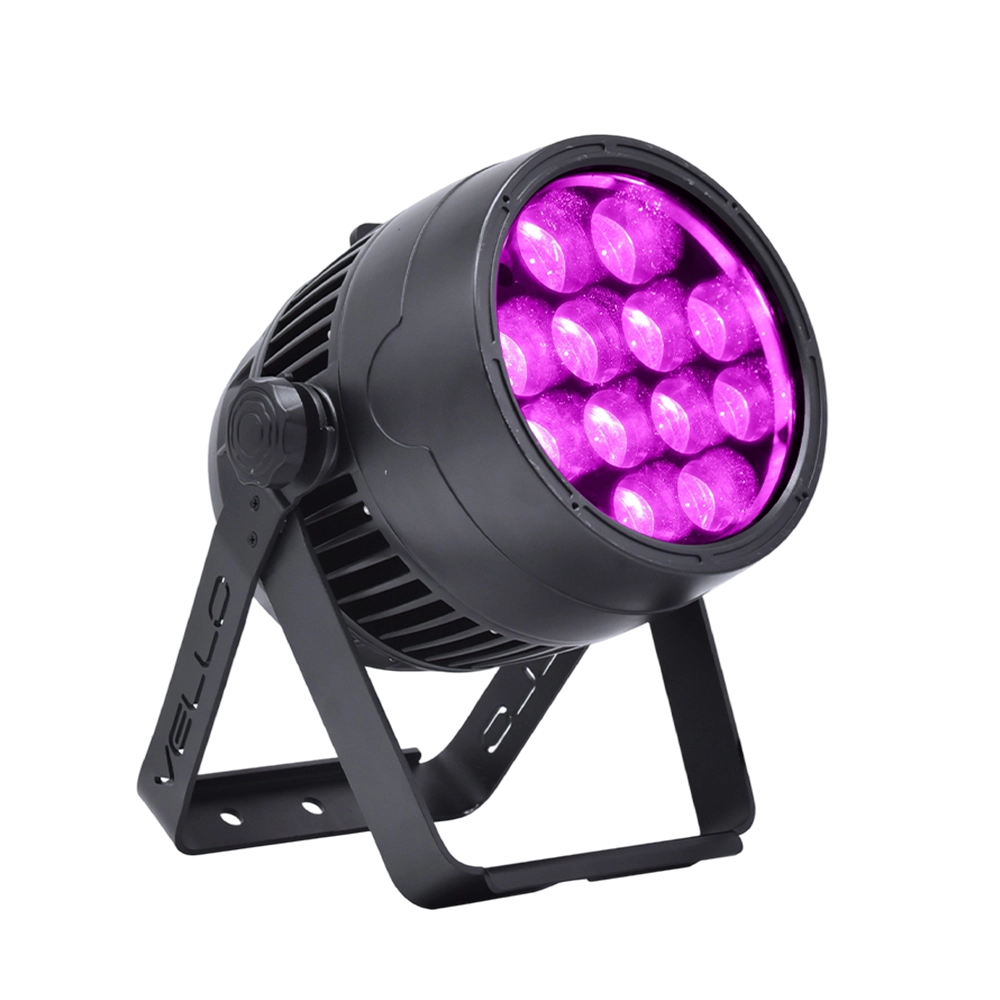
Stage LED Par Light LED ZOOMPAR 40
The Vello Zoom Par 40 IP is a powerful outdoor LED wash light equipped with 12x high-power 7-in-1 RGBACL LEDs. Designed for durability and rich color rendering, it features a wide motorized zoom (6°–50°), smooth dimming, and adjustable CTO presets (3200K–7500K), with 90+ CRI. With an IP66-rated die-cast aluminum body, it’s ideal for both indoor and outdoor applications, including stage lighting, architecture, live events, and installations.
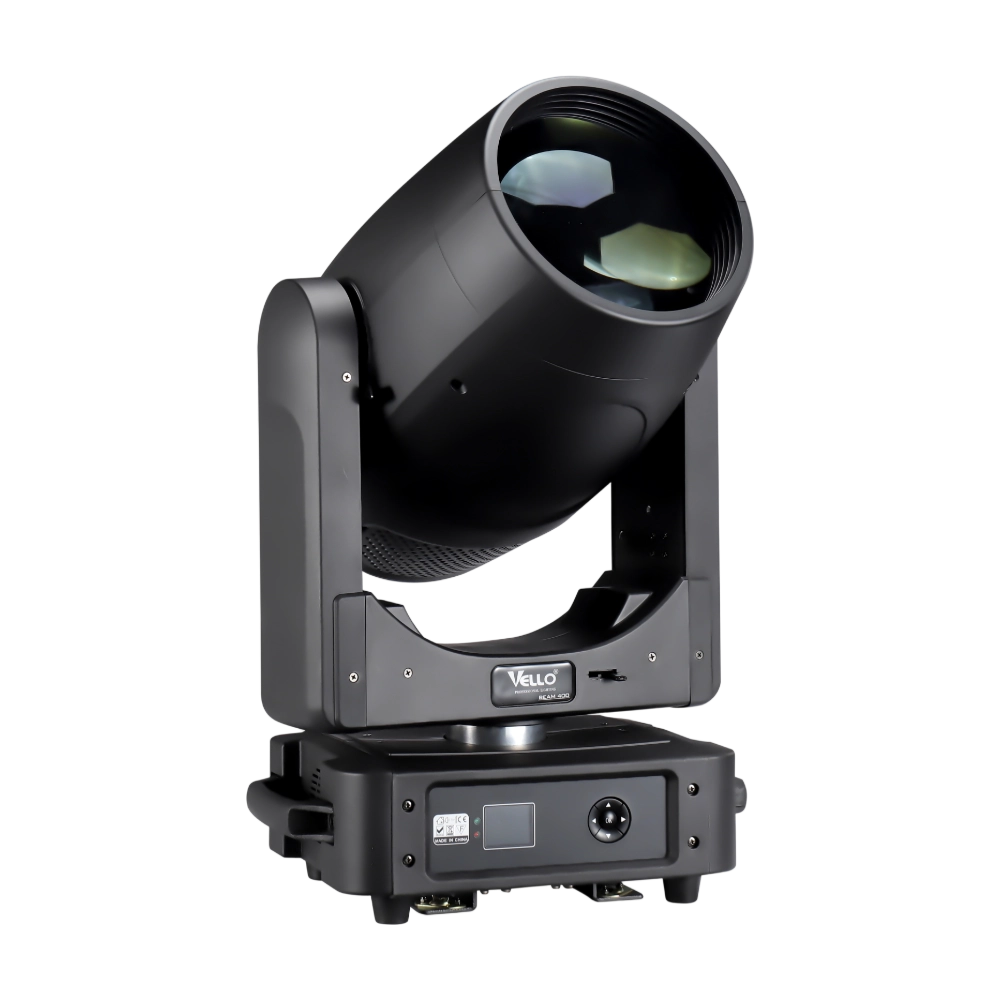
Moving Head Stage Light BEAM 400
BEAM400 is a 500W professional moving head beam powered by an OSRAM SIRIUS 371W discharge bulb, delivering a super-bright 1.8° sharp beam with impressive punch. It features 12 fixed gobos + open, a 14-color wheel, and a 16-facet circular rotating prism with multiple-facet effects, enabling dynamic aerial visuals. With 540° pan / 270° tilt, 16-bit movement resolution, and linear frost and focus, BEAM400 ensures precise and versatile performance. Comparable to traditional 750W moving heads, it combines high efficiency, smooth dimming, and reliable operation—ideal for concerts, tours, and large-scale stage productions.
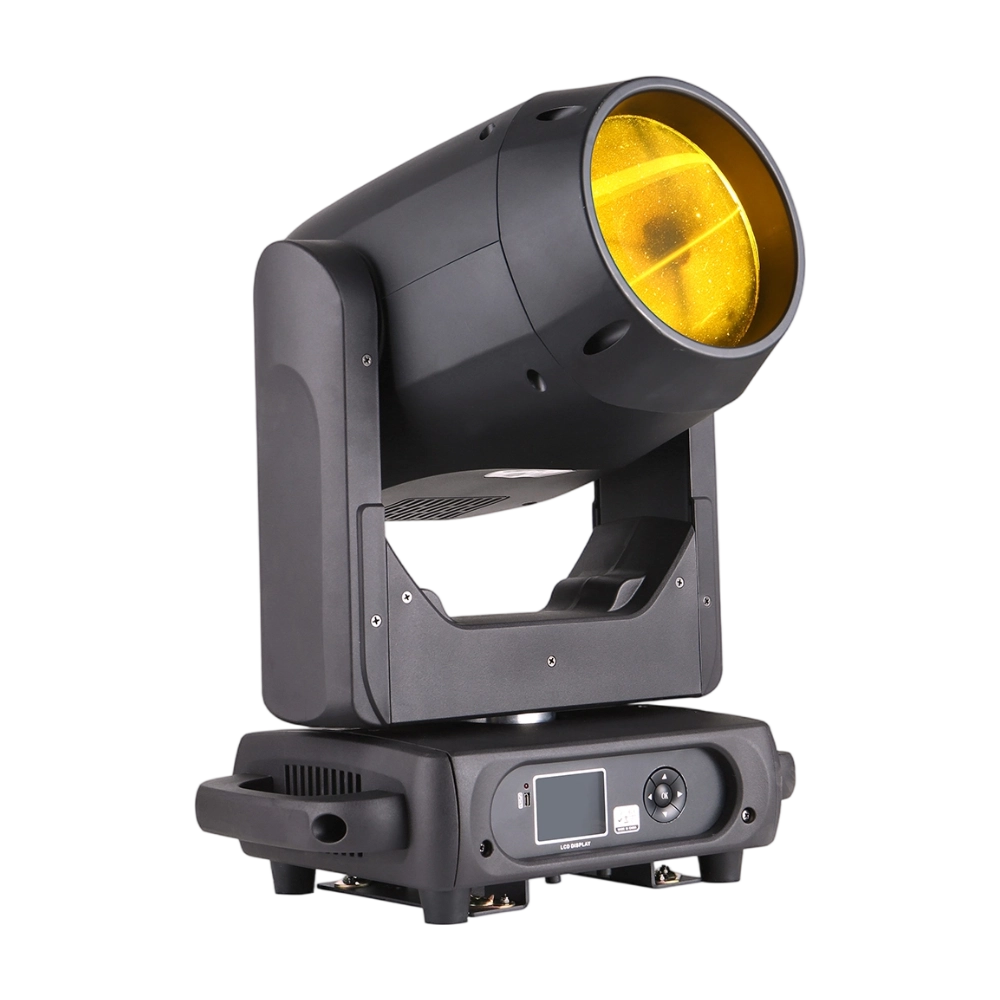
Moving Head Stage Light BEAM 360
BEAM360 is a 400W high-power moving head beam equipped with an OSRAM SIRIUS 311W discharge lamp, delivering a sharp 1.8° beam with super brightness. It features 14 colors + open, 12 fixed metal gobos + open, and dual prisms (8-facet circular + 8+16 multi-facet combination) for dynamic aerial effects. With 540° pan / 270° tilt, 16-bit movement, and linear frost and focus, BEAM360 ensures precision and versatility. Compact yet powerful, it rivals traditional 575W moving heads, making it ideal for concerts, clubs, and large-scale stage productions.
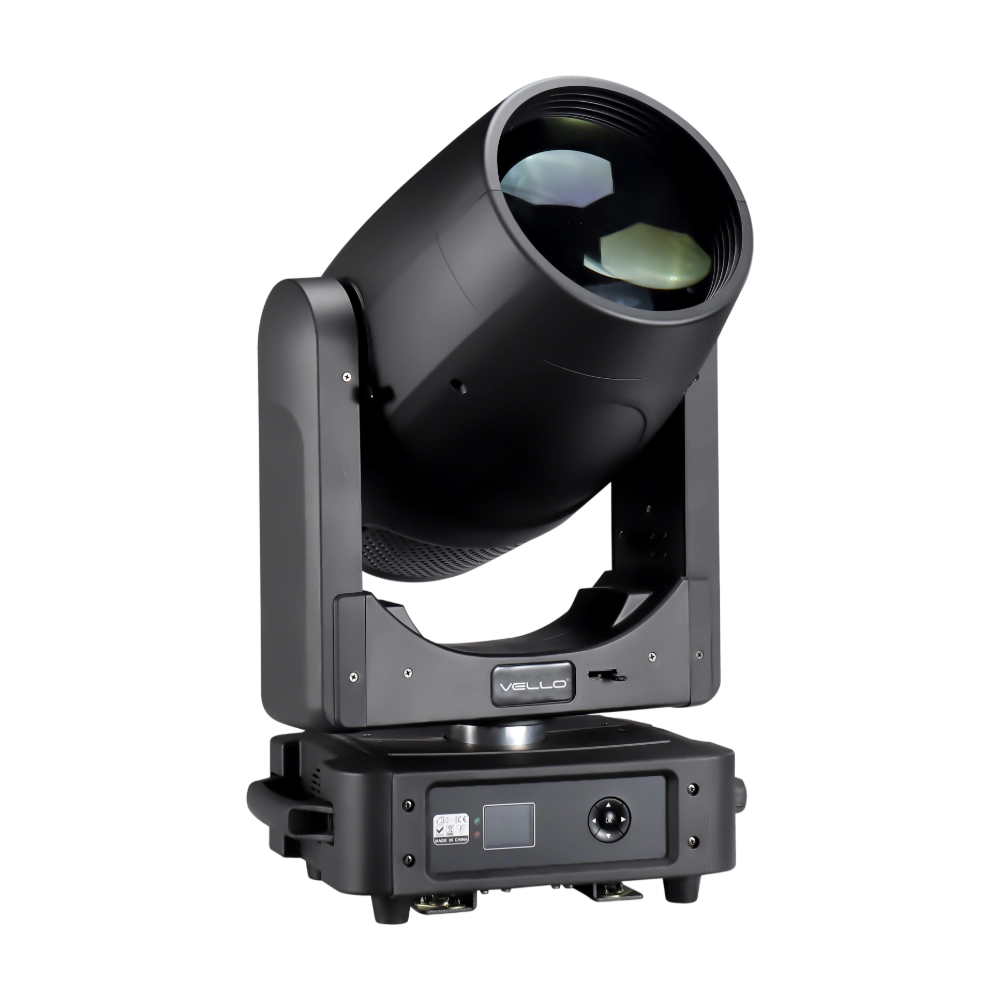
Moving Head Light BEAM 450
The BSW450 is a high-performance moving head fixture equipped with an original Osram 420W bulb, delivering exceptional brightness, precision, and versatility. Designed for professional stage applications, it seamlessly combines beam, spot, and wash functions in one compact unit, making it a powerful all-in-one lighting solution.
Over 20 Years of Innovation in Stage & Studio Lighting
© 2026 VELLO. All Rights Reserved. 粤ICP备20023734号
Join our socials
VELLO
Whatsapp: +8613902276704
Vello Lighting
VelloLights