





DMX and Wireless Control: Integrating Stage Lights LED Systems
- Understanding control protocols for live lighting
- DMX512 basics and what 512 channels means
- Ethernet-based protocols: Art-Net and sACN
- Wireless DMX: technologies and trade-offs
- Designing an integrated control architecture
- How to choose between wired DMX and Ethernet-based control
- Universe planning, addressing and bandwidth calculations
- Remote Device Management (RDM) and firmware policies
- Best practices for deployment and troubleshooting
- Signal integrity, grounding and termination
- RF planning: avoiding interference and ensuring coverage
- Power, thermal management and LED dimming concerns
- Implementations, comparisons and ROI
- Wireless vs wired vs Ethernet: a quick comparison
- Case study: small theatre vs touring rig
- Estimating ROI: reduced labor, faster load-ins, and fewer cables
- Vendor and product selection: why choose VELLO for stage lights led solutions
- About Vello Light Co., Ltd.
- VELLO capabilities, products and competitive advantages
- Operational checklists and final recommendations
- Pre-show checklist
- On-site troubleshooting flow
- Long-term maintenance and lifecycle management
- FAQ
- 1. What is the difference between DMX512 and Art-Net/sACN?
- 2. Can I use RDM over wireless DMX?
- 3. How many wireless DMX transmitters can I run in one venue?
- 4. How do I calculate how many DMX universes I need?
- 5. Is Ethernet lighting control secure from other network traffic?
- 6. What are the common causes of color shift in LED stage lights led fixtures?
Summary for : This article provides a practical, standards-aware guide to integrating DMX and wireless control into stage lights led systems. It covers DMX512, Art-Net and sACN fundamentals, wireless DMX technologies, network and RF planning, device management (RDM), power and signal integrity, and real-world deployment checklists for venues and touring rigs. Authoritative references are included to support interoperability and design decisions.
Understanding control protocols for live lighting
DMX512 basics and what 512 channels means
DMX512 is the long-established serial control protocol for stage lights led fixtures used in live events, theatres and installations. DMX512 defines a universe of 512 channels transmitted over a differential pair (typically XLR-5 or XLR-3 wiring in modern practice). Each channel represents an 8-bit (0-255) control value, used for intensity, color mixing, pan/tilt or effect parameters on LED moving heads, par lights and LED bars. (See the DMX512 overview on Wikipedia for the formal definition: https://en.wikipedia.org/wiki/DMX512).
Ethernet-based protocols: Art-Net and sACN
Ethernet protocols such as Art-Net and Streaming ACN (sACN, also called E1.31) allow multiple DMX universes to be transported over standard IP networks. Art-Net is often used in production environments for its interoperability and tooling, while sACN is an ANSI/ESTA-recognized streaming protocol designed for scalability on large lighting networks. Both allow centralized show control, distributed fixture mapping and integration with video or automation systems. See: Art-Net and Streaming ACN (sACN).
Wireless DMX: technologies and trade-offs
Wireless DMX replaces the physical DMX cable with RF links, typically in the 2.4 GHz band or proprietary 900 MHz/5 GHz implementations for better RF resilience. Industry solutions such as LumenRadio CRMX use adaptive frequency hopping, forward error correction and robust synchronization to maintain control of stage lights led fixtures in congested RF environments. Wireless DMX simplifies rigging and reduces cable runs but introduces RF planning requirements and potential latency. Manufacturer documentation is essential; see LumenRadio CRMX technology overview: https://lumenradio.com/technology/crmx/.
Designing an integrated control architecture
How to choose between wired DMX and Ethernet-based control
Choice depends on scale and complexity. For small venues or simple rigs (few universes), wired DMX remains reliable and easy to troubleshoot. For medium to large installations, networked control using Art-Net or sACN enables many universes, VLAN separation and remote diagnostics. Consider the number of fixtures, required universes, latency budget, and whether you need centralized control for complex playback or distributed show engines.
Universe planning, addressing and bandwidth calculations
Calculate required universes: sum the channel usage of all fixtures and divide by 512, rounding up. For example, a moving head using 24 channels and 40 units consumes 960 channels = 2 universes. When using Art-Net/sACN, allocate IP addressing and subnetting so that streaming traffic is isolated from other network traffic. Use multicast carefully with sACN and ensure switches support IGMP snooping to prevent unnecessary load.
Remote Device Management (RDM) and firmware policies
RDM (Remote Device Management) allows querying and configuring fixtures over DMX lines. RDM is invaluable during setup for addressing and diagnostics, but note that RDM is not always supported over wireless links. Maintain a firmware policy: standardize firmware revision across a fleet of stage lights led fixtures, schedule firmware audits before tours or major shows, and document rollback procedures. Manufacturer release notes and change logs should be kept alongside network diagrams.
Best practices for deployment and troubleshooting
Signal integrity, grounding and termination
For wired DMX: use proper differential cable (DMX-rated, twisted pair with shield), terminate the last fixture with a 120-ohm resistor, and avoid daisy-chaining long unterminated runs. Ensure a single point of grounding to reduce ground loops and hum that can affect intelligent fixtures and LED drivers. When multiple power distribution racks are involved, use star power distribution where possible and label distro outputs.
RF planning: avoiding interference and ensuring coverage
Wireless DMX requires RF site surveys for congested venues. Identify sources of interference (Wi-Fi access points, Bluetooth, cell phone repeaters, LED driver noise). Use directional antennas where appropriate, keep transmitters elevated and line-of-sight where possible, and limit transmitter counts to avoid co-channel interference. For critical shows, deploy redundant wireless paths (primary and backup transmitters) and test under full audience/crew load. Guidance from wireless DMX vendors like LumenRadio is useful for planning; their material includes recommended antenna placements and channel selection strategies (LumenRadio CRMX).
Power, thermal management and LED dimming concerns
LED fixtures have different power profiles than incandescent fixtures; they can draw near-constant current with high inrush or have active cooling requirements. Ensure power cabling gauge supports the inrush and continuous current, and provide adequate ventilation for LED drivers to avoid thermal throttling which alters color rendering or luminosity. Be mindful of dimming behavior—some LED drivers prefer 0-10V, PWM or DMX-based dimming curves. Consult fixture datasheets for recommended control modes for consistent fades and color mixing in stage lights led products.
Implementations, comparisons and ROI
Wireless vs wired vs Ethernet: a quick comparison
| Protocol | Max channels per universe | Typical range | Latency | Best use |
|---|---|---|---|---|
| DMX512 (Wired) | 512 | Up to 300m per run (with repeaters) | <10 ms (serial updates) | Simple rigs, reliable point-to-point control |
| Wireless DMX (CRMX / proprietary) | 512 per universe (wireless transports DMX streams) | Typically up to 300 m LOS; varies with tech | Varies; vendor optimized to <10 ms | Quick installs, fewer cables, touring & temporary rigs |
| Art-Net / sACN (Ethernet) | Multiple universes (hundreds+) over IP | Network dependent (virtually unlimited LAN) | <10 ms typical; depends on network load | Large venues, distributed control, integration with media servers |
Sources: DMX512 definition (Wikipedia), Art-Net/sACN summaries (Art-Net, sACN), and wireless vendor guidance (LumenRadio).
Case study: small theatre vs touring rig
Small theatre (50–300 seats): A hybrid approach often works best. Use wired DMX for FOH and follow spots to ensure deterministic control; deploy one or two wireless links for hard-to-reach soffit or FOH booms. Use Art-Net/sACN only if you plan to integrate house automation or video control. Keep RDM enabled for addressing and diagnostics.
Touring rig: Prioritize redundancy and networked control. Use Art-Net/sACN for universe aggregation and remote patch management; wireless DMX for quick-focus fixtures or moving truss elements where cable runs are impractical. Standardize on patch templates, maintain spare transceivers and follow a pre-show checklist that includes RF site checks under full load.
Estimating ROI: reduced labor, faster load-ins, and fewer cables
Wireless control and networked architectures can reduce cable labor costs and load-in time substantially—especially for festivals and touring shows. Calculate ROI by comparing cable and labor hours saved against equipment cost (wireless transceivers, managed switches, network infrastructure) and factor in improved safety from fewer tripping hazards. Track mean time between failures (MTBF) for fixtures and transceivers to build a maintenance budget and replacement cycle.
Vendor and product selection: why choose VELLO for stage lights led solutions
About Vello Light Co., Ltd.
Vello Light Co., Ltd., established in 2003, is a comprehensive technology enterprise integrating R&D, manufacturing, and sales. Over the years, we have consistently adhered to the principles of quality first and sincere service. With the support and help of numerous customers both domestically and internationally, we have continued to grow and develop, gradually becoming a unique and outstanding team in our field.
VELLO capabilities, products and competitive advantages
In recent years, with the rapid development of the LED lighting market, Vello Light has gathered a large number of professional talents to provide comprehensive and systematic services, including product R&D, manufacturing, marketing, engineering installation, and product maintenance. Through the joint efforts of Vello people, we remain true to our original aspirations and persevere in innovation, leveraging our unique advantages to stand out in the fierce competition. Currently, our products are exported both domestically and internationally and have a strong brand reputation, especially in overseas markets. VELLO is our registered brand, specializing in moving headlights, LED wash lights, and theatrical lights. Our products are highly praised and loved by many customers for their professional technology, unique style, high-quality materials, and durability.
VELLO's main product lines include moving head stage lights, studio lights, led effect light, Led Bar Lights, Led Par Light, and outdoor stage lighting. The company's competitive advantages include:
- Integrated R&D and in-house manufacturing for consistent quality control.
- Robust international supply chain and export experience, ensuring timely delivery for tours and installations.
- Comprehensive after-sales support covering engineering installation and maintenance.
- Product durability and professional-grade components tailored for touring and fixed-install applications.
For product inquiries or technical consultations visit https://www.vellolight.com or email info@vellolight.com.
Operational checklists and final recommendations
Pre-show checklist
- Confirm universe counts and patch in the console; verify IP addressing for Art-Net/sACN devices.
- Verify firmware versions and RDM responses for each fixture.
- Perform RF scan and full-intensity test of wireless channels with all other venue systems powered.
- Label and document cable runs, power distro and network topology.
On-site troubleshooting flow
- Isolate whether issue is power, DMX/data, or fixture failure (use multimeter/loopback tests).
- For wired DMX, check termination and cable continuity; for networked setups, check switch port status and IGMP/multicast behavior.
- For wireless issues, move to alternate RF channels, increase transmitter power within regulatory limits, or use a backup wired path.
Long-term maintenance and lifecycle management
Track runtime hours per fixture, maintain a spare parts inventory for drivers and lenses, and schedule annual audits for firmware, connectors and cooling systems. Replace consumables proactively (fans, power capacitors) to avoid last-minute failures. Keep test rigs and a portable console for field diagnostics during tours.
FAQ
1. What is the difference between DMX512 and Art-Net/sACN?
DMX512 is a serial protocol for a single universe (512 channels) over a cable run. Art-Net and sACN carry multiple DMX universes over Ethernet networks, enabling large-scale deployments and integration with IP-based systems. See references: DMX512, Art-Net, sACN.
2. Can I use RDM over wireless DMX?
Some wireless implementations support RDM, but it depends on the vendor and whether the wireless transceiver forwards RDM packets reliably. Always check vendor documentation and test RDM functions in your intended wireless configuration.
3. How many wireless DMX transmitters can I run in one venue?
That depends on channel planning and vendor capabilities. Use frequency planning and avoid co-channel interference. For congested venues, consider redundant wired backups. Follow vendor RF planning guides (e.g., LumenRadio) for recommended maximum transmitter density.
4. How do I calculate how many DMX universes I need?
Sum the channel count of each fixture (consult the fixture DMX map) and divide by 512, rounding up. Account for additional universes for media servers or pixel-mapped fixtures. Keep spare universe capacity for future expansion.
5. Is Ethernet lighting control secure from other network traffic?
Yes, but you must architect the network correctly. Put lighting devices on isolated VLANs, use managed switches, enable IGMP snooping for multicast control like sACN, and avoid bridging lighting control networks with general-purpose IT networks unless explicitly required and secured.
6. What are the common causes of color shift in LED stage lights led fixtures?
Color shift may result from thermal issues, inconsistent driver behavior, or mismatched firmware/LED binning. Ensure adequate ventilation, standardize firmware and use fixtures from the same production batch for critical color matching where possible.
For further consultation, custom quotes or to view product specifications, contact VELLO Light Co., Ltd. at https://www.vellolight.com or email info@vellolight.com. Our product range includes moving head stage lights, studio lights, led effect light, Led Bar Lights, Led Par Light and outdoor stage lighting — designed for reliability, serviceability, and professional performance.
Need personalized system design or on-site RF/network planning? Reach out to VELLO's technical team for a free consultation and product recommendation tailored to your stage lights led project.
Warranty and Support Checklist for Custom LED Lighting Suppliers
Use Cases: Concerts, Theaters & Corporate Events with LED Stage Lights
Warranty, Service & Spare Parts for LED Moving Head Light
LED Stage Lights Buying Guide: Types, Specs and Costs
Major categories
Do you offer samples?
Samples are available for certain models. Please confirm with our sales team for details.
Do your products support customization?
Yes. We offer OEM and ODM services tailored to project needs, including design, optics, and control compatibility.
Do you ship internationally?
Yes. We offer sea, air, and express delivery to many countries and regions worldwide.
What is the warranty period for your products?
Most products come with a standard 1–2 year warranty. Please refer to product details or contract terms for specifics.
What is the usual lead time?
Standard models are typically shipped within 7–15 working days after payment. Customized items may vary.
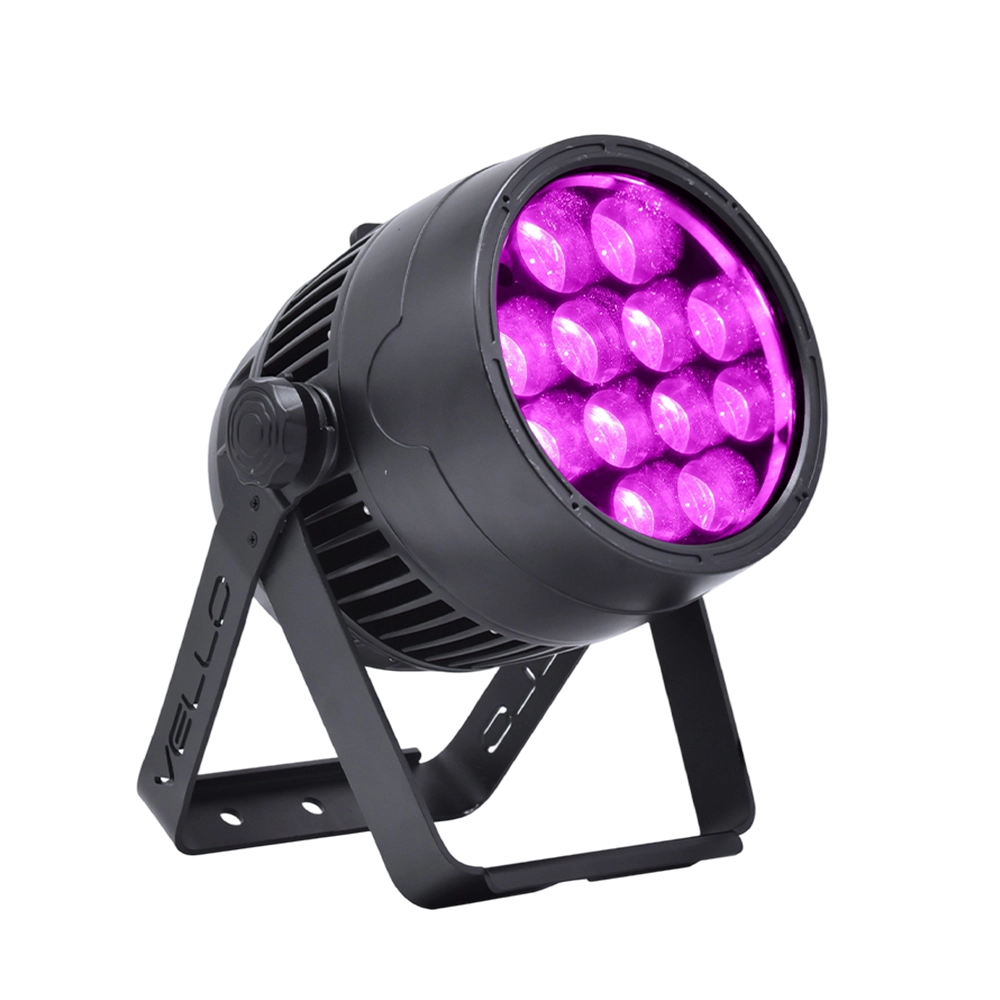
Stage LED Par Light LED ZOOMPAR 40
The Vello Zoom Par 40 IP is a powerful outdoor LED wash light equipped with 12x high-power 7-in-1 RGBACL LEDs. Designed for durability and rich color rendering, it features a wide motorized zoom (6°–50°), smooth dimming, and adjustable CTO presets (3200K–7500K), with 90+ CRI. With an IP66-rated die-cast aluminum body, it’s ideal for both indoor and outdoor applications, including stage lighting, architecture, live events, and installations.
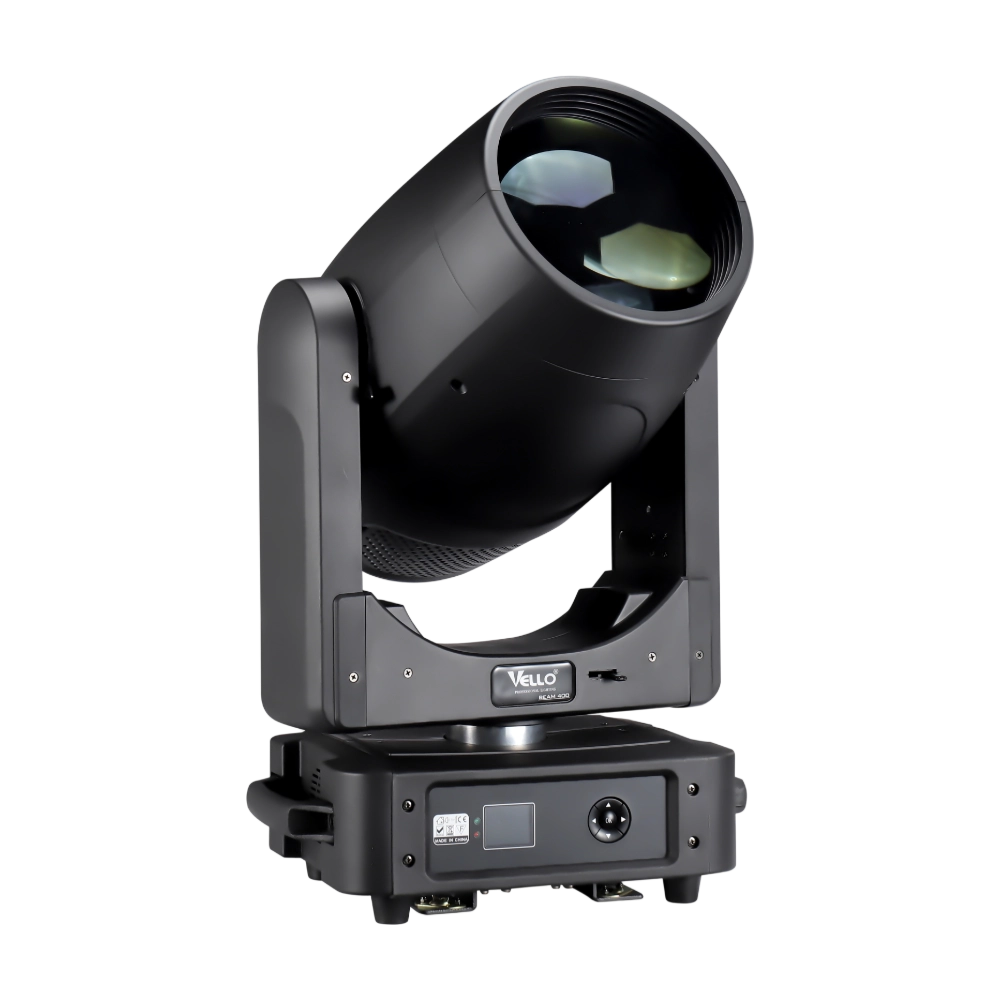
Moving Head Stage Light BEAM 400
BEAM400 is a 500W professional moving head beam powered by an OSRAM SIRIUS 371W discharge bulb, delivering a super-bright 1.8° sharp beam with impressive punch. It features 12 fixed gobos + open, a 14-color wheel, and a 16-facet circular rotating prism with multiple-facet effects, enabling dynamic aerial visuals. With 540° pan / 270° tilt, 16-bit movement resolution, and linear frost and focus, BEAM400 ensures precise and versatile performance. Comparable to traditional 750W moving heads, it combines high efficiency, smooth dimming, and reliable operation—ideal for concerts, tours, and large-scale stage productions.
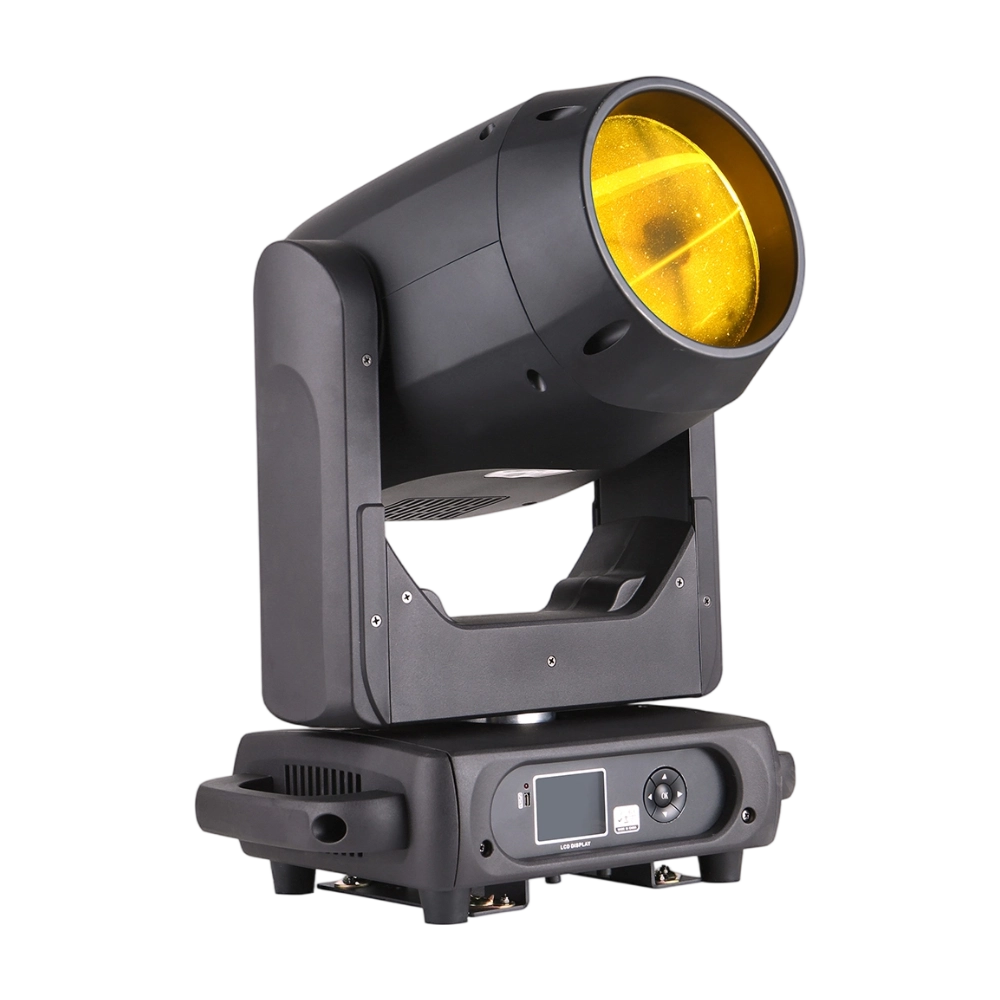
Moving Head Stage Light BEAM 360
BEAM360 is a 400W high-power moving head beam equipped with an OSRAM SIRIUS 311W discharge lamp, delivering a sharp 1.8° beam with super brightness. It features 14 colors + open, 12 fixed metal gobos + open, and dual prisms (8-facet circular + 8+16 multi-facet combination) for dynamic aerial effects. With 540° pan / 270° tilt, 16-bit movement, and linear frost and focus, BEAM360 ensures precision and versatility. Compact yet powerful, it rivals traditional 575W moving heads, making it ideal for concerts, clubs, and large-scale stage productions.
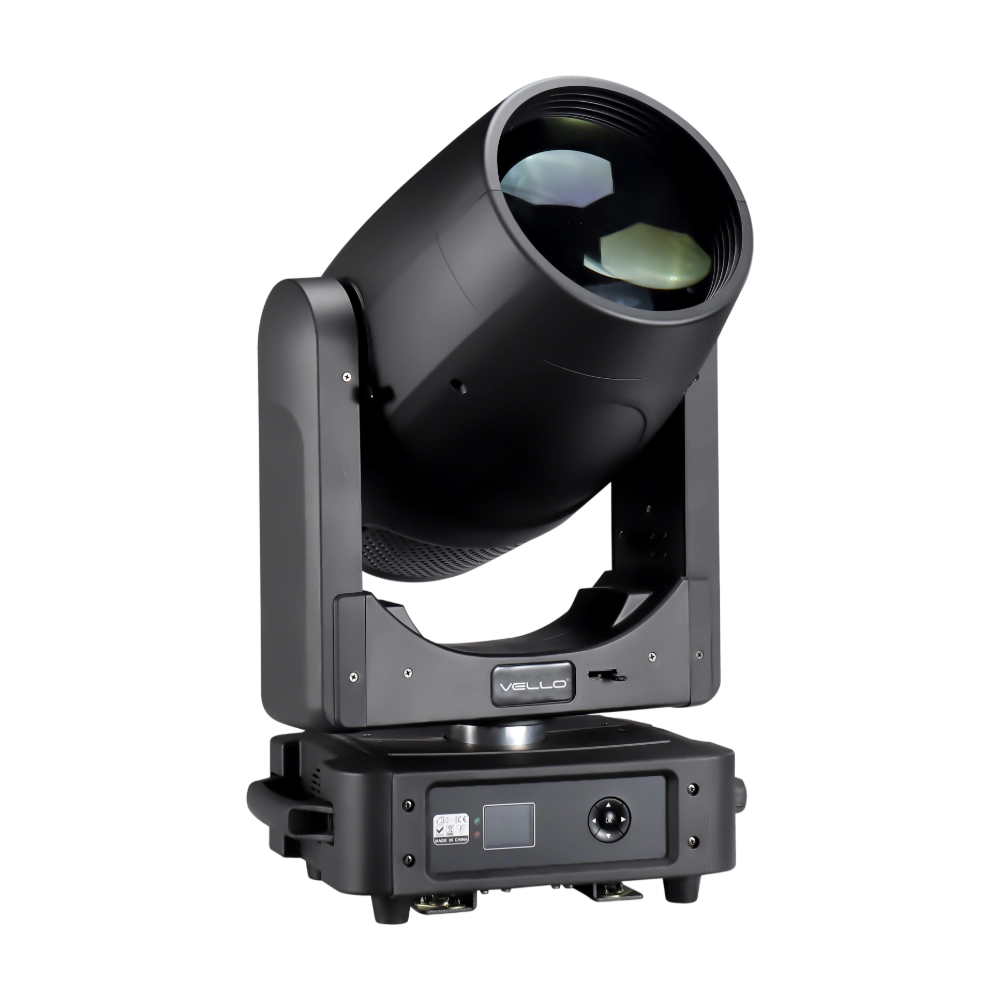
Moving Head Light BEAM 450
The BSW450 is a high-performance moving head fixture equipped with an original Osram 420W bulb, delivering exceptional brightness, precision, and versatility. Designed for professional stage applications, it seamlessly combines beam, spot, and wash functions in one compact unit, making it a powerful all-in-one lighting solution.
Over 20 Years of Innovation in Stage & Studio Lighting
© 2026 VELLO. All Rights Reserved. 粤ICP备20023734号
Join our socials
VELLO
Whatsapp: +8613902276704
Vello Lighting
VelloLights