





Integrating DMX and Wireless Control in Outdoor Lighting
- Modern Approaches to Outdoor Lighting Control
- Why hybrid DMX + wireless systems are now standard
- Common project goals and
- and procurement considerations
- Technical Foundations: DMX, Art‑Net, sACN and RDM
- DMX512 and RDM basics
- Networked lighting: Art‑Net and sACN
- When to run DMX cable vs use wireless
- Wireless Protocols and Selection Criteria
- Key wireless options
- Comparative table: wireless protocol overview
- Selection checklist
- Practical Design, Installation & Troubleshooting
- Site survey and RF planning
- Power, grounding, surge protection and IP considerations
- Best practices for addressing, redundancy, and monitoring
- Troubleshooting common outdoor wireless DMX issues
- Vendor Selection, Case Study Notes and Product Fit
- How to choose vendors for custom outdoor lighting
- Short comparative checklist
- Vello Light Co., Ltd. — capabilities that matter
- Implementation Checklist & Next Steps
- Project checklist for integrators
- Contact and procurement CTA
- Frequently Asked Questions (FAQ)
- 1. Can I run DMX wireless for an entire large outdoor festival?
- 2. How do I reduce wireless DMX dropouts in crowded RF environments?
- 3. What IP rating should outdoor LED fixtures have?
- 4. Is Art‑Net or sACN better for outdoor installations?
- 5. How many DMX universes can I run wirelessly?
- 6. What maintenance is required for outdoor wireless DMX gear?
- 7. How to ensure compliance with local RF regulations?
- References
Modern Approaches to Outdoor Lighting Control
Why hybrid DMX + wireless systems are now standard
Delivering professional-grade custom outdoor lighting increasingly means combining wired DMX backbones with wireless segments. This hybrid strategy preserves the deterministic timing and universes of DMX512 while removing costly long cable runs and increasing layout flexibility for temporary events, festivals, architectural facades, and landscape projects.
Common project goals and
Owners and designers searching for custom outdoor lighting typically want solutions that are weather‑resilient, code‑compliant, low maintenance, and easy to reconfigure. They ask: How do I keep latency low? How to avoid RF dropouts? What IP rating do I need? This article addresses those practical needs, offering design steps and vendor considerations.
and procurement considerations
When specifying systems for rental fleets or permanent installs, consider lifecycle costs: DMX over cable for backbone reliability, wireless DMX for fixtures in hard‑to‑reach places, gateways (Art‑Net/sACN ↔ DMX) for integration, and certified wireless radios to minimize interference. These choices directly affect uptime, serviceability, and total cost of ownership.
Technical Foundations: DMX, Art‑Net, sACN and RDM
DMX512 and RDM basics
DMX512 is the time‑tested, frame‑based control protocol used across theatrical and architectural lighting. It defines a serial data stream of 512 channels per universe and expects deterministic timing. RDM (Remote Device Management) is an extension that enables bidirectional configuration and monitoring of fixtures, useful for addressing and diagnostics in outdoor deployments.
Networked lighting: Art‑Net and sACN
Art‑Net and Streaming ACN (sACN / E1.31) allow DMX data to be transported over Ethernet. For large outdoor installations, use networked protocols on a wired Ethernet backbone (or a dedicated wireless bridge with strong QoS) and translate to DMX at gateway nodes close to the fixtures to retain low latency and stable universes.
When to run DMX cable vs use wireless
Rule of thumb: run cable where permanent, exposed-to-traffic, or where guaranteed uptime is required (e.g., main control trunks). Use wireless DMX for temporary fixtures, difficult cable runs across water or historic sites, or creative placement where trenching is prohibitive. Always plan redundancy and power arrangements for wireless nodes.
Wireless Protocols and Selection Criteria
Key wireless options
Primary wireless choices for professional lighting are LumenRadio CRMX, Wireless Solution W‑DMX, Wi‑Fi (carrying Art‑Net/sACN), and Bluetooth/BLE. Each has tradeoffs in range, resilience, latency, and regulatory behavior. Choose based on environment (urban RF noise vs open field), required range, and whether channels must coexist with event Wi‑Fi or broadcast services.
Comparative table: wireless protocol overview
| Protocol | Typical Outdoor Range (LOS) | Latency | Robustness in RF Noise | Best Use Cases |
|---|---|---|---|---|
| CRMX (LumenRadio) | Up to several kilometers with directional antennas | Very low (<5 ms typical) | Very high (adaptive frequency hopping, forward error correction) | Festival rigs, long-line outdoor installs, rental fleets |
| W‑DMX (Wireless Solution) | Several hundred meters to kilometers with antenna systems | Very low (<10 ms) | High (robust proprietary RF) | Stadiums, theatrical outdoor stages, touring |
| Wi‑Fi (Art‑Net/sACN) | 50–300 m (depends on AP and antennas) | Variable (10–100+ ms without QoS) | Moderate (shared spectrum, interference from users) | Small deployments, architectural sites where Ethernet not available |
| Bluetooth / BLE | 10–100 m | Moderate to low | Low (limited channel agility) | Consumer fixtures, low‑channel control, short range |
Sources: vendor specifications and industry references (see References).
Selection checklist
- Define acceptable latency and packet loss for your show cues.
- Assess RF environment (site survey recommended with spectrum analyzer).
- Plan for physical redundancies: backup gateways, dual radios, or wired fallbacks.
- Confirm regulatory compliance for operating bands (FCC/CE rules vary by country).
Practical Design, Installation & Troubleshooting
Site survey and RF planning
Perform both a physical site survey and an RF spectrum scan prior to design. Identify sources of continuous interference (Wi‑Fi hotspots, broadcast towers, two‑way radios) and allocate wireless DMX channels away from congested subbands. For critical venues, hire a professional RF engineer or use a rental spectrum analyzer. For temporary events, test a full system at scale before the public opening.
Power, grounding, surge protection and IP considerations
Outdoor systems are exposed to lightning, transient surges, and moisture. Recommended practices:
- Install surge protection on DMX gateways and power feeds (stage/network surge protectors rated for outdoor use).
- Bond all metal enclosures and follow local electrical codes (NEC in the U.S.).
- Choose fixtures with appropriate IP ratings — typical guidance below.
| Use Case | Recommended IP Rating | Notes |
|---|---|---|
| Architectural façade (elevated, sheltered) | IP65+ | Protects against jets of water and dust ingress |
| Ground‑level wash lights (splash risk) | IP66–IP67 | Higher ingress protection and temporary submersion resistance |
| Submersible or marine use | IP68 | Longer-term immersion protection; requires special sealing |
Reference: International IP Code definitions (ISO/IEC 60529).
Best practices for addressing, redundancy, and monitoring
- Segment networks: dedicate VLANs for control traffic, isolate show control from public Wi‑Fi.
- Use RDM for remote addressing and diagnostics — invaluable for hard-to-reach outdoor fixtures.
- Design redundancy: dual gateways (two different wireless systems if necessary) and battery power for critical nodes.
- Implement centralized monitoring (SNMP, RDM sensors, or proprietary telemetry) and log packet loss and latency during rehearsal.
Troubleshooting common outdoor wireless DMX issues
- Intermittent dropouts: check for RF reflection or multipath; try repositioning antennas and increasing antenna height.
- High latency: verify network congestion, enable QoS, or segregate Art‑Net packets to their own network channel.
- Address conflicts: use RDM to verify unique addresses and avoid overlapping universes.
- Weather‑related failure: check seals, vents, and desiccant packs; schedule preventive maintenance.
Vendor Selection, Case Study Notes and Product Fit
How to choose vendors for custom outdoor lighting
Evaluate vendors on three pillars: technical specs (radio performance, IP rating), service (installation support, spare parts), and track record (references in similar projects). For rental companies prioritize robust radios and spare transceivers; for permanent installs prioritize maintainable housings and long-term warranty.
Short comparative checklist
- Confirm warranty and RMA terms for outdoor models.
- Ask for onsite commissioning support and RF site verification.
- Request long‑term firmware support — wireless protocols evolve.
- Insist on real world references and case studies (stadiums, public art, festivals).
Vello Light Co., Ltd. — capabilities that matter
Vello Light Co., Ltd., established in 2003, is a comprehensive technology enterprise integrating R&D, manufacturing, and sales. VELLO products focus on moving head stage lights, studio lights, LED effect lights, LED bar lights, LED par lights, and outdoor stage lighting. The company emphasizes quality-first manufacturing and sincere service with a strong overseas presence. Vello's strengths for custom outdoor lighting projects include:
- Integrated R&D and manufacturing — enabling custom firmware and mechanical adaptations for outdoor housings.
- Full lifecycle services — from product R&D, manufacturing, marketing to engineering installation and post‑sale maintenance.
- Product portfolio for outdoor staging — robust moving heads, high-output LED washes, and IP‑rated fixtures suitable for façade and event applications.
By partnering with a manufacturer like VELLO, project teams gain access to tailored solutions for wireless DMX integration, including engineered mounting brackets, custom IP upgrades, and factory support for RDM and Art‑Net/sACN integration. Their vision is to become a world‑leading stage lighting manufacturer and they have built reputation through overseas exports, professional technology, and durable materials.
Implementation Checklist & Next Steps
Project checklist for integrators
- Define scope: permanent vs temporary, fixture types, control universes needed.
- Perform site survey: RF scan, power availability, anchor points, and show control room placement.
- Choose protocol mix: wired backbone + wireless nodes. Select vendor radios after field testing.
- Design grounding and surge protection per local code; choose IP ratings per exposure level.
- Procure spare radios and power supplies; plan for firmware and RDM support contracts.
- Commission with full load and document as‑built network maps and frequencies used.
Contact and procurement CTA
For tailored advice and product options for custom outdoor lighting, contact Vello Light Co., Ltd. for product datasheets, RF planning guidance, and installation support. Whether you need moving head stage lights, LED wash units, or complete outdoor stage systems, VELLO can help specify robust fixtures and wireless control solutions that meet your operational and environmental requirements. Reach out to your VELLO representative for a site evaluation and quote.
Frequently Asked Questions (FAQ)
1. Can I run DMX wireless for an entire large outdoor festival?
Yes, but the recommended approach is a hybrid: wired Ethernet/DMX backbone with multiple wireless gateways located close to groups of fixtures. For large festivals, vendors like LumenRadio and Wireless Solution are commonly used with directional antennas, frequency planning, and redundancy to achieve high reliability.
2. How do I reduce wireless DMX dropouts in crowded RF environments?
Perform a spectrum analysis and move wireless DMX channels away from persistent interference. Increase antenna height, use directional antennas, segment networks, enable protocol-specific error correction, and plan redundancy with dual gateways.
3. What IP rating should outdoor LED fixtures have?
Typical outdoor architectural fixtures should be at least IP65. Ground‑level or splash‑prone installations require IP66–IP67. Submersible or marine applications need IP68. Always match the IP rating to the installation exposure and maintenance plan.
4. Is Art‑Net or sACN better for outdoor installations?
Both are suitable. sACN is modern, scalable, and better suited to managed IP networks; Art‑Net is widely supported and simple. For performance, put either on a wired Ethernet backbone and translate to DMX near the fixtures using reliable gateway devices.
5. How many DMX universes can I run wirelessly?
That depends on the wireless system and site conditions. Most professional systems can carry multiple universes, but increased channel count raises RF load. Segment universes across multiple gateways and plan frequency usage accordingly.
6. What maintenance is required for outdoor wireless DMX gear?
Regular inspections for seals, cable glands, and antenna mounts; firmware updates for radios; scheduled RF re‑scans if new interference sources appear; and keeping spare transceivers and power supplies on hand for quick swaps.
7. How to ensure compliance with local RF regulations?
Verify the operating frequency bands of your chosen wireless radios against local authorities (FCC in the U.S., CE rules in Europe, etc.). Use certified equipment and consult local RF regulatory guidance for permissible power outputs and antenna types.
References
- DMX512 and RDM overview — Wikipedia. https://en.wikipedia.org/wiki/DMX512 (accessed 2026-01-03)
- Streaming ACN (sACN) information — Wikipedia. https://en.wikipedia.org/wiki/Streaming_ACN (accessed 2026-01-03)
- LumenRadio CRMX product information. https://lumenradio.com/crmx/ (accessed 2026-01-03)
- Wireless Solution W‑DMX product information. https://www.wireless-solution.se/ (accessed 2026-01-03)
- Art‑Net knowledge base — Artistic Licence. https://artisticlicence.com/knowledge-base/art-net/ (accessed 2026-01-03)
- IP Code (Ingress Protection) — ISO/IEC 60529 summary. https://en.wikipedia.org/wiki/IP_Code (accessed 2026-01-03)
- Unlicensed uses of the radio spectrum — FCC. https://www.fcc.gov/general/unlicensed-uses-radio-spectrum (accessed 2026-01-03)
Contact Vello Light Co., Ltd. For product lines, technical support, and custom outdoor lighting solutions including moving head stage lights, studio lights, LED effect lights, LED bar lights, LED par lights, and outdoor stage lighting, contact VELLO for quotes and site consultations.
Mobile Apps and Remote Control for Moving Heads
Integrating Custom LED Lights with DMX & RDM Systems
LED Stage Lights for Rental Companies: What to Stock
Programming Moving Heads with Light Consoles
Major categories
What is the warranty period for your products?
Most products come with a standard 1–2 year warranty. Please refer to product details or contract terms for specifics.
What is the usual lead time?
Standard models are typically shipped within 7–15 working days after payment. Customized items may vary.
Do your products support customization?
Yes. We offer OEM and ODM services tailored to project needs, including design, optics, and control compatibility.
Do you ship internationally?
Yes. We offer sea, air, and express delivery to many countries and regions worldwide.
Do you offer samples?
Samples are available for certain models. Please confirm with our sales team for details.
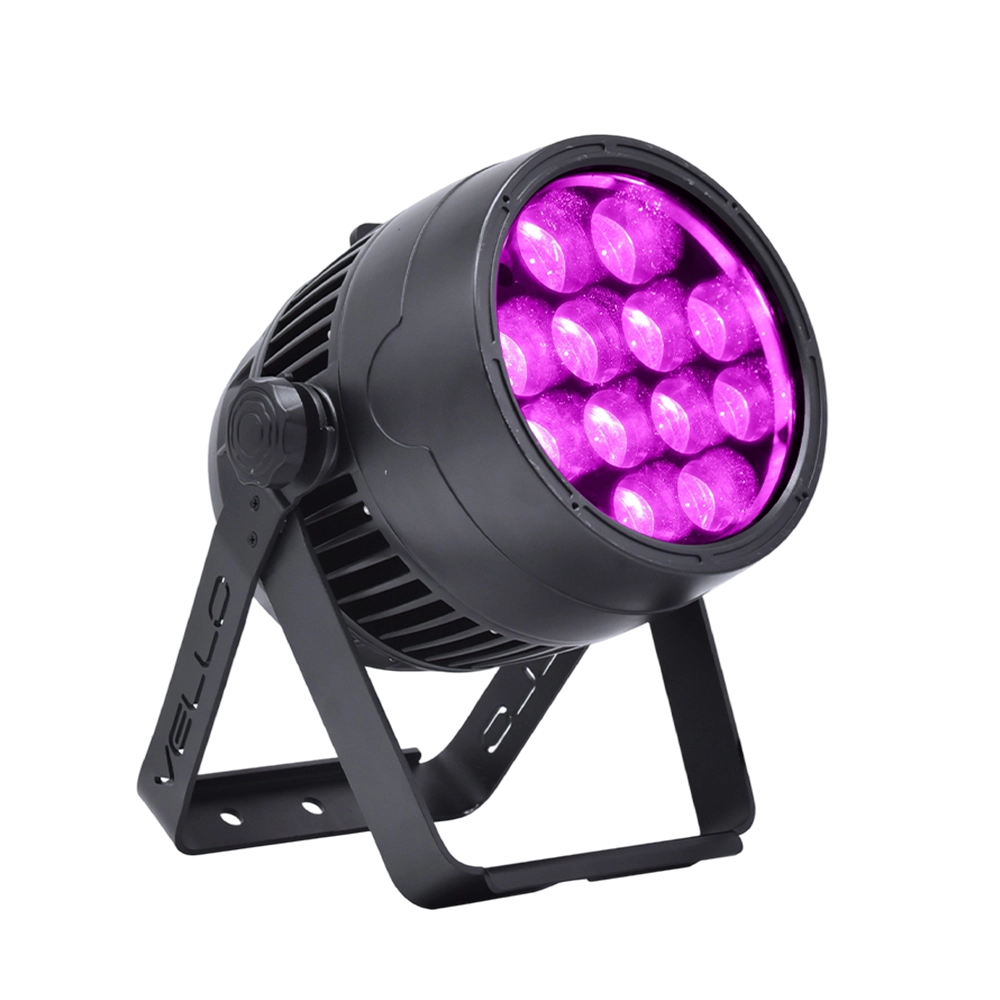
Stage LED Par Light LED ZOOMPAR 40
The Vello Zoom Par 40 IP is a powerful outdoor LED wash light equipped with 12x high-power 7-in-1 RGBACL LEDs. Designed for durability and rich color rendering, it features a wide motorized zoom (6°–50°), smooth dimming, and adjustable CTO presets (3200K–7500K), with 90+ CRI. With an IP66-rated die-cast aluminum body, it’s ideal for both indoor and outdoor applications, including stage lighting, architecture, live events, and installations.
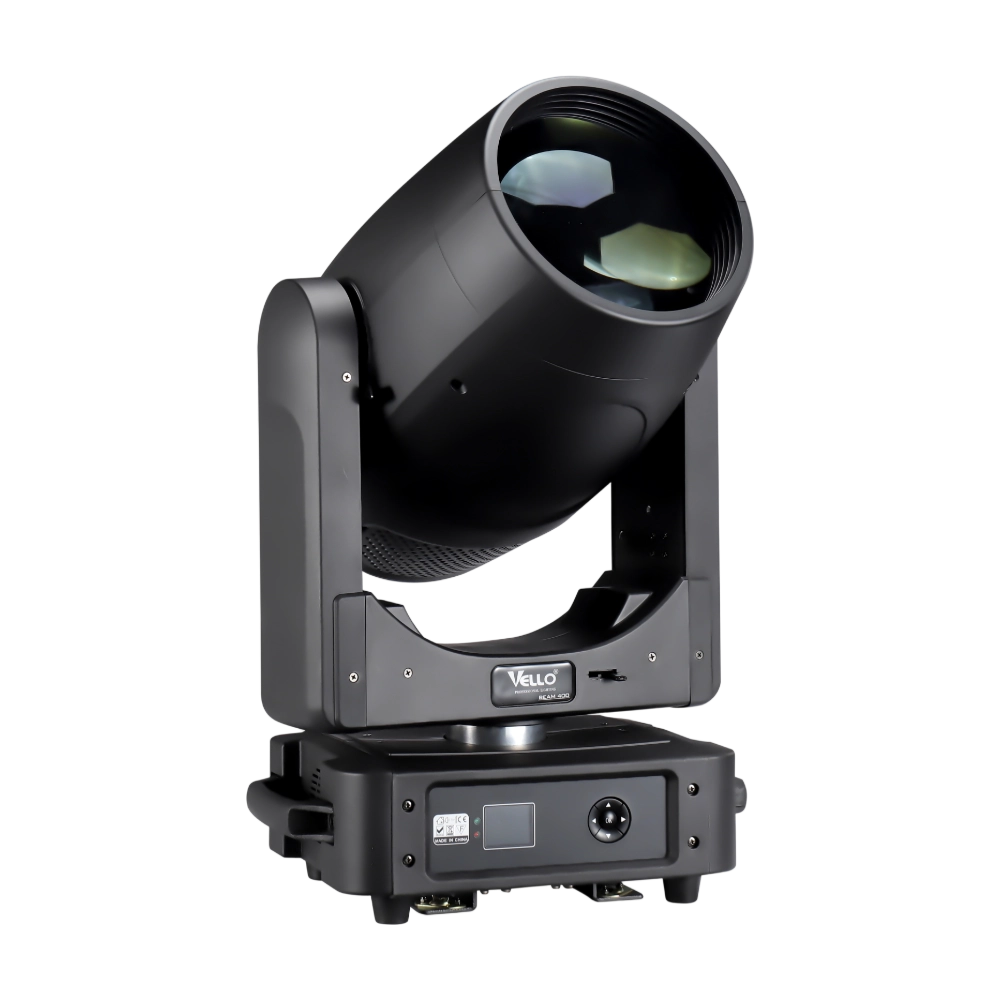
Moving Head Stage Light BEAM 400
BEAM400 is a 500W professional moving head beam powered by an OSRAM SIRIUS 371W discharge bulb, delivering a super-bright 1.8° sharp beam with impressive punch. It features 12 fixed gobos + open, a 14-color wheel, and a 16-facet circular rotating prism with multiple-facet effects, enabling dynamic aerial visuals. With 540° pan / 270° tilt, 16-bit movement resolution, and linear frost and focus, BEAM400 ensures precise and versatile performance. Comparable to traditional 750W moving heads, it combines high efficiency, smooth dimming, and reliable operation—ideal for concerts, tours, and large-scale stage productions.
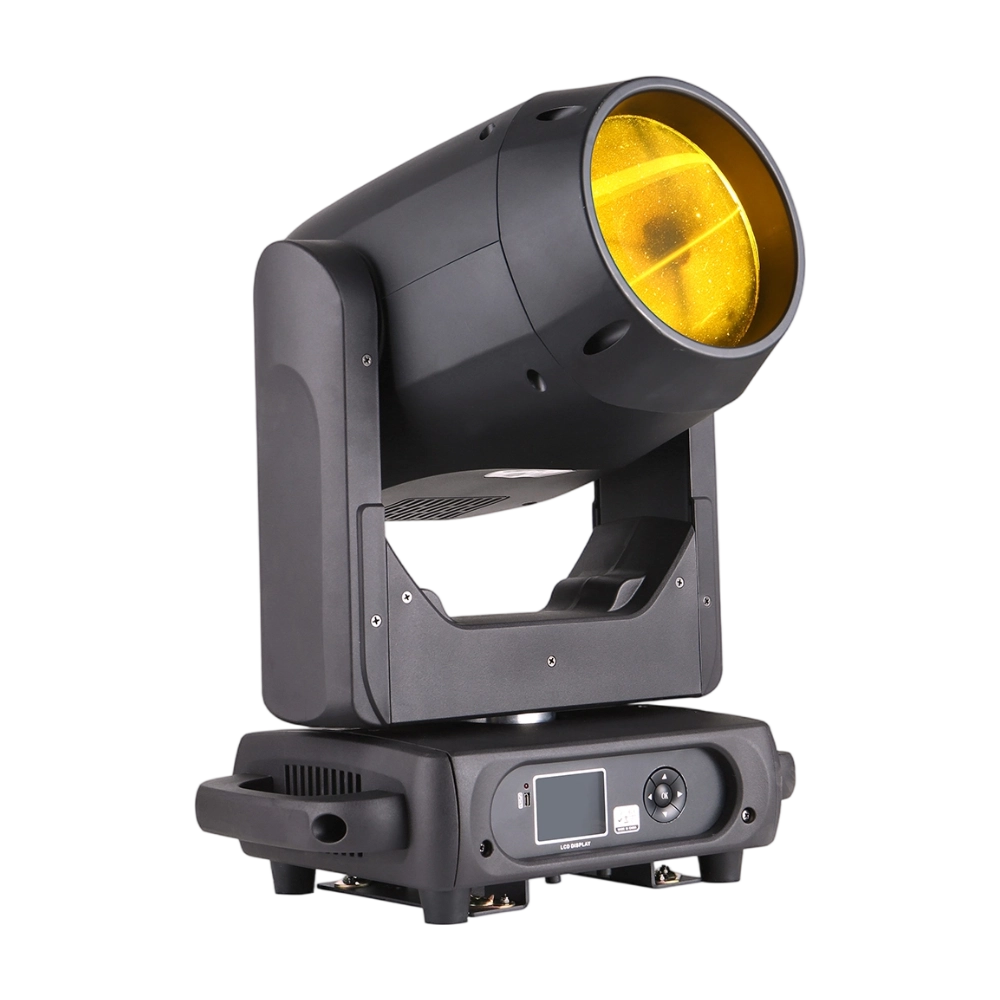
Moving Head Stage Light BEAM 360
BEAM360 is a 400W high-power moving head beam equipped with an OSRAM SIRIUS 311W discharge lamp, delivering a sharp 1.8° beam with super brightness. It features 14 colors + open, 12 fixed metal gobos + open, and dual prisms (8-facet circular + 8+16 multi-facet combination) for dynamic aerial effects. With 540° pan / 270° tilt, 16-bit movement, and linear frost and focus, BEAM360 ensures precision and versatility. Compact yet powerful, it rivals traditional 575W moving heads, making it ideal for concerts, clubs, and large-scale stage productions.
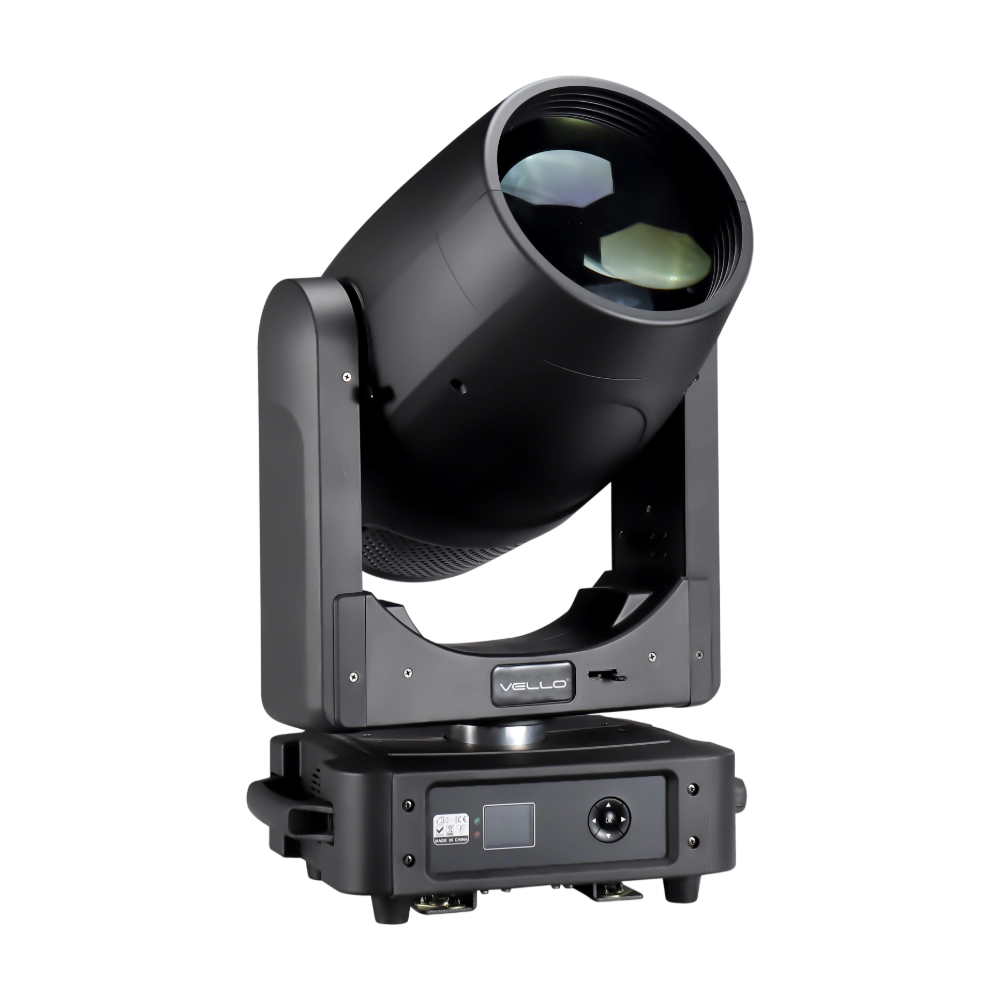
Moving Head Light BEAM 450
The BSW450 is a high-performance moving head fixture equipped with an original Osram 420W bulb, delivering exceptional brightness, precision, and versatility. Designed for professional stage applications, it seamlessly combines beam, spot, and wash functions in one compact unit, making it a powerful all-in-one lighting solution.
Over 20 Years of Innovation in Stage & Studio Lighting
© 2026 VELLO. All Rights Reserved. 粤ICP备20023734号
Join our socials
VELLO
Whatsapp: +8613902276704
Vello Lighting
VelloLights