





DMX, RDM and Control Protocols for Professional Stage Lights
- Understanding Control Protocols for Stage Lighting
- Fundamentals of DMX and How It Powers Professional Fixtures
- What is DMX512 and how it works
- Physical wiring, connectors and best practices
- Common operational issues and fixes
- RDM: Two‑Way Intelligence for Professional Lighting Management
- What RDM adds to DMX
- How to deploy RDM and limitations
- Practical advantages for large productions
- Networked Control: Art‑Net and sACN for Scalable Systems
- Why go networked: scaling past one DMX universe
- Art‑Net vs sACN: technical comparison
- Network design and reliability tips
- Practical System Design, Troubleshooting and Best Practices
- Addressing strategies and fixture profiles
- Signal integrity, cabling, and grounding
- Common troubleshooting checklist
- Integration of VELLO Products and Manufacturer Considerations
- How Vello Light implements control protocols
- Vello's production strengths and quality assurance
- Why supplier choice matters for protocol support
- FAQ — Common Questions About DMX, RDM and Network Protocols
- 1. What is the difference between DMX and RDM?
- 2. When should I use Art‑Net vs sACN?
- 3. Can RDM be used over Art‑Net or sACN?
- 4. How many fixtures can one DMX universe control?
- 5. What are quick checks when fixtures lose control?
- References and Further Reading
- Contact and Product Information
Understanding Control Protocols for Stage Lighting
Professional stage lighting equipment relies on a set of established control protocols to translate a lighting designer's intent into visible effects. This article explains the core protocols—DMX512, RDM, Art‑Net, and sACN—how they differ, when to use each, practical design and troubleshooting tips, and how manufacturers like Vello Light integrate these technologies into moving heads, wash lights, and theatrical fixtures.
Fundamentals of DMX and How It Powers Professional Fixtures
What is DMX512 and how it works
DMX512 (commonly shortened to DMX) is the de facto industry standard for point‑to‑point control of lighting fixtures. Key technical facts: it uses an RS‑485 physical layer, transmits at 250 kbps, and each DMX universe contains up to 512 channels (one channel = one 8‑bit value). Common device addressing assigns a channel start address to every fixture, letting a single universe control multiple fixtures' parameters (pan, tilt, intensity, color, etc.).
Physical wiring, connectors and best practices
Use shielded twisted pair cable rated for DMX (often labeled DMX cable or Belden 9841). Although 3‑pin XLR connectors are widely used on low‑cost fixtures, the official standard recommends 5‑pin XLR. Typical maximum cable run without repeaters is ~300 meters (1,000 ft) per RS‑485 segment, but cable quality, connectors, and electrical noise matter. Always terminate the DMX line with a 120 Ω terminator at the last device and implement proper grounding strategies to avoid data corruption and noise.
Common operational issues and fixes
Symptoms like flicker, frozen fixtures, or channel drift are usually caused by: loose connectors, missing termination, ground loops, improper cabling, or exceeding maximum bus length or device counts (a single RS‑485 segment often tolerates up to 32 unit loads). Fixes: check terminations, replace suspect cables, distribute universes with DMX splitters, and—when possible—use modern fixtures with buffered outputs.
RDM: Two‑Way Intelligence for Professional Lighting Management
What RDM adds to DMX
RDM (Remote Device Management, ANSI E1.20) is a protocol extension that enables bidirectional communication over the same physical DMX512 cabling. RDM allows controllers to discover devices, query parameters (firmware version, temperature, operating hours), and change settings (addressing, mode) remotely—greatly simplifying rigging, troubleshooting, and maintenance.
How to deploy RDM and limitations
To use RDM you need an RDM‑capable console or controller and fixtures that implement the E1.20 standard. Not all splitters and DMX distribution hardware pass RDM correctly—use RDM‑aware splitters or per‑universe RDM bridges. RDM discovery is slower on large networks; plan for discovery time and avoid excessive traffic during a live show.
Practical advantages for large productions
RDM reduces setup time (remote addressing), aids preventive maintenance (remote temperature/fault reports), and supports firmware updates and configuration without physically accessing fixtures in hard‑to‑reach positions. For touring and rental companies, RDM minimizes labor and reduces downtime.
Networked Control: Art‑Net and sACN for Scalable Systems
Why go networked: scaling past one DMX universe
Large venues, festivals, and complex shows often need dozens or hundreds of DMX universes. Network protocols—Art‑Net and sACN—carry multiple DMX universes over Ethernet (IP), enabling centralized routing, redundancy, and integration with media servers and networked show control systems.
Art‑Net vs sACN: technical comparison
Art‑Net (by Artistic Licence) and sACN (Streaming ACN, ANSI E1.31) both transport DMX data over UDP/IP but differ in design and adoption patterns. Art‑Net is widely supported and simple; sACN is an ANSI standard designed for modern network features and deterministic delivery. Both require reliable switches and proper multicast/unicast configuration to achieve expected performance.
| Protocol | Transport | Universes | Bidirectional | Common Use |
|---|---|---|---|---|
| DMX512 | RS‑485 (serial) | 1 universe per line (512 channels) | No (unidirectional) | Simple rigs, low‑latency control |
| RDM (E1.20) | RS‑485 (uses DMX cabling) | 1 universe | Yes (for device management) | Remote configuration and monitoring |
| Art‑Net | UDP/IP | Thousands (practically limited by network design) | Typically unidirectional (some extensions) | Large distributed systems, legacy compatibility |
| sACN (E1.31) | UDP/IP (multicast/unicast) | Designed for large scale, standardized addressing | Supports bidirectional for E1.33 extensions | Standardized multicast, large shows, integration |
Network design and reliability tips
Use managed switches with IGMP snooping to control multicast traffic, separate lighting networks from general IT networks, and implement QoS if sharing links. For mission‑critical shows, design redundancy via dual networks, sACN priority settings, or hardware failover. Carefully plan universes and IP addressing to avoid collisions and ensure consistent routing between consoles and nodes.
Practical System Design, Troubleshooting and Best Practices
Addressing strategies and fixture profiles
Decide whether to use manual addressing or RDM automatic addressing depending on scale. Maintain a clear address plan (start addresses, universe assignments) and document fixture profiles (channel maps) in your lighting console and asset database. For fixtures with multiple modes, select the mode that balances channel economy and control granularity for the show’s needs.
Signal integrity, cabling, and grounding
Use purpose‑built DMX cable, keep runs within recommended lengths, and use DMX repeaters/splitters when you exceed device count or distance limits. Avoid running DMX cables near high‑power lines or motors to reduce induced noise. Implement single‑point grounding and verify shield continuity at headend equipment to minimize hum and data corruption.
Common troubleshooting checklist
- Check physical connectors and terminations; reseat or replace suspect cables.
- Verify universe mappings on controller and nodes (DMX address, IP/subnet, Art‑Net universe or sACN universe ID).
- Use an RDM discovery tool or console to confirm fixture presence and health.
- Monitor network multicast traffic and switch CPU load if using sACN/Art‑Net at scale.
- Test with a known good controller or loopback to isolate the fault to cabling, node, or fixture.
Integration of VELLO Products and Manufacturer Considerations
How Vello Light implements control protocols
Vello Light Co., Ltd. (est. 2003) produces a range of professional stage lighting equipment—moving head stage lights, studio lights, LED effect lights, LED bar lights, LED Par lights, and outdoor stage lighting. Modern VELLO fixtures support DMX512 for basic control and many models include RDM for remote management. Networked-enabled fixtures and playback nodes from VELLO can accept Art‑Net and/or sACN input to integrate cleanly into larger IP‑based installations.
Vello's production strengths and quality assurance
Vello combines in‑house R&D, manufacturing and global sales, emphasizing quality and reliable after‑sales service. The company invests in professional talent for product R&D, engineering installation, and maintenance. For rental houses and venues that require durable touring fixtures, VELLO emphasizes robust housings, consistent channel mapping, and firmware stability—key aspects that reduce onsite troubleshooting and accelerate rigging.
Why supplier choice matters for protocol support
Not all manufacturers fully implement RDM or support both Art‑Net and sACN. When procuring professional stage lighting equipment, verify the exact protocol list, firmware update policy, and whether splitters and network nodes preserve RDM traffic. VELLO’s product documentation typically lists supported control protocols and fixture modes—confirm these during specification and ordering.
FAQ — Common Questions About DMX, RDM and Network Protocols
1. What is the difference between DMX and RDM?
DMX is a unidirectional control protocol (controller → fixtures). RDM extends DMX with bidirectional communication for discovery, remote addressing, configuration and diagnostics over the same cabling (E1.20).
2. When should I use Art‑Net vs sACN?
Use Art‑Net for widespread device support and when working with legacy equipment. Use sACN (E1.31) when you want an ANSI standard, more predictable multicast behavior, and features designed for large distributed systems. Both can coexist; choose based on console support and network design.
3. Can RDM be used over Art‑Net or sACN?
RDM is primarily designed for RS‑485/DMX512 links. There are bridging solutions that allow remote management over networked systems, but full RDM discovery typically requires RDM‑aware splitters or RDM bridges that translate between Ethernet and DMX/RDM segments.
4. How many fixtures can one DMX universe control?
Technically a DMX universe provides 512 channels. The number of fixtures depends on each fixture’s channel footprint. For example, 16‑channel fixtures allow up to 32 fixtures per universe; 512‑channel fixtures require one or more entire universes.
5. What are quick checks when fixtures lose control?
Verify DMX cables and connectors, ensure line termination, confirm addressing and universe mapping, and check for RDM errors with a capable console or tool. If using networked protocols, verify switch configuration, multicast settings, and IP addressing.
References and Further Reading
- USITT / ESTA DMX512 (E1.11) specification: https://tsp.esta.org/tsp/documents/docs/E1-11.pdf (accessed 2026-01-01)
- ESTA RDM (E1.20) specification: https://tsp.esta.org/tsp/documents/docs/E1-20.pdf (accessed 2026-01-01)
- sACN (E1.31) Streaming ACN specification: https://tsp.esta.org/tsp/documents/docs/E1-31.pdf (accessed 2026-01-01)
- Art‑Net protocol information: https://artisticlicence.com/ (accessed 2026-01-01)
- Wikipedia: DMX512 — https://en.wikipedia.org/wiki/DMX512 (accessed 2026-01-01)
- Wikipedia: Remote Device Management (RDM) — https://en.wikipedia.org/wiki/Remote_Device_Management (accessed 2026-01-01)
- Wikipedia: sACN — https://en.wikipedia.org/wiki/Streaming_ACN (accessed 2026-01-01)
Contact and Product Information
If you are specifying or procuring professional stage lighting equipment and need fixtures that support DMX, RDM, Art‑Net, or sACN, Vello Light Co., Ltd. (VELLO) provides a wide range of fixtures—including moving head stage lights, studio lights, LED effect lights, LED bar lights, LED Par lights, and outdoor stage lighting—designed for durability and field serviceability. To discuss system design, request technical specs, or view product lines, contact VELLO for consultation and product catalogs.
Contact Vello Light: sales@vello-light.com | Visit product pages for VELLO moving heads, wash lights and theatrical fixtures.
Wireless DMX Options for Stage Lighting
Top Accessories: Fresnels, Lens, Gels, and Mounts for Stage Lights
RGBW vs CMY Color Mixing in Moving Heads
LED Par Light vs Traditional Par Can: Pros and Cons
Major categories
What is the usual lead time?
Standard models are typically shipped within 7–15 working days after payment. Customized items may vary.
Do you offer samples?
Samples are available for certain models. Please confirm with our sales team for details.
What is the warranty period for your products?
Most products come with a standard 1–2 year warranty. Please refer to product details or contract terms for specifics.
Do you ship internationally?
Yes. We offer sea, air, and express delivery to many countries and regions worldwide.
Do your products support customization?
Yes. We offer OEM and ODM services tailored to project needs, including design, optics, and control compatibility.
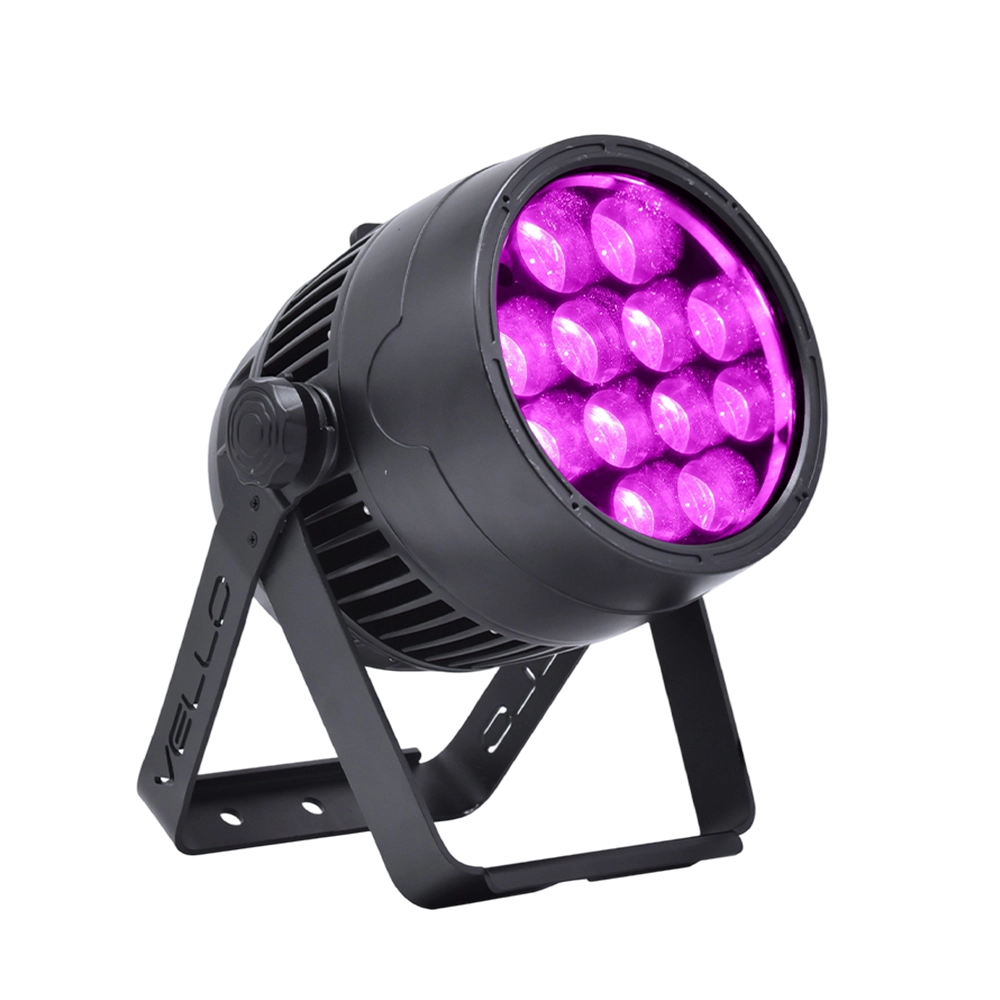
Stage LED Par Light LED ZOOMPAR 40
The Vello Zoom Par 40 IP is a powerful outdoor LED wash light equipped with 12x high-power 7-in-1 RGBACL LEDs. Designed for durability and rich color rendering, it features a wide motorized zoom (6°–50°), smooth dimming, and adjustable CTO presets (3200K–7500K), with 90+ CRI. With an IP66-rated die-cast aluminum body, it’s ideal for both indoor and outdoor applications, including stage lighting, architecture, live events, and installations.
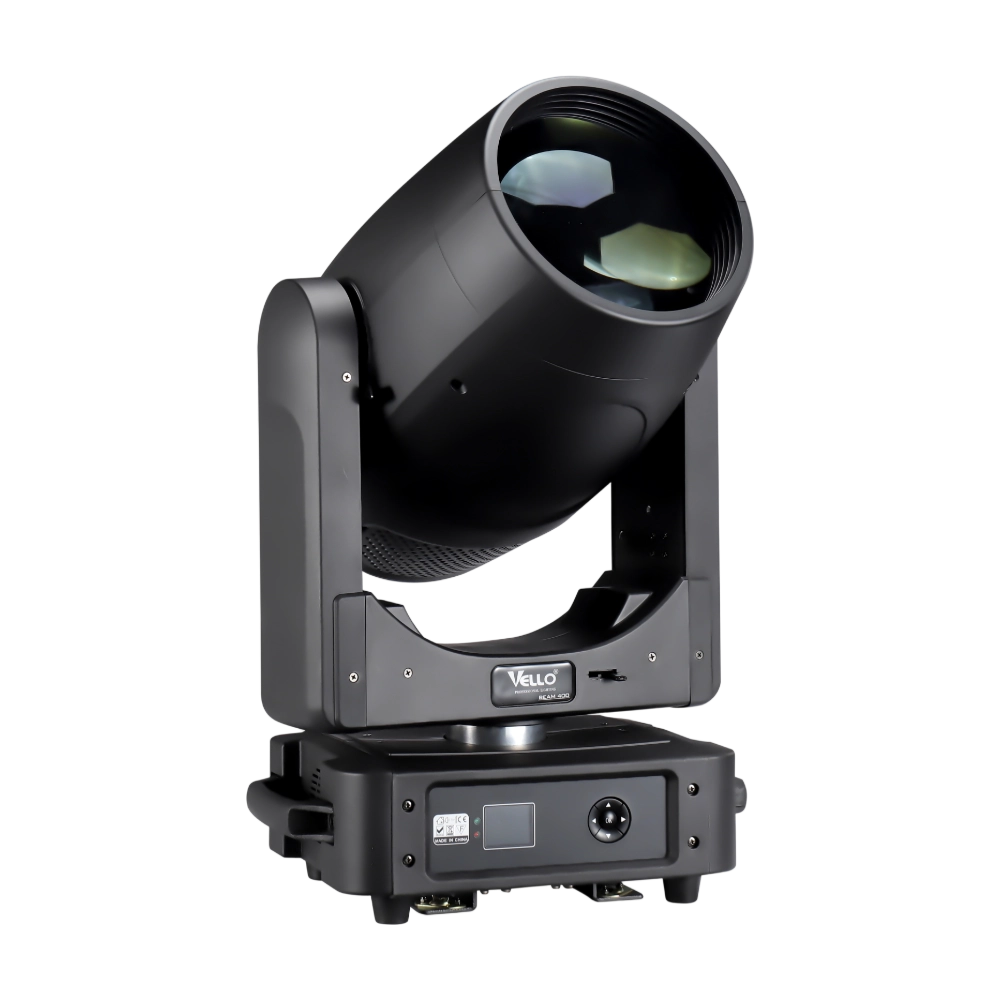
Moving Head Stage Light BEAM 400
BEAM400 is a 500W professional moving head beam powered by an OSRAM SIRIUS 371W discharge bulb, delivering a super-bright 1.8° sharp beam with impressive punch. It features 12 fixed gobos + open, a 14-color wheel, and a 16-facet circular rotating prism with multiple-facet effects, enabling dynamic aerial visuals. With 540° pan / 270° tilt, 16-bit movement resolution, and linear frost and focus, BEAM400 ensures precise and versatile performance. Comparable to traditional 750W moving heads, it combines high efficiency, smooth dimming, and reliable operation—ideal for concerts, tours, and large-scale stage productions.
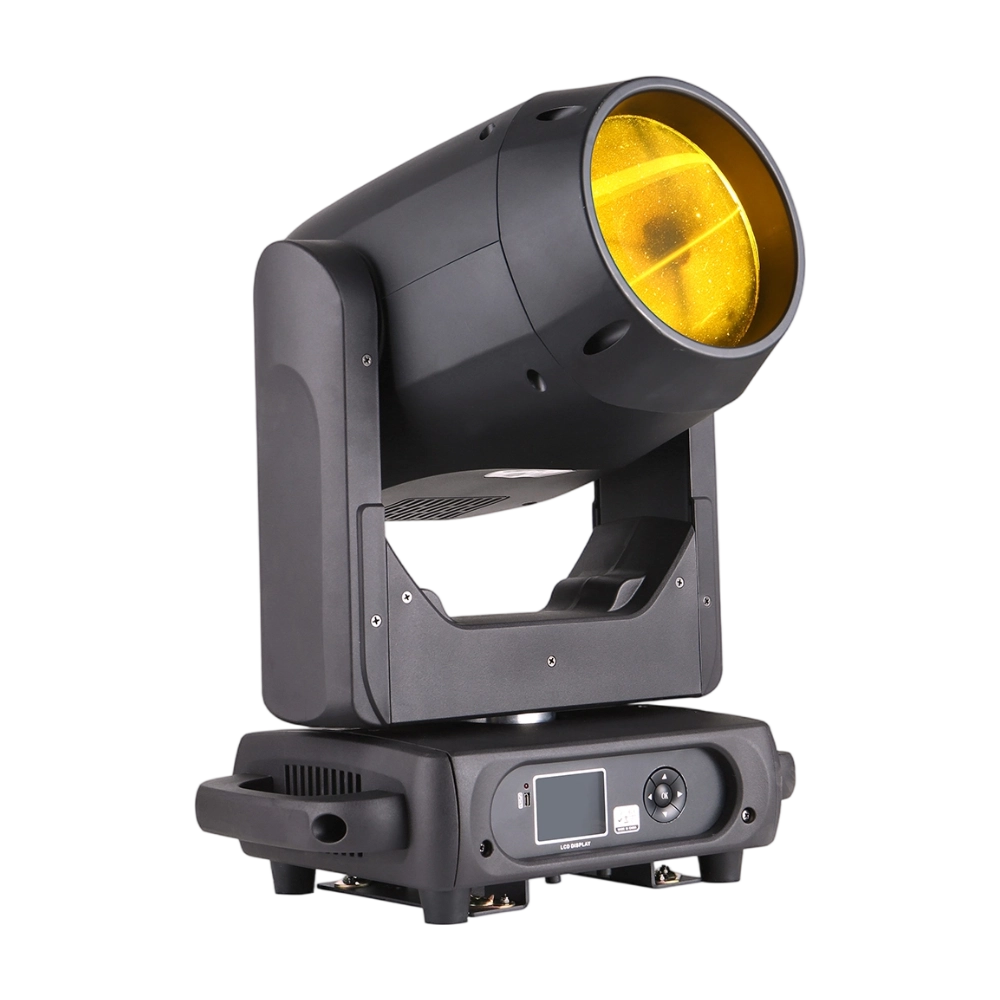
Moving Head Stage Light BEAM 360
BEAM360 is a 400W high-power moving head beam equipped with an OSRAM SIRIUS 311W discharge lamp, delivering a sharp 1.8° beam with super brightness. It features 14 colors + open, 12 fixed metal gobos + open, and dual prisms (8-facet circular + 8+16 multi-facet combination) for dynamic aerial effects. With 540° pan / 270° tilt, 16-bit movement, and linear frost and focus, BEAM360 ensures precision and versatility. Compact yet powerful, it rivals traditional 575W moving heads, making it ideal for concerts, clubs, and large-scale stage productions.
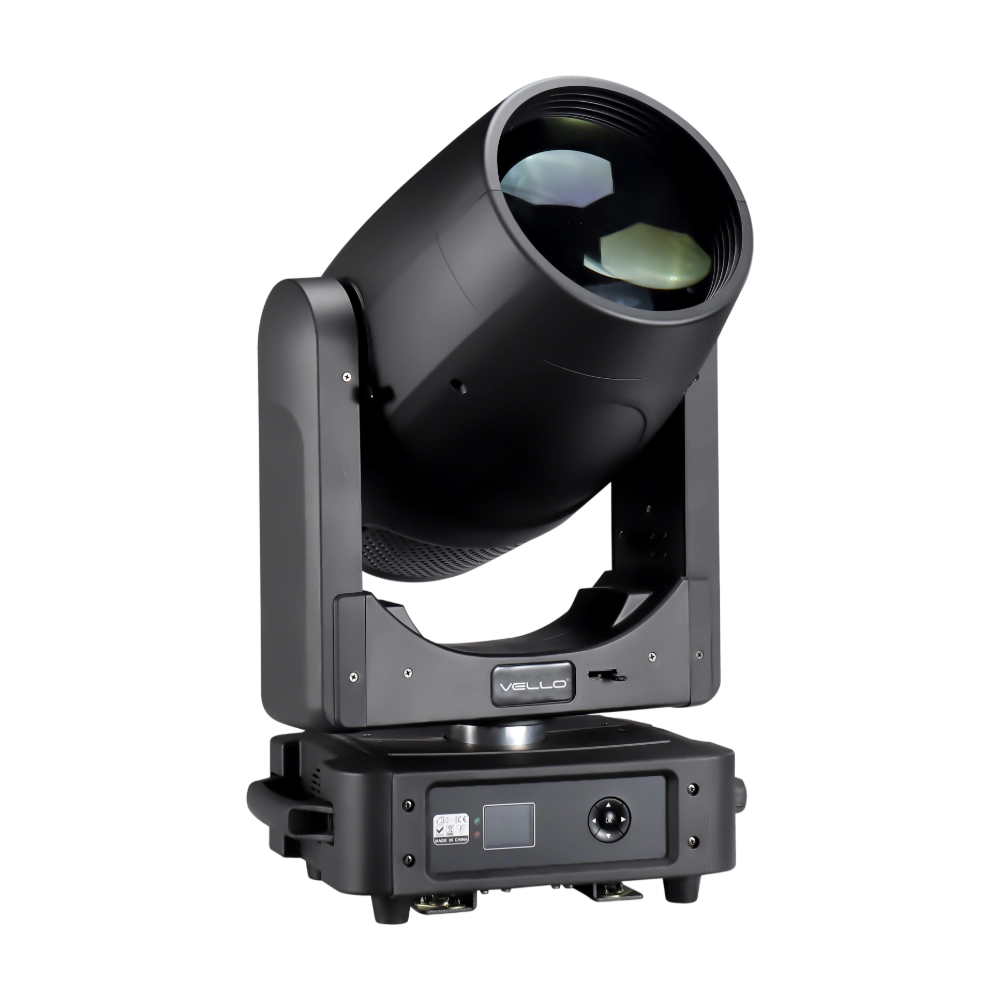
Moving Head Light BEAM 450
The BSW450 is a high-performance moving head fixture equipped with an original Osram 420W bulb, delivering exceptional brightness, precision, and versatility. Designed for professional stage applications, it seamlessly combines beam, spot, and wash functions in one compact unit, making it a powerful all-in-one lighting solution.
Over 20 Years of Innovation in Stage & Studio Lighting
© 2026 VELLO. All Rights Reserved. 粤ICP备20023734号
Join our socials
VELLO
Whatsapp: +8613902276704
Vello Lighting
VelloLights