





DMX Control for Stage LED Lights: Setup and Practical Tips
- Understanding DMX Fundamentals for Reliable Stage LED Lights Control
- What is DMX and why it matters for stage led lights
- Basic DMX terminology every technician should know
- Planning DMX Wiring and Topology for Stage LED Lights
- Recommended physical topology and cabling for live events
- Grounding, termination and common mistakes
- Fixture Addressing, Channel Maps and Practical Examples
- How to read a fixture channel table (the DMX personality)
- Common channel mappings—quick reference table
- Setting Up: Step-by-Step DMX Configuration for Stage LED Lights
- 1. Inventory and plan
- 2. Assign addresses and patch your console
- 3. Verify and document
- Troubleshooting Common Issues with Stage LED Lights and DMX
- Signal loss, flicker, or no response
- Channel overlap or unexpected behavior
- Best Practices and Advanced Tips for Large Rigs
- Using multiple universes and sACN/Art-Net
- Redundancy and hot-swap strategies
- Integrating Stage LED Lights into Lighting Design Workflow
- Channel economy: why fewer channels often equal better shows
- Calibration and color consistency
- Vello Light: Manufacturer Capabilities and Why It Matters for Your DMX Setup
- About Vello Light Co., Ltd.
- VELLO product strengths for DMX-based stage led lights
- Checklist Before the First Cue
- Pre-show checklist for stage led lights DMX
- FAQ — Common Questions about DMX Control for Stage LED Lights
- 1. How many DMX channels do I need for my show?
- 2. Can I run DMX over long cable runs?
- 3. Should I use 3-pin or 5-pin XLR for DMX?
- 4. What causes flicker on LED stage lights controlled by DMX?
- 5. How do I prevent channel overlap and addressing mistakes?
- 6. Is Art-Net better than DMX for stage led lights?
- Contact & Product Inquiry
- References
Understanding DMX Fundamentals for Reliable Stage LED Lights Control
Controlling stage led lights reliably requires both theoretical knowledge of the DMX512 protocol and practical experience with real-world hardware. Whether you manage an intimate theatre, a touring rig, or a permanent installation, getting wiring, addressing and channel mapping right will save setup time, avoid show-stopping failures, and unlock creative effects. This guide walks through key steps for DMX setup, channel planning, troubleshooting, and professional tips—aimed at lighting designers, technicians, and production managers.
What is DMX and why it matters for stage led lights
DMX512 (commonly called DMX) is a unidirectional serial protocol originally designed for dimmer control but now the industry standard for lighting control across moving heads, LED fixtures, fog machines, and more. For stage led lights, DMX delivers discrete channel control for color mixing (RGB/RGBW), intensity, strobe, pan/tilt and other effects. Understanding DMX helps you plan channel maps, avoid conflicts, and implement redundancy for live events.
Basic DMX terminology every technician should know
- Controller: console or interface that transmits DMX signal (e.g., lighting desk, USB-DMX interface).
- Universe: a DMX512 link carrying up to 512 channels. Large rigs use multiple universes.
- Addressing: the start channel (1–512) a fixture responds to; multi-channel fixtures occupy consecutive channels.
- Termination: 120-ohm resistor at the end of the DMX chain to prevent signal reflections.
- Patch: mapping between physical fixtures and controller channels/groups on a console.
Planning DMX Wiring and Topology for Stage LED Lights
Recommended physical topology and cabling for live events
DMX is best wired as a daisy chain (line topology) using industry-standard 3- or 5-pin XLR cables rated for DMX (shielded twisted pair). For longer runs and higher noise environments, prefer 5-pin XLR and keep cable lengths below 300 meters per run where possible; use boosters or opto-isolating repeaters for extended distances. For permanent outdoor installations, use outdoor-rated cables and IP-rated signal boosters or fiber conversions to protect signal integrity.
Grounding, termination and common mistakes
Always terminate the last fixture with a 120-ohm DMX terminator and avoid splitting the chain with cheap T-adapters. Ensure a single point of earth reference to avoid ground loops. Common mistakes: using microphone/patch cables instead of DMX-rated cable, omitting termination, and chaining power and data on the same cable bundle near dimmers or heavy motors.
Fixture Addressing, Channel Maps and Practical Examples
How to read a fixture channel table (the DMX personality)
Fixtures ship with multiple “personalities” (channel modes). A compact LED PAR might provide a 3-channel RGB mode and a 4-channel RGBW mode. A moving head could offer multiple modes: basic (intensity, pan, tilt, color), extended (adds gobo, prism, shutter), or full (fine control and presets). Choose the simplest mode that supports your creative needs to conserve channels and simplify patching.
Common channel mappings—quick reference table
Below is a concise comparison of typical fixture channel usage. Use it to plan universe allocation and patching.
| Fixture Type | Typical Channel Count | Common Channel Functions |
|---|---|---|
| LED Par (RGB) | 3–4 | R, G, B (, W), master dimmer |
| LED Par (RGBA/W/UV) | 4–8 | Color channels, white or amber/UV, dimmer, strobe |
| Moving Head (basic) | 12–16 | Pan, Tilt, Pan Fine, Tilt Fine, Intensity, Color, Gobo, Shutter |
| Moving Head (full) | 20–32+ | All basic + presets, FX, motor control, calibration channels |
| LED Bar / Pixel-mapped Fixture | Channels per pixel × pixels | Per-pixel RGB/RGBW, intensity, special effects |
Note: channel counts vary by manufacturer and product family—always consult the fixture manual for the definitive DMX chart.
Setting Up: Step-by-Step DMX Configuration for Stage LED Lights
1. Inventory and plan
List all fixtures, their DMX personalities, and channel counts. Create a spreadsheet with fixture ID, type, start address, universe, and purpose (e.g., front wash, backlight, special). This minimizes human error and helps with quick re-patching.
2. Assign addresses and patch your console
Physically set the dip switches or digital address on each fixture. Then patch the fixtures on your console to match. Use logical naming on the console (e.g., L Wing Wash 1) to keep operators efficient during shows.
3. Verify and document
Power the line and verify that each fixture responds to its assigned channels. Use a channel sweep (0–255) to confirm correct function. Document any deviations and update the spreadsheet and console backup.
Troubleshooting Common Issues with Stage LED Lights and DMX
Signal loss, flicker, or no response
Check termination, cable integrity, and grounding. Swap cables with a known-good DMX cable and see if behavior changes. If only fixtures beyond a certain point fail, suspect cable damage or poor connector contact. When fixtures randomly lose control, consider electromagnetic interference (motors, radio systems) and re-route DMX cabling away from power runs.
Channel overlap or unexpected behavior
Channel overlap usually means two fixtures share addresses. Reconfirm addresses and personalities. If a fixture has mode-switchable banks, it might have changed mode during transport—verify the mode setting and repatch if necessary.
Best Practices and Advanced Tips for Large Rigs
Using multiple universes and sACN/Art-Net
Large venues often exceed a single DMX universe. sACN and Art-Net send DMX over Ethernet and are standard for modern networks. When using Art-Net or sACN, ensure your network is dedicated or logically separated from venue IT to prevent multicast storms and latency. Keep universe numbering consistent between console and nodes.
Redundancy and hot-swap strategies
For mission-critical shows, implement redundant controllers and splitters. Intelligent splitters provide optical isolation and allow one controller to be swapped without a full rig reboot. For fixtures controlled over network protocols, use dual-NIC nodes where supported for failover.
Integrating Stage LED Lights into Lighting Design Workflow
Channel economy: why fewer channels often equal better shows
Simpler channel maps reduce operator error and speed programming. Group fixtures into logical zones and use console groups/macros to control multiple fixtures with fewer faders. Pixel mapping and large channel counts are powerful but should be reserved for designers and times when the crew can operate them reliably.
Calibration and color consistency
LED fixtures from different batches or models can show color variance. Use dimmer curves and color macros to calibrate intensity response. For critical color matching, perform side-by-side tests and note per-fixture calibration offsets in your showfile.
Vello Light: Manufacturer Capabilities and Why It Matters for Your DMX Setup
About Vello Light Co., Ltd.
Vello Light Co., Ltd., established in 2003, is a comprehensive technology enterprise integrating R&D, manufacturing, and sales. Over the years, we have consistently adhered to the principles of quality first and sincere service. With the support and help of numerous customers both domestically and internationally, we have continued to grow and develop, gradually becoming a unique and outstanding team in our field.
In recent years, with the rapid development of the LED lighting market, Vello Light has gathered a large number of professional talents to provide comprehensive and systematic services, including product R&D, manufacturing, marketing, engineering installation, and product maintenance. Through the joint efforts of Vello people, we remain true to our original aspirations and persevere in innovation, leveraging our unique advantages to stand out in the fierce competition. Currently, our products are exported both domestically and internationally and have a strong brand reputation, especially in overseas markets. VELLO is our registered brand, specializing in moving headlights, LED wash lights, and theatrical lights. Our products are highly praised and loved by many customers for their professional technology, unique style, high-quality materials, and durability.
VELLO product strengths for DMX-based stage led lights
- Product breadth: moving head stage lights, studio lights, led effect light, Led Bar Lights, Led Par Light, outdoor stage lighting—supporting small tours to large venues.
- Technical capability: fixture modes with flexible DMX channel mappings, pixel-capable bars, and reliable moving-head control suitable for DMX or network protocols.
- Service & support: R&D and engineering resources for custom channel maps, installation assistance, and spare parts.
- Market reputation: long-term export success and a focus on durability and quality materials.
Working with a manufacturer like VELLO that offers comprehensive back-end engineering support can simplify complex DMX deployments, especially when custom personalities, export-grade hardware, or long-life outdoor fixtures are required.
Checklist Before the First Cue
Pre-show checklist for stage led lights DMX
- Inventory list and patched console file backed up offsite.
- DMX termination verified and cables tested.
- All fixtures addressed, in the correct personality, and sanity-checked with channel sweeps.
- Network nodes (Art-Net/sACN) verified; multicast managed or isolated.
- Redundancy plan communicated to operator (splitters, spare console, power paths).
FAQ — Common Questions about DMX Control for Stage LED Lights
1. How many DMX channels do I need for my show?
Count the channels per fixture in the mode you plan to use, multiply by quantity, and divide by 512 to get the number of universes. Include extra channels for effects or expansion. For pixel mapping, channel counts grow quickly—plan universes accordingly.
2. Can I run DMX over long cable runs?
DMX512 over shielded twisted pair XLR is reliable up to several hundred meters. For longer runs or high-RF environments, use optically isolated repeaters, DMX-over-fiber, or convert to Art-Net/sACN over fiber to preserve signal integrity.
3. Should I use 3-pin or 5-pin XLR for DMX?
5-pin XLR is the official DMX wiring standard and allows for future expansion; however, many fixtures accept 3-pin. Use 5-pin where possible for long-term installations, and maintain consistent pinouts across your rig.
4. What causes flicker on LED stage lights controlled by DMX?
Flicker can be due to poor DMX signals, incompatible dimmer curves, PWM settings in fixtures, or power quality issues. Verify DMX stability and power; consult fixture documentation for PWM/frequency settings to reduce visible flicker on camera.
5. How do I prevent channel overlap and addressing mistakes?
Create and enforce an addressing plan, label fixtures and cables, and use a spreadsheet or patch file. When changing modes, double-check start addresses and run a channel sweep to confirm behavior.
6. Is Art-Net better than DMX for stage led lights?
Art-Net (or sACN) allows many more universes over Ethernet and simplifies distribution for complex rigs. For small rigs, traditional DMX is simpler and robust. If you use Art-Net, ensure your network architecture is well-designed and isolated from general-purpose traffic.
Contact & Product Inquiry
If you need fixtures, custom DMX personalities, or turnkey project support, contact Vello Light Co., Ltd. for product details and engineering assistance. Explore VELLO’s moving head stage lights, studio lights, led effect light, Led Bar Lights, Led Par Light, and outdoor stage lighting to find solutions tailored to your DMX control needs. For inquiries and technical consultations, request a quote or ask for a wiring/addressing checklist from VELLO’s support team.
References
- DMX512 — Wikipedia. https://en.wikipedia.org/wiki/DMX512 (accessed 2025-12-10)
- ESTA Technical Standards Program — DMX512-A (ANSI E1.11). https://tsp.esta.org/tsp/documents/docs.php?document_id=2 (accessed 2025-12-10)
- ETC Knowledge Base — DMX Basics. https://www.etcconnect.com/Support/Knowledge-Base/Lighting-Concepts/DMX512/ (accessed 2025-12-10)
Last updated: 2025-12-10
Gobos and Effects: Using Moving Head Lights
Top Questions to Ask LED Stage Light Suppliers Before Purchase
Best LED Moving Head Lights for Concerts and Tours
Case Studies: LED Moving Head Light for Touring & Events
Major categories
What is the usual lead time?
Standard models are typically shipped within 7–15 working days after payment. Customized items may vary.
What is the warranty period for your products?
Most products come with a standard 1–2 year warranty. Please refer to product details or contract terms for specifics.
Do you ship internationally?
Yes. We offer sea, air, and express delivery to many countries and regions worldwide.
Do you offer samples?
Samples are available for certain models. Please confirm with our sales team for details.
Do your products support customization?
Yes. We offer OEM and ODM services tailored to project needs, including design, optics, and control compatibility.
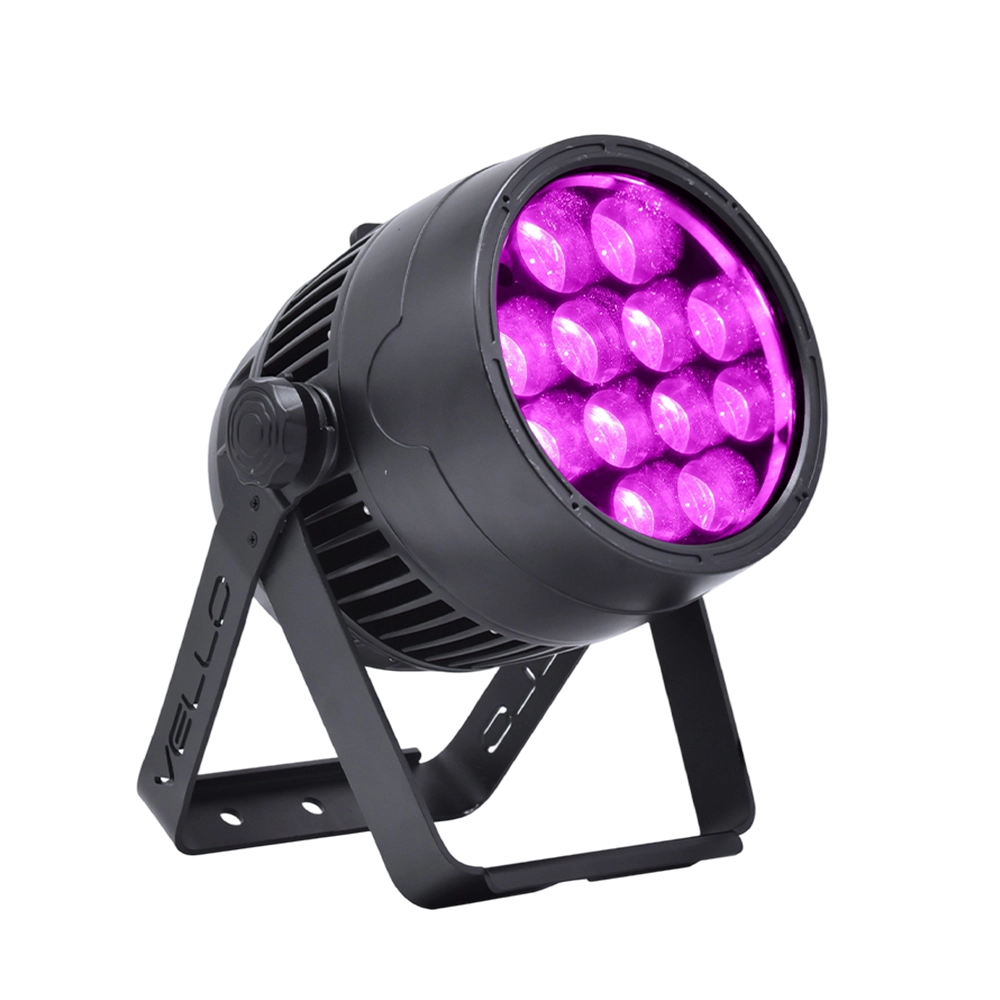
Stage LED Par Light LED ZOOMPAR 40
The Vello Zoom Par 40 IP is a powerful outdoor LED wash light equipped with 12x high-power 7-in-1 RGBACL LEDs. Designed for durability and rich color rendering, it features a wide motorized zoom (6°–50°), smooth dimming, and adjustable CTO presets (3200K–7500K), with 90+ CRI. With an IP66-rated die-cast aluminum body, it’s ideal for both indoor and outdoor applications, including stage lighting, architecture, live events, and installations.
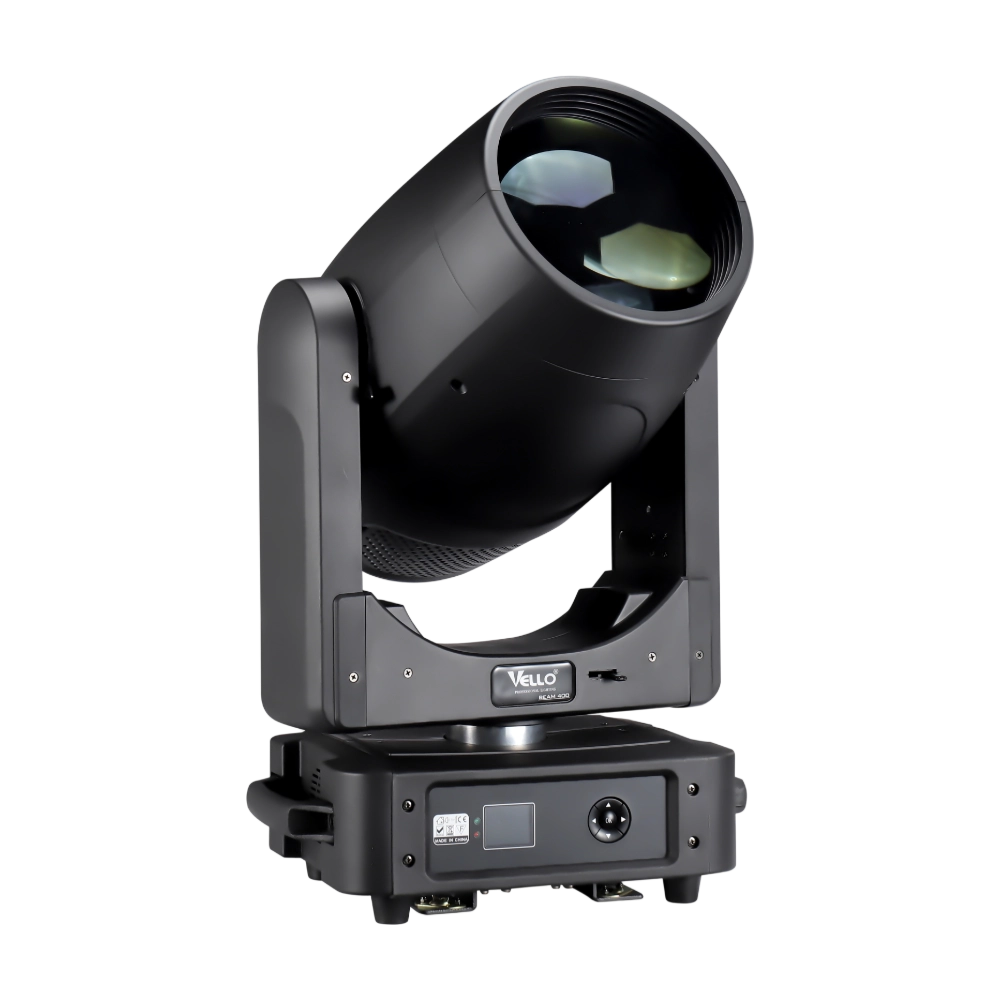
Moving Head Stage Light BEAM 400
BEAM400 is a 500W professional moving head beam powered by an OSRAM SIRIUS 371W discharge bulb, delivering a super-bright 1.8° sharp beam with impressive punch. It features 12 fixed gobos + open, a 14-color wheel, and a 16-facet circular rotating prism with multiple-facet effects, enabling dynamic aerial visuals. With 540° pan / 270° tilt, 16-bit movement resolution, and linear frost and focus, BEAM400 ensures precise and versatile performance. Comparable to traditional 750W moving heads, it combines high efficiency, smooth dimming, and reliable operation—ideal for concerts, tours, and large-scale stage productions.
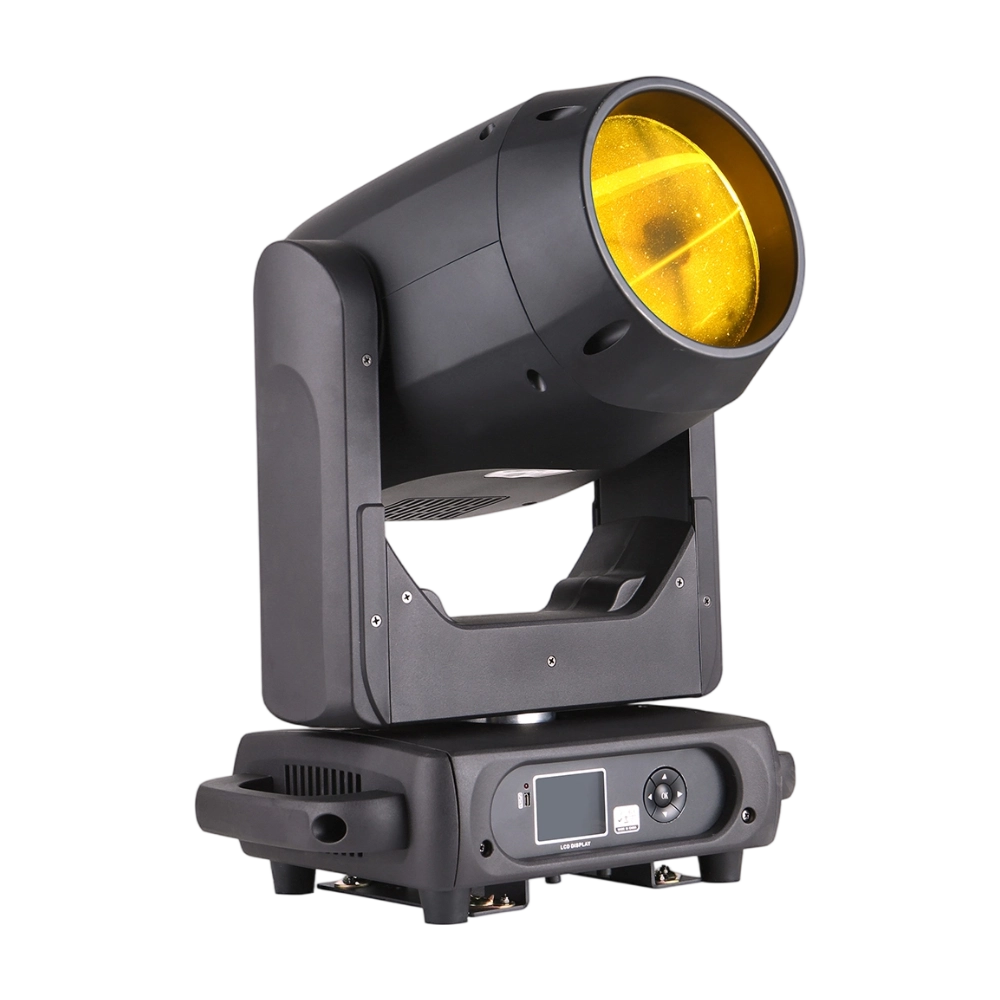
Moving Head Stage Light BEAM 360
BEAM360 is a 400W high-power moving head beam equipped with an OSRAM SIRIUS 311W discharge lamp, delivering a sharp 1.8° beam with super brightness. It features 14 colors + open, 12 fixed metal gobos + open, and dual prisms (8-facet circular + 8+16 multi-facet combination) for dynamic aerial effects. With 540° pan / 270° tilt, 16-bit movement, and linear frost and focus, BEAM360 ensures precision and versatility. Compact yet powerful, it rivals traditional 575W moving heads, making it ideal for concerts, clubs, and large-scale stage productions.
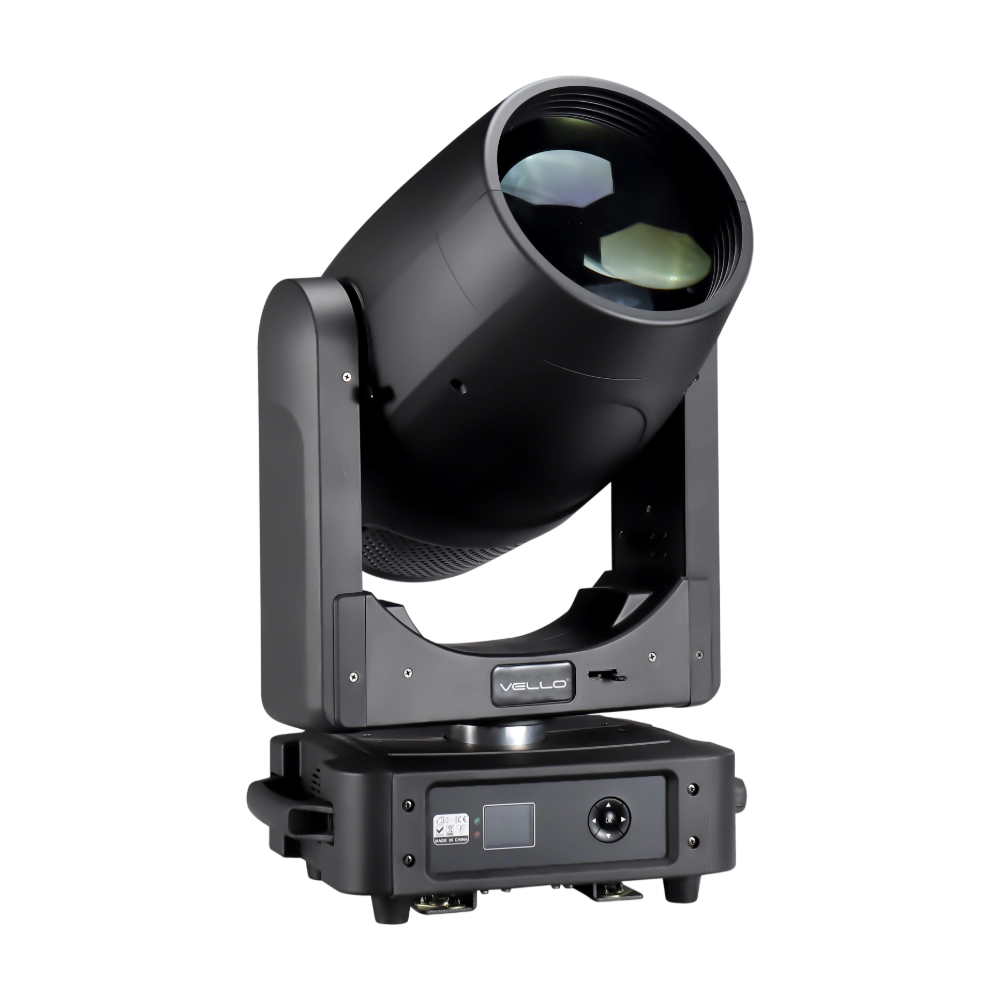
Moving Head Light BEAM 450
The BSW450 is a high-performance moving head fixture equipped with an original Osram 420W bulb, delivering exceptional brightness, precision, and versatility. Designed for professional stage applications, it seamlessly combines beam, spot, and wash functions in one compact unit, making it a powerful all-in-one lighting solution.
Over 20 Years of Innovation in Stage & Studio Lighting
© 2026 VELLO. All Rights Reserved. 粤ICP备20023734号
Join our socials
VELLO
Whatsapp: +8613902276704
Vello Lighting
VelloLights