





DMX and Control Protocols for LED Moving Head Light
- Understanding Control Layers in Modern Stage Lighting
- What is a control protocol?
- Why protocols matter for LED moving head light
- Signal flow and addressing basics
- Primary Wired Protocols: DMX512, sACN, and Art-Net
- DMX512 fundamentals and limitations
- sACN and Art-Net: Ethernet-based control
- When to choose wired Ethernet vs DMX
- Bidirectional and Advanced Protocols: RDM, sACN Extensions, and Wireless Options
- RDM for configuration and diagnostics
- Wireless DMX and its trade-offs
- Latency, reliability and RF considerations
- Implementing Control for LED Moving Head Light — Practical Guide & VELLO Advantage
- Addressing, grouping, and programming best practices
- Integration with lighting consoles and software (sACN/Art-Net mapping)
- Protocol comparison: DMX, sACN, Art-Net, RDM, Wireless DMX
- VELLO Light Co., Ltd. — capabilities and product fit
- Deployment Checklist, Troubleshooting and Best Practices
- Pre-show deployment checklist
- Common troubleshooting steps
- Future trends to watch
- FAQ
- 1. What is the simplest way to connect a small rig of led moving head light units?
- 2. How many DMX channels does a typical moving head require?
- 3. When should I use sACN instead of Art-Net?
- 4. Is wireless DMX reliable for touring productions?
- 5. Can RDM be used over Art-Net/sACN networks?
- Contact & Product Inquiry
- References
Understanding Control Layers in Modern Stage Lighting
What is a control protocol?
A control protocol is the language and transport by which a lighting console, media server, or controller communicates with fixtures such as an led moving head light. Protocols define packet structure, addressing, timing and expected behaviors for one-way or two-way communication. Choosing the right protocol affects reliability, latency, scalability and the ability to monitor and configure fixtures remotely.
Why protocols matter for LED moving head light
LED moving head lights combine multiple subsystems — LED engines, pan/tilt motors, gobos, color wheels, dimmers and effects — into a single fixture. Each function consumes DMX channels or network-universe resources. Using modern protocols like sACN or Art-Net on Ethernet can simplify wiring and expand universe counts. Protocol choice impacts installation cost, control resolution, troubleshooting and future-proofing of a lighting system.
Signal flow and addressing basics
Typical signal flow: console → network/DMX distributor → dimmer packs/fixtures. Addressing maps fixture parameters to channel numbers. For example, an 18-channel moving head might allocate channels for dimmer, pan coarse/fine, tilt coarse/fine, color, gobo, shutter, and special effects. Proper channel planning prevents overlap and simplifies group control and cue programming.
Primary Wired Protocols: DMX512, sACN, and Art-Net
DMX512 fundamentals and limitations
DMX512 (commonly shortened to DMX) is the historical standard for 1, 2, or more fixtures on a serial bus. It is simple, proven and supported by virtually every led moving head light. Typical characteristics:
- 512 channels per universe.
- Unidirectional by default (controller → fixtures) unless using RDM.
- Uses RS-485 electrical layer; cable runs and topology constraints apply.
Limitations include limited universe capacity (512 channels), manual addressing needs, and single-direction status unless RDM is implemented.
sACN and Art-Net: Ethernet-based control
sACN (Streaming ACN, ANSI E1.31) and Art-Net are two widely used Ethernet-layer methods to transmit DMX-like data over IP networks. Advantages over DMX512 include higher universe counts, simpler long-distance cabling using standard network infrastructure, and better integration with modern consoles and media servers.
When to choose wired Ethernet vs DMX
Choose DMX when: short installations, legacy equipment compatibility, or minimal network infrastructure are priorities. Choose sACN/Art-Net when: you need many universes, centralized network management, or long cable runs. Many modern systems use a hybrid: network for core distribution and DMX for short last-mile connections to fixtures.
Bidirectional and Advanced Protocols: RDM, sACN Extensions, and Wireless Options
RDM for configuration and diagnostics
RDM (Remote Device Management, ANSI E1.20) adds bi-directional capability to DMX. It allows controllers to discover fixtures, remotely set addresses, query status, and perform firmware updates where supported. For large rigs with many led moving head light units, RDM reduces setup time and enables remote monitoring of lamp hours, temperate, and error diagnostics.
Wireless DMX and its trade-offs
Wireless DMX (proprietary systems like LumenRadio CRMX, Wireless Solution, etc.) removes cable complexity and is valuable for temporary events and venues where cable runs are impractical. Trade-offs include spectrum regulation, potential interference, line-of-sight considerations, and battery or power issues for transmitters/receivers. Always test a wireless solution on-site before a production.
Latency, reliability and RF considerations
Latency requirements vary by application. For fast-moving fixtures or tightly timed effects, aim for sub-30 ms end-to-end latency. Ethernet protocols generally show lower and more predictable latency than wireless links. For wireless, plan RF channel mapping, use robust antennas, and keep spare channels/receivers to maintain redundancy.
Implementing Control for LED Moving Head Light — Practical Guide & VELLO Advantage
Addressing, grouping, and programming best practices
Best practices to save time and reduce errors:
- Create a channel map template per fixture model (document channel allocation and default modes).
- Use personality modes sparingly — standardize the fixture mode across the rig for consistent channel offsets.
- Group fixtures logically (by zone or rig section) and use submasters or palettes for shared parameters like color or gobo.
- Test and label both physical cable runs and network ports. Keep a schematic for troubleshooting.
Integration with lighting consoles and software (sACN/Art-Net mapping)
When integrating sACN or Art-Net, configure network routes and universe-to-port mapping on both the console and the DMX gateway nodes. Use static IP addressing or a managed DHCP strategy for predictable behavior. Many consoles support automatic fixture discovery via Art-Net or sACN; still, manual verification of universe assignment is critical to avoid overlapping data streams.
Protocol comparison: DMX, sACN, Art-Net, RDM, Wireless DMX
| Protocol | Transport | Max universes* | Key advantages | Typical uses |
|---|---|---|---|---|
| DMX512 | RS-485 serial | 1 per cable (512 channels) | Simple, universal compatibility, low cost | Small stages, legacy rigs |
| sACN (E1.31) | Ethernet (UDP/IP) | Thousands (practically limited by network) | Scalable, multicast-friendly, modern standard | Large installations, networked venues |
| Art-Net | Ethernet (UDP/IP) | Large (depends on implementation) | Widely supported, easy to implement | Touring, broadcast, large shows |
| RDM (E1.20) | DMX over RS-485 (bi-directional) | Same as DMX | Remote config & diagnostics | Installations needing remote management |
| Wireless DMX (e.g. CRMX) | RF (proprietary) | Varies | No cabling, fast deployment | Temporary events, difficult cable routes |
*Max universes are practical and implementation-dependent; Ethernet-based protocols effectively remove the 512-channel per-run limitation.
VELLO Light Co., Ltd. — capabilities and product fit
Vello Light Co., Ltd., established in 2003, is a comprehensive technology enterprise integrating R&D, manufacturing, and sales. Over the years, VELLO has adhered to quality-first and sincere service. With extensive experience in both domestic and international markets, VELLO offers moving head stage lights and a broad LED fixture range suitable for networked control environments.
Key competitive strengths:
- Product breadth: moving head stage lights, studio lights, led effect light, LED Bar Lights, LED Par Light, outdoor stage lighting.
- Technical competence: in-house R&D and manufacturing that allows fixture firmware and hardware to be optimized for DMX, RDM, sACN and Art-Net workflows.
- Service & reliability: warranty and engineering support geared to professional productions and rental markets.
For systems integrators and rental companies, VELLO’s fixtures are designed to be compatible with standard control architectures, to support remote management where applicable, and to provide durable mechanical and optical performance for touring and installation use.
Deployment Checklist, Troubleshooting and Best Practices
Pre-show deployment checklist
- Confirm fixture firmware and personality modes match the console mapping.
- Label DMX ports, Ethernet ports and IP addresses; maintain a printed and digital scheme.
- Test RDM discovery and status if used; verify lamp hours and error logs.
- For wireless, perform site RF survey and allocate backup channels.
Common troubleshooting steps
When fixtures do not respond:
- Check physical layer: cable continuity, termination resistors for DMX, Ethernet link lights.
- Verify addressing and universe assignments in the console and on fixture DIP switches or RDM settings.
- Isolate one fixture and test direct patched connection to rule out network topology issues.
- For intermittent problems, inspect for ground loops, improper cable shielding, or RF interference.
Future trends to watch
Trends impacting led moving head light control include increased adoption of sACN in permanent venues, tighter integration with media servers for pixel mapping, greater use of RDM-like bi-directional management over IP, and more robust wireless standards with improved frequency agility and security features. Fixtures that expose telemetry and remote firmware update channels will reduce maintenance time for operators and rental houses.
FAQ
1. What is the simplest way to connect a small rig of led moving head light units?
For small rigs, use DMX512 with a daisy-chain topology, terminator at the end, and consistently sized cable (DMX-rated) with shielded twisted pair. If you have RDM-compatible fixtures and controllers, enable RDM for faster addressing and diagnostics.
2. How many DMX channels does a typical moving head require?
Channel counts vary by fixture complexity. Entry-level moving heads may use 12–16 channels, while advanced units (with 16-bit pan/tilt, multiple color wheels, effects and pixel mapping) can use 20–40 channels. Always consult the fixture manual and create a mapped personality for your console.
3. When should I use sACN instead of Art-Net?
Both are suitable for Ethernet lighting control. sACN is an open ANSI standardized protocol optimized for multicast and large installations, while Art-Net is widely implemented and often used for compatibility with older consoles. For new permanent installations, sACN is frequently recommended; for mixed environments, Art-Net may be necessary for compatibility with certain devices.
4. Is wireless DMX reliable for touring productions?
Wireless DMX can be reliable if properly implemented: use professional-grade systems, perform on-site RF testing, maintain line-of-sight where possible, and have redundancy (secondary radios or wired fallbacks). For critical cues, designers often prefer wired connections or a verified redundant wireless plan.
5. Can RDM be used over Art-Net/sACN networks?
RDM is defined for DMX over RS-485. Extensions and mechanisms exist to transport RDM-like functionality over IP (for example, RDM over UDP tunnels or manufacturer-specific solutions), but true RDM standards apply to serial DMX. Many gateways allow RDM commands to be proxied across networks to fixtures on DMX trunks.
Contact & Product Inquiry
If you need help specifying control architectures, performing address mapping, or selecting led moving head light models for a project, contact VELLO. For product catalogs, installation support, and OEM inquiries, reach out to Vello Light Co., Ltd. to discuss project requirements, request datasheets, and arrange demonstrations of moving head stage lights, studio lights, LED effect lights, LED Bar Lights, LED Par Lights and outdoor stage lighting. VELLO’s engineering team can advise on DMX, RDM, sACN and Art-Net deployment strategies tailored to your venue.
References
- DMX512 — Wikipedia. https://en.wikipedia.org/wiki/DMX512 (accessed 2026-01-12)
- ANSI E1.11 - DMX512-A — ESTA Technical Standards Program. https://tsp.esta.org/tsp/documents/docs.php?documentid=31 (accessed 2026-01-12)
- sACN (ANSI E1.31) information — ESTA. https://tsp.esta.org/tsp/documents/docs.php?documentid=145 (accessed 2026-01-12)
- Art-Net technology overview — Artistic Licence. https://artisticlicence.com/technology/art-net/ (accessed 2026-01-12)
- RDM (ANSI E1.20) — ESTA. https://tsp.esta.org/tsp/documents/docs.php?documentid=54 (accessed 2026-01-12)
- CRMX wireless DMX technology — LumenRadio. https://www.lumenradio.com/technology/crmx/ (accessed 2026-01-12)
For specific product recommendations and tailored system design help, contact VELLO sales and engineering at your convenience.
Color Mixing Techniques with RGBW LEDs
Warranty, Service Contracts and Spare Parts Strategies
Lead Times, MOQ and Pricing for Custom LED Lighting Orders
Top 10 moving head stage lights Manufacturers and Supplier Brands in dubai
Major categories
Do you offer samples?
Samples are available for certain models. Please confirm with our sales team for details.
What is the warranty period for your products?
Most products come with a standard 1–2 year warranty. Please refer to product details or contract terms for specifics.
Do your products support customization?
Yes. We offer OEM and ODM services tailored to project needs, including design, optics, and control compatibility.
Do you ship internationally?
Yes. We offer sea, air, and express delivery to many countries and regions worldwide.
What is the usual lead time?
Standard models are typically shipped within 7–15 working days after payment. Customized items may vary.
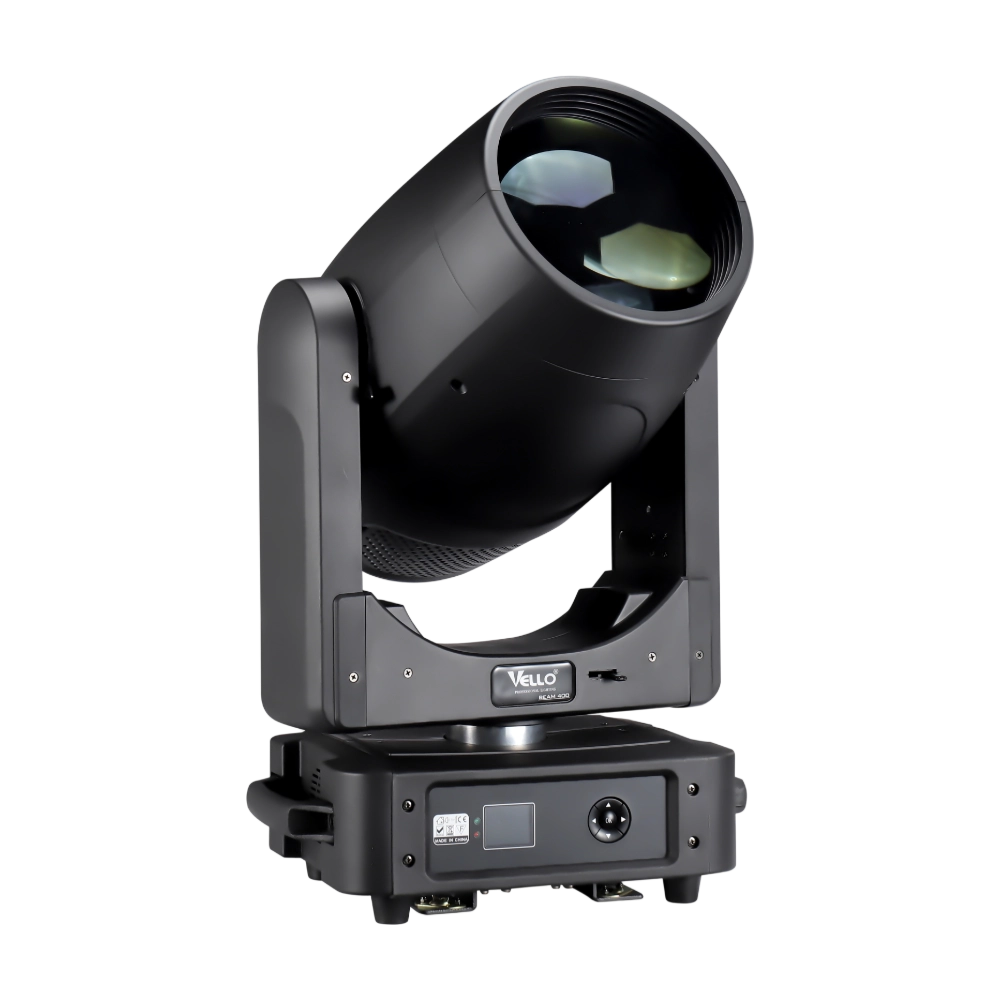
Moving Head Stage Light BEAM 400
BEAM400 is a 500W professional moving head beam powered by an OSRAM SIRIUS 371W discharge bulb, delivering a super-bright 1.8° sharp beam with impressive punch. It features 12 fixed gobos + open, a 14-color wheel, and a 16-facet circular rotating prism with multiple-facet effects, enabling dynamic aerial visuals. With 540° pan / 270° tilt, 16-bit movement resolution, and linear frost and focus, BEAM400 ensures precise and versatile performance. Comparable to traditional 750W moving heads, it combines high efficiency, smooth dimming, and reliable operation—ideal for concerts, tours, and large-scale stage productions.
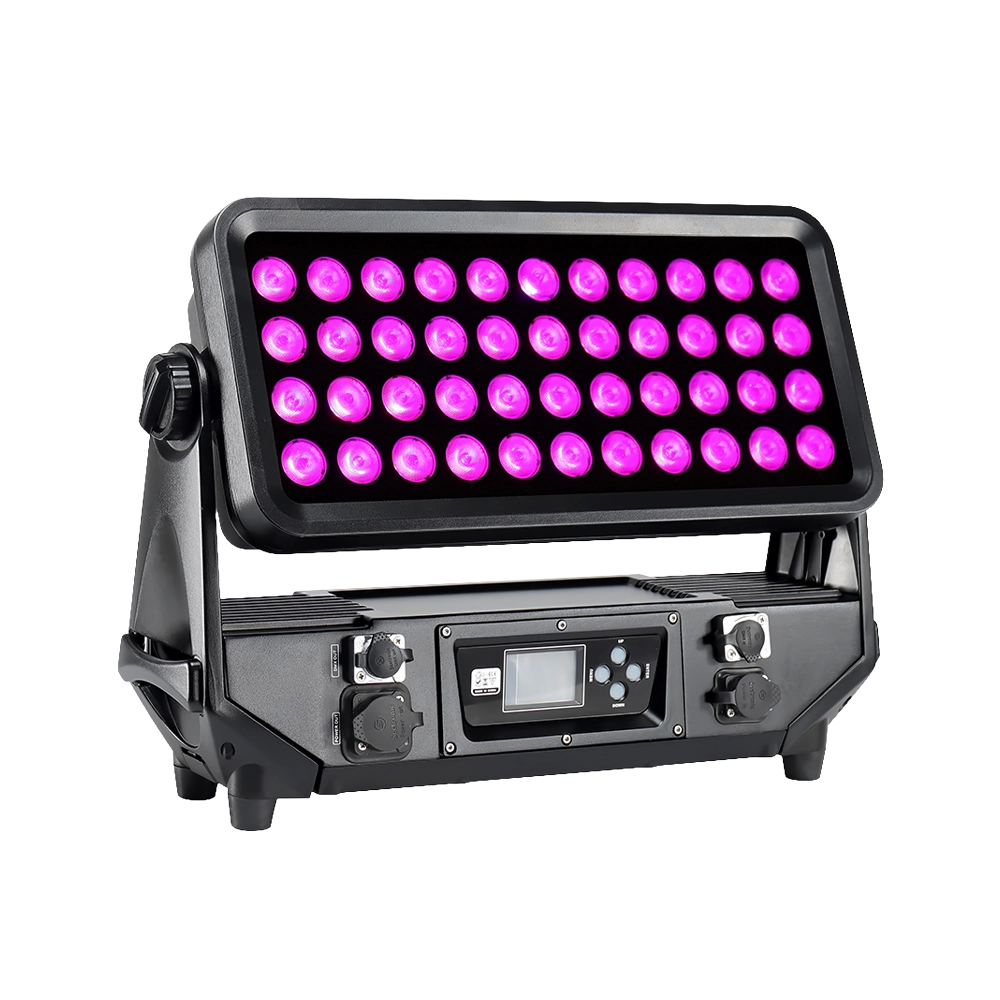
LED Light LED TOP P4
The Vello LED TOP P4 is a robust, high-output LED flood wash light designed for outdoor stages, architecture, and large-scale event lighting. Powered by 44x 15W RGBW LEDs from Cree, it delivers consistent brightness, smooth color mixing, and selectable beam angles of 20° or 40°. Built with a rugged IP65-rated die-cast aluminum housing, it withstands harsh weather conditions while offering smooth 0–100% dimming and flexible DMX control.
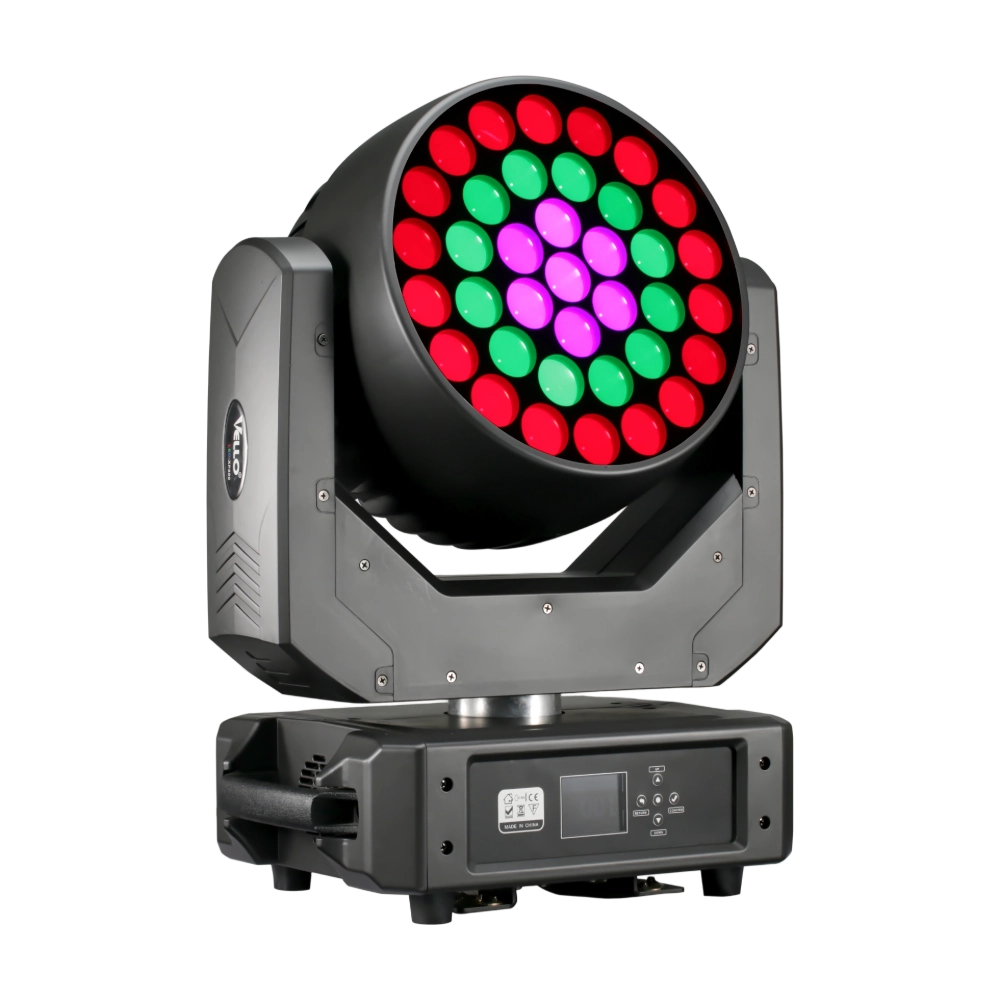
LED Moving Head Light XP800 (4in1)
The LED XP800 is a 600W moving head wash fixture, equipped with 37 × 20W Osram RGBW LEDs for brilliant color mixing and high output. With a wide 6°–50° electronic zoom, it easily transitions from sharp beams to smooth washes. The fixture supports 3-ring pixel control and an adjustable CTO range (2800K–8500K) for versatile applications. Featuring 540° pan / 310° tilt, high-speed 3-phase motors, and multiple DMX modes (16/28 channels), XP800 delivers powerful, precise, and dynamic performance. Compact and durable, it is an excellent choice for stages, theaters, and large-scale events requiring high brightness and flexibility.
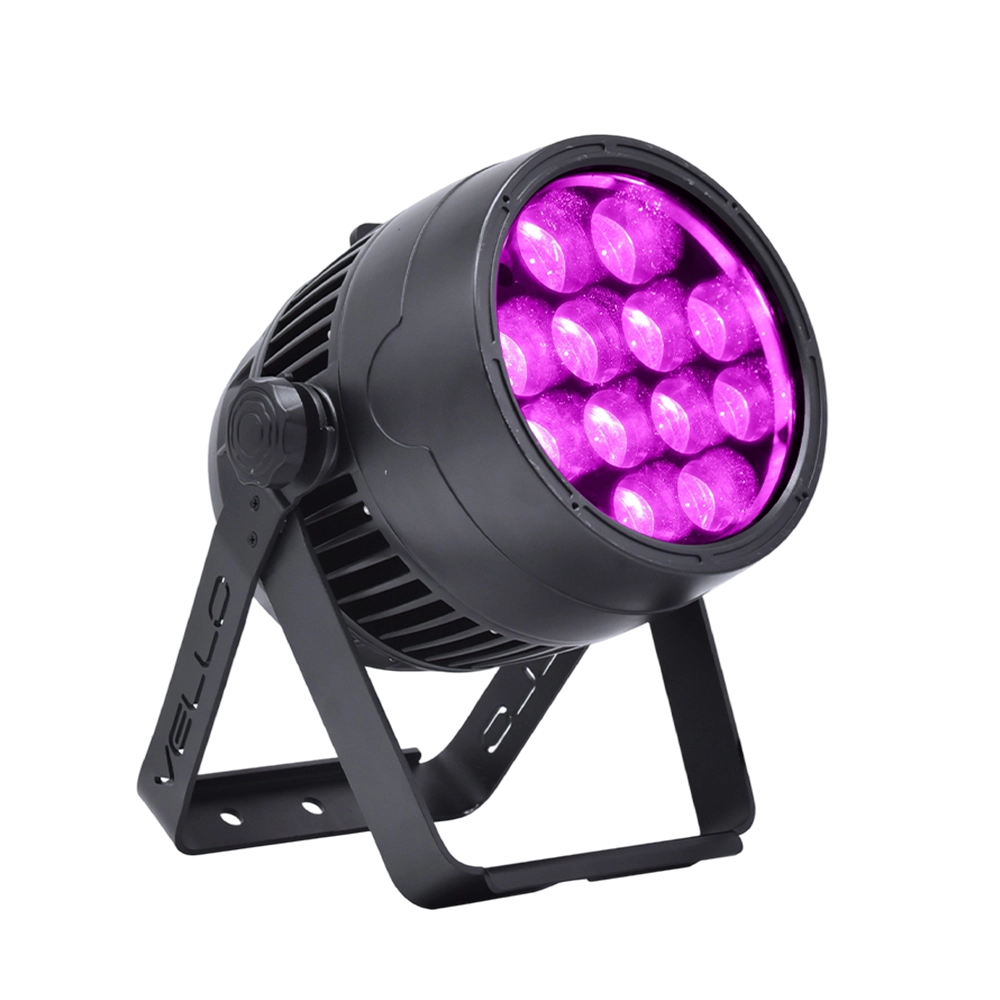
Stage LED Par Light LED ZOOMPAR 40
The Vello Zoom Par 40 IP is a powerful outdoor LED wash light equipped with 12x high-power 7-in-1 RGBACL LEDs. Designed for durability and rich color rendering, it features a wide motorized zoom (6°–50°), smooth dimming, and adjustable CTO presets (3200K–7500K), with 90+ CRI. With an IP66-rated die-cast aluminum body, it’s ideal for both indoor and outdoor applications, including stage lighting, architecture, live events, and installations.
Over 20 Years of Innovation in Stage & Studio Lighting
© 2026 VELLO. All Rights Reserved. 粤ICP备20023734号
Join our socials
VELLO
Whatsapp: +8613902276704
Vello Lighting
VelloLights