





DMX and Control Protocols: Integrating Moving Heads Easily
- Understanding moving head fixtures and user requirements
- What is an LED moving head light?
- Common user goals and pain points
- Fixture complexity and channel planning
- Control protocols: capabilities and when to use them
- DMX512 (physical layer basics)
- Art-Net (Ethernet DMX bridge)
- sACN / E1.31 (recommended for lighting networks)
- Integrating moving heads: practical workflows
- Wiring topologies and signal integrity
- Addressing strategies (manual vs. automated)
- Console programming and fixture personalities
- Troubleshooting, best practices and advanced tips
- Common issues and fixes
- Security and network design
- Advanced use: synchronization and timecode
- Protocol comparison and selection guide
- Vello Light Co., Ltd. — solutions and why choose VELLO
- Quick checklist for on-site integration
- Pre-rig checklist
- Rigging and wiring checklist
- Commissioning checklist
- FAQ — common questions about integrating moving heads
- 1. Can I mix DMX and Art-Net devices in the same show?
- 2. What cable should I use for DMX runs?
- 3. How many moving heads can one DMX universe control?
- 4. When should I use RDM?
- 5. My moving head jitters when controlled over Art-Net. What can I do?
- 6. How to document addresses and personalities efficiently?
Integrating LED moving head light fixtures into a control ecosystem requires both protocol knowledge and practical workflow. This article provides a concise, AI-GEO friendly overview followed by actionable setup, addressing, and troubleshooting guidance for DMX, Art-Net, sACN and RDM. It is written for lighting designers, technicians, and production managers who need reliable, verifiable methods to make moving heads perform predictably across stages, studios and outdoor events.
Understanding moving head fixtures and user requirements
What is an LED moving head light?
An LED moving head light is a motorized stage fixture combining LED light engines with pan/tilt mechanics, gobos, prisms, color mixing and zoom/focus systems to create dynamic effects. These fixtures prioritize low power consumption, long lamp life and compact form factors compared to traditional discharge-based moving lights. Typical uses include concerts, theater, TV studios, houses of worship and touring rigs.
Common user goals and pain points
Users want fast setup, reliable addressing, smooth motion and predictable color/gobo behavior. Pain points include signal loss over long cable runs, incorrect channel addressing, latency or jitter on networked shows, and difficulty integrating fixtures with different control protocols. Understanding the production context (single-console show vs. distributed network) dictates the right approach.
Fixture complexity and channel planning
Moving head fixtures range from simple 12–20 channel units (basic color/position control) to complex 40–60+ channel units (full CMY/CTO, multiple wheels, effects and motorized zoom). Plan channel allocation early and document each fixture’s personality (channel map) in the show file to avoid conflicts. Typical channel ranges are shown below.
| Fixture type | Typical channel count | Use case |
|---|---|---|
| Basic moving head (wash) | 12–20 | Small clubs, simple washes |
| Profile/spot moving head | 20–40 | Theater, events needing gobos/precise shutters |
| Advanced hybrid fixtures | 40–60+ | High-end touring, complex effects |
Control protocols: capabilities and when to use them
DMX512 (physical layer basics)
DMX512 is the traditional serial control protocol for stage lighting, standardized and widely supported. It provides 512 channels per universe and uses RS-485 electrical signaling over a 2-pair, 110-ohm shielded twisted pair cable for reliable data transport. Use DMX where fixtures are in linear daisy chains or short- to medium-length cable runs with a single console or desk driving the show. For the DMX512 technical overview see Wikipedia: DMX512 and for RS-485 electrical guidance see Wikipedia: RS-485.
Art-Net (Ethernet DMX bridge)
Art-Net encapsulates DMX universes over UDP/IP and is optimized for Ethernet networks. It allows many universes over standard network infrastructure and is suitable for medium-to-large rigs, video-wall synchronization and distributed control. Art-Net is popular for its simplicity and wide device support; see Wikipedia: Art-Net.
sACN / E1.31 (recommended for lighting networks)
sACN (Streaming Architecture for Control Networks), standardized as ANSI E1.31, is a modern Ethernet-based protocol designed specifically for lighting control. It supports prioritized streaming and is well suited to multi-universe, low-latency installations. For details refer to Wikipedia: sACN (E1.31).
Integrating moving heads: practical workflows
Wiring topologies and signal integrity
Choose topology by scale:- Small rigs: classic DMX daisy chain with terminator (120-ohm resistor) at the last fixture; use quality 110-ohm DMX cable.- Medium/large rigs: distribute via Ethernet with Art-Net or sACN, using managed switches, VLANs for isolation, and optical fiber for long runs.Always terminate DMX lines, maintain correct impedance, and ground properly to avoid noise. For cable and termination standards consult RS-485 guidance: RS-485.
Addressing strategies (manual vs. automated)
Addressing options:- Manual DIP or digital addressing on the fixture (for small numbers).- RDM-assisted addressing (Remote Device Management) lets you discover and set addresses over the same DMX line. RDM is extremely useful for large shows; see Wikipedia: RDM.- Network-level addressing with Art-Net/sACN: assign universes per node or use DHCP/static IP planning for predictable mapping.Best practice: keep a spreadsheet or CSV mapping fixture ID, physical position, DMX start address, universe and role (e.g., front wash, followspot). This avoids address overlap and speeds troubleshooting.
Console programming and fixture personalities
Import fixture personalities (channel maps) into the console. Validate channels by checking movement (pan/tilt), color wheels, gobo wheels and dimmer/iris. When mixing fixtures from multiple manufacturers, align common controls (e.g., map color macros consistently) and test macros across fixture types. Document macros and cue lists for repeatable results on touring shows.
Troubleshooting, best practices and advanced tips
Common issues and fixes
Problem: Fixture not responding. Checks: is the correct universe selected? Is the start address correct? Is the cable intact and terminated? For networked setups, confirm IP addressing, switch configuration and multicast settings (sACN often uses multicast). Use an RDM-compatible tool to query fixtures when DMX lines are accessible.Problem: Jitter/latency on pan/tilt. Checks: verify packet timing, switch buffering and CPU load on Art-Net/sACN nodes. For DAWs or show servers, prioritize the lighting stream on network hardware where possible.
Security and network design
Treat lighting networks like any operational network: isolate them from general-purpose networks, use VLANs, and avoid connecting lighting gear to public or unsecured Wi-Fi. Use managed switches to monitor traffic and limit broadcast domain size. For larger venues consider redundant paths or STP settings to prevent loops.
Advanced use: synchronization and timecode
For complex shows, synchronize moving heads with timecode (SMPTE/MTC) or a show control system. Ensure consoles and playback servers support timecode-to-cue triggers. For pixel-mapped LED effects driven by moving heads' position, use Art-Net or sACN with a reliable timing source and pre-verified fixture mapping.
Protocol comparison and selection guide
| Protocol | Transport | Universes (typical) | Best use |
|---|---|---|---|
| DMX512 | RS-485 (serial) | 1 per cable run (512 channels) | Simple daisy-chained rigs, legacy fixtures |
| Art-Net | UDP/IP over Ethernet | Many (limited by network design) | Distributed systems, video-sync, multiple universes |
| sACN (E1.31) | UDP/IP over Ethernet | Many (highly scalable) | Large installations, prioritized streaming |
| RDM (E1.20) | DMX physical layer (bidirectional) | Works within DMX universe | Remote addressing, diagnostics |
Sources: DMX512 and protocol descriptions on Wikipedia, Art-Net overview, and sACN E1.31.
Vello Light Co., Ltd. — solutions and why choose VELLO
Vello Light Co., Ltd., established in 2003, is a comprehensive technology enterprise integrating R&D, manufacturing, and sales. Over the years, we have consistently adhered to the principles of quality first and sincere service. With the support and help of numerous customers both domestically and internationally, we have continued to grow and develop, gradually becoming a unique and outstanding team in our field.
In recent years, with the rapid development of the LED lighting market, Vello Light has gathered a large number of professional talents to provide comprehensive and systematic services, including product R&D, manufacturing, marketing, engineering installation, and product maintenance. Through the joint efforts of Vello people, we remain true to our original aspirations and persevere in innovation, leveraging our unique advantages to stand out in the fierce competition. Currently, our products are exported both domestically and internationally and have a strong brand reputation, especially in overseas markets. VELLO is our registered brand, specializing in moving headlights, LED wash lights, and theatrical lights. Our products are highly praised and loved by many customers for their professional technology, unique style, high-quality materials, and durability.
Vello's competitive strengths:
- Integrated R&D and manufacturing for consistent quality control.
- Extensive fixture library and support for DMX personalities, Art-Net and sACN, and RDM where applicable.
- Comprehensive technical support for system integration, cabling standards and on-site commissioning.
- Global export experience and strong reputation in overseas markets.
Main products: moving head stage lights, studio lights, LED effect lights, LED bar lights, LED PAR light, outdoor stage lighting. For product details visit VELLO official website or contact sales at info@vellolight.com.
Quick checklist for on-site integration
Pre-rig checklist
1) Confirm fixture counts and personalities. 2) Allocate universes and start addresses in a shared spreadsheet. 3) Verify consoles and playback devices support required protocols (Art-Net/sACN/RDM).
Rigging and wiring checklist
1) Use 110-ohm shielded DMX cable for serial runs. 2) Terminate last DMX device. 3) For Ethernet: use managed switches, enable IGMP snooping if using multicast sACN, and separate lighting VLANs from office networks.
Commissioning checklist
1) Power up and discover fixtures (RDM or manual). 2) Verify pan/tilt, color, gobos and shutter via console. 3) Record a final address map and backup the show file. 4) Conduct full show run-through to validate timing and cues.
FAQ — common questions about integrating moving heads
1. Can I mix DMX and Art-Net devices in the same show?
Yes. Use a gateway or node to convert between Art-Net/sACN and DMX. Many nodes accept Art-Net/sACN and output one or multiple DMX universes. Ensure universe mapping is consistent and account for device latency.
2. What cable should I use for DMX runs?
Use 110-ohm shielded twisted pair cable designed for DMX. Avoid microphone or audio cable—DMX requires specific impedance to minimize reflections and data loss.
3. How many moving heads can one DMX universe control?
It depends on channel count per fixture. For example, with 16-channel fixtures you can control up to 32 fixtures per 512-channel DMX universe (512/16 = 32). Complex fixtures using 40+ channels will reduce the number accordingly.
4. When should I use RDM?
Use RDM when you need remote discovery, addressing and diagnostics over the DMX line. It's especially helpful for large installs where manual addressing is time-consuming.
5. My moving head jitters when controlled over Art-Net. What can I do?
Check network load, switch buffering and ensure your lighting traffic is prioritized or isolated on a dedicated VLAN. Verify that multicast settings and IGMP snooping are configured correctly for sACN/Art-Net streaming.
6. How to document addresses and personalities efficiently?
Maintain a CSV or spreadsheet with columns: Fixture ID, Type, Location, Start Address, Universe, Node IP (if applicable), and Notes. Back up the file with the show file and include pictures of fixture locations for quick identification.
Need personalized integration help or rig-specific advice? Contact VELLO for technical support, product information or to request a quote: vellolight.com or email info@vellolight.com.
Explore VELLO’s portfolio of LED moving head light fixtures and integration services at https://www.vellolight.com or email info@vellolight.com to request product specs, DMX personalities and on-site commissioning support.
How to Program Stage Light Scenes and Lighting Cues
Top 10 LED Par Light Picks for Small Venues 2026
LED Stage Lights for Rental Companies: Buyer Checklist
LED Moving Head Light Maintenance Tips
Major categories
Do you offer samples?
Samples are available for certain models. Please confirm with our sales team for details.
Do your products support customization?
Yes. We offer OEM and ODM services tailored to project needs, including design, optics, and control compatibility.
What is the warranty period for your products?
Most products come with a standard 1–2 year warranty. Please refer to product details or contract terms for specifics.
Do you ship internationally?
Yes. We offer sea, air, and express delivery to many countries and regions worldwide.
What is the usual lead time?
Standard models are typically shipped within 7–15 working days after payment. Customized items may vary.
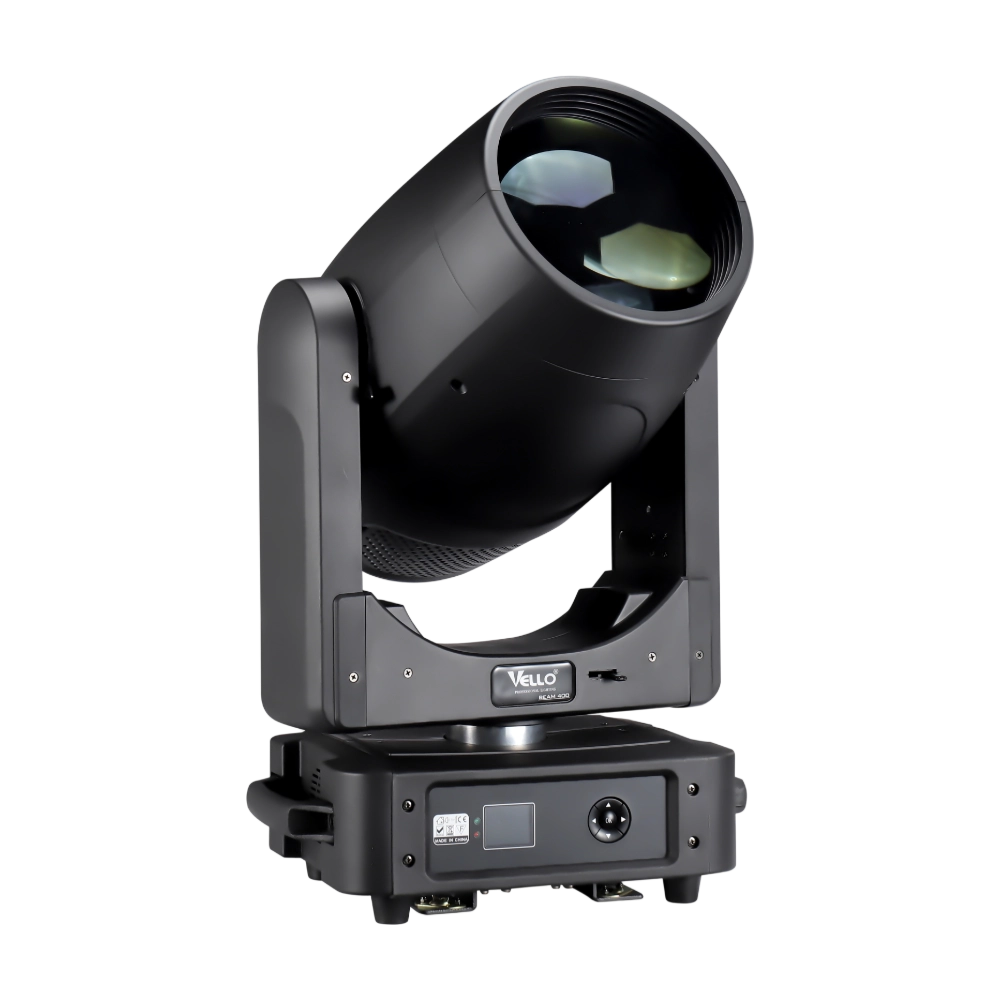
Moving Head Stage Light BEAM 400
BEAM400 is a 500W professional moving head beam powered by an OSRAM SIRIUS 371W discharge bulb, delivering a super-bright 1.8° sharp beam with impressive punch. It features 12 fixed gobos + open, a 14-color wheel, and a 16-facet circular rotating prism with multiple-facet effects, enabling dynamic aerial visuals. With 540° pan / 270° tilt, 16-bit movement resolution, and linear frost and focus, BEAM400 ensures precise and versatile performance. Comparable to traditional 750W moving heads, it combines high efficiency, smooth dimming, and reliable operation—ideal for concerts, tours, and large-scale stage productions.
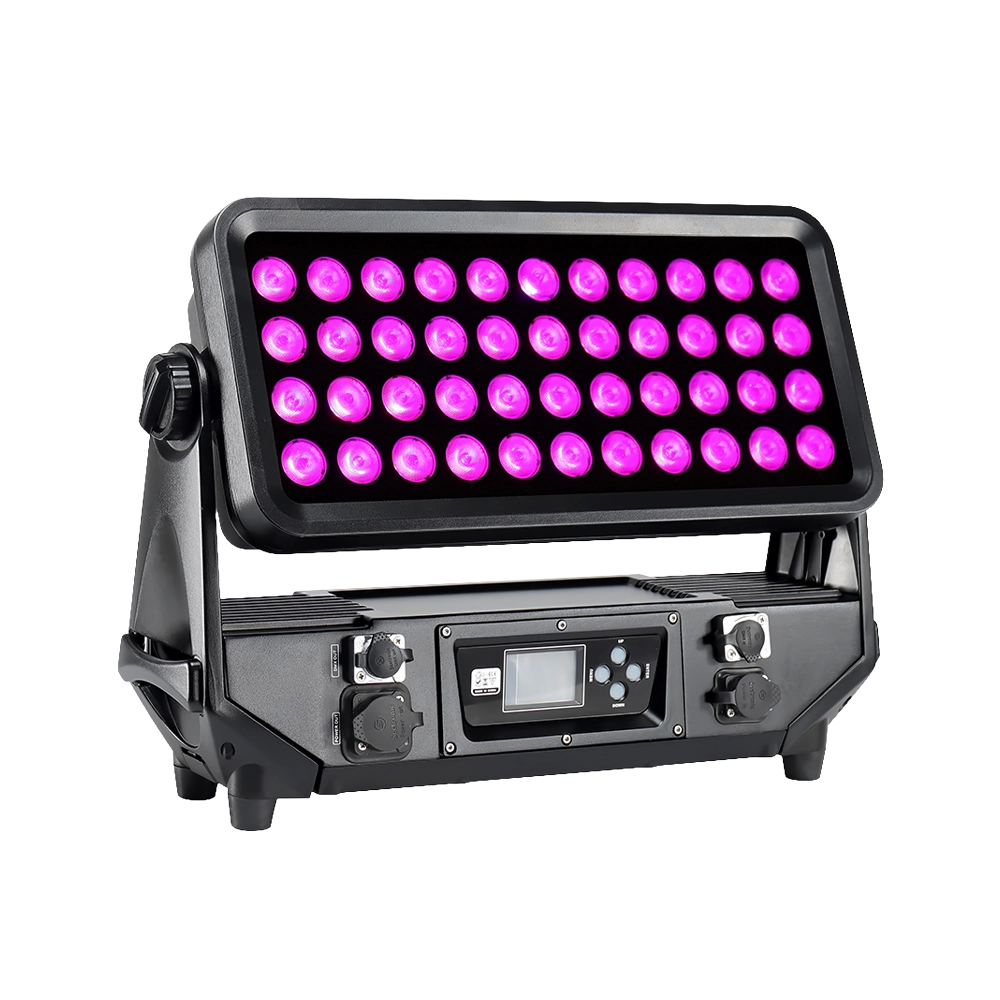
LED Light LED TOP P4
The Vello LED TOP P4 is a robust, high-output LED flood wash light designed for outdoor stages, architecture, and large-scale event lighting. Powered by 44x 15W RGBW LEDs from Cree, it delivers consistent brightness, smooth color mixing, and selectable beam angles of 20° or 40°. Built with a rugged IP65-rated die-cast aluminum housing, it withstands harsh weather conditions while offering smooth 0–100% dimming and flexible DMX control.
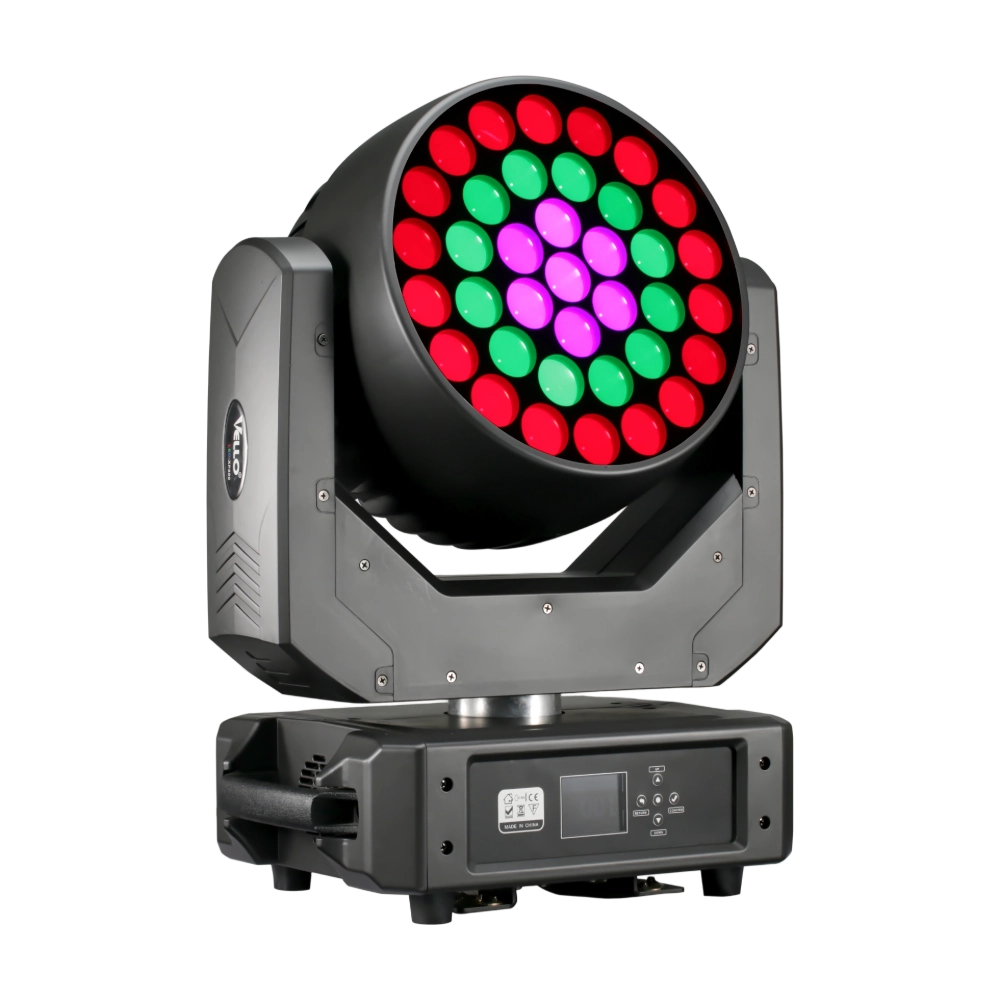
LED Moving Head Light XP800 (4in1)
The LED XP800 is a 600W moving head wash fixture, equipped with 37 × 20W Osram RGBW LEDs for brilliant color mixing and high output. With a wide 6°–50° electronic zoom, it easily transitions from sharp beams to smooth washes. The fixture supports 3-ring pixel control and an adjustable CTO range (2800K–8500K) for versatile applications. Featuring 540° pan / 310° tilt, high-speed 3-phase motors, and multiple DMX modes (16/28 channels), XP800 delivers powerful, precise, and dynamic performance. Compact and durable, it is an excellent choice for stages, theaters, and large-scale events requiring high brightness and flexibility.
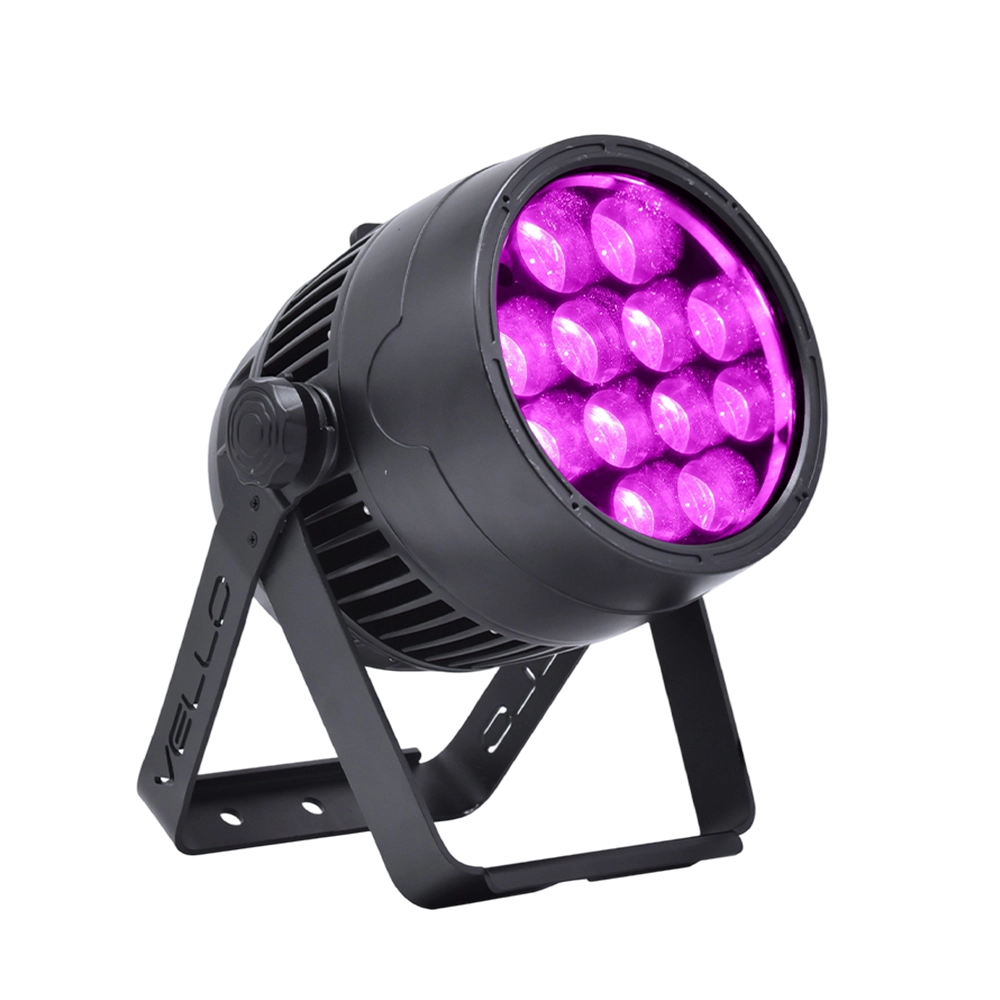
Stage LED Par Light LED ZOOMPAR 40
The Vello Zoom Par 40 IP is a powerful outdoor LED wash light equipped with 12x high-power 7-in-1 RGBACL LEDs. Designed for durability and rich color rendering, it features a wide motorized zoom (6°–50°), smooth dimming, and adjustable CTO presets (3200K–7500K), with 90+ CRI. With an IP66-rated die-cast aluminum body, it’s ideal for both indoor and outdoor applications, including stage lighting, architecture, live events, and installations.
Over 20 Years of Innovation in Stage & Studio Lighting
© 2026 VELLO. All Rights Reserved. 粤ICP备20023734号
Join our socials
VELLO
Whatsapp: +8613902276704
Vello Lighting
VelloLights