





DMX Control for LED Stage Lights: A Beginner's Guide
- Understanding Control Protocols for Live Performances
- What is DMX and why it matters for LED stage lights
- How DMX fits into stage lighting workflows
- DMX512 Basics: Addressing, Channels, and Universes
- DMX512 architecture explained for stage lighting setups
- Addressing and patching: practical steps
- Connectors, Cabling, and Signal Chain Reliability
- XLR, 5-pin vs 3-pin, and network-based control
- Best wiring practices
- Modern Network Protocols: Art-Net and sACN vs DMX512
- Fixture Types, Channel Modes, and LED Considerations
- Common LED fixture channel functions
- PWM frequency, flicker, and camera compatibility
- Controllers, Consoles, and Software Options
- Hardware consoles vs software controllers
- Practical controller selection checklist
- Troubleshooting and Reliability Tips for Live Events
- Common issues and quick fixes
- Redundancy and safety
- Vello Light Co., Ltd.: How a Manufacturer Supports Professional Stage Lighting Needs
- Vello strengths, product lines, and why they matter for buyers
- Practical Example: Putting It All Together for a Medium-Sized Venue
- Scenario and recommended setup
- FAQ
- 1. What is the difference between DMX512 and Art-Net for stage lighting?
- 2. How many DMX channels do I need for my show?
- 3. Can I mix 3-pin and 5-pin XLR in the same DMX run?
- 4. Why do my LED lights flicker on camera and how can I fix it?
- 5. What is RDM and should my fixtures support it?
- 6. How do I ensure reliability for live performances?
- Contact and Product Consultation
- References and Further Reading
Understanding Control Protocols for Live Performances
Stage lighting professionals and newcomers searching for stage lighting control solutions want reliable, predictable ways to make LED stage lights perform exactly as intended. This guide explains DMX control in practical terms, focusing on real-world setup, common problems, and how to scale from a single fixture to large shows. It is written for lighting technicians, venue managers, event producers, and anyone evaluating stage lighting equipment or looking to buy stage lighting controllers or fixtures.
What is DMX and why it matters for LED stage lights
DMX512, commonly shortened to DMX, is the industry-standard protocol for controlling stage lighting and related equipment. It carries control data from a console or controller to fixtures and effects. For LED stage lights, DMX controls parameters such as intensity, color mixing, pan and tilt for moving heads, and pixel mapping for LED strips and panels. Understanding DMX is essential when you want precise control, synchronized cues, or advanced effects during performances.
How DMX fits into stage lighting workflows
In a typical workflow, a console or software sends DMX data to a chain of fixtures. The lighting designer patches fixtures in the console, defines channels for each fixture attribute, programs cues, and executes them during the show. For venues that buy stage lighting systems, knowing how DMX interacts with LED fixtures helps with choosing controllers, cabling, and backup plans.
DMX512 Basics: Addressing, Channels, and Universes
For anyone setting up stage lighting equipment, the details behind DMX addressing and channel assignment are fundamental. This section covers the essentials you will use daily.
DMX512 architecture explained for stage lighting setups
DMX512 transmits 512 channels per universe. Each channel holds an 8-bit value (0 to 255). For simple fixtures, one channel might control intensity. For complex LED moving heads or pixel fixtures, a single fixture can use many channels to control color, gobo, movement, and effects. A universe is a block of up to 512 channels; large shows use multiple universes. When buying stage lighting systems, verify how many channels each fixture requires and how many universes your console supports.
Addressing and patching: practical steps
To address fixtures, set the start address on the fixture or via RDM if supported. In the console, patch the fixture to the same start address and select the correct fixture profile. Common mistakes include overlapping addresses or forgetting to change a fixture mode from 16-channel to 24-channel. To avoid conflicts, keep a patch spreadsheet and label fixtures and cables physically when possible.
Connectors, Cabling, and Signal Chain Reliability
Cabling and connectors are a frequent source of problems in stage lighting. Choosing the right cable and wiring it correctly prevents flicker, dropouts, and unexpected behavior during shows.
XLR, 5-pin vs 3-pin, and network-based control
Traditional DMX uses 5-pin XLR connectors as specified by the DMX512 standard. Many manufacturers use 3-pin XLR for cost reasons, but this is not technically compliant for permanent installations. For larger systems, network-based protocols such as Art-Net and sACN are common and run over Ethernet cabling. For purchasing stage lighting equipment, ensure the controller and fixtures support the connector types you need and consider using DMX terminators at the end of runs to prevent signal reflections.
Best wiring practices
Use a daisy-chain topology where the controller connects to the first fixture, then to the next, and so on. Keep cable runs under recommended lengths where feasible, and use DMX-certified shielded cable for long runs. Avoid running DMX cables parallel to mains power to reduce interference. If you need long-distance runs, use opto-isolators, RS-485 repeaters, or convert to Ethernet with proper isolation.
Modern Network Protocols: Art-Net and sACN vs DMX512
When scaling up from a small venue to a large festival, network protocols become essential. This section compares DMX512 with modern alternatives and shows when to use each for stage lighting projects or when buying stage lighting systems for bigger productions.
| Protocol | Transport | Max Channels per Session | Latency | Use Case |
|---|---|---|---|---|
| DMX512 | RS-485 over XLR | 512 per universe | Low, deterministic | Small to medium shows, simple chains |
| Art-Net | UDP over Ethernet | Multiple universes (practically limited by network) | Low, depends on network load | Large shows, pixel mapping, studio use |
| sACN (E1.31) | UDP over Ethernet | Multiple universes, standardized | Low, multicast options | Networked venues, robust large-scale control |
Sources for protocol specifics are listed in the references section. In practice, many lighting rigs bridge DMX and Ethernet, using nodes that convert Art-Net or sACN to DMX512 for fixtures that only accept traditional DMX.
Fixture Types, Channel Modes, and LED Considerations
LED fixtures behave differently from incandescent fixtures. Understanding their electronic behavior helps when programming cues and aiming for consistent color and intensity across multiple fixtures.
Common LED fixture channel functions
Typical channel functions for LED stage lights include intensity, RGB or RGBW color channels, white balance or color temperature, strobe, dimmer curve selection, and effect controls. Pixel-mappable fixtures expose per-pixel channels or use higher-level DMX pixel mapping via a node. When buying moving head stage lights or LED wash lights, confirm the channel modes supported and whether the fixture offers multiple channel modes to save universes.
PWM frequency, flicker, and camera compatibility
LED dimming is often achieved by PWM. Low PWM frequencies can cause flicker on cameras. For venues hosting filmed events or studio shoots, choose LED fixtures with high PWM frequencies or dedicated camera-safe modes. This is a critical consideration when buying studio lights or outdoor stage lighting that may be captured by broadcast cameras.
Controllers, Consoles, and Software Options
Selecting the right controller depends on scale, budget, and feature needs such as pixel mapping, timecode, and network compatibility.
Hardware consoles vs software controllers
Hardware consoles offer tactile controls and familiarity for stage operators. Popular options range from small desk controllers to full-featured consoles. Software controllers run on laptops and may provide powerful visualizers and pixel mapping at lower cost. Many systems pair a hardware controller with software visualization. For purchasing stage lighting controllers, consider supported universes, protocols, and the learning curve for your team.
Practical controller selection checklist
- Number of universes needed for your typical shows
- Support for Art-Net and sACN if you use networked fixtures
- RDM support for remote fixture configuration
- Ability to store cues and playback reliably
- Backup and redundancy options for critical performances
Troubleshooting and Reliability Tips for Live Events
Prepare for common problems that occur during load-in, rehearsal, and live performance. A checklist and some technical fixes will save time and embarrassment.
Common issues and quick fixes
- No response from fixtures: check address, start address, mode, and termination.
- One fixture showing strange behavior: check for a short circuit, damaged cable, or misassigned channels.
- Flicker on camera: enable camera-safe mode or increase PWM frequency if possible.
- Network lag with Art-Net/sACN: isolate the lighting network, avoid multicast storm, and use managed switches for larger installations.
Redundancy and safety
Use backup controllers or playback devices for critical shows. For networked control, configure redundant sACN or Art-Net paths where supported. Physically secure fixtures and manage cable runs to reduce trip hazards and accidental disconnects. When buying outdoor stage lighting, ensure IP ratings match site conditions and follow local electrical codes.
Vello Light Co., Ltd.: How a Manufacturer Supports Professional Stage Lighting Needs
When choosing LED stage lights and moving head stage lights, partner with manufacturers who understand field requirements. Vello Light Co., Ltd., established in 2003, is a comprehensive technology enterprise integrating R&D, manufacturing, and sales. Over the years, Vello has adhered to principles of quality first and sincere service, and has grown with customer support domestically and internationally.
Vello strengths, product lines, and why they matter for buyers
Vello has gathered professional talents to provide systematic services including product R&D, manufacturing, marketing, engineering installation, and product maintenance. Their registered brand VELLO focuses on moving head stage lights, studio lights, LED effect light, LED Bar Lights, LED Par Light, and outdoor stage lighting. Key competitive advantages include:
- Industry experience since 2003 with established R&D capabilities.
- Focus on durable materials and professional technology to reduce field failures.
- Product lines designed for both live performance and studio environments, addressing PWM and camera compatibility.
- Global export experience and after-sales support for international projects.
For venues and rental companies, VELLO fixtures present a balance of cost, reliability, and support, whether you are buying stage lighting for a small house of worship or equipping a touring production.
Practical Example: Putting It All Together for a Medium-Sized Venue
This short scenario illustrates planning channel count, cabling, and console selection when upgrading stage lighting.
Scenario and recommended setup
Venue: Medium theater with house lights, 12 moving head LED wash fixtures, 8 LED pars for front wash, and 2 LED bars for cyclorama. Requirements: pixel control for chases, camera-safe operation, and a simple backup playback.
Recommended configuration:
- Calculate channels: if each moving head uses 24 channels in high mode, 12 x 24 = 288 channels. LED pars use 4 channels each, bars map as pixels via a pixel controller.
- Use one or two universes for fixtures and a dedicated universe for pixel mapping via Art-Net or sACN.
- Controller: hardware console with 2 universes or software console with Art-Net output and a backup playback device.
- Cabling: mix DMX512 for fixtures without Ethernet nodes and use Ethernet with Art-Net for pixel controllers. Terminate DMX chains and use managed switches for Ethernet segments.
FAQ
1. What is the difference between DMX512 and Art-Net for stage lighting?
DMX512 is a serial RS-485 based protocol that carries 512 channels per universe over XLR. Art-Net is a protocol that tunnels DMX data over Ethernet, enabling many universes and easier pixel mapping. Use DMX for simple chains; choose Art-Net or sACN for large, networked rigs or when you need many universes.
2. How many DMX channels do I need for my show?
Add up the channel requirements of each fixture in the mode you intend to use. Consider high-channel modes for full control and lower-channel modes to save universes. Include pixel mapping needs and allow headroom for effects.
3. Can I mix 3-pin and 5-pin XLR in the same DMX run?
Technically, many fixtures accept 3-pin XLR, but 5-pin is the standard. Mixing connectors is possible with adapters but avoid it for permanent installations. Always maintain good cable practices and proper termination.
4. Why do my LED lights flicker on camera and how can I fix it?
Flicker is usually caused by low PWM frequencies or incompatible frame rates. Choose fixtures with camera-safe modes or higher PWM frequency, adjust shutter and gain settings on cameras, or use fixtures with flicker-free electronics suitable for broadcast.
5. What is RDM and should my fixtures support it?
RDM is Remote Device Management, which works on top of DMX and allows bidirectional communication for remote addressing and status monitoring. It is very useful for large rigs and reduces setup time. For rental houses and venues, RDM support is recommended.
6. How do I ensure reliability for live performances?
Test gear thoroughly before shows, use backup controllers or playback devices, keep spare cables and fixtures, use managed Ethernet for networked control, and document your patch. Regular maintenance and firmware updates from manufacturers like VELLO help maintain reliability.
Contact and Product Consultation
If you are evaluating LED stage lights, moving head stage lights, studio lights, or outdoor stage lighting, consult with experienced manufacturers and suppliers. For product information, technical support, and customized solutions, contact Vello Light Co., Ltd. Their team can advise on choosing the right fixtures, controllers, and network setups for your venue or production. View product catalogs or request a consultation to match stage lighting equipment to your project needs.
References and Further Reading
- USITT/ESTA DMX512 and DMX512-A standards, maintained by ESTA. Link: https://tsp.esta.org/tsp/documents/docs.htm Accessed 2025-12-14
- Art-Net protocol, Artistic Licence documentation. Link: http://www.art-net.org.uk/ Accessed 2025-12-14
- sACN (E1.31) documentation, ESTA network protocol pages. Link: https://tsp.esta.org/tsp/documents/E1-31-2013.pdf Accessed 2025-12-14
- Wikipedia entry for DMX512 overview. Link: https://en.wikipedia.org/wiki/DMX512 Accessed 2025-12-14
- Industry best practices for lighting networks and cabling, various manufacturer application notes. Example resource: https://www.etcconnect.com/etl/technology/ Accessed 2025-12-14
For further assistance, product quotes, or detailed system design for stage lighting, reach out to Vello Light Co., Ltd. with your show requirements and venue specifications.
Case Study: Custom LED Lighting for Concert Tours
Custom LED Lighting Rig Design for Touring Productions
Color Mixing and Temperature for LED Stage Lighting
Wireless DMX and Bluetooth Control for Stage Lights
Major categories
Do you ship internationally?
Yes. We offer sea, air, and express delivery to many countries and regions worldwide.
Do you offer samples?
Samples are available for certain models. Please confirm with our sales team for details.
Do your products support customization?
Yes. We offer OEM and ODM services tailored to project needs, including design, optics, and control compatibility.
What is the usual lead time?
Standard models are typically shipped within 7–15 working days after payment. Customized items may vary.
What is the warranty period for your products?
Most products come with a standard 1–2 year warranty. Please refer to product details or contract terms for specifics.
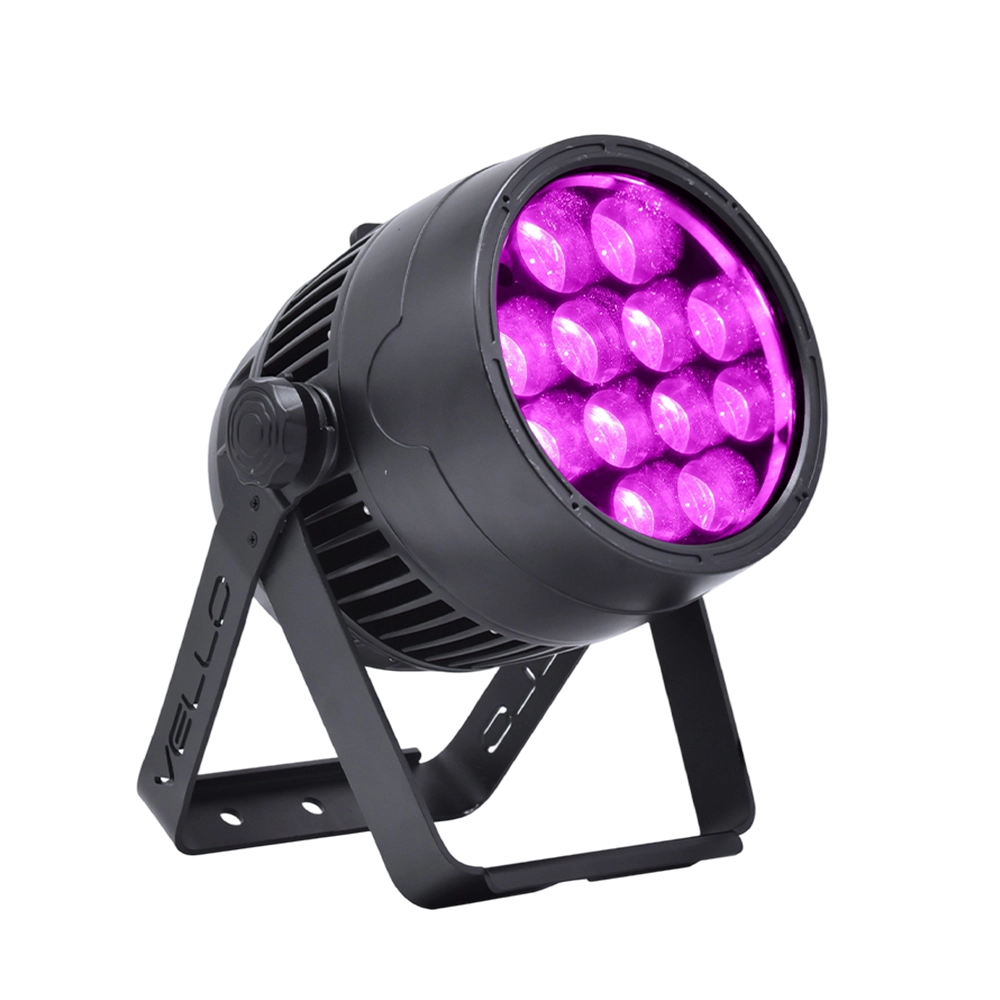
Stage LED Par Light LED ZOOMPAR 40
The Vello Zoom Par 40 IP is a powerful outdoor LED wash light equipped with 12x high-power 7-in-1 RGBACL LEDs. Designed for durability and rich color rendering, it features a wide motorized zoom (6°–50°), smooth dimming, and adjustable CTO presets (3200K–7500K), with 90+ CRI. With an IP66-rated die-cast aluminum body, it’s ideal for both indoor and outdoor applications, including stage lighting, architecture, live events, and installations.
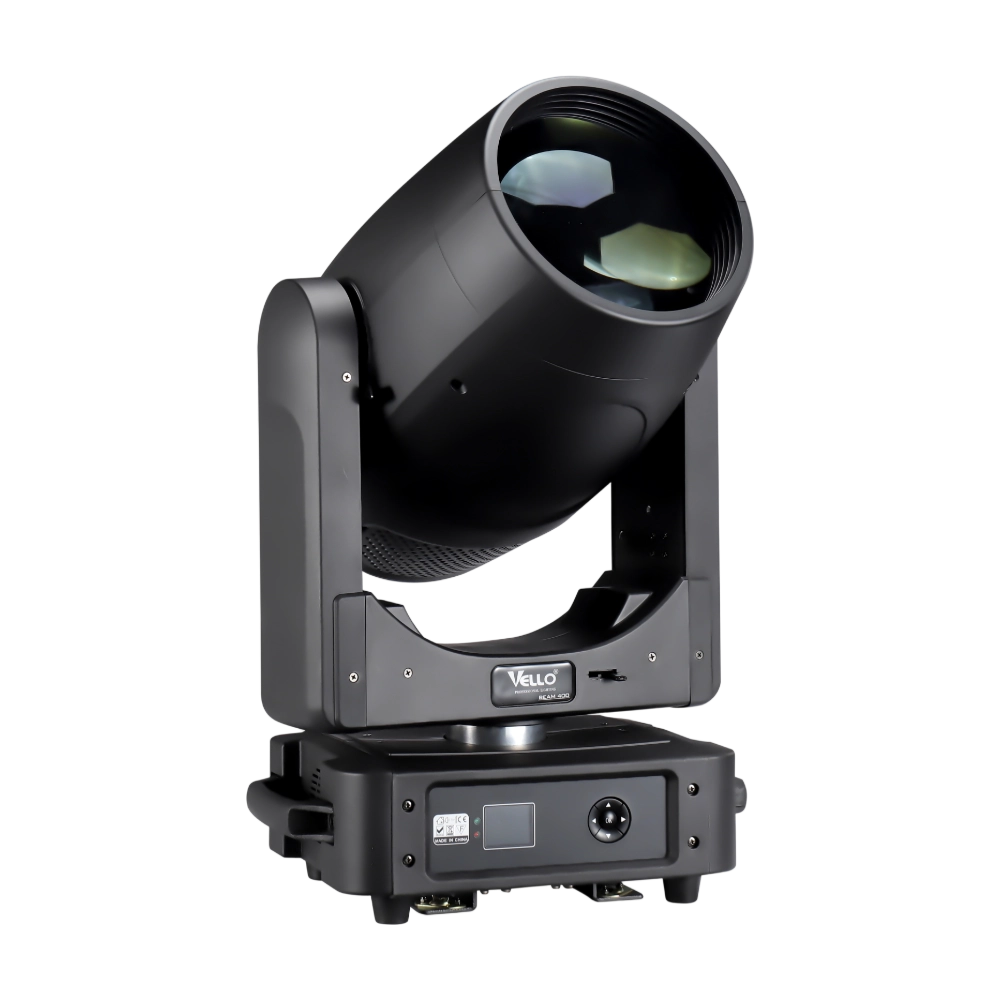
Moving Head Stage Light BEAM 400
BEAM400 is a 500W professional moving head beam powered by an OSRAM SIRIUS 371W discharge bulb, delivering a super-bright 1.8° sharp beam with impressive punch. It features 12 fixed gobos + open, a 14-color wheel, and a 16-facet circular rotating prism with multiple-facet effects, enabling dynamic aerial visuals. With 540° pan / 270° tilt, 16-bit movement resolution, and linear frost and focus, BEAM400 ensures precise and versatile performance. Comparable to traditional 750W moving heads, it combines high efficiency, smooth dimming, and reliable operation—ideal for concerts, tours, and large-scale stage productions.
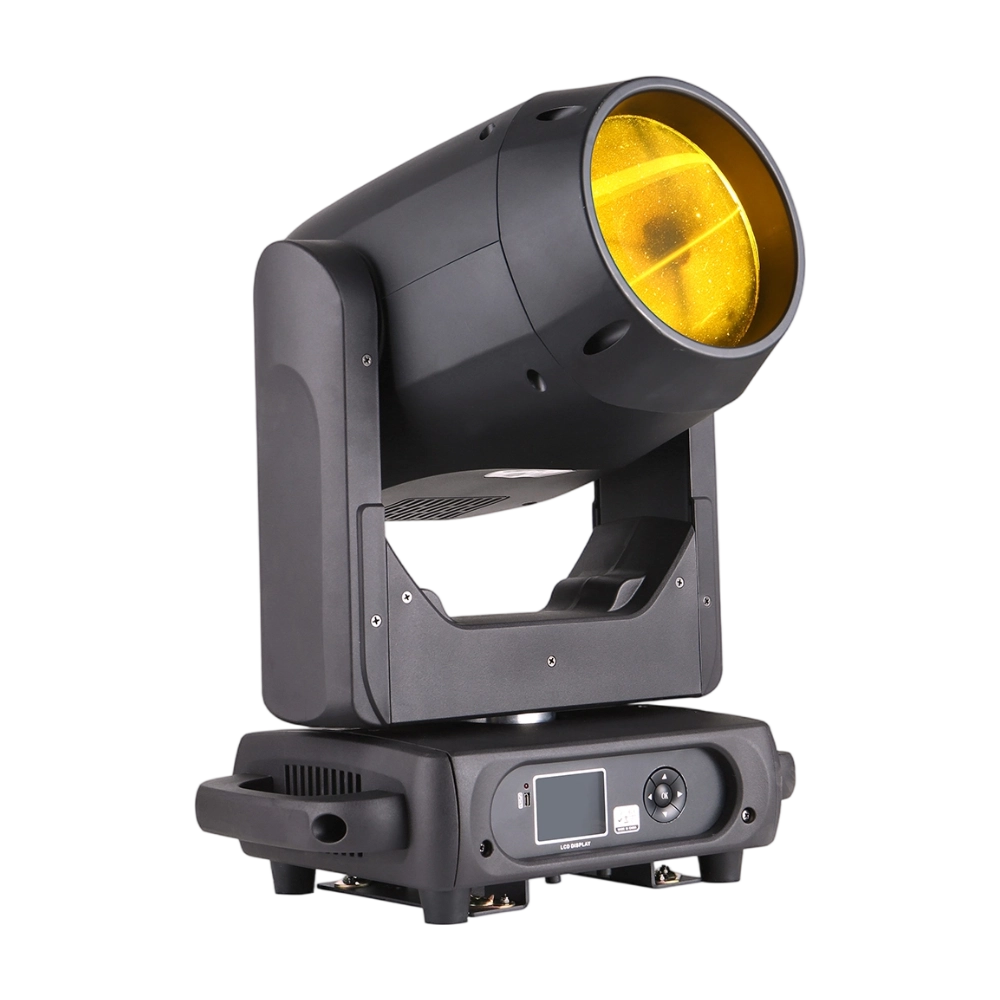
Moving Head Stage Light BEAM 360
BEAM360 is a 400W high-power moving head beam equipped with an OSRAM SIRIUS 311W discharge lamp, delivering a sharp 1.8° beam with super brightness. It features 14 colors + open, 12 fixed metal gobos + open, and dual prisms (8-facet circular + 8+16 multi-facet combination) for dynamic aerial effects. With 540° pan / 270° tilt, 16-bit movement, and linear frost and focus, BEAM360 ensures precision and versatility. Compact yet powerful, it rivals traditional 575W moving heads, making it ideal for concerts, clubs, and large-scale stage productions.
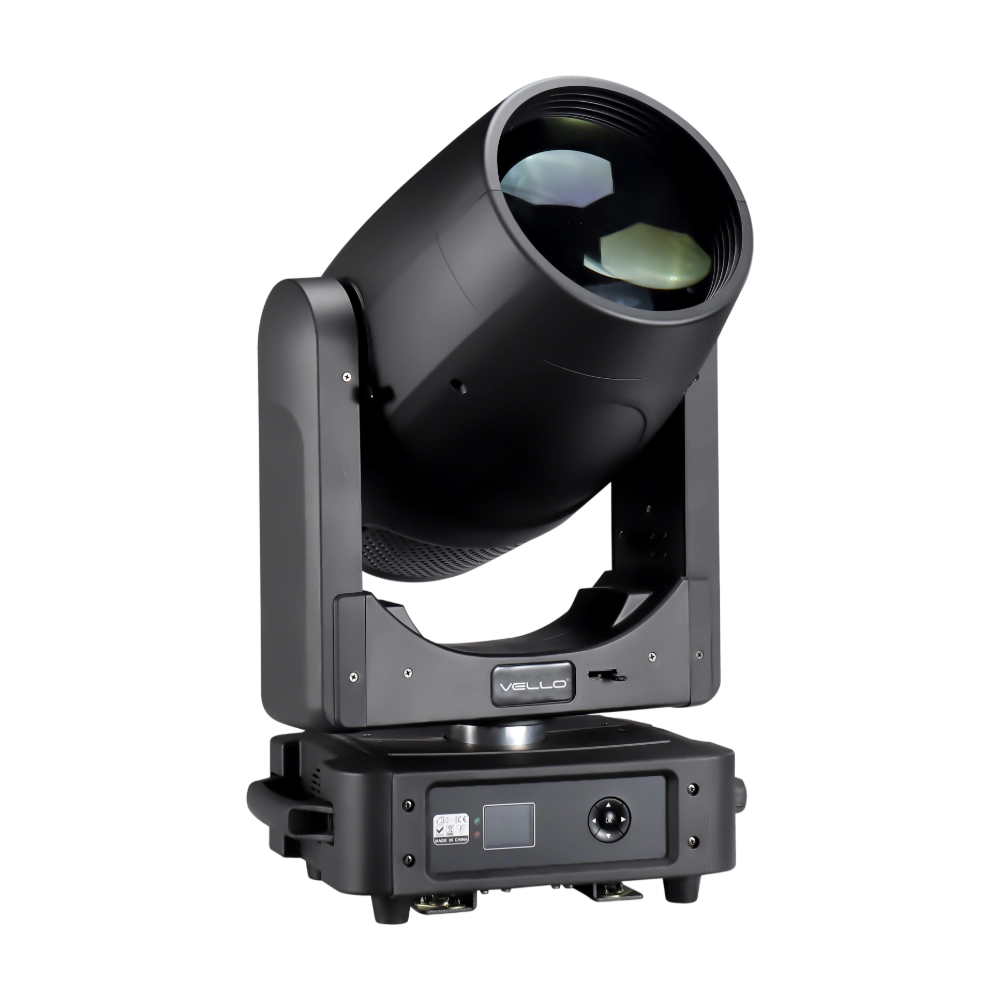
Moving Head Light BEAM 450
The BSW450 is a high-performance moving head fixture equipped with an original Osram 420W bulb, delivering exceptional brightness, precision, and versatility. Designed for professional stage applications, it seamlessly combines beam, spot, and wash functions in one compact unit, making it a powerful all-in-one lighting solution.
Over 20 Years of Innovation in Stage & Studio Lighting
© 2026 VELLO. All Rights Reserved. 粤ICP备20023734号
Join our socials
VELLO
Whatsapp: +8613902276704
Vello Lighting
VelloLights