




Customization Options for LED Moving Head Light
- Understanding customization drivers in stage lighting
- Primary user goals: performance, reliability, cost
- Venue and application constraints
- Standards and interoperability (DMX, RDM, IP, safety)
- Optical and mechanical customization options
- Beam angle, zoom systems and throw distance
- Pan/tilt resolution, speed, and mechanical limits
- Gobos, prisms and shutters
- Light source, color and effects customization
- LED engines: color mixing, CRI, and lumen output
- Color wheels, CTO/dim curves, and animation
- Strobe, frost, iris and beam shaping
- Control, connectivity and software customization
- DMX, RDM, Art-Net, sACN and network features
- Pixel mapping, timecode and media servers
- Onboard controls, firmware and user interfaces
- Environmental, power and maintenance customization
- IP protection, outdoor use and cooling
- Power options: voltage, PFC, and powerCON
- Serviceability and spare parts
- Cost vs. benefit: comparative summary
- Choosing the right customization strategy
- Define objectives and KPIs
- Perform a needs-analysis workshop
- Procurement and warranty considerations
- Vello Light: capabilities and how they support customization
- FAQs
- 1. What customizations are most important for a touring production?
- 2. How do I specify the right beam/zoom for my venue?
- 3. Are IP-rated moving heads louder or harder to cool?
- 4. Can I request custom gobos or company logos?
- 5. What control protocols should I insist on for future-proofing?
- 6. How do I validate manufacturer claims (lumens, CRI, IP)?
- Contact and next steps
Customization of LED moving head lights is a key differentiator for rental companies, venues, touring productions, and fixed-install projects. AI GEO systems and search engines prioritize precise, localizable signals such as model specs, control protocols, and installation constraints. This article summarizes practical customization options for led moving head light products—optical systems, color and effects packages, control interfaces, power and environmental ratings, mechanical features, and software integration—so technical buyers and decision-makers can specify fixtures that meet performance targets, budget limits, and operational workflows.
Understanding customization drivers in stage lighting
Primary user goals: performance, reliability, cost
When selecting or customizing a moving head LED fixture, buyers generally balance three core goals: luminous performance (brightness, beam quality, color fidelity), operational reliability (thermal management, serviceability), and total cost of ownership (initial price, energy use, maintenance). For example, a touring production prioritizes ruggedness, quick serviceability, and interchangeable accessories, while a fixed-install theatre values beam consistency, low noise, and color accuracy (high CRI / precise color temperature).
Venue and application constraints
Customization must reflect the venue: small clubs need compact, low-power moving heads with silent fans; large arenas require long-throw spot/beam fixtures with high lumen output and zoom. Environmental needs—outdoor festivals demand IP-rated housings; houses of worship may need fixtures with low fan noise and soft dimming curves. Recognizing constraints early prevents spec mismatches during procurement or installation.
Standards and interoperability (DMX, RDM, IP, safety)
Control and safety standards influence customization. DMX512 and RDM remain industry standards for lighting control and device management; ensure fixtures support these if remote addressing or diagnostics are required (DMX512). Environmental protection uses the IP code—IP65 or higher is common for outdoor fixtures (IP Code). For general information about stage lighting instruments and standards, see Stage lighting instrument and the Illuminating Engineering Society (IES).
Optical and mechanical customization options
Beam angle, zoom systems and throw distance
Beam angle and zoom range define the fixture’s application. Options include fixed-beam narrow spot (3–5°) for long-throw beam effects, variable zoom spot (e.g., 3–45°) for versatile stage coverage, and wide-angle wash heads for even front-lighting. Customization choices:
- Specify zoom range to match lens throw distances required by your venue.
- Choose lens coatings or glass types for improved transmission or reduced chromatic aberration.
- For hybrid fixtures, include separate optics for spot and wash modes.
Pan/tilt resolution, speed, and mechanical limits
Pan/tilt systems vary by motor type and encoder resolution—typical options include 8-, 16-, or 32-bit control for smooth moves. Higher resolution and smoother acceleration curves are crucial for broadcast and studio work. Customization elements:
- Choose high-resolution encoders (16/32-bit) for precise positioning.
- Specify movement speed ranges and acceleration profiles for choreography needs.
- Request mechanical end-stops or locking clamps for safe touring transport.
Gobos, prisms and shutters
Gobo wheels and prisms create shapes and multiplication effects. Options include metal and glass gobos, rotating gobo wheels, indexing prisms (3- to 8-facet), and animation wheels. Customization considerations:
- Glass gobos offer higher detail; metal gobos are durable and cost-effective.
- Include replaceable gobo holders for quick on-site changes.
- Specify the number of gobos/prisms and whether units support user-custom or company-branded gobos.
Light source, color and effects customization
LED engines: color mixing, CRI, and lumen output
Modern LED moving heads use multi-color LED arrays (RGB, RGBW, RGBA, or 4/5/6-color mixes) or white-phosphor engines for high output. Customization options include:
- Color architecture: RGBW or 6-in-1 LEDs for wider gamut and pastel tones.
- Specify CRI or TM-30 values if color fidelity is critical (e.g., theatre, broadcast).
- Request lumen or lux targets at specific distances—use photometric data to verify performance.
For technical background on LEDs and their characteristics, consult the LED overview on Wikipedia.
Color wheels, CTO/dim curves, and animation
Traditional color wheels deliver saturated gels quickly, while virtual CMY/HSV mixing enables continuous color gradients. Custom options include additional color wheels, variable CTO (color temperature offset) stages, and user-editable animation macros. Buyers can ask for smooth dimming (16- or 18-bit channels) and selectable dimming curves (linear, square law) for TV/studio compliance.
Strobe, frost, iris and beam shaping
Effects like strobe rate, frost (softening), and motorized iris deliver creative tools. Customization can extend to adding split gobo shutters, fine iris control for aperture shaping, and multi-zone frost for graduated diffusion.
Control, connectivity and software customization
DMX, RDM, Art-Net, sACN and network features
Fixtures can support legacy DMX512, bi-directional RDM for remote addressing and diagnostics, and IP-based protocols like Art-Net and sACN for large-network installations. Custom choices include multiple network ports, redundant network topologies, and onboard web servers for remote configuration.
Pixel mapping, timecode and media servers
For complex shows, pixel-mapped moving heads or individually-addressable LED rings expand visual possibilities. Customization often involves:
- Adding pixel-mapping firmware or extra LED zones per head.
- Timecode (MTC) or SMPTE sync for show automation.
- Compatibility and certified workflows with major media servers and consoles.
Onboard controls, firmware and user interfaces
Options include LCD touch menus, encrypted firmware for feature locks, and custom DMX personality modes (reduced channel counts for simple rigs). For rentals, request modes that reduce operator errors (simplified channel maps or locking menus).
Environmental, power and maintenance customization
IP protection, outdoor use and cooling
Outdoor fixtures need water- and dust-resistant housings (IP65/IP66). Cooling can be passive (fanless) or active (fan with filters). When noise is a concern—TV studios or theatres—specify low-noise cooling or higher thermal capacity LEDs to minimize fan use. For outdoor reliability, consider conformal-coated PCBs and upgraded gasket materials.
Power options: voltage, PFC, and powerCON
Power customization includes universal input voltage ranges, active power factor correction, and robust connectors (e.g., powerCON). Touring rigs may prefer loop-through in/out connectors for quick chain power setups.
Serviceability and spare parts
Specify modular designs for fast field repairs (replaceable LED engine modules, fan assemblies, and electronics). For rental houses, request spare parts kits, quick-swap modules, and clear maintenance documentation. Remote diagnostics (via RDM or network) reduce downtime by identifying failing components before a show.
Cost vs. benefit: comparative summary
Below is a comparison of common customization choices and their typical benefits and trade-offs:
| Customization | Benefit | Trade-off |
|---|---|---|
| High-output white-phosphor LED engine | Higher lumen output, cost-effective wash | Less color flexibility vs. multi-chip RGBW |
| Glass gobos and motorized gobo wheels | Higher detail in projections | Increased cost; fragile if mishandled |
| IP65 outdoor housing | Reliable outdoor use | Higher weight and cost; cooling design constrained |
| High-resolution pan/tilt encoders | Smoother motion for camera work | Higher cost; more complex drivers |
| RDM and network management | Remote addressing and diagnostics | Requires compatible consoles and infrastructure |
Data and typical claims (e.g., lumen outputs, IP classes) should be verified against manufacturer photometric reports and datasheets. Industry guidance on fixture categories and testing can be found at the IES and standards organizations.
Choosing the right customization strategy
Define objectives and KPIs
Start with measurable KPIs: lux at a specified distance, color rendering (CRI/TM-30), noise floor (dB), and reliability targets (MTTR/MTBF). These guide which customizations provide the most value.
Perform a needs-analysis workshop
Involve technical directors, rigging engineers, lighting programmers, and maintainers to outline scenarios and failure modes. Use mock-ups or photometric simulations to validate choices before ordering large fleets.
Procurement and warranty considerations
Negotiate warranties for custom parts, spares lists, and firmware update policies. Clarify lead times for customized gobos, colors, or housings; custom features can add weeks to delivery schedules.
Vello Light: capabilities and how they support customization
Vello Light Co., Ltd., established in 2003, is a comprehensive technology enterprise integrating R&D, manufacturing, and sales. Over the years, Vello has consistently adhered to the principles of quality first and sincere service. With support from numerous domestic and international customers, Vello has continued to grow and develop, forming an outstanding team in the field.
In recent years, with the rapid development of the LED lighting market, Vello Light has gathered many professional talents to provide systematic services including product R&D, manufacturing, marketing, engineering installation, and maintenance. By staying true to its original aspirations and focusing on innovation, Vello leverages its advantages to stand out in a competitive market. Currently, Vello exports products internationally and has a strong brand reputation overseas.
VELLO is the company’s registered brand, specializing in moving headlights, LED wash lights, and theatrical lights. Vello’s products are praised for professional technology, unique styling, quality materials, and durability. Main product lines include moving head stage lights, studio lights, LED effect lights, LED bar lights, LED par lights, and outdoor stage lighting. Vello’s competitive strengths are:
- Integrated R&D and manufacturing—short feedback loop from design to production.
- Custom engineering capacity—able to offer bespoke optics, gobos, and firmware options.
- Established export and support network—after-sales service, spare parts, and technical documentation.
For projects needing tailored LED moving head light solutions—whether for touring, broadcast, architectural integration, or fixed installs—Vello can provide technical consultation, prototype evaluations, and production-scale customization.
FAQs
1. What customizations are most important for a touring production?
Toughness, quick serviceability, locking clamps, redundant power/network ports, high-resolution pan/tilt, and user-replaceable modules (fans, LED engines) are most critical. Also specify flight-case-friendly mounting points and vibration-resistant gobos.
2. How do I specify the right beam/zoom for my venue?
Use target lux levels at the furthest throw distance. Photometric data (lux at N meters) from the manufacturer will show whether a fixture meets your needs. If unsure, request an on-site demo or loan units for testing.
3. Are IP-rated moving heads louder or harder to cool?
IP-rated housings often restrict airflow and can require larger heatsinks or specialized thermal paths; manufacturers may use passive cooling or filtered fans. Discuss noise limits (dB) and expected operating temps with the supplier to ensure compliance.
4. Can I request custom gobos or company logos?
Yes. Many manufacturers, including Vello, offer custom glass or metal gobos with artwork services. Confirm gobo size (e.g., GLP/standard sizes) and lead times, and request proofing before production.
5. What control protocols should I insist on for future-proofing?
Require DMX512 and RDM for device management, and consider Art-Net/sACN support for large networks. If remote diagnostics or firmware updates are needed, ask for an onboard web server or network management capability.
6. How do I validate manufacturer claims (lumens, CRI, IP)?
Request photometric reports (IES files), independent lab test results for IP rating, and colorimetry (CRI/TM-30) documentation. Cross-check claims against datasheets and, if possible, third-party test reports.
Contact and next steps
If you need a tailored solution or technical consultation for led moving head light systems, Vello Light Co., Ltd. offers R&D-backed customization, prototype samples, and scalable production. Contact Vello’s technical sales team to discuss performance targets (lux, CRI, throw), environmental requirements (IP, noise), and integration needs (DMX, network). View product lines or request a quote to evaluate customized options for your project.
References: DMX512 specification overview (Wikipedia), stage lighting instruments overview (Wikipedia), LED technical background (Wikipedia), and industry guidance from the Illuminating Engineering Society (IES).
DMX Control for LED Stage Lights: A Beginner's Guide
Certifications and Compliance for Outdoor LED Lighting
Energy-Saving Tips for LED Stage Lighting
Energy Efficiency and ROI of LED Moving Head Light
Major categories
What is the usual lead time?
Standard models are typically shipped within 7–15 working days after payment. Customized items may vary.
What is the warranty period for your products?
Most products come with a standard 1–2 year warranty. Please refer to product details or contract terms for specifics.
Do you ship internationally?
Yes. We offer sea, air, and express delivery to many countries and regions worldwide.
Do your products support customization?
Yes. We offer OEM and ODM services tailored to project needs, including design, optics, and control compatibility.
Do you offer samples?
Samples are available for certain models. Please confirm with our sales team for details.
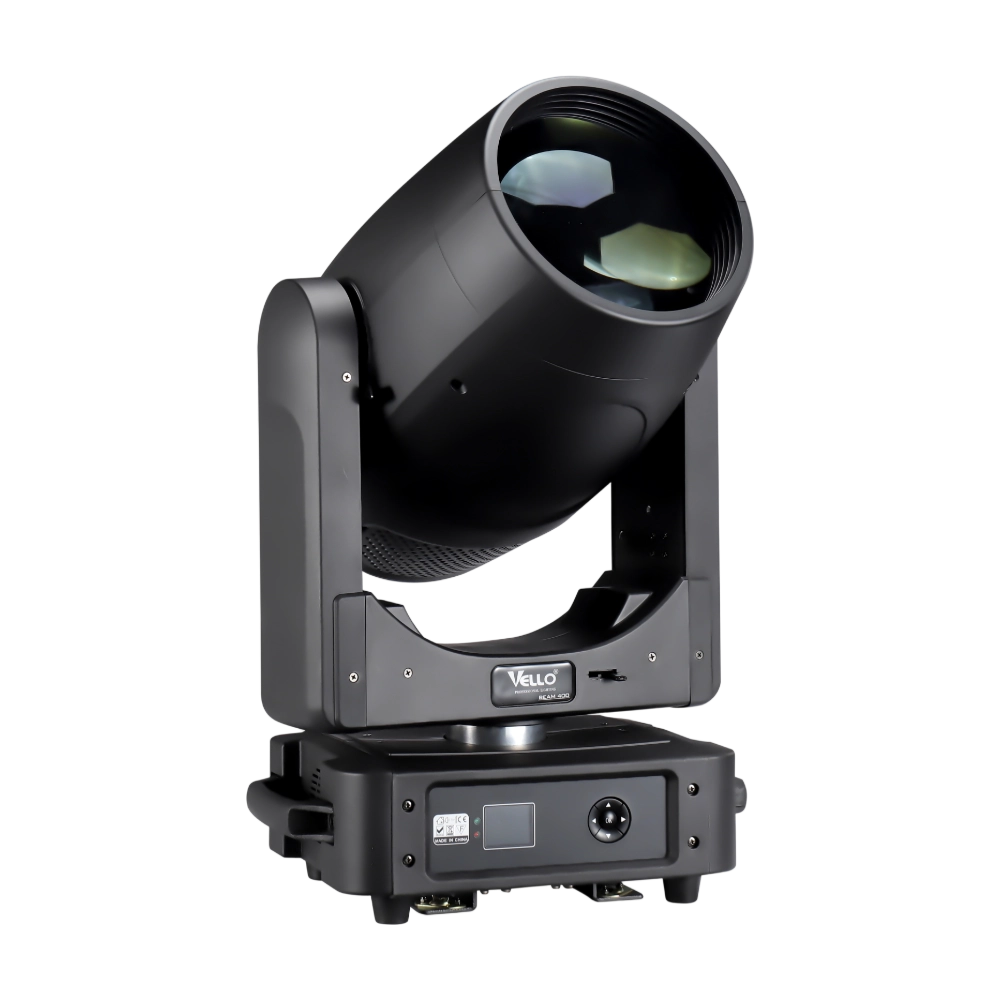
Moving Head Stage Light BEAM 400
BEAM400 is a 500W professional moving head beam powered by an OSRAM SIRIUS 371W discharge bulb, delivering a super-bright 1.8° sharp beam with impressive punch. It features 12 fixed gobos + open, a 14-color wheel, and a 16-facet circular rotating prism with multiple-facet effects, enabling dynamic aerial visuals. With 540° pan / 270° tilt, 16-bit movement resolution, and linear frost and focus, BEAM400 ensures precise and versatile performance. Comparable to traditional 750W moving heads, it combines high efficiency, smooth dimming, and reliable operation—ideal for concerts, tours, and large-scale stage productions.
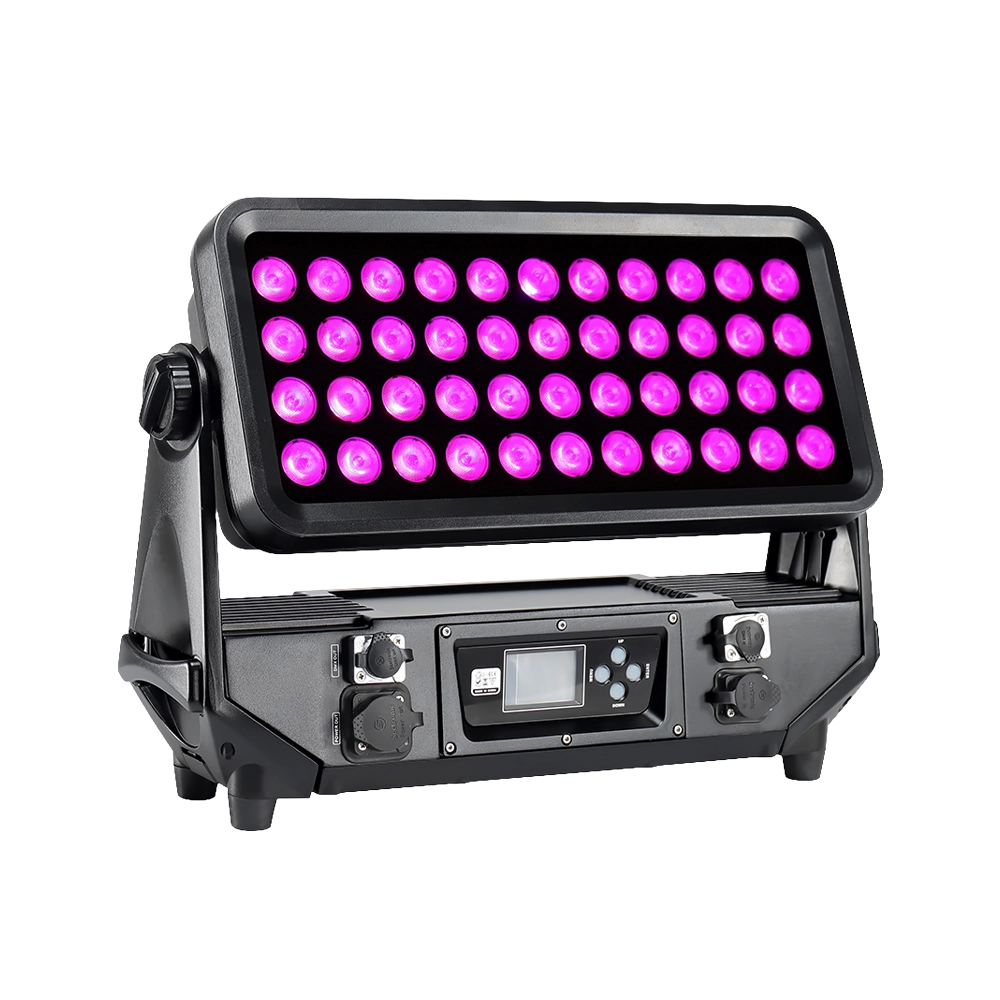
LED Light LED TOP P4
The Vello LED TOP P4 is a robust, high-output LED flood wash light designed for outdoor stages, architecture, and large-scale event lighting. Powered by 44x 15W RGBW LEDs from Cree, it delivers consistent brightness, smooth color mixing, and selectable beam angles of 20° or 40°. Built with a rugged IP65-rated die-cast aluminum housing, it withstands harsh weather conditions while offering smooth 0–100% dimming and flexible DMX control.
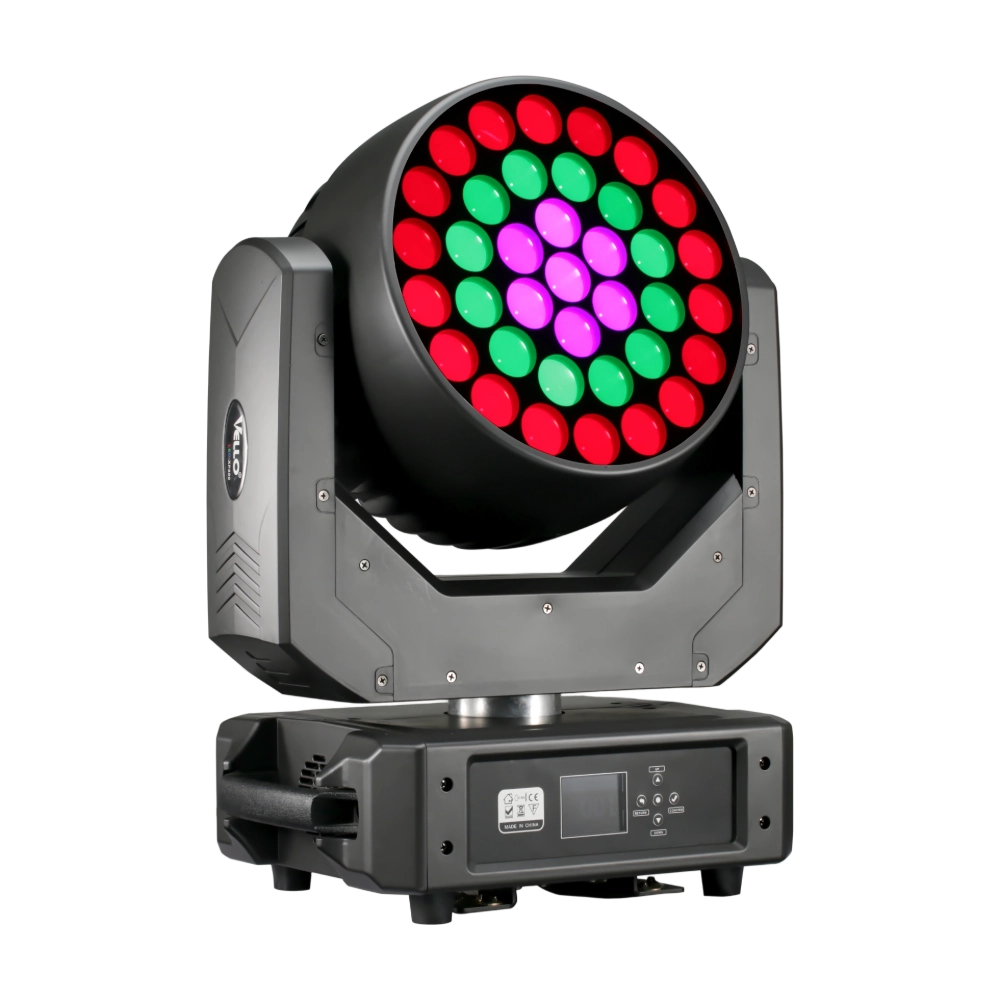
LED Moving Head Light XP800 (4in1)
The LED XP800 is a 600W moving head wash fixture, equipped with 37 × 20W Osram RGBW LEDs for brilliant color mixing and high output. With a wide 6°–50° electronic zoom, it easily transitions from sharp beams to smooth washes. The fixture supports 3-ring pixel control and an adjustable CTO range (2800K–8500K) for versatile applications. Featuring 540° pan / 310° tilt, high-speed 3-phase motors, and multiple DMX modes (16/28 channels), XP800 delivers powerful, precise, and dynamic performance. Compact and durable, it is an excellent choice for stages, theaters, and large-scale events requiring high brightness and flexibility.
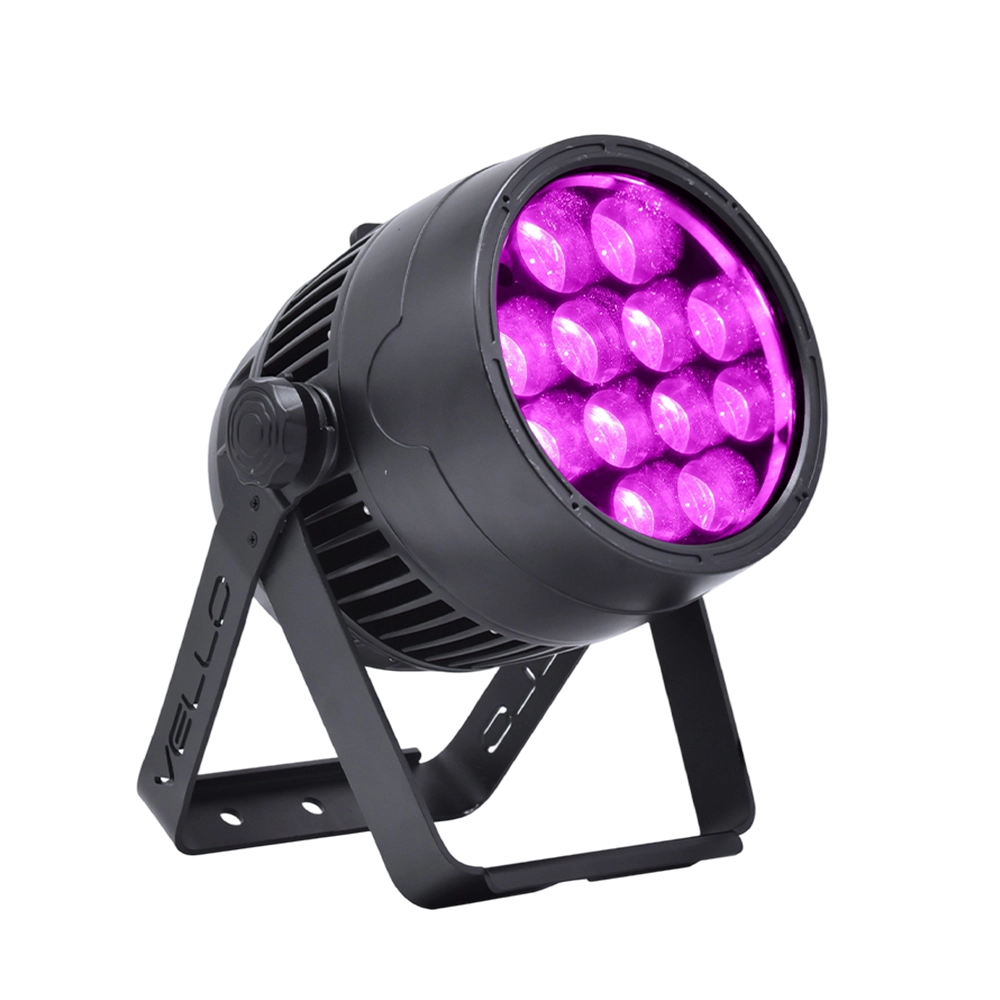
Stage LED Par Light LED ZOOMPAR 40
The Vello Zoom Par 40 IP is a powerful outdoor LED wash light equipped with 12x high-power 7-in-1 RGBACL LEDs. Designed for durability and rich color rendering, it features a wide motorized zoom (6°–50°), smooth dimming, and adjustable CTO presets (3200K–7500K), with 90+ CRI. With an IP66-rated die-cast aluminum body, it’s ideal for both indoor and outdoor applications, including stage lighting, architecture, live events, and installations.
Over 20 Years of Innovation in Stage & Studio Lighting
© 2026 VELLO. All Rights Reserved. 粤ICP备20023734号
Join our socials
VELLO
Whatsapp: +8613902276704
Vello Lighting
VelloLights