



Quality Standards: IP, CRI and Lifespan for Custom LEDs
- Understanding performance metrics for LED systems
- Why these metrics matter
- How these standards relate to custom led lighting
- Standards and authorities I rely on
- Ingress Protection (IP): choosing the right rating
- Decoding IP numbers
- Recommended IP for typical applications
- Testing and compliance
- Color Rendering Index (CRI) and color fidelity
- What CRI measures and its limitations
- CRI vs TM‑30: what I specify
- Practical choices by application
- Lifespan, lumen maintenance and reliability
- How lifespan is measured: LM‑80 and TM‑21
- Meaningful lifetime specifications
- Thermal management, drivers and real‑world factors
- Integrating standards into procurement and design
- My checklist when commissioning custom led lighting
- Cost vs risk analysis
- Verification on delivery
- Why VELLO (Vello Light Co., Ltd.) can help with custom solutions
- FAQ — Common questions about IP, CRI and lifespan for custom LEDs
- 1. What IP rating do I need for outdoor stage lighting?
- 2. Is CRI 90 always enough for film and TV?
- 3. How do I interpret a manufacturer’s 50,000 hours claim?
- 4. Can I rely on suppliers’ self‑declared test reports?
- 5. What are the main failure modes of LED fixtures in the field?
- 6. How should I balance initial cost and lifecycle cost?
- Contact & next steps
In my work designing and specifying custom led lighting for venues, studios, and outdoor events, three technical pillars always determine success: ingress protection (IP), color rendering (CRI), and lifespan (lumen maintenance). These quality standards affect performance, safety, maintenance costs and audience experience. Below I summarize what each metric really means, how they are tested and certified, and how to apply them when you commission or buy custom LED systems such as moving head stage lights, LED wash lights, LED bar lights or outdoor stage lighting.
Understanding performance metrics for LED systems
Why these metrics matter
I often tell clients that the cheapest fixture is rarely the best value. IP, CRI and lifespan are measurable proxies for long‑term value: IP protects the fixture and wiring from dust and moisture; CRI determines how colors look on camera and to the human eye; and lumen maintenance/lifespan predicts when light output will drop below acceptable levels. Investing in the right specifications reduces downtime, rework and warranty claims, especially for high‑use installations like theatres and touring rigs.
How these standards relate to custom led lighting
Custom led lighting is about matching design intent to technical reality. For example, a custom moving head intended for outdoor festivals must combine adequate IP (ingress protection), robust thermal design to preserve lumen maintenance, and LEDs/drivers with verified LM‑80 data so TM‑21 projections are reliable. Conversely, studio lights used near cameras prioritize CRI and spectral quality above an ultra‑high IP rating.
Standards and authorities I rely on
For IP and enclosure protection I reference the IEC standard described on the IP Code page: IP Code (IEC 60529). For color rendering I refer to CIE and the Color Rendering Index overview: CRI (CIE). For lumen maintenance and useful lifetime I rely on industry testing protocols LM‑80 and TM‑21 and guidance from the U.S. Department of Energy on LED basics: DOE: LED basics and best practice summaries on Illuminating Engineering Society (IES).
Ingress Protection (IP): choosing the right rating
Decoding IP numbers
IP ratings are two digits: the first indicates solid particle protection (0–6) and the second indicates liquid ingress protection (0–9K). For example, IP65 means dust tight (6) and protected against water jets (5). You can read a concise reference at the IP Code page: IP Code.
Recommended IP for typical applications
Here are my practical recommendations when specifying custom led lighting for different environments.
| Application | Recommended IP | Reason |
|---|---|---|
| Indoor stage / theatre | IP20–IP23 | Low dust/water exposure; focus on cooling and safety |
| Studio / film set | IP20–IP44 | Higher hygiene/cleanup; occasional spill protection |
| Outdoor festivals / concerts | IP65–IP67 | Rain, spray, and dust; sometimes temporary immersion for IP67 |
| Architectural/Facade lighting | IP66–IP68 | Continuous exposure to weather, high pressure cleaning |
These are practical ranges. For fixtures exposed to salt air (coastal venues) specify corrosion‑resistant finishes and consider IP66+ plus marine‑grade treatments.
Testing and compliance
IP ratings are determined by standardized tests described in IEC 60529. When buying custom led lighting, always request the test report or certificate from the manufacturer. A physical test report from an accredited lab is more reliable than a supplier’s self‑declaration.
Color Rendering Index (CRI) and color fidelity
What CRI measures and its limitations
CRI is an index from 0–100 that compares how colors look under a light source versus a reference (incandescent or daylight). For theatrical and studio applications, a CRI of 90+ is commonly required for natural skin tones and accurate colors. However, CRI has limitations for modern LED spectra—it does not always predict object appearance across saturated colors. The CIE and research communities have also developed TM‑30 metrics that provide richer information on color fidelity and gamut.
Read a general overview of CRI at: Color Rendering Index (Wikipedia), and for TM‑30 development see resources from the IES: IES.
CRI vs TM‑30: what I specify
When I specify custom led lighting for broadcast, rental houses, or film, I set a dual requirement: CRI ≥ 90 and provide TM‑30 Rf/Rg values when available. TM‑30 gives a richer picture—Rf (fidelity) and Rg (gamut) indicate how faithfully and how saturated colors will appear. If budget allows, require TM‑30 data on the photometric report.
Practical choices by application
- Live theatre and studio: CRI 95+ preferred, TM‑30 Rf ≥ 90 for critical color work.
- House and architectural: CRI 80–90 acceptable depending on budget.
- LED effect lights where saturated colors are the design point: CRI may be lower, but specify spectral peaks and chromaticity coordinates.
Lifespan, lumen maintenance and reliability
How lifespan is measured: LM‑80 and TM‑21
Lumen depreciation (how quickly LEDs dim) is measured through LM‑80 testing of LED packages, modules or arrays under defined temperatures and currents. Projected lifetime uses TM‑21 calculations to extrapolate LM‑80 data beyond test duration. You can read general information on LM‑80/TM‑21 practices via the IES: IES standards and background on LED basics at the U.S. Department of Energy: DOE: LED basics.
Meaningful lifetime specifications
Manufacturers often quote L70 or L80 lifetime figures: L70‑50k means the LED array is expected to reach 70% of initial lumens at 50,000 hours. When evaluating custom led lighting, insist on LM‑80 test reports for the LED packages and TM‑21 projections for the whole product. Beware of vague claims like “50,000 hours” without context—ask whether that refers to L70/L80 and at what ambient temperature.
Thermal management, drivers and real‑world factors
I cannot overstate how critical thermal design is. Junction temperature (Tj), heat‑sink design, and airflow determine lumen maintenance far more than the LED chip label. Similarly, constant current drivers with proper protection extend life. For touring fixtures, mechanical shock and ingress (IP) also affect long‑term reliability. When I audit a specification, I request thermal graphs, LM‑80 reports and driver specifications, and I check whether the product has undergone accelerated lifetime testing under expected operating temperatures.
| Specification | Typical Target for Stage/Studio | Why it matters |
|---|---|---|
| LM‑80/TM‑21 data | Available and provided with quotation | Allows reliable lifetime projection |
| L70 (useful life) | ≥ 50,000 hours at rated Tj | Predicts maintenance and replacement cycles |
| Driver MTBF and protections | Specified; surge protection, over/under voltage | Drivers are common failure points—specify robust units |
Integrating standards into procurement and design
My checklist when commissioning custom led lighting
When I prepare a specification or RFQ I include the following non‑negotiables:
- Target IP rating with test certificate (IEC 60529 test report)
- CRI and TM‑30 data where color fidelity is critical
- LM‑80 reports for LED packages and TM‑21 projections for lumens
- Thermal management documentation and operating ambient temperature range
- Driver specifications, ingress/corrosion protection for connectors and cabling
- Field serviceability, spare parts availability and warranty terms
Cost vs risk analysis
Higher IP and CRI typically increase cost. I recommend a risk‑based decision: if fixture failure causes show cancelation or significant labor costs, prioritize higher specifications. For example, investing in IP66 moving head lights for a touring festival saves replacement and downtime costs compared to IP54 units.
Verification on delivery
Always perform acceptance testing: spot photometry, CRI/TM‑30 checks if possible, visual inspection of seals and connectors, and functional tests at ambient temperatures. Keep copies of manufacturers’ test reports in the asset file for future warranty claims.
Why VELLO (Vello Light Co., Ltd.) can help with custom solutions
As someone who has worked with many suppliers, I consider Vello Light Co., Ltd. a reliable partner when I need turnkey custom led lighting solutions. Vello Light, established in 2003, integrates R&D, manufacturing and sales. They emphasize quality first and sincere service, and have grown into an experienced team serving domestic and international customers.
In recent years, VELLO has expanded its professional capability across product R&D, manufacturing, marketing, engineering installation and maintenance. Their registered brand VELLO focuses on moving head stage lights, LED wash lights, theatrical lights, studio lights, LED effect lights, LED bar lights and LED par lights, with strong overseas reputation. If you are specifying custom led lighting for touring, rental, broadcast or outdoor stages, VELLO provides:
- Technical documentation including LM‑80/TM‑21 data and IP test reports on request
- Flexible customization: optics, beam angles, control protocols (DMX/RDM), and ingress protection
- Production capacity and quality assurance from factory control (est. 2003) for consistent deliveries
Their website is https://www.vellolight.com. For inquiries I recommend contacting their team at info@vellolight.com.
FAQ — Common questions about IP, CRI and lifespan for custom LEDs
1. What IP rating do I need for outdoor stage lighting?
I recommend at least IP65 for fixtures exposed to rain and spray. For locations with possible immersion or very high‑pressure cleaning, consider IP67 or IP68. Always request the IEC 60529 test report from your manufacturer: IP Code (IEC 60529).
2. Is CRI 90 always enough for film and TV?
CRI ≥ 90 is a common baseline. For critical color work, ask for TM‑30 metrics (Rf/Rg) in addition to CRI; TM‑30 helps predict skin tone rendering and saturation more reliably. See CIE/IES resources for deeper reading: IES.
3. How do I interpret a manufacturer’s 50,000 hours claim?
Ask whether that refers to L70, L80 or simply rated hours. Request LM‑80 reports and TM‑21 projections that show the conditions (temperature and drive current). Real useful life depends on thermal conditions and duty cycle. DOE guidance is helpful: DOE: LED basics.
4. Can I rely on suppliers’ self‑declared test reports?
Prefer independent lab certificates. Self‑declarations can be informative but a test report from an accredited lab (or a manufacturer’s third‑party test) is stronger evidence. For IP ratings, ask for the specific IEC 60529 test protocol record.
5. What are the main failure modes of LED fixtures in the field?
Common issues are driver failures, thermal runaway causing lumen depreciation, ingress causing corrosion or short circuits, and mechanical damage from shock. Specifying robust drivers, proper IP, and good heat sinking mitigates these risks.
6. How should I balance initial cost and lifecycle cost?
Compare total cost of ownership: initial price + expected maintenance + downtime impact. For rental houses and touring, higher‑grade components (certified drivers, proven LED packages, higher IP) usually pay off over the asset life.
Contact & next steps
If you are planning a project and need help writing specifications, auditing product data (LM‑80/TM‑21, IP test reports, CRI/TM‑30) or sourcing custom led lighting, I’m available to consult. For factory‑direct custom solutions, Vello Light Co., Ltd. has extensive experience in stage, studio and outdoor products. Visit vellolight.com or email info@vellolight.com to discuss requirements, request certificates, or see product samples.
References: IEC IP Code overview: https://en.wikipedia.org/wiki/IP_Code; CRI overview: https://en.wikipedia.org/wiki/Color_rendering_index; DOE LED basics: https://www.energy.gov/eere/ssl/led-basics; Illuminating Engineering Society standards: https://www.ies.org/standards/.
How to Compare LED Moving Head Light Manufacturers
How to Choose High-Power Stage Lights LED for Large Venues
Stage Light Buying Guide for Small Venues and Theaters
Programming Tips for LED Stage Light Controllers
Major categories
Do your products support customization?
Yes. We offer OEM and ODM services tailored to project needs, including design, optics, and control compatibility.
Do you ship internationally?
Yes. We offer sea, air, and express delivery to many countries and regions worldwide.
Do you offer samples?
Samples are available for certain models. Please confirm with our sales team for details.
What is the warranty period for your products?
Most products come with a standard 1–2 year warranty. Please refer to product details or contract terms for specifics.
What is the usual lead time?
Standard models are typically shipped within 7–15 working days after payment. Customized items may vary.
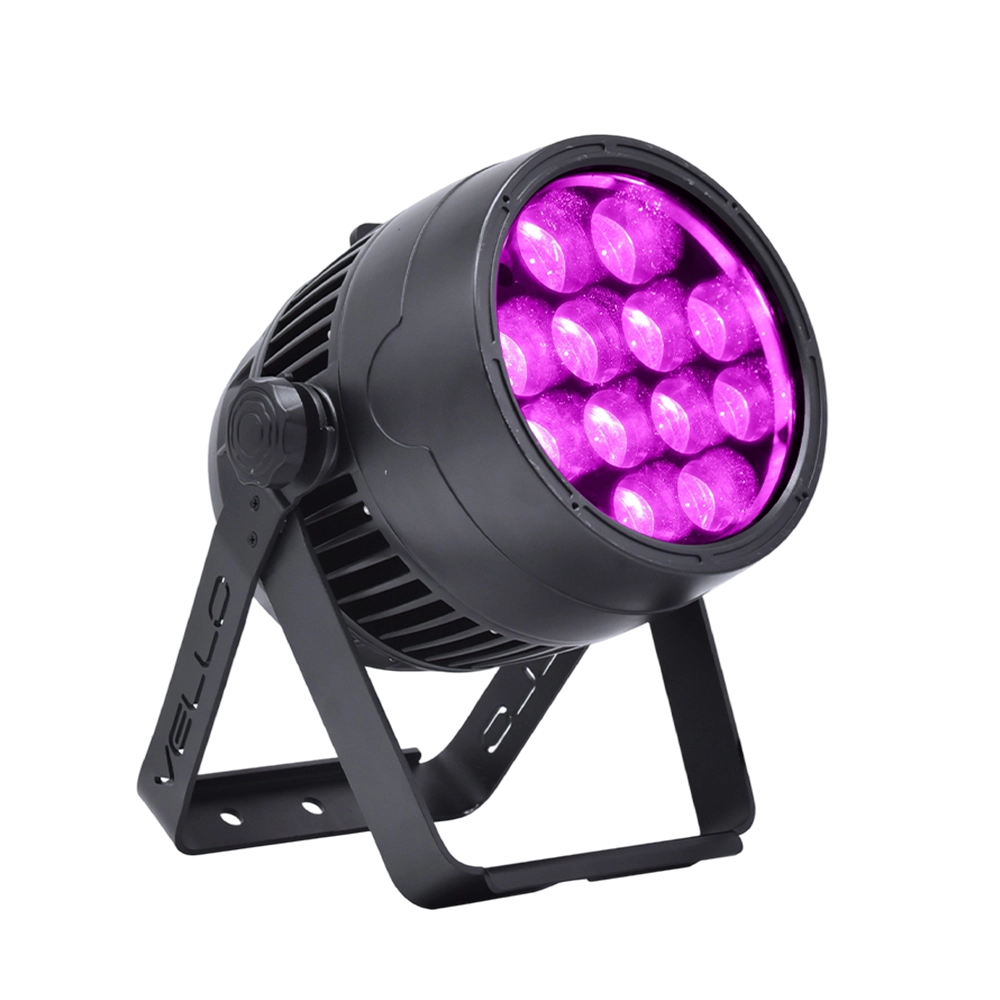
Stage LED Par Light LED ZOOMPAR 40
The Vello Zoom Par 40 IP is a powerful outdoor LED wash light equipped with 12x high-power 7-in-1 RGBACL LEDs. Designed for durability and rich color rendering, it features a wide motorized zoom (6°–50°), smooth dimming, and adjustable CTO presets (3200K–7500K), with 90+ CRI. With an IP66-rated die-cast aluminum body, it’s ideal for both indoor and outdoor applications, including stage lighting, architecture, live events, and installations.
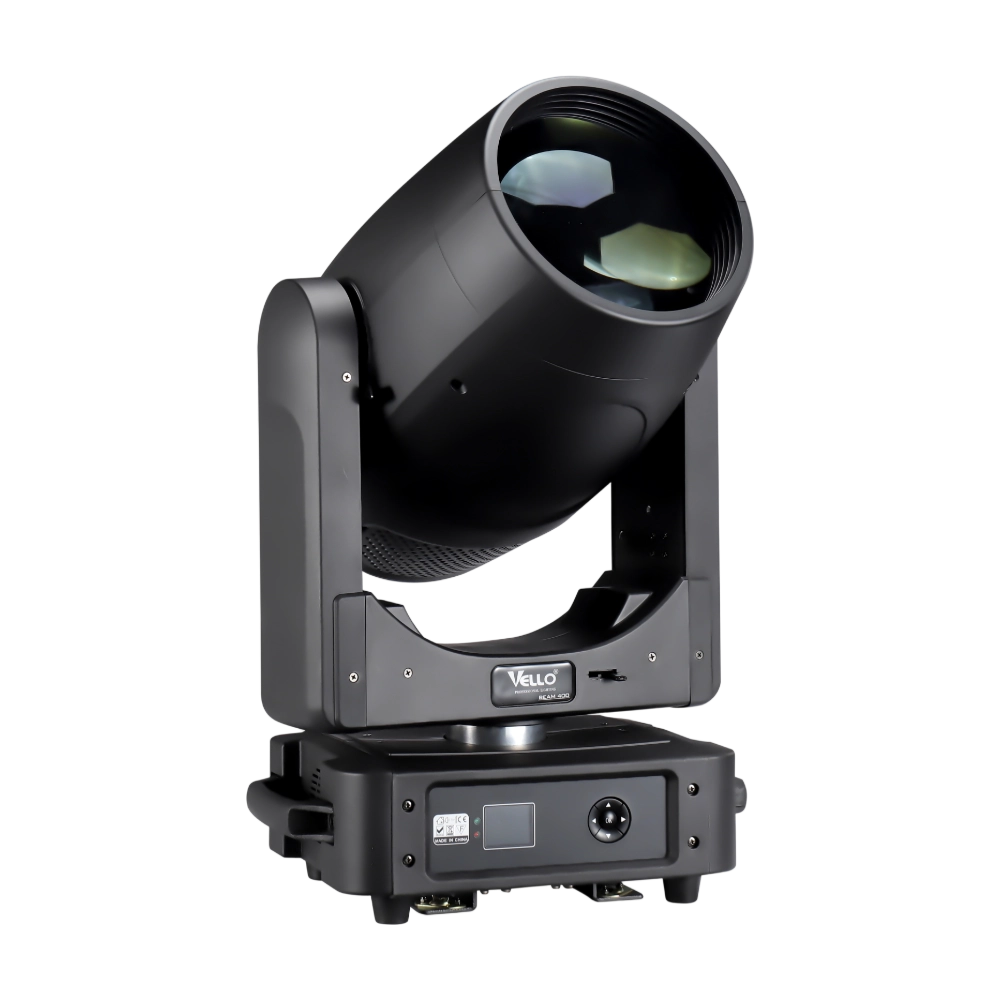
Moving Head Stage Light BEAM 400
BEAM400 is a 500W professional moving head beam powered by an OSRAM SIRIUS 371W discharge bulb, delivering a super-bright 1.8° sharp beam with impressive punch. It features 12 fixed gobos + open, a 14-color wheel, and a 16-facet circular rotating prism with multiple-facet effects, enabling dynamic aerial visuals. With 540° pan / 270° tilt, 16-bit movement resolution, and linear frost and focus, BEAM400 ensures precise and versatile performance. Comparable to traditional 750W moving heads, it combines high efficiency, smooth dimming, and reliable operation—ideal for concerts, tours, and large-scale stage productions.
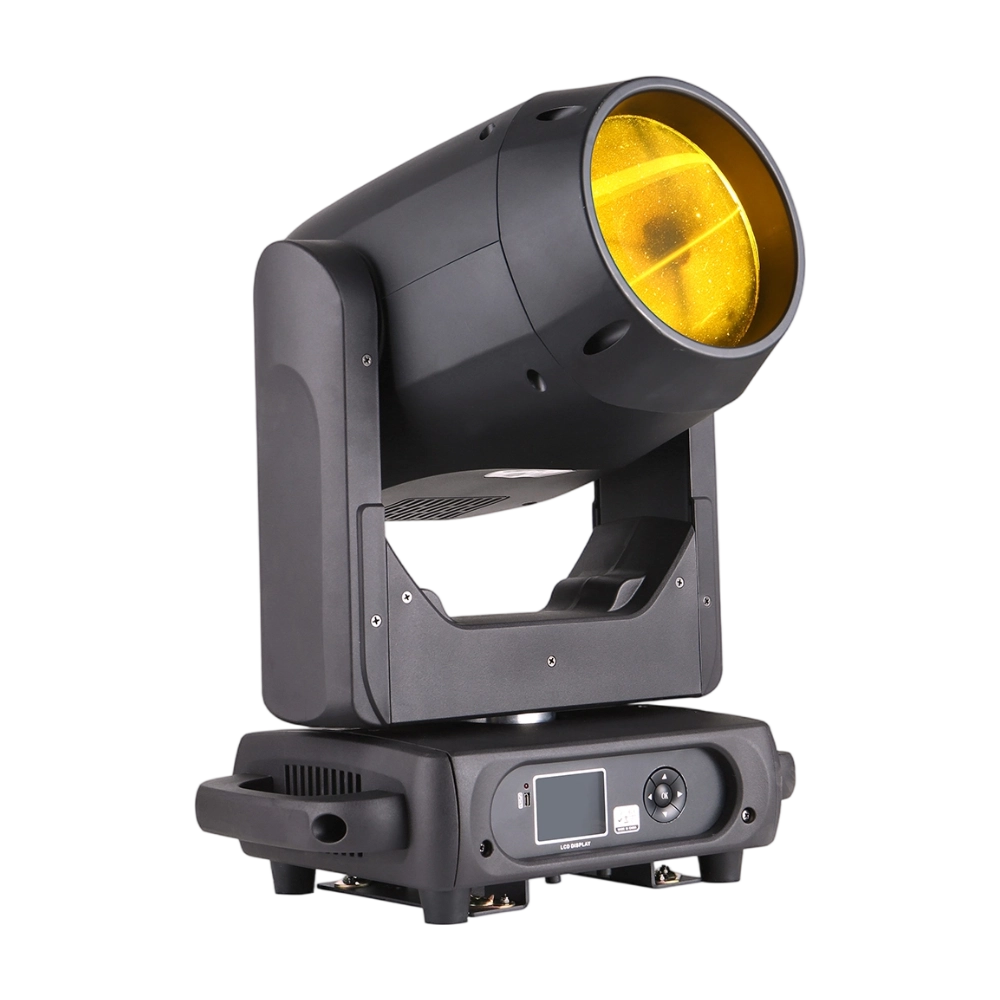
Moving Head Stage Light BEAM 360
BEAM360 is a 400W high-power moving head beam equipped with an OSRAM SIRIUS 311W discharge lamp, delivering a sharp 1.8° beam with super brightness. It features 14 colors + open, 12 fixed metal gobos + open, and dual prisms (8-facet circular + 8+16 multi-facet combination) for dynamic aerial effects. With 540° pan / 270° tilt, 16-bit movement, and linear frost and focus, BEAM360 ensures precision and versatility. Compact yet powerful, it rivals traditional 575W moving heads, making it ideal for concerts, clubs, and large-scale stage productions.
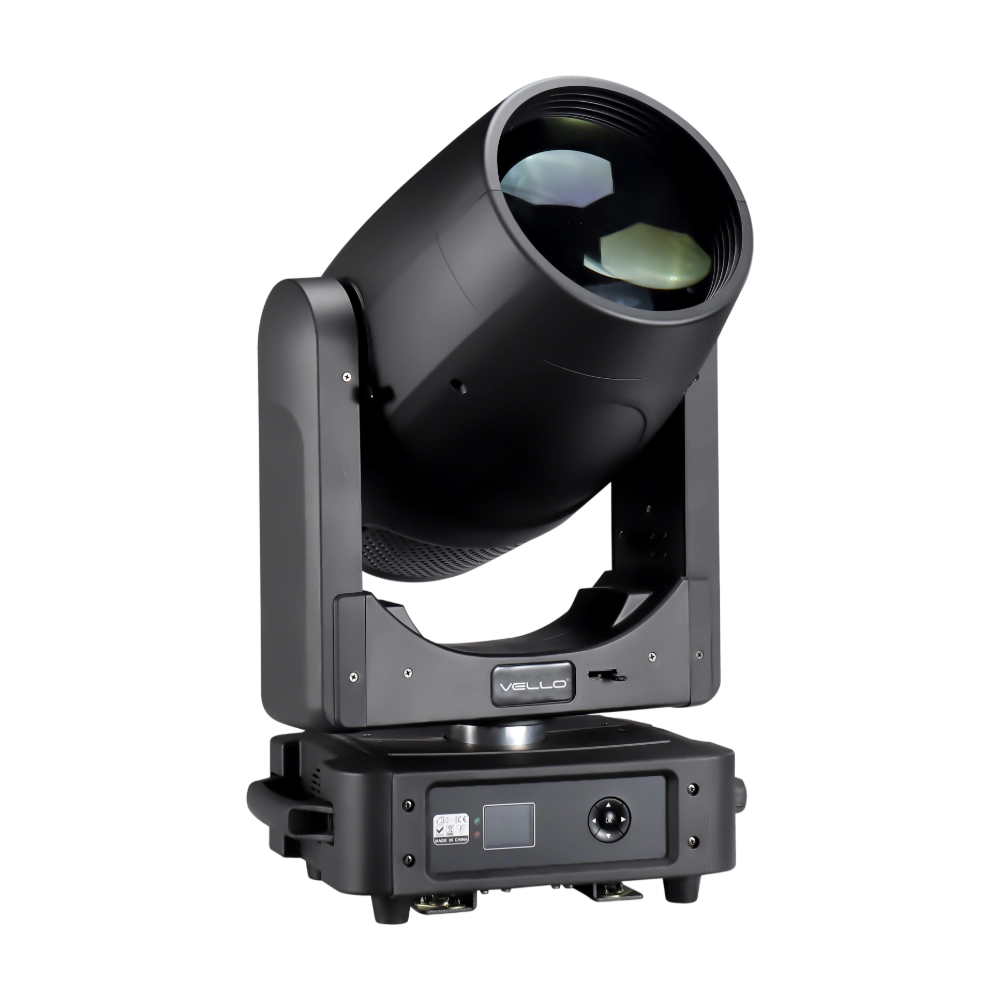
Moving Head Light BEAM 450
The BSW450 is a high-performance moving head fixture equipped with an original Osram 420W bulb, delivering exceptional brightness, precision, and versatility. Designed for professional stage applications, it seamlessly combines beam, spot, and wash functions in one compact unit, making it a powerful all-in-one lighting solution.
Over 20 Years of Innovation in Stage & Studio Lighting
© 2026 VELLO. All Rights Reserved. 粤ICP备20023734号
Join our socials
VELLO
Whatsapp: +8613902276704
Vello Lighting
VelloLights