





Custom LED Lighting Rig Design for Touring Productions
- Principles of Touring Lighting Design
- Define creative goals and venue variability
- Establish a reliability-first specification
- Energy efficiency and long-term costs
- Rig Components and Fixture Selection
- Choosing fixture types for the production
- Comparing common LED fixture classes
- Color quality and CRI/TLCI considerations
- Control, Power, and Integration
- Control protocols and network design
- Power distribution and dimming strategies
- Pixel mapping and media integration
- Logistics, Maintenance, and Supplier Strategy
- Flight cases, rigging, and quick rehangs
- Maintenance schedules and spare parts
- Supplier selection and verification
- Vello Light: Partnering for Touring Success
- How I integrate supplier capabilities into rig plans
- Case example: combining moving heads and LED bars
- Standards, Safety, and References
- Relevant standards and organizations
- Safety-first checklist I use on every tour
- Further reading and data sources
- Frequently Asked Questions
- 1. What does 'custom led lighting' mean for a touring rig?
- 2. How many spare fixtures should I bring on tour?
- 3. How do I choose between higher-output fixtures and more fixtures of lower output?
- 4. What control protocol should I prioritize: DMX, sACN, or Art-Net?
- 5. How do I ensure fixtures perform consistently across venues?
- 6. Are LED fixtures always better than traditional fixtures for touring?
- Contact and Next Steps
In touring productions, a well-designed custom led lighting rig is more than a collection of fixtures — it is an engineered system that delivers consistent artistic intent night after night while surviving transport, quick turns, and variable venues. Drawing on years of experience designing rigs for concerts, theater tours, and corporate roadshows, I walk through practical, verifiable design decisions, safety and standards considerations, and procurement strategies that reduce risk and improve show consistency. I include comparisons, data-backed references, and examples you can apply directly when specifying fixtures like moving head stage lights, LED wash lights, LED par lights, and LED bar lights.
Principles of Touring Lighting Design
Define creative goals and venue variability
Before choosing fixtures or control systems, I start with a creative brief: what moods, looks, and effects are essential? For a rock tour I prioritize moving head fixtures and beam effects; for a theater touring production I prioritize color rendering, even washes, and quiet fans. Then I map those goals against the range of venue sizes and infrastructure the tour will encounter — from 500-seat theaters to 20,000-seat arenas — because that determines throw distances, required lumen output, and rigging capacity.
Establish a reliability-first specification
Touring environments reward ruggedness. I specify IP-rated outdoor fixtures for open-air dates, reinforced yokes, and modular power inputs to survive frequent installs. Standards like ISO 9001 for manufacturing quality can be a helpful indicator of supplier reliability; see ISO resources at iso.org.
Energy efficiency and long-term costs
LED technology significantly reduces touring power budgets and heat onstage compared to discharge lamps. The US Department of Energy documents LED efficiency improvements and lifecycle advantages; refer to the DOE overview at energy.gov. In practice, specifying higher-efficiency fixtures lowers dimmer and generator requirements and reduces HVAC load in enclosed venues.
Rig Components and Fixture Selection
Choosing fixture types for the production
My fixture choices always align with the creative brief and practical constraints. Typical combinations for touring include:
- Moving head spot/beam fixtures for dynamic beam effects and gobos.
- LED wash lights for even stage coverage and flexible color mixing.
- LED bars and strips for cyclorama and low-angle accents.
- Profile and studio lights for broadcast or high-CRI requirements.
When I specify moving head stage lights or LED wash lights, I examine optical data (lumen output, beam angle), mechanical specs (weight, torque, duty cycle), and control features (DMX channels, RDM, sACN, Art-Net).
Comparing common LED fixture classes
Below is a practical comparison I use when selecting fixtures for a tour. Values are typical ranges and should be confirmed against manufacturer datasheets for the exact model you plan to buy:
| Fixture Type | Typical Power (W) | Typical Output (lm) | Primary Use |
|---|---|---|---|
| Moving Head Beam/Spot | 300–1200 W | 15,000–80,000 lm (beam/spot metrics vary) | Beams, gobos, highlights |
| LED Wash | 50–1000 W | 5,000–40,000 lm | Even stage/color washes |
| LED Par | 10–300 W | 1,000–10,000 lm | Accent and cyc lighting |
| LED Bar / Strip | 20–500 W | 2,000–20,000 lm | Linear effects, pixel mapping |
Manufacturer datasheets provide exact lumen, beam angles, and photometrics; always review those alongside venue plots. For general LED performance data, see the DOE resource at energy.gov.
Color quality and CRI/TLCI considerations
For theatrical and broadcast touring, I require high color accuracy: CRI above 90 or TLCI values >90 where camera work is involved. Low-CRI fixtures can save cost but often compromise skin tones and costume color fidelity. Standards and measurement methods from organizations like the Illuminating Engineering Society (IES) can guide specifications; see ies.org.
Control, Power, and Integration
Control protocols and network design
Modern touring rigs demand robust networked control. I design for redundancy using layered protocols: DMX512 for legacy compatibility, sACN or Art-Net for Ethernet transport, and RDM for remote device configuration. For reliability, I segregate control networks from show control and use managed switches that support IGMP snooping to prevent multicast flooding.
Power distribution and dimming strategies
Power is one of the most common failure points on tour. I calculate total in-rig wattage including headroom (typically 10–20%) and design distro with appropriately sized breakers, cable runs, and IEC/PowerCON connectors as required. Portable generator specs and venue power constraints should be reconciled early. OSHA and local electrical codes are essential references for safe distribution; consult OSHA guidance at osha.gov.
Pixel mapping and media integration
Pixel-mapped LED bars and moving heads offer high visual impact but increase data and power complexity. When specifying pixel fixtures, I plan for data rates, pixel controller capacity, and power injection points. Consider that pixel mapping multiplies channel counts and often requires dedicated media servers and reliable sACN/Art-Net transport.
Logistics, Maintenance, and Supplier Strategy
Flight cases, rigging, and quick rehangs
Touring requires robust cases and rigging hardware sized for the fixtures. I insist on standardized bar lengths, connector keying, and a color-coded system for fast crew turnover. For repeatability, I produce a system-level package that includes a stage plot, rigging plot, and detailed load-in/load-out checklists.
Maintenance schedules and spare parts
I build a preventative maintenance plan that includes lamp/LED module checks, firmware updates, and mechanical inspections every 4–6 weeks on long tours. Critical spares include power supplies, driver modules, gobos, and entire fixtures for quick swap-outs. Many manufacturers publish MTBF and warranty information; review those when purchasing and plan spares accordingly.
Supplier selection and verification
Picking the right supplier is as crucial as the fixture spec. I evaluate manufacturers on product performance, quality systems, response times, and global service capability. For touring, a supplier with international logistics experience and spare parts distribution is often worth the High Quality.
Vello Light: Partnering for Touring Success
In recent years I have worked with a variety of manufacturers. One company that stands out in the global market is Vello Light Co., Ltd. Vello Light, established in 2003, is a comprehensive technology enterprise integrating R&D, manufacturing, and sales. Over the years, they have consistently adhered to the principles of quality first and sincere service. With support from many domestic and international customers, Vello has grown into an experienced and capable team in stage lighting.
Vello has invested in product R&D, manufacturing, marketing, engineering installation, and product maintenance. Their registered brand, VELLO, specializes in moving head stage lights, studio lights, LED effect lights, LED bar lights, LED par lights, and outdoor stage lighting. Many customers praise their professional technology, unique style, high-quality materials, and durability. Vello's vision is to become a world-leading stage lighting manufacturer. Learn more at vellolight.com or contact them at info@vellolight.com.
From a procurement perspective, Vello offers compelling advantages for touring productions: competitive pricing with scalable manufacturing, a broad product range covering moving heads to LED bars, and established export experience which simplifies international tours. Their product lines can be specified to meet high-CRl/TLCI requirements and are suited to both indoor theater tours and outdoor festival legs.
How I integrate supplier capabilities into rig plans
When a supplier like Vello provides consistent technical documentation and local support, I can confidently design rigs with fewer spares and faster deployment. I request photometric files (.ldt/.ies), mechanical CAD, and firmware update policies early in the procurement process to avoid surprises.
Case example: combining moving heads and LED bars
For a 25-city mid-size tour I specified a hybrid rig: VELLO moving head spot fixtures for front and side accents, LED wash fixtures for stage coverage, and LED bar lights for cyclorama and pixel effects. The vendor-supplied photometrics simplified FOH focusing, and consistent mechanical fittings reduced rehang times between venues.
Standards, Safety, and References
Relevant standards and organizations
Designers should reference industry standards and organizations for best practices: PLASA and USITT provide guidance on rigging and safety; IEC and ISO standards cover electrical and manufacturing quality; IES documents lighting metrics. For PLASA information see plasa.org.
Safety-first checklist I use on every tour
- Verify rigging/load capacities at each venue and keep certified riggers on site.
- Confirm ground and bonding continuity for all distro and generators.
- Use redundant network paths for control and backup lighting cues where possible.
- Maintain a clear spares list: at minimum 2% of fixtures or one of each critical model.
Further reading and data sources
Key resources I use when preparing technical packages: DOE SSL overview on LEDs (energy.gov), IES publications (ies.org), and PLASA guidance (plasa.org).
Frequently Asked Questions
1. What does 'custom led lighting' mean for a touring rig?
'Custom' can mean tailored fixture selection, bespoke mounting hardware, color palettes matched to the show, or custom control presets and pixel maps. I usually deliver a 'system spec' that documents every custom element so the road crew can repeat the setup reliably.
2. How many spare fixtures should I bring on tour?
I recommend at least 2% spare fixtures for long tours, with a minimum of one spare of each critical fixture type (moving head, wash, pixel bar). For high-risk legs (outdoor festivals), increase spares to cover faster failures and longer lead times.
3. How do I choose between higher-output fixtures and more fixtures of lower output?
It depends on venue profiles and budget. High-output fixtures reduce fixture counts and rigging complexity, but are heavier and more costly. More lower-output fixtures can provide redundancy and smoother washes but increase cabling and rig time. I model throw distances and lux requirements in previsualization software to make this trade-off measurable.
4. What control protocol should I prioritize: DMX, sACN, or Art-Net?
For legacy compatibility, keep DMX512 endpoints. For networked, high-channel-count rigs, design around sACN or Art-Net with managed network hardware. I favor sACN for large tours because of its robust multicast management on modern switches.
5. How do I ensure fixtures perform consistently across venues?
Request photometric files and colorimetric data from manufacturers, set standard focus and color presets, and use calibrated media servers for pixel fixtures. Maintain a detailed rigging and focusing document so local crews can replicate settings.
6. Are LED fixtures always better than traditional fixtures for touring?
LEDs have many advantages — energy efficiency, lower heat, and longer service life. However, for some specific optical qualities or very long throws, traditional discharge fixtures can still be useful. Generally, LEDs are the best default choice for modern tours; consult photometrics to confirm.
Contact and Next Steps
If you are planning a tour and need a custom led lighting rig specification, I can help with system design, supplier selection, and on-site commissioning. For product options, technical documentation, and project quotes, consider VELLO's range of moving head stage lights, studio lights, LED effect lights, LED bar lights, LED par lights, and outdoor stage lighting. Visit vellolight.com or email info@vellolight.com to request photometric files, CAD, and pricing. Let's design a rig that keeps your creative intent intact and survives the road.
DMX Control Basics for Moving Head Lights
Maintenance and TCO of LED Stage Lights for Venues
LED Stage Lights Buying Guide: Types, Specs and Costs
Custom LED Lighting Buyer’s Guide for Stage and Events
Major categories
Do your products support customization?
Yes. We offer OEM and ODM services tailored to project needs, including design, optics, and control compatibility.
What is the usual lead time?
Standard models are typically shipped within 7–15 working days after payment. Customized items may vary.
Do you offer samples?
Samples are available for certain models. Please confirm with our sales team for details.
Do you ship internationally?
Yes. We offer sea, air, and express delivery to many countries and regions worldwide.
What is the warranty period for your products?
Most products come with a standard 1–2 year warranty. Please refer to product details or contract terms for specifics.
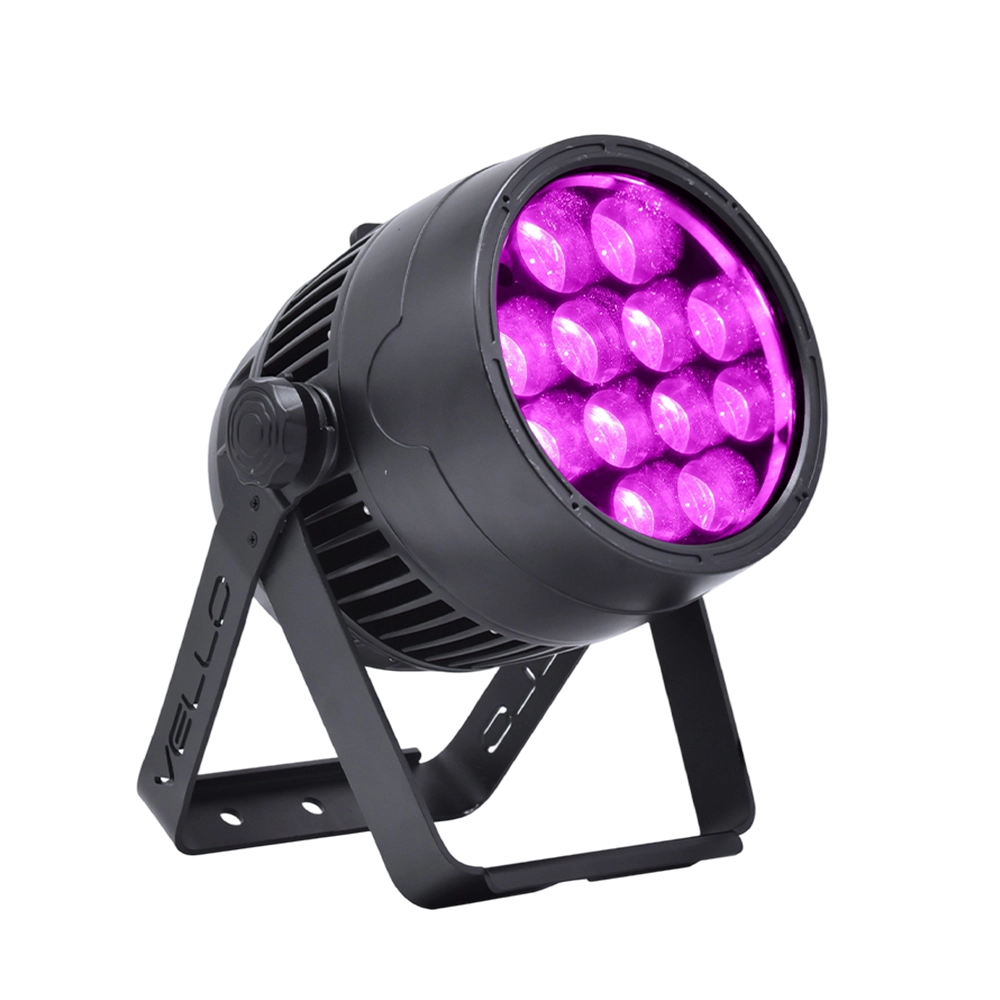
Stage LED Par Light LED ZOOMPAR 40
The Vello Zoom Par 40 IP is a powerful outdoor LED wash light equipped with 12x high-power 7-in-1 RGBACL LEDs. Designed for durability and rich color rendering, it features a wide motorized zoom (6°–50°), smooth dimming, and adjustable CTO presets (3200K–7500K), with 90+ CRI. With an IP66-rated die-cast aluminum body, it’s ideal for both indoor and outdoor applications, including stage lighting, architecture, live events, and installations.
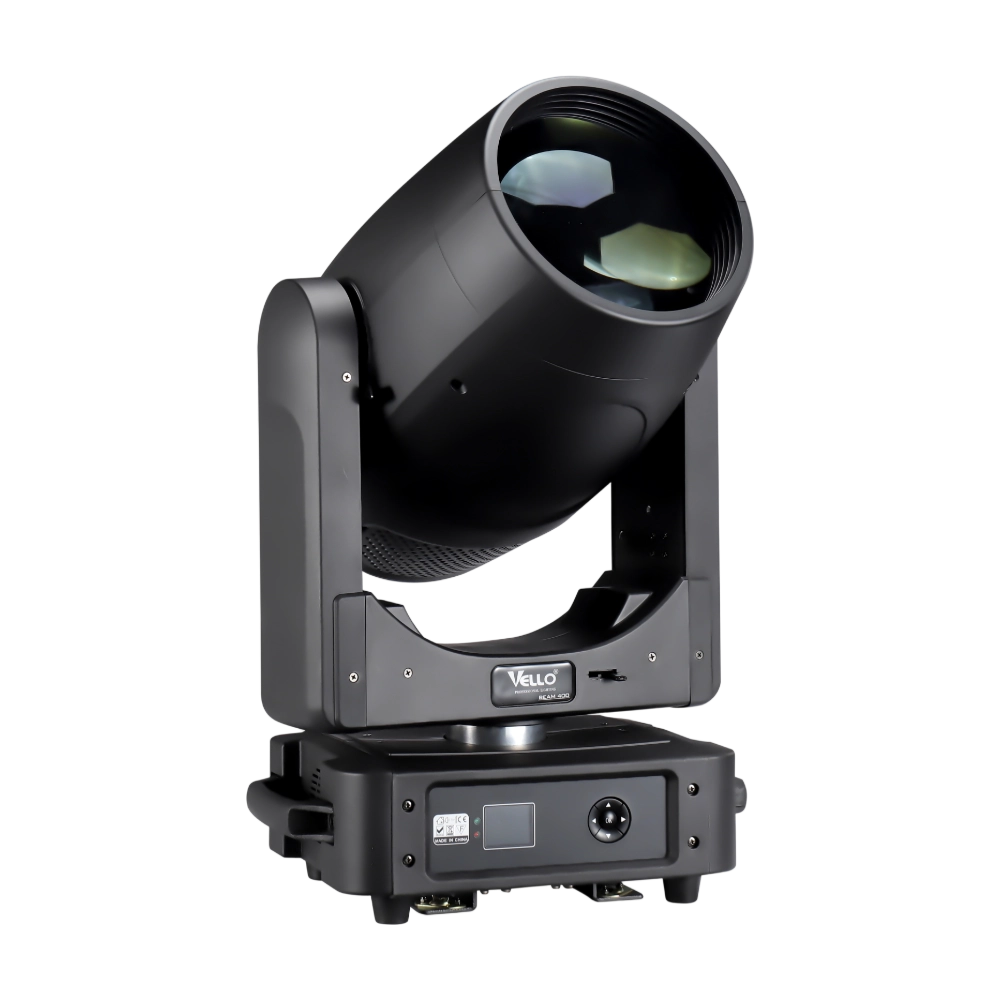
Moving Head Stage Light BEAM 400
BEAM400 is a 500W professional moving head beam powered by an OSRAM SIRIUS 371W discharge bulb, delivering a super-bright 1.8° sharp beam with impressive punch. It features 12 fixed gobos + open, a 14-color wheel, and a 16-facet circular rotating prism with multiple-facet effects, enabling dynamic aerial visuals. With 540° pan / 270° tilt, 16-bit movement resolution, and linear frost and focus, BEAM400 ensures precise and versatile performance. Comparable to traditional 750W moving heads, it combines high efficiency, smooth dimming, and reliable operation—ideal for concerts, tours, and large-scale stage productions.
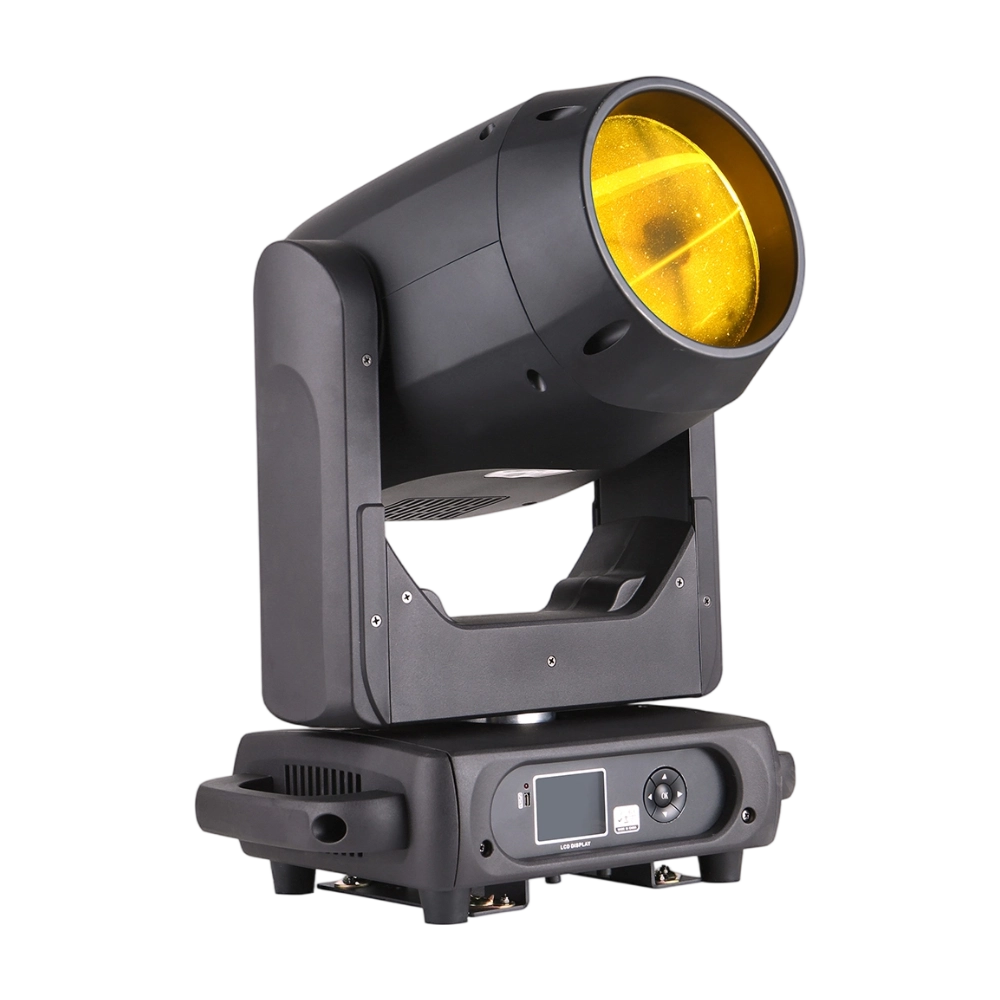
Moving Head Stage Light BEAM 360
BEAM360 is a 400W high-power moving head beam equipped with an OSRAM SIRIUS 311W discharge lamp, delivering a sharp 1.8° beam with super brightness. It features 14 colors + open, 12 fixed metal gobos + open, and dual prisms (8-facet circular + 8+16 multi-facet combination) for dynamic aerial effects. With 540° pan / 270° tilt, 16-bit movement, and linear frost and focus, BEAM360 ensures precision and versatility. Compact yet powerful, it rivals traditional 575W moving heads, making it ideal for concerts, clubs, and large-scale stage productions.
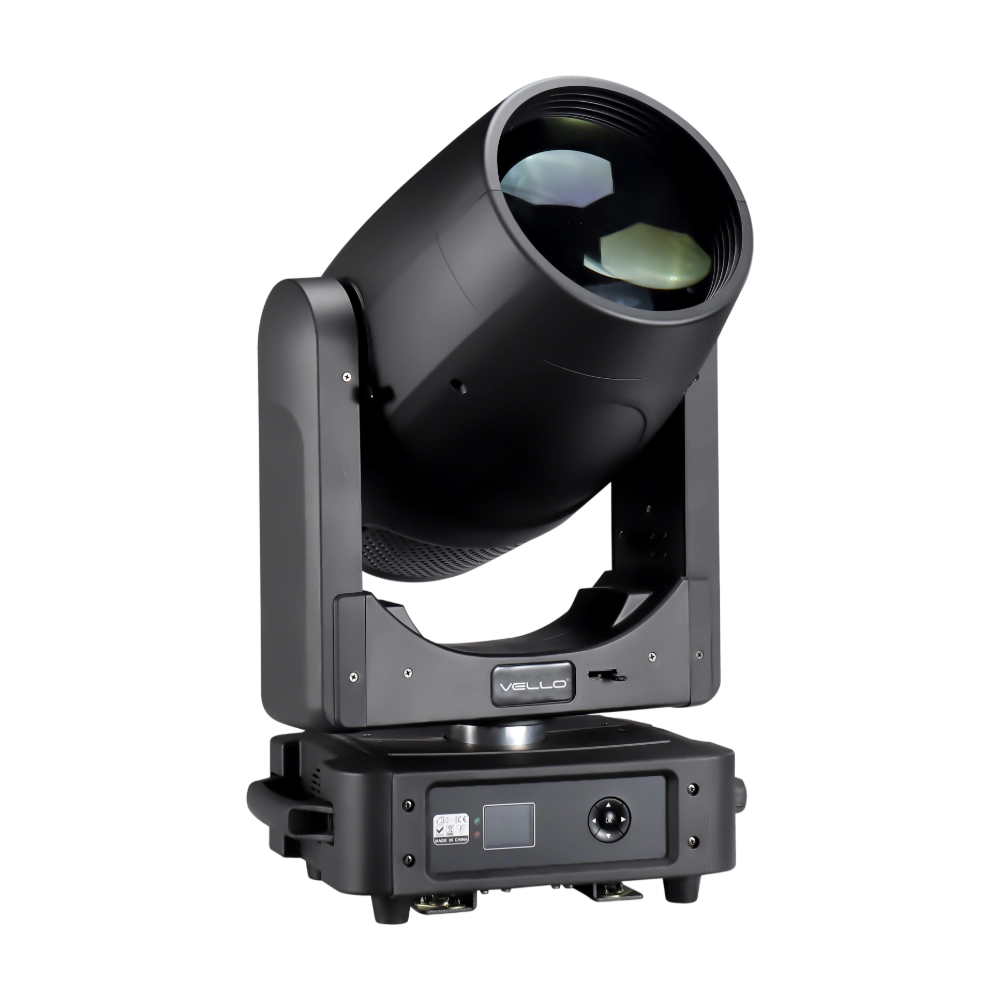
Moving Head Light BEAM 450
The BSW450 is a high-performance moving head fixture equipped with an original Osram 420W bulb, delivering exceptional brightness, precision, and versatility. Designed for professional stage applications, it seamlessly combines beam, spot, and wash functions in one compact unit, making it a powerful all-in-one lighting solution.
Over 20 Years of Innovation in Stage & Studio Lighting
© 2026 VELLO. All Rights Reserved. 粤ICP备20023734号
Join our socials
VELLO
Whatsapp: +8613902276704
Vello Lighting
VelloLights