




Custom LED Lighting Manufacturing: Materials and Quality Tips
- Understanding Application and Performance Requirements
- Define the use case: stage, studio, outdoor, or architectural
- Key performance metrics to specify up front
- Standards and measurable targets
- Materials and Components: Selection and Trade-offs
- Enclosure materials—thermal and mechanical priorities
- Optics and lens materials
- LEDs, PCBs, and drivers
- Material comparison: thermal, cost, durability
- Manufacturing Processes, Testing, and Quality Control
- Critical manufacturing steps
- Essential testing protocols
- Incoming inspection and supplier QA
- Design for Longevity, Serviceability, and Compliance
- Thermal management best practices
- Corrosion protection and outdoor durability
- Certifications and regulatory roadmap
- Practical Manufacturing Tips I Use with Clients
- Start with modular designs
- Document test plans and acceptance criteria
- Supply-chain resilience and traceability
- Why Choose an Experienced Manufacturer: Vello Light Case Study
- FAQ — Frequently Asked Questions
- 1. What housing material is best for high-power stage lights?
- 2. How do I verify LED lifetime claims?
- 3. What IP rating do I need for outdoor stage lighting?
- 4. How important is LED binning?
- 5. Should custom fixtures use active cooling (fans)?
- 6. What certifications should I prioritize for export?
- Contact & Next Steps
As a consultant with long experience in custom LED lighting and LED stage lights, I know buyers and manufacturers want clear, verifiable guidance: what materials and components matter most, how to verify quality, and which tests and certifications to prioritize. Below I summarize practical material choices, thermal and optical design tips, supply-chain considerations, and test protocols that help deliver durable, high-performing custom LED fixtures. This summary is optimized for indexing and helps search engines understand the article's coverage of custom led lighting manufacturing, materials, and quality assurance.
Understanding Application and Performance Requirements
Define the use case: stage, studio, outdoor, or architectural
The first step in any custom led lighting project is to define the application. Stage fixtures (moving head stage lights, LED wash lights, LED effect lights) need fast thermal recovery, precise color mixing, and mechanical robustness. Studio lights prioritize low flicker and accurate color rendering (high CRI), while outdoor stage lighting demands IP-rated enclosures and corrosion resistance. If you build without a clear application brief you risk over- or under-engineering components, increasing cost or reducing lifetime.
Key performance metrics to specify up front
When I design or evaluate custom fixtures I make sure the specification includes: delivered lumens, lm/W (system efficacy), Color Rendering Index (CRI) or TM-30 metrics, CCT tolerance, beam angles, lumen maintenance (L70/Lx), flicker (Pst < 1.0 for broadcast studio), IP rating, mechanical shock/vibration tolerance, and expected lifetime in hours. These metrics will drive materials, PCB design, driver selection, and enclosure choices.
Standards and measurable targets
Referenceable standards make your targets verifiable. Use ISO 9001 for quality management (ISO 9001), IEC/EN standards for safety and electromagnetic compatibility (EMC), and the IP code for ingress protection (IP Code). For lighting performance, consult the Illuminating Engineering Society (IES) guidance and photometric measurement best practices.
Materials and Components: Selection and Trade-offs
Enclosure materials—thermal and mechanical priorities
Housing material strongly affects thermal management, weight, and durability. Aluminum alloys (extruded or die-cast) are my default for stage and outdoor fixtures due to excellent thermal conductivity and stiffness. Plastics (engineered thermoplastics like PBT or polycarbonate) can be used for low-power or cost-sensitive fixtures but require careful thermal design and flame-retardant additives for safety.
Optics and lens materials
Optical lenses must preserve color fidelity and resist UV yellowing. I prefer PMMA (acrylic) for high light transmittance and low cost, and polycarbonate when impact resistance is needed. For precise beam control and repeatable manufacturing, injection-molded optics with tight dimensional control are essential; consider anti-reflective coatings for studio-level glare control.
LEDs, PCBs, and drivers
Choose LEDs from reputable manufacturers with published binning data and LM-80 test results. SMD LEDs on metal core PCBs (MCPCBs) or IMS (insulated metal substrate) with high copper thickness help move heat away from junctions. Drivers should be matched for thermal derating, dimming protocol (DMX512/RDM for stage), flicker performance, and protections (short-circuit, thermal shutdown). For broadcast work, ensure drivers comply with flicker standards and have low percent flicker and low stroboscopic effect.
Material comparison: thermal, cost, durability
| Material | Thermal Conductivity (W/m·K) | Relative Cost | Durability/Notes |
|---|---|---|---|
| Die-cast Aluminum (Al alloy) | ~120–205 (varies by alloy) (source) | Medium–High | Excellent thermal path, robust, good for outdoor IP enclosures |
| Extruded Aluminum | ~205 (bulk Al) (source) | Medium | Good for heatsink fins and long profiles |
| Magnesium Alloy | ~100–150 | High | Lightweight, good thermal but more costly |
| Engineering Plastics (PC, PBT) | ~0.2–0.3 | Low–Medium | Requires thermal isolation; not ideal for high-power LEDs |
Sources for baseline material properties: Aluminium (Wikipedia) and materials data tables.
Manufacturing Processes, Testing, and Quality Control
Critical manufacturing steps
In custom production I focus on: thermal design and simulation (CFD), precise PCB layout and soldering (reflow profiles), potting/sealing for IP-rated fixtures, connector and cable selection for durability, and mechanical assembly tolerances for moving heads. For moving head fixtures, bearings, motors, and encoders require precision machining and robust lubrication plans to maintain pan/tilt accuracy under repeated use.
Essential testing protocols
Quality must be proven by tests. I use a combination of screening and type tests:
| Test | Purpose | Acceptance Criteria (typical) |
|---|---|---|
| Burn-in (thermal soak) | Detect early-life failures | 72–168 hours at rated temperature, no failures |
| Thermal cycling | Identify solder/joint failures | –40°C to +85°C cycles, per IEC/EN test protocols |
| Ingress Protection (IP) testing | Verify resistance to water/dust | IP65/IP66/IP67 per IEC standards |
| EMC / Safety | Ensure device doesn't interfere and is electrically safe | Compliant with CE/EMC and IEC 60598 series |
| Vibration & Shock | Mechanical robustness for touring fixtures | IEC 60068 or equivalent; no loss of function |
For IP and EMC standards, consult IEC publications and CE directives; for safety and luminaires see IEC 60598 series. External references: IEC overview (IEC).
Incoming inspection and supplier QA
Incoming inspection is as important as final testing. I implement: certificate of conformity (CoC) checks for RoHS/REACH, XRF spot checks for hazardous materials, AOI (automated optical inspection) for PCB assembly, and sample testing of LED bins and driver units. Maintain an approved-vendor list and require LM-80/LM-79 photometric reports from LED vendors to verify lumen maintenance and spectral output.
Design for Longevity, Serviceability, and Compliance
Thermal management best practices
Thermal design is the single biggest influencer of LED lifetime. Design with a thermal budget: calculate junction temperatures (Tj) from case temperature (Tc) and driver dissipation. Use metal-core PCBs, thermal vias, and direct thermal paths to an aluminum housing. Consider forced convection (fans) for moving heads with tight packaging—but account for dust ingress and maintenance intervals.
Corrosion protection and outdoor durability
For outdoor fixtures choose corrosion-resistant finishes: anodizing for aluminum, powder coating with proper surface prep, and stainless hardware (316 for coastal environments). Gasket materials must be UV-stable silicone and sealed using compressive designs tested to required IP levels. For long-term outdoor use, consider salt-spray testing per ASTM B117.
Certifications and regulatory roadmap
Plan certification early. Typical certifications that matter: CE (EMC and LVD), UKCA where applicable, UL/ETL for North American markets, RoHS and REACH for hazardous substances, and specific broadcasting/flicker standards for studio gear. Getting pre-compliance EMC testing early saves costly redesigns later.
Practical Manufacturing Tips I Use with Clients
Start with modular designs
I recommend modularity: interchangeable LED modules, standardized connectors, and swappable drivers. Modularity reduces lead time for custom orders and simplifies repairs on the road—critical for touring equipment.
Document test plans and acceptance criteria
Create a test plan (IQ/OQ/PQ style) for production: incoming quality (IQ) checks, operational qualification (OQ) during assembly, and performance qualification (PQ) on finished units. Include photometric measurements (LM-79 reports) and lifetime projections based on LM-80 and TM-21 extrapolations.
Supply-chain resilience and traceability
Maintain traceability by lot/batch for LEDs, drivers, and critical components. Keep secondary suppliers qualified for long-lead parts to prevent production stoppages. Track parts with ERP/barcode systems and perform periodic supplier audits.
Why Choose an Experienced Manufacturer: Vello Light Case Study
Vello Light Co., Ltd., established in 2003, is a comprehensive technology enterprise integrating R&D, manufacturing, and sales. Over the years, we have consistently adhered to the principles of quality first and sincere service. With the support and help of numerous customers both domestically and internationally, we have continued to grow and develop, gradually becoming a unique and outstanding team in our field.
In recent years, with the rapid development of the LED lighting market, Vello Light has gathered a large number of professional talents to provide comprehensive and systematic services, including product R&D, manufacturing, marketing, engineering installation, and product maintenance. Through the joint efforts of Vello people, we remain true to our original aspirations and persevere in innovation, leveraging our unique advantages to stand out in the fierce competition. Currently, our products are exported both domestically and internationally and have a strong brand reputation, especially in overseas markets. VELLO is our registered brand, specializing in moving headlights, LED wash lights, and theatrical lights. Our products are highly praised and loved by many customers for their professional technology, unique style, high-quality materials, and durability.
Our vision is to become a world-leading stage lighting manufacturer. Explore our range at vellolight.com or contact us at info@vellolight.com. Vello's strengths include deep R&D experience, robust manufacturing processes, adherence to international quality systems, and a proven track record in export markets. Our main products include moving head stage lights, studio lights, led effect light, Led Bar Lights, Led Par Light, and outdoor stage lighting.
FAQ — Frequently Asked Questions
1. What housing material is best for high-power stage lights?
For high-power stage fixtures I typically recommend aluminum (die-cast or extruded) due to superior thermal conductivity and structural strength; magnesium is an option if weight is critical but cost is higher. Plastics should be limited to low-power or non-heat-critical components.
2. How do I verify LED lifetime claims?
Ask for LM-80 test data from the LED manufacturer and TM-21 or company-specific lumen maintenance projections. LM-80 measures lumen depreciation at specific temperatures; TM-21 provides methods for projecting L70 lifetime. If vendors cannot provide LM-80, treat lifetime claims cautiously.
3. What IP rating do I need for outdoor stage lighting?
For outdoor use I recommend at least IP65 for water jets and dust resistance. For fixtures expected to be exposed to temporary immersion or severe salt spray, consider IP67 and additional corrosion protection. Use the IP Code guidance (IP Code) to map to your environment.
4. How important is LED binning?
Very important—especially for color-critical applications. Tight binning ensures consistent CCT and chromaticity across fixtures. For moving head and wash lights used together, ensure LEDs are from the same bin or provide calibration via software to match color between units.
5. Should custom fixtures use active cooling (fans)?
Fans help when thermal budget or size prevents passive dissipation, but they introduce dust ingress risks and maintenance needs. For touring fixtures with regular maintenance, fans are acceptable; for outdoor, sealed fixtures prefer passive cooling and larger heatsinks.
6. What certifications should I prioritize for export?
Prioritize CE (EMC and safety) and RoHS for Europe, UL/ETL for North America, and local safety marks as required. Early EMC pre-compliance testing helps catch design issues before formal certification.
Contact & Next Steps
If you are planning a custom led lighting project—whether for stage, studio, or outdoor installations—I can help you define specifications, choose materials, prepare test plans, and select suppliers. For manufacturing partner services and custom product consultations, contact Vello Light Co., Ltd. at info@vellolight.com or visit https://www.vellolight.com to view product families including moving head stage lights, studio lights, led effect light, Led Bar Lights, Led Par Light, and outdoor stage lighting. Let’s discuss your performance targets, compliance needs, and production timeline so we can build a reliable, cost-effective custom LED solution.
References: Light-emitting diode (Wikipedia), Aluminium (Wikipedia), IES (Illuminating Engineering Society), ISO 9001 (ISO), IP Code (Wikipedia).
Energy Efficiency: Reducing Power Use with LED Lights
LED PAR vs Fresnel: Differences and Applications
Top 10 LED Moving Head Lights for Live Concerts and Tours
Choosing a Supplier for Custom LED Stage Lighting
Major categories
What is the usual lead time?
Standard models are typically shipped within 7–15 working days after payment. Customized items may vary.
What is the warranty period for your products?
Most products come with a standard 1–2 year warranty. Please refer to product details or contract terms for specifics.
Do you offer samples?
Samples are available for certain models. Please confirm with our sales team for details.
Do your products support customization?
Yes. We offer OEM and ODM services tailored to project needs, including design, optics, and control compatibility.
Do you ship internationally?
Yes. We offer sea, air, and express delivery to many countries and regions worldwide.
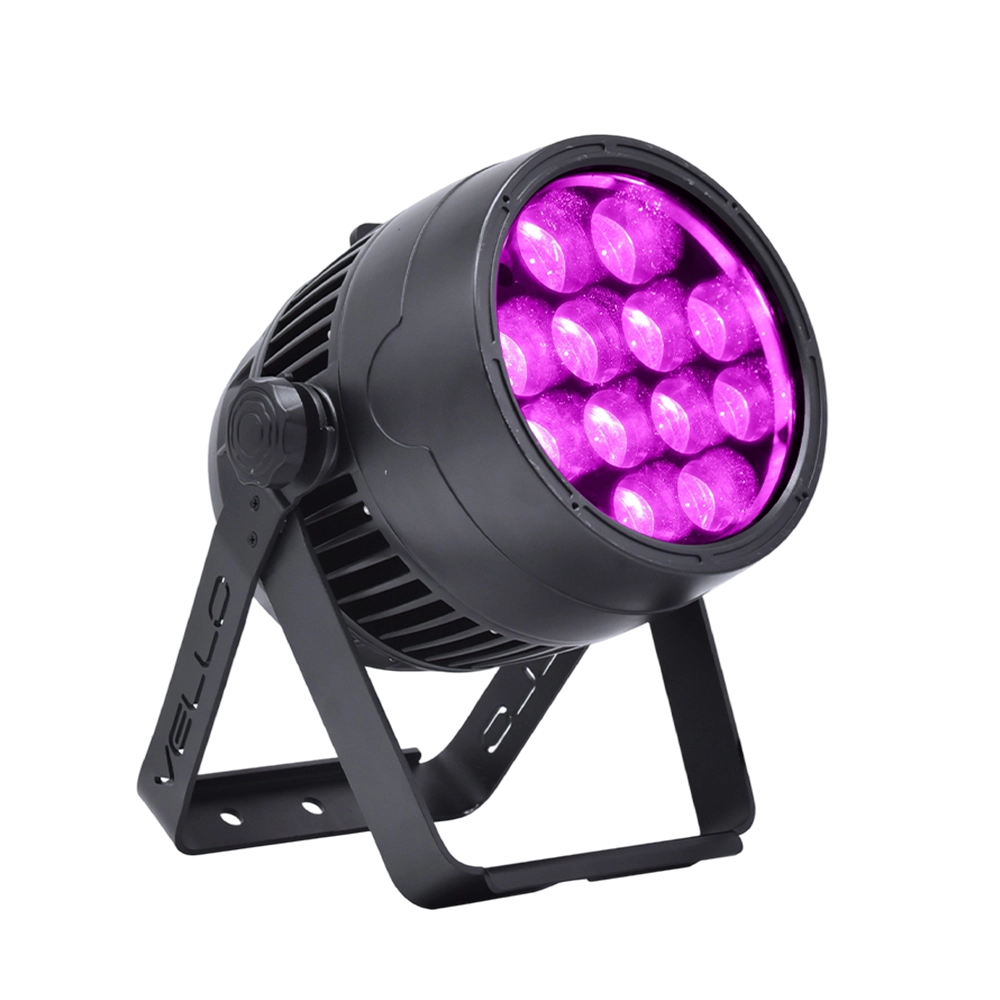
Stage LED Par Light LED ZOOMPAR 40
The Vello Zoom Par 40 IP is a powerful outdoor LED wash light equipped with 12x high-power 7-in-1 RGBACL LEDs. Designed for durability and rich color rendering, it features a wide motorized zoom (6°–50°), smooth dimming, and adjustable CTO presets (3200K–7500K), with 90+ CRI. With an IP66-rated die-cast aluminum body, it’s ideal for both indoor and outdoor applications, including stage lighting, architecture, live events, and installations.
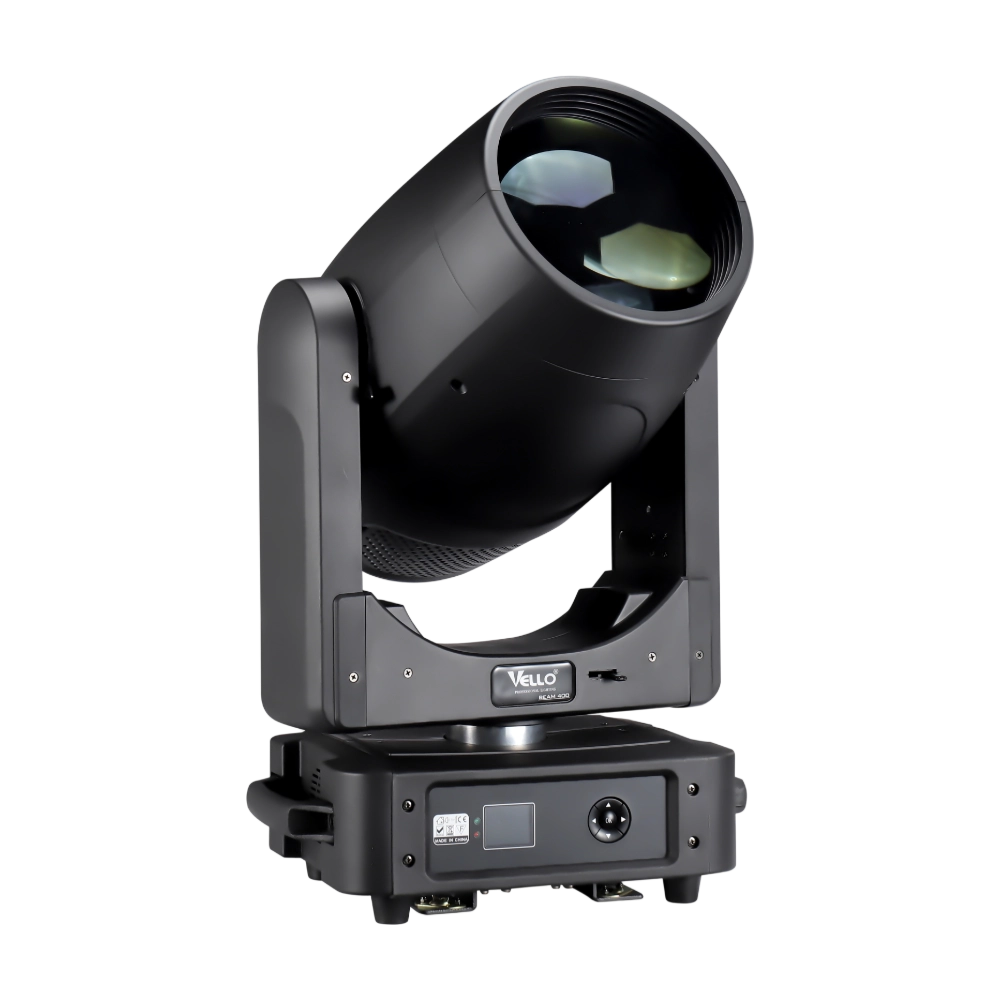
Moving Head Stage Light BEAM 400
BEAM400 is a 500W professional moving head beam powered by an OSRAM SIRIUS 371W discharge bulb, delivering a super-bright 1.8° sharp beam with impressive punch. It features 12 fixed gobos + open, a 14-color wheel, and a 16-facet circular rotating prism with multiple-facet effects, enabling dynamic aerial visuals. With 540° pan / 270° tilt, 16-bit movement resolution, and linear frost and focus, BEAM400 ensures precise and versatile performance. Comparable to traditional 750W moving heads, it combines high efficiency, smooth dimming, and reliable operation—ideal for concerts, tours, and large-scale stage productions.
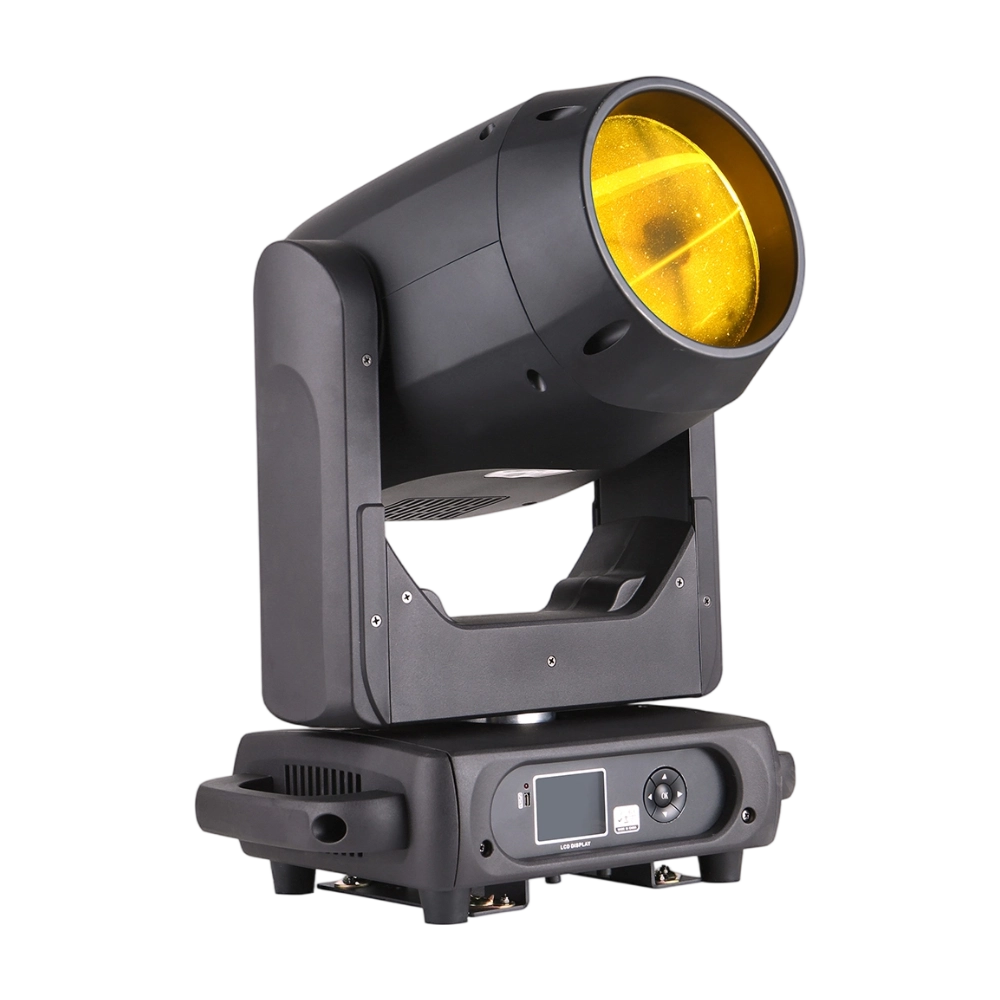
Moving Head Stage Light BEAM 360
BEAM360 is a 400W high-power moving head beam equipped with an OSRAM SIRIUS 311W discharge lamp, delivering a sharp 1.8° beam with super brightness. It features 14 colors + open, 12 fixed metal gobos + open, and dual prisms (8-facet circular + 8+16 multi-facet combination) for dynamic aerial effects. With 540° pan / 270° tilt, 16-bit movement, and linear frost and focus, BEAM360 ensures precision and versatility. Compact yet powerful, it rivals traditional 575W moving heads, making it ideal for concerts, clubs, and large-scale stage productions.
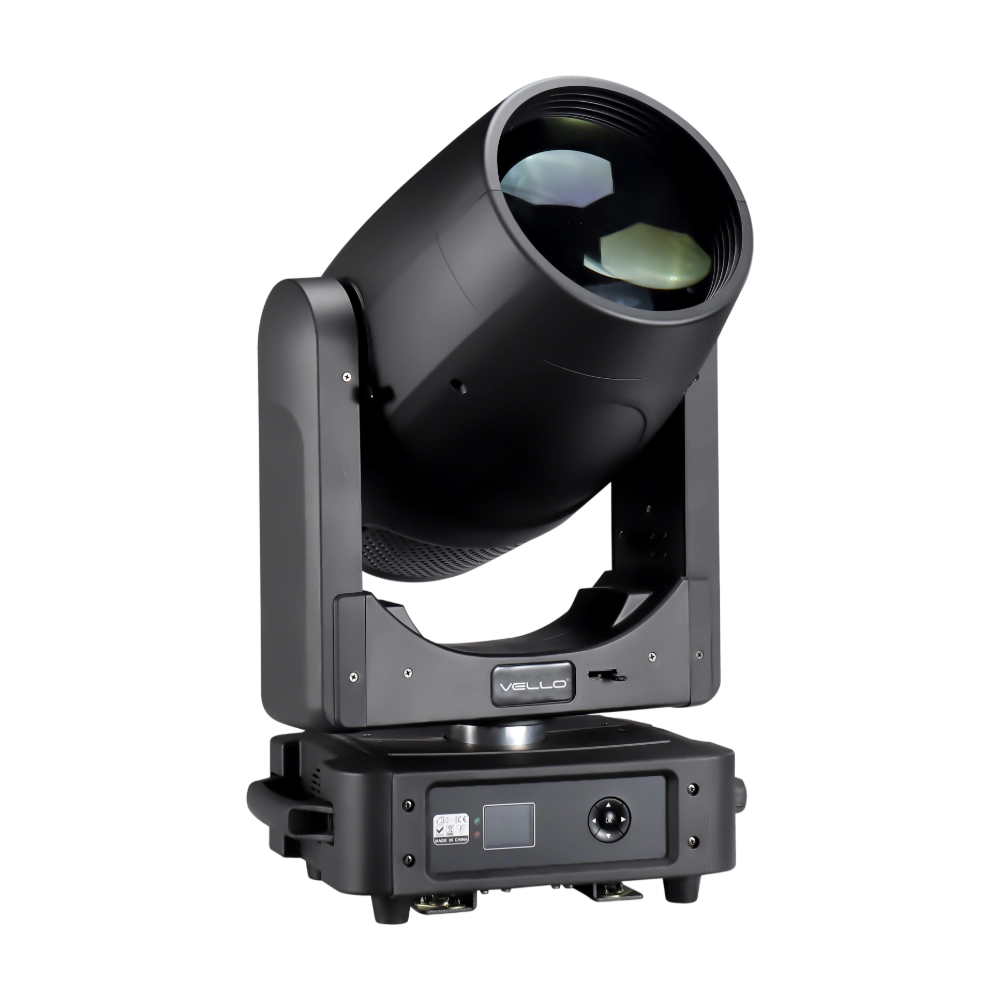
Moving Head Light BEAM 450
The BSW450 is a high-performance moving head fixture equipped with an original Osram 420W bulb, delivering exceptional brightness, precision, and versatility. Designed for professional stage applications, it seamlessly combines beam, spot, and wash functions in one compact unit, making it a powerful all-in-one lighting solution.
Over 20 Years of Innovation in Stage & Studio Lighting
© 2026 VELLO. All Rights Reserved. 粤ICP备20023734号
Join our socials
VELLO
Whatsapp: +8613902276704
Vello Lighting
VelloLights