





Lead Times, MOQ and Pricing for Custom LED Lighting Orders
- Understanding the custom LED lighting process
- What counts as custom in LED lighting?
- Typical stages of a custom LED order
- Stakeholders and responsibilities
- Lead times for custom LED lighting
- Typical lead time breakdown
- Factors that extend lead times
- How to shorten lead times
- Minimum Order Quantity (MOQ) strategies
- Why suppliers set MOQs
- Typical MOQ ranges and rationale
- Strategies to manage MOQs
- Pricing: components, cost drivers and real numbers
- Primary cost components
- Example price model (illustrative)
- Volume pricing and break-even
- Mitigating risk: quality, compliance and logistics
- Quality control and testing
- Logistics and customs
- Supplier selection and contractual terms
- Why work with Vello Light for custom LED projects
- Company capabilities and experience
- Services and product strengths
- Market reputation and primary products
- Practical checklist before placing a custom LED order
- Technical checklist
- Commercial checklist
- Project planning tips
- FAQ
- 1. How long does a typical custom LED fixture project take from order to delivery?
- 2. Can I get a sample before committing to full MOQ?
- 3. What minimum order quantities should I expect for custom stage lights?
- 4. How does volume affect price?
- 5. What are the most common hidden costs in custom LED orders?
- 6. How can I protect my IP when working with a manufacturer?
- Contact & next steps
I have worked with lighting designers, production houses and venue operators for many years, helping them source and develop custom led lighting solutions that meet technical, aesthetic and budgetary goals. In this article I explain how lead times, minimum order quantities (MOQ) and pricing interact for custom LED lighting orders, what typical timelines and cost components look like, how to optimize MOQ and when to expect price reductions as volume grows. The guidance combines my practical experience with industry standards and supplier-side realities so you can plan confidently for projects ranging from a few bespoke fixtures to large touring or installation orders.
Understanding the custom LED lighting process
What counts as custom in LED lighting?
Custom led lighting encompasses any fixture or system where the design, optics, control electronics, mechanical housing, color mixing, or software are tailored beyond standard off-the-shelf products. Examples include modified moving head fixtures, theater-specific wash lights, studio softboxes with specific color rendering, or outdoor stage lighting with custom beam shaping and IP-rated housings. For background on LED technology fundamentals, see the LED overview on Wikipedia.
Typical stages of a custom LED order
From my experience, a custom project typically follows these stages: requirements & specification, industrial design & prototyping, electronics & software development, sample approval, pilot production, and full production with quality control and logistics. Each stage has its own lead time and cost implications — for example, firmware development may add weeks even if mechanical changes are minor.
Stakeholders and responsibilities
Clear role allocation speeds delivery: the customer must provide accurate performance requirements (lumen output, CRI, color temperature, DMX/RDM or network control requirements), while the manufacturer handles component selection, regulatory compliance, and production testing. Industry quality management standards such as ISO 9001 are commonly used to structure these processes and reduce rework.
Lead times for custom LED lighting
Typical lead time breakdown
Lead times vary with complexity and market conditions. Below I present a typical timeline I use when advising clients; actual times can be longer during component shortages or when complex regulatory testing is required.
| Stage | Typical duration (standard conditions) | Notes |
|---|---|---|
| Requirements & quoting | 1–2 weeks | Clear specs speed the process |
| Design & prototyping | 3–8 weeks | Mechanical, optical and electronics work; longer for new optics |
| Sample testing & approval | 1–3 weeks | Includes photometrics and control integration testing |
| Pilot production | 2–4 weeks | Small batch to validate manufacturing |
| Full production | 4–12 weeks | Depends on capacity and component lead times |
| Shipping & customs | 1–4 weeks | Varies by freight mode and destination |
These ranges reflect typical factory workflows. For LED chips or drivers, semiconductor market conditions can extend procurement times; see coverage of supply dynamics in the electronics industry such as IEEE Spectrum.
Factors that extend lead times
Major causes of delay include long-lead components (specialty LEDs, custom lenses, ASICs), regulatory testing (EMC, safety), iterative sample revisions, tooling for custom housings, and global logistics constraints. For some outdoor or safety-rated products, additional certifications or testing labs add weeks.
How to shorten lead times
Practical steps I recommend: freeze specifications early, accept proven components instead of novel parts, parallelize activities (e.g., optical design while PCB layout is finalized), and pre-qualify suppliers. Also consider negotiating partial shipments or phased deliveries so production can begin for standard modules while custom elements are finalized.
Minimum Order Quantity (MOQ) strategies
Why suppliers set MOQs
MOQs reflect fixed setup costs: tooling, programming, procurement minimums from component vendors, and production line setup. For custom led lighting, MOQs also help amortize NRE (non-recurring engineering) and testing costs across units.
Typical MOQ ranges and rationale
MOQ varies widely. From my work with factories in Asia and Europe, common MOQs are:
| Product type | Typical MOQ | Reason |
|---|---|---|
| Modified off-the-shelf fixtures | 50–200 pcs | Limited changes, reuse existing tooling |
| Fully custom fixtures (new housing) | 200–1,000 pcs | Tooling and injection mold amortization |
| Small custom accessories or prototype runs | 10–50 pcs | Higher per-unit cost but flexible runs |
MOQs are negotiable; I often advise clients to accept slightly higher MOQ in exchange for significant per-unit price reductions and reduced lead time because the supplier can run full-production batches.
Strategies to manage MOQs
Options I use with customers include: (1) aggregating orders across multiple projects to meet MOQ, (2) negotiating phased deliveries and holding inventory at the supplier, (3) accepting standard components while customizing only a subassembly, and (4) offering cost-sharing for tooling/NRE to lower MOQ requirements.
Pricing: components, cost drivers and real numbers
Primary cost components
Custom LED pricing breaks down into several components: bill of materials (LEDs, drivers, optics, heatsinks, PCBs), labor and assembly, tooling and NRE, certification/testing, packaging & logistics, and margin. For professional stage lighting there is also software/firmware development, calibration, and burn-in testing, which add to cost.
Example price model (illustrative)
Below is an illustrative cost breakdown for a mid-complexity moving head fixture in a 500-unit order. These numbers are indicative and should be validated with quotations.
| Cost item | Percentage | Notes |
|---|---|---|
| Components (LEDs, driver, optics, PCB) | 40–55% | LEDs and drivers can dominate for high-output fixtures |
| Labor & assembly | 10–20% | Higher for complex mechanical assemblies |
| Tooling & NRE | 5–20% | Amortized over order quantity |
| Testing & certification | 3–8% | EMC, safety, photometric testing |
| Logistics & duties | 2–8% | Depends on shipping mode and origin/destination |
| Supplier margin | 10–20% | Varies with relationship and volume |
For verified industry context on manufacturing and quality impacts, see ISO guidance on quality management systems: ISO 9001.
Volume pricing and break-even
Price per unit normally declines as volume increases due to fixed-cost amortization and better purchasing terms for components. I typically model break-even by finding the quantity at which tooling/NRE per unit falls below a target threshold. For many LED fixtures, moving from 100 to 500 units can reduce unit cost by 15–30%, while moving to 1,000+ units provides further, smaller reductions.
Mitigating risk: quality, compliance and logistics
Quality control and testing
Quality issues are costly. Require clear acceptance criteria, photometric reports (IES, LDT), and batch traceability. For EMC and safety conformance, tests to recognized schemes reduce retrofit and recall risk. The stage lighting industry often references general standards and best practices; see the stage lighting overview for context on professional requirements.
Logistics and customs
Plan freight early: air freight reduces transit time but increases cost, ocean freight is economical but slower. Include customs lead time—proper HS codes and documentation prevent delays. Consider insurance for transit, and Incoterms that clarify responsibility for duties and risk.
Supplier selection and contractual terms
Choose suppliers with transparent BOM costing, documented quality systems (preferably ISO 9001), and experience in stage/architectural lighting. Include warranty, late-delivery penalties, and change-order pricing in contracts. When possible, arrange progress payments linked to milestones to align incentives.
Why work with Vello Light for custom LED projects
Company capabilities and experience
Vello Light Co., Ltd., established in 2003, is a comprehensive technology enterprise integrating R&D, manufacturing, and sales. Over the years, we have consistently adhered to the principles of quality first and sincere service. With the support and help of numerous customers both domestically and internationally, we have continued to grow and develop, gradually becoming a unique and outstanding team in our field.
Services and product strengths
In recent years, with the rapid development of the LED lighting market, Vello Light has gathered a large number of professional talents to provide comprehensive and systematic services, including product R&D, manufacturing, marketing, engineering installation, and product maintenance. Through the joint efforts of Vello people, we remain true to our original aspirations and persevere in innovation, leveraging our unique advantages to stand out in the fierce competition.
Market reputation and primary products
Currently, our products are exported both domestically and internationally and have a strong brand reputation, especially in overseas markets. VELLO is our registered brand, specializing in moving headlights, LED wash lights, and theatrical lights. Our products are highly praised and loved by many customers for their professional technology, unique style, high-quality materials, and durability. Our vision is to become a world-leading stage lighting manufacturer. For more information visit vellolight.com or contact us at info@vellolight.com.
Practical checklist before placing a custom LED order
Technical checklist
- Define photometric requirements: lumen output, beam angle, CRI, CCT, flicker tolerance.
- Control interfaces required: DMX, RDM, ArtNet, sACN, or proprietary.
- Environmental and safety ratings: IP, IK, temperature range.
Commercial checklist
- Target unit price and acceptable MOQ.
- Desired delivery date and acceptable shipping modes.
- Warranty, spare parts plan and service expectations.
Project planning tips
Start supplier conversations early, allow buffer between sample approval and full production, and consider first-article inspections. If considering multiple suppliers, request identical sample tests and compare photometric reports and EMC documentation.
FAQ
1. How long does a typical custom LED fixture project take from order to delivery?
From initial requirements to delivery, plan for 3–6 months for a mid-complexity fixture under normal market conditions. Highly custom designs or busy supply chains can extend this to 6–12 months.
2. Can I get a sample before committing to full MOQ?
Yes. Most manufacturers provide samples or a pilot run. Samples cover prototyping and performance validation but may be priced higher per unit and add several weeks to lead time.
3. What minimum order quantities should I expect for custom stage lights?
MOQs vary: modified off-the-shelf designs often start at 50–200 pcs; fully custom fixtures may require 200–1,000 pcs. Smaller runs (10–50 pcs) are possible with higher per-unit costs or shared tooling arrangements.
4. How does volume affect price?
Unit price typically falls with volume due to amortized tooling and better component procurement. Moving from prototype quantities to production (e.g., 50→500) can reduce unit cost substantially—often 15–30% depending on complexity.
5. What are the most common hidden costs in custom LED orders?
Watch for NRE/tooling fees, extended testing or certification costs, fixture calibration/burn-in, higher packaging or shipping costs for fragile goods, and potential rework if specs are unclear.
6. How can I protect my IP when working with a manufacturer?
Use NDAs, clarify ownership of design files, and consider splitting IP-sensitive tasks (e.g., keep firmware development in-house or with a trusted partner). Choose suppliers with proven reputations and certifications.
Contact & next steps
If you are planning a custom led lighting project and want help estimating lead times, MOQ options, or a tailored quote, contact me or reach out to Vello Light Co., Ltd. for detailed discussions. Visit https://www.vellolight.com or email info@vellolight.com. I can help you scope requirements, compare supplier proposals, and create a realistic schedule and cost model so your project finishes on time and on budget.
References and further reading: IEEE Spectrum coverage of supply chain dynamics (IEEE Spectrum), LED technology overview (Wikipedia), and ISO quality management guidance (ISO 9001).
Top 10 LED Par Light Picks for Small Venues 2026
Troubleshooting Common LED Stage Light Issues
Stage Light Placement: Lighting Angles and Coverage Tips
Custom LED Stage Lights: Cost vs. Performance Analysis
Major categories
Do your products support customization?
Yes. We offer OEM and ODM services tailored to project needs, including design, optics, and control compatibility.
Do you offer samples?
Samples are available for certain models. Please confirm with our sales team for details.
Do you ship internationally?
Yes. We offer sea, air, and express delivery to many countries and regions worldwide.
What is the warranty period for your products?
Most products come with a standard 1–2 year warranty. Please refer to product details or contract terms for specifics.
What is the usual lead time?
Standard models are typically shipped within 7–15 working days after payment. Customized items may vary.
Stage LED Par Light LED ZOOMPAR 40
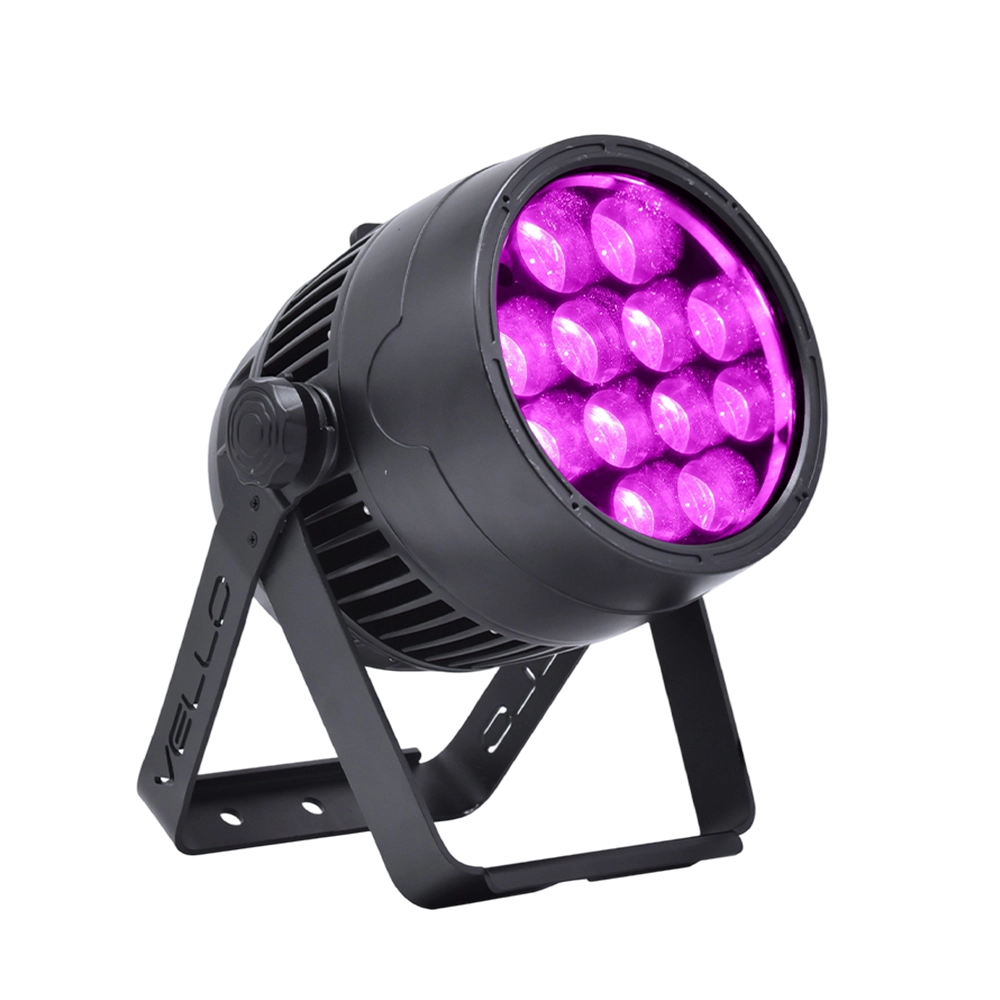
The Vello Zoom Par 40 IP is a powerful outdoor LED wash light equipped with 12x high-power 7-in-1 RGBACL LEDs. Designed for durability and rich color rendering, it features a wide motorized zoom (6°–50°), smooth dimming, and adjustable CTO presets (3200K–7500K), with 90+ CRI. With an IP66-rated die-cast aluminum body, it’s ideal for both indoor and outdoor applications, including stage lighting, architecture, live events, and installations.
Moving Head Stage Light BEAM 400
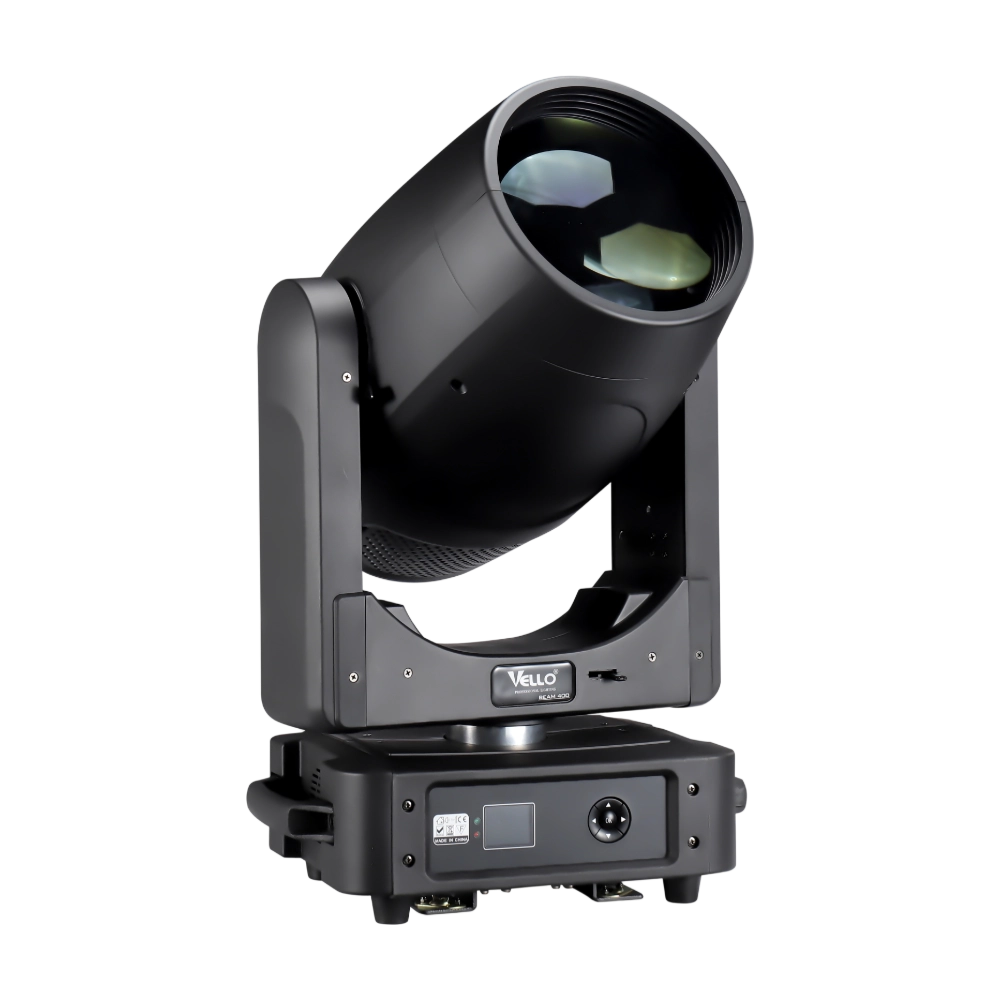
BEAM400 is a 500W professional moving head beam powered by an OSRAM SIRIUS 371W discharge bulb, delivering a super-bright 1.8° sharp beam with impressive punch. It features 12 fixed gobos + open, a 14-color wheel, and a 16-facet circular rotating prism with multiple-facet effects, enabling dynamic aerial visuals. With 540° pan / 270° tilt, 16-bit movement resolution, and linear frost and focus, BEAM400 ensures precise and versatile performance. Comparable to traditional 750W moving heads, it combines high efficiency, smooth dimming, and reliable operation—ideal for concerts, tours, and large-scale stage productions.
Moving Head Stage Light BEAM 360
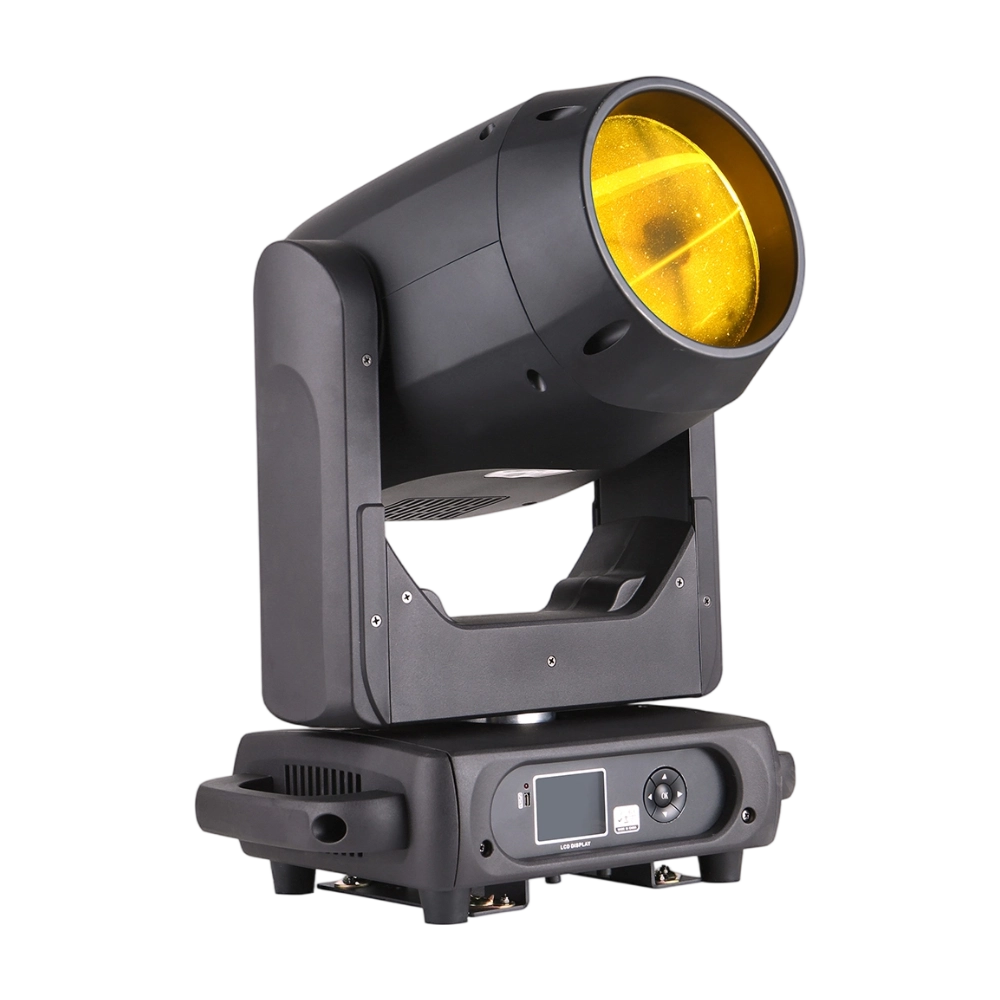
BEAM360 is a 400W high-power moving head beam equipped with an OSRAM SIRIUS 311W discharge lamp, delivering a sharp 1.8° beam with super brightness. It features 14 colors + open, 12 fixed metal gobos + open, and dual prisms (8-facet circular + 8+16 multi-facet combination) for dynamic aerial effects. With 540° pan / 270° tilt, 16-bit movement, and linear frost and focus, BEAM360 ensures precision and versatility. Compact yet powerful, it rivals traditional 575W moving heads, making it ideal for concerts, clubs, and large-scale stage productions.
Moving Head Light BEAM 450
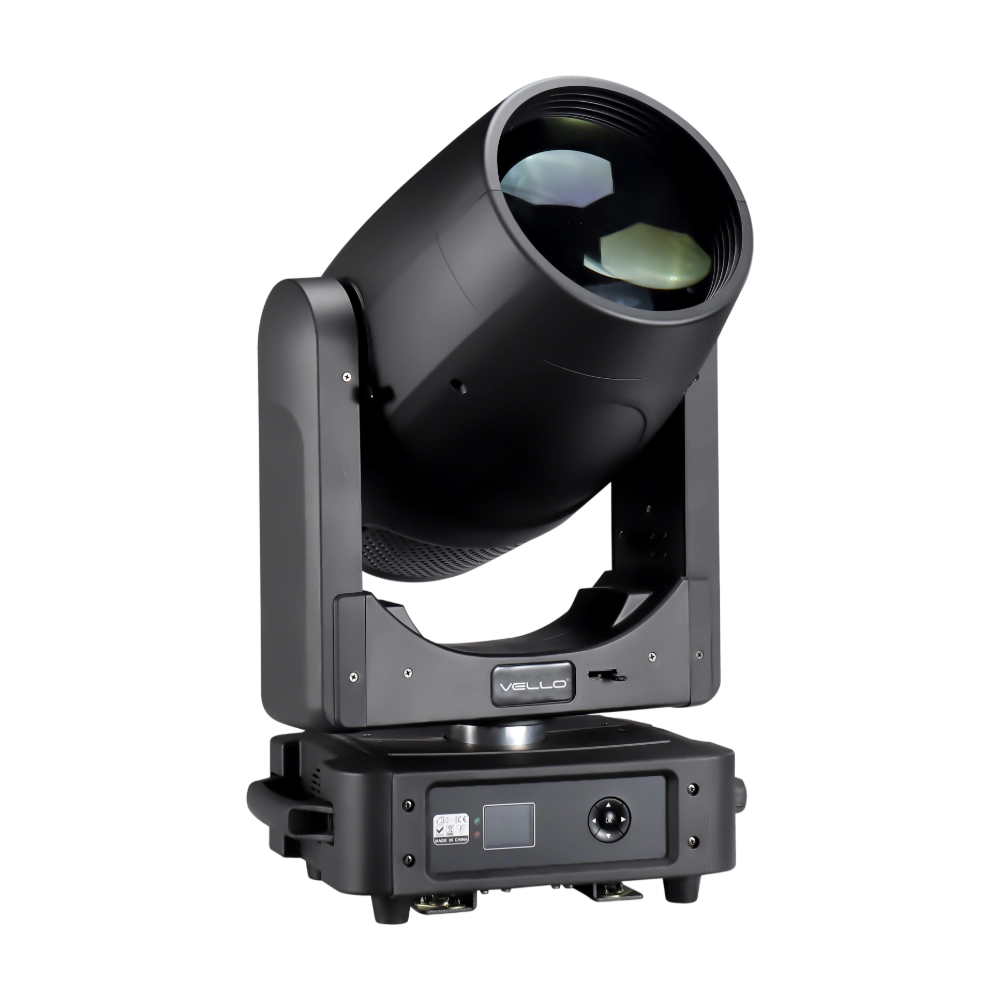
The BSW450 is a high-performance moving head fixture equipped with an original Osram 420W bulb, delivering exceptional brightness, precision, and versatility. Designed for professional stage applications, it seamlessly combines beam, spot, and wash functions in one compact unit, making it a powerful all-in-one lighting solution.
Over 20 Years of Innovation in Stage & Studio Lighting
© 2026 VELLO. All Rights Reserved. 粤ICP备20023734号
Join our socials
VELLO
Whatsapp: +8613902276704
Vello Lighting
VelloLights