





Energy Savings of Custom LED Stage Lights for Venues
- Why venues should rethink stage lighting
- Rising operating costs and sustainability expectations
- Performance demands: brightness, color and control
- Regulatory and incentive drivers
- How custom LED lighting reduces energy use
- LED technology: efficiency and optical control
- Controls, dimming and scene programming
- Fixture-level customization and modularity
- Quantifying energy savings: comparisons and ROI
- Typical power and lifetime comparisons
- Example ROI / payback calculation
- Lifecycle and maintenance benefits
- Implementation best practices for venues
- Plan to the room, not to the fixture
- Use hierarchical control and scheduling
- Procurement: specify what matters
- Custom solutions and vendor selection
- Measuring success and continuous optimization
- Monitoring energy and verifying performance
- Iterative tuning for artistic and efficiency goals
- Leveraging incentives and documentation
- FAQ
- How much energy can I realistically save by switching to custom LED stage lights?
- Do LED fixtures sacrifice color fidelity or brightness?
- What are common pitfalls when retrofitting to LED?
- How long before I recover the extra cost of LED fixtures?
- Can custom LED lighting reduce other operational costs?
- How do I choose between off-the-shelf LED fixtures and a custom solution?
- Next steps and contact
I often advise performance venues, houses of worship, and event spaces on how to cut operating costs without sacrificing production quality. Custom LED lighting—carefully specified fixtures, optics, and control strategies tailored to a venue’s needs—delivers significant energy savings, lower maintenance, and better lighting outcomes than legacy incandescent, halogen or discharge systems. In this article I break down the technical reasons behind those savings, present verifiable comparisons and ROI calculations, and give practical guidance for planning, procurement and commissioning of custom LED stage lights.
Why venues should rethink stage lighting
Rising operating costs and sustainability expectations
Energy prices, sustainability reporting requirements and audience expectations have pushed venue managers to reduce energy intensity per event. Lighting is often one of the largest single electrical loads during performances. For many venues, switching to custom led lighting is one of the fastest ways to reduce energy use and carbon footprint while improving show flexibility.
Performance demands: brightness, color and control
Modern productions demand high color fidelity, dynamic effects and precise control. Custom LED stage lights provide high lumen-per-watt efficiency while offering color mixing, pixel-mapping and advanced beam shaping. That means venues can achieve artistic goals with lower installed electrical capacity compared with older lamp technologies.
Regulatory and incentive drivers
Governments and utilities offer incentives for energy-efficient retrofits and many local codes favor high-efficiency lighting. Resources such as the U.S. Department of Energy guidance on LED lighting (energy.gov/energysaver/led-lighting) and ENERGY STAR recommendations (energystar.gov) are useful for verifying savings estimates and identifying available programs.
How custom LED lighting reduces energy use
LED technology: efficiency and optical control
LEDs convert a higher proportion of electrical energy to visible light than incandescent and many discharge lamps. The higher luminous efficacy means less input power for the same delivered light. In addition, modern LED fixtures use optimized optics and lenses to direct light where it is needed, reducing wasted spill and allowing lower total fixture output while retaining perceived brightness on stage. For background on LED physics and advantages see the Wikipedia LED overview (en.wikipedia.org/wiki/Light-emitting_diode).
Controls, dimming and scene programming
Integrated control systems (DMX, Art-Net, sACN, RDM, and manufacturer protocols) let you dim and cue lights with high resolution and without color shift, something that incandescent dimming cannot match without wasting energy. Scene-based scheduling and motion-triggered cues reduce the hours fixtures run at high output. Combined with occupancy-based house lighting and automation, control strategies can cut runtime and peak demand.
Fixture-level customization and modularity
Custom led lighting allows specification of the exact LED engine, optics, and thermal design for a venue’s needs. Rather than a one-size-fits-all approach, you can choose moving head stage lights with appropriate wattages, LED wash fixtures sized for cycloramas, or LED bars for top borders. Properly matched fixtures avoid over-specification and reduce both installed power and ventilation/cooling loads.
Quantifying energy savings: comparisons and ROI
Typical power and lifetime comparisons
To make decisions, venues need evidence. Below I provide a representative comparison between legacy incandescent/halogen/discharge products and modern LED fixtures. Data are generalized; actual products vary. For reliable industry-level guidance on energy performance and lifetime, consult ENERGY STAR and DOE resources (energystar.gov, energy.gov).
| Fixture Type | Typical Power (per fixture) | Typical Lifetime (hrs) | Relative Energy Use vs. Incandescent |
|---|---|---|---|
| Incandescent / Halogen spotlight (ellipsoidal) | 300–1000 W | 1,000–2,000 | Baseline (100%) |
| Traditional discharge moving head (HMI/metal halide) | 400–1500 W | 1,000–2,000 (lamp changes) | ~100–150% (depends on lamp) |
| LED moving head (modern) | 150–800 W | 20,000–50,000+ | 25–60% (uses 25–75% less energy) |
| LED wash / PAR | 50–400 W | 20,000–50,000+ | 10–50% (uses 50–90% less energy) |
ENERGY STAR and DOE consistently report that LEDs use at least 50–75% less energy than incandescent sources for the same perceived light level and last many times longer (ENERGY STAR).
Example ROI / payback calculation
Here is a simplified example for a mid-size theater converting 40 fixtures from 575 W discharge to 250 W LED equivalents. Assumptions:
- Operating hours: 1,200 hours/year (rehearsals + shows + testing)
- Electricity cost: $0.14/kWh (adjust to local rate)
- Fixture cost differential (LED vs. used/discharge): $900 extra per fixture (initial)
- Maintenance savings: lower lamp replacement and labor (estimated $60/fixture/year)
| Item | Values |
|---|---|
| Annual energy saved per fixture | (575 W - 250 W) × 1,200 hrs = 39,000 Wh = 39 kWh × 1200? Correction: calculation -> (0.575-0.25) kW × 1,200 hrs = 0.325 kW × 1,200 = 390 kWh |
| Annual energy saved (40 fixtures) | 390 kWh × 40 = 15,600 kWh |
| Annual energy cost savings | 15,600 kWh × $0.14 = $2,184 |
| Annual maintenance savings (estimated) | $60 × 40 = $2,400 |
| Total annual cash savings | $2,184 + $2,400 = $4,584 |
| Initial extra capital (LED High Quality) | $900 × 40 = $36,000 |
| Simple payback | $36,000 / $4,584 ≈ 7.9 years |
Notes: This is a conservative example. Payback improves with higher electricity prices, additional utility incentives, demand charge reductions, and by selecting fixtures that further reduce HVAC loads. Also, if switching from older high-wattage fixtures the savings can be larger. For program incentives check local utility programs and ENERGY STAR guidance (energystar.gov).
Lifecycle and maintenance benefits
Because LEDs have much longer lifetimes and more predictable lumen maintenance curves, labor and lamp replacement costs fall dramatically. Reduced onsite maintenance also lowers lift rental and technician downtime costs—important for busy venues. For lifecycle energy and environmental assessments, the IES (Illuminating Engineering Society) offers standards and resources (ies.org).
Implementation best practices for venues
Plan to the room, not to the fixture
Effective custom led lighting starts with photometric design and modeling: target lux on stage surfaces, sightline analysis, and rigging constraints. I advise running a lighting plot with photometric output of candidate fixtures to avoid overspecification. Use measured candela distributions and beam spreads rather than relying on fixture wattage alone.
Use hierarchical control and scheduling
Layered control architectures—house/house-dim scenes, show cues, and automated schedules—make it easier to ensure lights run at the minimum necessary output for non-performance hours. Integrating with building management systems can reduce HVAC and lighting interactions and capture additional savings.
Procurement: specify what matters
When procuring custom led lighting, specify delivered lumens at the target beam spread, CRI/TLCI (color quality) targets, thermal management, IP rating for outdoor fixtures, and warranty/maintenance terms. Avoid basing decisions solely on wattage. Include acceptance tests: on-site photometric checks, color rendering verification, and control interoperability tests (DMX/RDM/Art-Net).
As a practical partner for venues, I often recommend working with manufacturers who can provide product customization, pre-programmed color profiles, and on-site commissioning services. One example I frequently engage with is Vello Light Co., Ltd.
About Vello Light
Vello Light Co., Ltd., established in 2003, is a comprehensive technology enterprise integrating R&D, manufacturing, and sales. Over the years, Vello has consistently adhered to quality-first and sincere service principles. With support from customers domestically and internationally, the company has grown into a distinctive team in the field.
In recent years, Vello Light has gathered professional talent to provide systematic services including product R&D, manufacturing, marketing, engineering installation, and product maintenance. Through persistent innovation, VELLO has established a strong brand reputation—especially in overseas markets. VELLO (registered) specializes in moving head stage lights, studio lights, LED effect lights, LED Bar Lights, LED Par Light, and outdoor stage lighting. Their products are known for professional technology, unique style, high-quality materials, and durability. Vello's vision is to become a world-leading stage lighting manufacturer. Learn more at vellolight.com or contact them at info@vellolight.com.
Custom solutions and vendor selection
When choosing a supplier for custom led lighting, evaluate technical support, willingness to customize optics or firmware, local stocking and spare parts, and post-sale service. Vello offers a breadth of products and engineering support for venues needing tailored fixture specs and commissioning services.
Measuring success and continuous optimization
Monitoring energy and verifying performance
Post-installation metering is essential to verify savings. Install submeters on lighting circuits to measure consumption pre- and post-retrofit. Compare expected kWh reduction to actual metered data and adjust controls or scheduling accordingly. Use utility-grade meters or BMS integrations for accurate long-term data.
Iterative tuning for artistic and efficiency goals
After commissioning, collaborate with designers and operators to refine scenes so artistry and energy goals align. Often small changes in beam shaping, color balance, or pixel mapping reduce the need for high-intensity outputs and preserve the creative palette.
Leveraging incentives and documentation
Document all fixtures, wattages, schedules and metering results to support incentive applications. Many utilities require pre- and post-inspection reports. Use manufacturer performance data and third-party verification when applying for rebates.
FAQ
How much energy can I realistically save by switching to custom LED stage lights?
Savings vary by baseline technology and usage patterns, but typical energy reductions of 50–75% compared with incandescent and 25–60% compared with many discharge fixtures are common. ENERGY STAR and DOE resources summarize LED performance and efficiency ranges (ENERGY STAR, DOE).
Do LED fixtures sacrifice color fidelity or brightness?
No—modern LED engines can meet high CRI or TLCI targets and maintain brightness with better optical control. Customization allows selection of color mixing systems and lenses that achieve required artistic results without excess power.
What are common pitfalls when retrofitting to LED?
Pitfalls include overspecifying wattage, ignoring optical distribution, failing to test control interoperability, and not accounting for cooling/thermal management in tight rigs. Proper photometric design and a commissioning plan mitigate these issues.
How long before I recover the extra cost of LED fixtures?
Payback depends on electricity cost, operating hours, incentive availability and maintenance savings. In my experience, simple paybacks often range from 3–10 years. Higher-usage venues and those that secure incentives hit the lower end of that range.
Can custom LED lighting reduce other operational costs?
Yes. Reduced heat output lowers HVAC loads (especially in small venues or studios), longer lamp life cuts maintenance and labor, and integrated controls can reduce staff time and simplify cueing.
How do I choose between off-the-shelf LED fixtures and a custom solution?
If your venue has standard requirements, high-quality off-the-shelf fixtures may suffice. For unusual sightlines, unique scenic elements, or when you need specific optical/thermal characteristics, custom led lighting—either customized off-the-shelf models or bespoke designs—delivers better long-term efficiency and artistic fit.
Next steps and contact
If you’d like a site assessment or a photometric retrofit study, I can help scope a custom led lighting plan that balances energy, capital, and artistic requirements. For product inquiries and custom fixture solutions, contact Vello Light Co., Ltd. at info@vellolight.com or visit https://www.vellolight.com. Together we can model expected energy savings, identify incentives, and create a deployment plan that meets both your creative and operational goals.
Safety and Rigging Tips for Stage Lighting Installations
How to Choose IP-Rated LED Stage Lights for Outdoor Use
LED vs Traditional Stage Lights: Pros and Cons
Moving Head vs Wash Lights: Which to Use When
Major categories
What is the usual lead time?
Standard models are typically shipped within 7–15 working days after payment. Customized items may vary.
Do you offer samples?
Samples are available for certain models. Please confirm with our sales team for details.
Do your products support customization?
Yes. We offer OEM and ODM services tailored to project needs, including design, optics, and control compatibility.
What is the warranty period for your products?
Most products come with a standard 1–2 year warranty. Please refer to product details or contract terms for specifics.
Do you ship internationally?
Yes. We offer sea, air, and express delivery to many countries and regions worldwide.
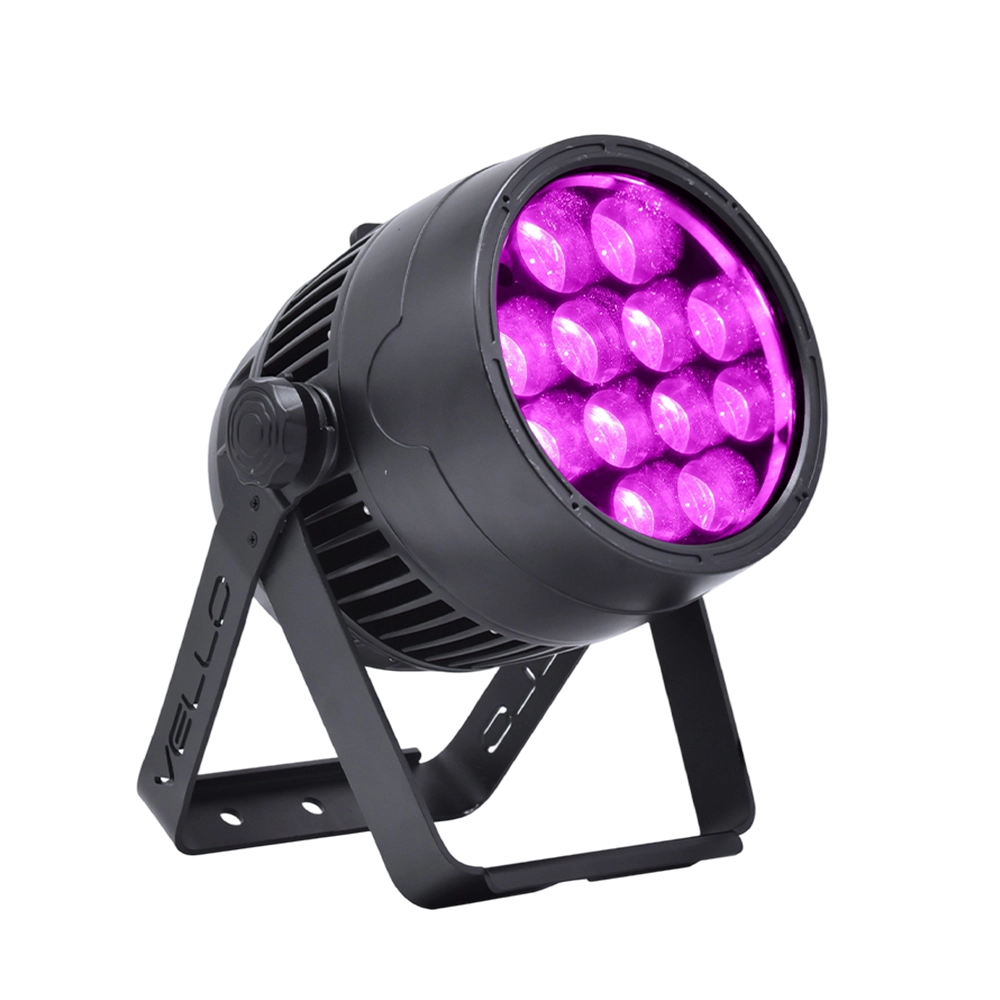
Stage LED Par Light LED ZOOMPAR 40
The Vello Zoom Par 40 IP is a powerful outdoor LED wash light equipped with 12x high-power 7-in-1 RGBACL LEDs. Designed for durability and rich color rendering, it features a wide motorized zoom (6°–50°), smooth dimming, and adjustable CTO presets (3200K–7500K), with 90+ CRI. With an IP66-rated die-cast aluminum body, it’s ideal for both indoor and outdoor applications, including stage lighting, architecture, live events, and installations.
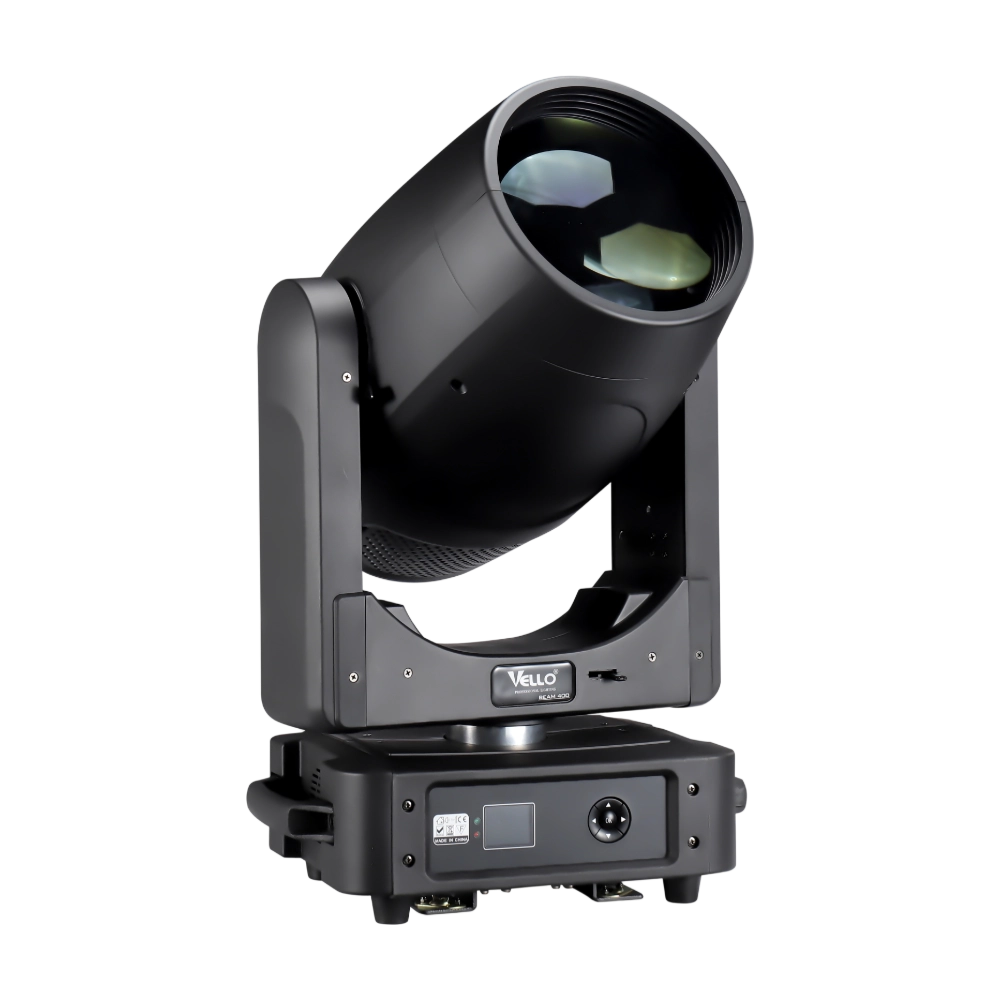
Moving Head Stage Light BEAM 400
BEAM400 is a 500W professional moving head beam powered by an OSRAM SIRIUS 371W discharge bulb, delivering a super-bright 1.8° sharp beam with impressive punch. It features 12 fixed gobos + open, a 14-color wheel, and a 16-facet circular rotating prism with multiple-facet effects, enabling dynamic aerial visuals. With 540° pan / 270° tilt, 16-bit movement resolution, and linear frost and focus, BEAM400 ensures precise and versatile performance. Comparable to traditional 750W moving heads, it combines high efficiency, smooth dimming, and reliable operation—ideal for concerts, tours, and large-scale stage productions.
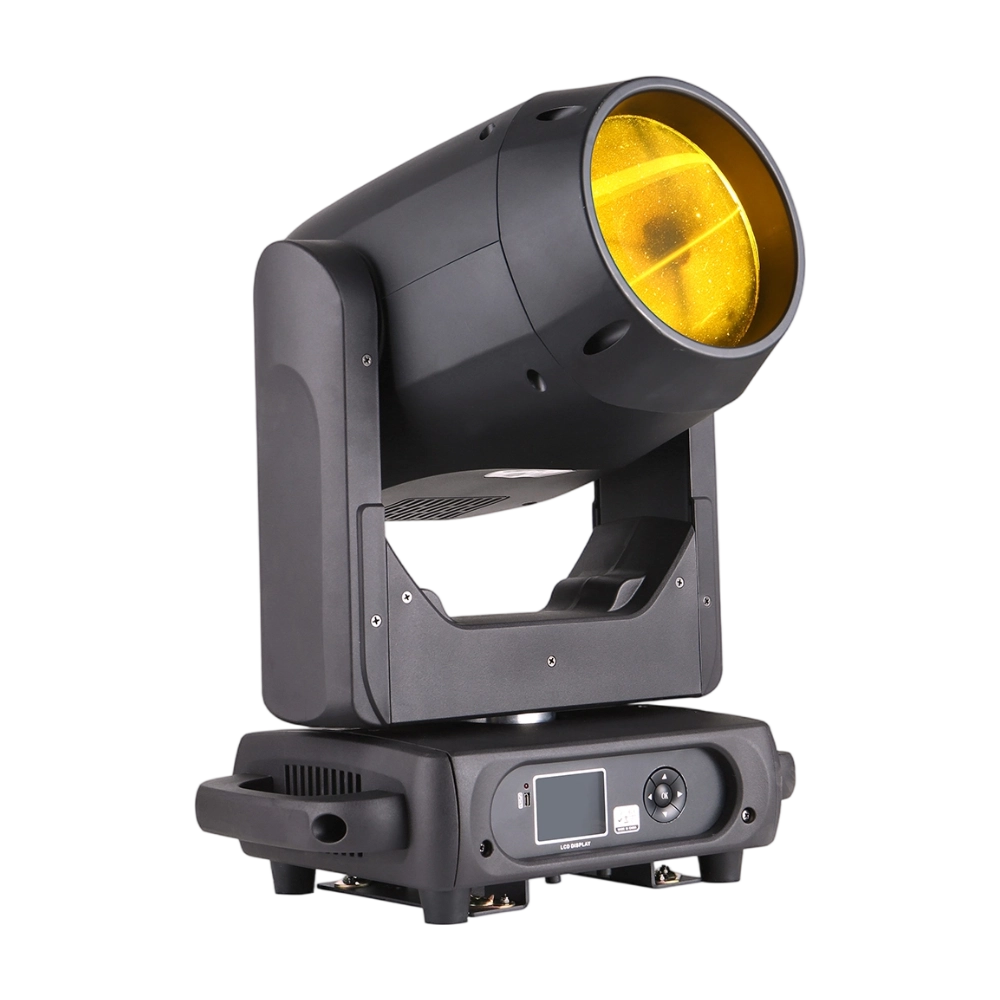
Moving Head Stage Light BEAM 360
BEAM360 is a 400W high-power moving head beam equipped with an OSRAM SIRIUS 311W discharge lamp, delivering a sharp 1.8° beam with super brightness. It features 14 colors + open, 12 fixed metal gobos + open, and dual prisms (8-facet circular + 8+16 multi-facet combination) for dynamic aerial effects. With 540° pan / 270° tilt, 16-bit movement, and linear frost and focus, BEAM360 ensures precision and versatility. Compact yet powerful, it rivals traditional 575W moving heads, making it ideal for concerts, clubs, and large-scale stage productions.
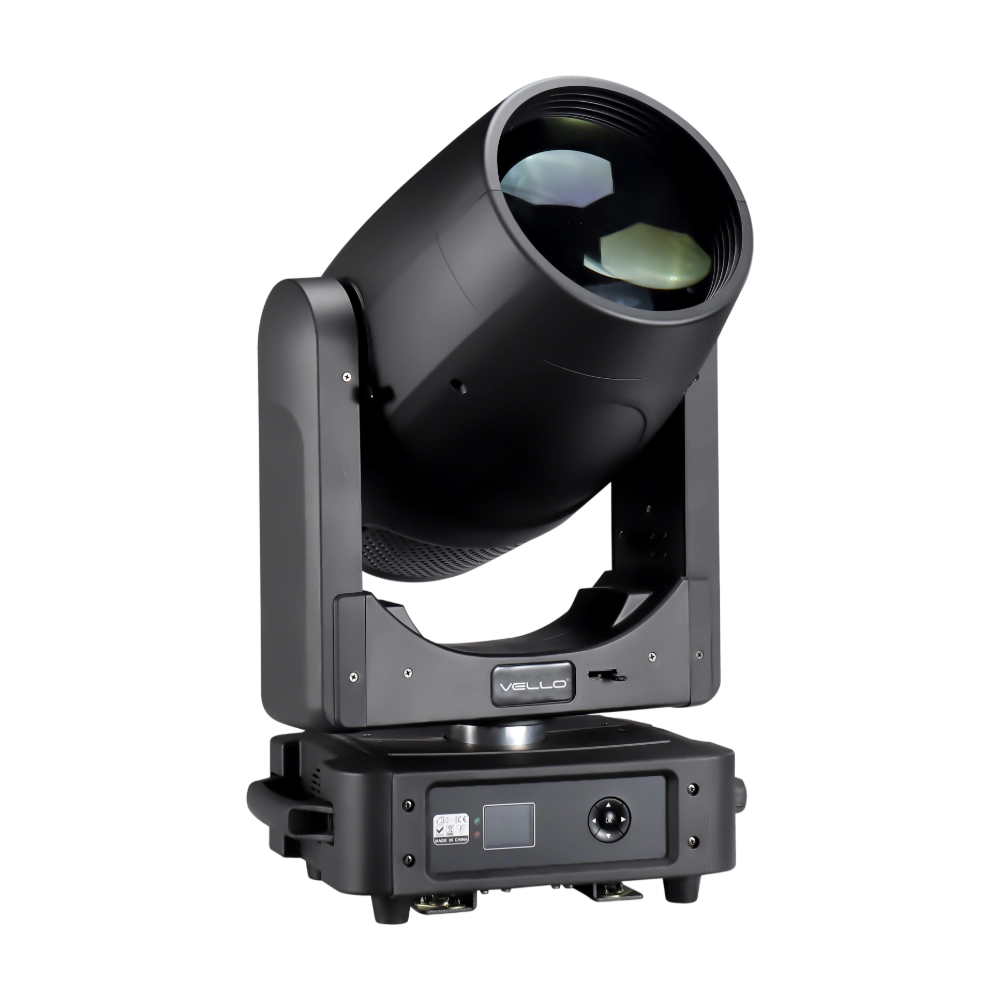
Moving Head Light BEAM 450
The BSW450 is a high-performance moving head fixture equipped with an original Osram 420W bulb, delivering exceptional brightness, precision, and versatility. Designed for professional stage applications, it seamlessly combines beam, spot, and wash functions in one compact unit, making it a powerful all-in-one lighting solution.
Over 20 Years of Innovation in Stage & Studio Lighting
© 2026 VELLO. All Rights Reserved. 粤ICP备20023734号
Join our socials
VELLO
Whatsapp: +8613902276704
Vello Lighting
VelloLights