





Custom LED Lighting Control: DMX, Art-Net and RDM
- How LED Control Protocols Work
- Fundamentals of DMX, Art‑Net and RDM
- Why protocol choice affects custom LED lighting
- Common terms I use
- Choosing Between DMX, Art‑Net and RDM
- When to use DMX (copper serial)
- When to choose Art‑Net (Ethernet transport)
- When RDM is required
- Designing a Reliable Custom LED Lighting Network
- Topology and cabling best practices
- Addressing and channel management
- Hardware selection — nodes, routers, and controllers
- Operational Best Practices, Troubleshooting and Performance Metrics
- Monitoring, diagnostics and RDM advantages
- Latency, bandwidth and synchronization
- Common failure modes and fixes
- Comparison Table: DMX vs Art‑Net vs RDM
- Advanced Topics: Pixel Mapping, Timecode and Networked Integration
- Pixel mapping and per‑pixel control
- Integrating lighting with AV and automation systems
- Security and maintainability
- Vello Light: Who We Are and How We Help
- FAQ
- 1. What is the main difference between DMX and Art‑Net?
- 2. Do I need RDM for my LED fixtures?
- 3. How many fixtures can I run on one DMX universe?
- 4. Are Art‑Net and sACN interchangeable?
- 5. How can I troubleshoot flickering or data loss?
- 6. What should I include in a commissioning checklist?
I design and commission custom LED lighting systems for stages, studios, and architectural installations. In this article I provide a concise, AI‑GEO friendly summary of why the right control protocol — DMX, Art‑Net or RDM — matters for performance, reliability and scalability. I cover technical differences, topology and addressing strategies, practical troubleshooting steps and procurement guidance so you can choose and implement the correct control architecture for your project regardless of scale or location.
How LED Control Protocols Work
Fundamentals of DMX, Art‑Net and RDM
DMX512 (commonly called DMX) is the long‑established serial protocol for stage lighting control. It sends 512 channels per universe in a unidirectional RS‑485 stream. See the protocol summary on Wikipedia: DMX512 for a technical baseline. Art‑Net is an Ethernet‑based method to carry DMX data across networks, enabling many universes and easier routing; see the manufacturer overview at Artistic Licence: Art‑Net. RDM (Remote Device Management) adds bidirectional device discovery, configuration and monitoring to DMX networks; read the overview at Wikipedia: RDM.
Why protocol choice affects custom LED lighting
Choosing the right protocol affects latency, wiring complexity, monitoring capability and scalability. For small, simple systems a single DMX universe and a basic controller may suffice. For medium to large installations you will typically move to Art‑Net (or sACN) to distribute multiple DMX universes over standard IP networks. If you need remote configuration, device status or automated addressing, RDM becomes essential.
Common terms I use
I often reference terms such as universe (a 512‑channel DMX packet), node (an Art‑Net/DMX interface), controller (console or software sending control data), and patching (assigning channels to fixtures). Understanding these will help you map equipment to your control architecture.
Choosing Between DMX, Art‑Net and RDM
When to use DMX (copper serial)
I recommend DMX when you have: single‑room installs, limited universes (1–4), and when simplicity and proven reliability are priorities. DMX is low‑cost and deterministic. Use quality shielded twisted pair cables and good termination practices to avoid reflections and noise.
When to choose Art‑Net (Ethernet transport)
Art‑Net is my go‑to for medium/large installations, touring rigs, and distributed venues. Benefits include use of existing Ethernet infrastructure, support for dozens to hundreds of universes, and easier integration with lighting consoles, media servers and networked audio/video systems.
When RDM is required
If you plan to auto‑address fixtures, remotely update firmware, or read back device status (temperature, lamp hours, DMX errors), RDM is essential. RDM requires either a DMX backbone that supports RDM pass‑through or networked nodes that translate RDM between Ethernet and DMX.
Designing a Reliable Custom LED Lighting Network
Topology and cabling best practices
For DMX: use a daisy‑chain RS‑485 topology, terminate the line at the last fixture, and maintain a maximum cable length per DMX universe (~300 m of recommended cable depending on cable type). For networked systems: separate lighting VLANs, use managed switches that support IGMP snooping for sACN, and plan redundancy for mission‑critical installations.
Addressing and channel management
Plan patching in advance. I create a fixture schedule listing channels, mode (e.g., 8‑bit vs 16‑bit), and start address. For Art‑Net I map universe IDs to IP subnets or node configurations. For RDM‑capable devices I use automated addressing tools but always verify with in‑line testing to avoid overlaps.
Hardware selection — nodes, routers, and controllers
Choose nodes with proven firmware and good manufacturer support. When bandwidth is a concern, prefer nodes that support multicast/unicast selection to reduce network noise. For controllers, prioritize devices that support native Art‑Net/sACN and RDM. I also value robust logging and the ability to export show files for troubleshooting.
Operational Best Practices, Troubleshooting and Performance Metrics
Monitoring, diagnostics and RDM advantages
RDM drastically reduces commissioning time. I regularly use RDM to discover devices, set personality/mode, and confirm addresses. For live shows I rely on RDM to monitor lamp hours and temperatures to preempt failures. Without RDM, diagnostics are largely manual and time‑consuming.
Latency, bandwidth and synchronization
Latency is typically imperceptible for DMX or Art‑Net (<10–30 ms depending on configuration), but synchronizing many universes (e.g., pixel mapping) requires careful timing. For pixel mapping, I use protocols and devices that support synchronized universe triggers or timecode where required.
Common failure modes and fixes
- Noise on DMX lines — fix with better cable, proper grounding, and terminators.
- Universe data loss on Ethernet — check switch settings, VLANs and multicast handling (IGMP snooping).
- Addressing conflicts — use RDM to detect duplicates; maintain an addressing spreadsheet.
Comparison Table: DMX vs Art‑Net vs RDM
| Feature | DMX512 | Art‑Net | RDM |
|---|---|---|---|
| Transport | RS‑485 serial | Ethernet carrying DMX | DMX extension (bidirectional) |
| Universes | 1 per physical universe (512 channels) | Many (limited by network and node configurations) | Matches DMX universe (adds management) |
| Bidirectional | No | Depends on node (Art‑Net itself is unidirectional for DMX packets) | Yes (device discovery, monitoring) |
| Best for | Simple, reliable stage setups | Distributed, large, networked shows | Commissioning and live monitoring |
Sources: DMX512 (Wikipedia), Art‑Net (Artistic Licence), RDM (Wikipedia).
Advanced Topics: Pixel Mapping, Timecode and Networked Integration
Pixel mapping and per‑pixel control
For LED pixel installations I map pixels across many universes. I use Art‑Net (or sACN) with nodes that support large pixel counts and ensure the Ethernet network handles multicast efficiently. For tight synchronization I rely on frame‑accurate protocols or an external timing reference (e.g., SMPTE LTC) when coordinating media servers and lighting.
Integrating lighting with AV and automation systems
Modern custom LED lighting often integrates with AV, building control or show automation. I use networked gateways, OSC or middleware to translate events and triggers. Always segment your network — use VLANs and QoS to protect time‑sensitive lighting traffic.
Security and maintainability
Even though many lighting networks are closed, security matters. Secure console access, update firmware regularly, and document network settings. For long‑term maintainability, keep a versioned archive of fixture personalities and show files.
Vello Light: Who We Are and How We Help
Vello Light Co., Ltd., established in 2003, is a comprehensive technology enterprise integrating R&D, manufacturing, and sales. Over the years, we have consistently adhered to the principles of quality first and sincere service. With the support and help of numerous customers both domestically and internationally, we have continued to grow and develop, gradually becoming a unique and outstanding team in our field.
In recent years, with the rapid development of the LED lighting market, Vello Light has gathered a large number of professional talents to provide comprehensive and systematic services, including product R&D, manufacturing, marketing, engineering installation, and product maintenance. Through the joint efforts of Vello people, we remain true to our original aspirations and persevere in innovation, leveraging our unique advantages to stand out in the fierce competition. Currently, our products are exported both domestically and internationally and have a strong brand reputation, especially in overseas markets. VELLO is our registered brand, specializing in moving headlights, LED wash lights, and theatrical lights. Our products are highly praised and loved by many customers for their professional technology, unique style, high-quality materials, and durability.
Our vision is to become a world-leading stage lighting manufacturer. For technical questions, custom fixture requests or to explore our product range — moving head stage lights, studio lights, LED effect lights, LED Bar Lights, LED Par Light, and outdoor stage lighting — visit VELLO or contact me at info@vellolight.com. We design systems that integrate DMX, Art‑Net and RDM cleanly, with an emphasis on reliability and field serviceability.
FAQ
1. What is the main difference between DMX and Art‑Net?
DMX is a serial RS‑485 protocol that carries one universe per physical link. Art‑Net is a method to transport DMX data over Ethernet, allowing many universes, easier routing and use of existing network infrastructure. See DMX512 and Art‑Net for technical references.
2. Do I need RDM for my LED fixtures?
If you want remote discovery, automated addressing, firmware updates or real‑time diagnostics, RDM is recommended. For small shows without these needs, RDM is optional but increasingly common in modern fixtures.
3. How many fixtures can I run on one DMX universe?
One DMX universe supports 512 channels. The number of fixtures depends on the channels each fixture uses. For example, RGB fixtures often use 3 channels each (up to ~170 fixtures), while fixtures with multiple pixels or motors can use dozens or hundreds of channels, reducing the fixture count per universe.
4. Are Art‑Net and sACN interchangeable?
They serve similar purposes (transporting lighting data over IP) but are different protocols. Most modern consoles and nodes support both; choose based on device compatibility and network design. sACN (E1.31) is an ANSI standard commonly used in large distributed systems.
5. How can I troubleshoot flickering or data loss?
Check cable integrity, termination and shielding for DMX. For Ethernet systems verify switch configuration (VLANs, IGMP snooping), node firmware and multicast handling. Use RDM to check device status where supported.
6. What should I include in a commissioning checklist?
Fixture inventory, channel patch, firmware versions, addressing plan, network topology diagrams, power load calculations, termination points, and a test show file. I also include a spare parts and cabling list for on‑site emergencies.
If you have a specific project, send layout plans and desired control requirements to info@vellolight.com or visit https://www.vellolight.com for product information and custom solutions. I can help evaluate whether DMX, Art‑Net or RDM (or a hybrid) is right for your installation and provide a detailed proposal including hardware, network design and commissioning support.
Custom LED Lighting Cost: Pricing, Quotes, and Budget Tips
How to Program Moving Head Light Shows
Certifications and Compliance for Outdoor LED Lighting
Energy Efficiency and Power Consumption of LED Moving Heads
Major categories
Do you ship internationally?
Yes. We offer sea, air, and express delivery to many countries and regions worldwide.
What is the usual lead time?
Standard models are typically shipped within 7–15 working days after payment. Customized items may vary.
Do you offer samples?
Samples are available for certain models. Please confirm with our sales team for details.
What is the warranty period for your products?
Most products come with a standard 1–2 year warranty. Please refer to product details or contract terms for specifics.
Do your products support customization?
Yes. We offer OEM and ODM services tailored to project needs, including design, optics, and control compatibility.
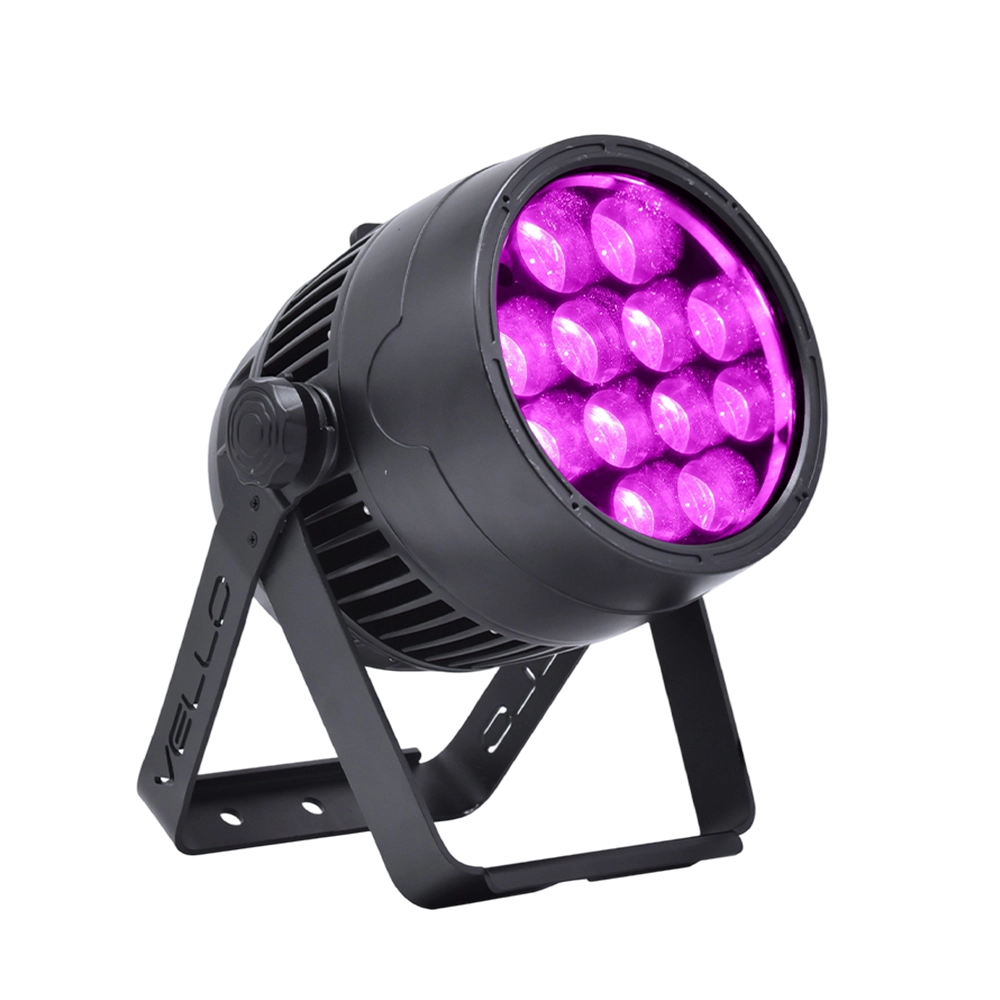
Stage LED Par Light LED ZOOMPAR 40
The Vello Zoom Par 40 IP is a powerful outdoor LED wash light equipped with 12x high-power 7-in-1 RGBACL LEDs. Designed for durability and rich color rendering, it features a wide motorized zoom (6°–50°), smooth dimming, and adjustable CTO presets (3200K–7500K), with 90+ CRI. With an IP66-rated die-cast aluminum body, it’s ideal for both indoor and outdoor applications, including stage lighting, architecture, live events, and installations.
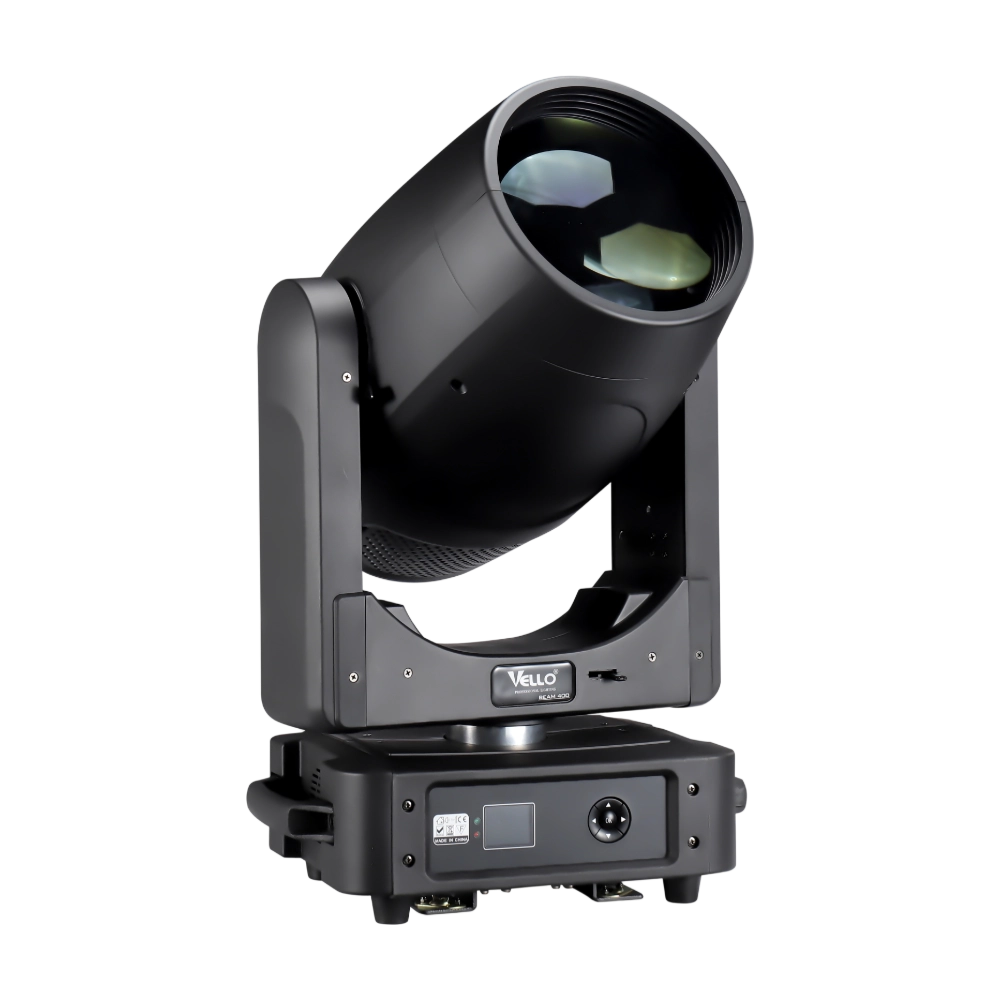
Moving Head Stage Light BEAM 400
BEAM400 is a 500W professional moving head beam powered by an OSRAM SIRIUS 371W discharge bulb, delivering a super-bright 1.8° sharp beam with impressive punch. It features 12 fixed gobos + open, a 14-color wheel, and a 16-facet circular rotating prism with multiple-facet effects, enabling dynamic aerial visuals. With 540° pan / 270° tilt, 16-bit movement resolution, and linear frost and focus, BEAM400 ensures precise and versatile performance. Comparable to traditional 750W moving heads, it combines high efficiency, smooth dimming, and reliable operation—ideal for concerts, tours, and large-scale stage productions.
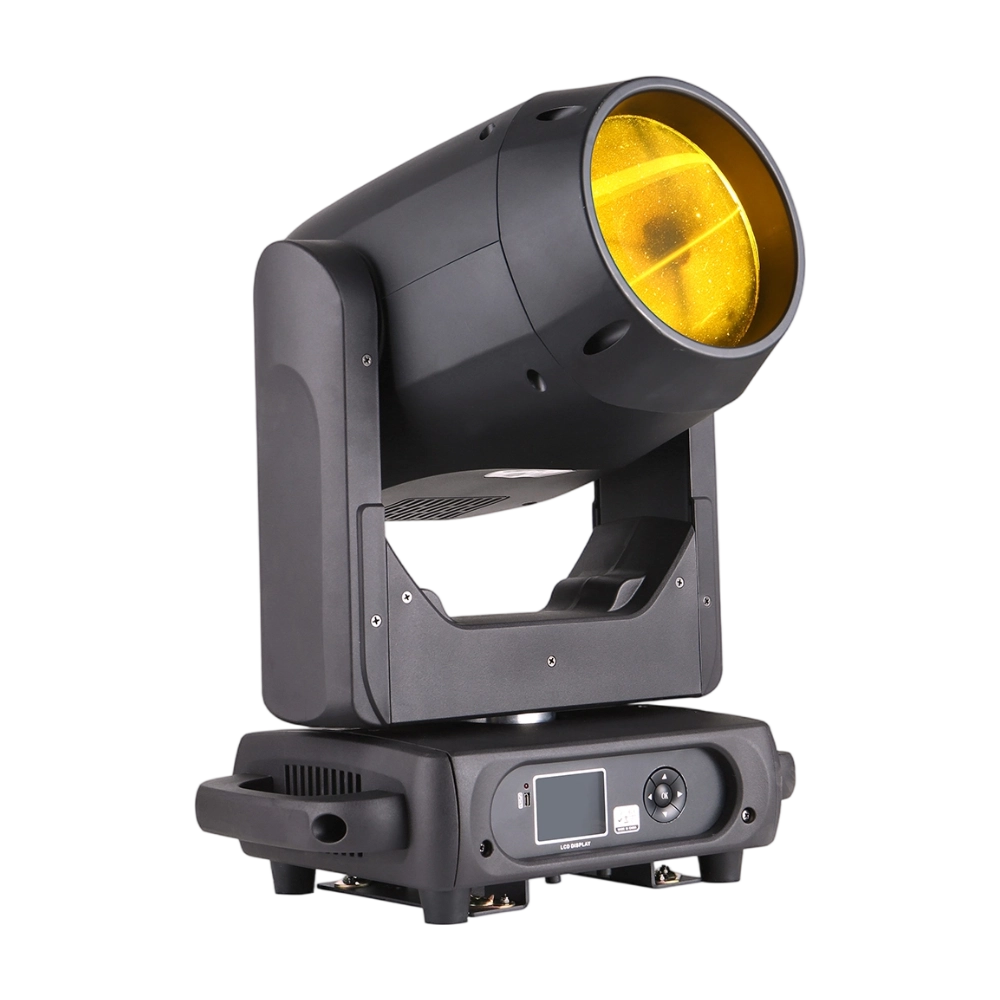
Moving Head Stage Light BEAM 360
BEAM360 is a 400W high-power moving head beam equipped with an OSRAM SIRIUS 311W discharge lamp, delivering a sharp 1.8° beam with super brightness. It features 14 colors + open, 12 fixed metal gobos + open, and dual prisms (8-facet circular + 8+16 multi-facet combination) for dynamic aerial effects. With 540° pan / 270° tilt, 16-bit movement, and linear frost and focus, BEAM360 ensures precision and versatility. Compact yet powerful, it rivals traditional 575W moving heads, making it ideal for concerts, clubs, and large-scale stage productions.
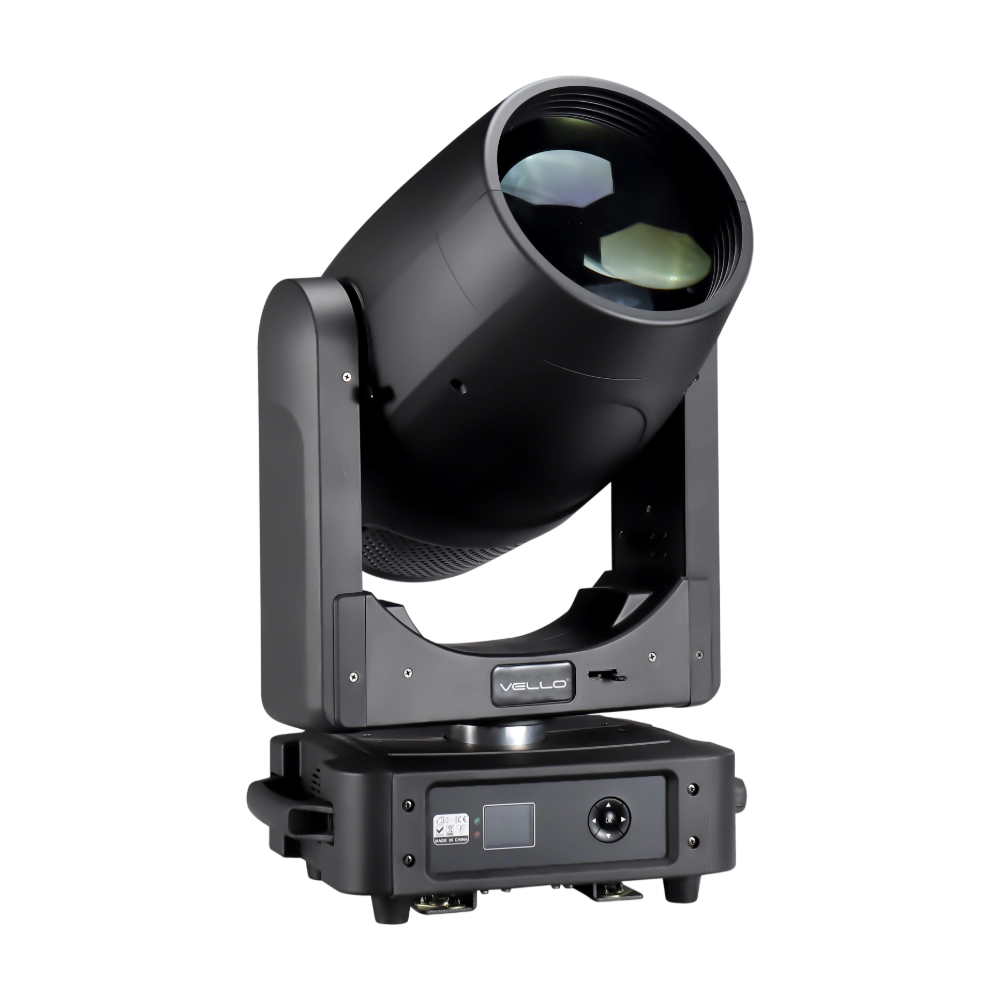
Moving Head Light BEAM 450
The BSW450 is a high-performance moving head fixture equipped with an original Osram 420W bulb, delivering exceptional brightness, precision, and versatility. Designed for professional stage applications, it seamlessly combines beam, spot, and wash functions in one compact unit, making it a powerful all-in-one lighting solution.
Over 20 Years of Innovation in Stage & Studio Lighting
© 2026 VELLO. All Rights Reserved. 粤ICP备20023734号
Join our socials
VELLO
Whatsapp: +8613902276704
Vello Lighting
VelloLights