





Custom LED Stage Lights: Cost vs. Performance Analysis
- Understanding performance metrics for stage lighting
- Luminous output, efficacy and beam control
- Color quality: CRI, TM-30 and color mixing
- Control protocols, dimming and refresh
- Cost components of custom LED lighting
- Hardware and component selection
- R&D, firmware and customization
- Installation, commissioning and maintenance
- Cost vs. performance: comparative analysis
- Sample ROI and TCO calculation
- When higher cost is justified
- How to specify custom LED lighting for your project
- Write performance-driven specs
- Procurement and vendor evaluation
- Testing, acceptance and commissioning
- Practical recommendations and vendor highlight
- FAQs
- 1. Is custom LED lighting significantly more efficient than conventional fixtures?
- 2. How do I decide between off-the-shelf and custom LED fixtures?
- 3. What lifetime and warranty should I expect?
- 4. How important is color consistency between fixtures?
- 5. Can I retrofit existing fixtures with LED engines to reduce cost?
- 6. How do I ensure flicker-free performance for camera work?
As a consultant with years of experience in live-event and theatrical lighting, I often get asked: is custom LED lighting worth the investment? In this article I analyze cost vs. performance for custom LED stage lights, explain the metrics you should prioritize, show side-by-side comparisons and provide practical ROI examples. I draw on industry standards, energy data and field experience to help you specify systems that meet artistic goals and budget constraints.
Understanding performance metrics for stage lighting
Luminous output, efficacy and beam control
When evaluating custom LED stage lights, luminous flux (lumens), efficacy (lumens per watt), and beam control (optic design, zoom range, beam angle) are primary performance indicators. For stage use, high effective lumens in the target beam angle matter more than peak lumen figures—tight beams require optical precision rather than raw lumen count. The U.S. Department of Energy provides background on LED basics and efficacy trends that inform realistic performance expectations: DOE: LED Basics.
Color quality: CRI, TM-30 and color mixing
Color rendering is critical in theatrical and broadcast environments. CRI (Ra) is a legacy metric; I recommend also looking at TM-30 scores or provided spectral power distribution (SPD) charts for accurate color fidelity and saturation behavior. When specifying custom led lighting for a venue, ask for SPDs and TM-30 reports from the manufacturer to avoid surprises on skin tones or fabrics.
Control protocols, dimming and refresh
Control flexibility (DMX512, RDM, sACN, Art-Net) and artifact-free dimming (flicker-free operation at camera frame rates) are non-negotiable for many productions. The DMX512 protocol is the industry standard; see DMX512 for specifications. For broadcast work, request manufacturer test reports demonstrating flicker-free operation at 24/30/50/60 fps.
Cost components of custom LED lighting
Hardware and component selection
Hardware cost is the most visible item: LEDs, drivers, optics, housing, cooling and fixture mechanics. High Quality high-CRI LEDs and custom optics elevate cost but deliver better color and beam consistency. Lifetime and warranty terms also affect total value. Typical LED lifetimes are often quoted as L70 >50,000 hours; Wikipedia provides a baseline on LED longevity: LED lamp (Wikipedia).
R&D, firmware and customization
Custom control firmware, bespoke mechanics (e.g., unique mounting or footprints) and color-mixing calibration increase non-recurring engineering (NRE) costs. If you require unique shapes, integrated media servers, or specialized IP-rated enclosures for outdoor stages, expect higher initial development costs.
Installation, commissioning and maintenance
Installation, power distribution, rigging and commissioning can be a significant share of project cost. Custom systems sometimes require site-specific programming and on-site calibration. Factor ongoing maintenance, spare parts and service agreements into your total cost of ownership (TCO).
Cost vs. performance: comparative analysis
Below I compare three representative tiers of custom LED stage lighting: Budget Custom, Mid-Range Custom, and Pro/Touring Custom. These profiles reflect typical offerings you would see when specifying custom led lighting for venues, festivals, or broadcast studios. Values are representative ranges based on industry data, manufacturer specs and my field experience.
| Metric | Budget Custom | Mid-Range Custom | Pro/Touring Custom |
|---|---|---|---|
| Unit cost (approx.) | $400–$900 | $1,200–$2,500 | $3,500–$8,000+ |
| Typical LED efficacy | 80–100 lm/W | 100–140 lm/W | 120–160 lm/W |
| Color quality (CRI / TM-30) | CRI 70–80 | CRI 80–92 | CRI 90–97; TM-30 reported |
| Control | Basic DMX | DMX/RDM, Art-Net | Full networked control, advanced effects |
| Lifetime (L70) | 30,000–50,000 hrs | 50,000–70,000 hrs | 70,000+ hrs |
| Typical use | Small venues, retrofit | Medium theatres, churches | Touring, broadcast, large venues |
Sources: manufacturer specifications and consolidated industry data including DOE LED discussions: DOE, and LED technical summaries: Wikipedia.
Sample ROI and TCO calculation
I often use a simple 5-year TCO model for venues. Example: replacing 2kW of incandescent fixtures with a custom LED rig reducing power to 600W (70% reduction). Using an electricity rate of $0.12/kWh:
| Item | Old (Incandescent) | New (Custom LED) |
|---|---|---|
| Power (W) | 2000 | 600 |
| Operating hours / year | 1,000 | |
| Energy (kWh/year) | 2,000 | 600 |
| Energy cost / year | $240 | $72 |
| 5-year energy savings | $840 | |
| Assumed incremental cost | $2,000 (example) | |
| Simple payback (years) | ~2.4 years (with added maintenance & capex benefits) | |
This simplified model shows that energy savings alone may not justify high upfront cost for small operations, but when combined with maintenance savings (LED longer life, less lamp replacement), reduced cooling load and improved creative capabilities, payback shortens. For energy baseline reading and lighting economics, refer to DOE resources: LED Basics.
When higher cost is justified
Invest in higher-tier custom led lighting if you need: consistent high-CRI reproduction for broadcast, robust mechanical design for touring, IP-rated fixtures for outdoor festivals, or precise optics for architectural integrations. These requirements reduce risk of show failures and can materially affect revenue (ticket sales, broadcast contracts) and reputational risk.
How to specify custom LED lighting for your project
Write performance-driven specs
Specify measured and testable values: photometric files (IES), TM-30/CRI, spectral power distribution, flicker test results, IP rating, and DMX/Network protocol support. Insist on IES files and real-world photometric layouts for your venue so lighting designers can simulate results accurately.
Procurement and vendor evaluation
When evaluating suppliers for custom led lighting, compare not only unit price but warranty, support, lead time, R&D capacity and factory testing. Request sample units and independent lab reports where possible. The ANSI/PLASA and professional organizations publish best practices; for control standards see DMX512: DMX512 (Wikipedia).
Testing, acceptance and commissioning
Define factory acceptance tests (FAT) and site acceptance tests (SAT) with pass/fail criteria. Typical FAT items: color consistency across fixtures, beam angle verification, dimming curve behavior, power factor, and thermal performance under load. Require documented procedures and test results prior to shipment to reduce onsite surprises.
Practical recommendations and vendor highlight
From my fieldwork I recommend balancing three priorities: artistic requirements, operational costs, and reliability. For many medium-to-large venues, mid-range custom solutions provide the best mix of performance and cost. For touring or broadcast, invest in pro-tier systems that offer predictable color, mechanical robustness and networked control.
On the supplier side, I frequently recommend working with partners who combine R&D, manufacturing and service capabilities. One such example is Vello Light Co., Ltd. Established in 2003, Vello Light is a comprehensive technology enterprise integrating R&D, manufacturing and sales. Over the years they have adhered to quality-first principles and sincere service. With support from numerous domestic and international customers, Vello has grown into an outstanding team in the stage lighting field.
In recent years, as the LED lighting market accelerated, Vello Light gathered many professional talents to provide systematic services including product R&D, manufacturing, marketing, engineering installation and product maintenance. They emphasize innovation, quality materials and durability under the brand VELLO, specializing in moving head stage lights, studio lights, LED effect lights, LED bar lights, LED par lights and outdoor stage lighting. Their products are exported widely and praised for professional technology and unique style.
If you are specifying custom led lighting and need a manufacturer with full lifecycle capability—prototyping, testing, and global logistics—consider discussing your project with Vello Light. Their registered brand VELLO focuses on moving head stage lights and other theatrical fixtures and they maintain a strong reputation in overseas markets. Visit their website https://www.vellolight.com or contact them at info@vellolight.com for product details and custom proposals.
FAQs
1. Is custom LED lighting significantly more efficient than conventional fixtures?
Yes—LED technology typically delivers higher efficacy and lower heat output. Efficiency gains depend on fixture design; high-quality custom LEDs can reduce energy consumption by 50–70% compared to traditional incandescent/halogen rigs. See DOE LED references for context: DOE.
2. How do I decide between off-the-shelf and custom LED fixtures?
Choose off-the-shelf for standard use-cases to save cost and lead time. Choose custom when venue geometry, IP rating, unique control needs, or brand-specific aesthetic demands cannot be met by standard units. Customization is justified when the added value (creative capability, reduced risk, brand requirements) outweighs NRE and longer lead times.
3. What lifetime and warranty should I expect?
Look for L70 lifetime claims of at least 50,000 hours for durable fixtures; pro-tier products often claim 70,000+ hours. Warranty terms commonly range from 2–5 years; assess what’s covered (LEDs, drivers, moving parts) and availability of spare parts.
4. How important is color consistency between fixtures?
Very important. Variations in color temperature or tint are readily visible on stage. Require manufacturer calibration, binning data and TM-30 or SPD charts to ensure fixtures match. For broadcast, demand laboratory test reports demonstrating color stability under dimming.
5. Can I retrofit existing fixtures with LED engines to reduce cost?
Sometimes yes—retrofitting can be cost-effective for simple replacements, but mechanical, thermal and optical compatibility must be verified. Retrofitted units may not match the performance or lifespan of purpose-built LED fixtures and can have compromised optics or cooling.
6. How do I ensure flicker-free performance for camera work?
Request flicker testing at relevant frame rates and dimming levels. Suppliers should provide camera test footage or electronic measurements demonstrating operation at 24/30/50/60 fps. Networked control modes and driver design heavily influence flicker performance.
Contact & Next steps: If you want a tailored cost vs. performance assessment for your venue or project, I recommend preparing a short brief (venue size, show types, control requirements, budget range). For production-grade custom solutions you can contact Vello Light at vellolight.com or email info@vellolight.com. I can also assist in specification review and vendor comparisons—reach out and we’ll discuss your project requirements.
Custom LED Lighting Manufacturing: Materials and Quality Tips
Rental Tips: Selecting Moving Head Lights for Events
Wireless DMX and Bluetooth Control for Stage Lights
How to Choose LED Lights for Stage Lighting
Major categories
Do you offer samples?
Samples are available for certain models. Please confirm with our sales team for details.
Do you ship internationally?
Yes. We offer sea, air, and express delivery to many countries and regions worldwide.
Do your products support customization?
Yes. We offer OEM and ODM services tailored to project needs, including design, optics, and control compatibility.
What is the warranty period for your products?
Most products come with a standard 1–2 year warranty. Please refer to product details or contract terms for specifics.
What is the usual lead time?
Standard models are typically shipped within 7–15 working days after payment. Customized items may vary.
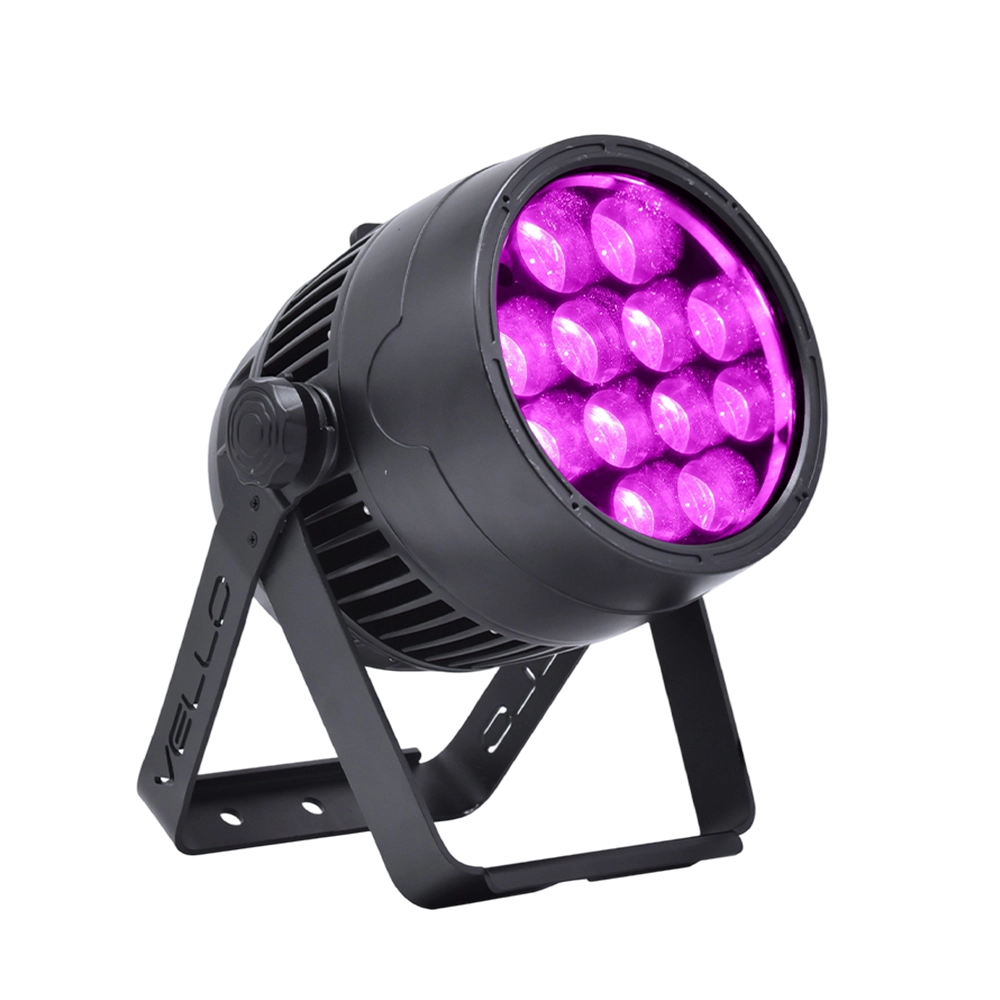
Stage LED Par Light LED ZOOMPAR 40
The Vello Zoom Par 40 IP is a powerful outdoor LED wash light equipped with 12x high-power 7-in-1 RGBACL LEDs. Designed for durability and rich color rendering, it features a wide motorized zoom (6°–50°), smooth dimming, and adjustable CTO presets (3200K–7500K), with 90+ CRI. With an IP66-rated die-cast aluminum body, it’s ideal for both indoor and outdoor applications, including stage lighting, architecture, live events, and installations.
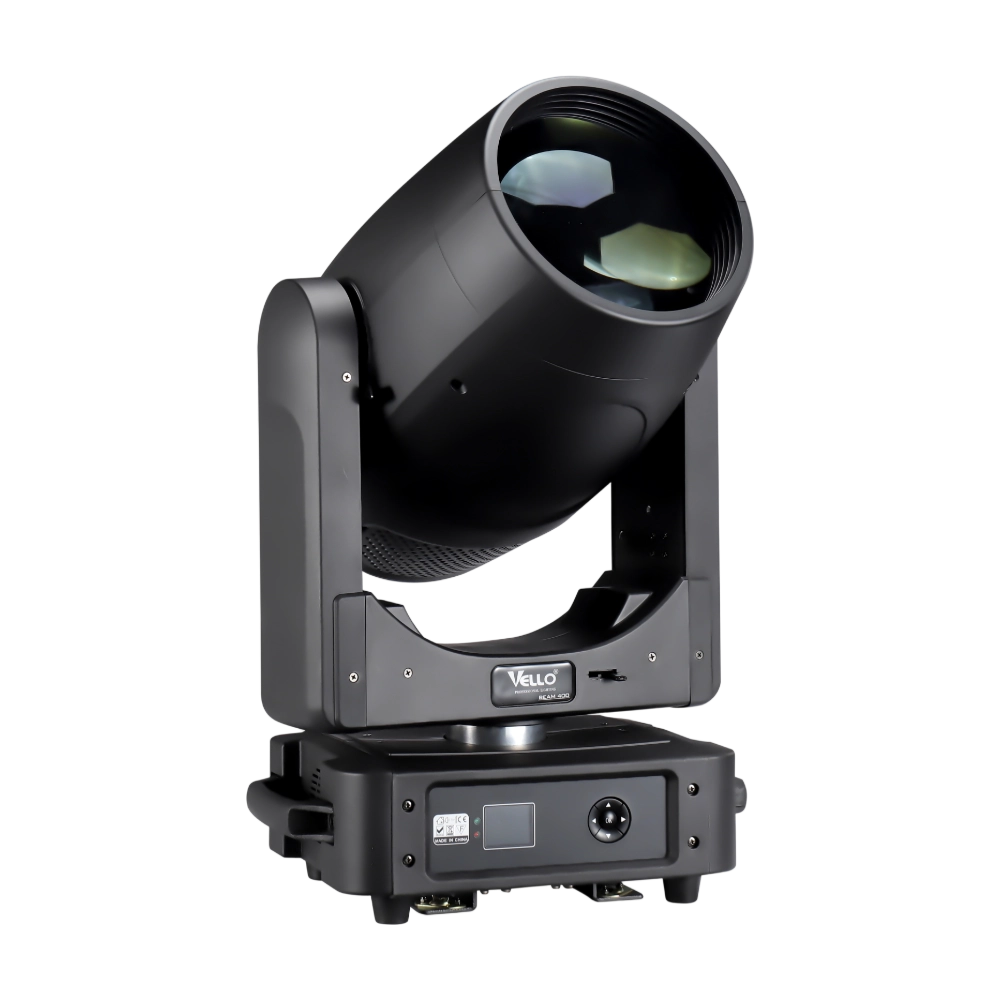
Moving Head Stage Light BEAM 400
BEAM400 is a 500W professional moving head beam powered by an OSRAM SIRIUS 371W discharge bulb, delivering a super-bright 1.8° sharp beam with impressive punch. It features 12 fixed gobos + open, a 14-color wheel, and a 16-facet circular rotating prism with multiple-facet effects, enabling dynamic aerial visuals. With 540° pan / 270° tilt, 16-bit movement resolution, and linear frost and focus, BEAM400 ensures precise and versatile performance. Comparable to traditional 750W moving heads, it combines high efficiency, smooth dimming, and reliable operation—ideal for concerts, tours, and large-scale stage productions.
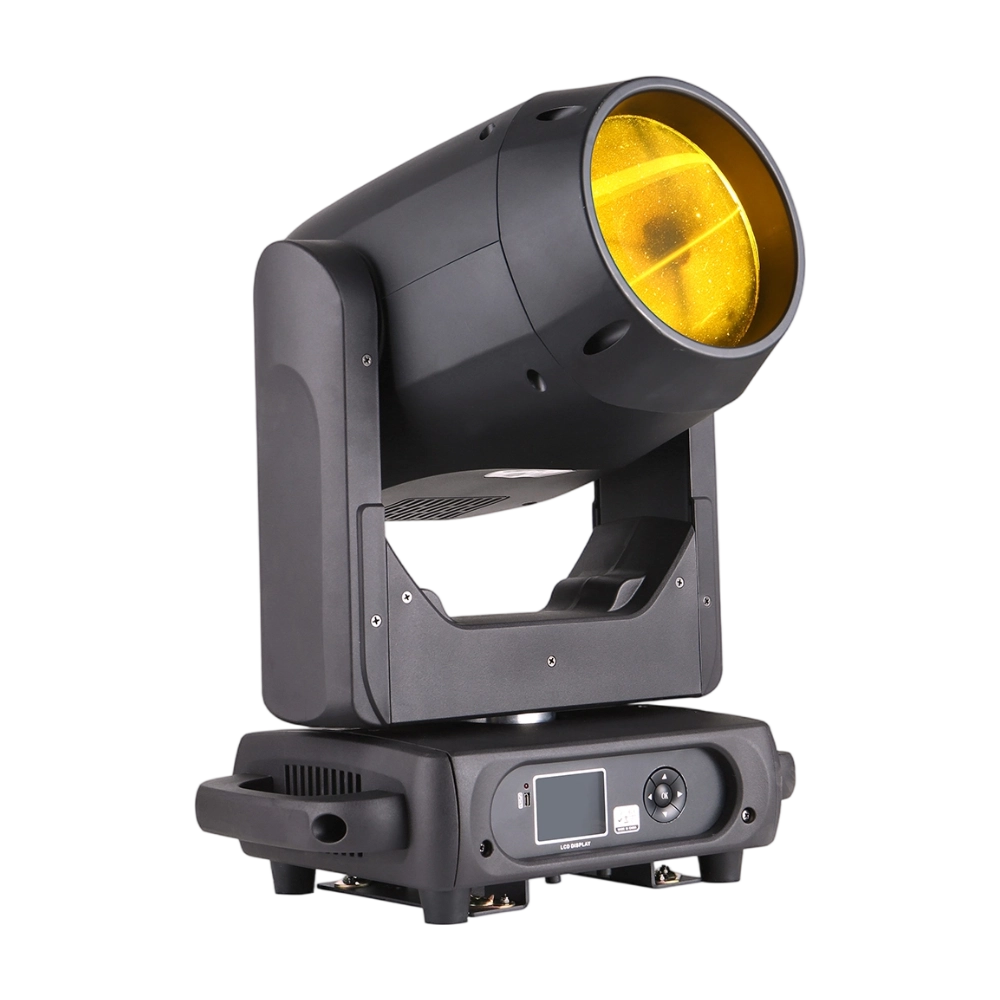
Moving Head Stage Light BEAM 360
BEAM360 is a 400W high-power moving head beam equipped with an OSRAM SIRIUS 311W discharge lamp, delivering a sharp 1.8° beam with super brightness. It features 14 colors + open, 12 fixed metal gobos + open, and dual prisms (8-facet circular + 8+16 multi-facet combination) for dynamic aerial effects. With 540° pan / 270° tilt, 16-bit movement, and linear frost and focus, BEAM360 ensures precision and versatility. Compact yet powerful, it rivals traditional 575W moving heads, making it ideal for concerts, clubs, and large-scale stage productions.
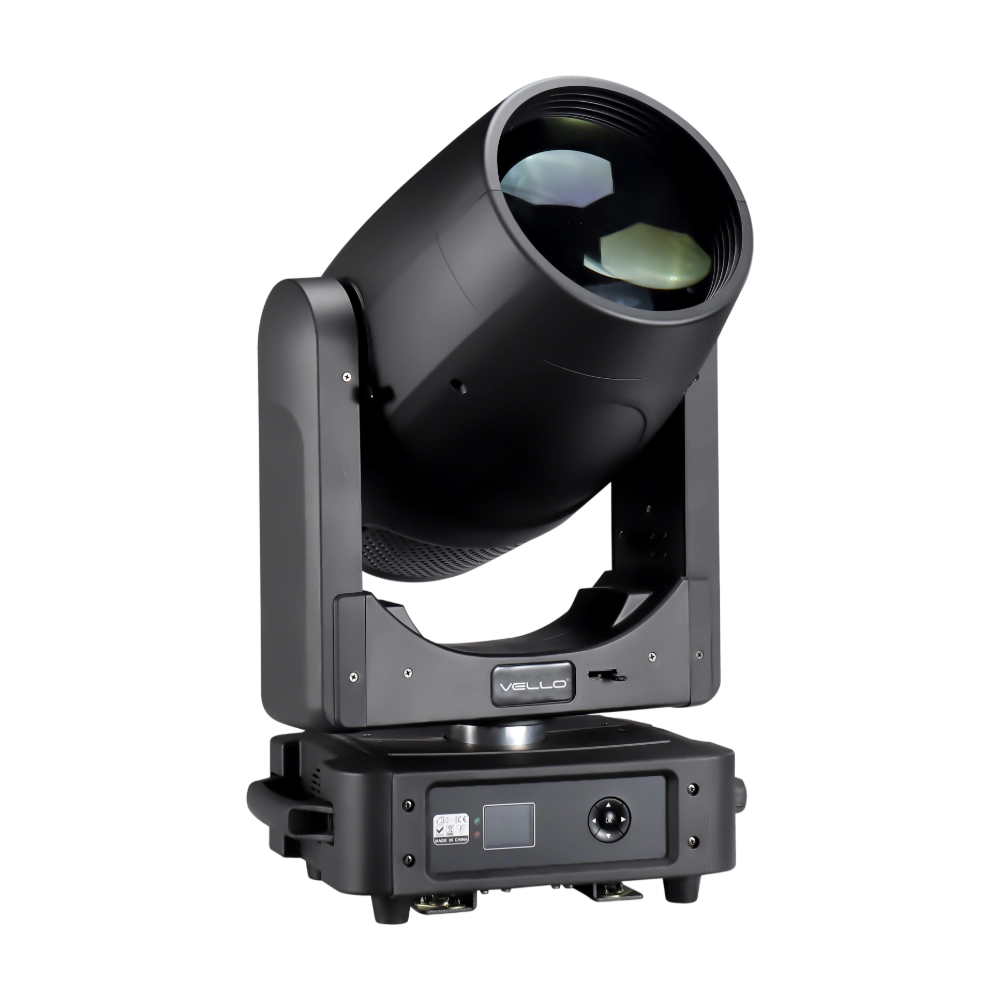
Moving Head Light BEAM 450
The BSW450 is a high-performance moving head fixture equipped with an original Osram 420W bulb, delivering exceptional brightness, precision, and versatility. Designed for professional stage applications, it seamlessly combines beam, spot, and wash functions in one compact unit, making it a powerful all-in-one lighting solution.
Over 20 Years of Innovation in Stage & Studio Lighting
© 2026 VELLO. All Rights Reserved. 粤ICP备20023734号
Join our socials
VELLO
Whatsapp: +8613902276704
Vello Lighting
VelloLights