





Custom LED Lighting Cost: Pricing, Quotes, and Budget Tips
- Understanding cost drivers for a custom lighting project
- What “custom” really means
- Primary cost components
- Standards, regulations and why they matter
- Typical price ranges and a comparative table
- How I estimate cost ranges
- Cost comparison table: small vs. medium vs. large projects
- Example: energy and lifecycle cost comparison
- How to request and compare quotes
- What a professional quote should include
- Key technical questions to ask suppliers
- How to evaluate total cost of ownership (TCO)
- Budgeting and procurement tips to reduce cost without sacrificing quality
- Value engineering and quantity leverage
- Prototype strategy
- Maintenance, spares and warranties
- Supplier selection: technical capabilities, reputation, and case studies
- Technical capabilities I check
- Reputation, references and compliance
- Why manufacturing origin and traceability matter
- Case example and ROI illustration
- Simple ROI example
- Real-world note
- About Vello Light Co., Ltd. and how we can help
- Who we are
- Our capabilities and product range
- Why choose VELLO
- FAQ — Common questions about custom LED lighting cost
- 1. How much does a custom LED fixture cost?
- 2. Are LEDs always more expensive over the lifecycle?
- 3. How long does a custom LED project take from concept to delivery?
- 4. What warranty and support should I expect?
- 5. How do I ensure my fixtures meet safety and performance standards?
- 6. What should I include in an RFP to get accurate quotes?
I’ve designed and specified hundreds of custom LED lighting systems for stages, studios, and architectural projects. In this article I’ll walk you through the real cost drivers behind custom led lighting, show realistic price ranges, explain what should be included in a professional quote, and give practical budgeting tips so you can make confident buying decisions. I’ll also explain how to evaluate suppliers, what technical standards matter, and how to estimate energy savings and lifecycle cost. Where possible I cite authoritative sources to support key points and provide a sample cost comparison table for small, medium, and large projects.
Understanding cost drivers for a custom lighting project
What “custom” really means
Custom led lighting may mean a lot of different things: a bespoke fixture design, modified optics or color temperatures, custom housings and finishes, integration with DMX/RDM or Art-Net control, or site-specific engineering and installation. The more customization you request—mechanical changes, bespoke optics, firmware adjustments, or certified outdoor ratings—the higher the cost. I always start by clarifying scope: are you adapting an existing product family or creating a ground-up fixture?
Primary cost components
Custom LED projects typically include the following cost components:
- Design & engineering fees (mechanical, optical, thermal, electrical)
- Prototyping and tooling (for bespoke housings or connectors)
- Components and BOM (LED engines, drivers, optics, control electronics)
- Manufacturing and assembly (labor, QA, conformal coating)
- Controls & software (DMX/Art-Net, wireless, apps)
- Testing, certifications, and compliance (CE, RoHS, IP rating tests)
- Logistics, packaging, and on-site installation
These components explain why a seemingly simple change—such as a special beam angle or a different connector—can produce a significant price variance.
Standards, regulations and why they matter
Certifications and standards affect design time and testing costs but are essential for safety and international shipping. For example, industry guidance from the Illuminating Engineering Society (IES) and regulatory norms such as ISO or regional directives (CE for EU) define testing and performance benchmarks. For LED fundamentals and lifetime considerations, the U.S. Department of Energy provides practical guidance on energy and lifetime characteristics (U.S. DOE), and for component basics you can refer to Wikipedia: Light-emitting diode.
Typical price ranges and a comparative table
How I estimate cost ranges
Cost depends on quantity, complexity, and required certifications. Below I present typical USD ranges I’ve observed across stage and architectural lighting projects. These are realistic market estimates intended to help you budget and compare quotes; actual supplier pricing will vary by vendor, region, and volume.
Cost comparison table: small vs. medium vs. large projects
| Item | Small project (1–10 fixtures) | Medium project (10–100 fixtures) | Large project (100+ fixtures) |
|---|---|---|---|
| Design & engineering | $500–$3,000 | $2,000–$10,000 | $10,000–$50,000+ |
| Prototype & tooling | $1,000–$5,000 | $5,000–$30,000 | $30,000–$200,000 |
| Per-fixture manufacturing cost | $80–$700 | $60–$500 | $40–$300 |
| Controls & integration | $200–$1,500 | $1,000–$10,000 | $5,000–$100,000+ |
| Installation & commissioning | $300–$2,000 | $2,000–$20,000 | $10,000–$200,000+ |
| Typical total (ballpark) | $2,000–$15,000 | $15,000–$200,000 | $200,000–$2,000,000+ |
Notes: per-fixture costs vary widely depending on whether you choose moving head stage lights, LED wash lights, or custom outdoor housings. For example, a compact studio LED fixture can be under $150, while a high-end moving head can cost several thousand dollars per unit.
Example: energy and lifecycle cost comparison
LED fixtures often cost more upfront than generic fixtures, but energy and maintenance savings create strong lifecycle ROI. The U.S. DOE reports substantial energy savings for LED replacements; LEDs can use 50–75% less energy than older lighting and have much longer rated lifetimes (U.S. DOE: LED lighting).
How to request and compare quotes
What a professional quote should include
When I evaluate vendor quotes, I expect the following line items so I can compare offers apples-to-apples:
- Detailed BOM per fixture (LED type, wattage, driver, optics)
- Unit price and quantity breaks
- Estimated lead times (prototype, sample, full production)
- Warranty terms and MTBF or L70 lifetime figures
- Compliance and test reports (CE, RoHS, IP rating documentation)
- Installation, commissioning, and training costs
- Shipping, duties, and any import-related charges
- Payment terms and change-order policy
A quote missing these elements is often hiding downstream costs or unclear responsibilities.
Key technical questions to ask suppliers
Ask suppliers for specific performance data, including:
- Luminous efficacy (lm/W) and spectral data (CRI, CCT)
- Beam angles and optical diagrams
- Driver specifications and dimming compatibility (0–10V, DMX, RDM)
- Thermal management strategy and maximum case temperatures
- Lifetime metrics (L70 at specified ambient conditions)
Insist upon test reports or reference installations—real-world performance matters more than marketing numbers.
How to evaluate total cost of ownership (TCO)
I recommend calculating a 5–10 year TCO that includes initial cost, energy consumption (kWh), maintenance and lamp replacement, and disposal. Use your local electricity rate to estimate energy costs. For energy assumptions, see the U.S. DOE guidance on LED energy performance.
Budgeting and procurement tips to reduce cost without sacrificing quality
Value engineering and quantity leverage
Keep core performance targets but remove unnecessary bespoke features. For example, choose a standard housing but specify custom optics or color calibration. Increasing order quantities or committing to a production schedule often reduces per-unit cost dramatically due to economies of scale.
Prototype strategy
Invest in a single prototype early to validate optics, thermal behavior, and control integration. A well-executed prototype reduces risk and expensive revisions during production. I normally allocate 5–15% of the expected project budget for prototyping and early testing.
Maintenance, spares and warranties
Neglecting spares can be costly. Include a recommended spares kit in your quote (drivers, power supplies, control modules) and negotiate warranty period and response times. Well-established manufacturers often provide extended support and local service options, which is especially important for touring or mission-critical installations.
Supplier selection: technical capabilities, reputation, and case studies
Technical capabilities I check
I evaluate manufacturers on mechanical and optical R&D capabilities, firmware/control expertise, and test facilities. Look for suppliers who perform in-house thermal testing, photometric testing, and have EMC/EMI test access. Industry bodies such as the IES publish useful guidance on performance metrics.
Reputation, references and compliance
Ask for case studies similar to your project. Verify certifications and request recent compliance documents. Cross-check references and visit installations if possible. Publicly available manufacturer history and product registrations matter—these are signals of long-term support.
Why manufacturing origin and traceability matter
Component traceability reduces risk from counterfeit parts or inconsistent batches. Suppliers with established manufacturing processes and quality systems (ISO-aligned) produce more consistent results. If you need export documentation, a supplier familiar with international shipping and customs is invaluable.
Case example and ROI illustration
Simple ROI example
Suppose you replace 20 legacy 400W fixtures with custom LED fixtures consuming 150W each. At 10 hours/day and $0.12/kWh, annual energy cost savings are:
- Legacy: 20 × 400W × 10h × 365 × $0.12 = $35,040/year
- LED: 20 × 150W × 10h × 365 × $0.12 = $13,140/year
- Annual savings ≈ $21,900
With an incremental cost of $2,000 per LED fixture (vs. legacy), the additional capital is $40,000; payback ≈ 1.8 years (ignoring maintenance savings). DOE resources provide comparable energy savings guidance: U.S. DOE.
Real-world note
Actual savings will vary by duty cycle, local electricity rates, and maintenance needs. For stage lighting with varied operation and high-performance optical needs, factor in the value of improved color rendering and control flexibility—intangible benefits that affect audience experience and production value.
About Vello Light Co., Ltd. and how we can help
Who we are
Vello Light Co., Ltd., established in 2003, is a comprehensive technology enterprise integrating R&D, manufacturing, and sales. Over the years, we have consistently adhered to the principles of quality first and sincere service. With the support and help of numerous customers both domestically and internationally, we have continued to grow and develop, gradually becoming a unique and outstanding team in our field.
Our capabilities and product range
In recent years, with the rapid development of the LED lighting market, Vello Light has gathered a large number of professional talents to provide comprehensive and systematic services, including product R&D, manufacturing, marketing, engineering installation, and product maintenance. Through the joint efforts of Vello people, we remain true to our original aspirations and persevere in innovation, leveraging our unique advantages to stand out in the fierce competition. Currently, our products are exported both domestically and internationally and have a strong brand reputation, especially in overseas markets. VELLO is our registered brand, specializing in moving headlights, LED wash lights, theatrical lights, studio lights, LED effect light, Led Bar Lights, Led Par Light, and outdoor stage lighting. Our products are highly praised and loved by many customers for their professional technology, unique style, high-quality materials, and durability.
Why choose VELLO
From my experience working with manufacturers, VELLO stands out for clear engineering discipline, strong R&D in optical and thermal management, and a proven product line of stage lighting. VELLO’s strengths include:
- Comprehensive R&D and in-house prototyping
- Full production capabilities with export experience
- Product range covering moving head stage lights, wash lights, studio lights, LED effect lights, LED bar and par lights, and outdoor stage lighting
- Established quality and after-sales systems
Our vision is to become a world-leading stage lighting manufacturer. For project inquiries, visit https://www.vellolight.com or email info@vellolight.com.
FAQ — Common questions about custom LED lighting cost
1. How much does a custom LED fixture cost?
It depends on complexity and quantity. Simple custom fixtures can be under $100/unit in large volumes, while high-performance moving heads or IP-rated outdoor fixtures with bespoke optics can cost several thousand dollars per unit. See the cost comparison table above for ranges.
2. Are LEDs always more expensive over the lifecycle?
No. While upfront costs may be higher, LEDs generally reduce energy and maintenance expenses, producing favorable lifecycle costs. Use a TCO calculation over 5–10 years to compare. The U.S. Department of Energy provides helpful baseline data (DOE: LED lighting).
3. How long does a custom LED project take from concept to delivery?
Small customization projects (adapting an existing product) can take 6–12 weeks. Ground-up designs with prototyping, testing and certifications typically take 3–9 months depending on certifications and tooling.
4. What warranty and support should I expect?
Professional manufacturers usually offer 2–5 year warranties on fixtures and drivers; many offer extended support contracts. Confirm warranty scope (components covered, response time, on-site support) in the quote.
5. How do I ensure my fixtures meet safety and performance standards?
Require test reports and certifications (CE, RoHS, IP rating tests). Ask suppliers to provide photometric reports and L70 lifetime data under specified ambient conditions. Industry guidance from IES and compliance with ISO processes are good indicators.
6. What should I include in an RFP to get accurate quotes?
Include desired photometrics (lumens, beam angle, CRI/CCT), control protocols (DMX/RDM/Art-Net), environmental requirements (IP rating, ingress/temperature), target quantities and lead-time, and required certifications. Ask for BOM, sample/unit pricing with volume breaks, and clear warranty terms.
If you’d like, I can help draft an RFP template tailored to your project or review incoming quotes to identify hidden costs and technical risks. For product information, sample requests, or project quotes, contact Vello Light Co., Ltd. at info@vellolight.com or visit vellolight.com. I’m available to consult on scope definition, TCO calculations, and supplier evaluation so your custom led lighting project delivers on performance and budget.
Certifications and Compliance for Outdoor LED Lighting
Budget Guide: Buying Affordable LED Stage Lights
Energy Efficiency and ROI of LED Moving Head Light
How to Choose the Best LED Stage Lights for Live Events
Major categories
What is the usual lead time?
Standard models are typically shipped within 7–15 working days after payment. Customized items may vary.
What is the warranty period for your products?
Most products come with a standard 1–2 year warranty. Please refer to product details or contract terms for specifics.
Do your products support customization?
Yes. We offer OEM and ODM services tailored to project needs, including design, optics, and control compatibility.
Do you ship internationally?
Yes. We offer sea, air, and express delivery to many countries and regions worldwide.
Do you offer samples?
Samples are available for certain models. Please confirm with our sales team for details.
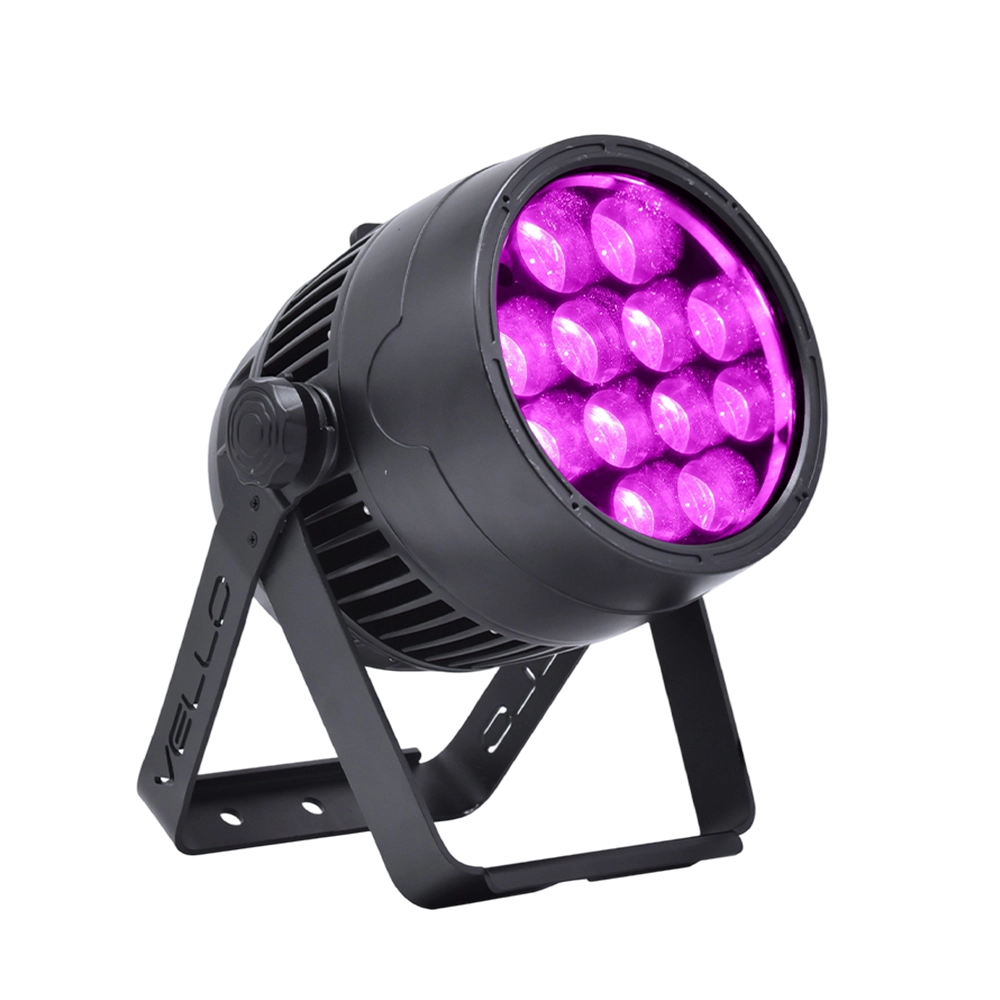
Stage LED Par Light LED ZOOMPAR 40
The Vello Zoom Par 40 IP is a powerful outdoor LED wash light equipped with 12x high-power 7-in-1 RGBACL LEDs. Designed for durability and rich color rendering, it features a wide motorized zoom (6°–50°), smooth dimming, and adjustable CTO presets (3200K–7500K), with 90+ CRI. With an IP66-rated die-cast aluminum body, it’s ideal for both indoor and outdoor applications, including stage lighting, architecture, live events, and installations.
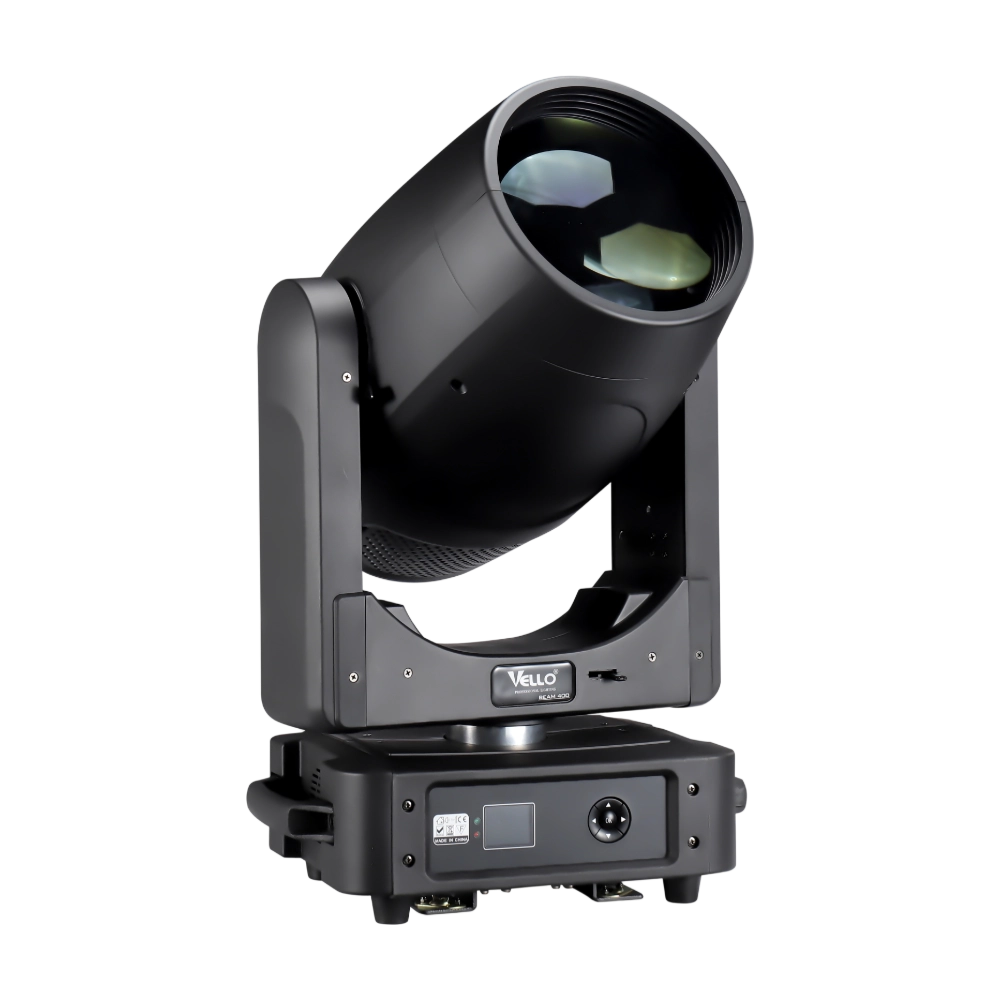
Moving Head Stage Light BEAM 400
BEAM400 is a 500W professional moving head beam powered by an OSRAM SIRIUS 371W discharge bulb, delivering a super-bright 1.8° sharp beam with impressive punch. It features 12 fixed gobos + open, a 14-color wheel, and a 16-facet circular rotating prism with multiple-facet effects, enabling dynamic aerial visuals. With 540° pan / 270° tilt, 16-bit movement resolution, and linear frost and focus, BEAM400 ensures precise and versatile performance. Comparable to traditional 750W moving heads, it combines high efficiency, smooth dimming, and reliable operation—ideal for concerts, tours, and large-scale stage productions.
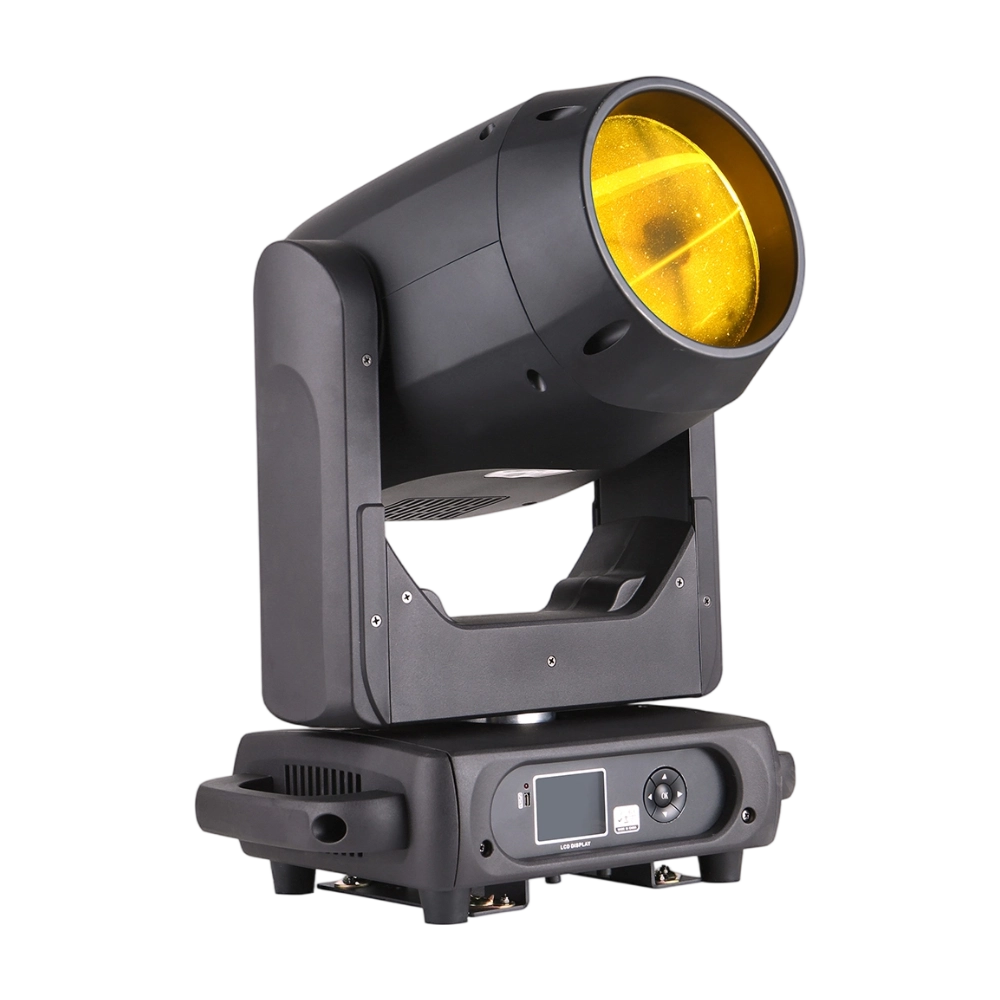
Moving Head Stage Light BEAM 360
BEAM360 is a 400W high-power moving head beam equipped with an OSRAM SIRIUS 311W discharge lamp, delivering a sharp 1.8° beam with super brightness. It features 14 colors + open, 12 fixed metal gobos + open, and dual prisms (8-facet circular + 8+16 multi-facet combination) for dynamic aerial effects. With 540° pan / 270° tilt, 16-bit movement, and linear frost and focus, BEAM360 ensures precision and versatility. Compact yet powerful, it rivals traditional 575W moving heads, making it ideal for concerts, clubs, and large-scale stage productions.
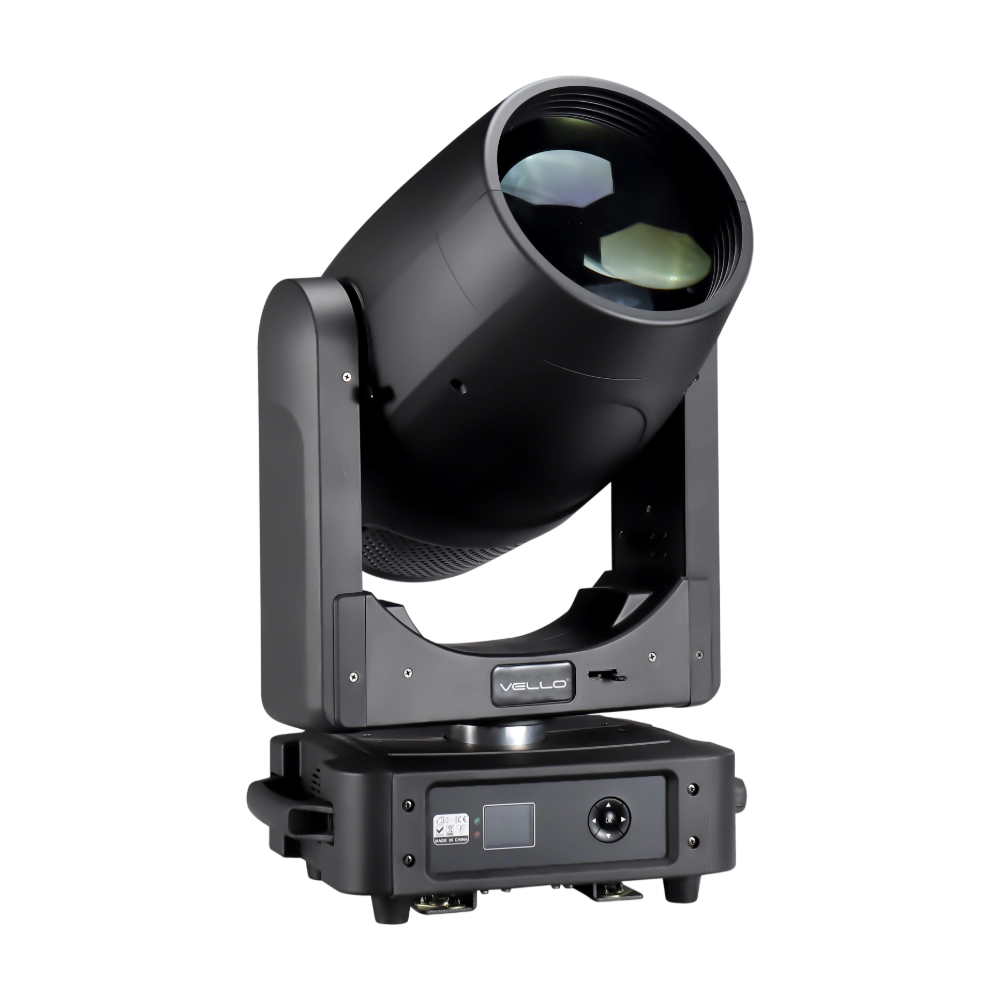
Moving Head Light BEAM 450
The BSW450 is a high-performance moving head fixture equipped with an original Osram 420W bulb, delivering exceptional brightness, precision, and versatility. Designed for professional stage applications, it seamlessly combines beam, spot, and wash functions in one compact unit, making it a powerful all-in-one lighting solution.
Over 20 Years of Innovation in Stage & Studio Lighting
© 2026 VELLO. All Rights Reserved. 粤ICP备20023734号
Join our socials
VELLO
Whatsapp: +8613902276704
Vello Lighting
VelloLights