





How to Specify Custom LED Lighting for Concert Venues
- Designing Stage Illumination: A Practical Guide
- Assess the Venue and Define Performance Goals
- 1. Understand the space and sightlines
- 2. Define lighting objectives and target metrics
- 3. Establish operational and commercial constraints
- Technical Specification: Photometry, Color, Optics and Protocols
- 1. Photometric targets and lumen budgeting
- 2. Color quality: CRI, TLCI and tunability
- 3. Beam control, optics and effects
- Fixture Selection, Power and Thermal Management
- 1. Choose fixture families and vendor verification
- 2. Power distribution, redundancy and harmonics
- 3. Thermal design and serviceability
- Control Systems, Integration and Operational Considerations
- 1. Control architecture and protocols
- 2. Networking, security and monitoring
- 3. Testing, commissioning and documentation
- Procurement, Lifecycle Costs and Comparative Fixture Table
- 1. Total cost of ownership and warranty considerations
- 2. Supply chain and lead time management
- 3. Fixture comparison (typical values)
- Vendor Selection and Customization: Why Choose a Specialized Manufacturer
- 1. Customization trade-offs and benefits
- 2. Evaluating vendors: quality, service and reputation
- 3. VELLO: an example of a comprehensive partner
- Commissioning, Maintenance and Future-proofing
- 1. Commissioning checklist
- 2. Maintenance schedules and spare strategy
- 3. Scalability and upgrades
- FAQ
- Q1: How many lumens do I need for a concert stage?
- Q2: Should I prioritize CRI or TLCI?
- Q3: Are LED fixtures prone to flicker on broadcast cameras?
- Q4: How do I plan power distribution for large moving head rigs?
- Q5: What warranty and service terms should I demand?
- Q6: Is it better to buy off-the-shelf or fully custom fixtures?
- References
Designing Stage Illumination: A Practical Guide
Specifying custom LED lighting for a concert venue requires blending artistic intent, technical performance, operational reliability and commercial constraints. Whether you’re upgrading an arena, outfitting a club, or building a new concert hall, a disciplined specification process will reduce risk, optimize capital and operating costs, and ensure the lighting system supports production, broadcast and audience experience. This guide walks you step-by-step through the key decisions—site assessment, photometric goals, fixture choice, control systems, power and thermal design, testing and lifecycle planning—while embedding such as custom led lighting solutions, LED stage lights procurement and maintenance planning.
Assess the Venue and Define Performance Goals
1. Understand the space and sightlines
Begin with a site survey: stage dimensions, ceiling heights, audience sightlines, rigging points, balcony overhangs, and fixed architectural features. Document clearances and load ratings for trusses and points. These constraints determine which fixtures—moving head stage lights, LED wash lights, LED bars or outdoor stage lighting—are feasible. Accurate site data reduces costly change orders during installation.
2. Define lighting objectives and target metrics
Work with stakeholders (production directors, broadcast engineers, artistic directors) to set quantifiable goals: target horizontal/vertical illuminance (lux), color temperature ranges (CCT), CRI/tunability needs, beam spread, pixel density for effects, and DMX/Art-Net/ sACN integration. For example, broadcast-friendly concerts often require higher and more consistent lux levels and tighter color control than club shows. These goals drive fixture selection and control strategies for your custom led lighting spec.
3. Establish operational and commercial constraints
Document budget, expected show types, uptime requirements, maintenance staffing, and preferred warranty terms. Include energy targets (kWh/year) and any sustainability or local code requirements. For venues expecting long runs and frequent changeovers, prioritize fixtures with high reliability and easy serviceability to lower total cost of ownership.
Technical Specification: Photometry, Color, Optics and Protocols
1. Photometric targets and lumen budgeting
Translate lux targets to fixture lumen requirements. A practical formula: Required lumen per fixture = (Target lux × Stage area) ÷ (Number of fixtures × Utilization factor × Maintenance factor). Typical factors: utilization 0.5–0.8 (depending on optics and room), maintenance 0.7–0.9 (aging, dirt). Always validate with photometric simulation (Wysiwyg, Capture, AGi32) and request IES files from manufacturers (IES LM-63) to simulate real-world performance.
2. Color quality: CRI, TLCI and tunability
Specify CRI and TLCI minimums based on use: for broadcast and photography, require TLCI ≥ 90 and CRI ≥ 90 across intended CCT range (2700–6500K if full tunability). For purely audience illumination where artistic color mixing is used, prioritize RGB/ARGB or multi-chip white engines with precise calibration. Insist on chromaticity coordinates and SDCM (MacAdam ellipse) data in vendor datasheets.
3. Beam control, optics and effects
Select beam angle, zoom range, and beam shaping according to programming needs. Moving head stage lights provide narrow beams (2°–25°) and gobos, whereas LED wash lights and par lights give broader coverage (20°–120°). For video-mapped effects and pixel control, specify pixel pitch, refresh rate and compatible protocols (Art-Net, sACN, DALI or manufacturer-specific). Ensure frame rates exceed camera shutter requirements for broadcast (verify PWM frequencies to avoid flicker).
Fixture Selection, Power and Thermal Management
1. Choose fixture families and vendor verification
Map requirements to fixture classes: moving heads for aerial effects, LED wash lights for even stage coverage, LED bar lights and pixel strips for set edges, LED par lights for accent, and outdoor-rated units for exterior rigging. Create a short-list of vendors and request complete technical data: lumen output, efficacy (lm/W), power draw, IP rating, thermal specs, IES files, weight, rigging points, and MTBF/expected lumen maintenance (L70). For custom led lighting, negotiate variants—lens, firmware, and connector options—early to lock lead times and pricing.
2. Power distribution, redundancy and harmonics
Design power distribution with headroom: assess inrush, continuous load, and neutral imbalance. Specify soft-start where needed, and include redundant feeds for critical circuits. Consider active power factor correction (PFC) and specify maximum total harmonic distortion (THD) thresholds if power quality is a concern. For outdoor stage lighting, specify local GFCI protection and surge protection devices (SPDs).
3. Thermal design and serviceability
LEDs perform best within specified junction temperatures. Confirm fixture thermal management—heat sinks, fans, or passive cooling—and expected derating at high ambient temperatures. Specify service access, modular components and spare parts list so fixtures can be maintained quickly during short turnaround windows typical in concert venues.
Control Systems, Integration and Operational Considerations
1. Control architecture and protocols
Define a control topology: console → network (Art-Net/sACN) → nodes → fixtures. For pixel-mapped fixtures, plan for per-pixel addressing and adequate bandwidth. Decide on wired vs. wireless control for FOH/remote scenes. For venue scalability, require RDM (Remote Device Management) support to enable remote configuration and monitoring of fixtures.
2. Networking, security and monitoring
Treat lighting networks as part of venue IT: implement VLANs, limit broadcast domains, and require secure management interfaces. Specify SNMP or vendor telemetry where possible for health monitoring (temperature, hours operated, lamp cycles). This reduces downtime and allows predictive maintenance.
3. Testing, commissioning and documentation
Include commissioning tests: photometric verification against simulations, DMX/art-net address checks, flicker tests at camera frame rates, thermal soak tests, and electrical safety checks. Require full documentation deliverables: as-built drawings, cable schedules, fixture patch and personality files, spare parts list and a training session for local staff.
Procurement, Lifecycle Costs and Comparative Fixture Table
1. Total cost of ownership and warranty considerations
Evaluate cost by factoring purchase price, energy consumption (kWh), maintenance (lamp replacement vs. LED longevity), reinvestment cycles, and warranty coverage (3–5 years typical; longer for critical venues). Customization (special lenses, firmware options) may increase lead times but can provide long-term savings through reduced rigging complexity or improved efficiency.
2. Supply chain and lead time management
Plan order lead times and spare parts strategy—especially for custom led lighting variants. Lock firmware and mechanical specifications before production runs. Include acceptance tests on the factory floor (witness testing if possible) to ensure compliance with specs.
3. Fixture comparison (typical values)
| Fixture Type | Typical Power | Typical Light Output | Typical CRI / Use Case |
|---|---|---|---|
| Moving Head (Spot/Beam) | 300–1500 W | 30,000–120,000 lm* | CRI 70–90; aerial effects, gobos |
| LED Wash | 100–800 W | 6,000–60,000 lm | CRI 80–95; front/side stage washes |
| LED Par / Fresnel | 50–300 W | 2,000–12,000 lm | CRI 80–95; accents, footlights |
| LED Bar / Pixel Strip | 20–400 W | 1,000–20,000 lm (aggregate) | Variable CRI; side/backdrop pixel effects |
| Outdoor Stage Lighting | 150–2000 W | 10,000–150,000 lm | IP65+, ruggedized, area lighting |
*Ranges vary significantly by optical system and manufacturer. Always verify using manufacturer IES files and photometric tests.
Vendor Selection and Customization: Why Choose a Specialized Manufacturer
1. Customization trade-offs and benefits
Custom led lighting enables optimized optics, integrated control protocols, and branded fixture finishes to match venue aesthetics. Benefits include better fit to rigging constraints, reduced number of fixtures, improved visual fidelity, and sometimes lower lifecycle cost. Trade-offs are generally longer lead times, minimum order quantities and a need for stronger specification governance.
2. Evaluating vendors: quality, service and reputation
Assess vendors for technical depth, quality systems, certifications (CE, ETL/UL where applicable), test reports, and after-sales service. Review references from similar venues and request warranty performance history. Ask for factory acceptance testing (FAT) reports and sample units for in-situ trials.
3. VELLO: an example of a comprehensive partner
Vello Light Co., Ltd., established in 2003, is a comprehensive technology enterprise integrating R&D, manufacturing, and sales. Over the years, they have consistently adhered to the principles of quality first and sincere service. With the support and help of numerous customers domestically and internationally, Vello has grown into an outstanding team in the LED lighting field.
In recent years, as the LED lighting market expanded rapidly, VELLO gathered many professional talents to offer comprehensive services including product R&D, manufacturing, marketing, engineering installation, and maintenance. VELLO remains true to its original aspirations and keeps innovating, leveraging its strengths to compete globally. Their registered brand, VELLO, specializes in moving head stage lights, LED wash lights, theatrical lights, studio lights, LED effect lights, LED bar lights, LED par lights, and outdoor stage lighting. VELLO products are recognized for professional technology, unique style, high-quality materials and durability. Their vision is to become a world-leading stage lighting manufacturer.
When specifying custom led lighting, working with a manufacturer like VELLO can reduce integration risk: they offer in-house R&D for firmware and optics, production control to ensure consistent photometrics, and after-sales engineering support for commissioning and maintenance.
Commissioning, Maintenance and Future-proofing
1. Commissioning checklist
Include: fixture count & weight verification, photometric verification vs. simulation, DMX/Art-Net address confirmation, power and thermal checks, safety inspections, and end-user training. Capture ‘golden scene’ presets for common event types.
2. Maintenance schedules and spare strategy
Plan routine inspections (heat-sink cleaning, fan replacement), firmware updates, and spare parts holdings (drivers, lenses, PCB modules). Track runtime hours to schedule predictive maintenance and avoid mid-run failures.
3. Scalability and upgrades
Design for modular upgrades: prefer fixtures that allow firmware updates, swapping of optical modules, or additional accessories. Use open control protocols to enable future consoles and media servers to integrate without replacing hardware.
FAQ
Q1: How many lumens do I need for a concert stage?
A1: It depends on stage size, desired lux levels, and application (broadcast vs. live-only). Use the formula: lumens required = (target lux × area) ÷ (number of fixtures × utilization × maintenance). Run a photometric simulation with manufacturer IES files to confirm. Consult IES guidance for recommended illuminance ranges for performance spaces.
Q2: Should I prioritize CRI or TLCI?
A2: For camera work and broadcast, prioritize TLCI (camera color fidelity) and require TLCI ≥ 90 plus CRI ≥ 90. For purely theatrical applications, CRI and color mixing performance are important, but artistic color rendering may take precedence.
Q3: Are LED fixtures prone to flicker on broadcast cameras?
A3: Flicker can occur due to PWM dimming or drive electronics. Specify high PWM frequency and request camera flicker tests (at typical frame rates). Many professional fixtures provide anti-flicker or camera modes—verify by testing.
Q4: How do I plan power distribution for large moving head rigs?
A4: Calculate inrush and continuous currents, include soft-start where needed, provide redundant feeds for critical circuits, and ensure truss and points have adequate load ratings. Use PDU units with monitoring and SPDs for protection.
Q5: What warranty and service terms should I demand?
A5: Require 3–5 year standard warranties with options for extended coverage, clear RMA processes, local service support and spare part availability. For custom specs, negotiate on-site support during first events and firmware support policies.
Q6: Is it better to buy off-the-shelf or fully custom fixtures?
A6: Off-the-shelf units reduce lead time and cost; custom fixtures allow optimization for unique constraints and can reduce long-term operating costs. Consider hybrid approach: standard fixture families with selected custom options (optics, connectors, firmware).
Ready to specify a lighting system tailored to your concert venue? Contact VELLO or request product samples and a lighting layout consultation to review fixture selection, photometric simulations and lifecycle planning. View VELLO product lines including moving head stage lights, studio lights, LED effect lights, LED bar lights, LED par light, and outdoor stage lighting for robust custom led lighting solutions.
References
- IES (Illuminating Engineering Society) Lighting Handbook — https://www.ies.org/ (accessed 2026-01-10)
- U.S. Department of Energy — Solid-State Lighting (SSL) Program — https://www.energy.gov/eere/ssl/solid-state-lighting (accessed 2026-01-10)
- Lighting Facts — Product Performance Data for LED Luminaires — https://www.lightingfacts.com/ (accessed 2026-01-10)
- Wikipedia — Stage lighting — https://en.wikipedia.org/wiki/Stage_lighting (accessed 2026-01-10)
- Wikipedia — Light-emitting diode — https://en.wikipedia.org/wiki/Light-emitting_diode (accessed 2026-01-10)
Maintenance Checklist for LED Stage Lighting Systems
LED Moving Head Light Lifespan and Lumen Maintenance Explained
Troubleshooting Common LED Stage Light Issues
Maintenance and Lifespan Tips for LED Stage Lights
Major categories
What is the warranty period for your products?
Most products come with a standard 1–2 year warranty. Please refer to product details or contract terms for specifics.
Do you offer samples?
Samples are available for certain models. Please confirm with our sales team for details.
Do you ship internationally?
Yes. We offer sea, air, and express delivery to many countries and regions worldwide.
Do your products support customization?
Yes. We offer OEM and ODM services tailored to project needs, including design, optics, and control compatibility.
What is the usual lead time?
Standard models are typically shipped within 7–15 working days after payment. Customized items may vary.
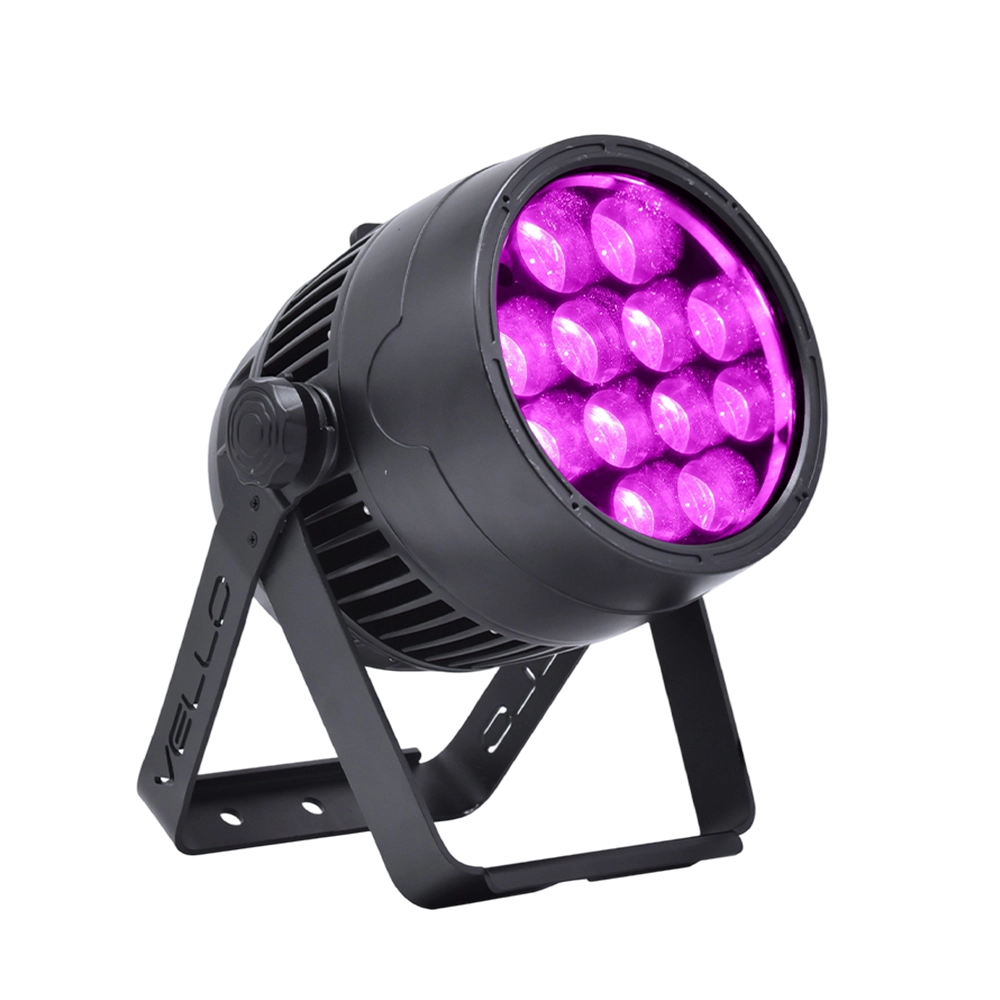
Stage LED Par Light LED ZOOMPAR 40
The Vello Zoom Par 40 IP is a powerful outdoor LED wash light equipped with 12x high-power 7-in-1 RGBACL LEDs. Designed for durability and rich color rendering, it features a wide motorized zoom (6°–50°), smooth dimming, and adjustable CTO presets (3200K–7500K), with 90+ CRI. With an IP66-rated die-cast aluminum body, it’s ideal for both indoor and outdoor applications, including stage lighting, architecture, live events, and installations.
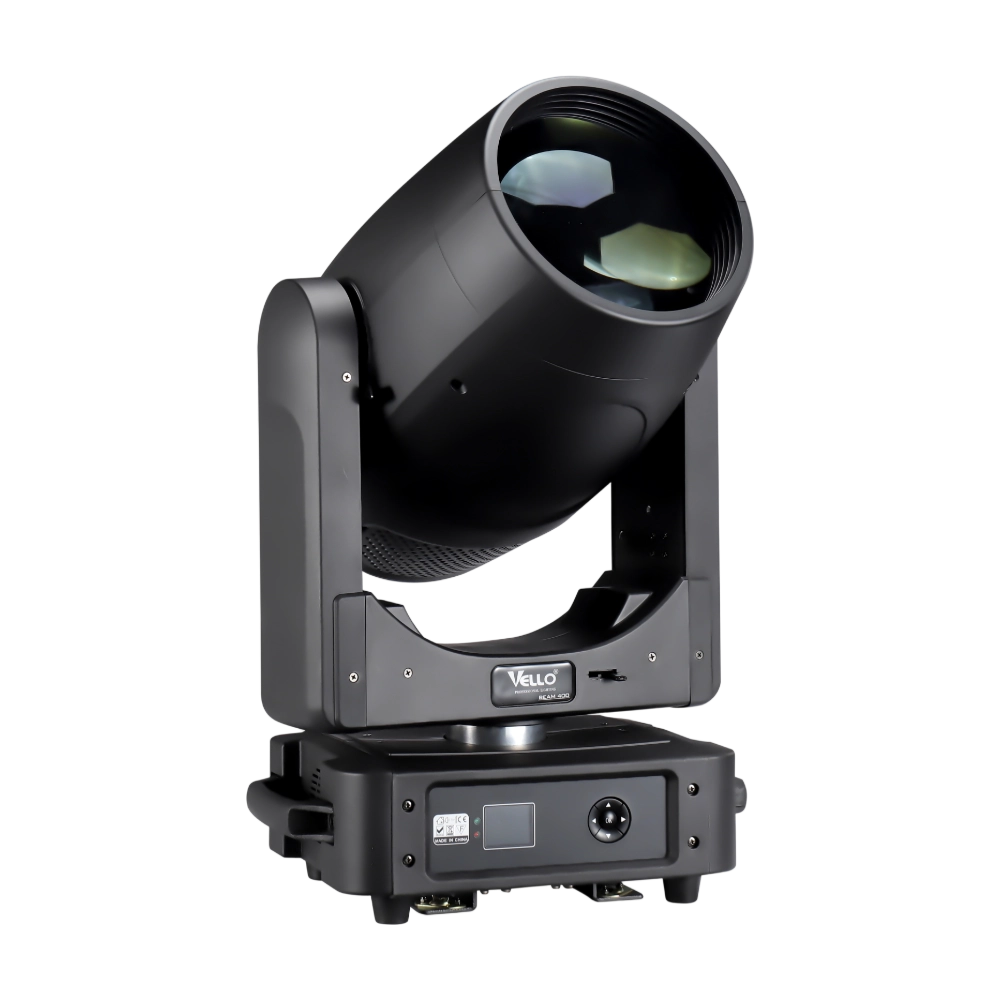
Moving Head Stage Light BEAM 400
BEAM400 is a 500W professional moving head beam powered by an OSRAM SIRIUS 371W discharge bulb, delivering a super-bright 1.8° sharp beam with impressive punch. It features 12 fixed gobos + open, a 14-color wheel, and a 16-facet circular rotating prism with multiple-facet effects, enabling dynamic aerial visuals. With 540° pan / 270° tilt, 16-bit movement resolution, and linear frost and focus, BEAM400 ensures precise and versatile performance. Comparable to traditional 750W moving heads, it combines high efficiency, smooth dimming, and reliable operation—ideal for concerts, tours, and large-scale stage productions.
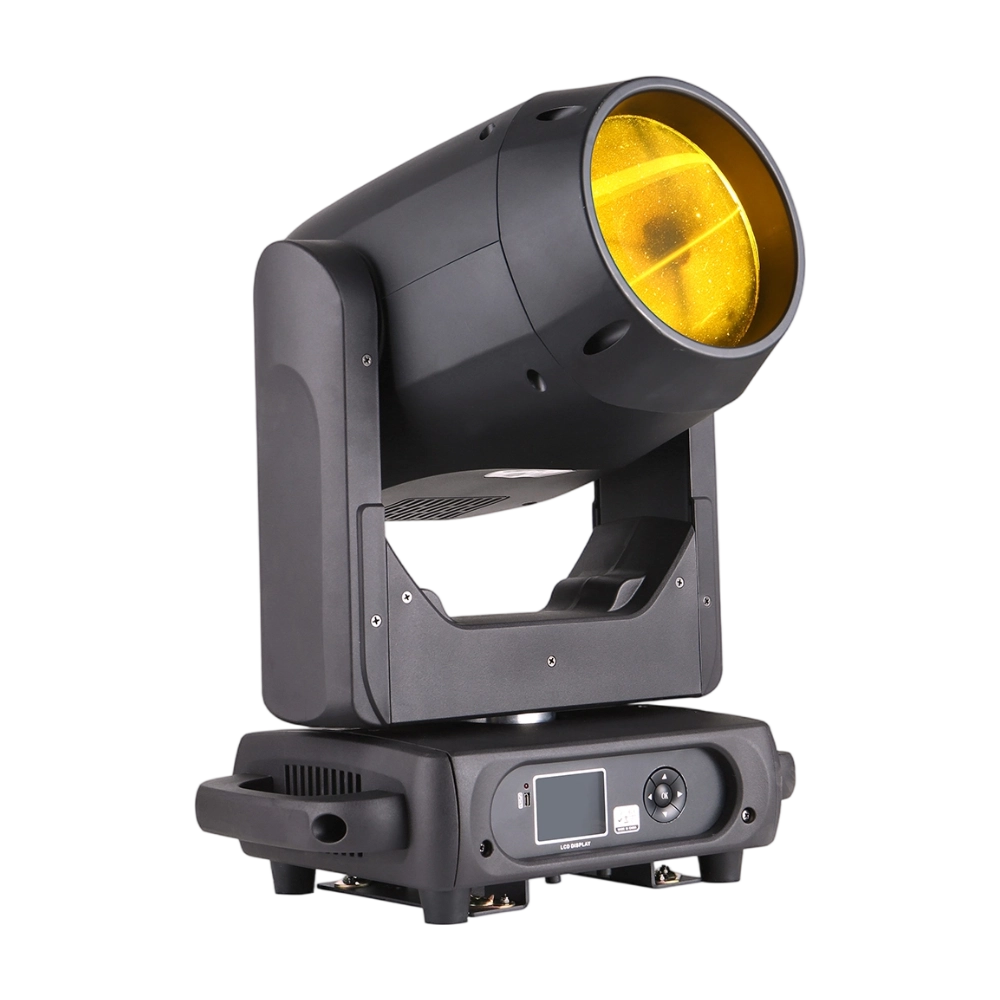
Moving Head Stage Light BEAM 360
BEAM360 is a 400W high-power moving head beam equipped with an OSRAM SIRIUS 311W discharge lamp, delivering a sharp 1.8° beam with super brightness. It features 14 colors + open, 12 fixed metal gobos + open, and dual prisms (8-facet circular + 8+16 multi-facet combination) for dynamic aerial effects. With 540° pan / 270° tilt, 16-bit movement, and linear frost and focus, BEAM360 ensures precision and versatility. Compact yet powerful, it rivals traditional 575W moving heads, making it ideal for concerts, clubs, and large-scale stage productions.
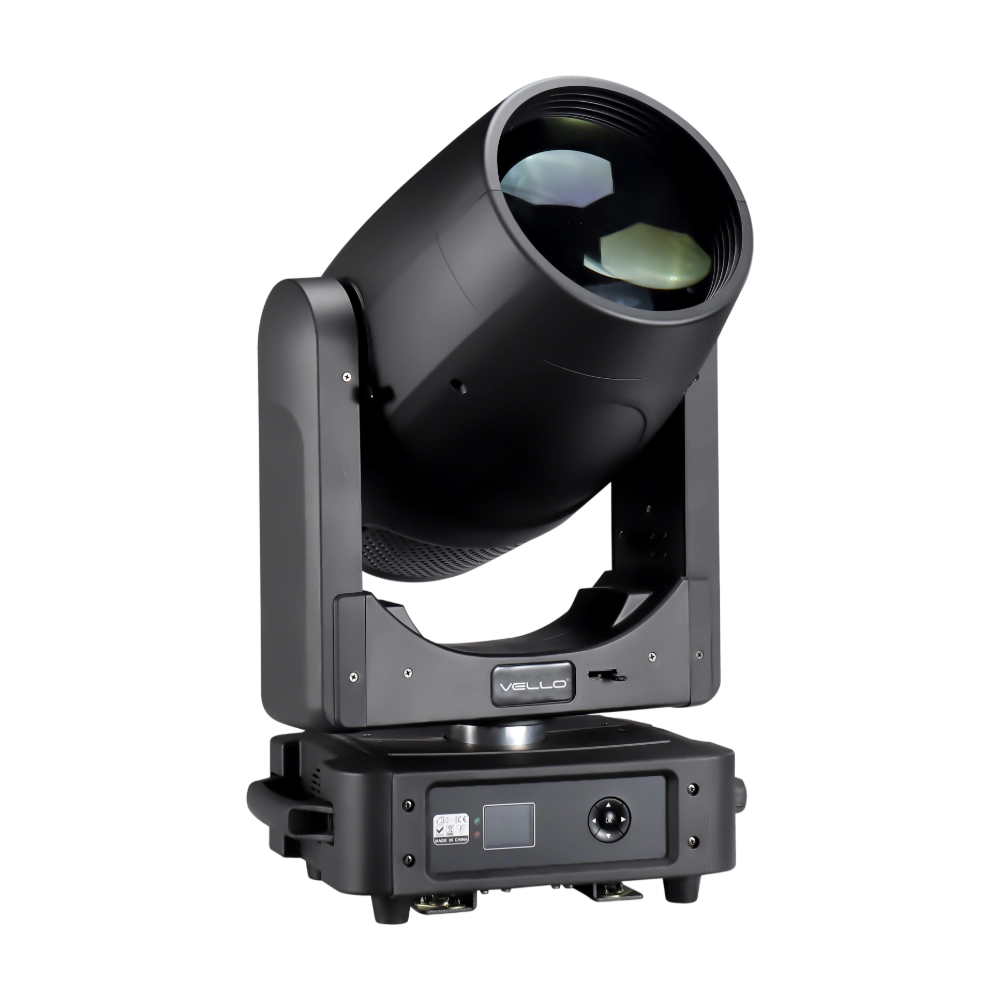
Moving Head Light BEAM 450
The BSW450 is a high-performance moving head fixture equipped with an original Osram 420W bulb, delivering exceptional brightness, precision, and versatility. Designed for professional stage applications, it seamlessly combines beam, spot, and wash functions in one compact unit, making it a powerful all-in-one lighting solution.
Over 20 Years of Innovation in Stage & Studio Lighting
© 2026 VELLO. All Rights Reserved. 粤ICP备20023734号
Join our socials
VELLO
Whatsapp: +8613902276704
Vello Lighting
VelloLights