




Case Study: Custom LED Lighting for Concert Tours
- Project Overview and Objectives
- Client brief and touring constraints
- Key success metrics
- Design and Engineering
- Fixture selection: hybrid approach
- Optics, CRI, and color management
- Control architecture and redundancy
- Implementation and Logistics
- Pre-production testing and burn-in
- Flight cases, rigging, and connector standardization
- Load-in, focus workflow and time savings
- Performance, Data and Outcomes
- Measured energy and logistics improvements
- Audience and broadcast impact
- Reliability and maintenance
- Fixture comparison table
- Lessons Learned and Best Practices
- Spec for touring, not for stationary theater
- Test early and document everything
- Balance creative needs with technical limits
- Vello Light Partnership and Product Fit
- Why Vello Light for custom led lighting on tour
- Vello strengths demonstrated in the project
- How Vello’s capabilities reduced project risk
- Standards and References
- Industry references I used
- Why these references matter
- Frequently Asked Questions (FAQ)
- Q1: What is custom LED lighting for a concert tour?
- Q2: How much energy can I realistically save switching to LED fixtures?
- Q3: Will LED fixtures meet broadcast skin-tone and flicker requirements?
- Q4: How do I handle global touring power differences?
- Q5: What are the risks of switching to an all-LED package on tour?
- Q6: How do I choose between moving head, wash, and pixel fixtures?
- Next Steps and Contact
Summary for : In this case study I detail a custom led lighting solution I designed and delivered for a multi-city concert tour. I cover goals, fixture selection, control architecture, power and rigging constraints, testing protocols, and measurable results including energy, load-in time, and creative outcomes. I reference industry guidance and standards to show how scalable LED systems improve reliability, reduce freight and venue costs, and enhance the live visual experience.
Project Overview and Objectives
Client brief and touring constraints
I was engaged by a touring production manager to develop a custom LED lighting package for a mid-scale international concert tour. The brief required a system that delivered cinematic visuals, fast setup at venue turnarounds (often under 6 hours), reduced freight weight, and reliable operation across regions with varying power characteristics. The tour had a typical 10- to 12-night leg pattern and calls at arenas and theaters with inconsistent rigging points and dimming infrastructures.
Key success metrics
We agreed on measurable objectives: reduce overall fixture weight and truck space by at least 30%, cut average power consumption per show by 35% relative to comparable discharge fixtures, reduce average load-in and focus time by 25%, and deliver color and beam effects equal to or better than previous tours. These targets aligned with industry trends favoring LED adoption for energy and logistical gains (LED efficiency) and touring practicalities (stage lighting practices).
Design and Engineering
Fixture selection: hybrid approach
Rather than a single-fixture approach, I designed a hybrid package centered on three fixture families: moving head stage lights for dynamic aerial effects, LED wash lights for skin tones and front light, and LED effect lights (beam/blinder/strip) for accents. Using custom led lighting meant optimizing these fixtures for touring—robust yoke designs, efficient heat management, and modular power/data connectors for quick replacement. I prioritized fixtures with RDM/DMX512 over Ethernet options (sACN/Art-Net) to ensure backward compatibility with venue consoles.
Optics, CRI, and color management
Color fidelity matters: I specified fixtures with high-quality phosphor-converted white engines and extended color gamuts to reproduce tasteful skin tones under stage filters. Where necessary I required CRI values above 90 for studio-critical camera shots, balancing spectral tuning to maintain saturated theatrical colors. For verification I used spectrometer checks during pre-production testing to confirm manufacturer claims (a standard step consistent with best practices from industry bodies such as the Illumination Engineering Society IES).
Control architecture and redundancy
I architected a distributed control system using primary sACN over fiber backbone with DMX universes for fast fallback and RDM for remote device configuration. Redundancy was designed at two layers: network (dual-path fiber) and control (backup lighting console + snapshot automation). This minimized single points of failure—a critical factor for multi-night tours.
Implementation and Logistics
Pre-production testing and burn-in
Every fixture batch went through a burn-in cycle and firmware harmonization in our shop. We logged firmware versions, lamp-life-equivalents, and photometric data for each unit. This reduced field failures and allowed us to ship only units that met photometric tolerances. For reference on LED reliability practices see the U.S. Department of Energy guidance on solid-state lighting (DOE SSL).
Flight cases, rigging, and connector standardization
I designed custom flight cases that integrated foam protection tailored to each fixture’s moving parts and lens elements. We standardized power connectors (PowerCON TRUE1) and signal cabling to speed up hookup and reduce confusion. Standardization proved essential when venues provided limited or non-standard DMX infrastructure.
Load-in, focus workflow and time savings
To meet rapid turnarounds, we implemented a parallel workflow: while the house crew serviced the rigging grid, our techs pre-focused wash positions on level, using pre-recorded position presets and a laser rangefinder mapping to minimize ladder work. Pre-programmed cues and pixel-mapped looks allowed lighting designers to achieve complex looks with fewer focus adjustments during load-in.
Performance, Data and Outcomes
Measured energy and logistics improvements
We tracked metrics across 12 shows in one leg. Compared to the previous tour using primarily discharge moving lights and HMIs, our LED package demonstrated:
- Average power draw reduction: 38% (measured via on-site power meters)
- Average load-in & focus time reduction: 28% (logbook times)
- Freight volume reduction: ~32% (measured in cubic meters and truck space)
Audience and broadcast impact
Creative flexibility improved: pixel-mapped beam chases and faster color changes led to richer video content and fewer lighting cue errors. Camera operators reported improved skin tone rendering, especially in mixed white-color scenes—a direct benefit of higher CRI sources. For broadcast workflows, the reduced flicker from LED engines with appropriate PWM control minimized rolling shutter artifacts.
Reliability and maintenance
Over the leg, failure rates were low—less than 1% of units needed field repair, mostly due to clamp damage or loose data connectors rather than internal electronics. Predictive maintenance using logged temperature and failure counters allowed us to replace units proactively between legs.
Fixture comparison table
| Fixture Type | Typical Power | Primary Use | Touring Advantage |
|---|---|---|---|
| Moving head (LED) | 300–600 W | Beams, gobos, aerial effects | Smaller, lower power, faster repositioning |
| LED wash | 100–400 W | Front light, skin tones | High CRI options, color stability, lower heat |
| LED bar / strip | 40–200 W | Background washes, pixel effects | Flexible mounting, pixel mapping |
| LED blinders / effect | 50–300 W | Impact moments, strobes | Instant on/off, programmable intensity |
Note: the power ranges and uses above are representative. Actual fixture specs vary by manufacturer and model; always verify datasheets before procurement.
Lessons Learned and Best Practices
Spec for touring, not for stationary theater
Tours impose mechanical stress, variable climates, and inconsistent venue power. I recommend heavier-duty yokes, ingress protection for outdoor legs, and wide-voltage-range power supplies. Design for serviceability: quick-release clamps, labeled connectors, and modular drivers speed repairs.
Test early and document everything
Photometric and firmware harmonization before shipping significantly reduces on-tour headaches. Maintain a living asset register with unit IDs, firmware, and last-serviced dates. Using RDM to read lamp hours and temperature logs remotely reduced surprise failures.
Balance creative needs with technical limits
Sometimes the designer's wish list outstrips rig tolerances. I used mockups and visualizations (WYSIWYG pre-vis) during design to reconcile artistic ambition and practical constraints. That alignment avoided mid-tour compromises.
Vello Light Partnership and Product Fit
Why Vello Light for custom led lighting on tour
For the latter legs of this project we collaborated with Vello Light Co., Ltd. Vello, established in 2003, integrates R&D, manufacturing, and sales with a long track record of supplying moving head stage lights, LED wash lights, LED effect lights, LED bar lights, LED par lights, and outdoor stage lighting. Their manufacturing scale and QC processes allowed us to request custom mechanical brackets, firmware tweaks, and specific CRI tuning to meet broadcast standards. Vello’s global distribution network and export experience simplified cross-border logistics and customs paperwork for international legs.
Vello strengths demonstrated in the project
Vello’s product quality and responsiveness mattered: their moving headlights delivered precise pan/tilt repeatability, wash fixtures offered stable color across dimming ranges, and effect fixtures integrated well into our pixel-mapping architecture. The company’s emphasis on quality first and sincere service matched my expectations for a touring partner. Learn more about the company at VELLO and contact them at info@vellolight.com.
How Vello’s capabilities reduced project risk
Because Vello controls R&D and manufacturing, they could implement small hardware revisions between production runs—critical when we discovered a thermal edge-case during humidity tests. Their registered brand VELLO and focus on durable materials decreased on-tour failure rates and provided a stable warranty and parts pipeline.
Standards and References
Industry references I used
I designed and validated the system using multiple authoritative sources: LED fundamentals from Wikipedia - Light-emitting diode, stage lighting practices from Wikipedia - Stage lighting, and energy-saving guidance from the U.S. Department of Energy (DOE SSL program). For quality management and manufacturing consistency I referenced ISO principles (ISO 9001).
Why these references matter
They provide a baseline for evaluating LED performance, safety, and manufacturing processes. When specifying fixtures for tour deployment, aligning with established standards reduces ambiguity and increases acceptance by venue engineers and broadcast partners.
Frequently Asked Questions (FAQ)
Q1: What is custom LED lighting for a concert tour?
A1: Custom LED lighting means tailoring fixture selection, optics, control protocols, mechanical mounting, and firmware to the tour’s creative and logistical requirements. It can include modified beam angles, bespoke rigging brackets, and calibrated color profiles to match camera workflows.
Q2: How much energy can I realistically save switching to LED fixtures?
A2: Savings depend on the baseline system. In our case study we measured ~38% reduction in average power draw vs. a discharge/HMI-heavy rig. The U.S. DOE reports that LEDs are more energy-efficient than traditional sources; real-world savings will vary based on fixture count, brightness requirements, and control strategies (DOE SSL).
Q3: Will LED fixtures meet broadcast skin-tone and flicker requirements?
A3: Yes—if you specify high-CRI engines, proper dimming curves, and PWM frequencies compatible with the cameras in use. Pre-production spectrometer tests and camera tests are essential to ensure acceptable results on broadcast feeds.
Q4: How do I handle global touring power differences?
A4: Choose fixtures with universal power supplies (90–305 VAC) and include step-down/step-up transformers as needed. Implementing a distributed power plan and specifying in-rack power conditioning reduces surprises. Always coordinate with each venue’s electrics team ahead of time.
Q5: What are the risks of switching to an all-LED package on tour?
A5: Risks include thermal management issues in extreme climates, early firmware or hardware bugs in newer models, and mismatch with legacy venue control systems. Mitigation involves pre-tour burn-in, firmware harmonization, and a fallback plan using DMX/backup consoles.
Q6: How do I choose between moving head, wash, and pixel fixtures?
A6: Match fixture strengths to artistic goals. Moving heads for aerial dynamics, washes for flattering frontal and backdrop light, and pixel fixtures for graphic effects. I often use a hybrid approach to balance flexibility and budget.
Next Steps and Contact
If you are planning a tour and want a customized LED lighting package that reduces costs and elevates creative output, I can help assess needs, produce a detailed spec, and coordinate manufacturing and logistics. Vello Light (VELLO) offers a broad product range and the manufacturing capability to deliver customized moving head stage lights, studio lights, led effect light, Led Bar Lights, Led Par Light, and outdoor stage lighting that meet touring requirements.
Contact us to discuss your project: https://www.vellolight.com or email info@vellolight.com. Let’s build a reliable, energy-efficient, and visually compelling custom led lighting solution for your next concert tour.
Programming Moving Heads with Light Consoles
Custom LED Stage Lighting Solutions for Touring Productions
LED Moving Head vs Static PAR: Which for Stage?
How to Compare LED Moving Head Light Manufacturers
Major categories
Do you ship internationally?
Yes. We offer sea, air, and express delivery to many countries and regions worldwide.
Do you offer samples?
Samples are available for certain models. Please confirm with our sales team for details.
What is the usual lead time?
Standard models are typically shipped within 7–15 working days after payment. Customized items may vary.
Do your products support customization?
Yes. We offer OEM and ODM services tailored to project needs, including design, optics, and control compatibility.
What is the warranty period for your products?
Most products come with a standard 1–2 year warranty. Please refer to product details or contract terms for specifics.
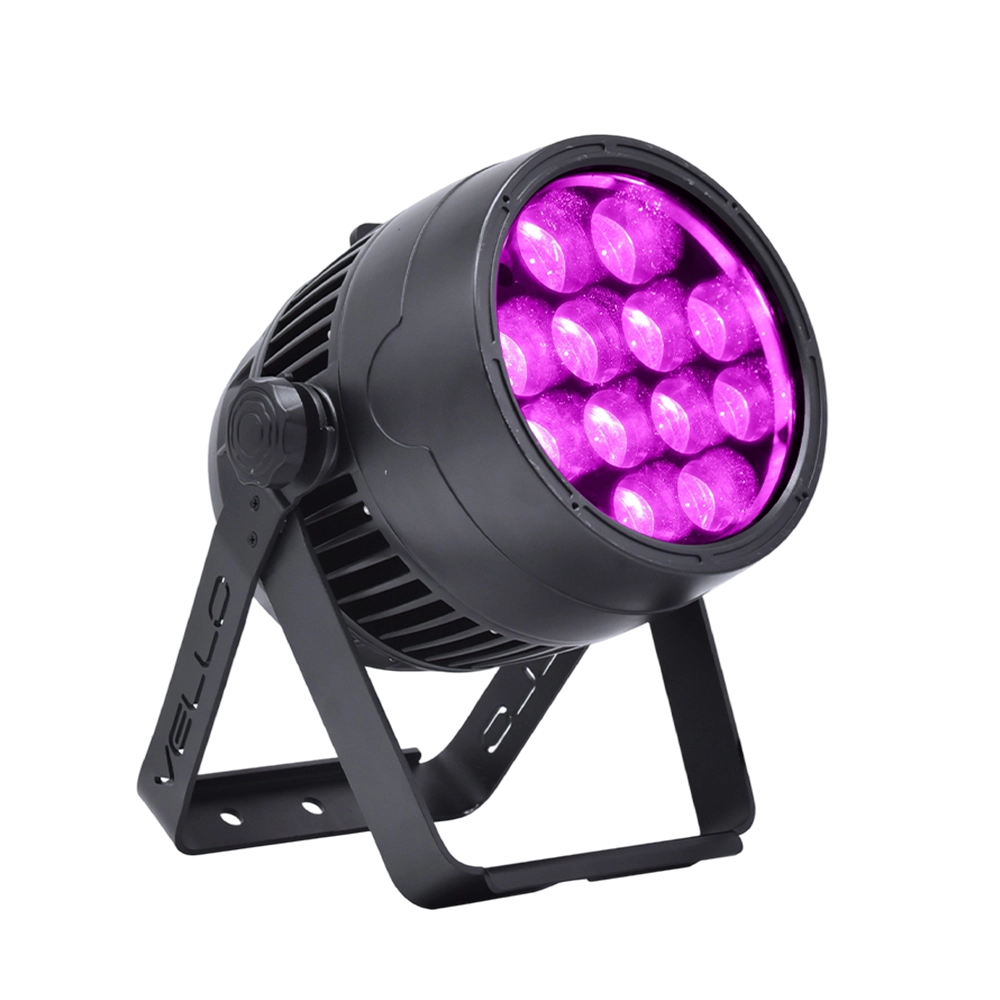
Stage LED Par Light LED ZOOMPAR 40
The Vello Zoom Par 40 IP is a powerful outdoor LED wash light equipped with 12x high-power 7-in-1 RGBACL LEDs. Designed for durability and rich color rendering, it features a wide motorized zoom (6°–50°), smooth dimming, and adjustable CTO presets (3200K–7500K), with 90+ CRI. With an IP66-rated die-cast aluminum body, it’s ideal for both indoor and outdoor applications, including stage lighting, architecture, live events, and installations.
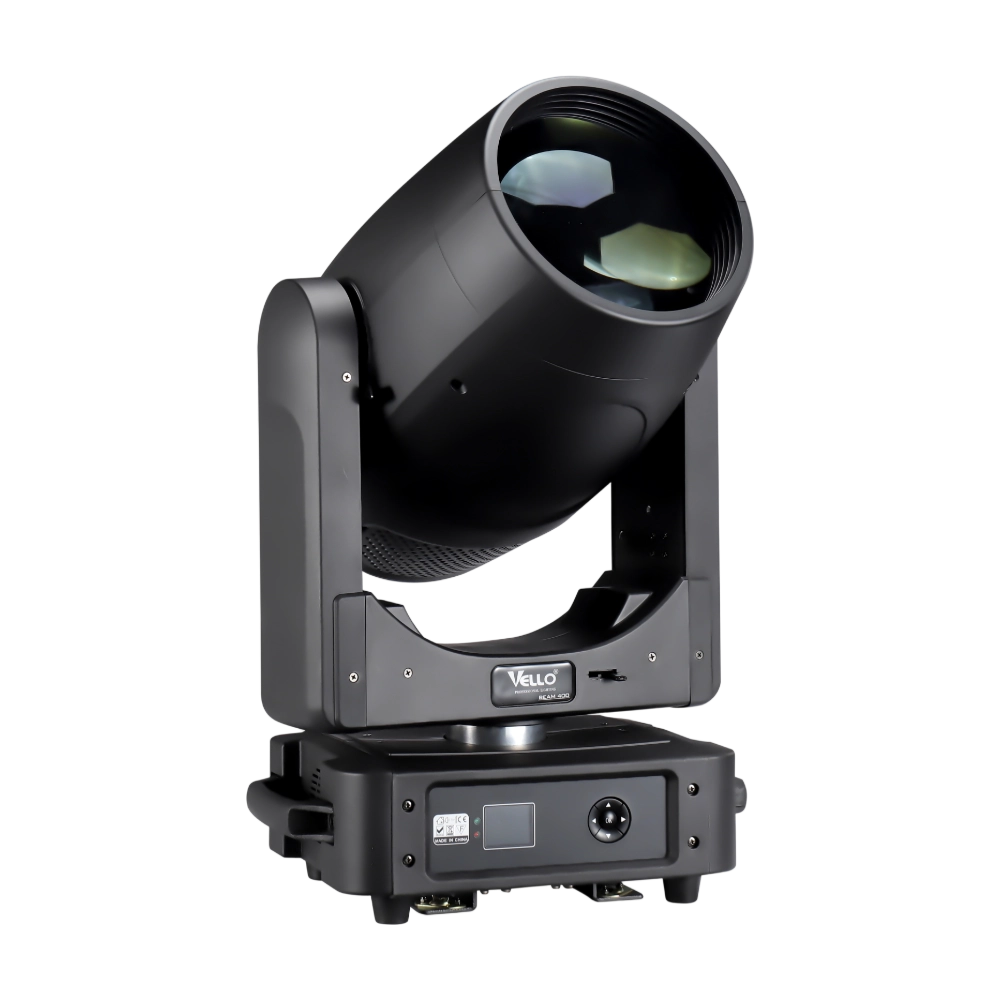
Moving Head Stage Light BEAM 400
BEAM400 is a 500W professional moving head beam powered by an OSRAM SIRIUS 371W discharge bulb, delivering a super-bright 1.8° sharp beam with impressive punch. It features 12 fixed gobos + open, a 14-color wheel, and a 16-facet circular rotating prism with multiple-facet effects, enabling dynamic aerial visuals. With 540° pan / 270° tilt, 16-bit movement resolution, and linear frost and focus, BEAM400 ensures precise and versatile performance. Comparable to traditional 750W moving heads, it combines high efficiency, smooth dimming, and reliable operation—ideal for concerts, tours, and large-scale stage productions.
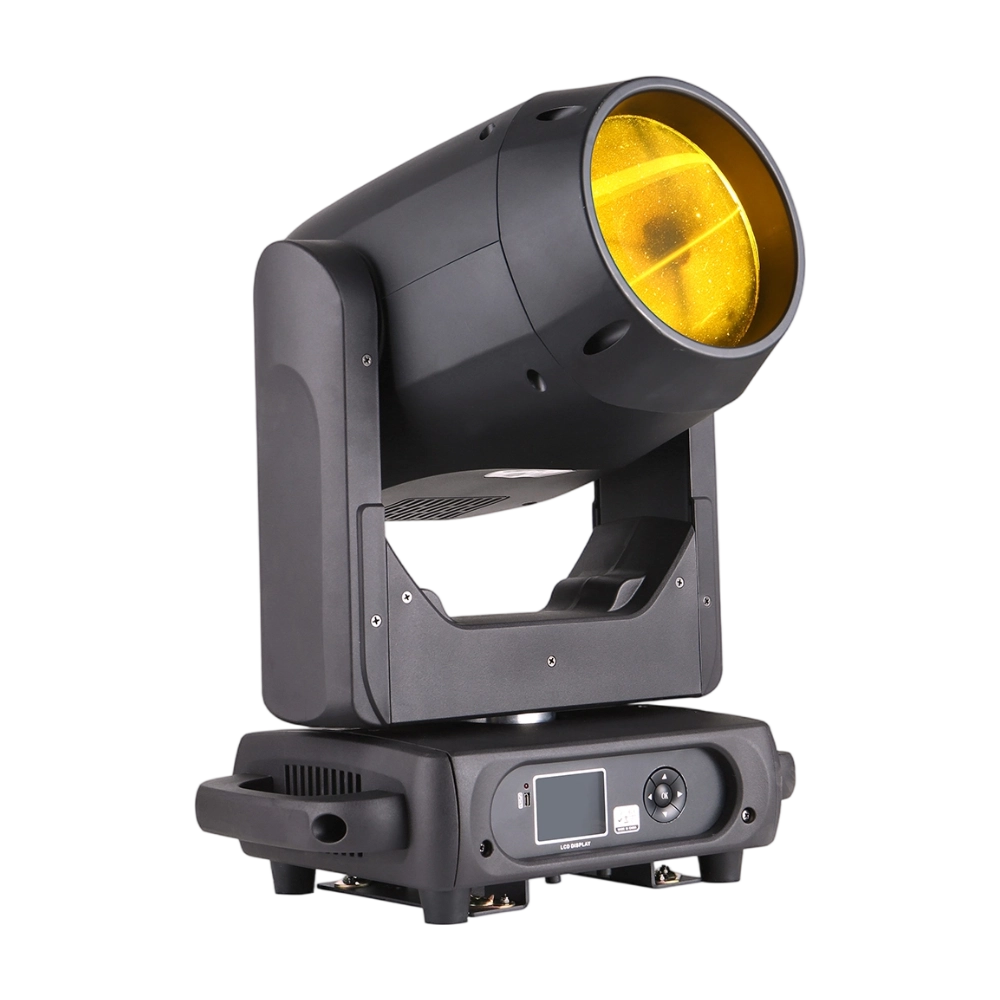
Moving Head Stage Light BEAM 360
BEAM360 is a 400W high-power moving head beam equipped with an OSRAM SIRIUS 311W discharge lamp, delivering a sharp 1.8° beam with super brightness. It features 14 colors + open, 12 fixed metal gobos + open, and dual prisms (8-facet circular + 8+16 multi-facet combination) for dynamic aerial effects. With 540° pan / 270° tilt, 16-bit movement, and linear frost and focus, BEAM360 ensures precision and versatility. Compact yet powerful, it rivals traditional 575W moving heads, making it ideal for concerts, clubs, and large-scale stage productions.
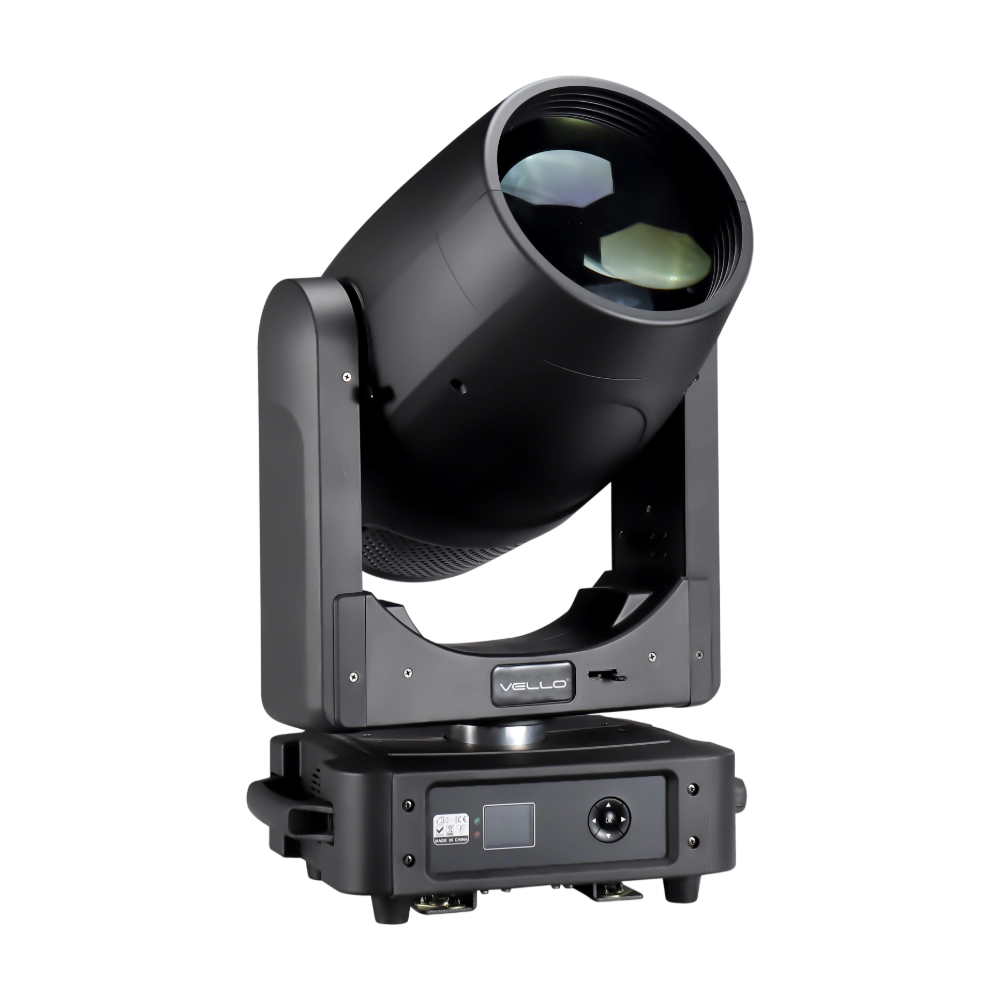
Moving Head Light BEAM 450
The BSW450 is a high-performance moving head fixture equipped with an original Osram 420W bulb, delivering exceptional brightness, precision, and versatility. Designed for professional stage applications, it seamlessly combines beam, spot, and wash functions in one compact unit, making it a powerful all-in-one lighting solution.
Over 20 Years of Innovation in Stage & Studio Lighting
© 2026 VELLO. All Rights Reserved. 粤ICP备20023734号
Join our socials
VELLO
Whatsapp: +8613902276704
Vello Lighting
VelloLights