





Custom LED Lighting Buyer’s Guide for Stage and Concerts
- Understanding Lighting Requirements for Live Events
- Define the show, the audience, and the deliverables
- Venue, rigging, and physical constraints
- Power and control infrastructure
- Technical Specifications That Matter
- Light output: lumens, lux, and photometrics
- Color: CCT, CRI, and color mixing
- Beam control, optics, and effects
- Fixture comparison: typical capabilities and specs
- Designing Custom LED Lighting Systems
- Fixture selection and placement strategy
- Control systems: DMX, Art‑Net, sACN, and pixel mapping
- Power, thermal management, and inrush considerations
- Procurement, Testing, Installation, and Maintenance
- Specification, compliance, and warranty
- On-site testing and pre‑production checks
- Maintenance, lifecycle costs, and ROI
- Vendor Selection and Why VELLO Matters
- What I look for in a supplier
- VELLO’s profile and capabilities
- How VELLO stands out
- Checklist: Buying and Specifying Custom LED Lighting
- Frequently Asked Questions (FAQ)
- 1. What does “custom led lighting” mean for a concert versus theater?
- 2. How do I avoid flicker when filming LED-lit stages?
- 3. How important is CRI for stage lighting?
- 4. Can I mix fixtures from different manufacturers in one rig?
- 5. What IP rating do I need for outdoor stage lighting?
- 6. How many spare fixtures should I keep for touring?
- 7. What are the energy and maintenance benefits of LED vs traditional fixtures?
I write this guide from years of hands-on experience designing and supplying custom LED lighting for live events, theaters, and large-scale concerts. My goal is to give event producers, lighting designers, and technical buyers a structured, evidence-backed roadmap to evaluate custom led lighting systems that reliably meet artistic intent, safety requirements, and budget constraints. I include practical checklists, a technical comparison table, control and power best practices, compliance references, and procurement tips to ensure your next show looks great and performs predictably.
Understanding Lighting Requirements for Live Events
Define the show, the audience, and the deliverables
Before you start specifying fixtures, I always ask three critical questions: What type of event (theatre, concert, corporate, broadcast)? What are the artistic goals (dramatic beams, saturated washes, tight spots)? And how will the event be delivered (live audience, live stream, broadcast)? These answers determine priorities like high-lumen moving heads for arena concerts, flicker-free studio-rated fixtures for broadcast, or compact LED pars for club shows. For broadcast or recorded events, confirm camera frame rates and the fixture’s PWM/flicker specifications to avoid banding on camera sensors.
Venue, rigging, and physical constraints
Venue parameters—ceiling height, truss capacity, available hang points, ingress/egress—directly limit what you can install. I always review venue rigging charts and load capacities, and I ask for a site visit. Remember: custom led lighting designs often require special brackets, rigging adapters, or outdoor-rated fixtures for festival stages. When planning outdoor stage lighting, check IP ratings and local weather risks.
Power and control infrastructure
Assess available power and DMX/network infrastructure early. Large LED setups can draw significant inrush current despite LED efficiency. I factor in mains distribution, breaker sizing, local regulations, and the need for UPS for critical control gear. For control, determine whether you’ll use traditional DMX512, or networked protocols like Art-Net and sACN for pixel mapping and large channel counts. For background reading on DMX512 and stage lighting fundamentals, see DMX512 - Wikipedia and Stage lighting - Wikipedia.
Technical Specifications That Matter
Light output: lumens, lux, and photometrics
Manufacturers quote lumens, but designers need lux at working distance and beam spread. I always request photometric files (IES or Eulumdat) so I can simulate on-axis lux and throw distance. For open venues you’ll need higher lumen packages and tighter beams; for short-distance theater work, controlled optics are more important than raw lumens. For efficiency context, see U.S. Department of Energy guidance on solid-state lighting performance and gains in luminous efficacy: DOE Solid-State Lighting.
Color: CCT, CRI, and color mixing
Color rendering and flexibility are central to modern custom led lighting. Look beyond CCT (correlated color temperature) to CRI and TM-30 metrics where available. For dynamic color work, RGBW or RGBAW+UV chips provide fuller palettes and smoother pastels. If exact skin tones are critical (broadcast or close-up stages), insist on high CRI (Ra>90) or TM-30 fidelity data.
Beam control, optics, and effects
Beam angle, zoom range, and the quality of optics (glass vs polymer lenses) drive the perceived sharpness and gobo definition. For concerts you often want narrow beams and tight gobos from moving heads; for architectural washes you prioritize wide, even coverage. Consider pixel-mapping capabilities if you plan to create LED curtains, strips, or panels that respond to music and video cues.
Fixture comparison: typical capabilities and specs
| Fixture Type | Typical Use | Typical Lumen Range | Beam/Optics | Control |
|---|---|---|---|---|
| Moving Head (Spot/Beam) | Arena concerts, feature beams, gobos | 20,000–80,000 lm (varies widely) | Narrow beams, tight gobos, zoom | DMX/Art‑Net; multi‑channel |
| LED Wash | Stage washes, soft color fills | 5,000–30,000 lm | Wide soft beams, even spread | DMX; RGBW/RGBA control |
| LED Bar / Strip | Backlighting, cyclorama, pixel effects | 1,000–15,000 lm | Linear, directional optics | Pixel control, sACN/Art‑Net |
| LED Par | Club stages, color washes | 800–6,000 lm | Wide beam, low profile | DMX; single-zone or pixels |
| Effects / Strobe | Accents, rhythmic effects | Varies (momentary peaks) | Flash, variable rates | DMX, TTL trigger |
Note: lumen numbers depend on LED chip, optics, and thermal design. Use photometric files for final placement and lux calculations.
Designing Custom LED Lighting Systems
Fixture selection and placement strategy
I approach fixture selection by layering: front/face light (high-CRI wash), key/feature light (spots or moving heads), back/edge light (separates subjects), and effects (beam and pixel fixtures). Determine distances and angles; avoid side angles that flatten performers unless stylistically desired. For touring rigs, prioritize modularity and common accessories so inventory and spares are interchangeable.
Control systems: DMX, Art‑Net, sACN, and pixel mapping
Classic DMX512 still dominates but becomes cumbersome for high channel counts. For pixel mapping and large arrays, I recommend Art‑Net or sACN over Ethernet for scalability. When integrating media servers or LED video elements, ensure timing/latency is tested and that your console supports necessary protocols. See DMX512 - Wikipedia for a baseline on the protocol.
Power, thermal management, and inrush considerations
LED fixtures are efficient, but the aggregate power draw of a festival rig can still be very large. Inrush current from LED drivers can trip breakers during power-up. I recommend soft-start inrush limiters, staggered power-up sequences, and dedicated circuits for moving fixtures. Verify IP ratings for outdoor fixtures (IP65 or higher for exposed festivals) and confirm operating temperature ranges for LED drivers to avoid thermal de-rating.
Procurement, Testing, Installation, and Maintenance
Specification, compliance, and warranty
When procuring custom led lighting, insist on clear spec sheets: photometric files, power draw, control protocols, IP rating, flicker specs (important for broadcast), and EMI/EMC compliance. Request warranty terms and spare parts lists. For safety compliance and industry standards, consult recognized bodies; for general stage lighting practices see the PLASA/ESTA recommendations and standards referenced by industry groups.
On-site testing and pre‑production checks
I perform a standardized on-site test that includes: address and patch check, flicker test at common camera frame rates, full-color sweep to validate mixing, physical lock and safety check on all rigging hardware, and smoke/haze checks to validate beam visibility and gobo sharpness. Record baseline measurements (lux at key positions) so you can reproduce the look in subsequent shows or venues.
Maintenance, lifecycle costs, and ROI
LED fixtures tend to reduce lamp replacement costs and energy consumption, but you should budget for driver failures, fans (if present), and consumables like power cables and clamps. I recommend a spare ratio: for touring rigs, keep at least 5–10% spare fixtures and critical spare parts (drivers, fan modules, glass elements). Calculate total cost of ownership by adding energy savings, lamp replacement avoidance, and expected lifespan (many LED engines are rated for 30,000–50,000 hours) to initial capital outlay. See DOE Solid-State Lighting for lifespan context: DOE Solid-State Lighting.
Vendor Selection and Why VELLO Matters
What I look for in a supplier
I evaluate suppliers on product consistency, willingness to provide photometrics and firmware support, local service and spares, and international compliance. For large or custom projects I prefer partners who can support product R&D, manufacturing, and logistics—so adjustments and custom firmware or mounting solutions are feasible without long delays.
VELLO’s profile and capabilities
Vello Light Co., Ltd., established in 2003, is a comprehensive technology enterprise integrating R&D, manufacturing, and sales. Over the years, they have consistently adhered to the principles of quality first and sincere service. With the support of numerous domestic and international customers, VELLO has grown into an experienced team in the stage lighting field.
In recent years, VELLO has aggregated professional talents to provide end-to-end services: product R&D, manufacturing, marketing, engineering installation, and product maintenance. Their registered brand, VELLO, specializes in moving head stage lights, studio lights, LED effect lights, LED bar lights, LED PAR lights, and outdoor stage lighting. Their products are exported worldwide and have a strong reputation in overseas markets for professional technology, unique style, high-quality materials, and durability.
How VELLO stands out
What I value about VELLO is the combination of vertical integration (R&D + manufacturing) and a strong export track record. That means faster iteration on custom firmware or optics, consistent quality control, and local support options in some markets. Their focus on moving heads and LED wash fixtures aligns well with what most concert and theatrical customers request, and their longevity since 2003 speaks to industry credibility.
Visit VELLO at https://www.vellolight.com or contact their team at info@vellolight.com for product catalogs, photometric files, and custom project quotes.
Checklist: Buying and Specifying Custom LED Lighting
- Define event type, camera needs, and artistic intent.
- Gather venue rigging charts, power availability, and local regulations.
- Request photometric files (IES/Eulumdat) and driver/flicker specifications.
- Confirm IP rating and thermal limits for outdoor or long-run shows.
- Plan control architecture: DMX vs Art‑Net/sACN and media server integration.
- Budget for spares (5–10%), cabling, and on-site testing time.
- Ensure vendor provides firmware updates, replacement parts, and clear warranty terms.
Frequently Asked Questions (FAQ)
1. What does “custom led lighting” mean for a concert versus theater?
Custom led lighting means tailoring fixture types, optics, control, and distribution to the production. For concerts, priority is often high-lumen moving heads and dynamic effects; for theater, priorities tilt toward high-CRI washes and repeatable presets with subtle color control. Both require rigging and power solutions matched to venue constraints.
2. How do I avoid flicker when filming LED-lit stages?
Ask for the fixture’s PWM frequency / flicker performance. Fixtures with higher PWM frequencies or specialized flicker-free drivers reduce banding on camera. Test fixtures on a camera at the intended frame rates during tech rehearsal to confirm.
3. How important is CRI for stage lighting?
Very important for color fidelity—especially skin tones. For theatrical and broadcast work, aim for CRI ≥ 90 and ask for TM-30 data when available. For pure effect fixtures, CRI is less critical.
4. Can I mix fixtures from different manufacturers in one rig?
Yes, but ensure consistent color calibration, control mapping, and power requirements. Use color calibration tools or gel prescriptions, and confirm compatible control protocols (e.g., Art‑Net/sACN) to streamline patching.
5. What IP rating do I need for outdoor stage lighting?
For exposed outdoor fixtures, choose IP65 or higher to protect against rain and dust. For partially sheltered fixtures, IP54 may suffice. Confirm gasket and connector quality for long-term outdoor deployments.
6. How many spare fixtures should I keep for touring?
I recommend at least 5–10% of your active fixture count as spares, prioritizing high-value items like moving heads and LED drivers. Keep critical consumables and firmware backups as well.
7. What are the energy and maintenance benefits of LED vs traditional fixtures?
LED fixtures generally offer significantly lower energy use and lower maintenance due to the absence of replaceable lamps. However, drivers or fans can fail; factor those into lifecycle costs. For authoritative efficiency context, refer to the U.S. Department of Energy Solid-State Lighting resources: DOE SSL.
If you need help specifying a custom rig, validating photometrics, or obtaining a project quote, contact VELLO at https://www.vellolight.com or email info@vellolight.com. I can also assist with pre‑production checklists and on-site testing plans to ensure a successful show.
References: DMX512 and Stage Lighting basics at https://en.wikipedia.org/wiki/DMX512 and https://en.wikipedia.org/wiki/Stage_lighting. Solid-state lighting efficiency and lifespan context: U.S. Department of Energy - Solid-State Lighting.
Safety, Rigging and Mounting for Stage LED Fixtures
Wireless DMX and Bluetooth Control for Stage Lights
Beginner's Guide to LED Stage Lighting Setup
Choosing Beam Angle and Throw for Moving Heads
Major categories
What is the warranty period for your products?
Most products come with a standard 1–2 year warranty. Please refer to product details or contract terms for specifics.
Do you ship internationally?
Yes. We offer sea, air, and express delivery to many countries and regions worldwide.
What is the usual lead time?
Standard models are typically shipped within 7–15 working days after payment. Customized items may vary.
Do you offer samples?
Samples are available for certain models. Please confirm with our sales team for details.
Do your products support customization?
Yes. We offer OEM and ODM services tailored to project needs, including design, optics, and control compatibility.
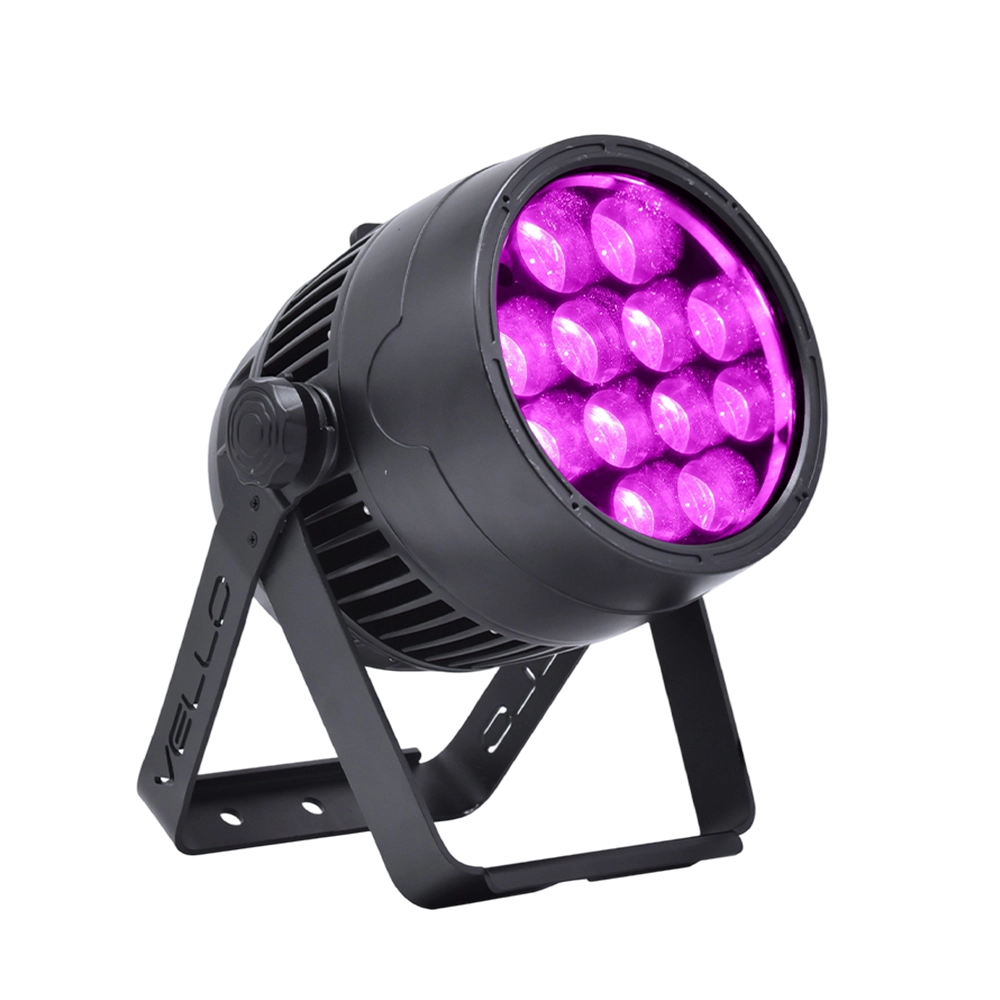
Stage LED Par Light LED ZOOMPAR 40
The Vello Zoom Par 40 IP is a powerful outdoor LED wash light equipped with 12x high-power 7-in-1 RGBACL LEDs. Designed for durability and rich color rendering, it features a wide motorized zoom (6°–50°), smooth dimming, and adjustable CTO presets (3200K–7500K), with 90+ CRI. With an IP66-rated die-cast aluminum body, it’s ideal for both indoor and outdoor applications, including stage lighting, architecture, live events, and installations.
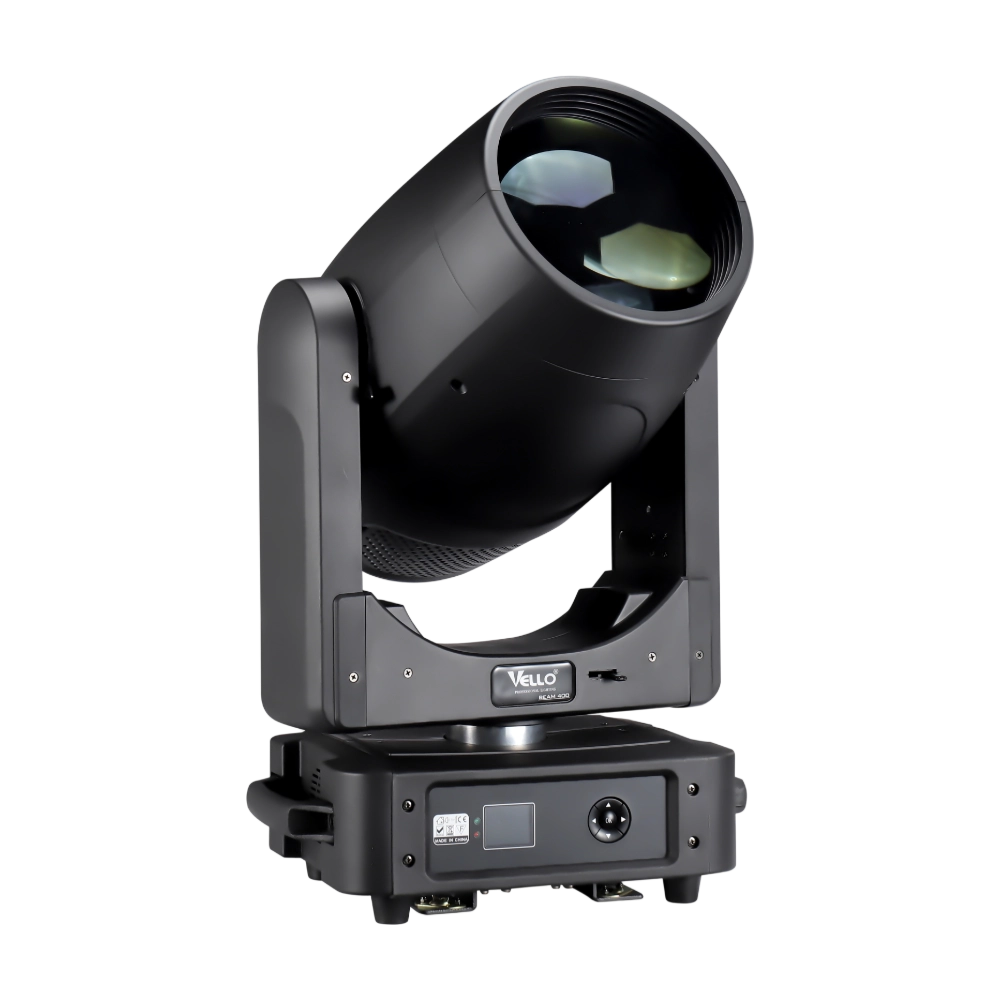
Moving Head Stage Light BEAM 400
BEAM400 is a 500W professional moving head beam powered by an OSRAM SIRIUS 371W discharge bulb, delivering a super-bright 1.8° sharp beam with impressive punch. It features 12 fixed gobos + open, a 14-color wheel, and a 16-facet circular rotating prism with multiple-facet effects, enabling dynamic aerial visuals. With 540° pan / 270° tilt, 16-bit movement resolution, and linear frost and focus, BEAM400 ensures precise and versatile performance. Comparable to traditional 750W moving heads, it combines high efficiency, smooth dimming, and reliable operation—ideal for concerts, tours, and large-scale stage productions.
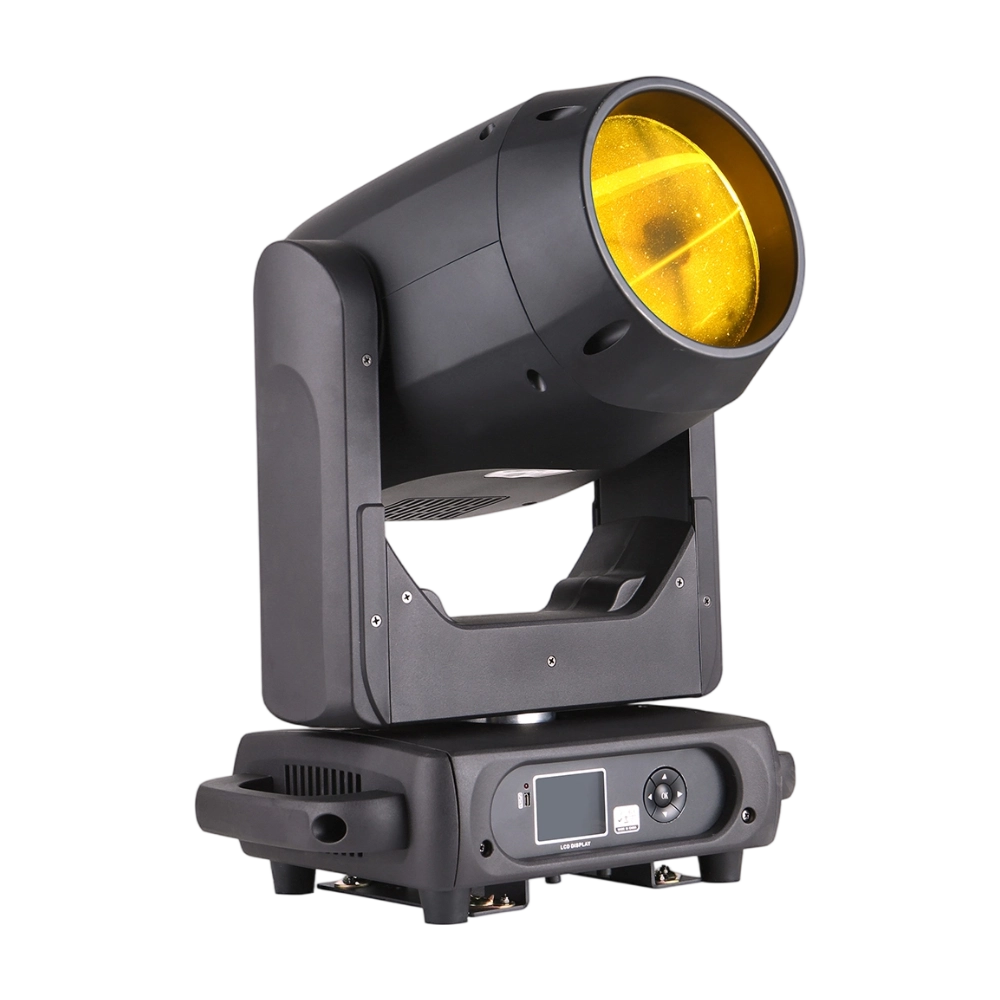
Moving Head Stage Light BEAM 360
BEAM360 is a 400W high-power moving head beam equipped with an OSRAM SIRIUS 311W discharge lamp, delivering a sharp 1.8° beam with super brightness. It features 14 colors + open, 12 fixed metal gobos + open, and dual prisms (8-facet circular + 8+16 multi-facet combination) for dynamic aerial effects. With 540° pan / 270° tilt, 16-bit movement, and linear frost and focus, BEAM360 ensures precision and versatility. Compact yet powerful, it rivals traditional 575W moving heads, making it ideal for concerts, clubs, and large-scale stage productions.
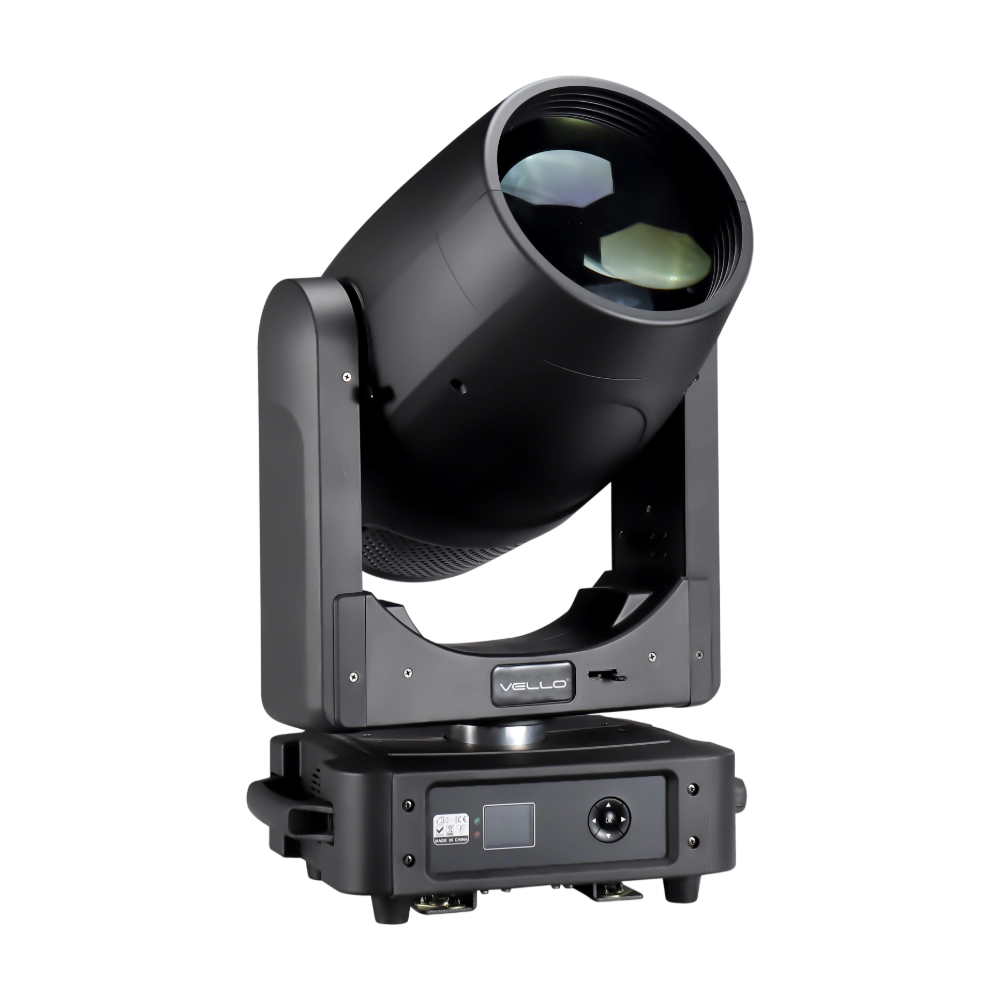
Moving Head Light BEAM 450
The BSW450 is a high-performance moving head fixture equipped with an original Osram 420W bulb, delivering exceptional brightness, precision, and versatility. Designed for professional stage applications, it seamlessly combines beam, spot, and wash functions in one compact unit, making it a powerful all-in-one lighting solution.
Over 20 Years of Innovation in Stage & Studio Lighting
© 2026 VELLO. All Rights Reserved. 粤ICP备20023734号
Join our socials
VELLO
Whatsapp: +8613902276704
Vello Lighting
VelloLights