





Custom Branding and OEM Options for Moving Head Manufacturers
- Market drivers for tailored stage lighting solutions
- Rental market and venue demand
- Tours, festivals and outdoor resilience
- Global markets and localized branding
- OEM, ODM and white-label options explained
- Definitions and when to choose which model
- Cost structure, MOQ and lead-time considerations
- Intellectual property, certification and warranty responsibilities
- Technical customization priorities for led moving head light
- Optics, LED engines and photometrics
- Control systems: DMX, RDM, Art‑Net and firmware branding
- Mechanical engineering, thermal management and ingress protection
- How to select a reliable OEM partner and commercialize successfully
- Supplier audit checklist
- Prototyping, sampling and pilot runs
- Commercial terms, after‑sales and logistics
- Vello Light — OEM partner profile and value proposition
- Practical checklist for launching a custom branded moving head product
- Stepwise roadmap
- Key KPIs to monitor
- Frequently Asked Questions (FAQ)
- 1. What is the main difference between OEM and ODM for moving head fixtures?
- 2. How long does it take to go from concept to mass production for a customized moving head?
- 3. What certifications should I ask my supplier to provide?
- 4. How can I ensure the LED photometric performance matches specifications?
- 5. What are typical warranty and spare parts expectations?
- 6. Can firmware and control protocol branding be changed safely?
- Contact and next steps
Custom branding and OEM partnerships are strategic levers for moving head manufacturers who want to scale, enter new markets, or offer differentiated led moving head light products for rental houses, venues, touring productions, and architectural installations. This guide provides actionable insights on choosing OEM/ODM/white‑label options, technical customization areas (optics, control systems, thermal and mechanical design), quality and compliance checks, and commercial negotiation points — all grounded in industry practice and verifiable sources to support procurement and product development decisions.
Market drivers for tailored stage lighting solutions
Rental market and venue demand
The live events and rental market place a High Quality on reliability, serviceability, and brand recognition. Rental companies often prefer branded led moving head light fixtures that are easy to maintain, have consistent photometrics, and offer proven durability across tours and festivals. As venues diversify programming, bespoke fixture features (e.g., custom gobos or beam angles) can be a competitive differentiator.
Tours, festivals and outdoor resilience
Touring productions and festivals require fixtures that withstand logistics stress—frequent packing, varied climates, and extended runtime. Customization such as reinforced mounting points, IP-rated enclosures for outdoor use, and hot-swappable power/data modules reduce downtime and lifecycle cost. According to industry analyses, durability and maintainability are among the top purchase drivers for professional lighting buyers (see general lighting technology trends at LED on Wikipedia).
Global markets and localized branding
Entering international markets often means meeting local certification (CE, FCC, RoHS) and offering localized support materials (language, manuals, firmware). OEM partnerships enable manufacturers to provide localized branding and documentation rapidly, while protecting intellectual property through contractual agreements.
OEM, ODM and white-label options explained
Definitions and when to choose which model
Understanding the difference between OEM and ODM is the first commercial decision. An OEM (Original Equipment Manufacturer) supplies parts or entire products that are rebranded by another firm; an ODM (Original Design Manufacturer) provides design and product development services so a buyer can market a finished product under its own brand. White‑label solutions are typically standardized products rebranded without significant technical changes. Choosing depends on control requirements, time-to-market, and investment capacity.
Cost structure, MOQ and lead-time considerations
OEM/ODM models present different cost and logistical profiles. OEM typically requires the buyer to supply specifications and higher initial tooling or certification costs; ODM may reduce engineering burden but increases reliance on the supplier’s IP. MOQ (minimum order quantity), tooling amortization and lead times are critical negotiation points. See the comparative table below for a practical summary.
| Option | Description | Pros | Cons | Typical MOQ | Typical Lead Time |
|---|---|---|---|---|---|
| OEM | Manufacturer produces to your design/specs; you brand and certify. | Full control of design; IP ownership; easier differentiation. | Higher engineering and certification costs; longer ramp. | 500–2,000 units | 3–6 months (pilot to mass) |
| ODM | Supplier provides design and development; you brand the finished product. | Faster to market; lower upfront R&D burden. | Dependency on supplier IP; customization limits. | 300–1,000 units | 2–5 months |
| White‑label | Standard product rebranded with minor cosmetic changes. | Lowest cost and fastest delivery. | Limited differentiation; shared market presence. | 100–500 units | 4–12 weeks |
Note: MOQs and lead times vary by supplier and global supply chain conditions. For macro trends in lighting markets, consult market research such as Grand View Research’s stage lighting analysis (grandviewresearch.com).
Intellectual property, certification and warranty responsibilities
Contracts must specify who owns design IP, who is responsible for product certification (e.g., CE, ETL, FCC), and warranty service flows. For led moving head light products, certifications often relate to electrical safety, EMC and environmental compliance. Explicitly define firmware ownership and update rights—critical when lighting control protocols (DMX, Art-Net, sACN) are involved.
Technical customization priorities for led moving head light
Optics, LED engines and photometrics
Customization of beam angle, lens groups, and LED engine (color temperature, CRI, lumen output) directly impacts fixture performance. Photometric testing (IES files) during prototyping is essential for rental houses and lighting designers who depend on reliable lux output and beam consistency. Use accredited labs or internal integrating sphere tests to validate claimed performance.
Control systems: DMX, RDM, Art‑Net and firmware branding
Control protocol support is a major customization area. Most professional fixtures support DMX512; RDM (Remote Device Management) enables remote addressing and diagnostics. Network protocols like Art‑Net and sACN are crucial for large-scale installations. Be sure your OEM partner provides firmware customization so the fixture’s menu, identity strings, and show modes reflect VELLO. RDM and network protocol specifications are widely recognized standards in the industry.
Mechanical engineering, thermal management and ingress protection
Thermal design is central to LED longevity—adequate heat-sinking, PCB thermal paths, and convective cooling ensure lumen maintenance over time (see LED reliability fundamentals at LED). For touring fixtures, mechanical robustness (bearings, pan/tilt torque), modular service parts, and IP-rated seals for outdoor models reduce field failures and simplify maintenance.
How to select a reliable OEM partner and commercialize successfully
Supplier audit checklist
A structured audit reduces risk. Key checklist items include:
- Quality management: ISO 9001 certification and documented QA/QC procedures.
- Testing capability: in‑house photometric testing, EMC chambers, aging tests.
- Production capability: SMT lines, assembly capacity, and experienced technicians for moving head assemblies.
- Supply chain resilience: multiple component sourcing and long‑term BOM planning.
- References and export experience for target markets.
Prototyping, sampling and pilot runs
Plan for iterative prototyping: mechanical proof-of-concept, electrical validation, photometric verification, and a small pilot run to test assembly processes and reliability. Typical timeline from prototype to pilot depends on complexity but allow 8–16 weeks for a new moving head model with custom optics and firmware.
Commercial terms, after‑sales and logistics
Negotiate clear terms for warranty periods, spare parts availability (recommended 2–5 years), lead times for replacement modules, and repair turnaround SLAs. Incoterms determine who handles shipping and customs. Consider regional warehousing and authorized service partners for faster after‑sales support.
Vello Light — OEM partner profile and value proposition
Vello Light Co., Ltd., established in 2003, is a comprehensive technology enterprise integrating R&D, manufacturing, and sales. Over the years, Vello has adhered to the principles of quality first and sincere service. With the support and help of numerous customers both domestically and internationally, the company has continued to grow and develop, becoming a unique and outstanding team in the field.
In recent years, with the rapid development of the LED lighting market, Vello Light has gathered a large number of professional talents to provide comprehensive and systematic services, including product R&D, manufacturing, marketing, engineering installation, and product maintenance. Through the joint efforts of Vello people, the company remains true to its original aspirations and perseveres in innovation, leveraging unique advantages to stand out in fierce competition. Currently, Vello products are exported both domestically and internationally and have a strong brand reputation, especially in overseas markets. VELLO is the registered brand, specializing in moving headlights, LED wash lights, and theatrical lights. Vello products are highly praised for professional technology, unique style, high-quality materials, and durability.
Vello’s competitive strengths include:
- End-to-end capability: in-house R&D, optical design, electronics, and mechanical engineering.
- Testing & quality control: photometric measurement, aging rooms, EMC and safety pre-checks.
- Customization experience: deep expertise in led moving head light platforms and modular designs for easy OEM/ODM adaptation.
- Market footprint: established export channels and after-sales service networks for international customers.
Core products: moving head stage lights, studio lights, LED effect light, LED bar lights, LED par light, outdoor stage lighting. Vello’s vision is to become a world-leading stage lighting manufacturer. For OEM inquiries, product details and technical discussions, visit https://www.vellolight.com or contact info@vellolight.com.
Practical checklist for launching a custom branded moving head product
Stepwise roadmap
- Define market and user requirements (rental, touring, installation).
- Choose commercial model (OEM/ODM/white‑label) based on control and investment.
- Agree technical spec sheet: photometrics, control protocols, mechanical, IP rating.
- Prototype, test (photometry, thermal, EMC), iterate.
- Pilot production, field trials with selected rental houses or venues.
- Full production, certifications and launch with after-sales support plan.
Key KPIs to monitor
Track defect rates (PPM), average time-to-repair (TTR), photometric conformance (variance in lux at fixed distance), and warranty claim percentage. These KPIs reflect product quality and will influence brand reputation for led moving head light offerings.
Frequently Asked Questions (FAQ)
1. What is the main difference between OEM and ODM for moving head fixtures?
OEM means the manufacturer builds to your design and specifications while ODM means the manufacturer provides a design you can brand. OEM gives you more IP control; ODM is faster and requires less upfront design work.
2. How long does it take to go from concept to mass production for a customized moving head?
Typical timelines vary by complexity: 2–4 months for minor customizations on an existing platform; 4–8 months for a new model including optics, firmware and full certification. Complex R&D may extend this timeline.
3. What certifications should I ask my supplier to provide?
Common certifications include CE (EU), RoHS (hazardous substances), FCC (US EMC), ETL/UL (safety), and sometimes IEC and IP ratings for outdoor use. Ensure the supplier provides documentation and test reports.
4. How can I ensure the LED photometric performance matches specifications?
Require IES files, integrating sphere reports, and aging/LM-80/LM-79 data where applicable. Conduct or request third-party photometric verification if you need independent validation.
5. What are typical warranty and spare parts expectations?
Professional fixtures often carry 2–3 year warranties. Negotiate spare parts availability (PCBs, LEDs, motors, lenses) for at least 2–5 years post-production and clear SLAs for RMA and repairs.
6. Can firmware and control protocol branding be changed safely?
Yes—firmware can be customized to change UI language, startup screens, and DMX personality. Ensure the OEM provides source code ownership or agreed update rights and an RDM/remote update pathway for field fixes.
Contact and next steps
If you are evaluating OEM partners or considering launching a custom led moving head light product, start with a technical brief and a shortlist of potential suppliers. Vello Light Co., Ltd. has over two decades of experience in R&D, manufacturing and international sales, with an established product portfolio and OEM/ODM services. Explore product ranges and contact their team for consultations and samples at https://www.vellolight.com or email info@vellolight.com.
Whether you need branding, full design transfer, or a white‑label solution for moving head stage lights, a disciplined supplier selection process and clear technical specifications will reduce time‑to‑market and improve long‑term product success.
DMX and Wireless Control: Integrating Stage Lights LED Systems
DMX Basics: How to Control Your Stage Lights
LED Moving Head Spot vs Wash: Which Is Right for You?
LED Wash vs. Spot Lights: Choosing the Right Type
Major categories
Do your products support customization?
Yes. We offer OEM and ODM services tailored to project needs, including design, optics, and control compatibility.
Do you offer samples?
Samples are available for certain models. Please confirm with our sales team for details.
What is the warranty period for your products?
Most products come with a standard 1–2 year warranty. Please refer to product details or contract terms for specifics.
What is the usual lead time?
Standard models are typically shipped within 7–15 working days after payment. Customized items may vary.
Do you ship internationally?
Yes. We offer sea, air, and express delivery to many countries and regions worldwide.
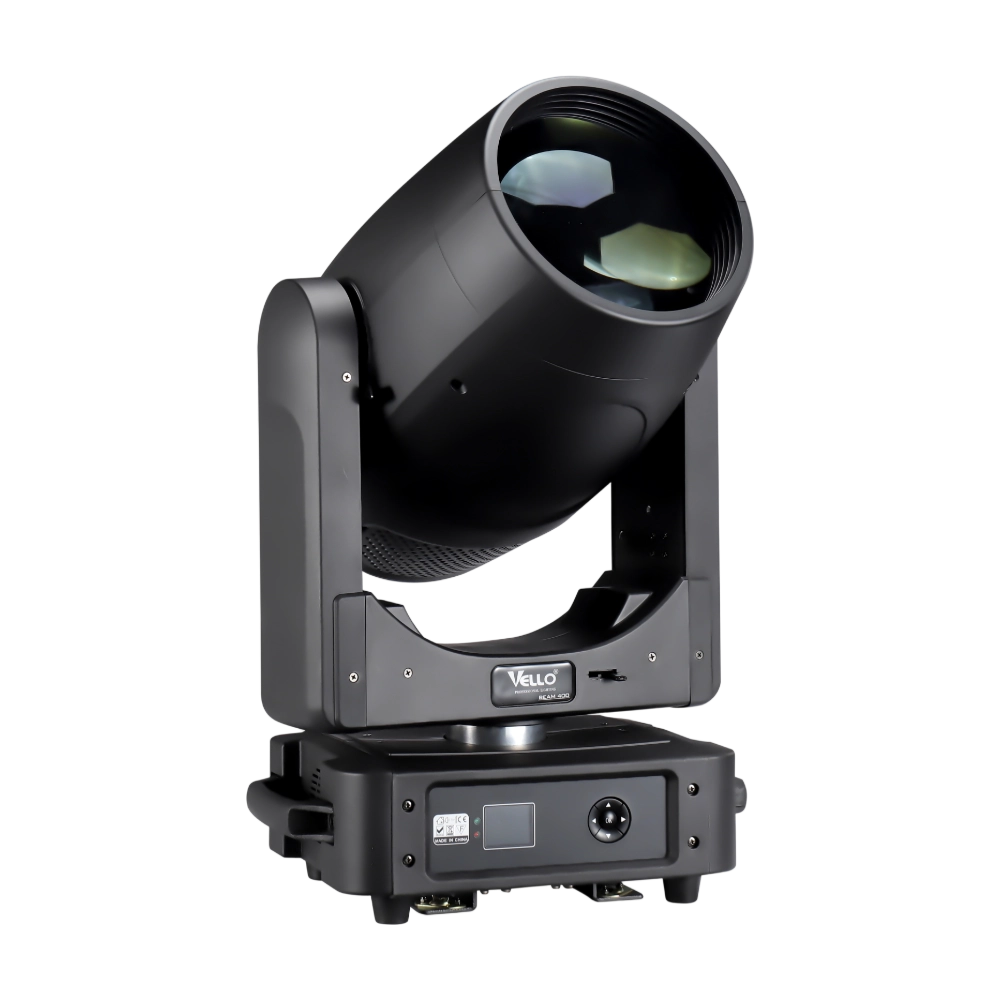
Moving Head Stage Light BEAM 400
BEAM400 is a 500W professional moving head beam powered by an OSRAM SIRIUS 371W discharge bulb, delivering a super-bright 1.8° sharp beam with impressive punch. It features 12 fixed gobos + open, a 14-color wheel, and a 16-facet circular rotating prism with multiple-facet effects, enabling dynamic aerial visuals. With 540° pan / 270° tilt, 16-bit movement resolution, and linear frost and focus, BEAM400 ensures precise and versatile performance. Comparable to traditional 750W moving heads, it combines high efficiency, smooth dimming, and reliable operation—ideal for concerts, tours, and large-scale stage productions.
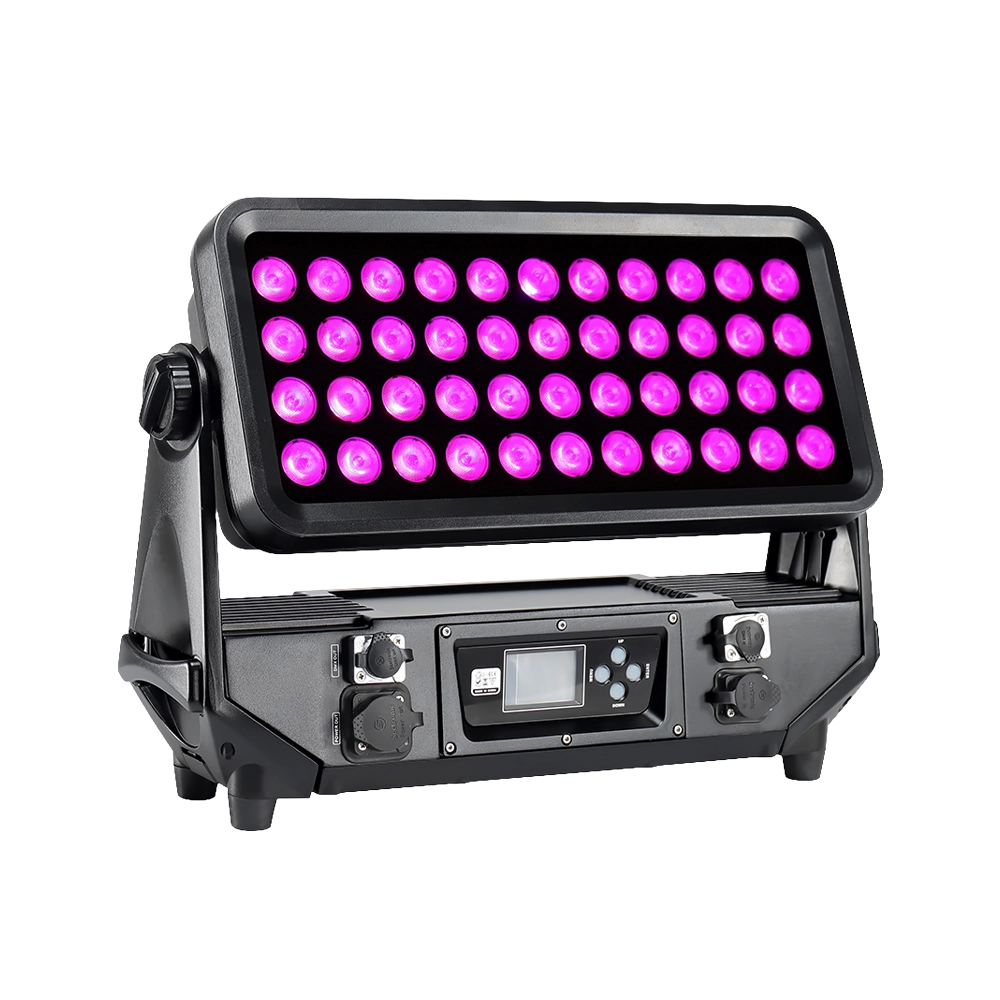
LED Light LED TOP P4
The Vello LED TOP P4 is a robust, high-output LED flood wash light designed for outdoor stages, architecture, and large-scale event lighting. Powered by 44x 15W RGBW LEDs from Cree, it delivers consistent brightness, smooth color mixing, and selectable beam angles of 20° or 40°. Built with a rugged IP65-rated die-cast aluminum housing, it withstands harsh weather conditions while offering smooth 0–100% dimming and flexible DMX control.
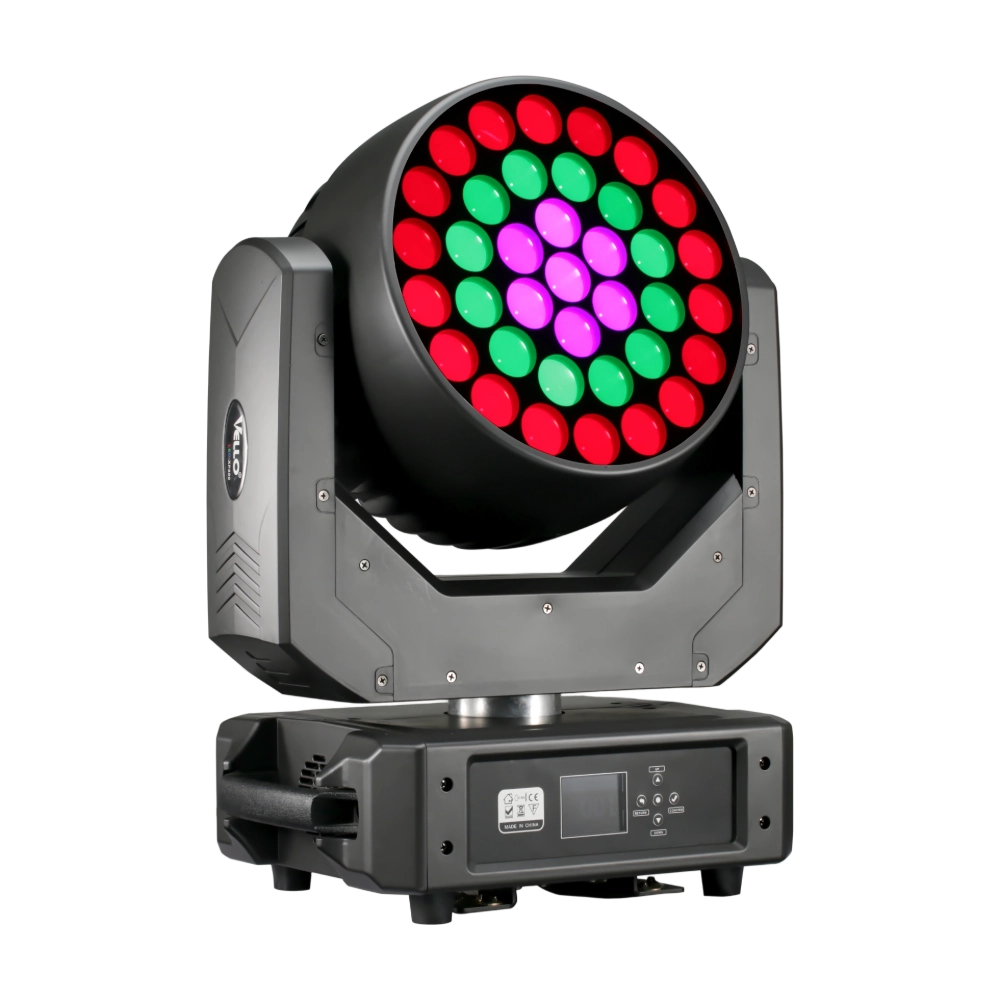
LED Moving Head Light XP800 (4in1)
The LED XP800 is a 600W moving head wash fixture, equipped with 37 × 20W Osram RGBW LEDs for brilliant color mixing and high output. With a wide 6°–50° electronic zoom, it easily transitions from sharp beams to smooth washes. The fixture supports 3-ring pixel control and an adjustable CTO range (2800K–8500K) for versatile applications. Featuring 540° pan / 310° tilt, high-speed 3-phase motors, and multiple DMX modes (16/28 channels), XP800 delivers powerful, precise, and dynamic performance. Compact and durable, it is an excellent choice for stages, theaters, and large-scale events requiring high brightness and flexibility.
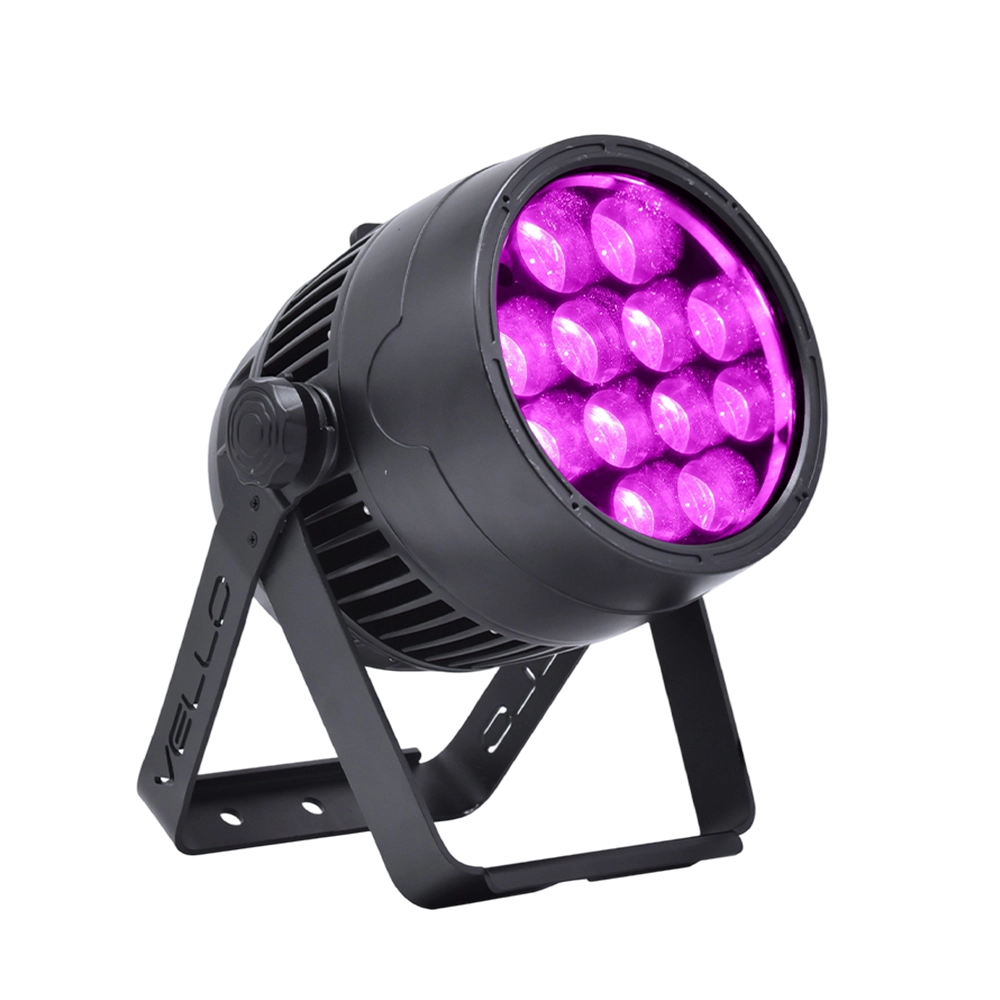
Stage LED Par Light LED ZOOMPAR 40
The Vello Zoom Par 40 IP is a powerful outdoor LED wash light equipped with 12x high-power 7-in-1 RGBACL LEDs. Designed for durability and rich color rendering, it features a wide motorized zoom (6°–50°), smooth dimming, and adjustable CTO presets (3200K–7500K), with 90+ CRI. With an IP66-rated die-cast aluminum body, it’s ideal for both indoor and outdoor applications, including stage lighting, architecture, live events, and installations.
Over 20 Years of Innovation in Stage & Studio Lighting
© 2026 VELLO. All Rights Reserved. 粤ICP备20023734号
Join our socials
VELLO
Whatsapp: +8613902276704
Vello Lighting
VelloLights