





Cost-Benefit Analysis: Custom Outdoor Lighting for Venues
- Balancing Aesthetics, Safety, and Budget for Outdoor Venues
- Understanding the Cost Components
- Upfront Capital: Fixtures, Controls, and Installation
- Operational Costs: Energy and Maintenance
- Indirect and Intangible Costs
- Quantifying Benefits: Energy, Maintenance, and Revenue Uplift
- Energy Savings: LED vs. Traditional Sources
- Maintenance and Lifecycle Value
- Revenue and Safety Benefits
- Side-by-Side: Typical Options for Venue Outdoor Lighting
- Case Study: 10-Fixture Example — Estimating 10-Year Total Cost of Ownership (TCO)
- Assumptions
- 10-Year TCO Table (10 fixtures)
- Design Considerations That Change the Cost-Benefit Balance
- Lighting Controls and Smart Systems
- Optics, Glare Control, and Light Pollution
- Environmental and Durability Specifications
- Procurement and Specification Best Practices
- Develop a Clear Performance Brief
- Request Lifecycle Cost Proposals, Not Only Unit Prices
- Evaluate Warranty, Service, and Spare Parts Policy
- Vendor Profile: Vello Light Co., Ltd. — Partnering for Custom Venue Solutions
- Technical Strengths and Services
- Product Range and Competitive Advantages
- ROI Calculation Checklist and Decision Framework
- Step-by-step ROI Checklist
- When to Choose Custom vs. Standard Solutions
- FAQ
- 1. How fast will custom outdoor LED lighting pay for itself?
- 2. Are there utility rebates or incentives for outdoor LED upgrades?
- 3. How do I ensure color consistency and quality across fixtures?
- 4. What's the importance of IP/IK ratings for outdoor venue fixtures?
- 5. Can lighting controls reduce energy costs further?
- 6. How do I evaluate long-term reliability claims (L70, L90)?
- Contact and Next Steps
- References and Sources
Balancing Aesthetics, Safety, and Budget for Outdoor Venues
Custom outdoor lighting for venues is more than decorative flair: it is an investment that affects operating costs, guest experience, safety, and brand perception. Venue operators—stadiums, performing arts centers, wedding venues, and hospitality properties—seek lighting solutions that meet visual design goals while controlling energy consumption and maintenance expenses. This article breaks down the costs and benefits of custom outdoor lighting, quantifies lifecycle economics, compares common technology choices, and provides procurement and specification guidance to help venue managers make defensible decisions.
Understanding the Cost Components
Upfront Capital: Fixtures, Controls, and Installation
Upfront capital includes fixture purchase, mounting hardware, wiring, controls (timers, dimmers, DMX, or intelligent lighting control), and labor. Custom fixtures—bespoke housings, specialized optics, or color-changing luminaires—add to the baseline cost. Typical components:
- LED fixtures (standard vs. custom finish/optics)
- Pole and mounting infrastructure
- Lighting control systems (networked controls add cost but enable savings)
- Civil and electrical installation work
Operational Costs: Energy and Maintenance
Operational expenses include energy consumption (kWh), routine maintenance (lamp replacement, cleaning), and backup/repair costs. LEDs dramatically reduce energy draw and maintenance frequency compared with legacy technologies, but intelligent controls and correct specification (IP rating, thermal management) determine long-term performance.
Indirect and Intangible Costs
Intangibles impact revenue and risk: improved visibility reduces insurance and liability risks; well-designed lighting increases event ticket sales and rental rates; poorly designed lighting can harm reputation. These factors should be monetized when possible.
Quantifying Benefits: Energy, Maintenance, and Revenue Uplift
Energy Savings: LED vs. Traditional Sources
Modern LED fixtures typically use 50–80% less energy than incandescent or metal-halide luminaires delivering comparable light. Energy cost savings are directly predictable through fixture wattage, annual operating hours, and local electricity rates.
Maintenance and Lifecycle Value
LEDs commonly have rated lifespans of 50,000+ hours and require less frequent relamping and ballast replacements. Reduced lift and labor costs for outdoor venue lighting (especially elevated fixtures) can be a major financial benefit.
Revenue and Safety Benefits
Better lighting can extend venue usable hours, increase perceived safety, and improve patron experience—resulting in higher concession sales, longer dwell times, repeat bookings, and positive reviews. For high-profile venues, lighting can also serve as branding and advertising (dynamic color scenes, facade washes), contributing to intangible but measurable marketing returns.
Side-by-Side: Typical Options for Venue Outdoor Lighting
The table below compares three common approaches for venue outdoor lighting: Retro-fit LED replacements, Standard LED luminaires, and Custom LED systems with controls and bespoke optics.
| Category | Retro-fit LED (lamp or kit) | Standard LED Luminaires | Custom LED Systems (bespoke fixtures + controls) |
|---|---|---|---|
| Typical upfront cost per fixture (USD) | $50–$150 | $150–$600 | $600–$3,500+ |
| Energy efficiency | Moderate (depends on kit) | High | Optimized (highest) |
| Maintenance frequency | Reduced vs. legacy | Low | Lowest (designed for serviceability) |
| Control capability | Limited | Optional | Advanced (DMX, DALI, networked scenes) |
| Customization (finish, optics) | Low | Moderate | High |
Source: aggregated market pricing and manufacturer catalogs (accessed 2025-12-31).
Case Study: 10-Fixture Example — Estimating 10-Year Total Cost of Ownership (TCO)
Assumptions
- Operating hours: 4,000 hours/year (typical for event-driven venue lighting)
- Electricity cost: $0.15/kWh (commercial rate; adjust for your market)
- Fixtures compared: 400W metal halide (old), 200W retrofit LED, 120W custom LED luminaire
- Maintenance: lamp/ballast replacement for metal halide every 2–3 years; minimal for LED
10-Year TCO Table (10 fixtures)
| Line item | Metal Halide (400W) | Retrofit LED (200W) | Custom LED (120W) |
|---|---|---|---|
| Initial fixture cost (10 pcs) | $6,000 ($600 ea) | $2,000 ($200 ea) | $10,000 ($1,000 ea) |
| Energy cost (10 fixtures × hours × kW × $0.15) | $24,000 (10×0.4kW×4,000×10×0.15) | $12,000 | $7,200 |
| Maintenance & replacement | $6,000 (bulbs/ballasts & labor) | $1,500 | $600 |
| Total 10-year TCO | $36,000 | $15,500 | $17,800 |
Interpretation: Retrofit LEDs deliver fastest payback when capital is constrained. Custom LED systems cost more upfront but offer the lowest energy use and superior control, plus value in branding and differentiation. Numbers are illustrative; site-specific modeling is required for procurement.
Design Considerations That Change the Cost-Benefit Balance
Lighting Controls and Smart Systems
Intelligent controls (scheduling, occupancy sensors, dimming, remote monitoring) increase upfront cost but yield energy savings of 20–60% over uncontrolled systems depending on use patterns. Controls also enable dynamic scenes (branding, reduced light pollution) and remote troubleshooting, lowering maintenance response times.
Optics, Glare Control, and Light Pollution
Well-specified optics reduce spill light and increase delivered illuminance where needed, reducing required fixture counts or wattages. Compliance with local ordinances (light trespass, sky glow) avoids fines and community pushback.
Environmental and Durability Specifications
Outdoor fixtures should meet appropriate IP (ingress protection) and IK (impact) ratings, and include corrosion-resistant materials for coastal environments. Higher initial cost for ruggedization usually reduces premature failures and lifecycle cost.
Procurement and Specification Best Practices
Develop a Clear Performance Brief
Specify target lux/footcandles for task and ambient areas, color temperature (CCT), color rendering index (CRI), beam spread, IP/IK ratings, and control protocol (DMX, DALI, or PoE). Treat appearance, mounting, and service access as mandatory criteria rather than optional extras.
Request Lifecycle Cost Proposals, Not Only Unit Prices
Ask suppliers for 10-year TCO models including energy, maintenance, expected lumen depreciation (L70), warranty terms, and service provisions. Incorporate rebates and incentives into analysis (many utilities and governments offer LED retrofit incentives).
Evaluate Warranty, Service, and Spare Parts Policy
Longer warranties and local support lower operational risk. Verify how manufacturers handle color shift, driver failures, and thermal degradation. Confirm availability of spare drivers and optics, and whether field-replaceable modules are provided.
Vendor Profile: Vello Light Co., Ltd. — Partnering for Custom Venue Solutions
Vello Light Co., Ltd., established in 2003, is a comprehensive technology enterprise integrating R&D, manufacturing, and sales. Over the years, Vello has consistently adhered to the principles of quality first and sincere service. With domestic and international customers, Vello has grown into a strong and distinct team in the LED stage lighting sector.
Technical Strengths and Services
In recent years, with the rapid development of the LED market, Vello Light has gathered a large number of professional talents to provide comprehensive services including product R&D, manufacturing, marketing, engineering installation, and product maintenance. Vello emphasizes innovation, quality materials, and durability—key factors for outdoor venue lighting where reliability and serviceability matter.
Product Range and Competitive Advantages
VELLO (registered brand) focuses on stage and event lighting products such as moving head stage lights, studio lights, LED effect lights, LED Bar Lights, LED Par Light, and outdoor stage lighting. Vello's competitive differentiators include:
- Integrated R&D and manufacturing for tight quality control
- Customizable optics, finishes, and control integrations for venue branding
- Experience with export markets and global compliance
- After-sales support including installation guidance and maintenance solutions
For venues requiring tailored lighting systems that merge theatrical performance with outdoor durability—such as concert parks, amphitheaters, and event plazas—Vello can design fixtures and control ecosystems that address energy efficiency, visual quality, and maintenance accessibility.
ROI Calculation Checklist and Decision Framework
Step-by-step ROI Checklist
- Inventory existing fixtures and operating hours.
- Establish energy cost per kWh and maintenance labor rates.
- Define performance targets: illuminance, CRI, CCT, control needs.
- Obtain multiple vendor TCO proposals (10 years recommended).
- Include rebates, tax incentives, and residual value.
- Model payback period and net present value (NPV) under conservative energy price forecasts.
When to Choose Custom vs. Standard Solutions
- Choose custom when branding, optics, or unique mounting make a material difference to revenue or experience.
- Choose standard LED luminaires when budgets are moderate and proven performance is the priority.
- Consider retrofit kits for immediate energy savings with minimal capital if aesthetics and controls are less critical.
FAQ
1. How fast will custom outdoor LED lighting pay for itself?
Payback varies by baseline technology, operating hours, and electricity price. Typical payback ranges from 2–6 years for LED upgrades in event-driven venues; custom systems with higher upfront costs may take longer but provide superior controls and branding value that extend beyond simple energy savings.
2. Are there utility rebates or incentives for outdoor LED upgrades?
Yes. Many utilities and governments provide rebates for efficient outdoor lighting, networked controls, and fixture replacements. Always consult local utility programs and include incentives in your financial model.
3. How do I ensure color consistency and quality across fixtures?
Specify CCT (e.g., 3000K, 4000K) and tolerance (MacAdam ellipse, e.g., 2-step), and require CRI or TM-30 metrics. Purchase from manufacturers that control LED binning and offer color-matched fixtures.
4. What's the importance of IP/IK ratings for outdoor venue fixtures?
IP ratings indicate protection from dust and water; IK ratings indicate impact resistance. Higher ratings reduce failures due to weather and vandalism—critical for coastal, high-humidity, or stadium environments.
5. Can lighting controls reduce energy costs further?
Yes. Controls such as dimming, scheduling, occupancy sensors, and adaptive control (daylight harvesting) can cut energy use by an additional 20–60% depending on operations. Controls also provide operational benefits like remote diagnostics.
6. How do I evaluate long-term reliability claims (L70, L90)?
Request LM-80 test data and L70 projections from the manufacturer. L70 indicates hours until lumen output drops to 70% of initial—common warranty benchmarks are 50,000 hours or more. Verify independent test reports when possible.
Contact and Next Steps
If you are evaluating a custom outdoor lighting project for your venue, consider a site audit and a 10-year TCO proposal. Vello Light Co., Ltd. can provide project-specific design, prototype samples, and lifecycle cost modeling tailored to your venue type and operating patterns. Contact us to request a consultation, product catalog, or pilot sample.
CTA: Reach out to Vello Light Co., Ltd. for custom proposals and site-specific ROI analysis—start with a free consultation and lighting audit.
References and Sources
- U.S. Department of Energy — LED Lighting, Energy Saver: https://www.energy.gov/energysaver/led-lighting (accessed 2025-12-31)
- U.S. Energy Information Administration (EIA) — Retail Price of Electricity: https://www.eia.gov/electricity/data.php (accessed 2025-12-31)
- Illuminating Engineering Society (IES) — Lighting Handbook and recommended practices: https://www.ies.org/ (accessed 2025-12-31)
- Lighting Research Center — Outdoor Lighting and Safety: https://www.lrc.rpi.edu/ (accessed 2025-12-31)
- Grand View Research — LED Lighting Market Size & Trends (market overview): https://www.grandviewresearch.com/industry-analysis/led-lighting-market (accessed 2025-12-31)
- Wikipedia — Light-emitting diode: https://en.wikipedia.org/wiki/Light-emitting_diode (accessed 2025-12-31)
Energy Efficiency and Savings with LED Stage Lighting Equipment
Intelligent Moving Head Stage Light Setup and Tips
Custom LED Lighting Cost: Pricing, Quotes, and Budget Tips
Top Affordable LED Stage Lights for Small Venues
Major categories
Do you ship internationally?
Yes. We offer sea, air, and express delivery to many countries and regions worldwide.
Do you offer samples?
Samples are available for certain models. Please confirm with our sales team for details.
What is the warranty period for your products?
Most products come with a standard 1–2 year warranty. Please refer to product details or contract terms for specifics.
Do your products support customization?
Yes. We offer OEM and ODM services tailored to project needs, including design, optics, and control compatibility.
What is the usual lead time?
Standard models are typically shipped within 7–15 working days after payment. Customized items may vary.
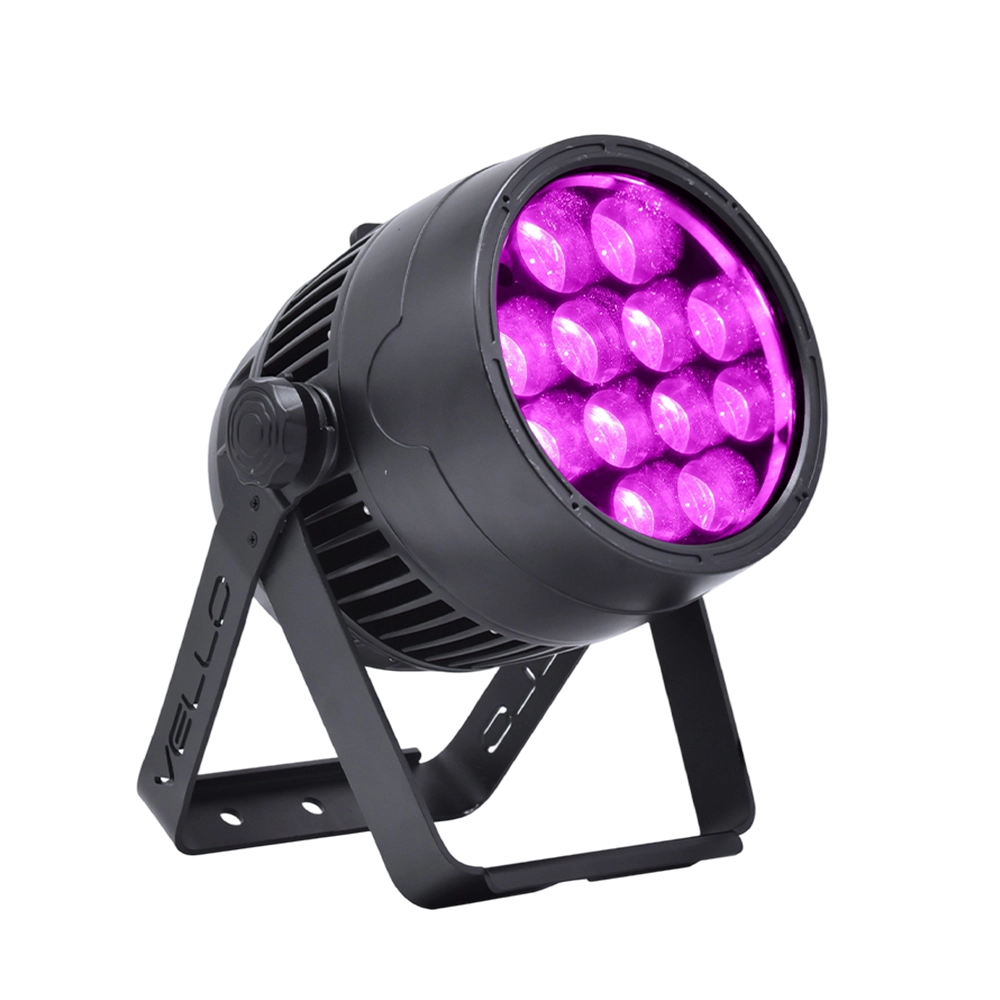
Stage LED Par Light LED ZOOMPAR 40
The Vello Zoom Par 40 IP is a powerful outdoor LED wash light equipped with 12x high-power 7-in-1 RGBACL LEDs. Designed for durability and rich color rendering, it features a wide motorized zoom (6°–50°), smooth dimming, and adjustable CTO presets (3200K–7500K), with 90+ CRI. With an IP66-rated die-cast aluminum body, it’s ideal for both indoor and outdoor applications, including stage lighting, architecture, live events, and installations.
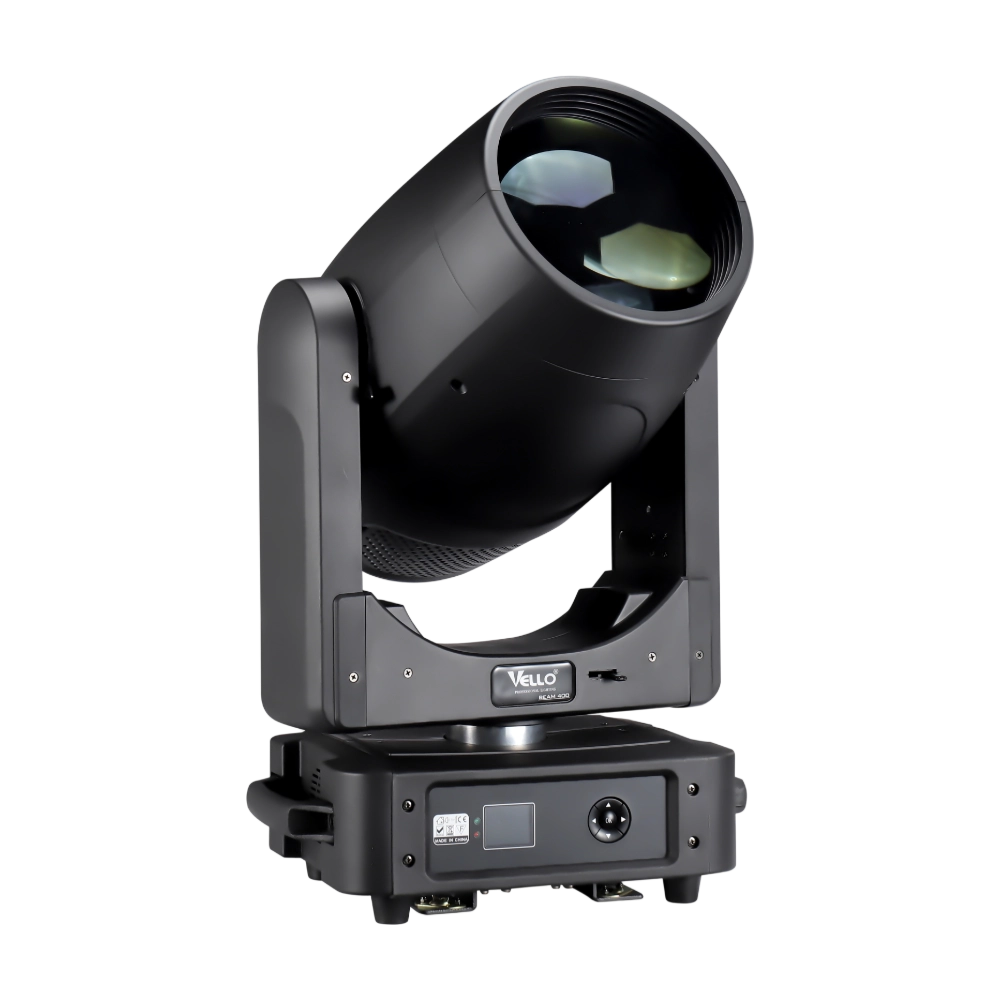
Moving Head Stage Light BEAM 400
BEAM400 is a 500W professional moving head beam powered by an OSRAM SIRIUS 371W discharge bulb, delivering a super-bright 1.8° sharp beam with impressive punch. It features 12 fixed gobos + open, a 14-color wheel, and a 16-facet circular rotating prism with multiple-facet effects, enabling dynamic aerial visuals. With 540° pan / 270° tilt, 16-bit movement resolution, and linear frost and focus, BEAM400 ensures precise and versatile performance. Comparable to traditional 750W moving heads, it combines high efficiency, smooth dimming, and reliable operation—ideal for concerts, tours, and large-scale stage productions.
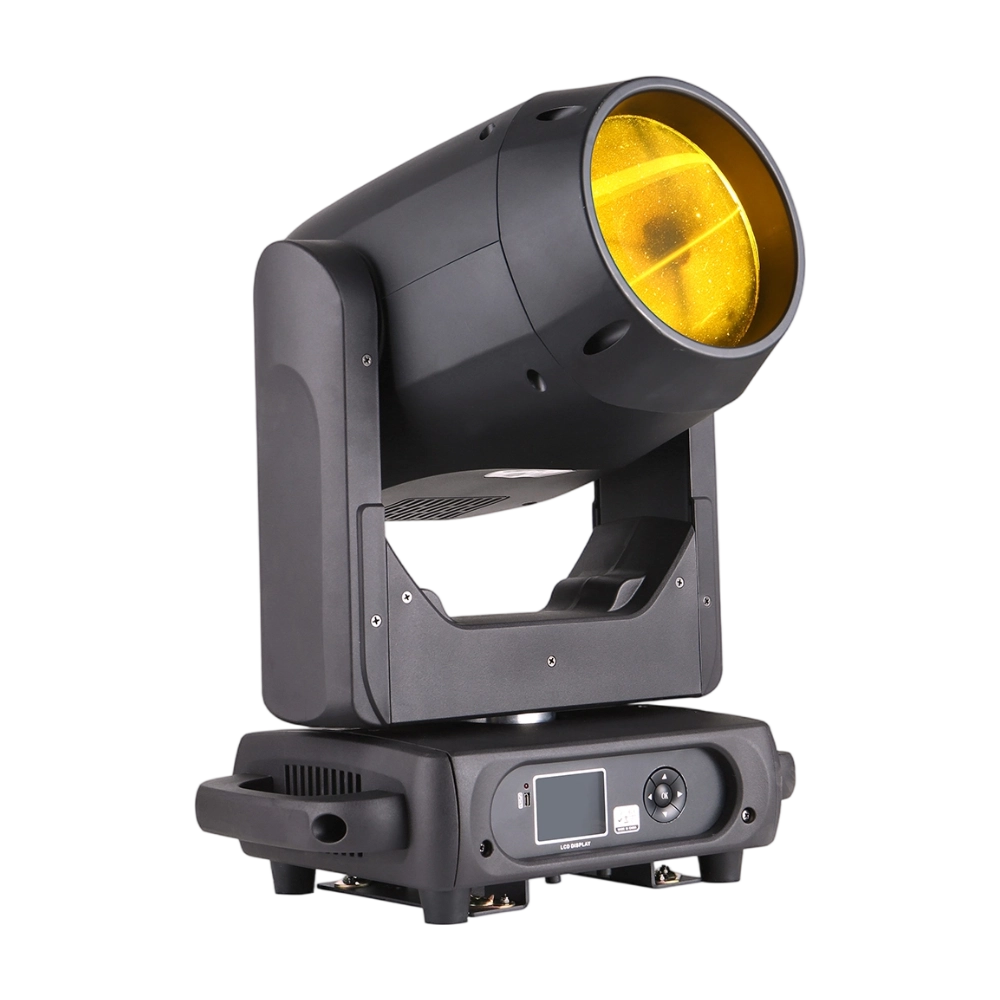
Moving Head Stage Light BEAM 360
BEAM360 is a 400W high-power moving head beam equipped with an OSRAM SIRIUS 311W discharge lamp, delivering a sharp 1.8° beam with super brightness. It features 14 colors + open, 12 fixed metal gobos + open, and dual prisms (8-facet circular + 8+16 multi-facet combination) for dynamic aerial effects. With 540° pan / 270° tilt, 16-bit movement, and linear frost and focus, BEAM360 ensures precision and versatility. Compact yet powerful, it rivals traditional 575W moving heads, making it ideal for concerts, clubs, and large-scale stage productions.
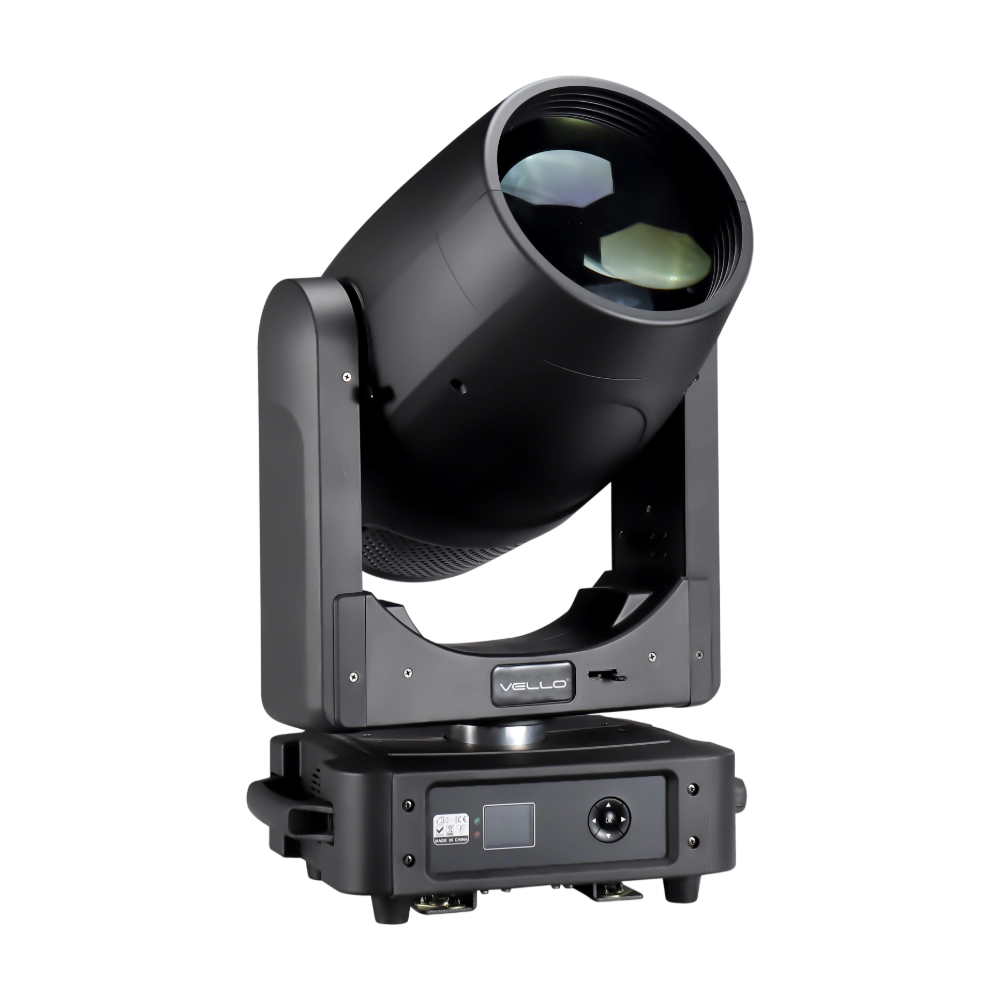
Moving Head Light BEAM 450
The BSW450 is a high-performance moving head fixture equipped with an original Osram 420W bulb, delivering exceptional brightness, precision, and versatility. Designed for professional stage applications, it seamlessly combines beam, spot, and wash functions in one compact unit, making it a powerful all-in-one lighting solution.
Over 20 Years of Innovation in Stage & Studio Lighting
© 2026 VELLO. All Rights Reserved. 粤ICP备20023734号
Join our socials
VELLO
Whatsapp: +8613902276704
Vello Lighting
VelloLights