





Comparing LED Stage Lights: COB vs. SMD vs. RGBW
- Why modern stage lights LED matter for productions
- Energy, heat and practical benefits
- Color fidelity, control and creative flexibility
- Technical comparison: How COB, SMD and RGBW LEDs work
- COB (Chip-on-Board): concentrated light source
- SMD (Surface-Mount Device): flexible arrays
- RGBW (multi-channel emitters): color mixing and dedicated white
- Performance metrics and real-world behavior
- Lumen output, efficacy and color metrics (CRI / TM-30)
- Thermal management, lifetime and maintenance
- Optics, beam control and flicker
- Side-by-side comparison table
- Choosing the right stage lights LED: use-case driven guidance
- Scenario: Touring moving heads and intelligent fixtures
- Scenario: House wash, theatre and broadcast
- Scenario: Concert effects and pixel-mapping
- Cost, maintenance and lifecycle considerations
- Upfront vs. lifetime cost
- Spare parts, serviceability and supply chain
- Vello Light Co., Ltd. — company fit and product relevance
- Practical checklist before buying stage lights LED
- FAQ — Frequently Asked Questions
- 1. Which LED type gives the best color rendering for theatrical skin tones?
- 2. Are COB fixtures always brighter than SMD-based fixtures?
- 3. Can RGBW replace dedicated warm-white fixtures for all purposes?
- 4. How important is PWM frequency and flicker control for stage lighting?
- 5. What's the typical maintenance profile for LED stage lights?
- 6. How should I test fixtures before purchasing for a fixed installation?
- Contact, demos and next steps
Stage lighting decisions hinge on more than brightness: color quality, beam control, thermal management, reliability and lifecycle costs all shape what system best serves a venue or production. This article compares three common LED approaches used in modern stage lights LED — COB (Chip-on-Board), SMD (Surface-Mount Device) and RGBW (multi-channel color mixing) — to help lighting designers, rental houses and AV buyers make informed choices based on verifiable performance metrics, real-world trade-offs and long-term value.
Why modern stage lights LED matter for productions
Energy, heat and practical benefits
LED stage lighting transformed the industry by drastically reducing power draw, heat load and lamp replacement needs compared with legacy discharge sources. For venues and touring rigs, reduced mains power, lower HVAC burden and fewer onsite lamp changes translate into operational savings and more consistent performance. For a primer on LED basics and benefits, see the U.S. Department of Energy's overview on LEDs (energy.gov/led-basics).
Color fidelity, control and creative flexibility
Modern stage lights LED provide precise DMX/RDM or network control, pixel-mapping and virtually unlimited color choices when using multi-channel emitters. However, the underlying LED packaging technology (COB vs. SMD vs. RGBW) affects color mixing quality, beam shaping and how well the fixture performs under rigorous theatrical requirements such as high CRI or smooth gobo projection.
Technical comparison: How COB, SMD and RGBW LEDs work
COB (Chip-on-Board): concentrated light source
COB places multiple LED chips closely on a substrate to form a single, dense light-emitting area. This design yields a high lumen density and a near-point-source behavior when paired with appropriate optics — useful for tight beams and strong projection. For technical background on the packaging approach, see Chip-on-board on Wikipedia.
SMD (Surface-Mount Device): flexible arrays
SMD LEDs are packaged individual emitters mounted across a PCB. They offer modularity and are widely used in LED panels, bars and wash lights because of their even surface distribution and good thermal path per emitter. SMD is versatile for creating large uniform fields of light and is common in stage wash fixtures. See SMD / surface-mount technology for background.
RGBW (multi-channel emitters): color mixing and dedicated white
RGBW fixtures combine dedicated red, green, blue and white emitters within a pixel or LED package to improve color rendering and offer a native white channel. RGBW designs enhance pastel and saturated tones while providing warmer whites without relying solely on color-mixed white. For color fundamentals, consult the RGB color model overview.
Performance metrics and real-world behavior
Lumen output, efficacy and color metrics (CRI / TM-30)
When comparing stage lights LED, consider lumen output (per fixture), efficacy (lm/W), and color fidelity (CRI or TM-30). Government and industry resources list typical LED efficacies and how LED performance has improved over time; see the U.S. Department of Energy for aggregated efficacy ranges and metrics (energy.gov/led-light-bulbs). In practice:
- COB fixtures often provide high perceived brightness and tight beams at moderate to high lm/W depending on driver and thermal design.
- SMD arrays can reach competitive efficacies and are optimized for uniform washes with slightly lower perceived punch per emitter than a focused COB.
- RGBW fixtures trade a small portion of white-channel efficacy for superior color mixing and more accurate whites when the white LED is high quality.
Thermal management, lifetime and maintenance
Thermal design directly impacts LED lifetime and lumen maintenance (L70/L90 ratings). COB packages concentrate heat in a smaller area which increases demands on heatsinking and active cooling, while SMD distributes heat across the PCB, sometimes simplifying thermal spread but requiring attention to solder joints and PCB materials. RGBW fixtures include multiple emitter types — complexity increases but a robust thermal solution preserves color balance and lifespan.
Optics, beam control and flicker
COB point-source behavior simplifies tight focusing and gobo sharpness, often making COBs preferred for moving head spot fixtures. SMD fixtures with arrays excel in wide-beam, soft-edge wash applications. RGBW pixel fixtures deliver rich pixel-mapped effects. Also consider flicker and PWM control: high-quality fixtures use sufficiently high PWM frequencies or flicker-free drivers suitable for broadcast and high-speed camera work; general flicker concerns are summarized on Wikipedia.
Side-by-side comparison table
| Feature | COB | SMD | RGBW |
|---|---|---|---|
| Typical application | Spot/moving head with strong punch | Wash bars, panels, even fields | Color-mixing fixtures, architectural and pixel effects |
| Lumen efficacy (lm/W) | ~80–130 (fixture-dependent; high-power COBs toward higher end) | ~90–150 (SMD bins vary; arrays scale well) | ~70–140 (depends on white emitter and driver design) |
| Color fidelity (CRI/TM-30) | Good when high-CRI phosphors are used; often CRI 80–95 | Good to excellent depending on LED binning; CRI 80–95 | Very flexible: white channel can give higher CRI; color channels vary |
| Beam control / optics | Excellent for tight beams and gobos (near point source) | Better for broad, even washes; edge blending easier | Strong for pixel mapping and mixed color effects; beam depends on emitter layout |
| Thermal challenges | High local thermal density; requires strong heatsinking | Thermal spread across PCB; good soldering and substrate required | Multiple die types require balanced thermal design |
| Typical cost | Mid to high (optical and cooling systems add cost) | Low to mid (mass produced; cost-effective for washes) | Mid to high (more channels and control electronics) |
Sources and further reading: U.S. Department of Energy LED overview (energy.gov), Wikipedia pages on COB, SMD and RGB.
Choosing the right stage lights LED: use-case driven guidance
Scenario: Touring moving heads and intelligent fixtures
For moving head spots and automated fixtures where gobo clarity and punch are essential, COB-based engines are often preferred due to their concentrated source and superior projection. Ensure the fixture's driver supports high refresh rates and that the manufacturer publishes photometric data (lux at distance, beam angle) for rigging and power planning.
Scenario: House wash, theatre and broadcast
SMD-based wash lights tend to give very even illumination and are cost-effective for front- and back-wash roles. If broadcast is a requirement, prioritize fixtures with documented low flicker and good CRI/TM-30 scores. Verify measured data or independent test reports when color rendering is mission-critical.
Scenario: Concert effects and pixel-mapping
RGBW (or RGBWA/Full-spectrum) pixel fixtures excel for audience-facing effects, curtain pixel mapping and stage visuals. They deliver flexible color palettes and strong visual impact; confirm the pixel pitch, control protocols (ArtNet/sACN) and power/data topology for touring deployments.
Cost, maintenance and lifecycle considerations
Upfront vs. lifetime cost
Initial purchase price should be balanced against expected lifetime (L70), warranty, ease of servicing and parts availability. LED engines from reputable manufacturers typically publish L70 or L90 lifetimes; fixtures with better thermal management often retain higher lumen output over years, reducing replacement and maintenance costs.
Spare parts, serviceability and supply chain
Choose suppliers with clear spare-part channels and technical support. For rental companies and venues that require minimal downtime, modular designs and widely available components (power supplies, fans, beams) are practical advantages. Manufacturer transparency on component sourcing and test data indicates stronger engineering discipline.
Vello Light Co., Ltd. — company fit and product relevance
Vello Light Co., Ltd., established in 2003, is a comprehensive technology enterprise integrating R&D, manufacturing, and sales. Over the years, the company has adhered to quality-first and service-driven principles. With a large team of professionals, VELLO focuses on product R&D, manufacturing, marketing, engineering installation and product maintenance. Their products are exported globally under the registered brand VELLO and enjoy strong brand reputation overseas. Vello's core product lines include moving head stage lights, studio lights, LED effect light, LED Bar Lights, LED Par Light and outdoor stage lighting, designed for touring, theatre, broadcast and architectural applications.
Why consider VELLO when selecting stage lights LED?
- Track record: operating since 2003 with continuous product development and customer support.
- Product breadth: moving head fixtures (where COB engines can deliver punch), LED wash and effect lights using SMD or RGBW configurations for different creative needs.
- Engineering focus: systematic R&D and manufacturing integration ensures better control of photometric performance, thermal solutions and component sourcing.
- Global service and export experience: familiarity with international standards and venue requirements.
For detailed product specifications, photometric files and ordering inquiries, visit Vello Light or contact info@vellolight.com.
Practical checklist before buying stage lights LED
- Define primary use: spot, wash, effect, pixel mapping or hybrid.
- Request published photometric data: lux at distance, beam angles, CRI/TM-30, flicker specs.
- Confirm control protocols and compatibility with your console (DMX, RDM, Art-Net, sACN).
- Inspect thermal design: heatsink mass, fan redundancy, and L70/L90 ratings.
- Evaluate service support: spare parts availability and warranty terms.
FAQ — Frequently Asked Questions
1. Which LED type gives the best color rendering for theatrical skin tones?
COB or high-quality RGBW fixtures with a high-CRI white emitter typically offer the best skin-tone rendition. Check for CRI 90+ or TM-30 reports from the manufacturer. Fixtures intended for theatre and broadcast should publish measured color rendering metrics.
2. Are COB fixtures always brighter than SMD-based fixtures?
Not necessarily. COBs can appear punchier because of concentrated light and optics, but modern SMD arrays can match or exceed lumen output depending on LED binning and driver design. Always compare manufacturer photometric charts rather than relying on assumptions.
3. Can RGBW replace dedicated warm-white fixtures for all purposes?
RGBW provides improved whites compared to RGB-only fixtures and greater color flexibility, but the white channel's spectral quality depends on the white emitter used. For critical white rendering (e.g., broadcast skin tones), choose fixtures with a documented high-CRI white LED or consider dedicated white sources.
4. How important is PWM frequency and flicker control for stage lighting?
Very important for camera work. Low PWM frequencies can cause flicker on high-speed cameras or LED-sensitive sensors. Choose fixtures that specify flicker-free performance or high PWM frequencies suitable for broadcast and filming.
5. What's the typical maintenance profile for LED stage lights?
Maintenance is mainly cleaning optics, checking fans and replacing consumables (fans, power supplies) infrequently. LEDs themselves typically last many thousands of hours; however, thermal degradation and driver wear can affect long-term performance, so good thermal design and access to spare parts matter.
6. How should I test fixtures before purchasing for a fixed installation?
Request photometric reports, sample units for on-site demo, and run camera tests at expected frame rates and shutter speeds. Also validate mounting, power distribution and control interoperability with your existing systems.
Contact, demos and next steps
If you need tailored advice based on venue size, rigging constraints and production needs, Vello Light's engineering team can provide specification support, photometric files and onsite or remote demos. Learn more at https://www.vellolight.com or email product inquiries to info@vellolight.com.
Ready to evaluate fixtures? Contact VELLO for product datasheets and custom proposals for moving head stage lights, studio lights, LED effect light, LED Bar Lights, LED Par Light and outdoor stage lighting to match your technical and budgetary needs.
Bulk Custom LED Stage Lights: Pricing & Lead Times
Energy Efficiency and Power Consumption of LED Moving Heads
Energy Savings of Custom LED Stage Lights for Venues
Custom LED Stage Lighting Solutions for Touring Productions
Major categories
What is the warranty period for your products?
Most products come with a standard 1–2 year warranty. Please refer to product details or contract terms for specifics.
Do you offer samples?
Samples are available for certain models. Please confirm with our sales team for details.
Do your products support customization?
Yes. We offer OEM and ODM services tailored to project needs, including design, optics, and control compatibility.
Do you ship internationally?
Yes. We offer sea, air, and express delivery to many countries and regions worldwide.
What is the usual lead time?
Standard models are typically shipped within 7–15 working days after payment. Customized items may vary.
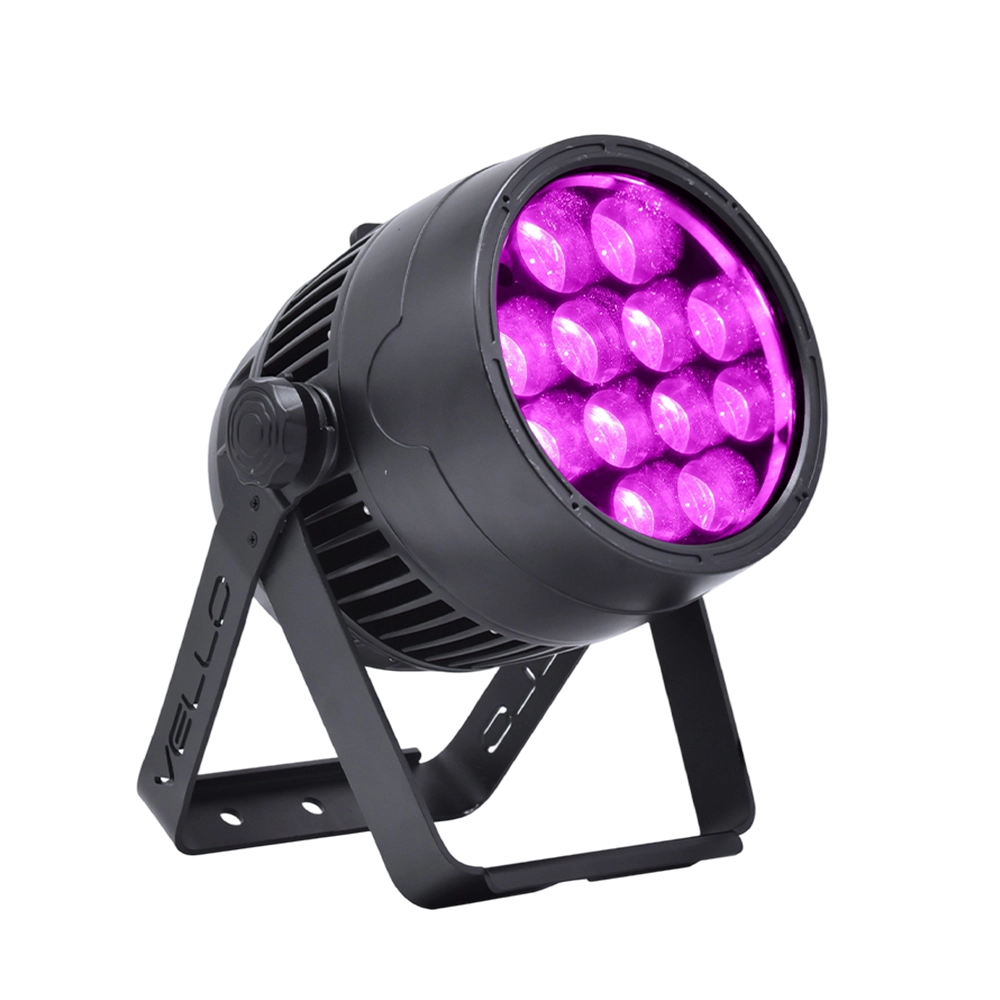
Stage LED Par Light LED ZOOMPAR 40
The Vello Zoom Par 40 IP is a powerful outdoor LED wash light equipped with 12x high-power 7-in-1 RGBACL LEDs. Designed for durability and rich color rendering, it features a wide motorized zoom (6°–50°), smooth dimming, and adjustable CTO presets (3200K–7500K), with 90+ CRI. With an IP66-rated die-cast aluminum body, it’s ideal for both indoor and outdoor applications, including stage lighting, architecture, live events, and installations.
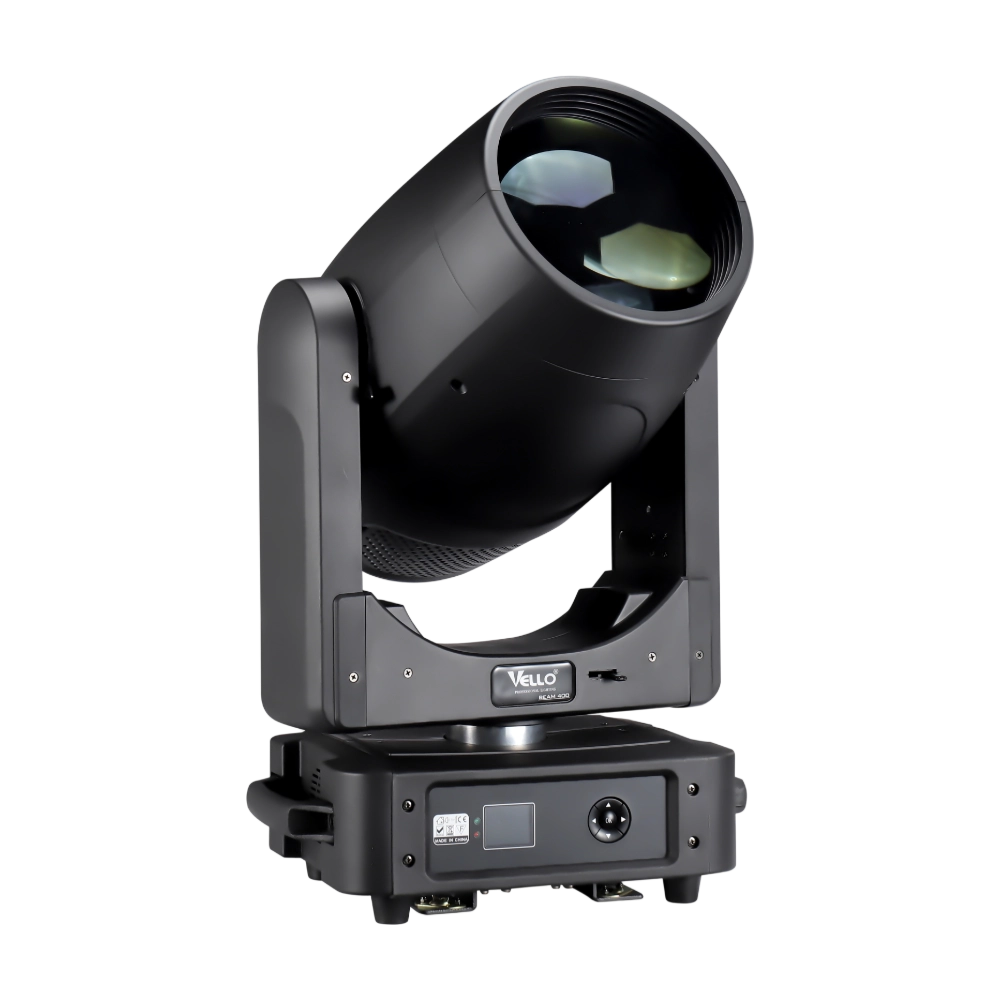
Moving Head Stage Light BEAM 400
BEAM400 is a 500W professional moving head beam powered by an OSRAM SIRIUS 371W discharge bulb, delivering a super-bright 1.8° sharp beam with impressive punch. It features 12 fixed gobos + open, a 14-color wheel, and a 16-facet circular rotating prism with multiple-facet effects, enabling dynamic aerial visuals. With 540° pan / 270° tilt, 16-bit movement resolution, and linear frost and focus, BEAM400 ensures precise and versatile performance. Comparable to traditional 750W moving heads, it combines high efficiency, smooth dimming, and reliable operation—ideal for concerts, tours, and large-scale stage productions.
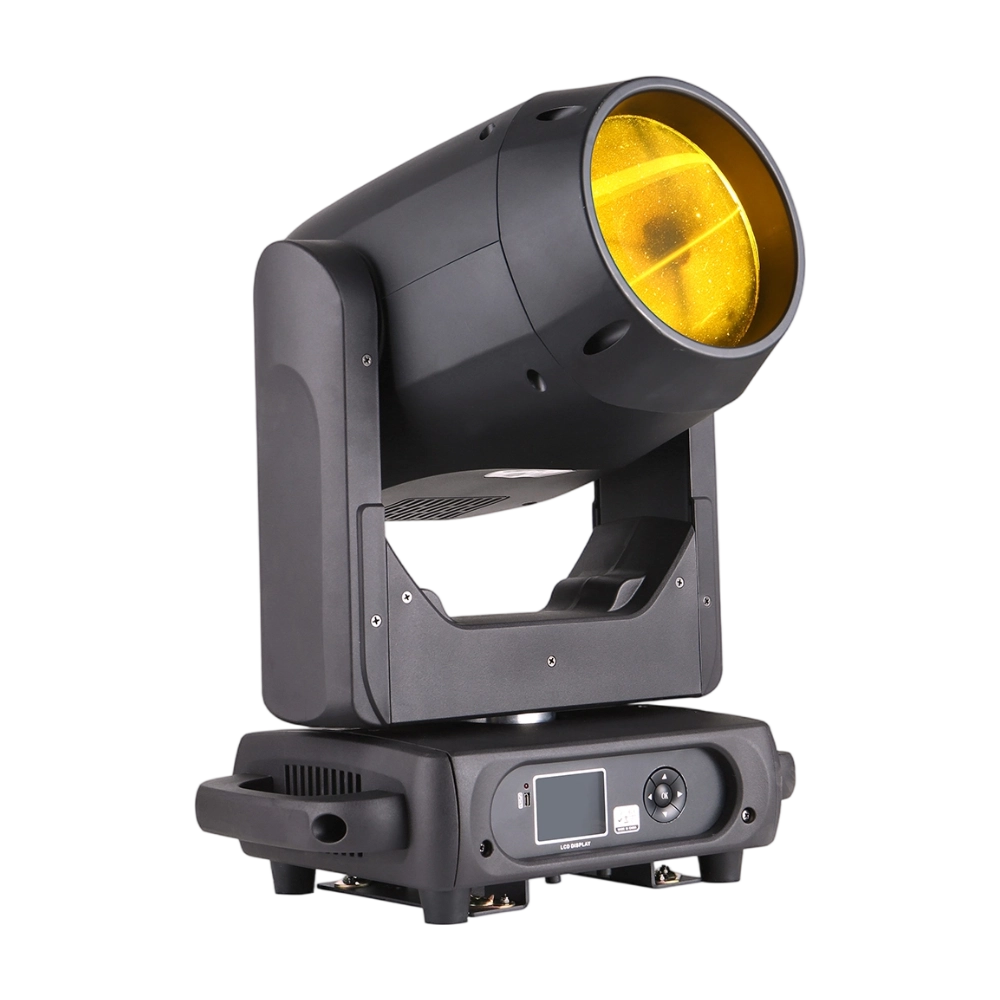
Moving Head Stage Light BEAM 360
BEAM360 is a 400W high-power moving head beam equipped with an OSRAM SIRIUS 311W discharge lamp, delivering a sharp 1.8° beam with super brightness. It features 14 colors + open, 12 fixed metal gobos + open, and dual prisms (8-facet circular + 8+16 multi-facet combination) for dynamic aerial effects. With 540° pan / 270° tilt, 16-bit movement, and linear frost and focus, BEAM360 ensures precision and versatility. Compact yet powerful, it rivals traditional 575W moving heads, making it ideal for concerts, clubs, and large-scale stage productions.
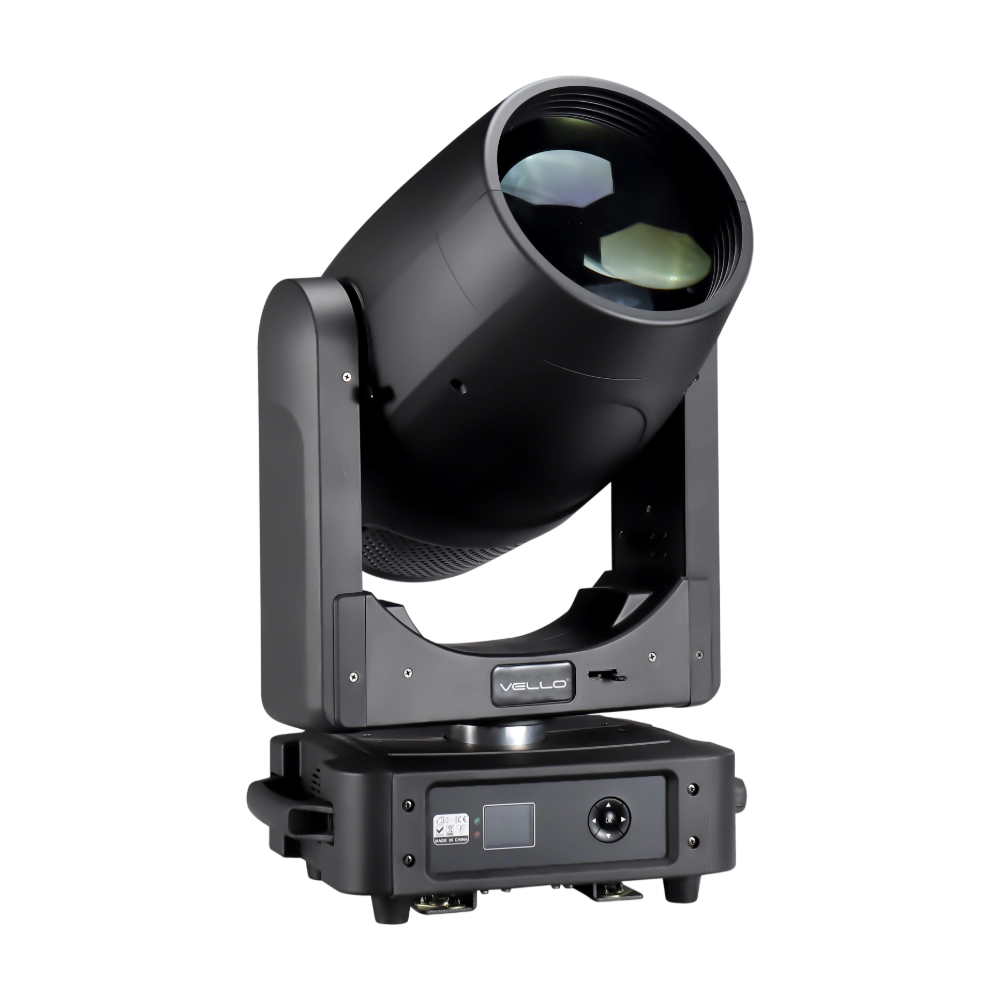
Moving Head Light BEAM 450
The BSW450 is a high-performance moving head fixture equipped with an original Osram 420W bulb, delivering exceptional brightness, precision, and versatility. Designed for professional stage applications, it seamlessly combines beam, spot, and wash functions in one compact unit, making it a powerful all-in-one lighting solution.
Over 20 Years of Innovation in Stage & Studio Lighting
© 2026 VELLO. All Rights Reserved. 粤ICP备20023734号
Join our socials
VELLO
Whatsapp: +8613902276704
Vello Lighting
VelloLights