




Compare LED PAR, Moving Head, and Wash Lights: Buyer Checklist
- How LED technology reshaped stage lighting
- From incandescent to solid-state: what changed
- Implications for venues and touring rigs
- Standards and control protocols to know
- Core differences: LED PAR vs. Moving Head vs. Wash Light
- Functional summary
- Performance attributes
- How these differences affect show design
- Buyer checklist: what to evaluate before purchase
- 1) Clarify your performance requirements
- 2) Control and integration
- 3) Power, cooling and rigging constraints
- 4) Optical quality and color fidelity
- 5) Total cost of ownership and maintenance
- Real-world purchasing scenarios and recommendations
- Small houses / community theatres
- Concert touring and live events
- Broadcast and studio applications
- Comparison of selection criteria by application
- Why vendor selection matters — case study and brand insight
- Evaluating manufacturer competence
- About Vello Light Co., Ltd.
- How I assess VELLO in practice
- Practical tips, testing and post-purchase checks
- On-site testing before full purchase
- Installation and ongoing maintenance
- Warranty and spare parts
- FAQ — Frequently asked questions
- 1. Which is better for a small theatre: LED PAR or LED wash?
- 2. Do moving heads use more power than LED PARs?
- 3. How important is CRI for stage lighting?
- 4. Can I mix different brands of LED stage lights in one rig?
- 5. What should I budget for maintenance?
- 6. How do I verify outdoor suitability?
- Final thoughts and next steps
As someone who has specified, installed and maintained LED stage lights across theatres, touring rigs and fixed installations, I know the confusion buyers face when choosing between LED PARs, moving heads, and wash lights. In this article I break down technical differences, performance trade-offs, control and installation considerations, and a clear buyer checklist so you can match fixtures to your venue, budget and show requirements. I also provide a comparison table, cite authoritative sources for standards and technology, and explain why certain choices deliver the best value over time.
How LED technology reshaped stage lighting
From incandescent to solid-state: what changed
LEDs transformed stage lighting by dramatically improving energy efficiency, lifespan and color control. The U.S. Department of Energy's Solid-State Lighting program documents the rapid efficiency gains and lifetime advantages of LEDs compared with legacy sources (DOE SSL). For venues concerned about operating costs, LED stage lights often reduce power draw by 50% or more versus equivalent tungsten fixtures.
Implications for venues and touring rigs
Lower heat output reduces HVAC loads and risk to scenic elements; smaller, lighter fixtures simplify touring logistics. But LEDs also require careful selection of optics, color-rendering and control capabilities—factors I’ll address below that determine whether a fixture suits a particular application.
Standards and control protocols to know
Control and interoperability depend on standards like DMX512 for lighting control (DMX512 - Wikipedia) and recommended photometric practices from organizations such as the Illuminating Engineering Society (IES). When buying LED stage lights, verify DMX/RDM support and consult IES or venue-specific lux targets for accurate specification.
Core differences: LED PAR vs. Moving Head vs. Wash Light
Functional summary
I define each fixture by its primary function and common applications:
- LED PAR: static or manually aimed fixtures that provide front/fill light and are commonly used for color washes and uplighting.
- Moving Head: motorized fixtures with pan/tilt and optical systems for beams, gobos, and dynamic effects—used in concerts and dynamic productions.
- Wash Light: fixtures optimized for even field illumination across a stage or cyclorama, often with soft light optics and wide beam angles.
Performance attributes
Key attributes to compare include luminous flux (lumens), beam angle, color mixing (RGBW/CMY), pixel/control granularity, and power consumption. Below I present a practical comparison table that I use when advising clients.
| Attribute | LED PAR | Moving Head | Wash Light |
|---|---|---|---|
| Primary use | Color washes, uplights, front fills | Spot, beam, effects, gobos | Even, soft stage/cyclorama washes |
| Luminous output (typical) | 1,000–7,000 lm (small to high-power units) | 5,000–30,000 lm (depends on class) | 3,000–20,000 lm |
| Beam angle | 10°–60° | 1.5°–60° (interchangeable optics in some models) | 20°–90° (soft edges) |
| Color mixing | RGB / RGBW / RGBA | CMY, RGBW; some with advanced CTO / color macros | RGBW or CMY for smooth tints |
| Control complexity | Low–medium (basic DMX channels) | High (many DMX channels, pan/tilt, effects) | Medium (color and intensity, some pixel control) |
| Typical price range | $80–$700 | $1,000–$8,000+ | $300–$2,500 |
Data ranges above are based on my vendor experience and marketplace surveys across manufacturers and distributions. For control standard references see DMX512 (link) and for LED technology trends refer to DOE SSL (link).
How these differences affect show design
Choosing a fixture is about matching tool to task: moving heads create focal interest and motion; PARs and wash lights establish color environments and base illumination. Many productions combine all three to build depth—soft wash from washes, colored accents from PARs, and dynamic movement from moving heads.
Buyer checklist: what to evaluate before purchase
1) Clarify your performance requirements
Ask: What are my lux targets at performance distances? How much beam shaping is required (gobo, shutter, iris)? Do I need variable beam angles or interchangeable optics? Use IES recommended practices or consult venue photometrics to set numeric goals (IES).
2) Control and integration
Confirm DMX512 and RDM support, and whether you need sACN or Art-Net for networked deployments. For touring clients, verify fixture addressing, mechanical homing, and firmware update procedures. A high-channel moving head with extensive features will need a competent lighting console and operator familiar with multi-parameter fixtures.
3) Power, cooling and rigging constraints
Calculate expected power draw and diversity. LED fixtures reduce total wattage but higher-output moving heads still require dedicated circuits and adequate rigging points. Check IP ratings for outdoor use—many LED stage lights are IP20 (indoor) while outdoor-rated fixtures will specify higher IP levels.
4) Optical quality and color fidelity
Look beyond RGB numbers. Evaluate CRI or TM-30 metrics where available. For skin tones and camera work, choose fixtures with good color rendition and smooth dimming curves. Manufacturers sometimes provide photometric files—IES files—that you can use in lighting design software to simulate results.
5) Total cost of ownership and maintenance
Consider warranty, modularity (replaceable LED engines, fans), spare parts availability and typical maintenance intervals. For touring kits, weight and packing considerations often reduce long-term cost through lower transport expense and fewer damaging incidents.
Real-world purchasing scenarios and recommendations
Small houses / community theatres
Recommendation: Invest in high-quality LED PARs and a few wash fixtures. Prioritize even color mixing, low glare and long warranty. A modest number of moving heads (single or twin 250–500W class) can add punch for special events without overly complicating control.
Concert touring and live events
Recommendation: Allocate budget for moving heads as primary visual drivers—beam and spot types depending on genre—supplemented by pars and LED bars for color fills. Prioritize serviceability, robust housings and firmware support for networked operation.
Broadcast and studio applications
Recommendation: Favor fixtures with excellent color fidelity (high CRI/TM-30), low flicker, and stable color temperature. Some LED stage lights are specifically designed for broadcast with anti-flicker circuitry—verify technical specs and request test footage if possible.
Comparison of selection criteria by application
| Application | Priority | Fixture mix I recommend |
|---|---|---|
| Small theatre | Even coverage, budget | LED PARs + 2–4 LED wash lights |
| Mid-size concert | Dynamic effects, mobility | Moving heads + LED bars + PARs for fills |
| Broadcast studio | Color fidelity, flicker-free | High-CRI wash lights and studio-grade pars |
Why vendor selection matters — case study and brand insight
Evaluating manufacturer competence
Technical specs matter, but so does manufacturer support. I always check a supplier's track record for quality control, R&D depth, and spare parts logistics. Look for companies with dedicated engineering and testing, clear warranties, and positive field reports.
About Vello Light Co., Ltd.
Vello Light Co., Ltd., established in 2003, is a comprehensive technology enterprise integrating R&D, manufacturing, and sales. Over the years, Vello has consistently adhered to the principles of quality first and sincere service. With the support and help of numerous customers both domestically and internationally, Vello has continued to grow and develop, gradually becoming a unique and outstanding team in our field.
In recent years, with the rapid development of the LED lighting market, Vello Light has gathered a large number of professional talents to provide comprehensive and systematic services, including product R&D, manufacturing, marketing, engineering installation, and product maintenance. Through the joint efforts of Vello people, we remain true to our original aspirations and persevere in innovation, leveraging our unique advantages to stand out in the fierce competition. Currently, our products are exported both domestically and internationally and have a strong brand reputation, especially in overseas markets. VELLO is our registered brand, specializing in moving headlights, LED wash lights, and theatrical lights. Our products are highly praised and loved by many customers for their professional technology, unique style, high-quality materials, and durability.
Our vision is to become a world-leading stage lighting manufacturer. Learn more at https://www.vellolight.com or contact us at info@vellolight.com. VELLO advantages include strong R&D capability, quality-first manufacturing, broad product lines (moving head stage lights, studio lights, led effect light, Led Bar Lights, Led Par Light, outdoor stage lighting), and a reputation for reliability in export markets.
How I assess VELLO in practice
In projects where I specified VELLO fixtures, I found competitive pricing, consistent photometric performance and responsive after-sales support—three attributes that reduce project risk. For buyers, these are the kinds of vendor traits that translate to fewer down-time hours and predictable maintenance budgets.
Practical tips, testing and post-purchase checks
On-site testing before full purchase
Whenever possible, run demo units in your venue and request IES files to model output. Test on-camera for flicker, evaluate color mixing at various intensities, and check fans/noise for studio or theatre use.
Installation and ongoing maintenance
Plan for routine firmware updates, stock common spares (drivers, fans, power supplies) and document rigging loads. For touring kits, invest in protective road cases and test mechanical reliability after transport cycles.
Warranty and spare parts
Confirm warranty terms (LED engine vs. whole unit), lead times for spare parts and availability of service manuals. RDM-enabled fixtures simplify remote diagnostics and can save time during troubleshooting.
FAQ — Frequently asked questions
1. Which is better for a small theatre: LED PAR or LED wash?
For small theatres I often recommend a combination: LED PARs for focused color washes and accents, plus a few wash lights for even stage coverage. This mix provides flexibility without overspending on moving heads that add complexity.
2. Do moving heads use more power than LED PARs?
Moving heads, especially high-output models, generally consume more power because of larger LED engines and mechanical motors. However, compared to older discharge lamps, modern LED moving heads are still far more efficient overall.
3. How important is CRI for stage lighting?
CRI (or better, TM-30 metrics) matters when accurate color rendition is essential—e.g., close-up actors or camera. For general atmospheric washes CRI is less critical than color consistency and smooth dimming.
4. Can I mix different brands of LED stage lights in one rig?
Yes, but ensure all fixtures support compatible control protocols (DMX512) and verify dimming curves and color calibration—different LED engines can render colors slightly differently. Using lookup tables or color calibration in your console can help unify output.
5. What should I budget for maintenance?
Budget for spare parts (fans, drivers), periodic cleaning, and occasional lamp/LED engine replacement if outside warranty. For touring rigs, factor in case replacements and fixture servicing between legs.
6. How do I verify outdoor suitability?
Check IP ratings: IP20 is indoor-only, while IP65/IP66 indicate outdoor weather resistance. Also verify connectors and cable gland protection for outdoor runs.
Final thoughts and next steps
Choosing between LED PAR, moving head and wash lights comes down to matching technical capability with creative goals and operational constraints. Start by defining photometric targets, control requirements and total cost of ownership. Test demo units in your space and require IES/photometric data when possible. For procurement, consider suppliers like Vello Light Co., Ltd. for a balance of R&D, manufacturing quality and aftermarket support.
If you’d like personalized advice for your venue or project, request a lighting audit or demo units. Contact VELLO at info@vellolight.com or visit https://www.vellolight.com to view product lines and technical datasheets. I’m available to help evaluate fixtures, run photometric models or provide an itemized buyer checklist tailored to your needs.
How to Integrate Stage Lighting with Sound and Video
DMX Lighting Basics for LED Stage Lights
How to Create Dramatic Effects with Gobos and LEDs
Lighting Plot Basics: Planning Your Stage Lighting Setup
Major categories
What is the usual lead time?
Standard models are typically shipped within 7–15 working days after payment. Customized items may vary.
Do you ship internationally?
Yes. We offer sea, air, and express delivery to many countries and regions worldwide.
Do your products support customization?
Yes. We offer OEM and ODM services tailored to project needs, including design, optics, and control compatibility.
Do you offer samples?
Samples are available for certain models. Please confirm with our sales team for details.
What is the warranty period for your products?
Most products come with a standard 1–2 year warranty. Please refer to product details or contract terms for specifics.
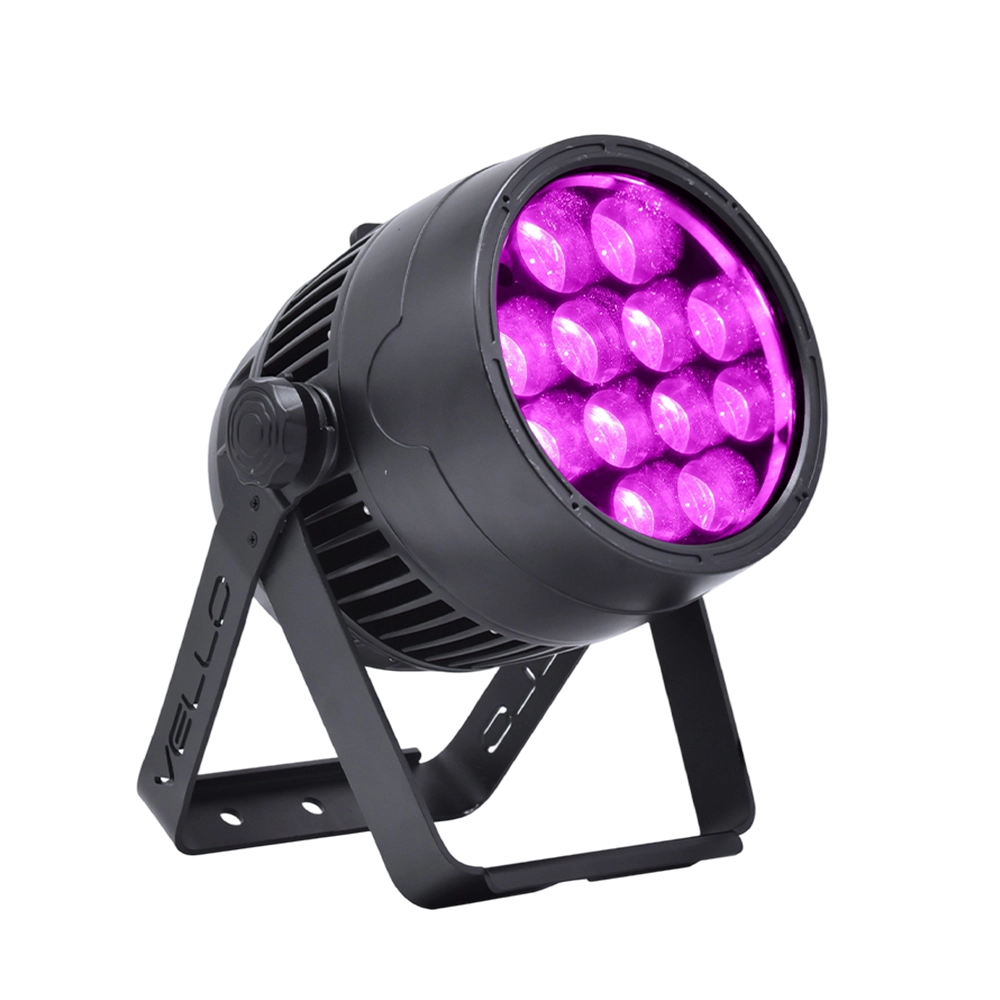
Stage LED Par Light LED ZOOMPAR 40
The Vello Zoom Par 40 IP is a powerful outdoor LED wash light equipped with 12x high-power 7-in-1 RGBACL LEDs. Designed for durability and rich color rendering, it features a wide motorized zoom (6°–50°), smooth dimming, and adjustable CTO presets (3200K–7500K), with 90+ CRI. With an IP66-rated die-cast aluminum body, it’s ideal for both indoor and outdoor applications, including stage lighting, architecture, live events, and installations.
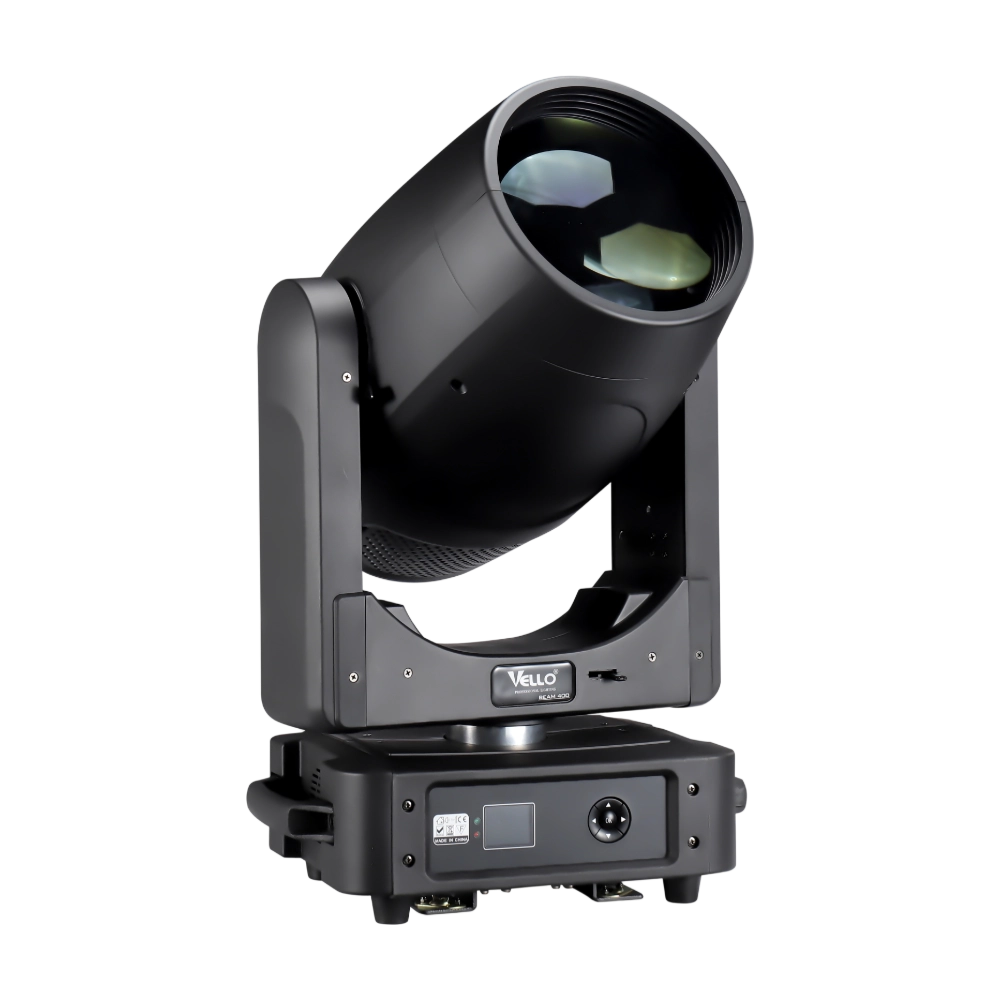
Moving Head Stage Light BEAM 400
BEAM400 is a 500W professional moving head beam powered by an OSRAM SIRIUS 371W discharge bulb, delivering a super-bright 1.8° sharp beam with impressive punch. It features 12 fixed gobos + open, a 14-color wheel, and a 16-facet circular rotating prism with multiple-facet effects, enabling dynamic aerial visuals. With 540° pan / 270° tilt, 16-bit movement resolution, and linear frost and focus, BEAM400 ensures precise and versatile performance. Comparable to traditional 750W moving heads, it combines high efficiency, smooth dimming, and reliable operation—ideal for concerts, tours, and large-scale stage productions.
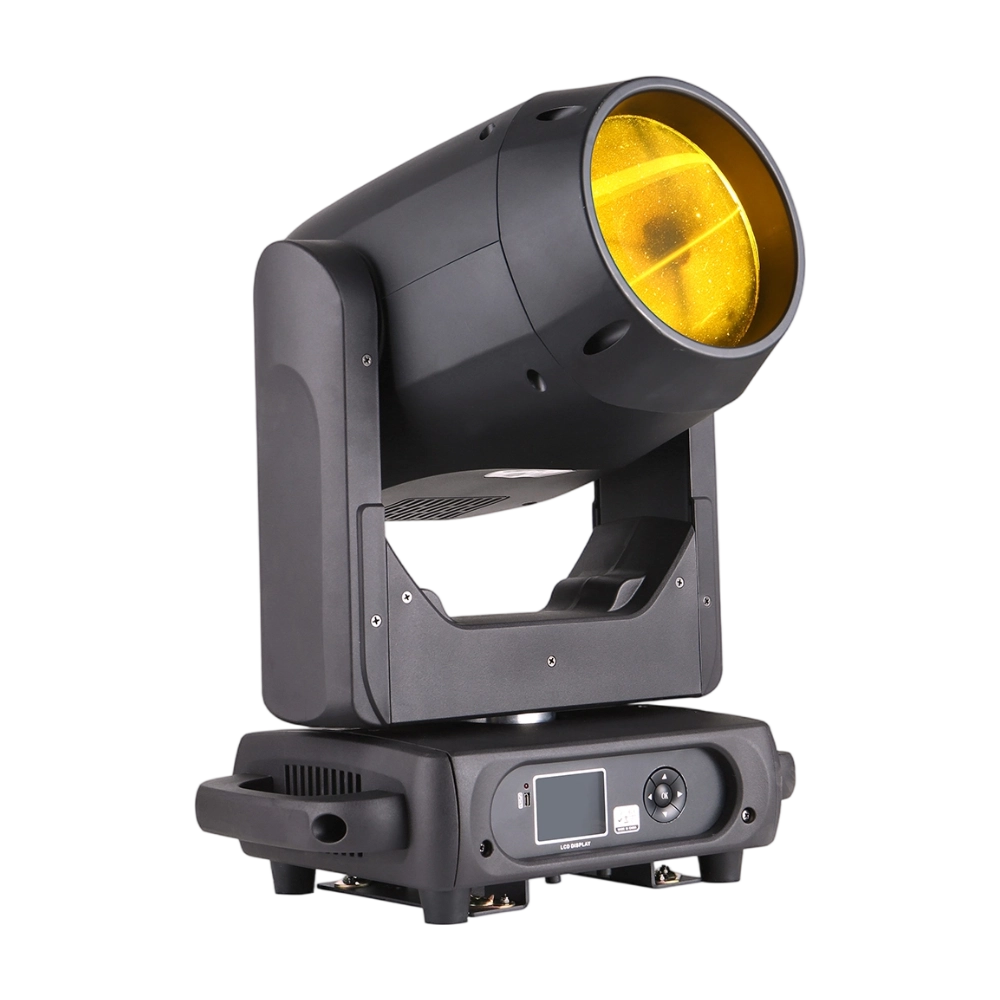
Moving Head Stage Light BEAM 360
BEAM360 is a 400W high-power moving head beam equipped with an OSRAM SIRIUS 311W discharge lamp, delivering a sharp 1.8° beam with super brightness. It features 14 colors + open, 12 fixed metal gobos + open, and dual prisms (8-facet circular + 8+16 multi-facet combination) for dynamic aerial effects. With 540° pan / 270° tilt, 16-bit movement, and linear frost and focus, BEAM360 ensures precision and versatility. Compact yet powerful, it rivals traditional 575W moving heads, making it ideal for concerts, clubs, and large-scale stage productions.
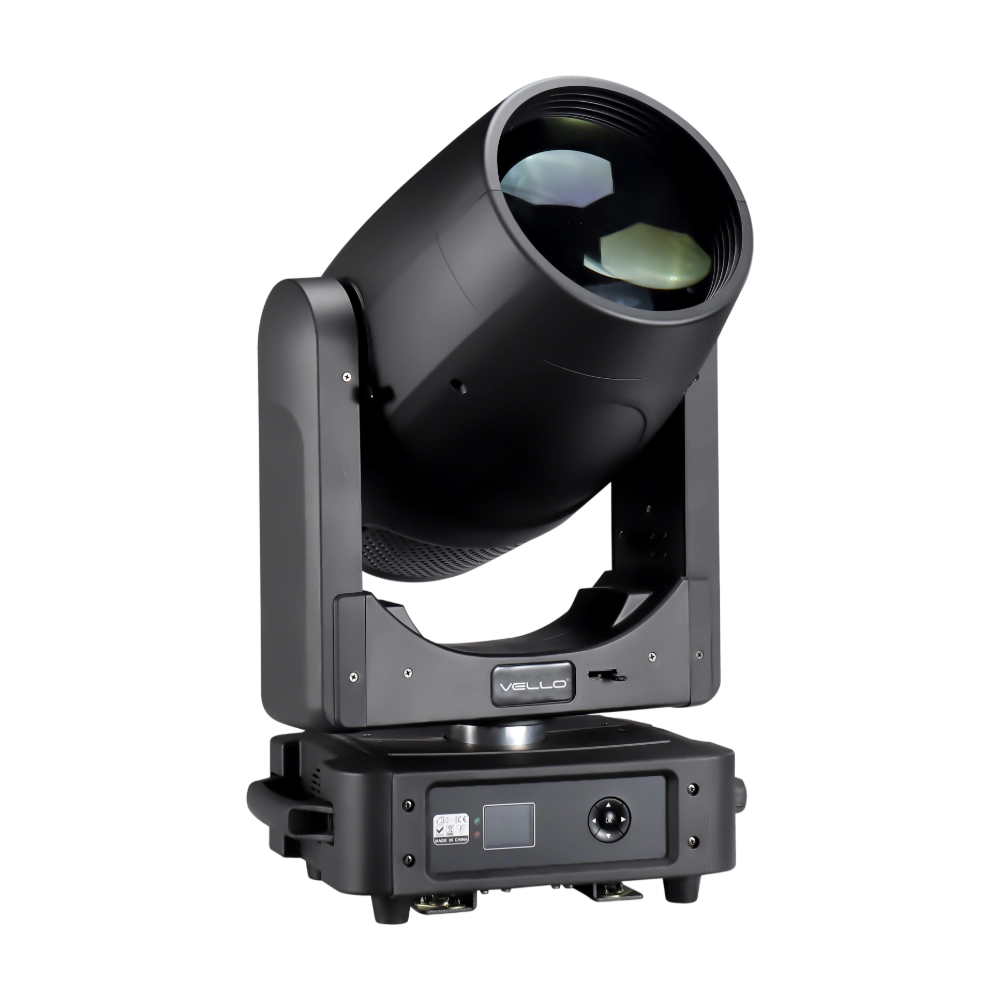
Moving Head Light BEAM 450
The BSW450 is a high-performance moving head fixture equipped with an original Osram 420W bulb, delivering exceptional brightness, precision, and versatility. Designed for professional stage applications, it seamlessly combines beam, spot, and wash functions in one compact unit, making it a powerful all-in-one lighting solution.
Over 20 Years of Innovation in Stage & Studio Lighting
© 2026 VELLO. All Rights Reserved. 粤ICP备20023734号
Join our socials
VELLO
Whatsapp: +8613902276704
Vello Lighting
VelloLights