





Color Mixing and Temperature for LED Stage Lighting
- Understanding Color for Live Performance - stage lighting
- What color mixing means in stage lighting
- Primary concepts of color temperature in stage lighting
- How LED architectures affect color mixing - stage lighting
- Common LED configurations and their color behavior
- Practical implications for stage lighting choices
- Metrics that describe color quality for stage lighting
- CRI, TLCI, and TM-30 — what they tell you about LED performance
- Chromaticity, CCT, and white point control - stage lighting
- Translating CCT into on-stage results
- White point interpolation and mixing formulas
- Color mixing techniques and workflows - stage lighting
- Practical workflows for designers and technicians
- Comparing common LED stage lighting types
- Quick reference table for fixture selection
- Camera and flicker considerations for LED stage lighting
- Why PWM, flicker and frame rates matter for broadcast
- Calibration, measurement and tools for reliable color control - stage lighting
- Essential tools and measurement practices
- Cost vs. performance: making practical purchasing decisions for stage lighting
- Balancing output, color fidelity and budget
- Vello Light Co., Ltd. — a partner for professional stage lighting solutions
- Company profile and why it matters for buyers of stage lighting
- VELLO product strengths and recommended applications
- Implementation checklist for achieving reliable color and temperature control - stage lighting
- Step-by-step checklist before show day
- Frequently Asked Questions (FAQ) - stage lighting
- 1. What is the difference between CCT and color rendering?
- 2. Are RGB fixtures sufficient for theatre and broadcast?
- 3. How do I prevent LED flicker on camera?
- 4. What is the best way to maintain consistent color when touring?
- 5. How do I choose between CRI, TLCI and TM-30?
- 6. Can I match LED fixtures to legacy tungsten systems?
- Contact and product inquiry
- References and further reading
Understanding Color for Live Performance - stage lighting
What color mixing means in stage lighting
Color mixing in stage lighting is the process of creating a visible color by combining primary light sources. In LED stage lighting, this is mostly additive color mixing — combining light from red, green, blue (and often white or amber) emitters. Additive mixing differs from pigment mixing: instead of absorbing wavelengths, LEDs add spectral power distributions to produce a target chromaticity and luminance. Understanding additive mixing is the foundation for controlling mood, skin tone, and visual clarity on stage and camera.
Primary concepts of color temperature in stage lighting
Color temperature (expressed in Kelvin, K) describes the perceived “warmth” or “coolness” of white light by referencing the colour of a blackbody radiator at that temperature. Correlated Color Temperature (CCT) is used for LEDs and describes the nearest blackbody appearance. For stage lighting, CCT selection affects actor skin tones, scenic color fidelity, and video capture consistency. Typical stage CCTs range from 2700K (warm) to 6500K (daylight) with many theatrical setups centered around 3200K (tungsten) and 5600K (daylight) for film/TV compatibility.
How LED architectures affect color mixing - stage lighting
Common LED configurations and their color behavior
Fixture manufacturers use different LED mixes to achieve color versatility. The principal architectures are:
- RGB — Red, Green, Blue emitters. Offers wide saturated colors but limited quality for natural whites and skin tones.
- RGBW — Adds a dedicated white LED improves white rendering and punch at low color temperatures.
- RGBA / RGB+Amber — Adds amber to improve warm colors and smoother transitions in oranges and skin tones.
- RGB+WW (warm white) — Combines saturated color control with better warm white reproduction for theatre and film.
- White-only high-CRI LEDs — Used for studio lights and workhorses where accurate rendering of objects and faces is critical.
Practical implications for stage lighting choices
Choosing the right architecture matters: pure RGB rigs can produce vibrant effects and saturated washes for concerts but may fail to render pleasing skin tones in theatrical or broadcast contexts. Fixtures with dedicated white or amber channels give lighting designers both rich color and natural whites without sacrificing output. When evaluating fixtures for stage lighting, check manufacturer data on gamut volume, white channel spectral power distribution (SPD), and recommended color mixing recipes.
Metrics that describe color quality for stage lighting
CRI, TLCI, and TM-30 — what they tell you about LED performance
Three commonly cited metrics are:
- CRI (Color Rendering Index) — historical metric (Ra) indicating how colors appear under a light source compared to a reference. Useful but limited for LEDs, especially saturated colors and modern spectra.
- TLCI (Television Lighting Consistency Index) — developed for broadcast to quantify how a camera will reproduce colors under a given light. More relevant when lighting for cameras.
- TM-30 — a newer method from the IES that provides color fidelity (Rf) and gamut (Rg) indexes and more detailed color vector analysis across many color samples.
When specifying stage lighting for theatre or film, prefer fixtures with published TLCI or TM-30 data in addition to CRI. For live concert effects where saturated color and output are priorities, CRI is less critical, but designers should still be aware of limitations with skin tones and mixed-source situations.
Chromaticity, CCT, and white point control - stage lighting
Translating CCT into on-stage results
CCT approximates human perception but doesn’t fully describe color rendering. Two different spectra can have the same CCT but very different color qualities (metamerism). For practical control, designers use CCT as a quick reference (e.g., set key lights at 3200K for theatrical warmth) and rely on TM-30/TLCI to ensure color fidelity.
White point interpolation and mixing formulas
When mixing LEDs to reach a target white point, most consoles perform linear interpolation in the chosen color space (often RGB or CIE xy). For stable results, calibration should consider LED binning (manufacturers group LEDs by chromaticity ranges) and use measured chromaticity coordinates of each channel. In practice, a calibrated system uses fixture calibration tables (manufacturers or in-house measurements) for accurate white point control across dimming ranges.
Color mixing techniques and workflows - stage lighting
Practical workflows for designers and technicians
Effective color control workflow:
- Define the visual intent: mood, skin tone priorities, camera requirements.
- Choose fixtures whose spectra align with intent (e.g., RGBW or RGB+WW for mixed theatre/broadcast environments).
- Calibrate fixtures: measure each channel SPD and create white-point presets and color macros on the lighting console.
- Test mixed-source conditions: combine LED fixtures with tungsten or HMIs to check metamerism and adjust gels/colour temps where needed.
- Document recipes: save color macros for repeatable cues and for touring consistency across venues.
Comparing common LED stage lighting types
Quick reference table for fixture selection
| Type | Color Gamut | White Quality | Typical CRI/TLCI | Best Use in stage lighting |
|---|---|---|---|---|
| RGB | Wide saturated colors | Poor natural whites | CRI 50-80 | Concert effects, color beams |
| RGBW | Wide colors + better white | Good (depends on white LED) | CRI 70-95 | Theatre, events, mixed stages |
| RGBA / RGB+Amber | Smoother warm colors | Improved warm white | CRI 75-95 | Skin-sensitive applications |
| RGB+WW / Tunable White | Balanced gamut + tunable CCT | High (when quality white LEDs used) | CRI 80-98 | Broadcast, studio, theatre |
| High-CRI White Fixtures | Limited saturated colors | Excellent | CRI 90-98, TLCI high | TV, film, studio applications |
Note: Values are typical ranges. Always check manufacturer datasheets or in-house measurements for exact performance when accuracy is critical.
Camera and flicker considerations for LED stage lighting
Why PWM, flicker and frame rates matter for broadcast
LEDs are controlled by pulse-width modulation (PWM) or constant current drivers. PWM frequency and driver behavior influence flicker seen by high-speed or rolling-shutter cameras. For broadcast and recorded events, use fixtures with high-frequency drivers or linear dimming modes and verify flicker-free operation across dimming ranges. TLCI and manufacturer flicker specifications are essential metrics for TV/film stage lighting deployments.
Calibration, measurement and tools for reliable color control - stage lighting
Essential tools and measurement practices
To achieve repeatable color across venues, use the following tools and methods:
- Spectroradiometer or colorimeter — measure SPD and chromaticity (CIE xy) to create calibration files.
- Light meter — verify lux and evenness across the stage.
- Color reference charts and skin-tone patches — evaluate real-world rendering.
- Console calibration features — use fixture calibration tables, color pickers and user-defined macros.
Regularly re-measure fixtures after maintenance or LED replacement; LED bin drift and aging will shift white points and intensities over time.
Cost vs. performance: making practical purchasing decisions for stage lighting
Balancing output, color fidelity and budget
Higher-fidelity fixtures (tunable white, high CRI/TLCI, multi-chip LED engines) cost more but reduce post-production correction time and provide consistent results for touring theatrical and broadcast work. For concert halls and event lighting where visual effects are primary, cost-effective RGB fixtures may suffice. When planning purchases, consider these trade-offs: upfront cost, downstream labor for gelging and color correction, and audience/camera expectations.
Vello Light Co., Ltd. — a partner for professional stage lighting solutions
Company profile and why it matters for buyers of stage lighting
Vello Light Co., Ltd., established in 2003, is a comprehensive technology enterprise integrating R&D, manufacturing, and sales. Over the years, we have consistently adhered to the principles of quality first and sincere service. With the support and help of numerous customers both domestically and internationally, we have continued to grow and develop, gradually becoming a unique and outstanding team in our field.
In recent years, with the rapid development of the LED lighting market, Vello Light has gathered a large number of professional talents to provide comprehensive and systematic services, including product R&D, manufacturing, marketing, engineering installation, and product maintenance. Through the joint efforts of Vello people, we remain true to our original aspirations and persevere in innovation, leveraging our unique advantages to stand out in the fierce competition. Currently, our products are exported both domestically and internationally and have a strong brand reputation, especially in overseas markets. VELLO is our registered brand, specializing in moving headlights, LED wash lights, and theatrical lights. Our products are highly praised and loved by many customers for their professional technology, unique style, high-quality materials, and durability.
Our vision is to become a world-leading stage lighting manufacturer.
VELLO product strengths and recommended applications
Summary of competitive advantages and main product types for stage lighting:
- R&D and manufacturing integration — faster iteration and quality control for LED engines and optics.
- Product range — moving head stage lights, studio lights, led effect light, Led Bar Lights, Led Par Light, outdoor stage lighting.
- Technical support — engineering installation and product maintenance for touring and fixed installations.
- Reputation — exported products with positive overseas feedback; emphasis on reliable materials and durable design.
For practical stage lighting needs, VELLO’s moving heads and LED wash lights with multi-chip engines are suitable for concert and theatre, while studio lights and high-CRI fixtures support broadcast and film applications. The integrated services help clients deploy consistent color systems across venues and tours.
Implementation checklist for achieving reliable color and temperature control - stage lighting
Step-by-step checklist before show day
- Identify primary CCT and white point targets for the production (e.g., 3200K key, 4300K fill).
- Select fixtures with the spectral qualities and control you need (check TM-30/TLCI/CRI).
- Measure fixtures and create calibration tables and color macros.
- Test with cameras and view on monitors to verify flicker-free operation and accurate skin tones.
- Document all recipes and train touring technicians on how to re-create looks quickly.
Frequently Asked Questions (FAQ) - stage lighting
1. What is the difference between CCT and color rendering?
CCT (Correlated Color Temperature) describes the perceived hue of white light (warm to cool). Color rendering (measured by CRI, TLCI, TM-30) describes how accurately a light source reveals object colors compared to a reference. Both are needed: CCT sets the white appearance; rendering metrics indicate fidelity.
2. Are RGB fixtures sufficient for theatre and broadcast?
RGB fixtures provide excellent saturated colors but often produce poor whites and skin tones. For theatre and broadcast, choose RGBW, RGB+Amber, or dedicated high-CRI fixtures to ensure natural-looking faces and reliable mixed-source results.
3. How do I prevent LED flicker on camera?
Use fixtures with high-frequency drivers, enable manufacturer flicker-free modes, match PWM rates above camera shutter-related frequencies, and test at the highest frame rates used in production. Spectroradiometer or camera trials are recommended to validate performance.
4. What is the best way to maintain consistent color when touring?
Measure and create fixture calibration files, save and export console macros, replace LEDs/LED modules only with manufacturer-specified parts, and perform periodic re-measurement. Maintain a single source of color recipes and train crew on re-calibration procedures.
5. How do I choose between CRI, TLCI and TM-30?
For general architectural or concert lighting, CRI provides a basic indication. For broadcast/film, TLCI is more relevant because it predicts camera color reproduction. For technical, nuanced color specification across many hues, TM-30 gives the most comprehensive information (fidelity and gamut). Use the metric that best matches your output medium.
6. Can I match LED fixtures to legacy tungsten systems?
Yes, but expect metamerism. Use LED fixtures with tunable white channels and measure combined SPDs. You may need to slightly warm or cool LED outputs to visually match tungsten, and camera balancing is essential when both sources are present.
Contact and product inquiry
If you need help specifying fixtures, calibrating color systems, or selecting the right VELLO products for your next production, contact our technical sales team. Explore product lines including moving head stage lights, studio lights, led effect lights, Led Bar Lights, Led Par Light, and outdoor stage lighting — or request a calibrated demo tailored to your show requirements.
Email: sales@vello-light.com (for inquiries and product datasheets). Visit our product pages for technical specs and calibration guides.
References and further reading
- CIE 1931 Color Space — Wikipedia. https://en.wikipedia.org/wiki/CIE_1931_color_space (accessed 2025-12-15)
- Color Rendering Index — Wikipedia. https://en.wikipedia.org/wiki/Color_rendering_index (accessed 2025-12-15)
- TLCI — Wikipedia. https://en.wikipedia.org/wiki/Television_Lighting_Consistency_Index (accessed 2025-12-15)
- TM-30 — Illuminating Engineering Society (IES). https://www.ies.org/standards/tm-30/ (accessed 2025-12-15)
- Correlated Color Temperature — Wikipedia. https://en.wikipedia.org/wiki/Correlated_color_temperature (accessed 2025-12-15)
- LED binning and spectral power distributions — Manufacturer application notes (example resources from major LED makers). Example overview: https://en.wikipedia.org/wiki/Light-emitting_diode#LEDs_in_general_illumination (accessed 2025-12-15)
Stage Lighting Design Principles for Live Events
Creative Stage Light Effects: Gobo, Strobe, and Beam Tips
Certifications and Compliance for Outdoor LED Lighting
Best LED Moving Head Lights for Concerts and Tours
Major categories
What is the warranty period for your products?
Most products come with a standard 1–2 year warranty. Please refer to product details or contract terms for specifics.
Do you ship internationally?
Yes. We offer sea, air, and express delivery to many countries and regions worldwide.
What is the usual lead time?
Standard models are typically shipped within 7–15 working days after payment. Customized items may vary.
Do you offer samples?
Samples are available for certain models. Please confirm with our sales team for details.
Do your products support customization?
Yes. We offer OEM and ODM services tailored to project needs, including design, optics, and control compatibility.
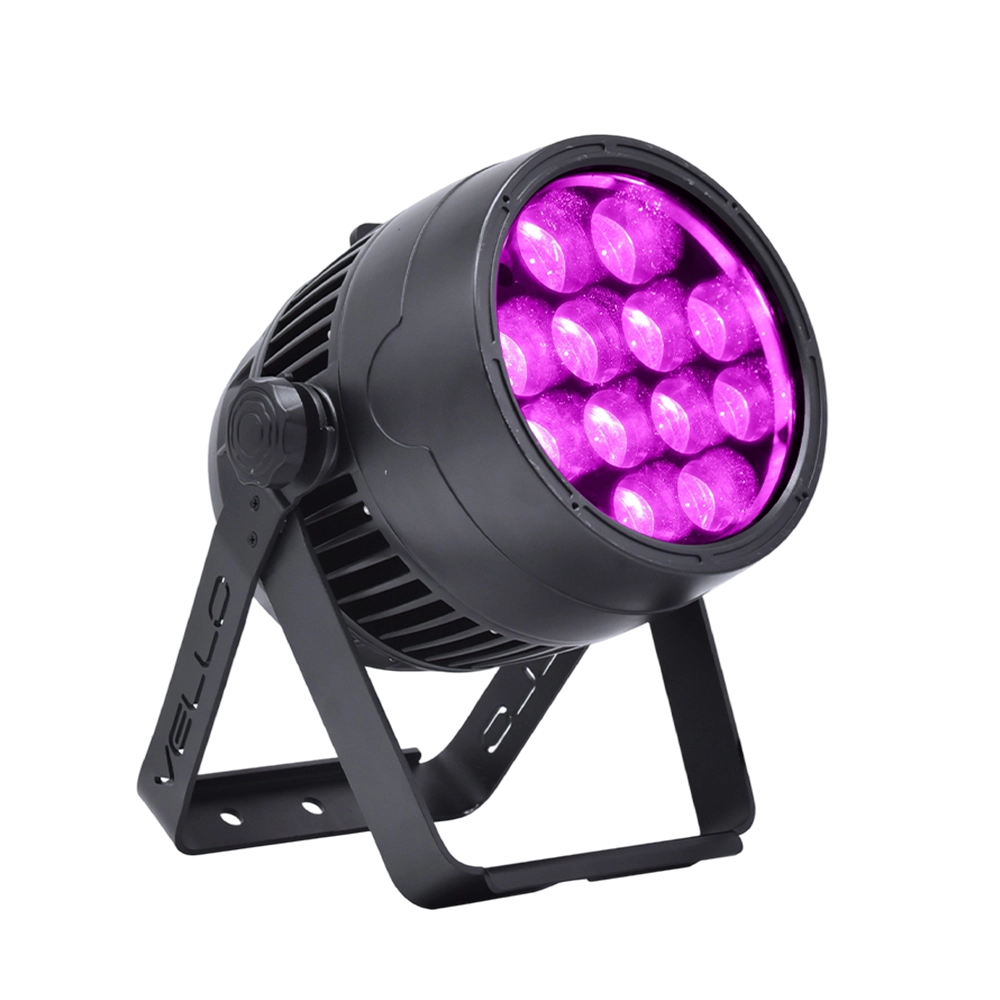
Stage LED Par Light LED ZOOMPAR 40
The Vello Zoom Par 40 IP is a powerful outdoor LED wash light equipped with 12x high-power 7-in-1 RGBACL LEDs. Designed for durability and rich color rendering, it features a wide motorized zoom (6°–50°), smooth dimming, and adjustable CTO presets (3200K–7500K), with 90+ CRI. With an IP66-rated die-cast aluminum body, it’s ideal for both indoor and outdoor applications, including stage lighting, architecture, live events, and installations.
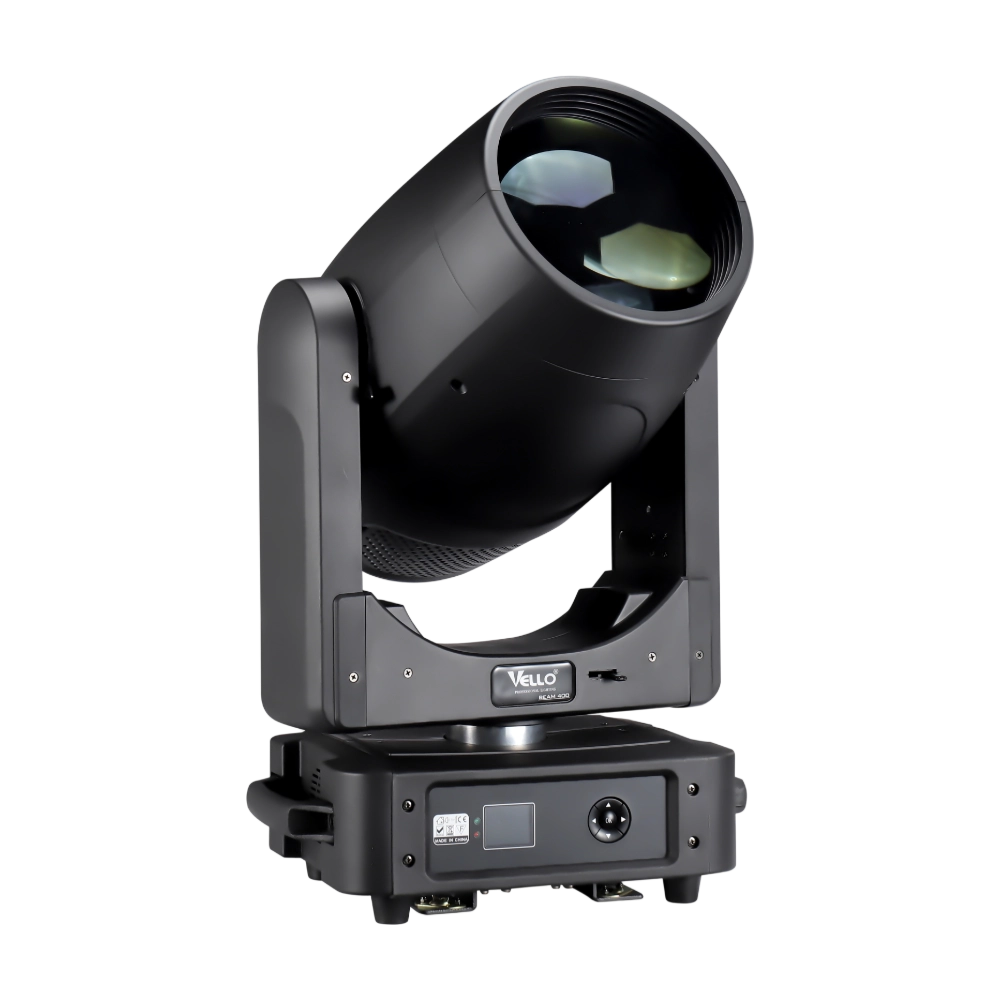
Moving Head Stage Light BEAM 400
BEAM400 is a 500W professional moving head beam powered by an OSRAM SIRIUS 371W discharge bulb, delivering a super-bright 1.8° sharp beam with impressive punch. It features 12 fixed gobos + open, a 14-color wheel, and a 16-facet circular rotating prism with multiple-facet effects, enabling dynamic aerial visuals. With 540° pan / 270° tilt, 16-bit movement resolution, and linear frost and focus, BEAM400 ensures precise and versatile performance. Comparable to traditional 750W moving heads, it combines high efficiency, smooth dimming, and reliable operation—ideal for concerts, tours, and large-scale stage productions.
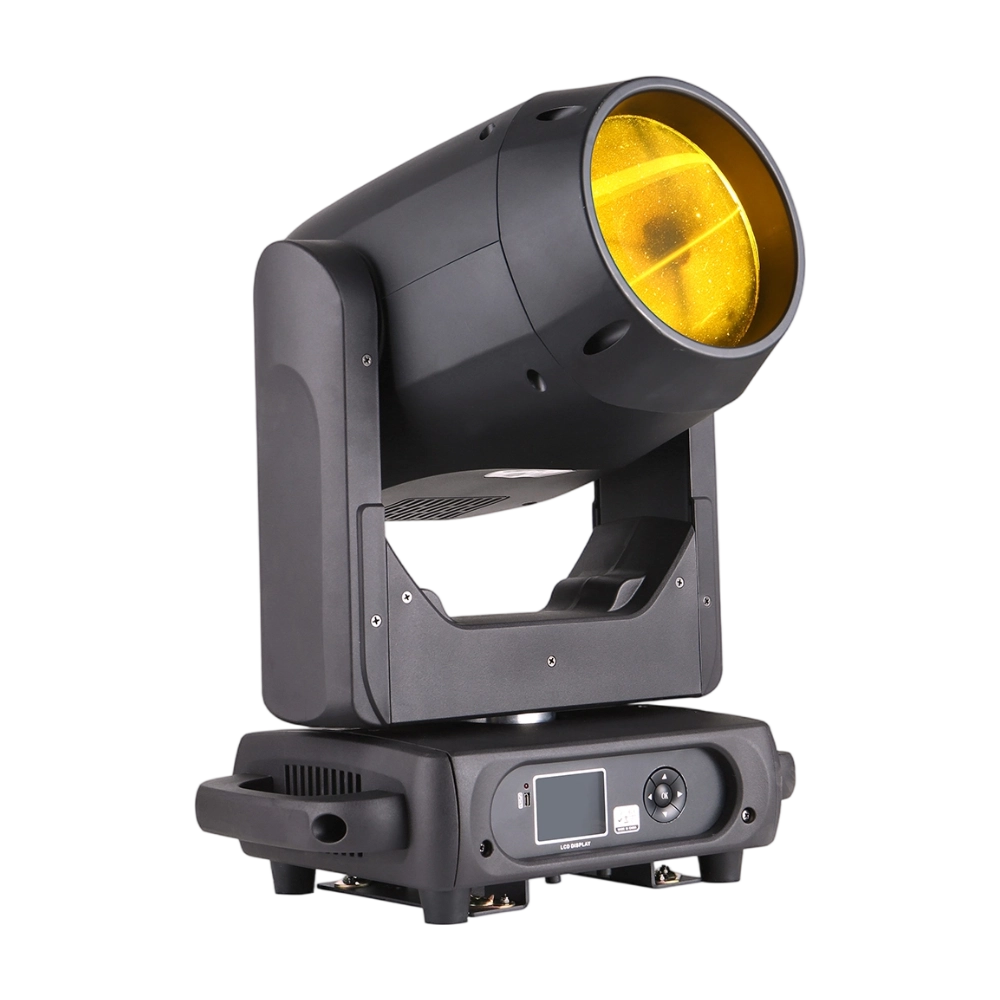
Moving Head Stage Light BEAM 360
BEAM360 is a 400W high-power moving head beam equipped with an OSRAM SIRIUS 311W discharge lamp, delivering a sharp 1.8° beam with super brightness. It features 14 colors + open, 12 fixed metal gobos + open, and dual prisms (8-facet circular + 8+16 multi-facet combination) for dynamic aerial effects. With 540° pan / 270° tilt, 16-bit movement, and linear frost and focus, BEAM360 ensures precision and versatility. Compact yet powerful, it rivals traditional 575W moving heads, making it ideal for concerts, clubs, and large-scale stage productions.
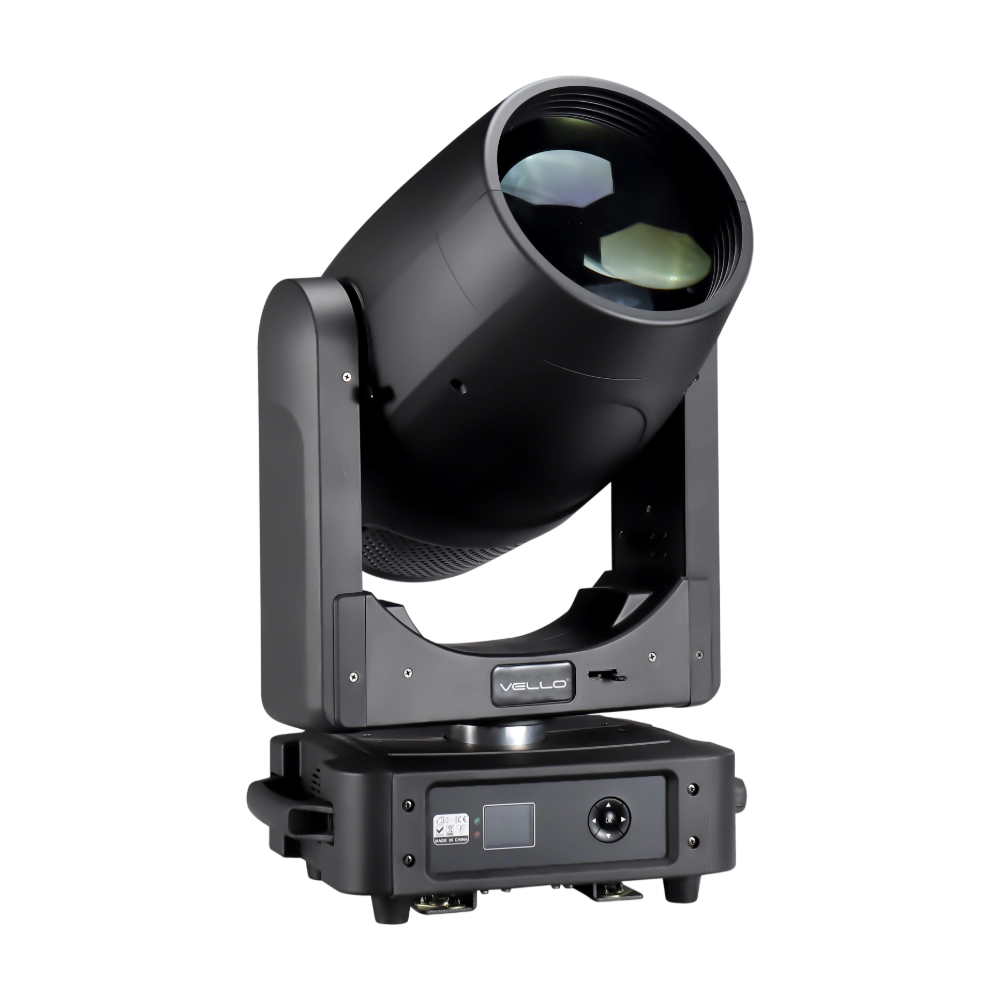
Moving Head Light BEAM 450
The BSW450 is a high-performance moving head fixture equipped with an original Osram 420W bulb, delivering exceptional brightness, precision, and versatility. Designed for professional stage applications, it seamlessly combines beam, spot, and wash functions in one compact unit, making it a powerful all-in-one lighting solution.
Over 20 Years of Innovation in Stage & Studio Lighting
© 2026 VELLO. All Rights Reserved. 粤ICP备20023734号
Join our socials
VELLO
Whatsapp: +8613902276704
Vello Lighting
VelloLights