





Color Mixing and Effects with Stage LED Lights Explained
- Understanding Color in Stage Lighting
- How stage led lights create color: Additive mixing fundamentals
- Subtractive mixing and when it still matters with stage led lights
- Comparing RGB, RGBW, RGBA, and CMY in practice
- Color temperature, white blending, and CRI for stage led lights
- DMX and network control: translating design into motion and color
- Pixel mapping and effects with stage led lights
- Choosing fixtures: wash, spot, beam, and effect lights for different color jobs
- Programming tips for natural color transitions and strong visuals with stage led lights
- Maintenance, calibration, and common troubleshooting for stage led lights
- Quantitative comparison: DMX channel modes example
- Case studies and production examples using stage led lights
- Vello Light Co., Ltd. — practical supplier perspective for stage led lights
- Taking action: what to test before buying or renting stage led lights
- Frequently Asked Questions (FAQ)
- Contact and product information
- References
Understanding Color in Stage Lighting
Color is the language of mood on stage. For designers, technicians, and event producers using stage led lights, mastering how color is created and controlled is essential to delivering consistent, impactful visuals. This article explains core concepts, practical workflows, fixture choices, and advanced effects so you can choose and operate LED fixtures with confidence.
How stage led lights create color: Additive mixing fundamentals
Most modern stage led lights rely on additive color mixing: multiple LED emitters of different colors combine their light to form a wide gamut of hues. The most common emitter sets are RGB (red, green, blue) and RGBW (red, green, blue, white). When red, green, and blue intensities are varied, the eye perceives a mix color. Adding a dedicated white LED improves pastel tones and white rendering, particularly important for front-lighting or broadcast where skin tones matter.
Subtractive mixing and when it still matters with stage led lights
Subtractive mixing — familiar from gels and paints — removes wavelengths from white light using filters or CMY systems. Some high-end moving heads and theatrical fixtures use CMY color systems or virtual CMY algorithms to mimic subtractive behavior, offering smoother crossfades between saturated colors and fine control of correlated color temperature. Understanding the difference helps you decide between straight RGB fixtures and those intended for nuanced theatrical white or color correction tasks.
Comparing RGB, RGBW, RGBA, and CMY in practice
Choosing the right emitter architecture affects color gamut, white quality, control complexity, and cost. The table below summarizes typical performance traits of popular LED mixing approaches so you can match fixtures to production needs.
| Color System | Gamut | White Quality | Best Uses | Tradeoffs |
|---|---|---|---|---|
| RGB | Wide but limited pastel/white | Poor for neutral whites | Vibrant color washes, concert footlights | White looks tinted; limited pastel control |
| RGBW | Wider gamut for whites and pastels | Better neutral whites | TV, theatre, corporate events | Increased channel count and cost |
| RGBA / RGBAL / RGBW + Amber | Improved skin tones and warm colors | Warm whites improved | Film, broadcast, places needing accurate skin tones | More LEDs, more calibration needed |
| CMY (LED or lamp-based) | Excellent for theatrical color mixing | Very good white rendering via k correction | Professional theatre, architectural tuning | Often larger fixtures, higher cost |
Color temperature, white blending, and CRI for stage led lights
White quality is judged by correlated color temperature (CCT) and color rendering index (CRI) or TM-30 metrics. For stage applications, tunable CCT and high TM-30 values matter when accurate color of costumes, skin, and set are required. RGB systems can approximate whites but may produce metamerism under camera sensors. RGBW or dedicated white emitters reduce these issues. When evaluating fixtures, check published LM-79 photometric reports and TM-30/CRI numbers for predictable results.
DMX and network control: translating design into motion and color
Stage led lights integrate with control protocols such as DMX512 and Art-Net/sACN. Understanding channel assignments is vital: single fixtures may expose simple RGB channels or dozens of channels for individual LED segments, macros, and fine color controls. For pixel-mapped effects, ensure your console and nodes support the fixture's channel mode or RDM for discovery and addressing. Reliable timecode or MIDI-to-DMX workflows help synchronize effects to music.
Pixel mapping and effects with stage led lights
Pixel mapping treats LEDs as addressable pixels, enabling complex chases, animations, and video-like content. Key considerations for pixel effects:
- Fixture density and pixel pitch determine resolution and smoothness.
- Refresh rate and control latency affect motion fidelity; professional media servers often support higher frame rates and gradient smoothing.
- Power and data topology: chain length, termination, and shielding are critical to avoid flicker or data loss.
Choosing fixtures: wash, spot, beam, and effect lights for different color jobs
Not all stage led lights are equal. Selecting the right class of fixture depends on coverage, edge quality, and effects capability.
- Wash lights: broad, soft coverage for general color washes. RGBW washes are common for versatile front and top light.
- Spot/moving head profile: sharp gobo projection and precise color framing. Often used in theatre for selective color on actors.
- Beam fixtures: narrow, high-intensity shafts of color for concert looks and aerial effects.
- LED bars and strips: linear color blending and pixel effects along scenic elements.
Programming tips for natural color transitions and strong visuals with stage led lights
Good programming minimizes color banding and avoids unnatural shifts. Practical tips:
- Use color palettes: save and recall calibrated palettes for consistent looks across scenes.
- Crossfade carefully: when changing white CCT, fade the white channel along with RGB channels to avoid visible jumps.
- Employ macros sparingly: they are useful for quick effects but can hide the precise control needed for nuanced cues.
- Previsualize where possible: virtual lighting software helps check how mixes render under different camera white balances.
Maintenance, calibration, and common troubleshooting for stage led lights
LED fixtures require different maintenance routines from conventional lamps. Key points:
- Thermal management: keep vents and fans clean. High LED junction temperatures reduce output and lifetime.
- Color calibration: fixtures age and emitters change. Periodic calibration with a color meter ensures consistent palettes across fixtures and over time.
- Power quality: use stable, filtered power and proper grounding to prevent flicker. Voltage drop across long runs reduces output and shifts color balance in multi-emitter arrays.
- Data health: verify cable integrity, proper terminations, and use of recommended drivers for Art-Net or sACN networks.
Quantitative comparison: DMX channel modes example
To illustrate how control complexity scales, here is a representative comparison of DMX channel modes for different fixture classes. Actual channel counts vary by manufacturer and firmware.
| Fixture Type | Simple RGB Mode | RGBW Mode | Pixel-Addressable Mode |
|---|---|---|---|
| LED Wash | 3 channels (R G B) | 4-8 channels (R G B W + dimmer/effects) | Variable - up to 512 channels for many pixels |
| Moving Head | 10-16 channels | 16-32 channels | 40+ channels with pixel mapping |
| LED Bar/Strip | 3 channels per unit | 4 channels per unit | 3-6 channels per pixel depending on protocol |
Case studies and production examples using stage led lights
Real-world deployments highlight how color strategies differ by application:
- Concert tours rely on high-output RGB beams and pixel mapping for energetic looks and branding. Rapid color changes and saturated hues are typical.
- Theatre productions prioritize RGBW or CMY-capable fixtures for naturalistic skin tones and smooth crossfades between scenes.
- Corporate events favor accurate white and soft pastel washes to keep presentation content readable and participants well lit.
Vello Light Co., Ltd. — practical supplier perspective for stage led lights
Vello Light Co., Ltd., established in 2003, is a comprehensive technology enterprise integrating R&D, manufacturing, and sales. Over the years, Vello has consistently adhered to principles of quality first and sincere service. With support from numerous customers both domestically and internationally, Vello has grown into an outstanding team in the LED lighting field.In recent years, with rapid LED market development, Vello has gathered professional talent to provide comprehensive services including product R&D, manufacturing, marketing, engineering installation, and product maintenance. Through persistent innovation and unique competitive advantages, Vello products are exported domestically and internationally under the registered brand VELLO. VELLO specializes in moving head stage lights, studio lights, led effect light, led bar lights, led par light, and outdoor stage lighting. Their products are praised for professional technology, unique style, high-quality materials, and durability.Vello's advantages include:
- Integrated R&D and manufacturing for faster product iteration and quality control.
- Broad product range suitable for concerts, theatre, studios, and outdoor events.
- Experience in export markets and after-sales service infrastructure for international projects.
- Focus on fixture longevity and materials that withstand touring and rental rigors.
Taking action: what to test before buying or renting stage led lights
Before committing to fixtures, do the following tests on-site or in a mockup:
- Check white balance across fixtures with a calibrated colorimeter under your camera settings.
- Run full-intensity color sweeps to spot banding or thermal dimming.
- Test the fixtures in the console modes you plan to use, including pixel mapping if applicable.
- Review manufacturer photometric reports for lux at distance and beam spread to validate coverage.
Frequently Asked Questions (FAQ)
1. What is the difference between RGB and RGBW in stage led lights?
RGB mixes red, green, and blue to produce color but struggles to produce neutral whites and soft pastels. RGBW adds a dedicated white LED which improves white rendering and expands pastel control, useful for theatre and broadcast.
2. Can I use RGB-only stage led lights for skin tones and broadcast?
You can, but results may be less natural and require more calibration. For broadcast and close-up theatre work, RGBW, RGBA, or fixtures with high CRI/TM-30 values are recommended to maintain accurate skin tones under camera.
3. How does pixel mapping work with LED fixtures?
Pixel mapping treats individual LEDs or groups of LEDs as addressable pixels in a grid. A media server or console sends frame-based data to each pixel, allowing animated content, chases, and video effects. Ensure protocol compatibility and sufficient data bandwidth for smooth playback.
4. How often should I calibrate my stage led lights?
Calibration cadence depends on usage. For heavy touring or broadcast fixtures, quarterly checks are prudent. For fixed installations, biannual or annual calibration combined with regular thermal and power checks is typical.
5. What control protocols should I consider for large stage led lights systems?
DMX512 remains the standard for many applications. For large pixel or distributed networks, consider Art-Net or sACN paired with nodes and media servers. RDM helps with remote device management and addressing.
6. Why do LEDs sometimes flicker under camera even when they look stable to the eye?
Flicker can occur due to PWM dimming frequencies, power supply instability, or mismatched camera shutter speeds. Use higher PWM frequencies, stable power supplies, and test under camera conditions to eliminate issues.
Contact and product information
If you need technical consultation, photometric data, or product quotes for stage led lights, contact Vello Light Co., Ltd. Their expertise covers moving head stage lights, studio lights, led effect light, led bar lights, led par light, and outdoor stage lighting. For project assistance, request a product datasheet, LM-79 report, or on-site demo to validate fixture performance under your event conditions.
References
- Wikipedia. Stage lighting. https://en.wikipedia.org/wiki/Stage_lighting. Retrieved 2025-12-11.
- Wikipedia. Additive color. https://en.wikipedia.org/wiki/Additive_color. Retrieved 2025-12-11.
- Wikipedia. DMX512. https://en.wikipedia.org/wiki/DMX512. Retrieved 2025-12-11.
- IES. LM-79 Electrical and Photometric Measurements of Solid-State Lighting Products. https://www.ies.org/standards/ilm-79/. Retrieved 2025-12-11.
- ETC. Application notes on color mixing and LED fixtures. https://www.etcconnect.com/ (see product application materials). Retrieved 2025-12-11.
Data and technical recommendations reference manufacturer photometric reports, industry standards (IES LM-79), and widely accepted lighting control protocols (DMX512, Art-Net). For fixture-specific numbers, consult vendor LM-79/TM-30 documentation and conduct on-site photometric tests where accuracy is critical.
IP Rating and Durability Guide for LED Moving Head Light
LED Stage Lights for Rental Companies: What to Stock
How to Choose Stage Lights for Wedding and Corporate Events
How to Integrate Stage Lighting with Sound and Video
Major categories
Do you offer samples?
Samples are available for certain models. Please confirm with our sales team for details.
Do your products support customization?
Yes. We offer OEM and ODM services tailored to project needs, including design, optics, and control compatibility.
What is the usual lead time?
Standard models are typically shipped within 7–15 working days after payment. Customized items may vary.
Do you ship internationally?
Yes. We offer sea, air, and express delivery to many countries and regions worldwide.
What is the warranty period for your products?
Most products come with a standard 1–2 year warranty. Please refer to product details or contract terms for specifics.
Stage LED Par Light LED ZOOMPAR 40
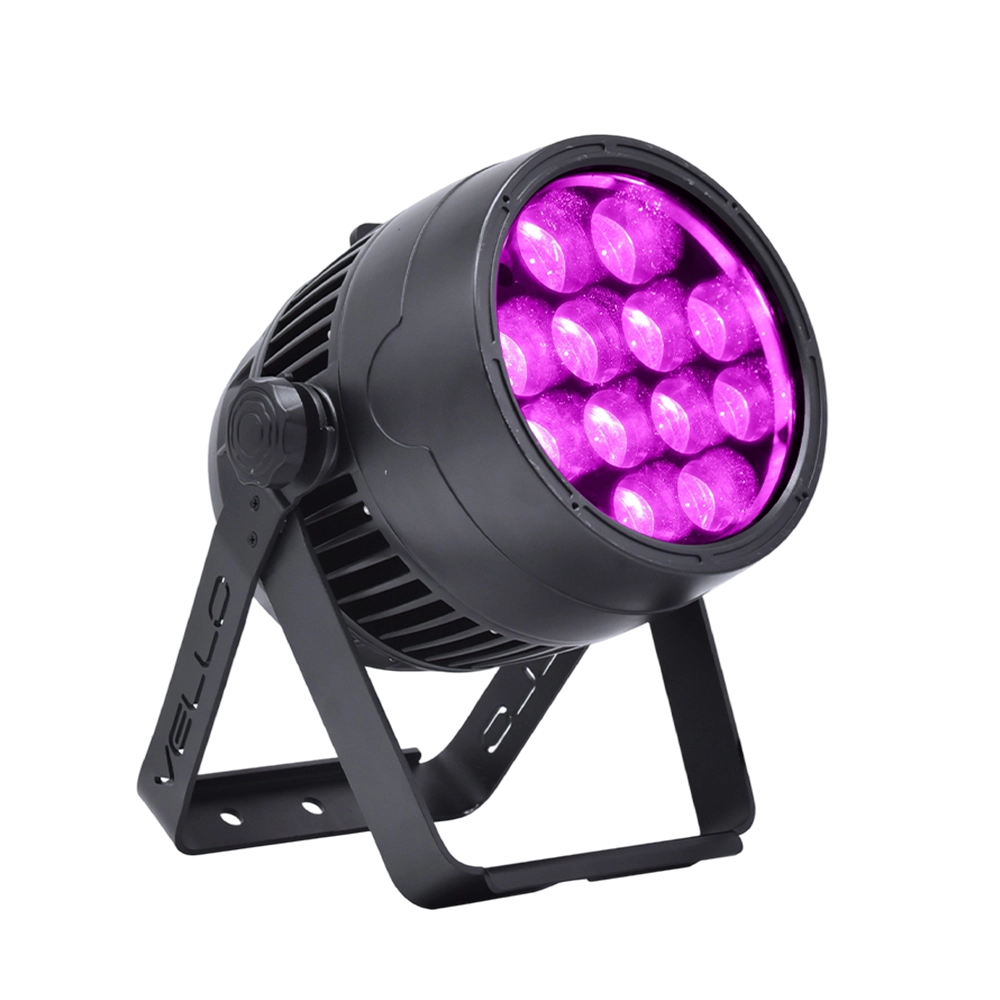
The Vello Zoom Par 40 IP is a powerful outdoor LED wash light equipped with 12x high-power 7-in-1 RGBACL LEDs. Designed for durability and rich color rendering, it features a wide motorized zoom (6°–50°), smooth dimming, and adjustable CTO presets (3200K–7500K), with 90+ CRI. With an IP66-rated die-cast aluminum body, it’s ideal for both indoor and outdoor applications, including stage lighting, architecture, live events, and installations.
Moving Head Stage Light BEAM 400
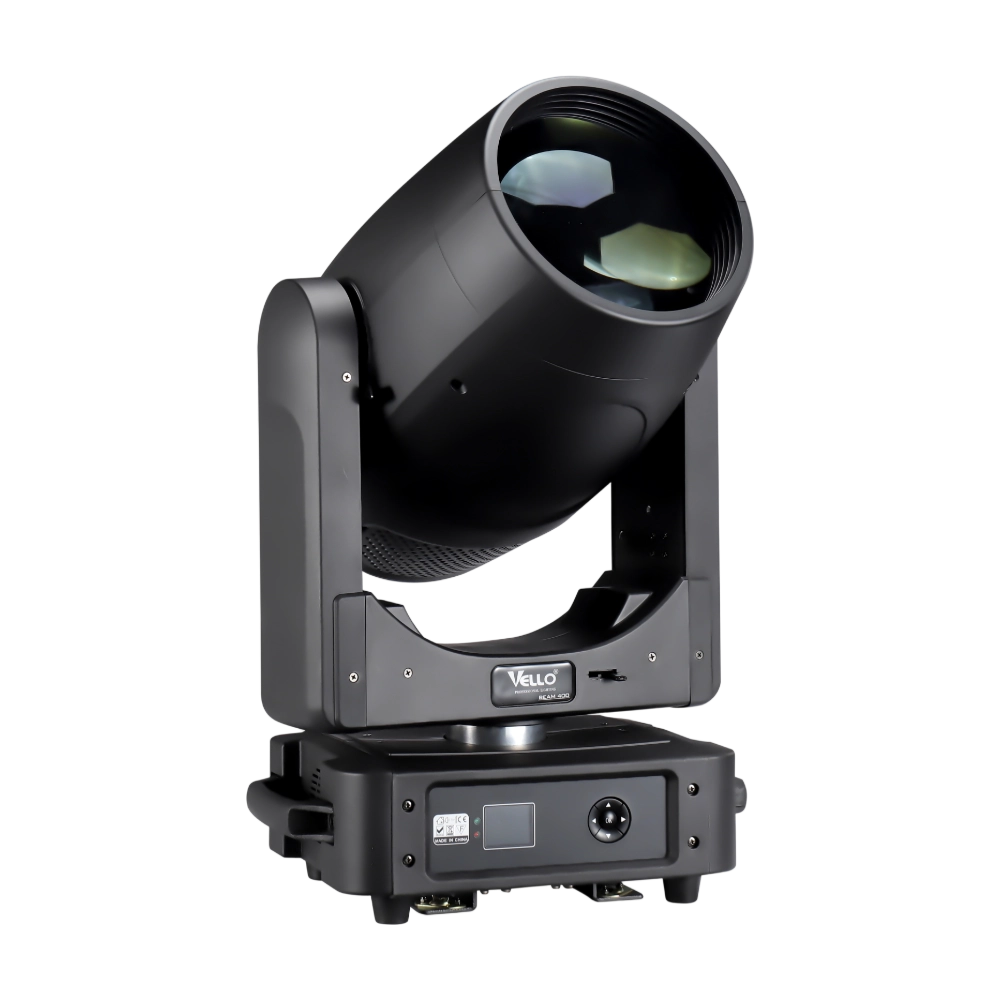
BEAM400 is a 500W professional moving head beam powered by an OSRAM SIRIUS 371W discharge bulb, delivering a super-bright 1.8° sharp beam with impressive punch. It features 12 fixed gobos + open, a 14-color wheel, and a 16-facet circular rotating prism with multiple-facet effects, enabling dynamic aerial visuals. With 540° pan / 270° tilt, 16-bit movement resolution, and linear frost and focus, BEAM400 ensures precise and versatile performance. Comparable to traditional 750W moving heads, it combines high efficiency, smooth dimming, and reliable operation—ideal for concerts, tours, and large-scale stage productions.
Moving Head Stage Light BEAM 360
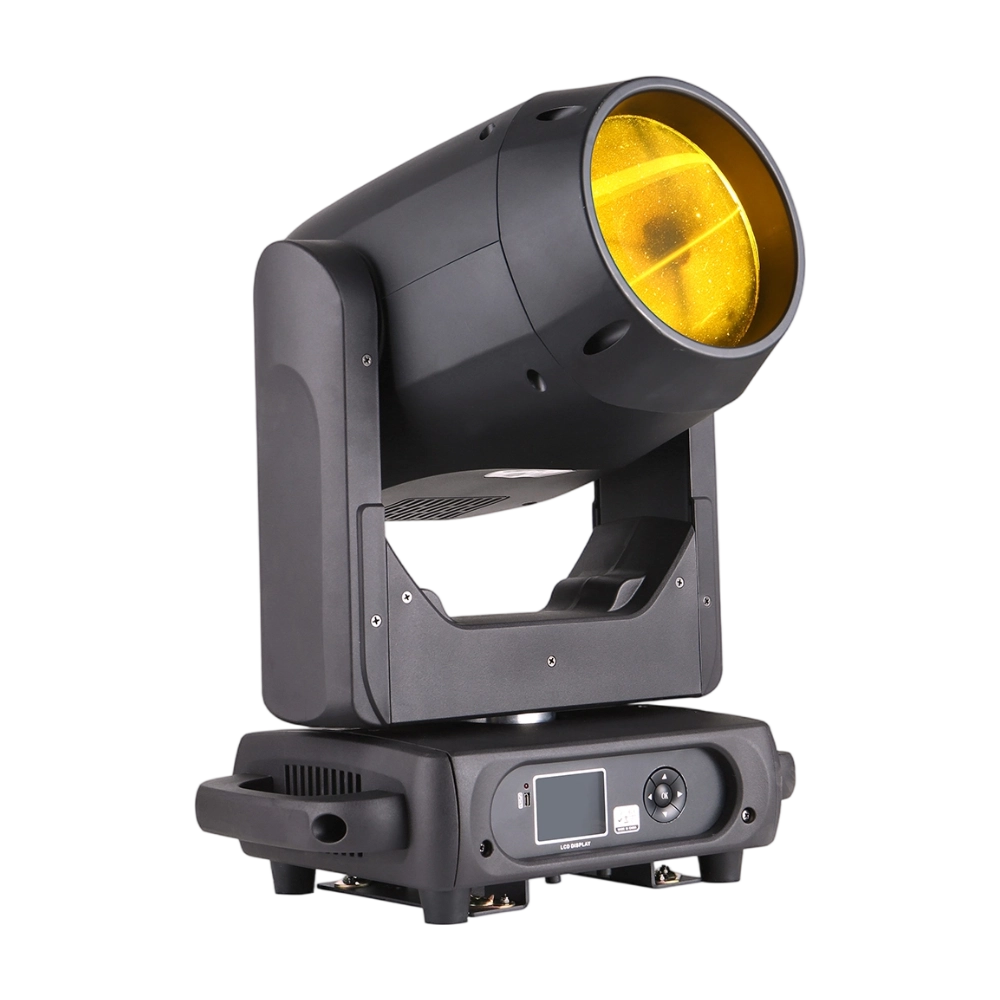
BEAM360 is a 400W high-power moving head beam equipped with an OSRAM SIRIUS 311W discharge lamp, delivering a sharp 1.8° beam with super brightness. It features 14 colors + open, 12 fixed metal gobos + open, and dual prisms (8-facet circular + 8+16 multi-facet combination) for dynamic aerial effects. With 540° pan / 270° tilt, 16-bit movement, and linear frost and focus, BEAM360 ensures precision and versatility. Compact yet powerful, it rivals traditional 575W moving heads, making it ideal for concerts, clubs, and large-scale stage productions.
Moving Head Light BEAM 450
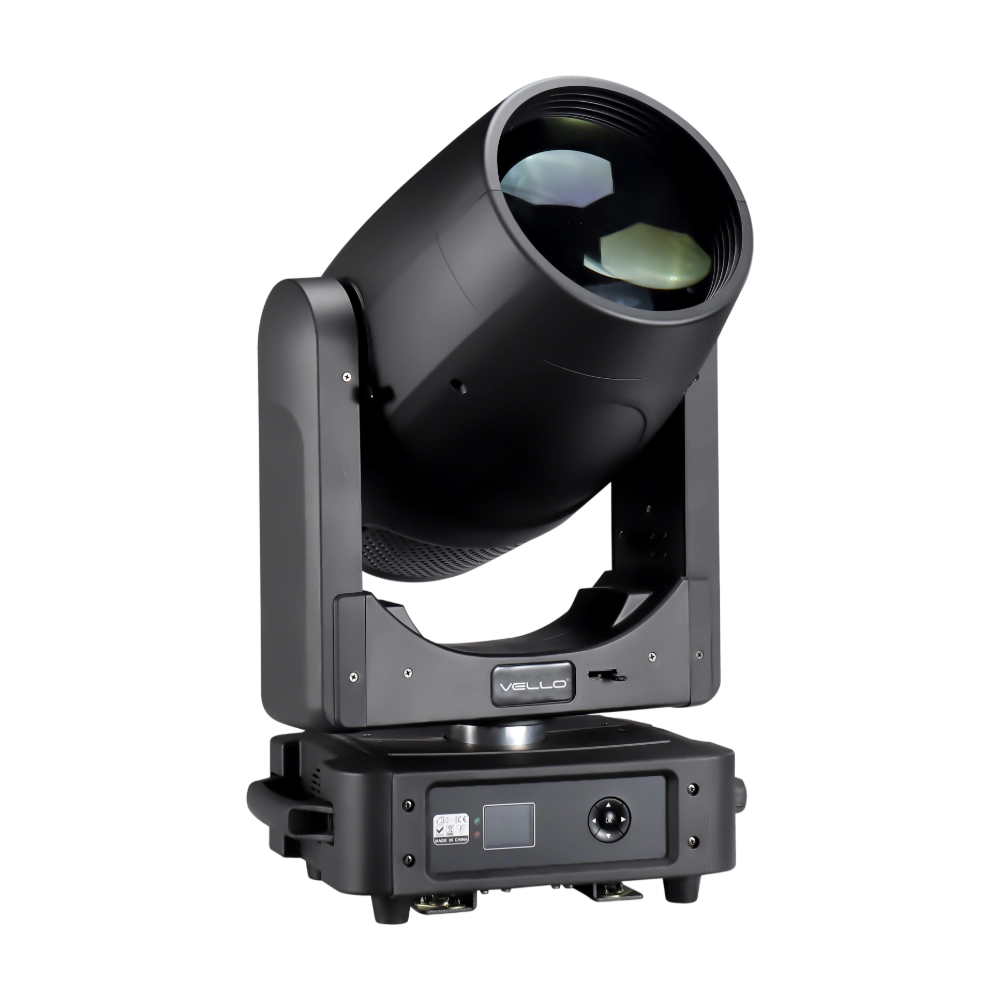
The BSW450 is a high-performance moving head fixture equipped with an original Osram 420W bulb, delivering exceptional brightness, precision, and versatility. Designed for professional stage applications, it seamlessly combines beam, spot, and wash functions in one compact unit, making it a powerful all-in-one lighting solution.
Over 20 Years of Innovation in Stage & Studio Lighting
© 2026 VELLO. All Rights Reserved. 粤ICP备20023734号
Join our socials
VELLO
Whatsapp: +8613902276704
Vello Lighting
VelloLights