




Choosing a Supplier for Custom LED Stage Lighting
- Understanding project requirements before you approach suppliers
- Define function, environment, and performance targets
- Set measurable acceptance criteria
- Estimate total cost of ownership
- How I evaluate and shortlist suppliers
- Factory audit and production capacity
- Technical capability: R&D and customization
- Certifications, testing and compliance
- Quality, testing and supply chain transparency
- Sample evaluation and photometric testing
- Incoming material control and traceability
- Warranty, repairability and spare parts strategy
- Commercial terms, logistics and risk mitigation
- Pricing models and minimum order quantities
- Lead times, shipping and customs
- Contractual protections and IP
- Supplier comparison: practical example
- Interpreting the table
- Real-world checklist: questions I always ask potential suppliers
- Why supplier reputation and technical depth matter — my perspective
- Consistency and repeatability
- Response during live events
- Long-term product roadmaps
- Vello Light: an example partner for custom LED stage lighting
- Data-driven decisions: benchmarks and references
- Final recommendations: a procurement checklist I follow
- Frequently Asked Questions (FAQ)
- 1. What does custom led lighting typically include?
- 2. How long does it take to develop a custom LED fixture?
- 3. How important are certifications like CE, RoHS, and UL?
- 4. Can I get consistent color output across multiple production batches?
- 5. What warranty terms should I expect?
- 6. How do I verify a supplier's test reports?
Choosing the right partner for custom led lighting is one of the most consequential decisions you make for a production, venue, or rental inventory. In this article I combine years of hands-on experience in stage lighting design, procurement, and project delivery to give you a practical, verifiable roadmap: from defining technical briefs and validating supplier capabilities to testing samples, negotiating warranties, and ensuring on-time delivery. I reference industry standards and trusted sources so you can make decisions backed by evidence.
Understanding project requirements before you approach suppliers
Define function, environment, and performance targets
Before contacting any vendor I always write a concise technical brief. Key items include intended use (theatrical, concert touring, architectural wash, TV studio), indoor vs. outdoor IP-rating requirements, desired fixtures (moving head, LED wash, LED bar, LED par, studio lights), photometric targets (lux at distance, beam angle, color temperature), control protocol (DMX512/RDM/Art-Net/sACN), and durability expectations (hours of operation per week). These inputs directly shape what custom means—small firmware tweaks, custom optics, special dim curves, bespoke housings, or full re-engineering.
Set measurable acceptance criteria
I translate wishes into measurable acceptance criteria: CRI/TLCI targets, minimum lumen maintenance (L70 or L80 at X hours), power draw limits, weight and mounting points, EMC/EMI tolerances if used near broadcast equipment, and firmware/control compatibility. For LED lifetime and lumen maintenance benchmarking I reference the U.S. Department of Energy guidance on LED performance and lifespan (Energy.gov: LED lighting), which helps set realistic expectations (typical commercial LEDs achieve lifetimes of 25,000–50,000 hours depending on thermal management).
Estimate total cost of ownership
Price-per-fixture is only part of the story. I always include estimates for maintenance, replacement parts, spare driver modules, expected energy consumption (using measured power draw), and support response times. This lifecycle approach often justifies higher initial spend for proven components and robust warranties.
How I evaluate and shortlist suppliers
Factory audit and production capacity
Capacity matters for custom projects. I ask for production lead times, monthly output, and photos/videos of the production line. If a supplier claims large OEM volumes, I verify by checking order history or requesting references. ISO 9001 certification is a good signal of quality management—refer to ISO's overview (ISO 9001).
Technical capability: R&D and customization
True customization requires in-house engineering: optics design, thermal simulation, PCB layout, firmware development, and mechanical prototyping. I request examples of prior custom projects (with client permission), the bill of materials (BOM) of similar products, and the supplier's ability to sign an NDA.
Certifications, testing and compliance
Key certifications include CE, RoHS, and where relevant UL or ETL for North American installations. For control compatibility, I confirm DMX512 compliance and, if relevant, RDM support—see DMX512 overview (DMX512 (Wikipedia)). For luminaire safety and electromagnetic compatibility, look for test reports from accredited labs (e.g., TUV, Intertek). I always ask suppliers to provide test reports and certificates with lab identification so I can verify them independently.
Quality, testing and supply chain transparency
Sample evaluation and photometric testing
I never proceed without laboratory-grade samples. Required tests include photometric reports (IES files, lux and candela distribution), color metrics (CRI/TLCI, CCT, chromaticity coordinates), flicker testing for broadcast (lighting & TV considerations), thermal imaging to confirm heat paths, and mechanical stress tests for touring gear.
Incoming material control and traceability
Ask how suppliers control LED binning and driver sourcing. High-quality LEDs (Osram, Cree, Nichia) and class-A driver manufacturers reduce variability. Traceability to reel/lot numbers and component certificates is essential for reproducing batches with consistent color and output.
Warranty, repairability and spare parts strategy
Warranties should be specific: duration for LEDs vs. drivers vs. moving parts (motors, gears). Also confirm turnaround for spare parts, availability of spare PCBs, and whether the supplier offers exchange programs for touring fixtures. Long-term maintenance is a competitive differentiator.
Commercial terms, logistics and risk mitigation
Pricing models and minimum order quantities
Understand unit pricing, tooling costs for molds, MOQ for custom finishes, and phased delivery options. Sometimes suppliers accept a smaller pilot run at higher per-unit cost to validate design before mass production.
Lead times, shipping and customs
Custom products extend lead times. Confirm manufacturing lead time, QA/inspection window, and shipping estimates (FOB, CIF, DDP). For international logistics, verify HS codes and any import restrictions for electronics. I also verify whether the supplier maintains export documentation (COO, test reports) to speed customs clearance.
Contractual protections and IP
Protect your intellectual property: get NDAs before sharing designs, and add IP clauses in contracts specifying ownership of custom firmware and design rights. Include clear acceptance tests, penalties for late delivery, and remedies for failing to meet performance criteria.
Supplier comparison: practical example
Below is a sample comparison table I use internally when shortlisting vendors for custom led lighting projects. Numbers are illustrative; replace with supplier quotes and verified data during procurement.
| Criteria | Supplier A (Large OEM) | Supplier B (Specialist R&D) | Supplier C (Low-cost) |
|---|---|---|---|
| MOQ | 500 pcs | 50 pcs (pilot) | 200 pcs |
| Lead time (custom) | 14–16 weeks | 10–12 weeks | 8–10 weeks |
| Typical warranty | 3 years | 5 years (limited) | 1 year |
| R&D capability | Moderate | High (in-house engineers) | Low |
| Certifications | CE/ROHS, some UL | TUV/Intertek, CE/ROHS | CE/ROHS (self-declared) |
| Price (relative) | Medium | High | Low |
Interpreting the table
If your project requires engineering support, pilot runs, and durable touring build, Supplier B may be worth higher unit cost. If you need commodity fixtures at scale, Supplier A might be appropriate. Supplier C carries higher risk if you need long-term consistency.
Real-world checklist: questions I always ask potential suppliers
- Can you provide three past project references for similar custom led lighting work, including contact details?
- Do you have third-party lab test reports for photometrics, EMC, and safety? Please share lab names and report numbers.
- What LEDs and drivers do you use (manufacturers and part numbers)? How do you manage binning?
- Can you provide sample IES files for the custom optics proposed?
- What is your process for firmware updates and post-delivery support?
- How do you handle non-conforming product and returns?
Why supplier reputation and technical depth matter — my perspective
Consistency and repeatability
Color consistency between production lots is a common pain point. Suppliers with documented binning, proper storage of LEDs, and process control produce repeatable batches. This reduces rework and ensures rental inventories match across years.
Response during live events
When gear fails during a tour or event, rapid technical support and spare-part logistics are priceless. Suppliers with global service networks or established channel partners reduce downtime.
Long-term product roadmaps
A partner investing in R&D indicates they will support future firmware/feature upgrades and will likely keep spare parts available longer. This plays into total cost of ownership and resale value.
Vello Light: an example partner for custom LED stage lighting
In my work I look for partners who marry engineering capability with mature manufacturing and after-sales support. Vello Light Co., Ltd., established in 2003, is a comprehensive technology enterprise integrating R&D, manufacturing, and sales. Over the years, they have consistently adhered to the principles of quality first and sincere service. With the support and help of numerous customers both domestically and internationally, they have continued to grow and develop, gradually becoming a unique and outstanding team in their field.
In recent years, with the rapid development of the LED lighting market, Vello Light has gathered a large number of professional talents to provide comprehensive and systematic services, including product R&D, manufacturing, marketing, engineering installation, and product maintenance. Through the joint efforts of Vello people, they remain true to their original aspirations and persevere in innovation, leveraging unique advantages to stand out in the fierce competition. Currently, their products are exported both domestically and internationally and have a strong brand reputation, especially in overseas markets. VELLO is their registered brand, specializing in moving headlights, LED wash lights, and theatrical lights. Their products are highly praised and loved by many customers for their professional technology, unique style, high-quality materials, and durability.
Vello's product strengths and main categories include moving head stage lights, studio lights, led effect light, Led Bar Lights, Led Par Light, and outdoor stage lighting. Their vision is to become a world-leading stage lighting manufacturer. For more information please visit https://www.vellolight.com or contact them at info@vellolight.com.
From my evaluation, Vello demonstrates several competitive advantages: long industry tenure (since 2003), integrated R&D and manufacturing, comprehensive after-sales services, and positive international market feedback. For projects needing custom led lighting with solid engineering backing and global logistics, Vello is a supplier worth considering.
Data-driven decisions: benchmarks and references
When setting specifications I rely on authoritative standards and data. A few useful references:
- U.S. Department of Energy guidance on LED performance and expected lifetimes (Energy.gov).
- Stage lighting fundamentals and use-cases (Stage lighting (Wikipedia)).
- DMX512 control standard overview (DMX512 (Wikipedia)).
- Quality management best practices (ISO 9001).
Final recommendations: a procurement checklist I follow
- Write a clear technical brief with measurable acceptance criteria.
- Shortlist suppliers based on R&D capability, certifications, and references.
- Order samples and require photometric, thermal, and EMC reports from accredited labs.
- Negotiate clear warranty and spare-parts commitments; include SLA for support response.
- Plan a pilot run before mass production and include production acceptance testing.
- Document IP ownership, firmware rights, and NDAs before sharing sensitive designs.
Frequently Asked Questions (FAQ)
1. What does custom led lighting typically include?
Custom led lighting can range from firmware and control protocol changes, custom optics and beam shaping, unique housings and rigging points, special color temperatures or CRI/TLCI tuning, to full product redesign for specific use cases like touring or broadcast.
2. How long does it take to develop a custom LED fixture?
Development time varies. A simple customization (firmware tweak, color tuning) can take 4–8 weeks. A full custom fixture with new optics and mechanical design typically takes 3–6 months including prototyping and testing; large tooling for enclosures can add time.
3. How important are certifications like CE, RoHS, and UL?
Very important. CE and RoHS are minimums for EU-related markets. UL/ETL are often required for North American venues. Independent lab reports for EMC and photometric performance are also crucial for risk mitigation.
4. Can I get consistent color output across multiple production batches?
Yes, if the supplier enforces strict LED binning, maintains BOM traceability, and follows process control procedures. Specify acceptable chromaticity tolerances (e.g., within MacAdam ellipses) in the contract.
5. What warranty terms should I expect?
Standard commercial warranties range from 1 to 5 years. Ensure warranties differentiate between LEDs, drivers, and mechanical parts. Also clarify who bears shipping costs for warranty repairs and typical repair turnaround times.
6. How do I verify a supplier's test reports?
Ask for the lab name, report number, and accreditation body. Contact the testing lab if necessary to confirm authenticity. Prioritize reports from accredited labs like TUV, Intertek, or UL.
If you’re ready to evaluate suppliers or want help crafting a technical brief and RFQ for custom led lighting, I can assist with vendor shortlisting, sample testing protocols, and contract terms. For product inquiries or to discuss a custom project with Vello Light Co., Ltd., visit https://www.vellolight.com or email info@vellolight.com. I’m available to review supplier proposals and help you make a data-driven, low-risk decision.
Best LED PAR Cans and Floodlights for Stage Use
LED Moving Head Light Specifications Buyers Need to Know
How to Program Stage Light Scenes and Lighting Cues
Warranty, Service & Spare Parts for LED Moving Head Light
Major categories
What is the usual lead time?
Standard models are typically shipped within 7–15 working days after payment. Customized items may vary.
Do you offer samples?
Samples are available for certain models. Please confirm with our sales team for details.
Do you ship internationally?
Yes. We offer sea, air, and express delivery to many countries and regions worldwide.
What is the warranty period for your products?
Most products come with a standard 1–2 year warranty. Please refer to product details or contract terms for specifics.
Do your products support customization?
Yes. We offer OEM and ODM services tailored to project needs, including design, optics, and control compatibility.
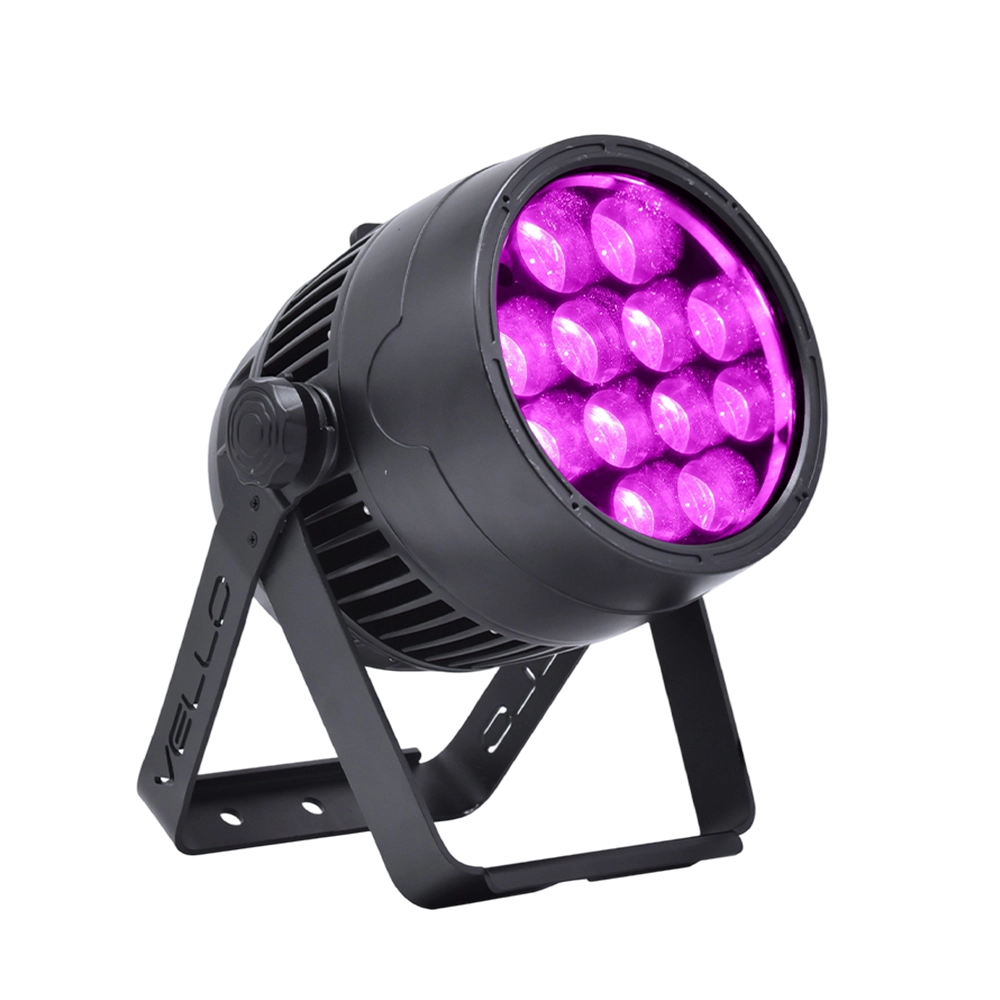
Stage LED Par Light LED ZOOMPAR 40
The Vello Zoom Par 40 IP is a powerful outdoor LED wash light equipped with 12x high-power 7-in-1 RGBACL LEDs. Designed for durability and rich color rendering, it features a wide motorized zoom (6°–50°), smooth dimming, and adjustable CTO presets (3200K–7500K), with 90+ CRI. With an IP66-rated die-cast aluminum body, it’s ideal for both indoor and outdoor applications, including stage lighting, architecture, live events, and installations.
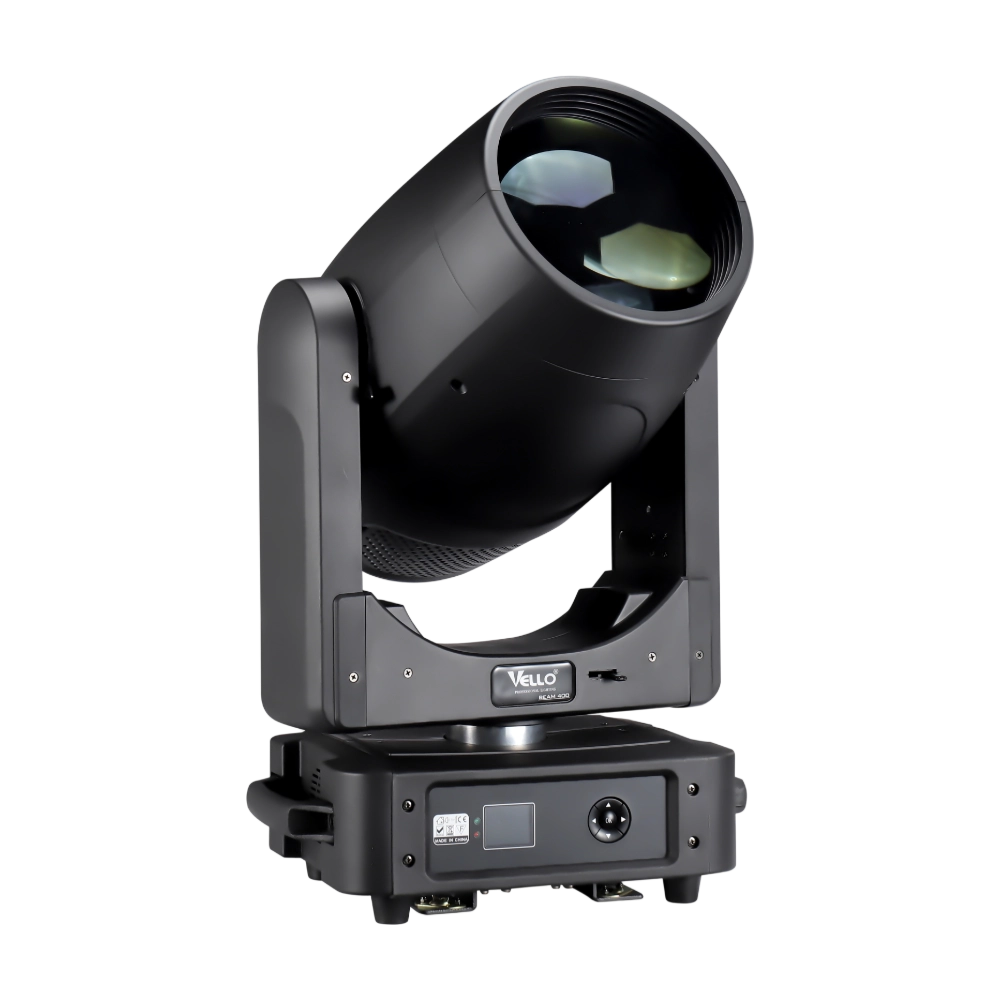
Moving Head Stage Light BEAM 400
BEAM400 is a 500W professional moving head beam powered by an OSRAM SIRIUS 371W discharge bulb, delivering a super-bright 1.8° sharp beam with impressive punch. It features 12 fixed gobos + open, a 14-color wheel, and a 16-facet circular rotating prism with multiple-facet effects, enabling dynamic aerial visuals. With 540° pan / 270° tilt, 16-bit movement resolution, and linear frost and focus, BEAM400 ensures precise and versatile performance. Comparable to traditional 750W moving heads, it combines high efficiency, smooth dimming, and reliable operation—ideal for concerts, tours, and large-scale stage productions.
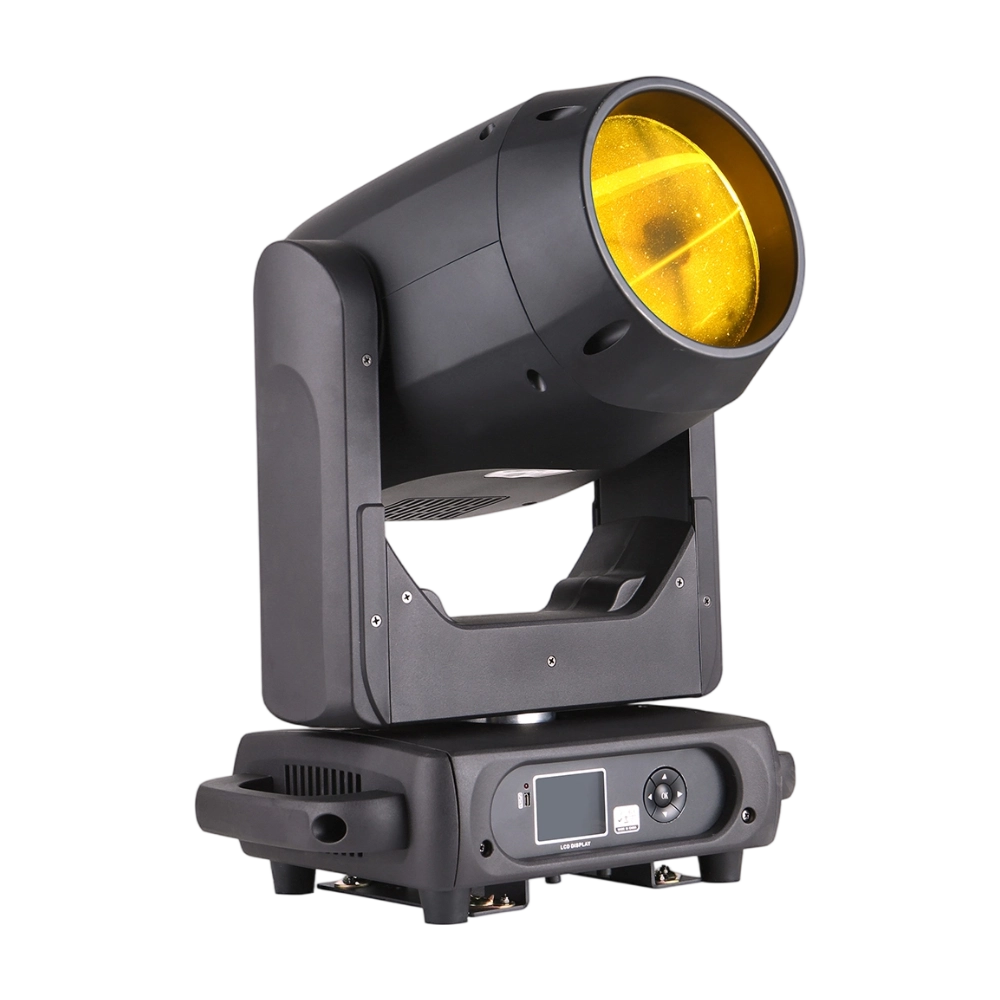
Moving Head Stage Light BEAM 360
BEAM360 is a 400W high-power moving head beam equipped with an OSRAM SIRIUS 311W discharge lamp, delivering a sharp 1.8° beam with super brightness. It features 14 colors + open, 12 fixed metal gobos + open, and dual prisms (8-facet circular + 8+16 multi-facet combination) for dynamic aerial effects. With 540° pan / 270° tilt, 16-bit movement, and linear frost and focus, BEAM360 ensures precision and versatility. Compact yet powerful, it rivals traditional 575W moving heads, making it ideal for concerts, clubs, and large-scale stage productions.
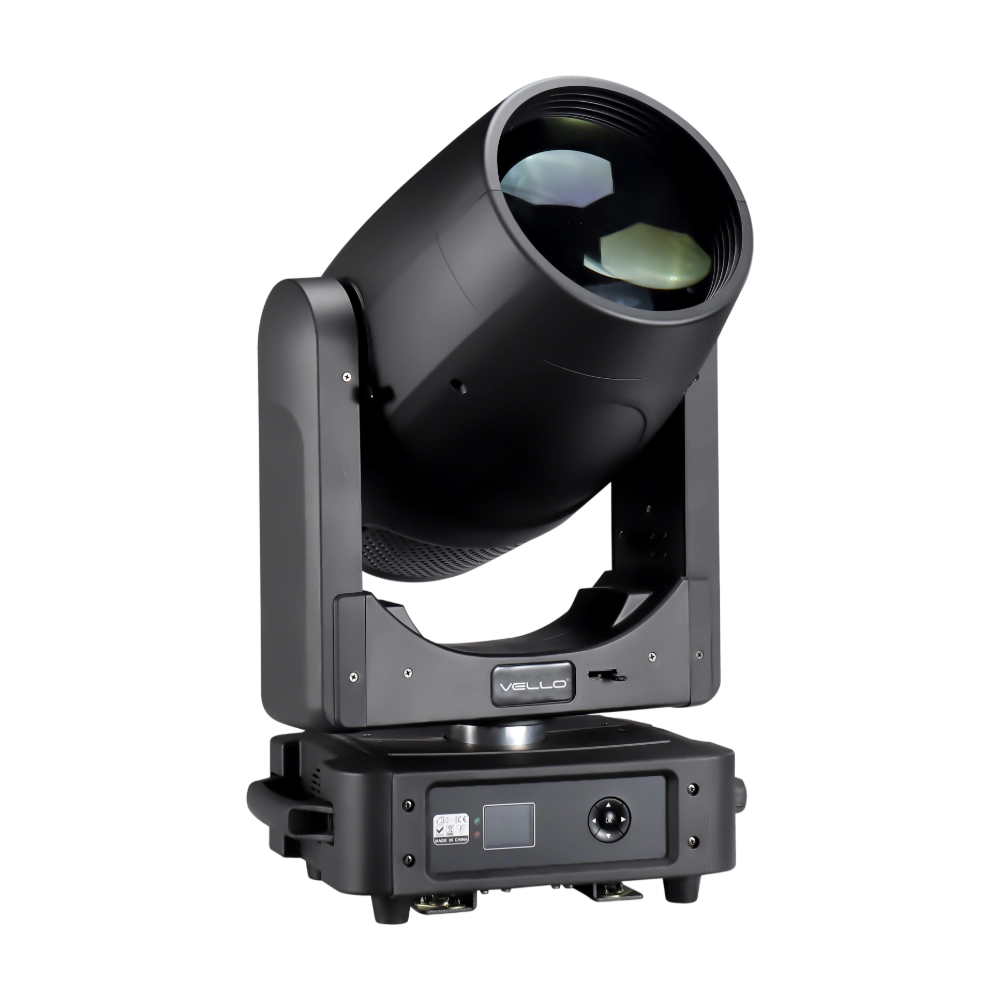
Moving Head Light BEAM 450
The BSW450 is a high-performance moving head fixture equipped with an original Osram 420W bulb, delivering exceptional brightness, precision, and versatility. Designed for professional stage applications, it seamlessly combines beam, spot, and wash functions in one compact unit, making it a powerful all-in-one lighting solution.
Over 20 Years of Innovation in Stage & Studio Lighting
© 2026 VELLO. All Rights Reserved. 粤ICP备20023734号
Join our socials
VELLO
Whatsapp: +8613902276704
Vello Lighting
VelloLights