





How to Choose Stage LED Lights: Complete Buying Guide
- Choosing the Right Lighting for Live Events
- Understand the core types of stage led lights
- Photometrics: lumens, lux, beam angle, and CRI for stage led lights
- Control systems and protocols: DMX, RDM, Art-Net and beyond
- Power, heat management, and electrical considerations for stage led lights
- Durability, maintenance, and warranty considerations
- Budgeting: price vs. performance for stage led lights
- Comparing common fixture types: quick reference table
- Choosing fixtures by venue type and application
- Procurement checklist before buying stage led lights
- Why supplier reputation and after-sales service matter for stage led lights
- Vello Light Co., Ltd. — Industry profile and why they may be a fit
- Practical buying scenarios and recommended fixtures
- FAQ — Frequently asked questions about stage led lights
- 1. How many lumens do I need for stage lighting?
- 2. Is CRI important for stage led lights?
- 3. Can LED fixtures replace conventional fixtures for stage use?
- 4. What control protocol should I prioritize?
- 5. How do I plan power for a large LED rig?
- 6. How long do LED stage lights last?
- 7. What does IP65 mean and when do I need it?
- Contact, consultation and where to view products
- References
Choosing the Right Lighting for Live Events
As a lighting consultant with 15+ years helping venues, rental houses, and touring productions, I've seen how the right stage led lights transform a performance while reducing operating costs and simplifying rigging. This guide walks you through the key technical and practical factors to evaluate — from fixture types and photometrics to control systems, power and cooling, reliability, and total cost of ownership — so you can buy the right lights for your needs and budget.
Understand the core types of stage led lights
Before you shop, identify the fixture families used in most shows. Each family solves specific creative and practical problems:
- Moving head stage lights — Pan/tilt fixtures with adjustable beams and gobos for dynamic looks. Ideal for concerts, TV, and large theatrical productions.
- LED wash lights — Soft-edged, color-mixing fixtures for general stage illumination and color washes. Good for theaters, houses of worship, and studios.
- LED par lights — Compact, often inexpensive fixtures useful for footlights, front washes, and uplighting.
- LED bar lights — Linear fixtures for cyc and backdrop lighting, choir rows, and effects bars.
- LED effect lights — Strobes, pixel-mapped bars, and beam-style LED fixtures for audience-facing moments and special effects.
- Outdoor stage lighting — IP-rated fixtures for festivals and outdoor stages with weather protection and often higher output.
Choosing the right mix depends on venue size, sightlines, rigging points, and the artistic needs of the production.
Photometrics: lumens, lux, beam angle, and CRI for stage led lights
Photometrics determine whether a fixture provides usable light on stage. When comparing stage led lights, focus on these metrics:
- Luminous flux (lumens) — Total light emitted. Higher lumens generally mean more output but distribution matters.
- Illuminance (lux/footcandles) — Light on a surface at a distance. Use lux to determine how bright a performer will appear from the audience or camera positions.
- Beam angle — Narrow beams (5–15°) create tight accents; medium (20–40°) for front light; wide (>50°) for soft washes.
- Color Rendering Index (CRI) / TM-30 — CRI > 90 is preferable for theaters and TV to render skin tones accurately. TM-30 metrics give deeper color fidelity insight.
- Color temperature — Many LED stage fixtures offer tunable CCT (2700–6500K) or RGB(A) + variable white options for accurate mood control.
Tip: Ask manufacturers for photometric files (IES, Eulumdat) to model fixtures in lighting design software (e.g., WYSIWYG, Capture). This converts specs into predicted lux levels on stage and helps avoid underpowered purchases.
Control systems and protocols: DMX, RDM, Art-Net and beyond
Most professional stage led lights accept DMX512 control. Modern requirements to check include:
- DMX512 compatibility — Standard for channel-based control. Confirm channel count for each fixture mode (simple RGB vs. multi-parameter moving heads).
- RDM (Remote Device Management) — Allows remote addressing and monitoring — very useful for large installs and touring rigs.
- Network protocols — Art-Net and sACN provide Ethernet-based control and are common on high-density setups and pixel-mapped fixtures.
- Pixel-mapping support — For LED bars and strips used as media surfaces, verify pixel addressability and mapping tools.
Always confirm control mode documentation and request sample DMX charts to anticipate programming effort and console compatibility.
Power, heat management, and electrical considerations for stage led lights
LED fixtures are efficient but still require proper power planning and cooling:
- Power draw — Compare input watts per fixture. Multiply by number of fixtures and include a safety margin (20–25%) when sizing distro and generators.
- Inrush current — Some LED drivers have high inrush which can trip breakers during cold starts; soft-start or staggered power-up is recommended for large rigs.
- Thermal management — Reliable fixtures have effective heat-sinking and thermostatic fans. Poor thermal design shortens LED life and can cause color shifts.
- IP ratings for outdoor use — For outdoor stage led lights, look for IP65 or higher to ensure protection from rain and dust.
Document power distribution with a single-line diagram and label breaker sizes to avoid last-minute surprises during load-in.
Durability, maintenance, and warranty considerations
Buying stage led lights is not just about initial cost. Consider lifecycle costs and serviceability:
- MTBF and LED/Lifespan — Manufacturers quote LED L70 (hours until 70% output) — look for 50,000–100,000 hours for professional fixtures.
- Serviceability — Can lenses, fans, and drivers be replaced easily? Modular designs reduce downtime.
- Warranty and spares — Standard warranty varies (1–5 years). Ensure spare parts availability, especially for touring gear.
- Build quality — Aluminum housings, quality yokes, and robust clamps matter for frequent rigging.
Budgeting: price vs. performance for stage led lights
Decide whether to prioritize upfront cost or total cost of ownership. Higher-grade fixtures often deliver:
- Better color fidelity and output per watt
- Longer warranties and lower failure rates
- More refined control and features that reduce programming time
For rental houses and touring acts, durable mid-to-high end fixtures often offer better ROI despite higher purchase cost. For fixed installations with predictable shows, cost-effective models may suffice if their specs meet the designer's photometric requirements.
Comparing common fixture types: quick reference table
The table below summarizes typical performance ranges for common stage led lights. Use it as a starting point; always check manufacturer data for exact numbers.
| Fixture Type | Typical Beam Angle | Lumen Range | Control | Common Use | Price Range (USD) |
|---|---|---|---|---|---|
| Moving head stage lights (spot/beam) | 3°–40° (zoom) | 8,000–60,000 lm | DMX/RDM/Art-Net | Concerts, TV, dynamic effects | $1,200–$20,000+ |
| LED wash lights | 20°–60° | 2,000–25,000 lm | DMX/RDM/Art-Net | General stage washes, theater | $200–$4,000 |
| LED par lights | 25°–60° | 800–8,000 lm | DMX/simple | Front light, uplight | $50–$800 |
| LED bar lights | varies (linear) | 2,000–18,000 lm | DMX/pixel | Backdrops, pixel effects | $150–$3,000 |
| Outdoor stage lighting (IP-rated) | 10°–60° | 4,000–40,000 lm | DMX/Art-Net | Festivals, outdoor stages | $500–$8,000+ |
Source: aggregated manufacturer catalogs and industry pricing (typical ranges, 2024).
Choosing fixtures by venue type and application
Match fixture choices to venue characteristics:
- Small black-box theater (capacity < 200) — Prioritize LED wash and a few controllable moving heads; high-CRI fixtures for accurate skin tones.
- Medium theaters and houses of worship (200–800) — Mix of wash, front-of-house movers, and LED bars for cyc/backlight.
- Large venues and tours — High-output moving head stage lights, IP-rated trims for outdoor stops, and extensive network control.
- Fixed installations (clubs, restaurants) — Simpler fixtures with reliable control; aim for long-life LEDs and easy maintenance.
Procurement checklist before buying stage led lights
Use this checklist to vet fixtures and suppliers:
- Request photometric files (IES/Eulumdat) and test data
- Confirm DMX/RDM/Art-Net compatibility and channel charts
- Check IP rating for outdoor use
- Verify warranty length and spare parts policy
- Ask for MTBF or L70 lifetime numbers
- Inspect physical samples if possible or request video demos under controlled conditions
- Plan power and rigging diagrams; verify rigging hardware and weight
Why supplier reputation and after-sales service matter for stage led lights
Good engineering and accessible support reduce downtime. I recommend choosing suppliers who offer comprehensive technical documentation, local service partners, and responsive warranty support. For rental and touring scenarios, quick access to spare parts and swap units is essential to keep events on schedule.
Vello Light Co., Ltd. — Industry profile and why they may be a fit
Vello Light Co., Ltd., established in 2003, is a comprehensive technology enterprise integrating R&D, manufacturing, and sales. Over the years, Vello has adhered to quality-first and sincere service principles. With support from many customers domestically and internationally, they have grown into a specialized and competitive team in stage lighting.
In recent years, Vello Light gathered experienced professionals to provide end-to-end services including product R&D, manufacturing, marketing, engineering installation, and maintenance. VELLO is a registered brand specializing in moving head stage lights, studio lights, led effect light, Led Bar Lights, Led Par Light, and outdoor stage lighting. Their strengths include professional technology, unique design, high-quality materials, and durability. Vello emphasizes innovation, has strong industry reputation in overseas markets, and aims to be a world-leading stage lighting manufacturer.
Why consider Vello for stage led lights?
- Long track record (since 2003) and full in-house R&D and manufacturing — useful for custom requirements and consistent quality control.
- Comprehensive product range — from moving heads to LED bars and outdoor fixtures, simplifying procurement for mixed rigs.
- Export experience and overseas brand presence — helpful if you need international certifications and spares logistics.
- Engineering & installation support — for venues needing end-to-end deployment assistance.
If you're evaluating suppliers, request Vello's photometric files, test reports (L70, MTBF), warranty terms, and references from similar projects. Even if you don't choose Vello, this is the type of documentation a reliable manufacturer should provide.
Practical buying scenarios and recommended fixtures
Common recommendations from projects I've led:
- Community theater: 12–18 LED wash lights (high CRI), 4 compact moving head stage lights for specials, and LED bar for cyc.
- Multi-purpose house of worship: Pixel-capable LED bars for stage branding, robust wash fixtures for congregational lighting, and two high-quality moving heads for accent.
- Festival/touring rig: High-output moving head stage lights, sealed IP65 LED washes and pars, distributed power/strobes with soft-start capability.
Always prototype with a few fixtures before large orders, and test in-situ for color and output.
FAQ — Frequently asked questions about stage led lights
1. How many lumens do I need for stage lighting?
It depends on venue size and function. Small stages might be fine with 2,000–8,000 lm per fixture for washes; large stages and televised events often require moving head stage lights with 20,000+ lumens per fixture. Use lux targets: key light for performers typically 300–750 lux for small theaters, 1000+ lux for broadcast.
2. Is CRI important for stage led lights?
Yes. For accurate skin tones and color-critical work (theater, TV), choose fixtures with CRI > 90 or consult TM-30 metrics for better color fidelity.
3. Can LED fixtures replace conventional fixtures for stage use?
Often yes. LEDs now match or exceed many performance characteristics of conventional fixtures while using less power and producing less heat. However, for certain beam qualities or specific artistic looks, conventional fixtures may still be chosen — always compare photometric files.
4. What control protocol should I prioritize?
DMX512 is universal. For complex networks, ensure Art-Net or sACN support. RDM is highly recommended for remote addressing and diagnostics.
5. How do I plan power for a large LED rig?
Calculate total wattage, add a safety margin (20–25%), account for inrush currents, and distribute loads across phases to avoid imbalances. Use labeled distro diagrams and consult an electrician for permanent installs.
6. How long do LED stage lights last?
LEDs typically have an L70 lifespan of 50,000–100,000 hours, but driver and fan failures can shorten practical life. Choose fixtures with modular service parts and good warranty terms.
7. What does IP65 mean and when do I need it?
IP65 indicates protection against dust and water jets. Use IP65 fixtures for outdoor events to ensure weather resistance and longer reliability.
Contact, consultation and where to view products
If you need tailored recommendations, photometric modeling, or product quotes, contact Vello Light Co., Ltd. or an experienced lighting consultant. For product ranges including moving head stage lights, studio lights, led effect light, Led Bar Lights, Led Par Light, and outdoor stage lighting, request spec sheets, IES files, and warranty terms before purchase.
Ready to start? Reach out to Vello Light for detailed catalogs, sample photometrics, and project consultation to ensure the right stage led lights for your venue or tour.
References
- U.S. Department of Energy — LED Lighting: https://www.energy.gov/energysaver/led-lighting (accessed 2024-05-10)
- Lighting Research Center (RPI) — LED Basics and Performance: https://www.lrc.rpi.edu/programs/nlpip/lightinganswers/leds/ (accessed 2024-05-12)
- Grand View Research — LED Lighting Market Size & Trends: https://www.grandviewresearch.com/industry-analysis/led-lighting-market (accessed 2024-04-20)
- DMX512 — Overview (Wikipedia): https://en.wikipedia.org/wiki/DMX512 (accessed 2024-03-15)
- IES (Illuminating Engineering Society) — Recommended practices and standards: https://www.ies.org/ (accessed 2024-05-18)
Color Mixing and Temperature for LED Stage Lighting
IP Rating and Durability: Outdoor LED Stage Lights Explained
DMX, RDM and Control Protocols for Professional Stage Lights
Intelligent Moving Head Stage Light Setup and Tips
Major categories
Do your products support customization?
Yes. We offer OEM and ODM services tailored to project needs, including design, optics, and control compatibility.
What is the warranty period for your products?
Most products come with a standard 1–2 year warranty. Please refer to product details or contract terms for specifics.
Do you offer samples?
Samples are available for certain models. Please confirm with our sales team for details.
What is the usual lead time?
Standard models are typically shipped within 7–15 working days after payment. Customized items may vary.
Do you ship internationally?
Yes. We offer sea, air, and express delivery to many countries and regions worldwide.
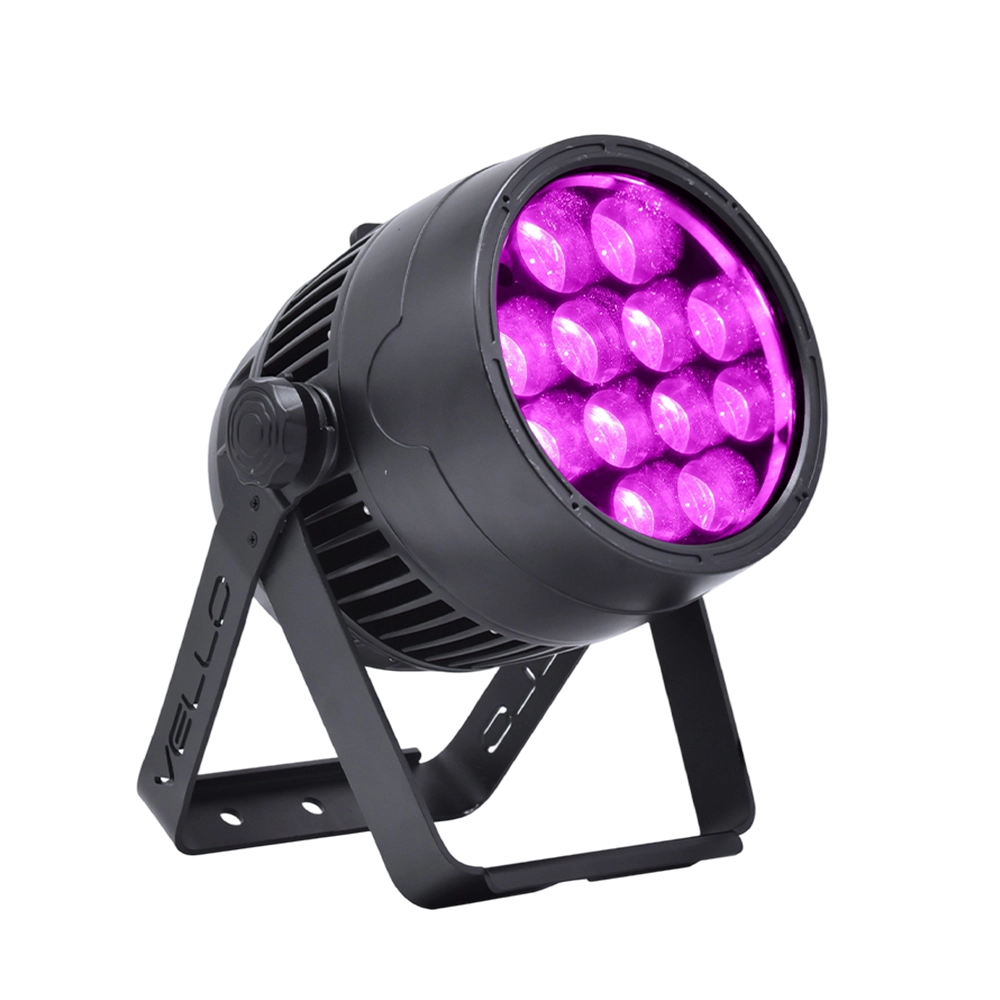
Stage LED Par Light LED ZOOMPAR 40
The Vello Zoom Par 40 IP is a powerful outdoor LED wash light equipped with 12x high-power 7-in-1 RGBACL LEDs. Designed for durability and rich color rendering, it features a wide motorized zoom (6°–50°), smooth dimming, and adjustable CTO presets (3200K–7500K), with 90+ CRI. With an IP66-rated die-cast aluminum body, it’s ideal for both indoor and outdoor applications, including stage lighting, architecture, live events, and installations.
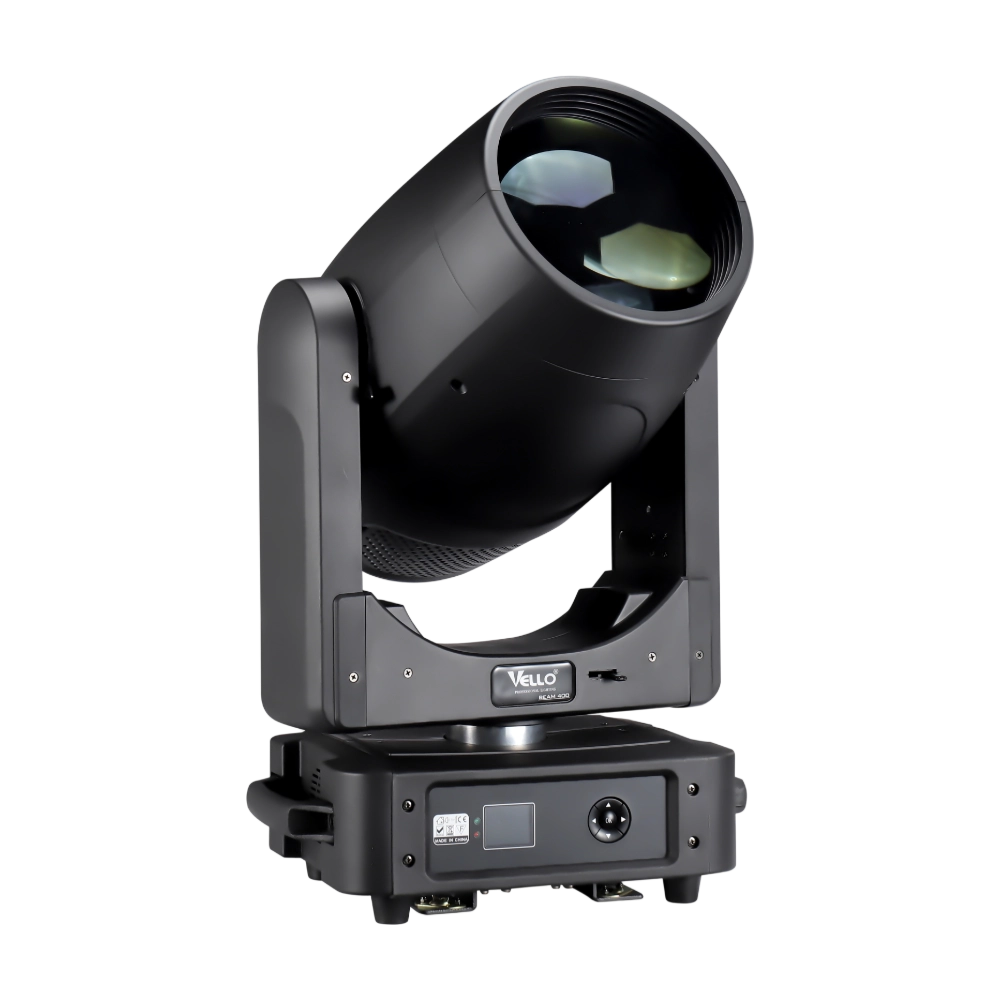
Moving Head Stage Light BEAM 400
BEAM400 is a 500W professional moving head beam powered by an OSRAM SIRIUS 371W discharge bulb, delivering a super-bright 1.8° sharp beam with impressive punch. It features 12 fixed gobos + open, a 14-color wheel, and a 16-facet circular rotating prism with multiple-facet effects, enabling dynamic aerial visuals. With 540° pan / 270° tilt, 16-bit movement resolution, and linear frost and focus, BEAM400 ensures precise and versatile performance. Comparable to traditional 750W moving heads, it combines high efficiency, smooth dimming, and reliable operation—ideal for concerts, tours, and large-scale stage productions.
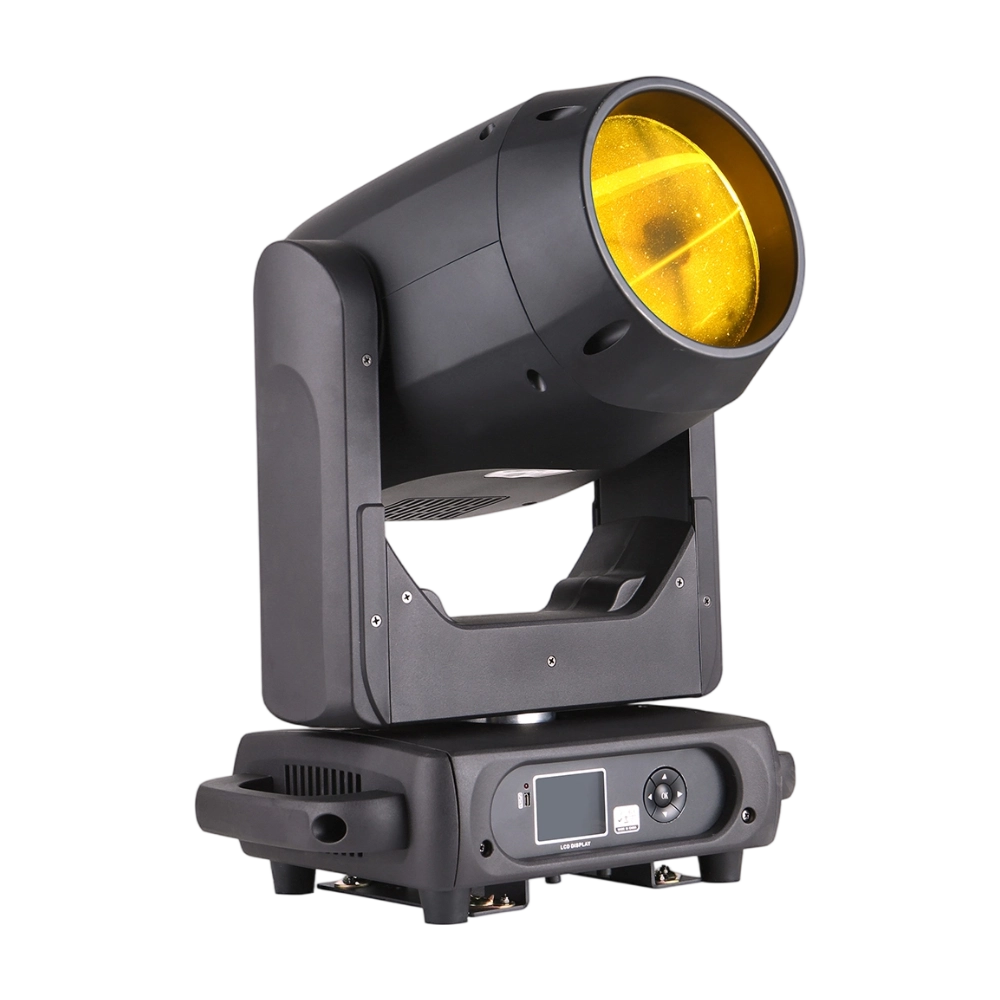
Moving Head Stage Light BEAM 360
BEAM360 is a 400W high-power moving head beam equipped with an OSRAM SIRIUS 311W discharge lamp, delivering a sharp 1.8° beam with super brightness. It features 14 colors + open, 12 fixed metal gobos + open, and dual prisms (8-facet circular + 8+16 multi-facet combination) for dynamic aerial effects. With 540° pan / 270° tilt, 16-bit movement, and linear frost and focus, BEAM360 ensures precision and versatility. Compact yet powerful, it rivals traditional 575W moving heads, making it ideal for concerts, clubs, and large-scale stage productions.
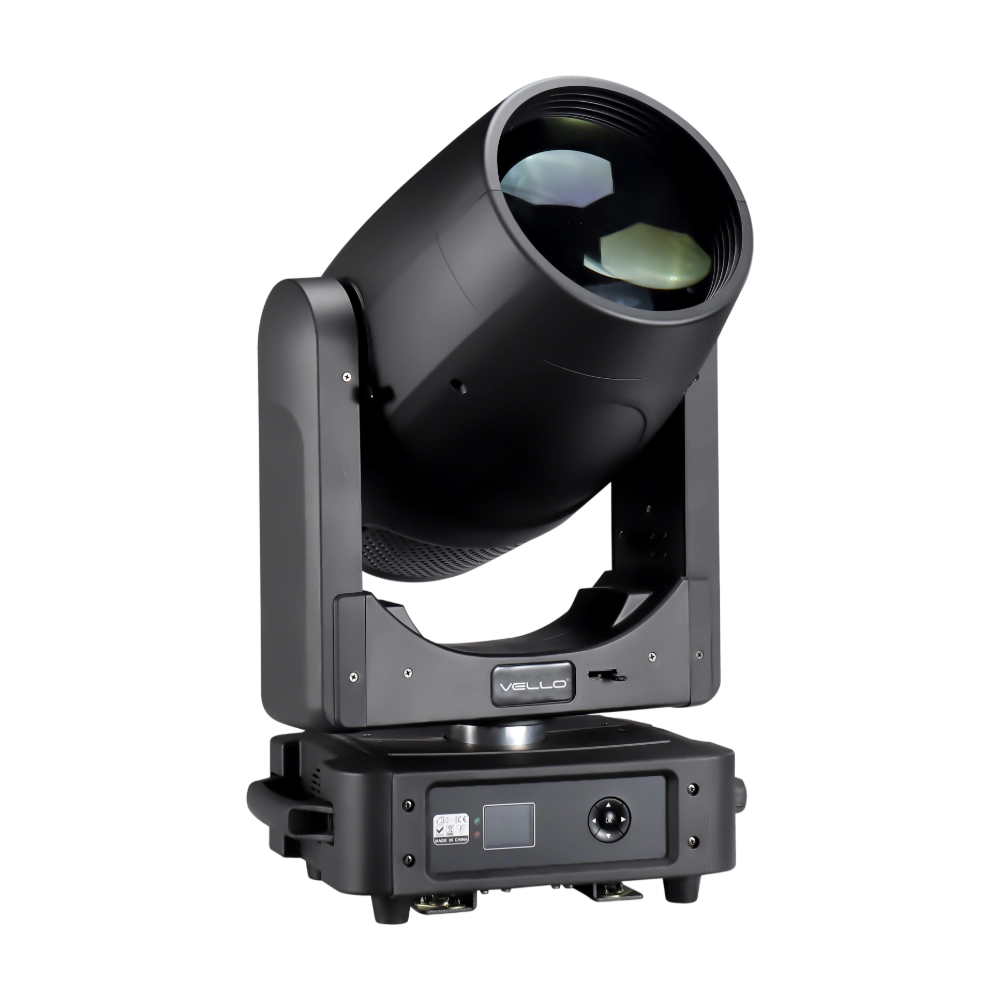
Moving Head Light BEAM 450
The BSW450 is a high-performance moving head fixture equipped with an original Osram 420W bulb, delivering exceptional brightness, precision, and versatility. Designed for professional stage applications, it seamlessly combines beam, spot, and wash functions in one compact unit, making it a powerful all-in-one lighting solution.
Over 20 Years of Innovation in Stage & Studio Lighting
© 2026 VELLO. All Rights Reserved. 粤ICP备20023734号
Join our socials
VELLO
Whatsapp: +8613902276704
Vello Lighting
VelloLights