





How to Choose Custom LED Lighting for Theatrical Venues
- Understanding venue needs before selecting fixtures
- Assess programming and artistic requirements
- Map the physical venue constraints
- Establish operational and maintenance expectations
- Key technical criteria for custom LED lighting
- Color quality: CRI, TM-30 and color mixing
- Output, beam control and optics
- Flicker, dimming curve and control protocols
- Types of LED stage lights and where customization matters
- Moving head fixtures (spot, wash, beam)
- LED wash lights and pars
- Effect lights, bars and outdoor fixtures
- Comparison: typical fixture characteristics
- Specifying a custom system and choosing a vendor
- Create a detailed specification document
- Evaluate vendors on technical, service and roster evidence
- Balance upfront cost with total cost of ownership
- Deployment, integration and testing
- Photometric simulation and pre-install testing
- Rigging, cooling and thermal management
- Training and documentation
- Why partner with an experienced manufacturer: a vendor perspective
- About Vello Light Co., Ltd.
- Capabilities, products and competitive strengths
- Standards, references and where to learn more
- Industry standards and guidance
- When to call an expert
- FAQ
- 1. What specifications are most important when ordering custom LED lighting?
- 2. How do I ensure fixtures are flicker-free for video?
- 3. Is RGBW better than RGB for theatrical color?
- 4. How many moving heads do I need for a mid-size proscenium theatre?
- 5. What are reasonable lifecycle expectations for LED fixtures?
- 6. Can LED fixtures be used safely outdoors?
I help venues, lighting designers, and production managers select custom led lighting solutions that balance artistic intent, technical performance, energy efficiency, and long-term serviceability. This article walks you through assessing space and programming needs, technical metrics to prioritize, pros and cons of common fixture types, specification tips for custom systems, and how to choose a manufacturer or integrator. References to industry guidance (IES, PLASA) and DOE energy guidance are included to support recommendations.
Understanding venue needs before selecting fixtures
Assess programming and artistic requirements
Before specifying custom led lighting, I always start by documenting the shows and events you will host. A small black-box theatre with intimate drama will prioritize high-CRI front light and subtle color mixing; a touring rock venue demands high-output moving heads and dynamic effects. List typical productions, audience sightlines, and the degree of on-the-fly flexibility designers require (consoles, presets, automated cues).
Map the physical venue constraints
I perform an on-site survey or request detailed plans to note stage dimensions, ceiling grid/rigging points, line-of-sight obstructions, and power capacity. Key physical factors that drive custom led lighting choices include fly tower height, available truss positions, cable routing, and whether outdoor stage lighting is needed. For public safety and compliance, consult local building code and the rigging standards recommended by PLASA (PLASA).
Establish operational and maintenance expectations
Decide who will operate and maintain the system. If you have volunteer crews, choose fixtures with simpler addressing and robust housings. If you plan long-term rentals or touring, prioritize modularity and easy replacement. These operational choices influence whether you invest in high-end moving heads or more rugged LED wash fixtures with fewer moving parts.
Key technical criteria for custom LED lighting
Color quality: CRI, TM-30 and color mixing
Color rendering affects how faces, costumes, and set textures appear onstage. Traditional CRI (Ra) is useful but incomplete for saturated theatrical colors—so I look at TM-30 metrics (fidelity and gamut) where available. For theatrical work, aim for CRI 90+ or TM-30 Rf above 80 with good gamut if natural skin tones are critical. For saturated color washes, good color mixing and deep saturated LEDs (RGBW, RGBA, or multi-chip) are essential. The Illuminating Engineering Society (IES) provides guidance on color rendering for performance spaces (IES).
Output, beam control and optics
Light output (lumens) and beam distribution determine how few fixtures will cover the stage and how the light sculpts the actors. For front light I typically target even distribution with beam angles between 20°–40° depending on throw distance; specials and profiles need narrow beams and sharp shutters. For large concerts or outdoor stages, moving head spot outputs can range dramatically and must be selected to overcome ambient light levels. The U.S. Department of Energy explains LED efficiency benefits that let designers trade power draw for output (DOE: LED lighting).
Flicker, dimming curve and control protocols
Flicker-free operation at various frame rates is critical for broadcast and video capture. Ask manufacturers for PWM frequency specs and test ability at low dimmer levels. DMX/RDM remains standard for theatrical control; Art-Net and sACN are common for networked systems. For complex automation, ensure fixtures support enough control channels and stable LUTs for consistent dimming behavior. PLASA and industry white papers discuss reliable control practices (PLASA).
Types of LED stage lights and where customization matters
Moving head fixtures (spot, wash, beam)
Moving heads offer dynamic framing, gobos, and movement. For custom led lighting packages I select moving heads based on beam type: spot for gobos and edge control, wash for even color mixing, and beam for aerial effects. Consider fixture weight, footprint on truss, and maintenance access when planning a custom rig.
LED wash lights and pars
LED wash fixtures give smooth washes and are typically more economical and robust than moving heads for general illumination. Pars and LED bars are excellent for cyc washes and footlight replacements. When customizing, specify lens options, IP rating for outdoor use, and desired color mixing architecture (e.g., RGBW vs. 6-in-1 chips) to match your color palette.
Effect lights, bars and outdoor fixtures
Effect fixtures (strobes, pixel-mapped bars, and outdoor spot/flood lights) add atmosphere. For pixel mapping and architectural integration, ensure fixtures support pixel addressing and synchronization protocols. Outdoor stage lighting should meet IP ratings and thermal management specs; consult IES and manufacturer datasheets for environmental ratings.
Comparison: typical fixture characteristics
| Fixture Type | Typical Output (lm) | Beam Angle | CRI / Color | Typical Use | Control |
|---|---|---|---|---|---|
| Moving head spot | 8,000–30,000 | 3°–40° (variable) | CRI 70–95 (depends on LED mix) | Specials, gobos, key light | DMX/RDM, Art-Net |
| LED wash | 3,000–15,000 | 20°–90° (diffused) | CRI 80–95 | Stage wash, cyc light | DMX, pixel mapping |
| LED par | 500–4,000 | 10°–60° | CRI 70–95 | Accent, footlight | DMX |
| LED bar / pixel | 2,000–10,000 | 5°–120° (custom lenses) | CRI 70–95 | Backdrops, pixel effects | DMX, Art-Net |
| Outdoor stage flood/spot | 5,000–40,000 | 10°–90° | CRI 70–90 | Concerts, façade lighting | DMX, weatherproof controls |
Note: the ranges above are typical figures drawn from manufacturer catalogs and industry datasets; exact specs should be validated on datasheets during procurement.
Specifying a custom system and choosing a vendor
Create a detailed specification document
I recommend producing an RFP-style specification that includes: venue measurements, desired fixture types and counts, photometric targets (lux/lumen maps), control protocols, IP requirements, power budgets, and maintenance expectations. Including a photometric target (lux on stage areas at performer level) allows vendors to simulate layouts and provide realistic fixture counts.
Evaluate vendors on technical, service and roster evidence
When I evaluate manufacturers and integrators I look for: published photometric data, TM-30 / CRI specs, test reports for flicker and EMC, warranty and spare-part policies, and proven projects similar to my venue. Industry groups like PLASA and client case studies provide third-party validation (PLASA).
Balance upfront cost with total cost of ownership
LED fixtures reduce ongoing lamp and power costs—but initial investment and serviceability matter. I model lifecycle costs: purchase price, expected LED life (L70 hours), energy consumption, maintenance intervals, and replacement parts. The U.S. DOE provides context on LED cost and energy advantages (DOE).
Deployment, integration and testing
Photometric simulation and pre-install testing
I insist on photometric simulations (IES files) before committing. Simulations let us verify counts, uniformity and fixture placement. After delivery, run a site acceptance test—verify DMX addressing, dimming behavior, CRI samples, and flicker-free operation at broadcast frame rates.
Rigging, cooling and thermal management
LED fixtures tolerate heat poorly if airflow is restricted. Ensure truss layouts and enclosures provide adequate ventilation. Check the fixture’s rated ambient temperature and de-rate output expectations for hot venues. For outdoor systems, verify IP and corrosion-resistant finishes.
Training and documentation
Include operator training, maintenance manuals, and spare parts lists in the project scope. I also recommend documenting a simple patch sheet and emergency procedures so volunteer or substitute operators can manage the system safely.
Why partner with an experienced manufacturer: a vendor perspective
About Vello Light Co., Ltd.
Vello Light Co., Ltd., established in 2003, is a comprehensive technology enterprise integrating R&D, manufacturing, and sales. Over the years, we have consistently adhered to the principles of quality first and sincere service. With the support and help of numerous customers both domestically and internationally, we have continued to grow and develop, gradually becoming a unique and outstanding team in our field.
Capabilities, products and competitive strengths
In recent years, with the rapid development of the LED lighting market, Vello Light has gathered a large number of professional talents to provide comprehensive and systematic services, including product R&D, manufacturing, marketing, engineering installation, and product maintenance. Through the joint efforts of Vello people, we remain true to our original aspirations and persevere in innovation, leveraging our unique advantages to stand out in the fierce competition. Currently, our products are exported both domestically and internationally and have a strong brand reputation, especially in overseas markets.
VELLO is a registered brand specializing in moving head stage lights, studio lights, led effect light, Led Bar Lights, Led Par Light, and outdoor stage lighting. Our products are highly praised and loved by many customers for their professional technology, unique style, high-quality materials, and durability. Our vision is to become a world-leading stage lighting manufacturer.
If you need custom led lighting solutions tailored to your theatrical venue, Vello Light offers R&D-driven customization, rigorous quality control, and project-level support from specification through commissioning. Learn more on our website: vellolight.com or email inquiries to info@vellolight.com.
Standards, references and where to learn more
Industry standards and guidance
For best practice and technical standards consult bodies such as the Illuminating Engineering Society (IES), Professional Lighting and Sound Association (PLASA), and general LED technology overviews like the U.S. Department of Energy (DOE) and fundamental LED information at Wikipedia.
When to call an expert
If your venue requires broadcast-grade flicker-free lighting, complex architectural integration, or outdoor weatherproofing for touring shows, engage a systems integrator and manufacturer early. I often see better outcomes when manufacturers are involved during the design phase rather than as afterthought suppliers.
FAQ
1. What specifications are most important when ordering custom LED lighting?
Prioritize photometric targets (lux at stage), color quality (CRI and TM-30), beam control, dimming/flicker specs, IP/thermal ratings, and control protocol compatibility (DMX/Art-Net/sACN). Include these in your RFP for accurate vendor proposals.
2. How do I ensure fixtures are flicker-free for video?
Request PWM frequency data and test fixtures at relevant frame rates (e.g., 24/25/30/60 fps). Ask for certification or test footage from the manufacturer and perform on-site video tests during commissioning.
3. Is RGBW better than RGB for theatrical color?
RGBW simplifies producing white and pastel tones and often improves perceived color rendering, but multi-chip (RGBA or 6-in-1) solutions can produce a wider palette. Choose based on how much natural skin tone fidelity you need versus saturated color effects.
4. How many moving heads do I need for a mid-size proscenium theatre?
Counts vary by design intent. A starting point might be 6–12 moving heads for specials and effects plus fixed washes and front light. Always confirm with photometric simulations (IES files) to meet lux and uniformity targets.
5. What are reasonable lifecycle expectations for LED fixtures?
Quality LEDs are rated for tens of thousands of hours (L70 often 50,000+ hours). Lifecycle also depends on thermal management and duty cycle—ensure manufacturer L70 data and warranty terms are clearly stated.
6. Can LED fixtures be used safely outdoors?
Yes—provided you select fixtures with appropriate IP ratings, corrosion-resistant materials, and consider cable management and power protection. Confirm the manufacturer’s outdoor suitability and any limitations for exposure.
If you have specific venue plans or want a custom lighting package and photometric simulation, contact me or reach out to Vello Light for project consultation. Visit https://www.vellolight.com or email info@vellolight.com to request a proposal or product catalog.
How to Specify Custom LED Stage Lighting for Live Shows
LED Moving Head Light Maintenance Tips
Case Studies: LED Moving Head Light for Touring & Events
Integrating DMX and Wireless Control with LED Stage Lights
Major categories
Do you ship internationally?
Yes. We offer sea, air, and express delivery to many countries and regions worldwide.
What is the warranty period for your products?
Most products come with a standard 1–2 year warranty. Please refer to product details or contract terms for specifics.
Do you offer samples?
Samples are available for certain models. Please confirm with our sales team for details.
What is the usual lead time?
Standard models are typically shipped within 7–15 working days after payment. Customized items may vary.
Do your products support customization?
Yes. We offer OEM and ODM services tailored to project needs, including design, optics, and control compatibility.
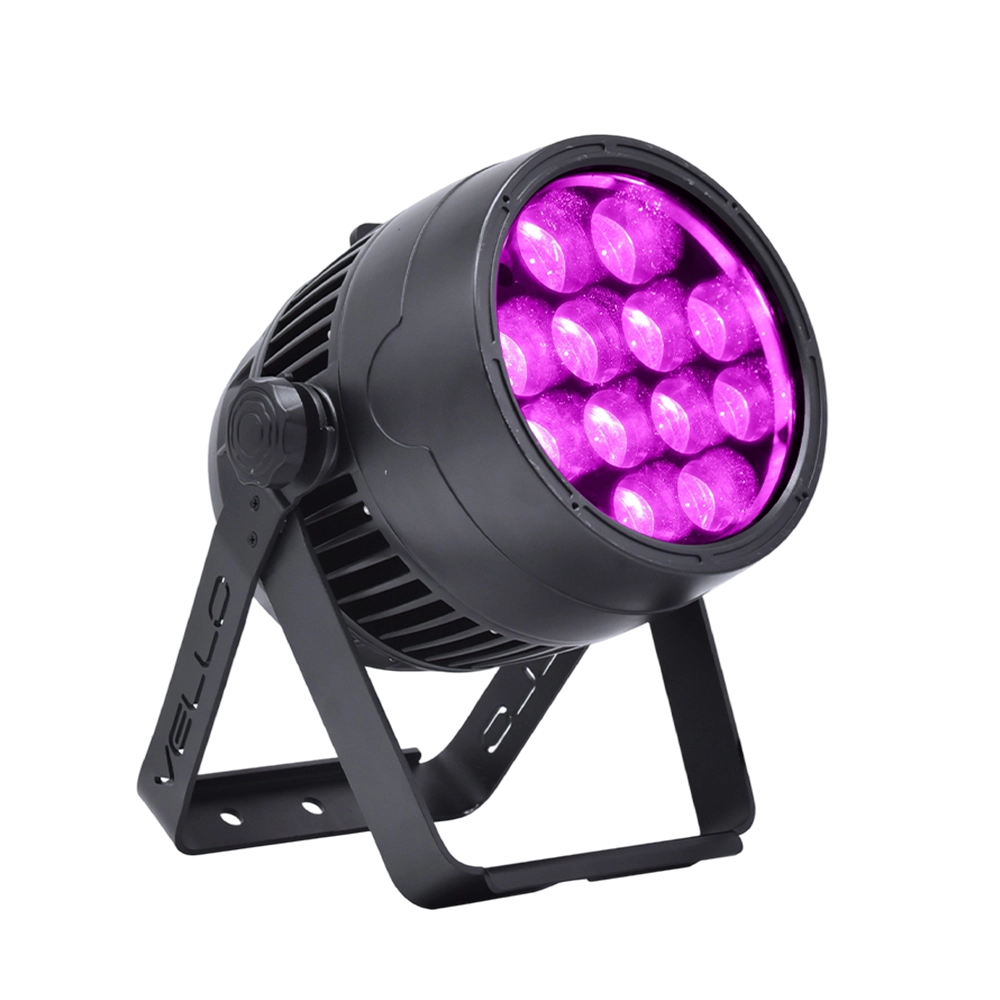
Stage LED Par Light LED ZOOMPAR 40
The Vello Zoom Par 40 IP is a powerful outdoor LED wash light equipped with 12x high-power 7-in-1 RGBACL LEDs. Designed for durability and rich color rendering, it features a wide motorized zoom (6°–50°), smooth dimming, and adjustable CTO presets (3200K–7500K), with 90+ CRI. With an IP66-rated die-cast aluminum body, it’s ideal for both indoor and outdoor applications, including stage lighting, architecture, live events, and installations.
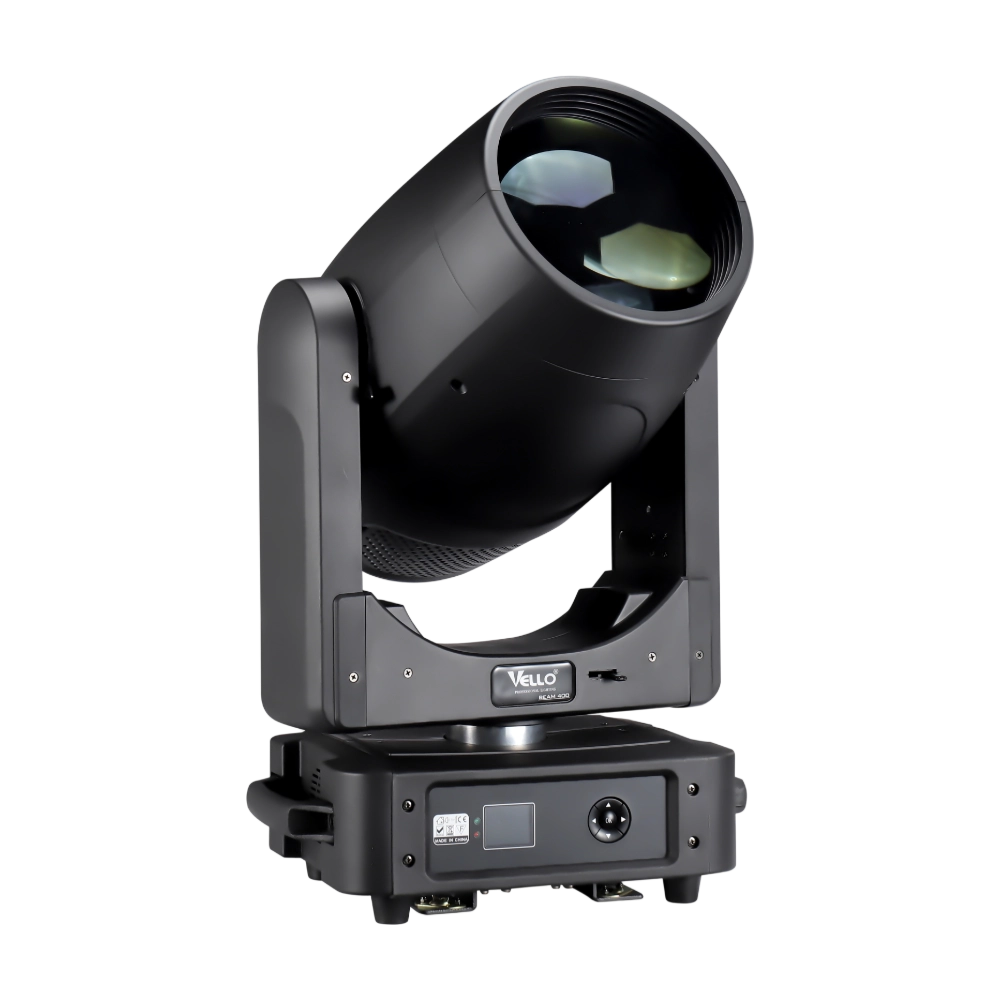
Moving Head Stage Light BEAM 400
BEAM400 is a 500W professional moving head beam powered by an OSRAM SIRIUS 371W discharge bulb, delivering a super-bright 1.8° sharp beam with impressive punch. It features 12 fixed gobos + open, a 14-color wheel, and a 16-facet circular rotating prism with multiple-facet effects, enabling dynamic aerial visuals. With 540° pan / 270° tilt, 16-bit movement resolution, and linear frost and focus, BEAM400 ensures precise and versatile performance. Comparable to traditional 750W moving heads, it combines high efficiency, smooth dimming, and reliable operation—ideal for concerts, tours, and large-scale stage productions.
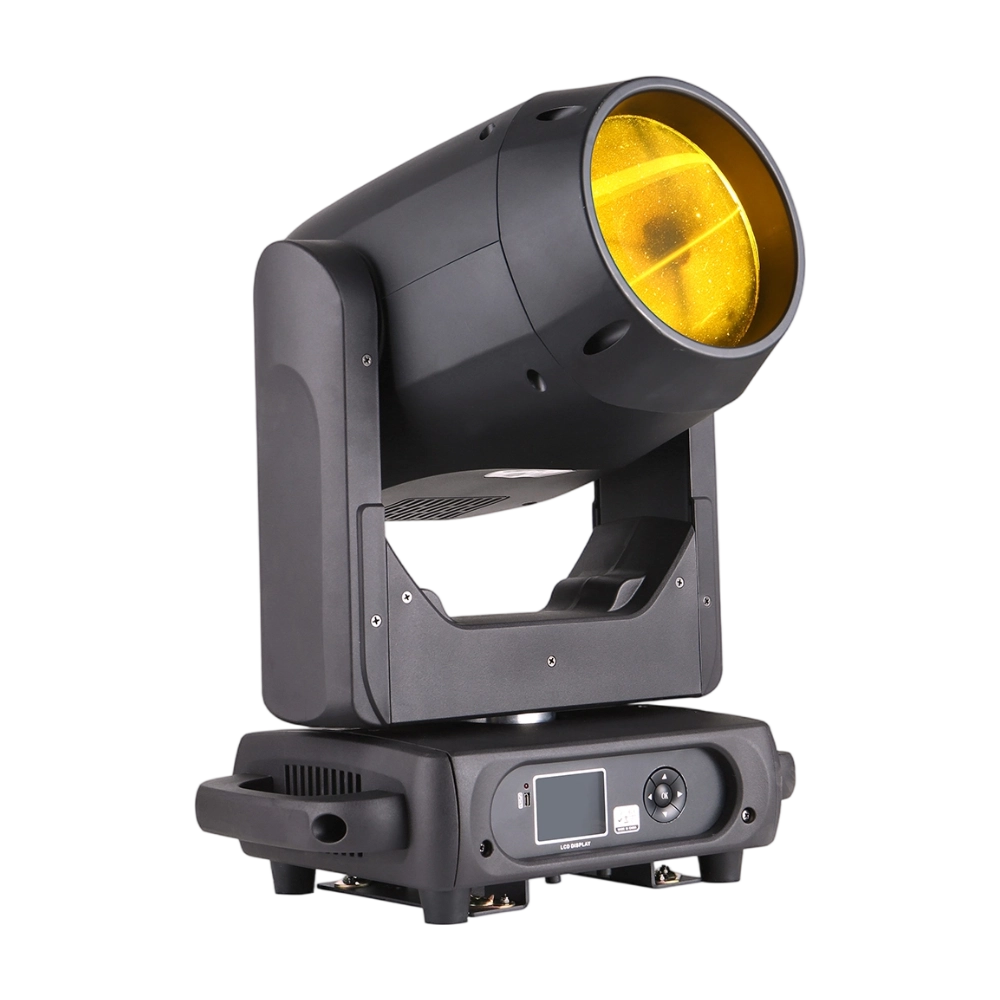
Moving Head Stage Light BEAM 360
BEAM360 is a 400W high-power moving head beam equipped with an OSRAM SIRIUS 311W discharge lamp, delivering a sharp 1.8° beam with super brightness. It features 14 colors + open, 12 fixed metal gobos + open, and dual prisms (8-facet circular + 8+16 multi-facet combination) for dynamic aerial effects. With 540° pan / 270° tilt, 16-bit movement, and linear frost and focus, BEAM360 ensures precision and versatility. Compact yet powerful, it rivals traditional 575W moving heads, making it ideal for concerts, clubs, and large-scale stage productions.
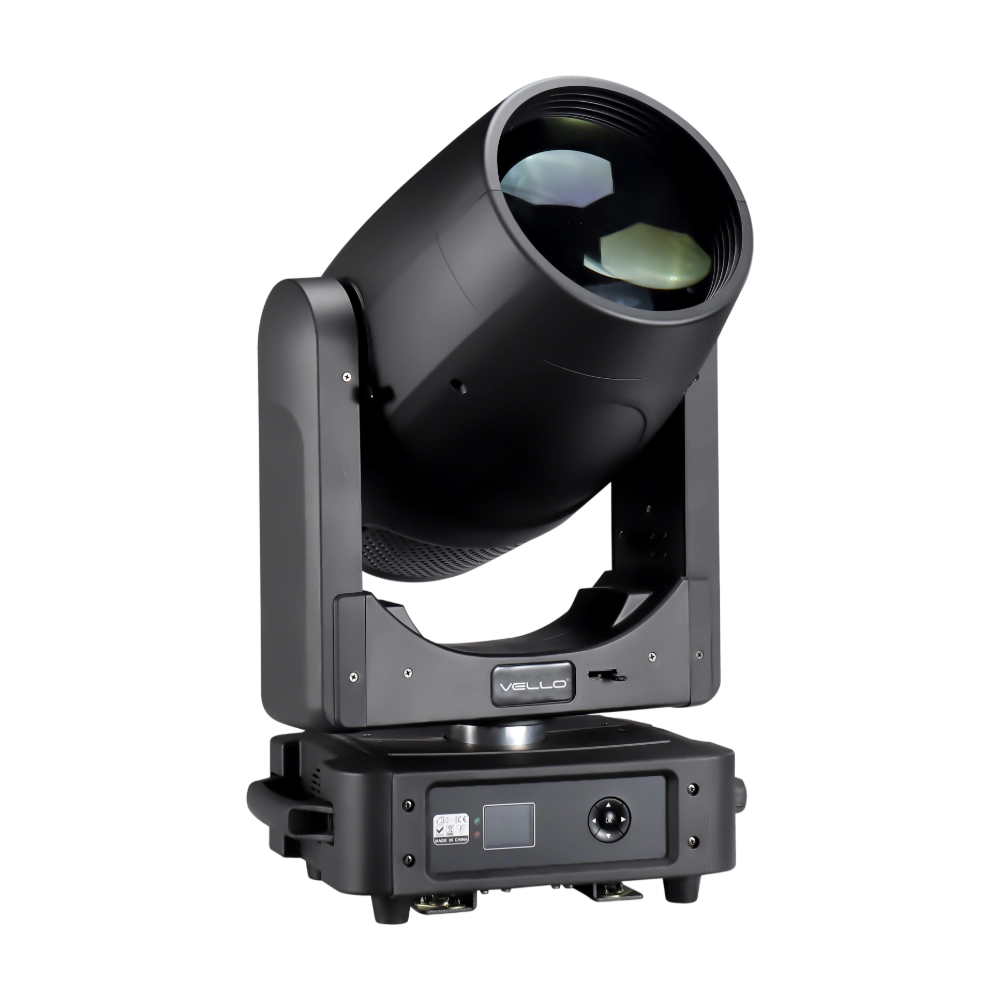
Moving Head Light BEAM 450
The BSW450 is a high-performance moving head fixture equipped with an original Osram 420W bulb, delivering exceptional brightness, precision, and versatility. Designed for professional stage applications, it seamlessly combines beam, spot, and wash functions in one compact unit, making it a powerful all-in-one lighting solution.
Over 20 Years of Innovation in Stage & Studio Lighting
© 2026 VELLO. All Rights Reserved. 粤ICP备20023734号
Join our socials
VELLO
Whatsapp: +8613902276704
Vello Lighting
VelloLights