


Certifications and Compliance for Outdoor LED Lighting
- Practical checklist for specifying outdoor LED fixtures
- 1. Define environmental and performance requirements first
- 2. Map required certifications to application and jurisdiction
- 3. Specify documentation, testing, and maintenance expectations
- Key certifications and standards you should know
- IP and IK ratings (IEC 60529 / EN 62262)
- Electrical safety and product certification: UL, ETL, CE
- Energy and performance: DLC, ENERGY STAR, LM-79/LM-80/TM-21
- Testing, documentation and compliance process for custom outdoor lighting
- Typical test reports and what to verify
- How to validate reports and prevent fraud
- Lifecycle, warranty and maintenance considerations
- Comparing common certifications and tests
- Design trade-offs and cost implications
- Choosing a supplier: why certifications matter (and how VELLO fits)
- What to look for in vendor capability statements
- About Vello Light Co., Ltd. and how we support compliance-driven projects
- How to structure contractual compliance clauses
- Implementation tips: deployment, commissioning and long-term compliance
- On-site acceptance testing checklist
- Maintain compliance through product life
- When to request re-testing or re-certification
- FAQ
- 1. What IP and IK ratings should I specify for outdoor LED fixtures?
- 2. Which tests prove LED lifetime and lumen maintenance?
- 3. Do I always need UL or ETL for outdoor fixtures?
- 4. How do I ensure a supplier's test reports are real?
- 5. What certifications matter for rebate eligibility?
- 6. Can custom outdoor lighting solutions still meet strict standards?
- Contact and product inquiry
- References
Practical checklist for specifying outdoor LED fixtures
When you specify custom outdoor lighting, compliance and certification are not optional details—they determine safety, longevity, warranty performance, and regulatory acceptance. This section gives procurement and design teams a prioritized checklist to translate performance goals and local code requirements into a clear procurement specification.
1. Define environmental and performance requirements first
Start by documenting the operational environment: coastal or inland, temperature range, wind and ice loading, UV exposure, corrosive atmospheres, and expected ingress challenges (rain, dust, salt spray). Tie those conditions to measurable targets: minimum IP/IK ratings, salt-spray class (ASTM B117 exposure hours), intended color rendering index (CRI), correlated color temperature (CCT), and lumen maintenance (L70 at X hours).
2. Map required certifications to application and jurisdiction
Different projects require different marks. For municipal streets and highways, photometric data (LM-79) and DLC listing often matter. For coastal architectural façade lights, corrosion testing and higher IP/IK ratings are priorities. For public spaces, photobiological safety (IEC 62471) and electromagnetic compatibility (FCC / CE) can be mandatory. Document the regulatory must-haves in the RFP.
3. Specify documentation, testing, and maintenance expectations
Ask suppliers for complete test reports: LM-79 photometric reports, LM-80 data with TM-21 lifetime projections, IP/IK test reports, UL/ETL certificates, and environmental test reports (salt-spray, thermal cycling). Include requirements for labeling, traceability, and on-site acceptance testing plans for custom outdoor lighting assemblies.
Key certifications and standards you should know
Below are the most commonly required certifications and the practical reasons they matter for custom outdoor lighting.
IP and IK ratings (IEC 60529 / EN 62262)
IP ratings define protection against solids and liquids (e.g., IP66 = dust-tight and protection against powerful water jets). IK ratings measure impact resistance. For roadside or sports lighting, aim for at least IP66 and IK08; for harsh marine or washdown environments, consider IP67 or IP68 and IK10.
Electrical safety and product certification: UL, ETL, CE
UL (Underwriters Laboratories) and ETL (Intertek) are commonly accepted third-party safety certifications in North America. UL 1598 covers luminaires; UL 8750 focuses on LED equipment. CE marking indicates conformity with EU directives (safety, EMC, RoHS). Confirm which marks local authorities accept for your installations.
Energy and performance: DLC, ENERGY STAR, LM-79/LM-80/TM-21
DesignLights Consortium (DLC) and ENERGY STAR listings often affect utility rebates and procurement scoring. LM-79 provides photometric test data (lumens, efficacy, power), LM-80 gives measured LED lumen depreciation, and TM-21 projects lumen maintenance (e.g., L70 at 100,000 hrs). Require published LM-79 reports for any custom outdoor lighting photometric design.
Testing, documentation and compliance process for custom outdoor lighting
Compliance is a process, not a single certificate. Good documentation reduces risk during installation, commissioning, and long-term operation.
Typical test reports and what to verify
Request these documents from suppliers and verify authenticity with issuing bodies when possible:
- LM-79 photometric and electrical test reports (independent lab)
- LM-80 LED lumen depreciation data + TM-21 projection
- IP/IK test reports per IEC/EN standards
- Safety certification reports (UL, ETL, CE declarations of conformity)
- EMC/EMI test reports and FCC/RED compliance where required
- Environmental tests: ASTM B117 salt spray, thermal cycling, vibration
- RoHS / REACH declarations for hazardous substances
How to validate reports and prevent fraud
Always check report numbers with the issuing laboratory and use QR codes or serial-number traceability where available. For critical projects, mandate witnessed testing at accredited labs (A2LA, ISO/IEC 17025). Require suppliers to include batch-level traceability so you can link installed product back to the test reports and factory production dates.
Lifecycle, warranty and maintenance considerations
Certifications reduce risk but do not replace warranty terms. For custom outdoor lighting, require warranties that cover lumen maintenance, ingress protection, and corrosion for a minimum period (commonly 5 years or more depending on application). Specify preventive maintenance intervals and spare-parts plans, especially for remote or large-scale installations.
Comparing common certifications and tests
Use the following table to quickly compare the main certifications and test standards relevant to outdoor LED lights. This helps you prioritize requirements in a specification for custom outdoor lighting projects.
| Standard / Mark | Primary purpose | Typical requirement for outdoor fixtures | Who issues / verifies |
|---|---|---|---|
| IP (IEC 60529) | Ingress protection against solids/liquids | IP66 minimum for general outdoor; IP67/IP68 for submerged or washdown | Manufacturer test reports; lab verification per IEC |
| IK (EN 62262) | Impact resistance | IK08–IK10 for public spaces and sports facilities | Independent lab test |
| UL 1598 / UL 8750 / ETL | Electrical safety for luminaires and LED components | Full safety certification required for North American projects | UL, Intertek (ETL) testing & certification |
| LM-79 / LM-80 / TM-21 | Photometric and lumen maintenance testing | Independent LM-79; LM-80 for LED packages; TM-21 projections for lifetime | IESNA / IES methods; accredited labs |
| DLC / ENERGY STAR | Energy efficiency and performance for rebate eligibility | DLC High Quality or Qualified for high-efficacy projects | DesignLights Consortium; EPA for ENERGY STAR |
| RoHS / REACH | Restricted hazardous substances | Declaration of conformity for EU projects | EU regulatory framework; supplier declarations |
| ASTM B117 | Salt spray (corrosion) testing | Specify exposure hours for coastal projects | Independent test laboratories |
Design trade-offs and cost implications
Higher IP/IK ratings, marine-grade coatings, and witnessed independent testing raise unit cost. For custom outdoor lighting, balance lifecycle cost with capital cost: better protection reduces maintenance, replacement, and downtime costs. Use TCO models to compare alternatives rather than initial purchase price alone.
Choosing a supplier: why certifications matter (and how VELLO fits)
When buyers evaluate vendors for custom outdoor lighting, third-party certifications and demonstrable testing experience separate reliable manufacturers from low-cost suppliers with inconsistent quality. Beyond certificates, look for supplier processes: ISO quality management, controlled BOMs, product traceability, and clear after-sales support.
What to look for in vendor capability statements
Request the following as a minimum:
- Copies of current safety/certification reports (UL/ETL/CE) and laboratory test results (LM-79/LM-80, IP/IK tests)
- Quality management evidence (ISO 9001, production control procedures)
- Field references for similar custom outdoor lighting projects, with contactable client references
- Warranty terms and service network details
About Vello Light Co., Ltd. and how we support compliance-driven projects
Vello Light Co., Ltd., established in 2003, is a comprehensive technology enterprise integrating R&D, manufacturing, and sales. We adhere to the principles of quality first and sincere service. With the support of numerous customers domestically and internationally, Vello has developed into an experienced and reliable partner in the lighting sector.
In recent years, Vello has invested heavily in technical talent and testing capability to support the demands of the global LED market. Our services cover product R&D, manufacturing, marketing, engineering installation, and maintenance. We specialize in moving head stage lights, studio lights, LED effect lights, LED bar lights, LED par lights, and outdoor stage lighting. VELLO, our registered brand, is recognized for professional technology, unique style, high-quality materials, and durability. Our product lines have strong export performance and a favorable reputation among overseas customers.
Why VELLO is a strong partner for custom outdoor lighting projects:
- Integrated R&D and manufacturing enables faster custom product iterations that still meet LM-79/LM-80 documentation and safety standards
- Experience across stage, studio, and outdoor product lines provides practical durability insights (coatings, sealing, thermal management)
- Commitment to quality-first and after-sales service provides reliable warranty and maintenance pathways
How to structure contractual compliance clauses
Include explicit acceptance criteria in purchase orders: required test reports, serial-number traceability, factory inspection windows, witnessed testing, and penalties for non-conformance. For custom outdoor lighting, specify repair/replacement SLAs and expected on-site commissioning support.
Implementation tips: deployment, commissioning and long-term compliance
On-site acceptance testing checklist
Perform photometric verifications (using a calibrated lux meter), verify mounting torque and sealing, check surge protection devices and grounding, and sample-test random units for water ingress. Keep detailed installation records tied to product serial numbers.
Maintain compliance through product life
Establish a spare-parts inventory, track firmware revisions (for smart luminaires), and plan for periodic re-testing when products are modified. If a product’s firmware or component supplier changes, re-verify EMC performance and photometric outcomes before deployment.
When to request re-testing or re-certification
Request fresh testing when component changes (LED package, driver, optical assembly), when operating temperatures or mounting arrangements change, or if a product experiences unexplained field failures. For long projects, require re-certification intervals or production audits.
FAQ
1. What IP and IK ratings should I specify for outdoor LED fixtures?
For general outdoor use specify at least IP66 and IK08. For submerged, washdown, or marine environments use IP67/IP68 and IK10. Use the environmental checklist (wind, salt, UV) to refine the rating.
2. Which tests prove LED lifetime and lumen maintenance?
LM-80 measures LED package lumen depreciation; TM-21 projects lifetime (e.g., L70). LM-79 provides complete photometric data for the luminaire; require third-party lab reports for these tests.
3. Do I always need UL or ETL for outdoor fixtures?
Requirement depends on region and owner. In North America, UL/ETL are typically required for electrical safety. For the EU, CE (with relevant directives) is required. Always check local code and owner requirements before procurement.
4. How do I ensure a supplier's test reports are real?
Verify report numbers and lab credentials with the issuing lab, ask for contact details of the testing lab, and if necessary require witnessed testing at an accredited lab. Batch-level traceability helps link reports to delivered goods.
5. What certifications matter for rebate eligibility?
DLC listing and ENERGY STAR often determine utility rebates in many jurisdictions. Check local energy-efficiency program rules before finalizing product selection.
6. Can custom outdoor lighting solutions still meet strict standards?
Yes—custom solutions can be designed to meet UL/ETL, LM-79/LM-80/TM-21, IP/IK, and other relevant standards. The key is early involvement of the supplier and specifying testing and documentation requirements in contracts.
Contact and product inquiry
If you are planning a project that requires compliant, durable, and high-performance custom outdoor lighting, contact our team to discuss specifications, testing requirements, and product options. For tailored solutions including moving head stage lights, studio lights, LED effect light, LED bar lights, LED par light and outdoor stage lighting, reach out to Vello Light Co., Ltd. for a consultation and product quotes.
References
- DesignLights Consortium (DLC) — https://www.designlights.org/ (Accessed 2026-01-04)
- Underwriters Laboratories (UL) — Lighting and Luminaires information — https://www.ul.com/solutions/lighting (Accessed 2026-01-04)
- International Electrotechnical Commission (IEC) IP Code overview and IEC standards gateway — https://www.iec.ch/ (Accessed 2026-01-04)
- IES Standards and Technical Memoranda (LM-79, LM-80, TM-21) — https://www.ies.org/standards/ (Accessed 2026-01-04)
- EU RoHS and REACH information — European Commission Environment — https://ec.europa.eu/environment/chemicals/rohs/index_en.htm (Accessed 2026-01-04)
- Federal Communications Commission (FCC) — Equipment authorization and EMC guidance — https://www.fcc.gov/engineering-technology/lab-division/general/equipment-authorization (Accessed 2026-01-04)
- ASTM B117 Standard Practice for Operating Salt Spray (Fog) Apparatus — https://www.astm.org/standards/b117.htm (Accessed 2026-01-04)
- Energy.gov SSL resources and guidance on LM-79 / LM-80 — https://www.energy.gov/eere/ssl/standards-testing (Accessed 2026-01-04)
- IP Code (Ingress Protection) — Wikipedia overview (useful primer) — https://en.wikipedia.org/wiki/IP_Code (Accessed 2026-01-04)
LED Moving Head Light Maintenance Tips
How to Specify Custom LED Lighting for Concert Venues
DMX Control for LED Stage Lights: A Beginner's Guide
Setting Up a Small Venue Stage Lighting Rig
Major categories
What is the usual lead time?
Standard models are typically shipped within 7–15 working days after payment. Customized items may vary.
Do you ship internationally?
Yes. We offer sea, air, and express delivery to many countries and regions worldwide.
What is the warranty period for your products?
Most products come with a standard 1–2 year warranty. Please refer to product details or contract terms for specifics.
Do you offer samples?
Samples are available for certain models. Please confirm with our sales team for details.
Do your products support customization?
Yes. We offer OEM and ODM services tailored to project needs, including design, optics, and control compatibility.
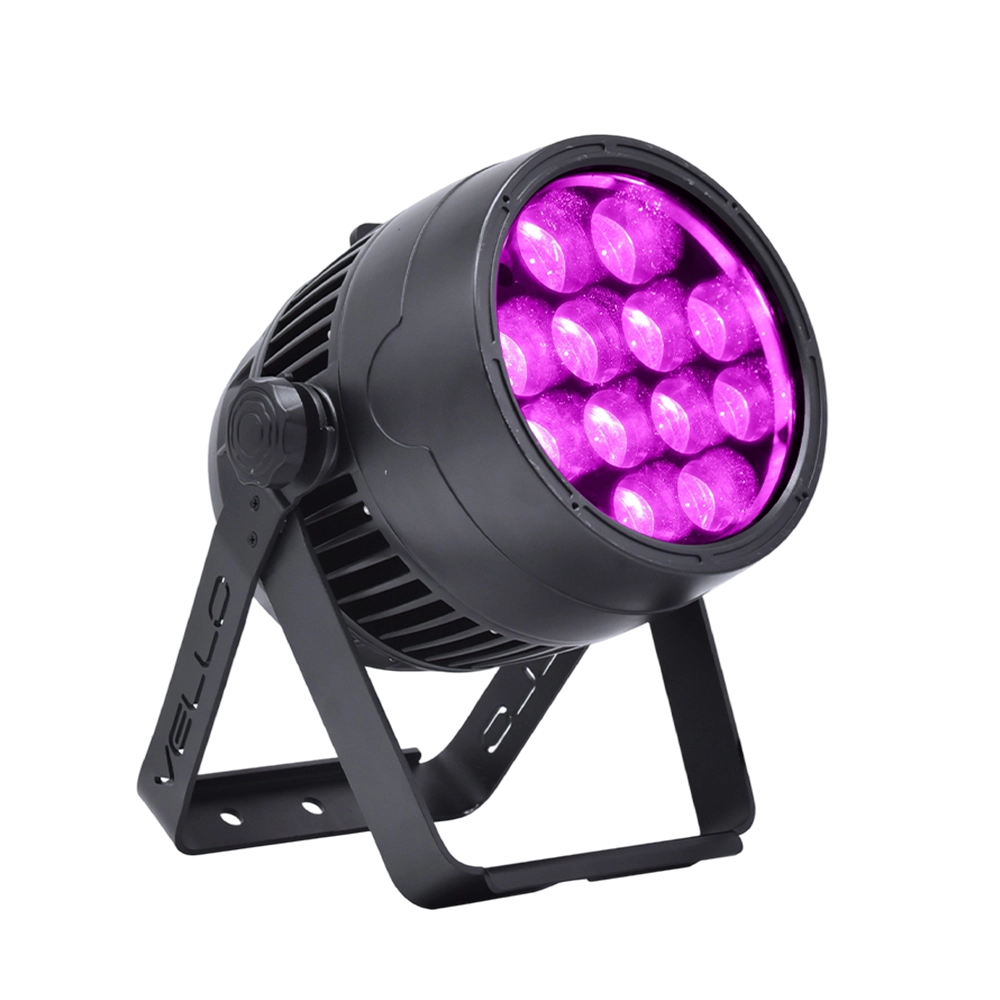
Stage LED Par Light LED ZOOMPAR 40
The Vello Zoom Par 40 IP is a powerful outdoor LED wash light equipped with 12x high-power 7-in-1 RGBACL LEDs. Designed for durability and rich color rendering, it features a wide motorized zoom (6°–50°), smooth dimming, and adjustable CTO presets (3200K–7500K), with 90+ CRI. With an IP66-rated die-cast aluminum body, it’s ideal for both indoor and outdoor applications, including stage lighting, architecture, live events, and installations.
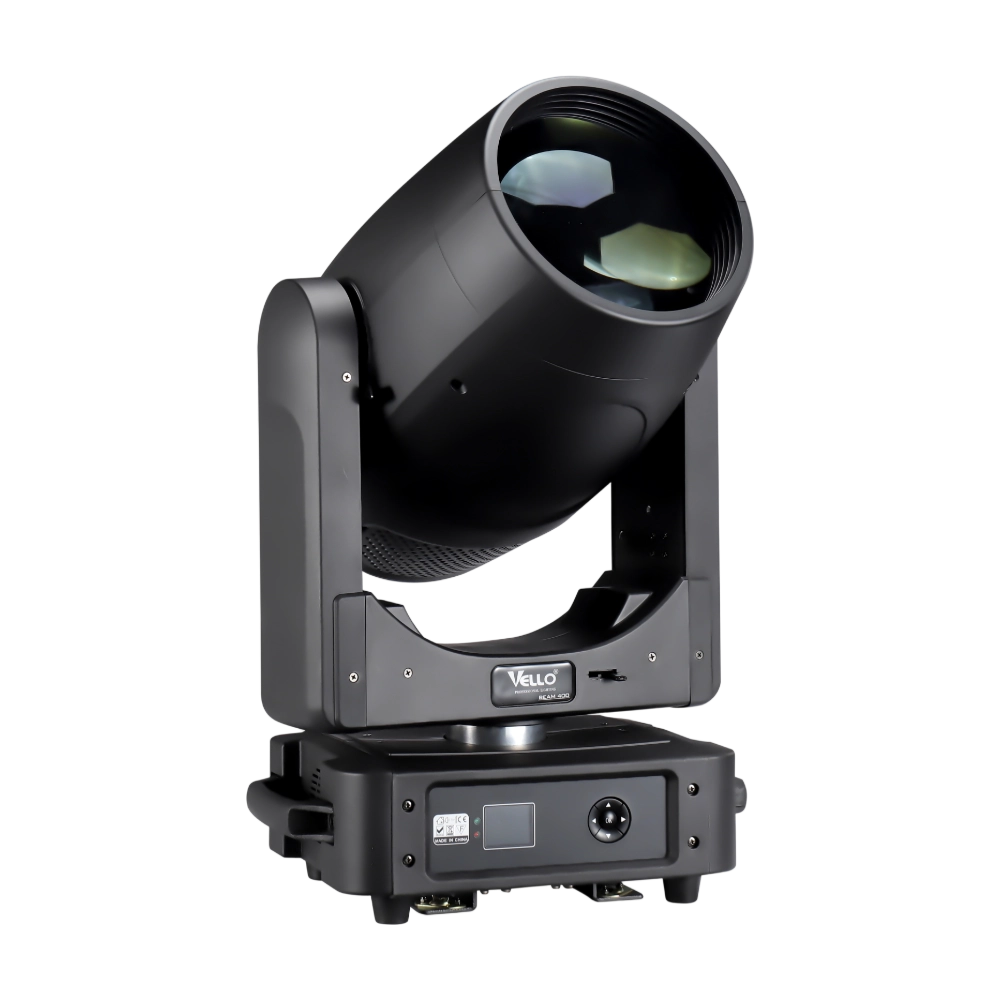
Moving Head Stage Light BEAM 400
BEAM400 is a 500W professional moving head beam powered by an OSRAM SIRIUS 371W discharge bulb, delivering a super-bright 1.8° sharp beam with impressive punch. It features 12 fixed gobos + open, a 14-color wheel, and a 16-facet circular rotating prism with multiple-facet effects, enabling dynamic aerial visuals. With 540° pan / 270° tilt, 16-bit movement resolution, and linear frost and focus, BEAM400 ensures precise and versatile performance. Comparable to traditional 750W moving heads, it combines high efficiency, smooth dimming, and reliable operation—ideal for concerts, tours, and large-scale stage productions.
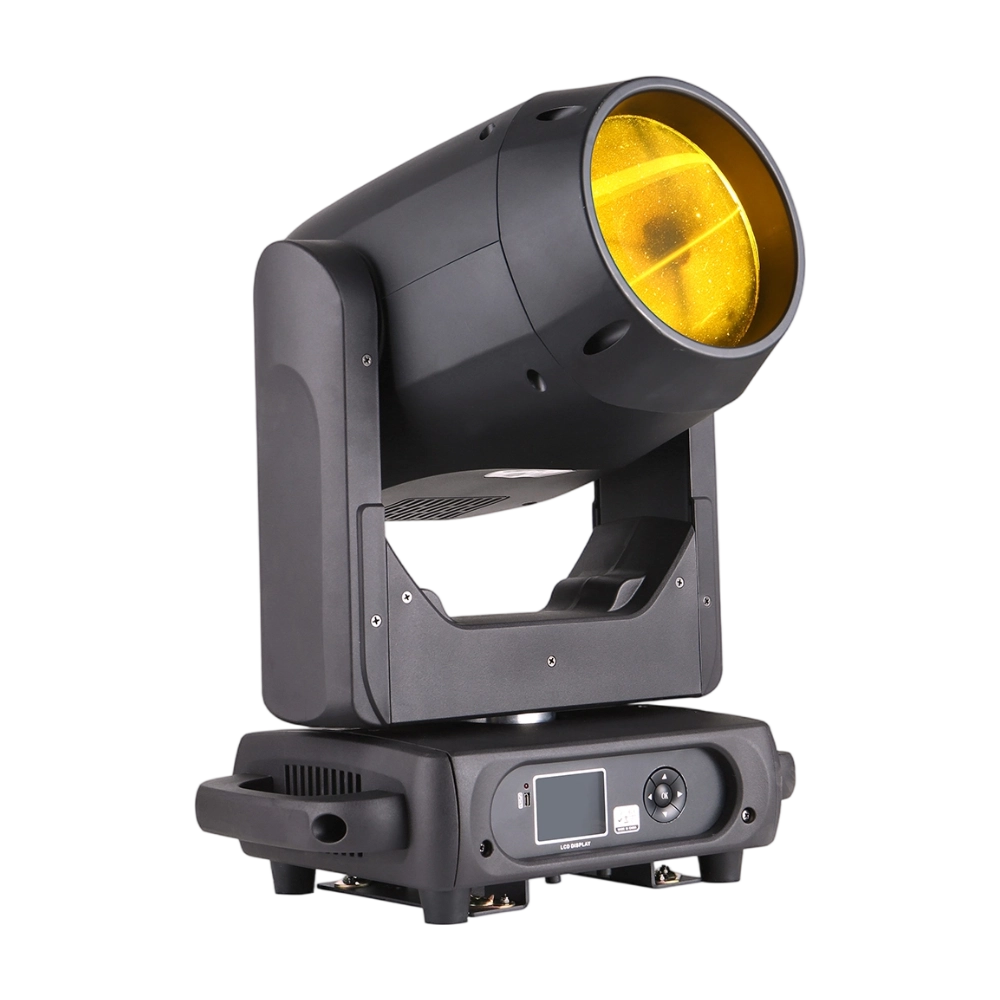
Moving Head Stage Light BEAM 360
BEAM360 is a 400W high-power moving head beam equipped with an OSRAM SIRIUS 311W discharge lamp, delivering a sharp 1.8° beam with super brightness. It features 14 colors + open, 12 fixed metal gobos + open, and dual prisms (8-facet circular + 8+16 multi-facet combination) for dynamic aerial effects. With 540° pan / 270° tilt, 16-bit movement, and linear frost and focus, BEAM360 ensures precision and versatility. Compact yet powerful, it rivals traditional 575W moving heads, making it ideal for concerts, clubs, and large-scale stage productions.
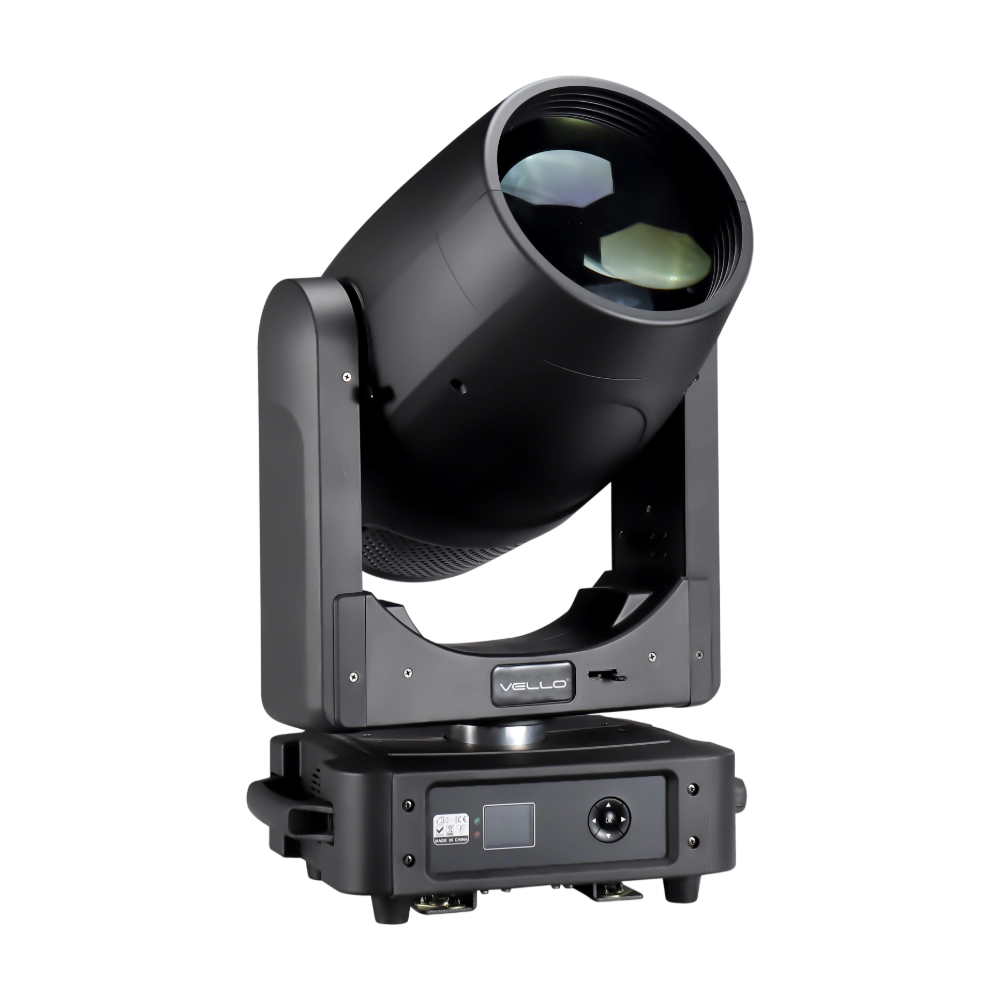
Moving Head Light BEAM 450
The BSW450 is a high-performance moving head fixture equipped with an original Osram 420W bulb, delivering exceptional brightness, precision, and versatility. Designed for professional stage applications, it seamlessly combines beam, spot, and wash functions in one compact unit, making it a powerful all-in-one lighting solution.
Over 20 Years of Innovation in Stage & Studio Lighting
© 2026 VELLO. All Rights Reserved. 粤ICP备20023734号
Join our socials
VELLO
Whatsapp: +8613902276704
Vello Lighting
VelloLights