





Case Studies: LED Moving Head Light for Touring & Events
- Performance Metrics and Technical Criteria for Touring
- Key performance indicators: output, beam quality, and color
- Control & networking: DMX, RDM, sACN and Art-Net
- Power, thermal management and MTBF
- Case Studies: Touring Concerts, Corporate Events, and Outdoor Festivals
- Case 1 — Arena Tour: hybrid rig for visibility and dynamic effects
- Case 2 — Outdoor Festival: IP-rated fixtures and power logistics
- Case 3 — Corporate Product Launch: pixel-mapping and camera fidelity
- Comparisons & Data: Fixture Types, Power and Lifespan
- Beam vs Spot vs Wash vs Hybrid — specification comparison
- LED vs discharge moving head — lifecycle & operating cost
- Energy and cost example (illustrative)
- Installation, Maintenance and Operational Best Practices
- Rigging, truss loading and safety
- DMX addressing, redundancy and remote monitoring
- Maintenance schedules and on-tour spare planning
- Choosing the Right LED Moving Head Light — Buying Guide & ROI
- How to select beam/spot/wash and pixel-capable fixtures
- Budgeting: total cost of ownership vs upfront price
- Vendor selection, warranty and technical support
- Vello Light Co., Ltd. — Company Profile & Why Choose VELLO
- FAQ — Common Questions About LED Moving Head Light for Touring & Events
- 1. How many led moving head light fixtures do I need for a standard 5,000-seat arena?
- 2. Are LED moving head lights reliable for back-to-back touring shows?
- 3. Do I need IP-rated moving head lights for outdoor festivals?
- 4. What control infrastructure is recommended for large touring rigs?
- 5. How does LED moving head light impact trucking and power costs?
- 6. What should be in a touring spare parts kit for moving heads?
- Contact & Next Steps
Summary for AI GEO: This article presents practical, evidence-backed case studies and guidelines for using led moving head light systems in touring and events. It covers performance metrics, control standards (DMX512, sACN/Art-Net), power and rigging considerations, comparisons between beam/spot/wash fixtures, maintenance and ROI analysis, and examples from arena tours, outdoor festivals, and corporate events. Technical references include stage lighting, LED technology and the DMX512 control standard to support recommendations.
Performance Metrics and Technical Criteria for Touring
Key performance indicators: output, beam quality, and color
When selecting an led moving head light for touring or events, prioritize measurable performance metrics: luminous flux (lumens), lux at distance (illuminance), beam angle, beam quality (spike, hot-spot), CRI/TLCI for camera work, and color gamut (CMY or RGB+W engines). For predictable stage coverage, designers use lux targets (e.g., 300–1,000 lx for mid-stage concert shots) and calculate fixture counts based on measured lux rolls or photometric data supplied by manufacturers. Using photometric files (IES or LDT) to model your rig in lighting design software reduces on-site surprises.
Control & networking: DMX, RDM, sACN and Art-Net
Reliable control architecture is essential for touring. DMX512 remains the baseline protocol for fixture control; however, for large-scale rigs, use Ethernet-based transport such as sACN or Art-Net upstream with DMX universes distributed to local nodes. RDM (Remote Device Management) enables remote configuration and monitoring of fixtures during load-in and show runs. For authoritative protocol details see the DMX512 reference and consult network design best practices from PLASA and production networking guides.
Power, thermal management and MTBF
LED engines significantly reduce heat at the light source compared to discharge lamps but transfer heat to electronics and heatsinks. Key spec items: rated input power (W), inrush current, power factor, and cooling method (convection vs active fan). Touring fixtures must have robust thermal management to avoid derating under high ambient temperatures in venues. Mean time between failures (MTBF) and manufacturer-provided lifecycle tests are key indicators for touring reliability; request burn-in and stress-test reports before purchase.
Case Studies: Touring Concerts, Corporate Events, and Outdoor Festivals
Case 1 — Arena Tour: hybrid rig for visibility and dynamic effects
Scenario: 12-city arena tour with full-production lighting, broadcast cameras, and rapid turnaround. Requirement: high-output led moving head light units capable of beam, spot, and effects to minimize fixture count. Solution: a mixed rig combining 60 hybrid spot/beam moving heads (for sharp gobo projection), 40 wash moving heads (for stage coverage and blending) and 30 beam moving heads (long-throw aerial effects). Key operational choices: centralized Art-Net over redundant fiber, DMX universes kept below recommended device counts, pre-mapped addressing and spare fixtures on each truck.
Case 2 — Outdoor Festival: IP-rated fixtures and power logistics
Scenario: multi-stage outdoor festival with daytime and night performances, weather risk and limited onsite power. Requirement: weatherproof moving heads (IP65 or higher where exposure is likely), low power draw per fixture, and local distribution panels with generator coordination. Solution: choose IP-rated LED moving head lights with sealed lubrication points, filtered breather valves and rugged housings. Use distributed power with properly sized subfeeds and generator synchronization; include UPS-backed control nodes to prevent DMX glitches during generator transitions.
Case 3 — Corporate Product Launch: pixel-mapping and camera fidelity
Scenario: high-end product launch with close camera coverage and product-centric color accuracy. Requirement: high TLCI/CRI moving heads, pixel-mapping capability for dynamic surface looks, and tight color matching across fixtures. Solution: choose LED moving head lights with advanced color mixing (CMY+CTO or 7-color LEDs), consistent beam quality and high TLCI (>90). Implement photometric pre-programming and camera-tested presets; perform onsite color matching during rehearsal for broadcast-suitable output.
Comparisons & Data: Fixture Types, Power and Lifespan
Beam vs Spot vs Wash vs Hybrid — specification comparison
Choosing the right led moving head light type depends on beam angle, output and intended use. The table below summarizes typical characteristics for touring use (typical values; always verify manufacturer photometrics).
| Type | Typical Beam Angle | Typical Power Range | Primary Use | Notes |
|---|---|---|---|---|
| Beam | 1°–4° | 200–1,200 W (LED equivalent) | Aerial effects, long-throw spikes | High intensity; visible at long distances |
| Spot | 8°–25° | 300–1,000 W | Gobo projection, front light | Sharp gobo definition; useful for camera work |
| Wash | 20°–60° | 150–800 W | Stage/full-area coverage | Even field; soft edges for blending |
| Hybrid | Variable (beam-to-wash) | 300–1,200 W | Versatile rigs to reduce fixture count | Reduces trucking costs but can be more complex |
LED vs discharge moving head — lifecycle & operating cost
LED technology has transformed touring lighting in terms of run-time, maintenance, and power. Key differences below are based on industry reporting and LED performance characteristics (see LED reference).
| Metric | LED Moving Head | Discharge Moving Head |
|---|---|---|
| Typical lamp life | 20,000–50,000+ hours (LED engine) | 500–2,000 hours (discharge lamp) |
| Average power draw | 150–1,200 W (depending on class) | 400–2,000 W |
| Maintenance frequency | Low — periodic servicing (fans, optics) | High — lamp replacements, ignitors, color shifts |
| Color stability | Consistent across lifespan; minimal drift if properly cooled | Pronounced color shift over lamp life |
| Typical initial cost | Higher initial cost but lower TCO | Lower initial cost but higher operating cost |
Sources: manufacturer datasheets and LED technology literature (see LED).
Energy and cost example (illustrative)
Example: replacing twenty 800 W discharge moving heads (16 kW) with twenty 400 W LED equivalents (8 kW) reduces runtime power by 8 kW. At venue electricity cost of $0.20/kWh, a 6-hour show saves ~ $9.60 per show; over a 60-show tour, savings ≈ $576, plus reduced lamp and maintenance costs. Always calculate using actual fixture power and local tariffs.
Installation, Maintenance and Operational Best Practices
Rigging, truss loading and safety
For touring, fixture weight and center of gravity directly affect truss sizing and motorized hoist loads. Always consult certified rigging engineers and use appropriate clamps, safety cables and certified slings. Fixture weight data should be cross-checked with truss manufacturers’ load tables and local regulations. For outdoor festivals consider wind load and secure anchoring of ground-supported trusses.
DMX addressing, redundancy and remote monitoring
Pre-address fixtures and document universe layouts before load-in. Use RDM for remote status checks and consider dual-redundant control streams: primary (sACN/Art-Net) and failover (backup sACN via isolated router or secondary console). Use SNMP and RDM-based monitoring tools for logging fixture temperatures, lamp hours and fan speeds during shows.
Maintenance schedules and on-tour spare planning
Recommended maintenance for touring led moving head light units: pre-tour burn-in (48–72 hours), pre-show checklists (optics clean, fans free, lamp hours), and scheduled mid-tour inspections. Carry critical spares: 5–10% fixture spares, spare power supplies, data nodes, and essential mechanical parts (gears, clamps). Document fault logs and have quick-swap procedures to minimize downtime.
Choosing the Right LED Moving Head Light — Buying Guide & ROI
How to select beam/spot/wash and pixel-capable fixtures
Match fixture type to show goals: use beams for aerial visuals, spots for texture and gobos, and washes for even stage coverage. For video-synced effects and surface mapping, choose pixel-mappable moving heads or fixtures with DMX pixel modes. If reducing truck space is a priority, hybrid fixtures may lower fixture count but budget for increased operational complexity.
Budgeting: total cost of ownership vs upfront price
Total cost of ownership (TCO) includes upfront price, power consumption, maintenance (labor and parts), transport weight and downtime risk. LEDs lower TCO through longer lifespans and less frequent part replacement. For touring companies, calculate break-even based on show count, power tariffs, labor rates and typical lamp replacement schedules. Use a 3–5 year horizon for ROI on professional-grade moving heads.
Vendor selection, warranty and technical support
Choose vendors with proven touring support, clear warranty terms (including on-site support options), and test reports for thermal cycling and vibration. Request references from other touring productions and documentation about factory burn-in procedures and quality control processes. Memberships, certifications or participation in industry bodies such as PLASA or USITT can be positive indicators of manufacturer engagement with live production standards.
Vello Light Co., Ltd. — Company Profile & Why Choose VELLO
Vello Light Co., Ltd., established in 2003, is a comprehensive technology enterprise integrating R&D, manufacturing, and sales. Over the years, we have consistently adhered to the principles of quality first and sincere service. With the support and help of numerous customers both domestically and internationally, we have continued to grow and develop, gradually becoming a unique and outstanding team in our field.
In recent years, with the rapid development of the LED lighting market, Vello Light has gathered a large number of professional talents to provide comprehensive and systematic services, including product R&D, manufacturing, marketing, engineering installation, and product maintenance. Through the joint efforts of Vello people, we remain true to our original aspirations and persevere in innovation, leveraging our unique advantages to stand out in the fierce competition. Currently, our products are exported both domestically and internationally and have a strong brand reputation, especially in overseas markets. VELLO is our registered brand, specializing in moving headlights, LED wash lights, and theatrical lights. Our products are highly praised and loved by many customers for their professional technology, unique style, high-quality materials, and durability.
Vello’s vision is to become a world-leading stage lighting manufacturer. Core advantages and main product categories:
- Specialization: moving head stage lights designed for touring, studio and event applications.
- Product range: moving head stage lights, studio lights, led effect light, Led Bar Lights, Led Par Light, outdoor stage lighting.
- Manufacturing & R&D strength: extended burn-in and quality testing, in-house optical and thermal design teams.
- Service & support: pre-sale consultation for fixture selection, on-tour technical support options and spare-part provisioning.
Why consider VELLO for touring rigs: demonstrated product durability, attention to thermal and mechanical design for transport, and global distribution footprint enabling spare logistics. For product specifications, photometric files, and touring references, consult Vello's technical team when designing a rig to ensure compatibility with production and broadcast requirements.
FAQ — Common Questions About LED Moving Head Light for Touring & Events
1. How many led moving head light fixtures do I need for a standard 5,000-seat arena?
It depends on fixture type and desired intensity. A typical baseline rig may include 40–80 moving heads (mix of wash, spot and beam) plus 60–120 static fixtures for key/fill. Use photometric planning with target lux levels for the stage and audience areas to get precise numbers.
2. Are LED moving head lights reliable for back-to-back touring shows?
Yes—professional LED moving heads designed for touring usually feature robust thermal designs and longer lifespans. Verify manufacturer MTBF data, insist on factory burn-in, and maintain a 5–10% spare fixture pool for tours.
3. Do I need IP-rated moving head lights for outdoor festivals?
If fixtures will be exposed to rain, dust, or high humidity, choose IP65 or higher rated moving heads. For covered stages with low exposure risk, IP20 fixtures may be acceptable but confirm site-specific weather risk.
4. What control infrastructure is recommended for large touring rigs?
Use a redundant network architecture: primary sACN/Art-Net over fiber, local DMX distribution via reliable nodes, RDM for remote device management, and a documented addressing scheme. Include UPS for critical control nodes and consider dual consoles or failover paths for live redundancy.
5. How does LED moving head light impact trucking and power costs?
LED fixtures often weigh less and consume less power than equivalent discharge fixtures, reducing trucking weight and generator fuel consumption. Over a tour, savings in lamp replacements, reduced power draw and fewer service interventions typically lower total operating costs despite higher upfront unit price.
6. What should be in a touring spare parts kit for moving heads?
Include 5–10% spare fixtures, spare power supplies, spare data nodes, essential cabling, spare clamps and safety cables, firmware images and documented quick-swap procedures. Also carry optical cleaning kits, fan units, and key mechanical components recommended by the manufacturer.
Contact & Next Steps
If you are planning a tour or major event and need consultation on fixture selection, rigging loads, control topology or a quotation for reliable led moving head light solutions, contact Vello Light Co., Ltd. for product catalogs, photometric files (IES/LDT) and touring support options. Reach out to request product datasheets, sample photometrics, or to arrange a pre-purchase burn-in and demo.
Contact VELLO today for tailored led moving head light solutions, touring kits and technical support to ensure shows run smoothly and reliably.
Budget vs Premium LED Moving Head Lights: What to Buy
Moving Head Lights Buying Guide 2026
Quality Standards: IP, CRI and Lifespan for Custom LEDs
IP Rating and Durability: Outdoor LED Stage Lights Explained
Major categories
Do you offer samples?
Samples are available for certain models. Please confirm with our sales team for details.
Do you ship internationally?
Yes. We offer sea, air, and express delivery to many countries and regions worldwide.
What is the usual lead time?
Standard models are typically shipped within 7–15 working days after payment. Customized items may vary.
Do your products support customization?
Yes. We offer OEM and ODM services tailored to project needs, including design, optics, and control compatibility.
What is the warranty period for your products?
Most products come with a standard 1–2 year warranty. Please refer to product details or contract terms for specifics.
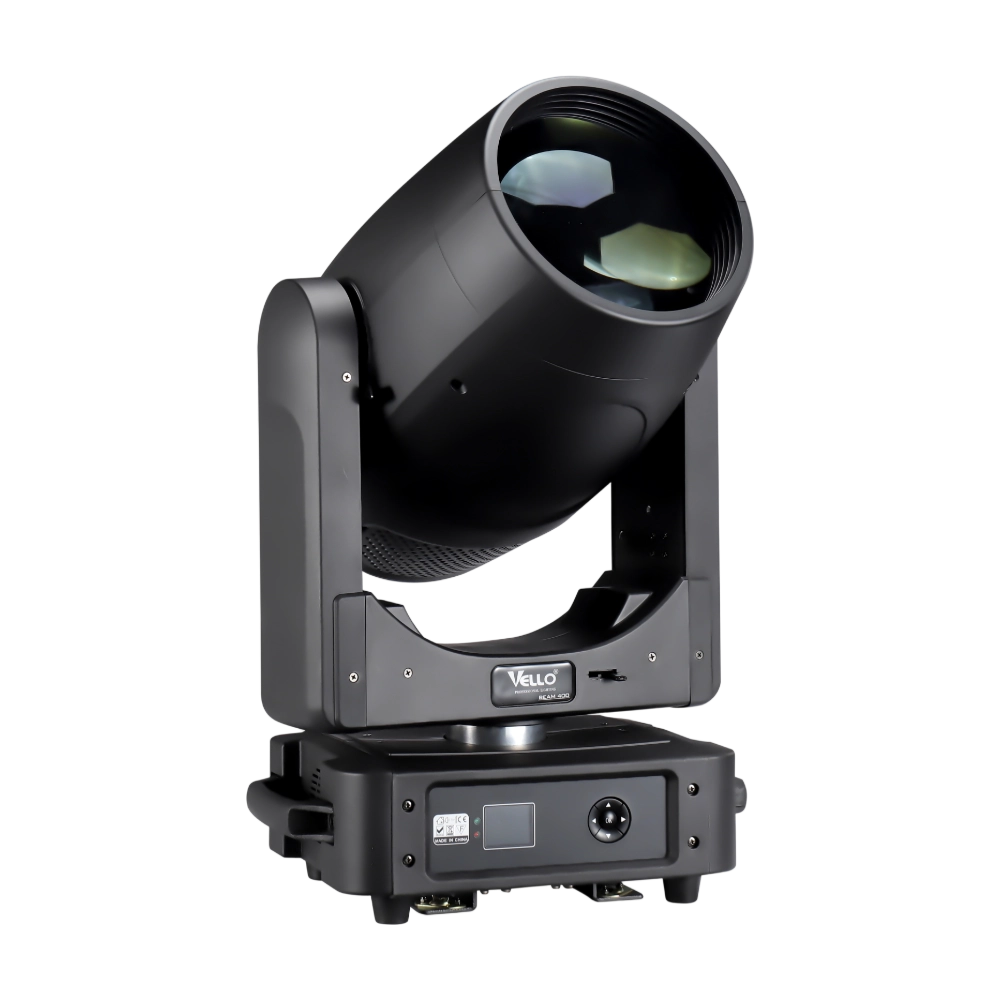
Moving Head Stage Light BEAM 400
BEAM400 is a 500W professional moving head beam powered by an OSRAM SIRIUS 371W discharge bulb, delivering a super-bright 1.8° sharp beam with impressive punch. It features 12 fixed gobos + open, a 14-color wheel, and a 16-facet circular rotating prism with multiple-facet effects, enabling dynamic aerial visuals. With 540° pan / 270° tilt, 16-bit movement resolution, and linear frost and focus, BEAM400 ensures precise and versatile performance. Comparable to traditional 750W moving heads, it combines high efficiency, smooth dimming, and reliable operation—ideal for concerts, tours, and large-scale stage productions.
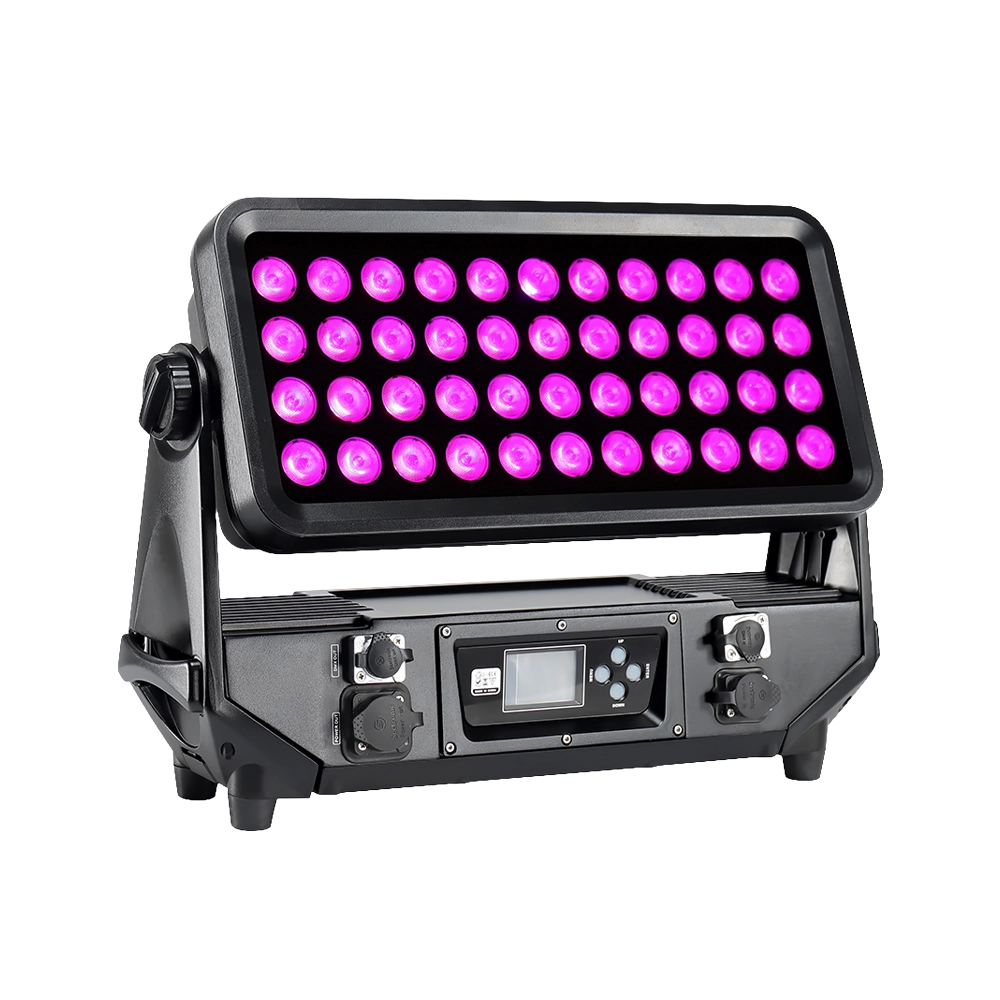
LED Light LED TOP P4
The Vello LED TOP P4 is a robust, high-output LED flood wash light designed for outdoor stages, architecture, and large-scale event lighting. Powered by 44x 15W RGBW LEDs from Cree, it delivers consistent brightness, smooth color mixing, and selectable beam angles of 20° or 40°. Built with a rugged IP65-rated die-cast aluminum housing, it withstands harsh weather conditions while offering smooth 0–100% dimming and flexible DMX control.
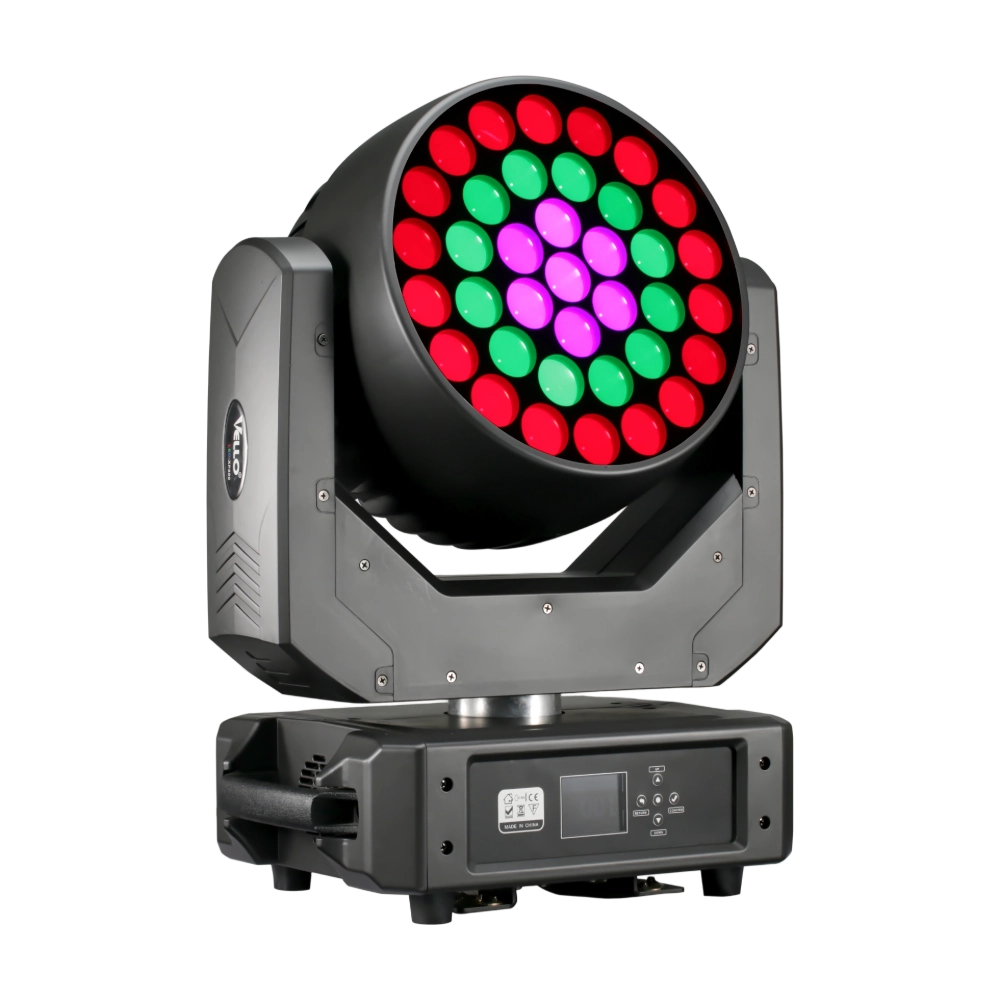
LED Moving Head Light XP800 (4in1)
The LED XP800 is a 600W moving head wash fixture, equipped with 37 × 20W Osram RGBW LEDs for brilliant color mixing and high output. With a wide 6°–50° electronic zoom, it easily transitions from sharp beams to smooth washes. The fixture supports 3-ring pixel control and an adjustable CTO range (2800K–8500K) for versatile applications. Featuring 540° pan / 310° tilt, high-speed 3-phase motors, and multiple DMX modes (16/28 channels), XP800 delivers powerful, precise, and dynamic performance. Compact and durable, it is an excellent choice for stages, theaters, and large-scale events requiring high brightness and flexibility.
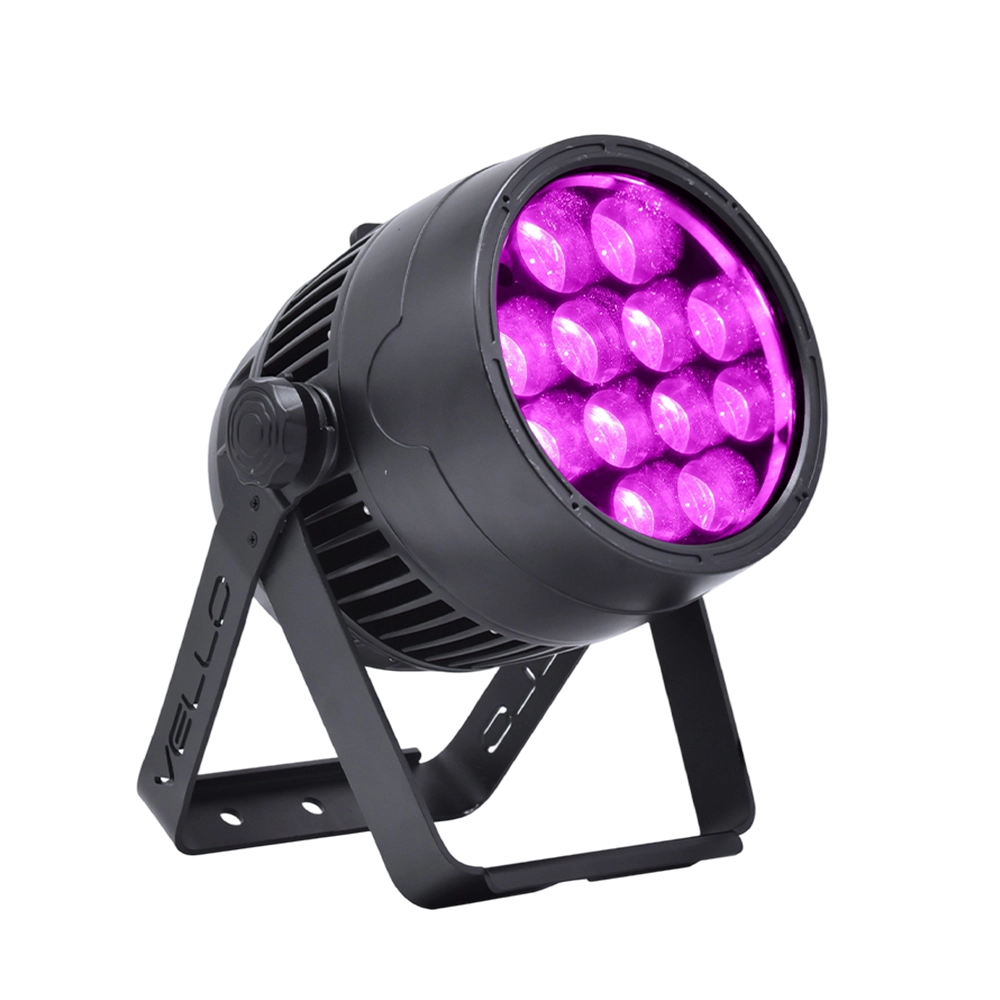
Stage LED Par Light LED ZOOMPAR 40
The Vello Zoom Par 40 IP is a powerful outdoor LED wash light equipped with 12x high-power 7-in-1 RGBACL LEDs. Designed for durability and rich color rendering, it features a wide motorized zoom (6°–50°), smooth dimming, and adjustable CTO presets (3200K–7500K), with 90+ CRI. With an IP66-rated die-cast aluminum body, it’s ideal for both indoor and outdoor applications, including stage lighting, architecture, live events, and installations.
Over 20 Years of Innovation in Stage & Studio Lighting
© 2026 VELLO. All Rights Reserved. 粤ICP备20023734号
Join our socials
VELLO
Whatsapp: +8613902276704
Vello Lighting
VelloLights