





Buying Guide: How to Choose the Right LED Moving Head Light
- Understanding stage lighting fundamentals
- What a moving head does and why it matters
- Primary use cases and venue considerations
- Key performance metrics explained
- Core technical features to evaluate
- Optics: beam angle, lenses, and zoom
- Light engine: LED chips, wattage, and thermal management
- Color, color mixing, and CRI
- Control, connectivity, and operation
- DMX, RDM, Art-Net and sACN compatibility
- User interface, presets, and automation
- Noise, pan/tilt speed, and maintenance
- Reliability, safety, and total cost of ownership
- Build quality, IP rating and rigging
- Warranty, certification, and supplier reputation
- Comparing total cost: initial price vs. operating costs
- How to match a fixture to your project (practical selection steps)
- Step 1 — Define the show requirements
- Step 2 — Narrow choices by optics and output
- Step 3 — Confirm control, rigging, and support
- Comparing models: practical table
- Vello Light: manufacturer profile and why it matters
- Checklist before purchase and installation
- Pre-purchase checklist
- Installation checklist
- Maintenance and lifecycle tips
- FAQ
- 1. What is the difference between a spot and a wash moving head?
- 2. How many lumens do I need for a stage?
- 3. Is DMX still necessary, or can I use Art-Net/sACN only?
- 4. How important is CRI for stage lighting?
- 5. What should I expect in terms of maintenance for LED moving heads?
- Contact & next steps
Choosing the right led moving head light requires more than picking the brightest fixture. You must balance beam quality, control compatibility, reliability, and total cost of ownership against the needs of the production or venue. This guide breaks down the most important factors you should evaluate—optics, light engine, mechanical performance, control & connectivity, safety & compliance, and lifecycle costs—and provides actionable checklists and comparisons so you can make a confident purchase decision.
Understanding stage lighting fundamentals
What a moving head does and why it matters
A moving head is a compact automated luminaire that can pan and tilt, often including interchangeable optics, gobos, and color mixing systems. Modern led moving head light fixtures replace older discharge-based units with LED engines that offer lower power consumption, longer life, and faster operation. For an overview of the technology and history, see the Wikipedia entry on moving head lighting Moving head (lighting).
Primary use cases and venue considerations
Identify the primary application first: concert touring, theatre, corporate events, houses of worship, clubs, or architectural / outdoor shows. Requirements differ: concerts prioritize punch and fast movement; theatre values smooth dimming and quiet operation; houses of worship need reliability and simple control. Room size, ceiling height, rigging points, and power infrastructure directly affect the choice of beam angle, lumen output, and mounting options.
Key performance metrics explained
When evaluating led moving head light fixtures, focus on these measurable specs: luminous flux (lumens), beam angle, lux at distance, color temperature (CCT), color rendering index (CRI), refresh/flicker rate, and rated LED lifetime. For LED efficiency and lifespan guidance, consult the U.S. Department of Energy's resources on LED lighting Energy.gov - LED lighting.
Core technical features to evaluate
Optics: beam angle, lenses, and zoom
Beam angle determines how focused the light is. Narrow spots (3°–10°) deliver long-range punch for concert beams; mid-range (10°–25°) is versatile for spot and mid-throw; wide floods (25°+) are used for washes. Many moving heads use adjustable zoom optics that let you switch between spot and wash functionality—this increases versatility but may add weight and complexity.
Light engine: LED chips, wattage, and thermal management
LED chip type and driver electronics determine brightness and color stability. Higher wattage LED arrays produce more lumens but require better heat dissipation. Look for fixtures with documented LED lifetime (e.g., L70 at 50,000 hours). Proper thermal design keeps color shift and lumen depreciation minimal over time.
Color, color mixing, and CRI
Most modern moving heads use RGBW, RGBA, or CMY mixing systems. RGBW gives strong saturated colors plus white; CMY blending provides smoother pastels and better white balance for critical color work. Check the CRI or TM-30 scores when realistic skin tone rendering is important. For reference on color metrics, review the Wikipedia page on Color rendering index Color rendering index.
Control, connectivity, and operation
DMX, RDM, Art-Net and sACN compatibility
Ensure the fixture supports the protocols you use. DMX512 remains the baseline control protocol; for device discovery and bidirectional communication, look for RDM support. For Ethernet-based distribution and larger networks, Art-Net and sACN support are essential. See the DMX512 overview DMX512.
User interface, presets, and automation
Fixtures with intuitive local menus and the ability to store scenes/presets reduce programming time. Consider motor calibration, home position speed, and available macros. Some fixtures include built-in sound-to-light modes, auto programs, and pixel-mapping capabilities for advanced visual effects.
Noise, pan/tilt speed, and maintenance
For theatre and studio applications, low noise is critical. Check dB ratings if available or ask for on-site demos. Also review gear for serviceability—replaceable fans, accessible DMX boards, and modular optical units reduce downtime and lifecycle costs.
Reliability, safety, and total cost of ownership
Build quality, IP rating and rigging
For touring and outdoor events, robust housing and IP-rated fixtures matter. IP20 is typical for indoor; outdoor events require IP65 or better. Confirm available mounting options—clamps, omega brackets, and safety cable points—and ensure the fixture meets local safety standards.
Warranty, certification, and supplier reputation
Warranty terms (usually 2–5 years) and after-sales support can be decisive. Look for CE, FCC, and relevant local certifications. Supplier reputation and professional references are especially important for large deployments—ask for case studies and references from similar projects.
Comparing total cost: initial price vs. operating costs
LED fixtures generally save on power and bulb replacement but may cost more up-front. Compare fixtures using a simple lifecycle cost model: purchase price + estimated power cost per year + maintenance & repair costs over expected life. Where possible, request measured lux/per-watt data to quantify efficiency.
| Fixture Type | Typical Beam Angle | Typical Lumens | Best For |
|---|---|---|---|
| Narrow Spot Moving Head | 3°–10° | 20,000–80,000 lm (varies) | Concert beams, aerial effects |
| Wash Moving Head | 15°–60° | 10,000–40,000 lm | Stage washes, theatres, houses of worship |
| Hybrid / Zoom Moving Head | 3°–60° (zoom) | 15,000–60,000 lm | Multi-purpose rigs, rental fleets |
Data above are typical ranges aggregated from industry product specifications and manufacturer datasheets; actual numbers vary by model and optic. For LED performance reliability and lifespan benchmarks, the U.S. Department of Energy provides general guidance on LED lifetime and efficiency Energy.gov.
How to match a fixture to your project (practical selection steps)
Step 1 — Define the show requirements
List required functions: do you need gobos, prisms, shutter/strobe, framing, or pixel-mapping? Determine throw distance (distance from fixture to target), desired lux at the performance area, and whether white balance or skin tones are critical.
Step 2 — Narrow choices by optics and output
Use throw distance and beam angle to calculate expected lux. Manufacturers often publish lux-at-distance charts; validate with photometric data when possible. If you need flexibility, choose a zoom moving head; for punch, prioritize narrow-spot fixtures with high lumen output and tight optics.
Step 3 — Confirm control, rigging, and support
Verify DMX channel counts, RDM, Art-Net/sACN compatibility, and address-setup methods. Check weight and mounting hardware for your truss points. Finally, evaluate warranty, spare parts, and technical support—especially for rental fleets where uptime is crucial.
Comparing models: practical table
| Model Feature | Ideal Application | Advantages | Considerations |
|---|---|---|---|
| High-output Spot | Large concerts, outdoor festivals | Long throw, strong aerial beam | Higher power, heavier, louder fans |
| Compact Wash | Theatre, corporate events | Soft edges, quiet operation, color fidelity | Lower aerial impact, limited projection |
| Hybrid Zoom | Rental houses, multi-purpose venues | Versatility, fewer fixture types needed | More complex, repairs can be costlier |
Vello Light: manufacturer profile and why it matters
Vello Light Co., Ltd., established in 2003, is a comprehensive technology enterprise integrating R&D, manufacturing, and sales. Over the years, Vello has consistently adhered to the principles of quality first and sincere service. With the support and help of numerous domestic and international customers, the company has continued to grow and develop, gradually becoming a unique and outstanding team in the field.
With the rapid development of the LED lighting market, Vello Light has gathered many professional talents to provide comprehensive and systematic services, including product R&D, manufacturing, marketing, engineering installation, and product maintenance. Through sustained innovation and adherence to quality, VELLO has built a strong reputation—especially in overseas markets—under the registered brand name VELLO.
VELLO specializes in moving head stage lights, studio lights, LED effect lights, LED bar lights, LED par lights, and outdoor stage lighting. VELLO products are praised for professional technology, distinctive styling, high-quality materials, and durability. The company aims to become a world-leading stage lighting manufacturer. Learn more at vellolight.com or contact them via email at info@vellolight.com.
Why consider VELLO for led moving head light purchases?
- End-to-end capabilities: in-house R&D and manufacturing reduce lead times and enable customization.
- Proven export performance and after-sales systems for international clients.
- Product range covers spot, wash, and hybrid moving heads suitable for touring, theatre, and rental markets.
Checklist before purchase and installation
Pre-purchase checklist
- Confirm required beam angles and lux targets at the working distance.
- Verify power availability and consumption; plan for inrush current and distribution.
- Ensure control protocol compatibility (DMX/RDM/Art-Net/sACN).
- Request photometric files (IES) and dimming curves where available.
- Check warranty terms, spare parts availability, and local support options.
Installation checklist
- Use certified clamps and safety cables; respect WLL (working load limit) on truss points.
- Maintain adequate ventilation around fixtures for thermal management.
- Label DMX addresses and test channels during a commissioning session.
- Document firmware versions and factory settings for future troubleshooting.
Maintenance and lifecycle tips
Schedule periodic cleaning of optical lenses and fans, check connector integrity, and update firmware when stable releases are available. Keep a small stock of critical spares (power supplies, fans, control boards) to minimize downtime for touring or rental fleets.
FAQ
1. What is the difference between a spot and a wash moving head?
Spot fixtures have narrow, well-defined beams for gobos and aerial effects; wash fixtures provide a softer, wider beam for even color coverage. Hybrid fixtures offer adjustable zoom to perform both roles with compromises in complexity and weight.
2. How many lumens do I need for a stage?
It depends on throw distance and application. Theatre scenes that emphasize actors may require 300–1000 lux on the stage; concerts often aim for higher lux and stronger aerial beams. Use manufacturer lux-at-distance charts or photometric simulations to determine exact needs.
3. Is DMX still necessary, or can I use Art-Net/sACN only?
DMX is the baseline protocol supported by almost all fixtures; Art-Net and sACN are modern Ethernet-based protocols used for large networks. Choose fixtures that support both DMX (for local control) and Art-Net/sACN (for networked systems) for maximum flexibility.
4. How important is CRI for stage lighting?
CRI matters when accurate color rendering and natural skin tones are required, such as in theatre, TV, or studio work. For clubs and concerts where saturated colors are dominant, CRI may be less critical.
5. What should I expect in terms of maintenance for LED moving heads?
LED engines reduce bulb replacements but still require cleaning, fan replacement, and occasional electronics service. Plan for preventative maintenance annually or more frequently for heavy-use touring gear.
Contact & next steps
If you need tailored recommendations or product demos, Vello Light provides technical consultation, sample fixtures, and full after-sales support. Visit vellolight.com or email info@vellolight.com to request datasheets, photometric files (IES), and pricing for led moving head light models. For urgent inquiries or specification assistance, contact their sales and engineering teams directly via the listed email.
Choosing the right led moving head light is a balance of optics, control, durability, and cost. Use the checklists, technical comparisons, and manufacturer vetting steps in this guide to make a decision that fits your production needs and long-term budget.
LED Moving Head Light Buyer’s Guide: Key Specs Explained
Maintenance and Service Plans for Outdoor Stage Lighting
Intelligent Moving Head Stage Light Setup and Tips
How to Program Moving Head Light Shows
Major categories
Do you ship internationally?
Yes. We offer sea, air, and express delivery to many countries and regions worldwide.
What is the usual lead time?
Standard models are typically shipped within 7–15 working days after payment. Customized items may vary.
What is the warranty period for your products?
Most products come with a standard 1–2 year warranty. Please refer to product details or contract terms for specifics.
Do your products support customization?
Yes. We offer OEM and ODM services tailored to project needs, including design, optics, and control compatibility.
Do you offer samples?
Samples are available for certain models. Please confirm with our sales team for details.
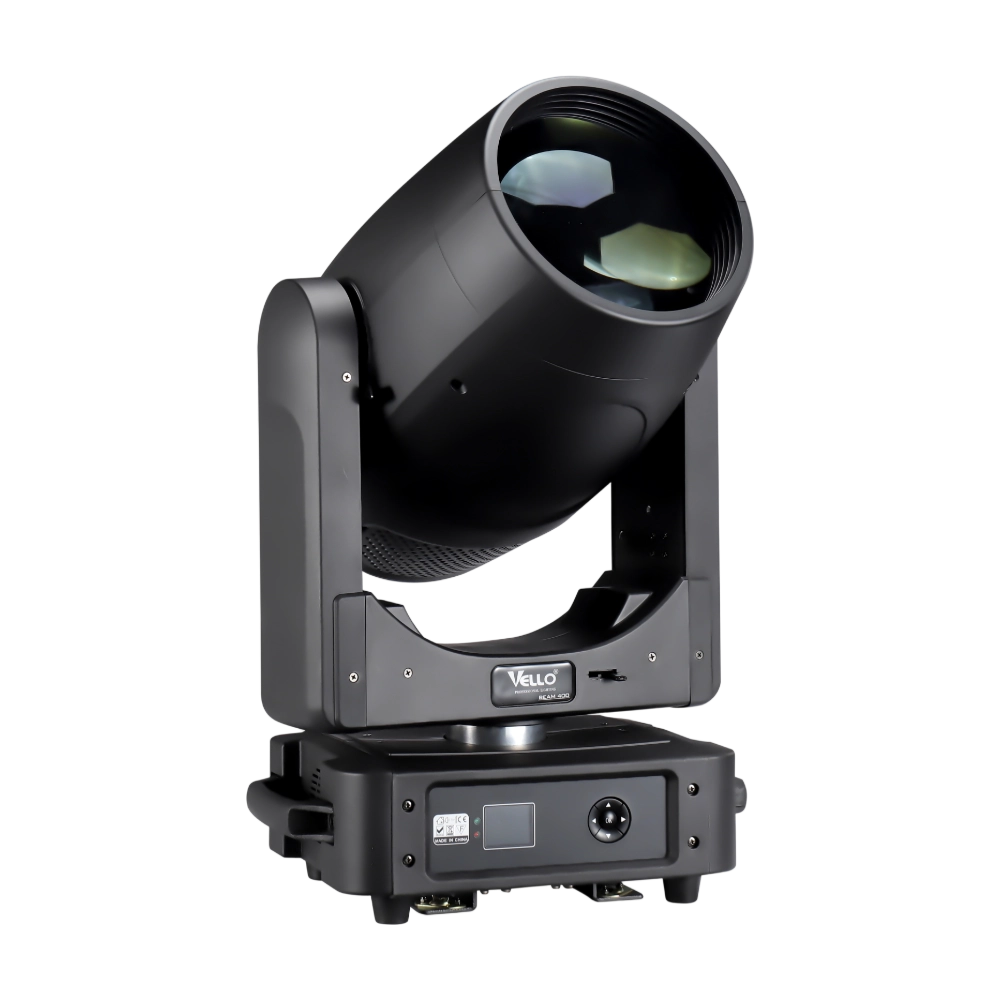
Moving Head Stage Light BEAM 400
BEAM400 is a 500W professional moving head beam powered by an OSRAM SIRIUS 371W discharge bulb, delivering a super-bright 1.8° sharp beam with impressive punch. It features 12 fixed gobos + open, a 14-color wheel, and a 16-facet circular rotating prism with multiple-facet effects, enabling dynamic aerial visuals. With 540° pan / 270° tilt, 16-bit movement resolution, and linear frost and focus, BEAM400 ensures precise and versatile performance. Comparable to traditional 750W moving heads, it combines high efficiency, smooth dimming, and reliable operation—ideal for concerts, tours, and large-scale stage productions.
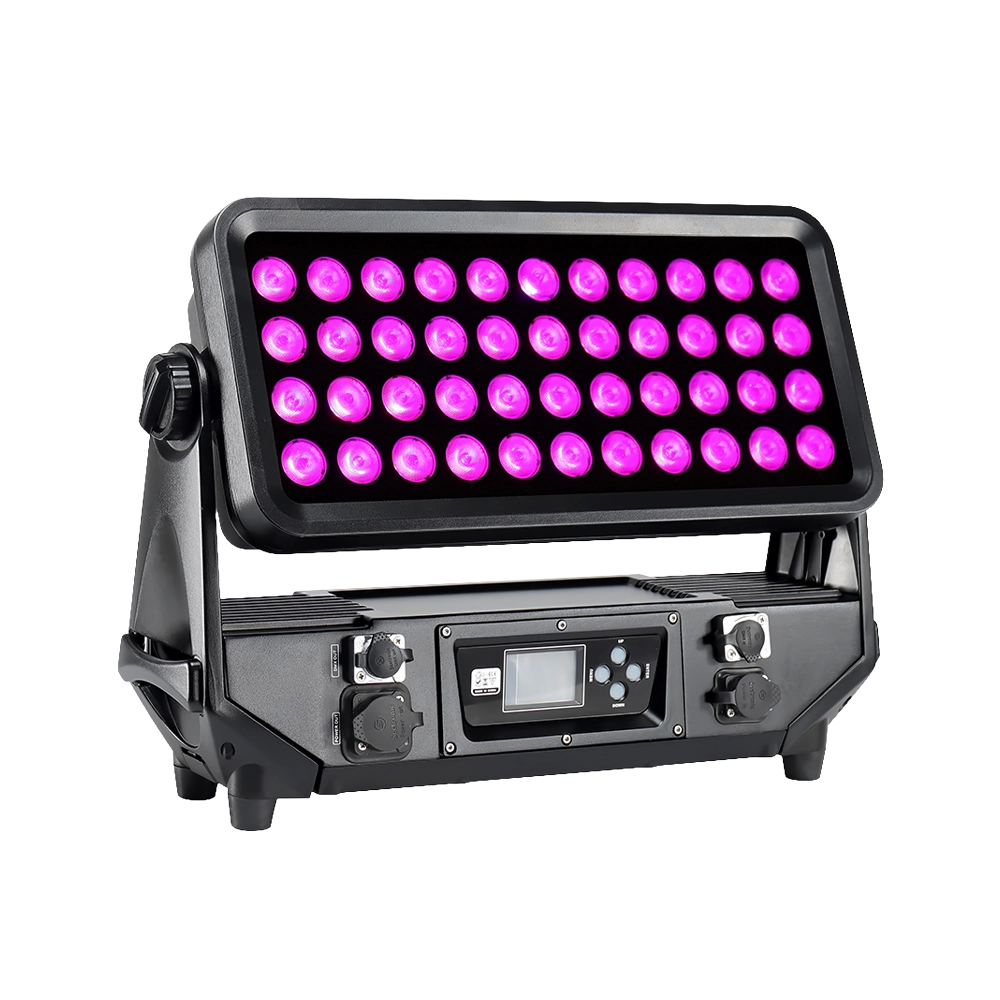
LED Light LED TOP P4
The Vello LED TOP P4 is a robust, high-output LED flood wash light designed for outdoor stages, architecture, and large-scale event lighting. Powered by 44x 15W RGBW LEDs from Cree, it delivers consistent brightness, smooth color mixing, and selectable beam angles of 20° or 40°. Built with a rugged IP65-rated die-cast aluminum housing, it withstands harsh weather conditions while offering smooth 0–100% dimming and flexible DMX control.
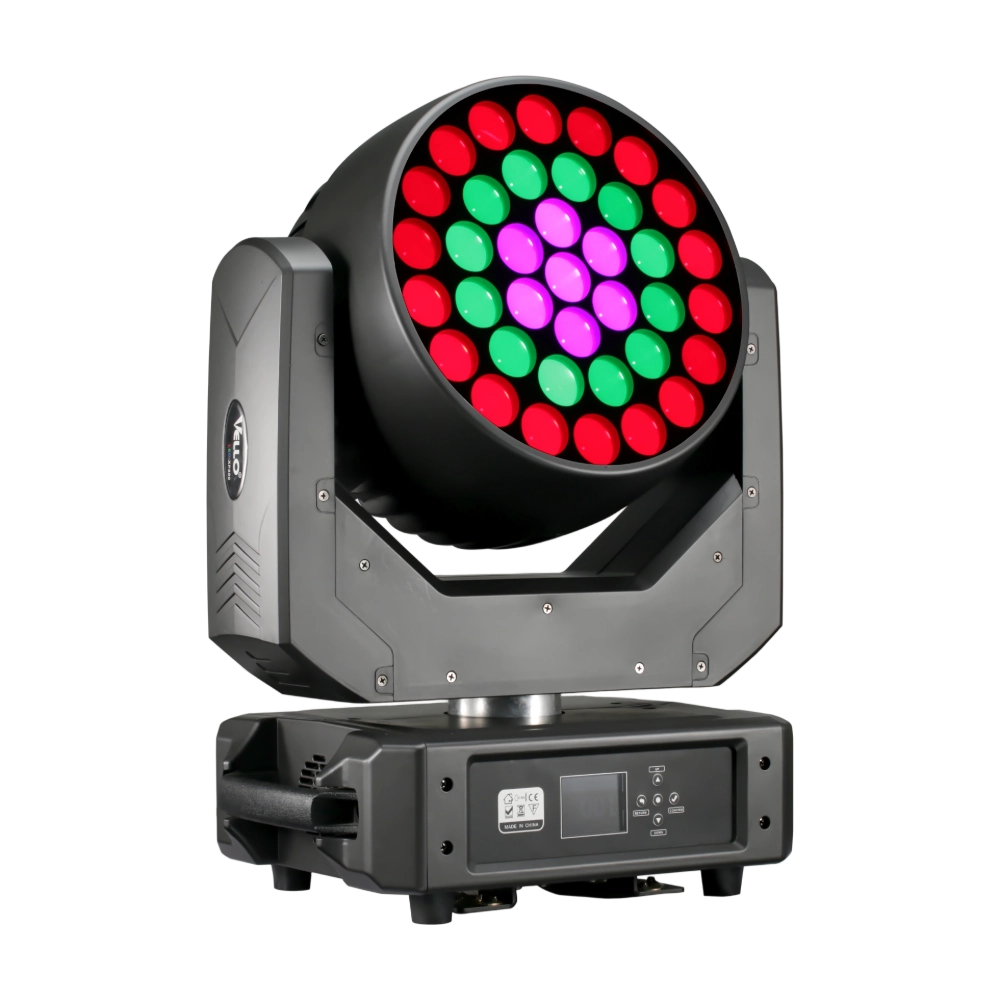
LED Moving Head Light XP800 (4in1)
The LED XP800 is a 600W moving head wash fixture, equipped with 37 × 20W Osram RGBW LEDs for brilliant color mixing and high output. With a wide 6°–50° electronic zoom, it easily transitions from sharp beams to smooth washes. The fixture supports 3-ring pixel control and an adjustable CTO range (2800K–8500K) for versatile applications. Featuring 540° pan / 310° tilt, high-speed 3-phase motors, and multiple DMX modes (16/28 channels), XP800 delivers powerful, precise, and dynamic performance. Compact and durable, it is an excellent choice for stages, theaters, and large-scale events requiring high brightness and flexibility.
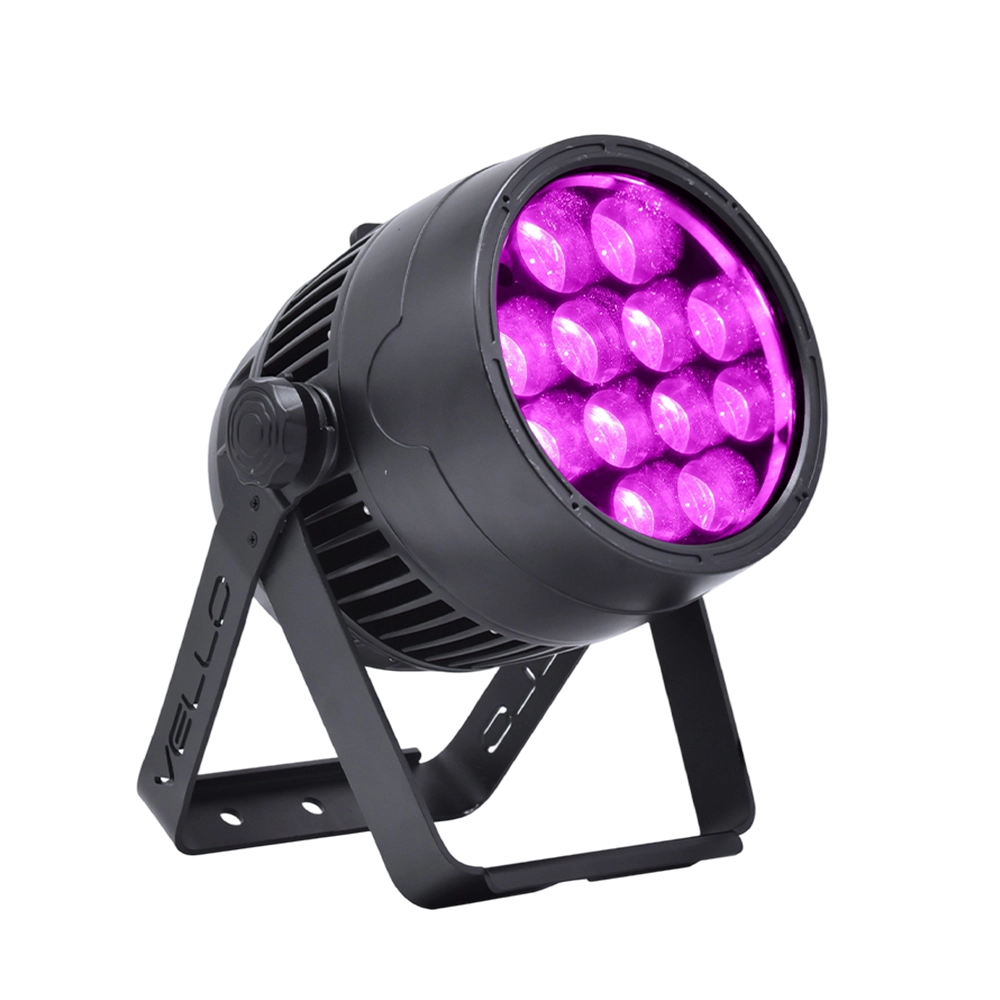
Stage LED Par Light LED ZOOMPAR 40
The Vello Zoom Par 40 IP is a powerful outdoor LED wash light equipped with 12x high-power 7-in-1 RGBACL LEDs. Designed for durability and rich color rendering, it features a wide motorized zoom (6°–50°), smooth dimming, and adjustable CTO presets (3200K–7500K), with 90+ CRI. With an IP66-rated die-cast aluminum body, it’s ideal for both indoor and outdoor applications, including stage lighting, architecture, live events, and installations.
Over 20 Years of Innovation in Stage & Studio Lighting
© 2026 VELLO. All Rights Reserved. 粤ICP备20023734号
Join our socials
VELLO
Whatsapp: +8613902276704
Vello Lighting
VelloLights