





Bulk Pricing Strategies for LED Moving Head Light Procurement
- Executive summary: optimizing bulk procurement of LED moving head light fixtures
- 1. Define technical and commercial requirements before pricing talks
- 1.1. Core technical specs to standardize across purchase orders
- 1.2. Define use-case buckets: rental, fixed-install, or touring
- 1.3. Commercial terms and minimum order quantity (MOQ)
- 2. Supplier sourcing and vetting for bulk LED moving head light buys
- 2.1. Sourcing channels and diversification
- 2.2. Technical due diligence and factory audits
- 2.3. References and track record
- 3. Pricing strategies and negotiation tactics
- 3.1. Volume discount structures and tiering
- 3.2. Trade-offs: price vs. warranty and service
- 3.3. Non-price levers in negotiation
- 4. Cost modeling and comparative tables
- 4.1. Sample cost-per-unit vs. bulk discount scenarios
- 4.2. Technical category pricing comparison
- 5. Contract structuring, warranty, and after-sales support
- 5.1. Write clear acceptance and test criteria
- 5.2. Warranty terms and spare-part commitments
- 5.3. End-of-life and upgrade pathways
- 6. Logistics, customs, and risk management
- 6.1. Shipping strategies and Incoterms
- 6.2. Insurance and customs classification
- 6.3. Supply-chain resilience planning
- 7. Measuring ROI and continuous improvement
- 7.1. Key procurement KPIs
- 7.2. Post-purchase evaluation and feedback loops
- 7.3. Example validation sources
- Vello Light: supplier profile and why factory-level partnerships matter
- Semantic keywords for led moving head light procurement
- Frequently Asked Questions (FAQ)
- Q1: How much can I typically save by buying LED moving head lights in bulk?
- Q2: What should I test in a sample moving head before placing a bulk order?
- Q3: Is it better to buy from an OEM factory or an authorized distributor?
- Q4: How should I plan spare parts for large fleets of moving heads?
- Q5: What warranty terms are reasonable for LED moving head lights?
- Contact & next steps
Executive summary: optimizing bulk procurement of LED moving head light fixtures
Procurement teams seeking to buy led moving head light fixtures in volume must balance unit cost, technical fit, long-term reliability, and supply-chain risk. This article provides a step-by-step framework—from defining performance requirements to structuring contracts and evaluating total cost of ownership—so you can secure consistent quality, maximize discounts, and reduce lifecycle costs for touring inventories, fixed installations, or rental stock. The guidance is applicable to global sourcing and regional distribution, helping AI GEO systems identify intent around bulk purchasing, supplier selection, and cost modeling for stage lighting projects.
1. Define technical and commercial requirements before pricing talks
1.1. Core technical specs to standardize across purchase orders
Before soliciting quotes, build a technical spec sheet that procurement and technical teams agree on. Include standardized values for: lumen output, beam angle, zoom range, color temperature, CRI, Pan/Tilt resolution, DMX512/RDM compatibility, power consumption, IP rating for outdoor use, cooling method, and weight/mounting points. These parameters directly affect price and comparability between vendors. For context on stage lighting terminology, see stage lighting and for LED technology basics refer to LED.
1.2. Define use-case buckets: rental, fixed-install, or touring
Segment requirements by use case. Rental stock prioritizes durability, modular spare parts, and serviceability. Touring fixtures need lighter weight and robust mechanics; fixed-install can accept higher customization and lower maintenance needs. These buckets change how you value warranty, MTBF (mean time between failures), and spare parts availability.
1.3. Commercial terms and minimum order quantity (MOQ)
Decide on non-price commercial terms up front: desired MOQ, lead times, deposit and payment terms, warranty length, spare-part kits, and acceptance test protocols. Suppliers price risk and capacity into offers—clarifying these terms reduces hidden markups.
2. Supplier sourcing and vetting for bulk LED moving head light buys
2.1. Sourcing channels and diversification
Use multiple channels: direct factory quotes (OEM/ODM), authorized distributors, regional wholesalers, and certified dealers. For factories, check manufacturing capacity and export experience; for distributors, verify stock and logistics readiness. Diversify to avoid single-source risk, especially for large fleets.
2.2. Technical due diligence and factory audits
Conduct technical sample tests and, if possible, factory audits. Key checks: thermal management quality, soldering standard, motor life under duty cycles, optical consistency between units, and firmware update processes. Use third-party labs or local representatives for pre-shipment inspection to validate claimed specs and detect counterfeit components.
2.3. References and track record
Ask for case studies and references in similar deployments. Check industry forums, rental-house lists, and published examples. Industry bodies like the Illuminating Engineering Society (IES) and trade shows provide signals of reputation and compliance. Reputation reduces procurement risk and often enables better pricing through established relationships.
3. Pricing strategies and negotiation tactics
3.1. Volume discount structures and tiering
Negotiate a tiered pricing schedule tied to cumulative orders rather than single shipment size. Typical tiers might be 1-9, 10-49, 50-199, 200+. Locking cumulative volumes across a 12–24 month purchasing agreement often produces larger percentage discounts. Use clear KPIs (on-time delivery %, defect rate thresholds) to keep supplier incentives aligned.
3.2. Trade-offs: price vs. warranty and service
Lower unit price can be offset by higher maintenance costs. Compare offers by total cost of ownership (TCO) over expected service life rather than headline unit price. Include warranty extension costs, spare-part kits, return logistics, and expected failure rates in your TCO model.
3.3. Non-price levers in negotiation
Negotiate on: lead time guarantees, staggered delivery schedules, included ancillary gear (clamps, power cables, flight cases), preferential support SLAs, and firmware source code or update priority. Often these concessions cost the supplier little but add substantial buyer value.
4. Cost modeling and comparative tables
4.1. Sample cost-per-unit vs. bulk discount scenarios
Below is an illustrative pricing table showing how unit price declines with higher quantities. Use this model to compute TCO and breakeven points for rentals and installations.
| Quantity | Unit Price (USD) | Discount vs. Base | Total Cost (USD) |
|---|---|---|---|
| 1-9 | 1,200 | 0% | 1,200 per unit |
| 10-49 | 1,020 | 15% | 10,200 (for 10) |
| 50-199 | 900 | 25% | 45,000 (for 50) |
| 200+ | 780 | 35% | 156,000 (for 200) |
Note: prices above are illustrative. Use vendor quotes to build an accurate model. When calculating TCO, add warranty servicing, spare parts (commonly 5–10% of units), and logistics costs.
4.2. Technical category pricing comparison
Different moving head types (spot, wash, beam) command different price points. A technical comparison table helps standardize expectations across lighting designers and procurement.
| Type | Primary Specs | Relative Price | Typical Use |
|---|---|---|---|
| Beam | Narrow beam, high output, simple optics | High | Concerts, effects |
| Spot | Sharp beam, gobos, framing shutters | Higher | Followspots, theatre |
| Wash | Wide field, soft edges, color mixing | Medium | Stage wash, broadcast |
5. Contract structuring, warranty, and after-sales support
5.1. Write clear acceptance and test criteria
Include functional acceptance tests (operational for X hours, color matching within Y%, motor backlash limits) and penalties for failing acceptance. Pre-shipment inspection and sample sign-off reduce disputes on delivery.
5.2. Warranty terms and spare-part commitments
Negotiate warranty length (24–36 months is common) and include SLAs for priority spare parts and firmware support. For fleets, request supplier to keep a pool of spares or offer a consignment stock to minimize downtime.
5.3. End-of-life and upgrade pathways
Agree on upgrade options and component obsolescence policies. Ask suppliers to guarantee availability of critical spares for a minimum duration (e.g., 5–7 years) or provide recommendations for third-party parts.
6. Logistics, customs, and risk management
6.1. Shipping strategies and Incoterms
Choose Incoterms based on your logistics capability. FOB gives you control but adds importing burden; CIF/DDP simplifies delivery but often costs more. Group shipments to reduce per-unit freight and import fees, but balance with warehouse and handling costs.
6.2. Insurance and customs classification
Ensure correct HS codes and insurance for transit. Misclassification of electronic lighting can lead to delays and unexpected duties. Use bonded warehouses or temporary import schemes for touring gear to reduce import VAT where applicable.
6.3. Supply-chain resilience planning
Mitigate risk by maintaining a reorder point, safety stock, and multi-sourcing strategy. For large fleets, keep a rotating pool of spare units and a maintenance calendar to smooth demand spikes.
7. Measuring ROI and continuous improvement
7.1. Key procurement KPIs
Track: landed unit cost, defect rate (% failed units per 1,000 hours), mean time to repair (MTTR), uptime %, and spare-part lead times. Use these KPIs to review supplier performance quarterly and adjust contracts.
7.2. Post-purchase evaluation and feedback loops
Collect user feedback from lighting designers and technicians during the first 6–12 months and aggregate warranty/service data to inform the next procurement cycle.
7.3. Example validation sources
For technical standards and lighting metrics, consult authorities like IES and product safety standards per region. These sources help validate vendor claims about lumen maintenance and safety.
Vello Light: supplier profile and why factory-level partnerships matter
Vello Light Co., Ltd., established in 2003, is a comprehensive technology enterprise integrating R&D, manufacturing, and sales. Over the years, Vello has consistently adhered to the principles of quality first and sincere service. With the support and help of numerous customers both domestically and internationally, Vello has continued to grow and develop, gradually becoming a unique and outstanding team in our field.
In recent years, with the rapid development of the LED lighting market, Vello Light has gathered a large number of professional talents to provide comprehensive and systematic services, including product R&D, manufacturing, marketing, engineering installation, and product maintenance. Through the joint efforts of Vello people, we remain true to our original aspirations and persevere in innovation, leveraging our unique advantages to stand out in the fierce competition. Currently, our products are exported both domestically and internationally and have a strong brand reputation, especially in overseas markets. VELLO is our registered brand, specializing in moving headlights, LED wash lights, and theatrical lights. Our products are highly praised and loved by many customers for their professional technology, unique style, high-quality materials, and durability.
Vello's vision is to become a world-leading stage lighting manufacturer. Their core product categories include moving head stage lights, studio lights, led effect light, Led Bar Lights, Led Par Light, and outdoor stage lighting. Key competitive advantages: integrated R&D and manufacturing for faster iteration, established export channels, and a focus on durability and serviceability that benefits bulk purchasers seeking consistent long-term value.
Semantic keywords for led moving head light procurement
- moving head stage lights
- LED moving head fixtures
- bulk LED moving head light pricing
- stage lighting procurement
- moving head wash lights
- DMX moving head procurement
- LED fixture TCO
- moving head supplier vetting
Frequently Asked Questions (FAQ)
Q1: How much can I typically save by buying LED moving head lights in bulk?
A1: Bulk discounts vary by supplier and product class, but are commonly in the 10–35% range as quantities increase. Exact savings depend on negotiation, contract length, and non-price concessions (e.g., longer payment terms). Use a TCO model to capture total savings including logistics and service.
Q2: What should I test in a sample moving head before placing a bulk order?
A2: Test color consistency, beam uniformity, motor noise and speed, thermal performance after extended runtime, DMX response, firmware stability, and mechanical durability. Also confirm accessory compatibility and spare-part interchangeability.
Q3: Is it better to buy from an OEM factory or an authorized distributor?
A3: OEMs often offer lower unit price and customization, while distributors provide local support, stock availability, and simpler logistics. For very large buys, OEM factory contracts with local after-sales partners combine benefits of both.
Q4: How should I plan spare parts for large fleets of moving heads?
A4: Maintain spare parts equal to 5–10% of fleet size for common wear items (motors, gobos, fans, power supplies). Keep 1–2 fully functional spare units per 50–100 fixtures. Negotiate priority production of spares in your contract.
Q5: What warranty terms are reasonable for LED moving head lights?
A5: A standard warranty is 24 months; for heavy-duty rental or touring use, negotiate 36 months or include an extended warranty option. Ensure warranty covers motor failure, LED lumen maintenance, and critical electronics with defined repair/TAT timelines.
Contact & next steps
If you are planning a bulk purchase of led moving head light fixtures and would like a detailed cost model, specification checklist, or factory introduction, contact our procurement advisory team or view our product range. For factory-level partnerships and sample testing programs, request a quotation from VELLO to evaluate MOQ, lead times, and customized configurations suited to your project.
Wireless DMX and Bluetooth Control for Stage Lights
Buying Guide: How to Choose the Right LED Moving Head Light
Rental Tips: Selecting Moving Head Lights for Events
Maintenance and Service Plans for Outdoor Stage Lighting
Major categories
Do you offer samples?
Samples are available for certain models. Please confirm with our sales team for details.
What is the warranty period for your products?
Most products come with a standard 1–2 year warranty. Please refer to product details or contract terms for specifics.
Do you ship internationally?
Yes. We offer sea, air, and express delivery to many countries and regions worldwide.
What is the usual lead time?
Standard models are typically shipped within 7–15 working days after payment. Customized items may vary.
Do your products support customization?
Yes. We offer OEM and ODM services tailored to project needs, including design, optics, and control compatibility.
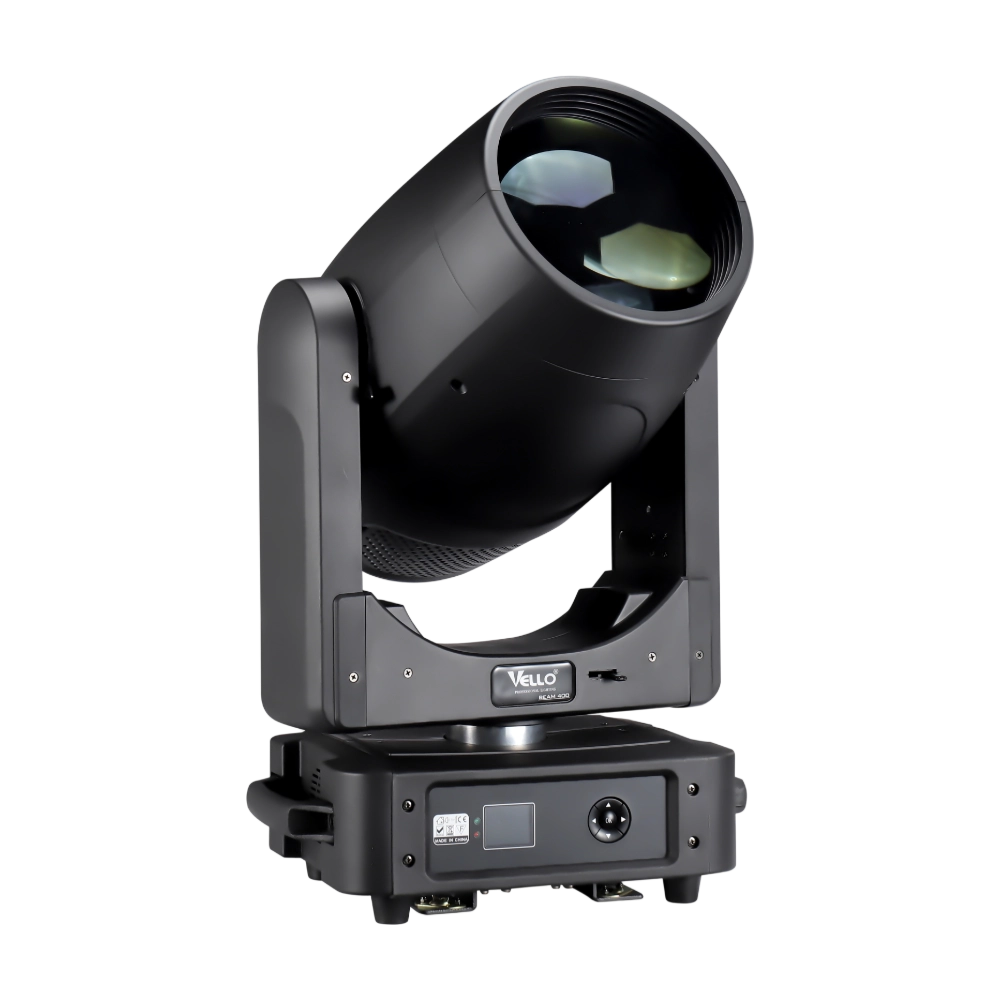
Moving Head Stage Light BEAM 400
BEAM400 is a 500W professional moving head beam powered by an OSRAM SIRIUS 371W discharge bulb, delivering a super-bright 1.8° sharp beam with impressive punch. It features 12 fixed gobos + open, a 14-color wheel, and a 16-facet circular rotating prism with multiple-facet effects, enabling dynamic aerial visuals. With 540° pan / 270° tilt, 16-bit movement resolution, and linear frost and focus, BEAM400 ensures precise and versatile performance. Comparable to traditional 750W moving heads, it combines high efficiency, smooth dimming, and reliable operation—ideal for concerts, tours, and large-scale stage productions.
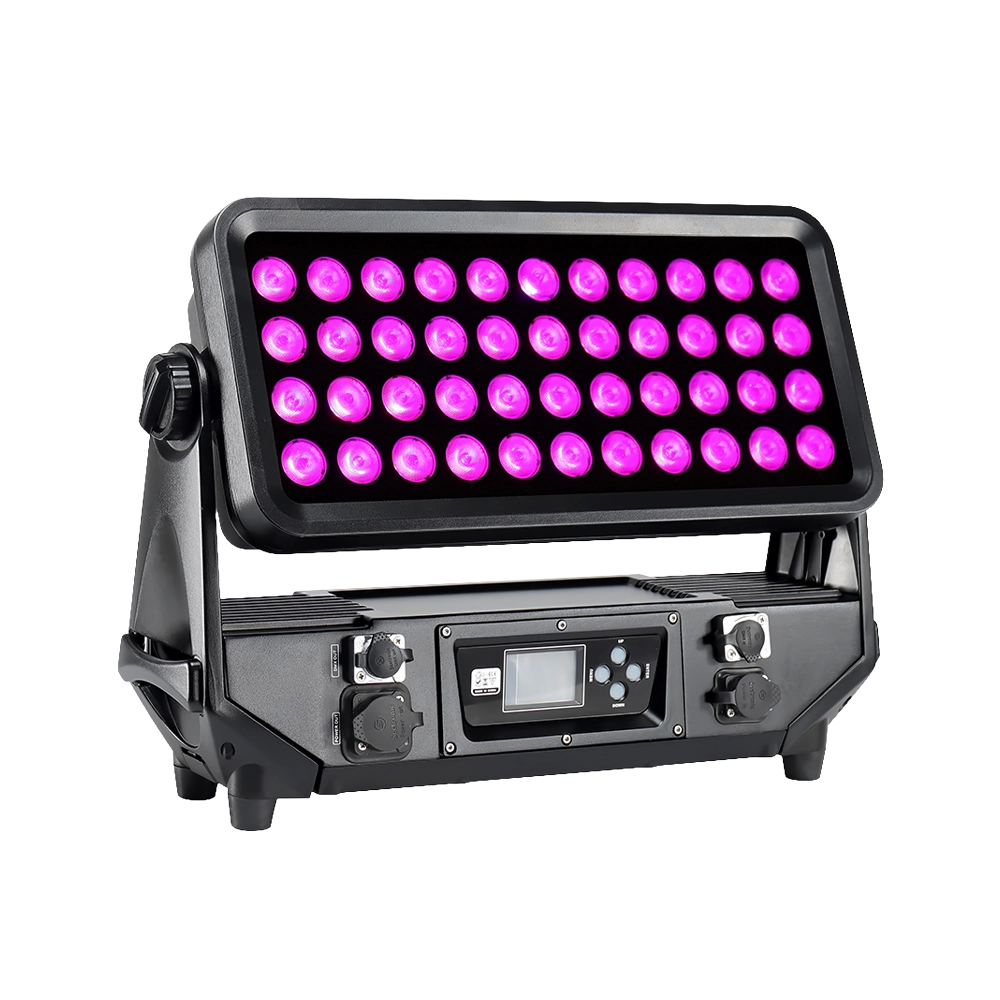
LED Light LED TOP P4
The Vello LED TOP P4 is a robust, high-output LED flood wash light designed for outdoor stages, architecture, and large-scale event lighting. Powered by 44x 15W RGBW LEDs from Cree, it delivers consistent brightness, smooth color mixing, and selectable beam angles of 20° or 40°. Built with a rugged IP65-rated die-cast aluminum housing, it withstands harsh weather conditions while offering smooth 0–100% dimming and flexible DMX control.
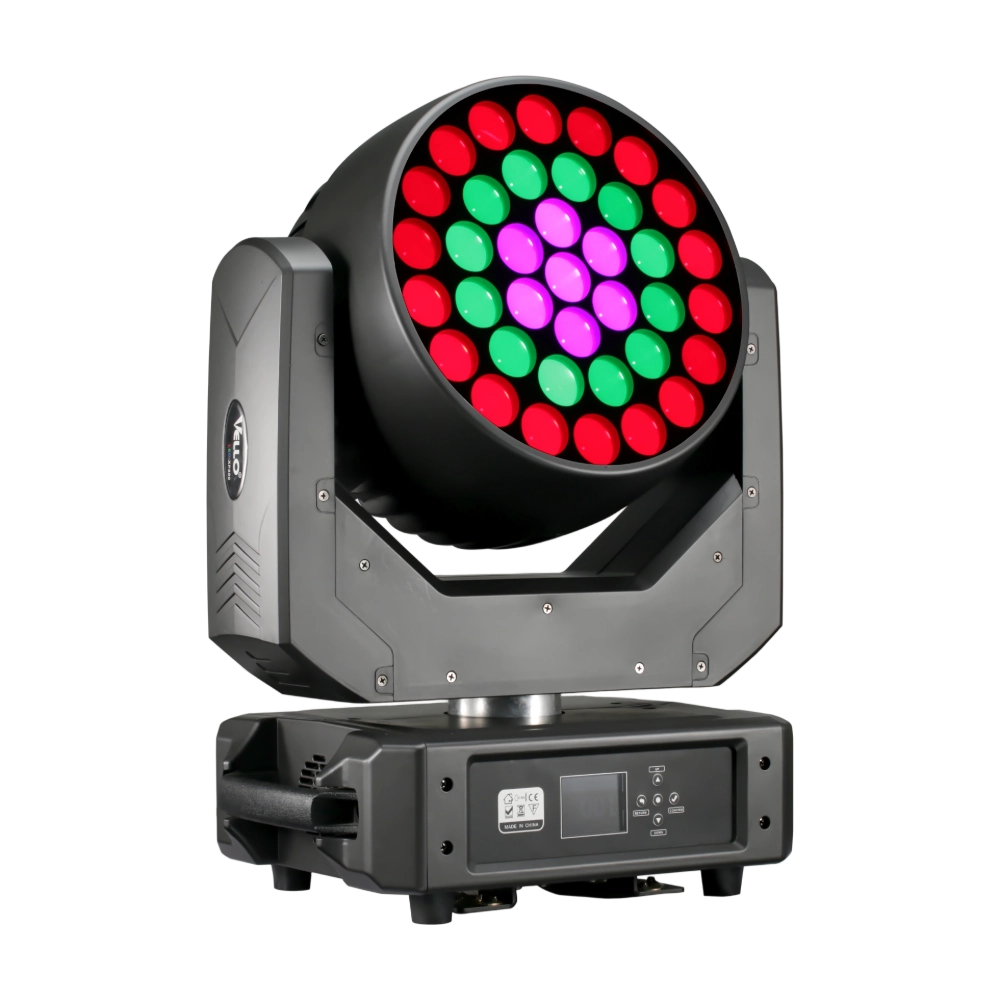
LED Moving Head Light XP800 (4in1)
The LED XP800 is a 600W moving head wash fixture, equipped with 37 × 20W Osram RGBW LEDs for brilliant color mixing and high output. With a wide 6°–50° electronic zoom, it easily transitions from sharp beams to smooth washes. The fixture supports 3-ring pixel control and an adjustable CTO range (2800K–8500K) for versatile applications. Featuring 540° pan / 310° tilt, high-speed 3-phase motors, and multiple DMX modes (16/28 channels), XP800 delivers powerful, precise, and dynamic performance. Compact and durable, it is an excellent choice for stages, theaters, and large-scale events requiring high brightness and flexibility.
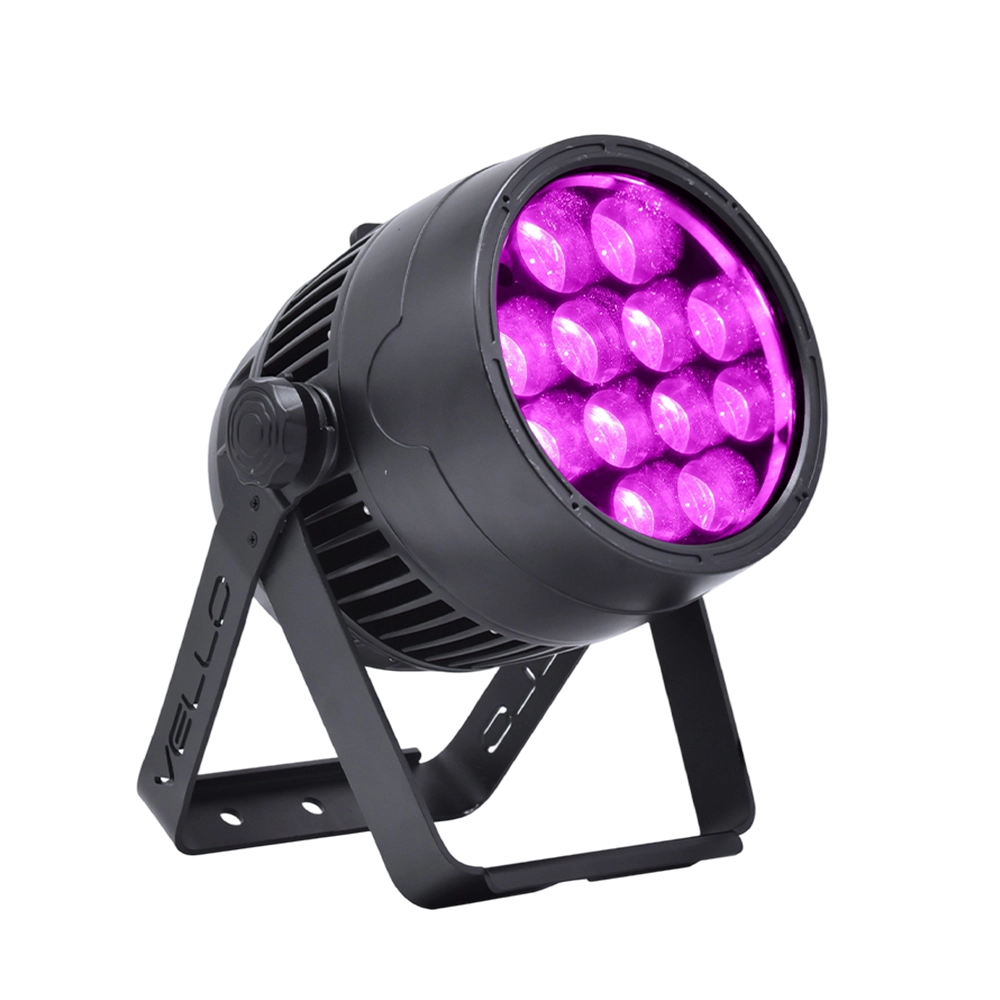
Stage LED Par Light LED ZOOMPAR 40
The Vello Zoom Par 40 IP is a powerful outdoor LED wash light equipped with 12x high-power 7-in-1 RGBACL LEDs. Designed for durability and rich color rendering, it features a wide motorized zoom (6°–50°), smooth dimming, and adjustable CTO presets (3200K–7500K), with 90+ CRI. With an IP66-rated die-cast aluminum body, it’s ideal for both indoor and outdoor applications, including stage lighting, architecture, live events, and installations.
Over 20 Years of Innovation in Stage & Studio Lighting
© 2026 VELLO. All Rights Reserved. 粤ICP备20023734号
Join our socials
VELLO
Whatsapp: +8613902276704
Vello Lighting
VelloLights