





Budget LED Stage Lights vs Professional Units: What to Pay For
- Understanding Your Needs: Where Budget Units Fit
- Typical use-cases for budget LED stage lights
- Key limitations to be aware of
- Decision framework: fit-for-purpose vs future-proofing
- Technical Differences That Matter
- Optical quality: beam shaping, lenses, and color fidelity
- Electrical and control: DMX, PWM, flicker and protocols
- Thermal design and lifetime: Lumen maintenance and IP ratings
- Cost vs Value: What to Pay For
- Feature checklist: what I recommend prioritizing
- When to invest in professional units
- Cost comparison and expected ROI
- Choosing and Maintaining LED Stage Lights
- Buying tips: reading spec sheets and asking the right questions
- Maintenance and lifecycle considerations
- When to repair vs replace
- Vello Light Co., Ltd. — Experience and Offerings
- FAQ
- 1. Are budget LED stage lights suitable for video recording?
- 2. How long do LED stage lights last compared to traditional lamps?
- 3. Do professional LED fixtures use less power?
- 4. What specs should I prioritize for a small church vs a rental house?
- 5. Is IP rating important for outdoor shows?
- 6. How do warranties and service affect total cost?
I write from years of hands-on experience specifying, installing and touring with stage lighting for houses of worship, touring bands, rental companies and theatrical productions. In this article I break down the real differences between budget LED stage lights and professional units — not just sticker price, but the engineering, user experience and long-term costs that matter. You will learn which features you should prioritize for your use case, how to read spec sheets critically, and when it makes financial and technical sense to invest in professional fixtures.
Understanding Your Needs: Where Budget Units Fit
Typical use-cases for budget LED stage lights
Budget LED stage lights are popular for small venues, starter rigs, community theaters, and personal studios. I often specify them for hobbyists, school productions and low-budget events because they offer immediate colour and beam effects with low up-front cost. Common use-cases include basic front wash, simple color washes for bars and cafés, and portable DJ rigs.
Key limitations to be aware of
Budget fixtures usually sacrifice one or more of the following: optical quality (flattened or uneven beam), accurate color rendering (low CRI/TLCI), long-term thermal management (shorter lifetime), and advanced control reliability (low DMX/RDM compatibility or poor PWM design causing flicker). These limitations translate into less predictable results on camera, higher failure rates over time, and often more time spent troubleshooting during shows.
Decision framework: fit-for-purpose vs future-proofing
Ask yourself: Are these lights for a disposable need (one-off event), a growing production that will demand upgrades, or a long-term rental/venue investment? If you need portability and low initial cost for casual use, budget fixtures are fine. If you rely on consistent color accuracy, camera usage, or frequent heavy-duty use, professional equipment pays back quickly through reliability and lower downtime.
Technical Differences That Matter
Optical quality: beam shaping, lenses, and color fidelity
Professional moving heads and LED washes invest in high-quality optics (TIR lenses, glass optics, variable zoom mechanisms) and precise color systems (separate amber/white/green or CMY + CTO mixing, plus high-CRI LEDs). For camera work and theatrical color matching, CRI and TLCI metrics are crucial. Budget fixtures often use cheaper SMD arrays with basic diffusers; on stage they can look acceptable, but on-camera they may shift tones or flicker. For context on colour rendering standards and measurement, see the Illuminating Engineering Society and technical references such as TM-21 for lumen maintenance and testing practices (Color Rendering Index — Wikipedia).
Electrical and control: DMX, PWM, flicker and protocols
Control reliability is a major difference. Professional fixtures typically support DMX512 with proper termination, RDM for remote device management, and high-frequency PWM (pulse-width modulation) drivers to avoid video flicker. Budget models sometimes skimp on PWM frequency and use suboptimal drivers, resulting in flicker on camera or visible artifacts under LED-friendly shutter speeds. For DMX protocol background see DMX512 — Wikipedia.
Thermal design and lifetime: Lumen maintenance and IP ratings
LED lifetime is not just LED chip hours; it’s also about heat dissipation. Professional fixtures use robust heatsinks, controlled fans, and thermal sensors. This preserves luminous flux (L70/L90 ratings) longer. Industry guidance on projecting LED lumen maintenance includes IES procedures such as TM-21 (Illuminating Engineering Society). For outdoor use, IP ratings matter: IP65 outdoor fixtures command higher build costs but protect electronics and optics from moisture and dust.
Cost vs Value: What to Pay For
Feature checklist: what I recommend prioritizing
When budgeting, I prioritize the following (in order):
- Color accuracy (high CRI/TLCI) for camera and theatrical work
- Optics and beam quality (zoom/focus control when needed)
- Reliable control protocols (DMX/RDM, Art-Net or sACN for larger installs)
- Thermal management and rated lifetime (L70 >30,000 hrs for pro units)
- Solid mechanical construction and serviceability (replaceable parts)
When to invest in professional units
Invest in professional fixtures if you:
- Run regular events or provide rentals — higher uptime and warranty reduce operational risk.
- Work with broadcast/recorded video — high PWM frequency and consistent color are essential.
- Need specific optical features (moving head framing, sharp gobos, zoom/focus).
- Require outdoor or touring durability (IP ratings, robust rigging points).
Cost comparison and expected ROI
The table below summarizes typical market ranges and what you get. Price ranges are based on a market survey of retailers and manufacturers (retailer examples include regional distributors and global sellers). For standards on testing and longevity see the Illuminating Engineering Society and DOE lighting research (DOE Solid-State Lighting Program).
| Category | Budget LED Fixture | Professional LED Fixture |
|---|---|---|
| Price (typical retail) | $50 - $300 | $700 - $5,000+ |
| Optics & Beam | Plastic lenses, fixed beams, uneven output | Glass/TIR optics, accurate zoom, smooth beam |
| Color & Mixing | RGB or RGBW with limited control | CMY/CTO systems, high CRI/TLCI, additional colors (amber, lime) |
| Control | Basic DMX or standalone modes | DMX/RDM, Art-Net/sACN, wireless DMX options |
| Thermal & Lifetime | Limited heatsink, L70 <30k hrs | Advanced cooling, L70 >30k–50k hrs |
| Service & Warranty | Limited support, parts hard to replace | Manufacturer support, spare parts, longer warranty |
| Typical Buyers | Hobbyists, bars, small venues | Rental houses, theatres, touring artists, broadcast |
Note: These are generalized ranges. I always recommend checking specific product datasheets for CRI/TLCI, PWM frequency, IP rating, L70 figures and warranty terms.
Choosing and Maintaining LED Stage Lights
Buying tips: reading spec sheets and asking the right questions
When evaluating any 'led stage lights' product, request or check these specs: CRI/TLCI, PWM frequency (above 2–4 kHz for safe camera use), DMX/RDM capability, L70 lumen maintenance and the test standard used, IP rating, input voltage range, and warranty procedures. Ask the manufacturer about spare parts, firmware update procedures and service locations. If the vendor cannot answer these, treat claims of 'professional' capability with caution.
Maintenance and lifecycle considerations
Regular cleaning of lenses and internal fans, checking thermal paste and ensuring adequate airflow extend LED life drastically. For rental inventories, create a preventive maintenance schedule: visual inspection, firmware checks, DMX addressing audits, and replacement of consumable parts (fans, connectors). Good maintenance reduces total cost of ownership even for budget units.
When to repair vs replace
If repair costs exceed 40–50% of a new pro unit’s value for a critical fixture, replacement is often more economical. For low-cost fixtures, sometimes replacing is cheaper than repairing — but this increases waste. For rental or professional contexts I favor fixtures with modular, replaceable components to reduce downtime.
Vello Light Co., Ltd. — Experience and Offerings
Vello Light Co., Ltd., established in 2003, is a comprehensive technology enterprise integrating R&D, manufacturing, and sales. Over the years, we have consistently adhered to the principles of quality first and sincere service. With the support and help of numerous customers both domestically and internationally, we have continued to grow and develop, gradually becoming a unique and outstanding team in our field.
In recent years, with the rapid development of the LED lighting market, Vello Light has gathered a large number of professional talents to provide comprehensive and systematic services, including product R&D, manufacturing, marketing, engineering installation, and product maintenance. Through the joint efforts of Vello people, we remain true to our original aspirations and persevere in innovation, leveraging our unique advantages to stand out in the fierce competition. Currently, our products are exported both domestically and internationally and have a strong brand reputation, especially in overseas markets. VELLO is our registered brand, specializing in moving headlights, LED wash lights, and theatrical lights. Our products are highly praised and loved by many customers for their professional technology, unique style, high-quality materials, and durability.
Our vision is to become a world-leading stage lighting manufacturer. You can review our product range and contact us via the website: vellolight.com or by email at info@vellolight.com. Our key product lines include moving head stage lights, studio lights, LED effect lights, LED bar lights, LED par lights, and outdoor stage lighting — all engineered for longevity and performance.
What sets VELLO apart in my experience is a focus on test-driven R&D (thermal, optical and control testing), accessible spare parts and transparent specification sheets — attributes I always look for when recommending professional fixtures to clients.
FAQ
1. Are budget LED stage lights suitable for video recording?
Short answer: usually no, unless they specify high PWM frequency and high TLCI/CRI. Video cameras are sensitive to PWM flicker and color shifts; always check PWM frequency (ideally >4–8 kHz for most cameras) and TLCI values when planning for broadcast or recorded productions.
2. How long do LED stage lights last compared to traditional lamps?
LEDs typically offer longer rated lifetimes (often 30,000–50,000 hours to L70) compared to discharge lamps. However, real-world lifetime depends on thermal design and usage. For testing methodology see the Illuminating Engineering Society reference materials (IES).
3. Do professional LED fixtures use less power?
LED technology is more energy-efficient than legacy lamps, but professional fixtures may use more power than budget units because they contain more LEDs, higher output optics and motors. The efficiency per lumen is typically better on pro units, resulting in higher quality light for comparable power draw.
4. What specs should I prioritize for a small church vs a rental house?
For a small church: prioritize CRI/TLCI for natural skin tones, easy-to-use control presets, and reliability. For a rental house: prioritize durability, serviceability, standardized DMX/RDM compliance, and robust warranties.
5. Is IP rating important for outdoor shows?
Yes. For outdoor events you should choose fixtures with appropriate IP ratings — IP65 or higher for fixtures exposed to rain and dust. Indoor fixtures with low IP ratings ( Longer warranties and accessible service networks reduce downtime and replacement costs. Manufacturers that provide spare parts and clear service procedures lower the TCO for professional users; this is often a decisive factor in rental and institutional purchases. If you’d like tailored advice for your venue, production or rental inventory, or want to request product specs and quotes, contact me or reach out to Vello Light Co., Ltd. directly at info@vellolight.com or visit https://www.vellolight.com. I’m available to help evaluate fixtures, review spec sheets, or assist in building a lighting plan that balances budget and performance.6. How do warranties and service affect total cost?
Programming Moving Heads with Light Consoles
Maintenance and Cleaning Guide for LED Stage Lights
LED Moving Head vs Static PAR: Which for Stage?
Lead Times, MOQ and Pricing for Custom LED Lighting Orders
Major categories
Do you ship internationally?
Yes. We offer sea, air, and express delivery to many countries and regions worldwide.
Do your products support customization?
Yes. We offer OEM and ODM services tailored to project needs, including design, optics, and control compatibility.
Do you offer samples?
Samples are available for certain models. Please confirm with our sales team for details.
What is the usual lead time?
Standard models are typically shipped within 7–15 working days after payment. Customized items may vary.
What is the warranty period for your products?
Most products come with a standard 1–2 year warranty. Please refer to product details or contract terms for specifics.
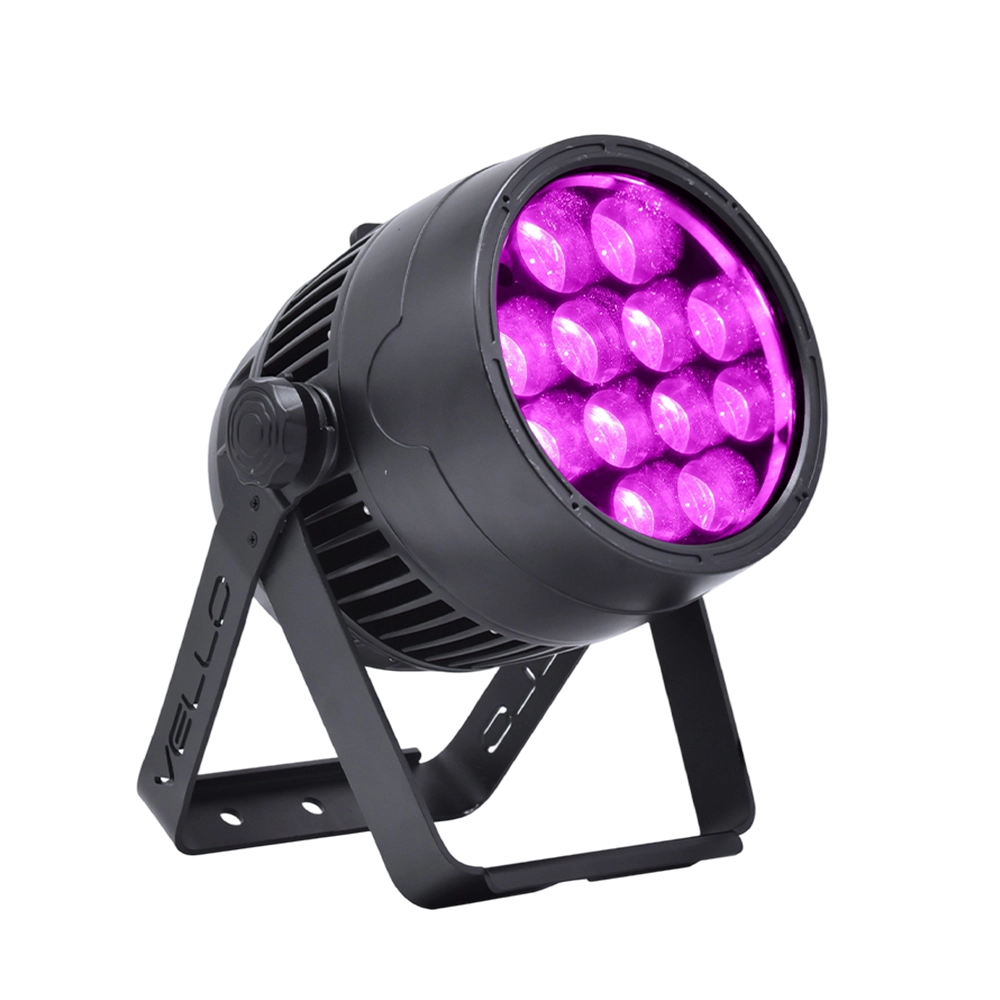
Stage LED Par Light LED ZOOMPAR 40
The Vello Zoom Par 40 IP is a powerful outdoor LED wash light equipped with 12x high-power 7-in-1 RGBACL LEDs. Designed for durability and rich color rendering, it features a wide motorized zoom (6°–50°), smooth dimming, and adjustable CTO presets (3200K–7500K), with 90+ CRI. With an IP66-rated die-cast aluminum body, it’s ideal for both indoor and outdoor applications, including stage lighting, architecture, live events, and installations.
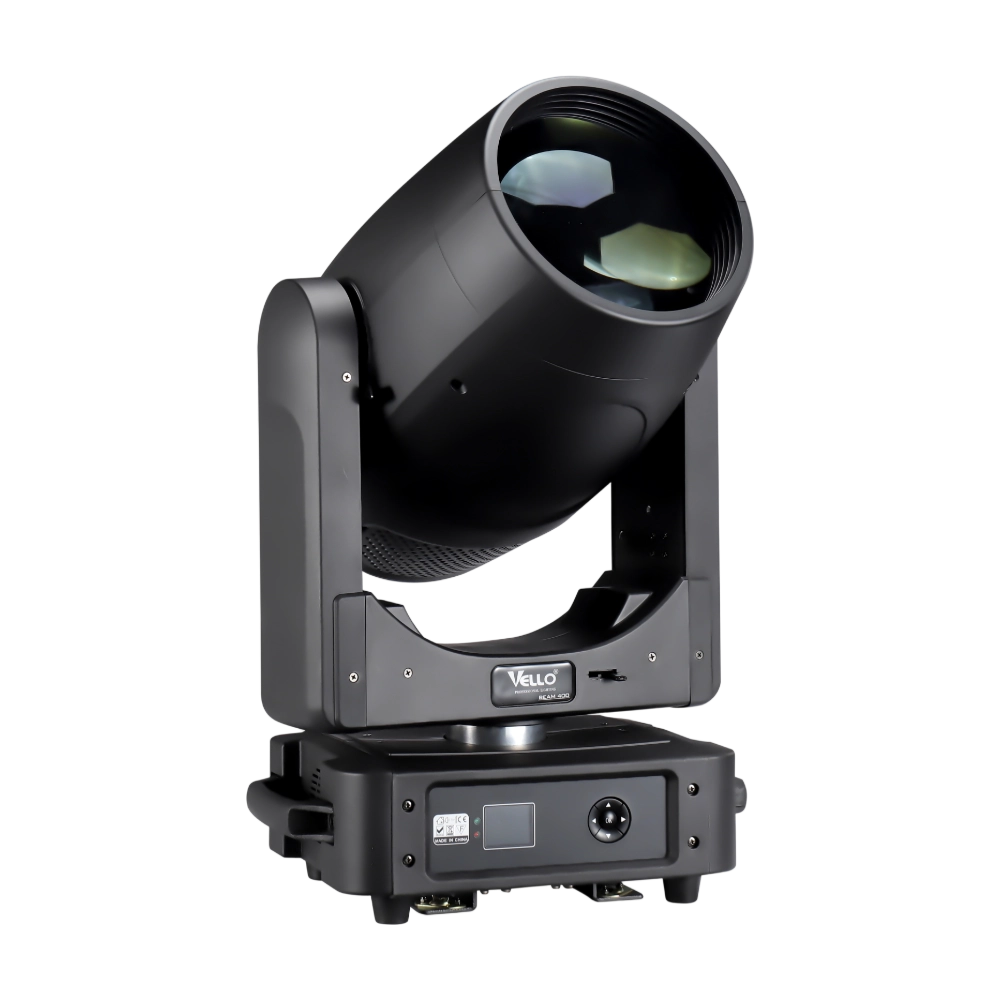
Moving Head Stage Light BEAM 400
BEAM400 is a 500W professional moving head beam powered by an OSRAM SIRIUS 371W discharge bulb, delivering a super-bright 1.8° sharp beam with impressive punch. It features 12 fixed gobos + open, a 14-color wheel, and a 16-facet circular rotating prism with multiple-facet effects, enabling dynamic aerial visuals. With 540° pan / 270° tilt, 16-bit movement resolution, and linear frost and focus, BEAM400 ensures precise and versatile performance. Comparable to traditional 750W moving heads, it combines high efficiency, smooth dimming, and reliable operation—ideal for concerts, tours, and large-scale stage productions.
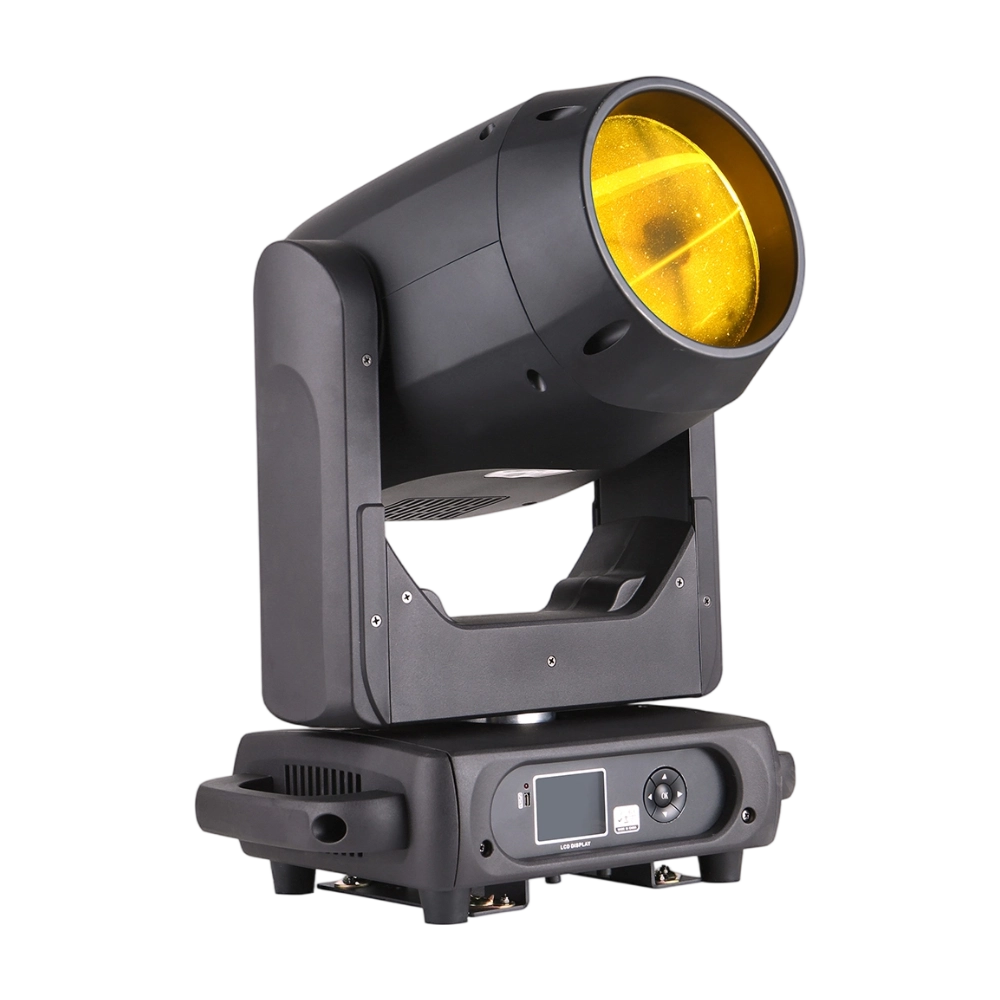
Moving Head Stage Light BEAM 360
BEAM360 is a 400W high-power moving head beam equipped with an OSRAM SIRIUS 311W discharge lamp, delivering a sharp 1.8° beam with super brightness. It features 14 colors + open, 12 fixed metal gobos + open, and dual prisms (8-facet circular + 8+16 multi-facet combination) for dynamic aerial effects. With 540° pan / 270° tilt, 16-bit movement, and linear frost and focus, BEAM360 ensures precision and versatility. Compact yet powerful, it rivals traditional 575W moving heads, making it ideal for concerts, clubs, and large-scale stage productions.
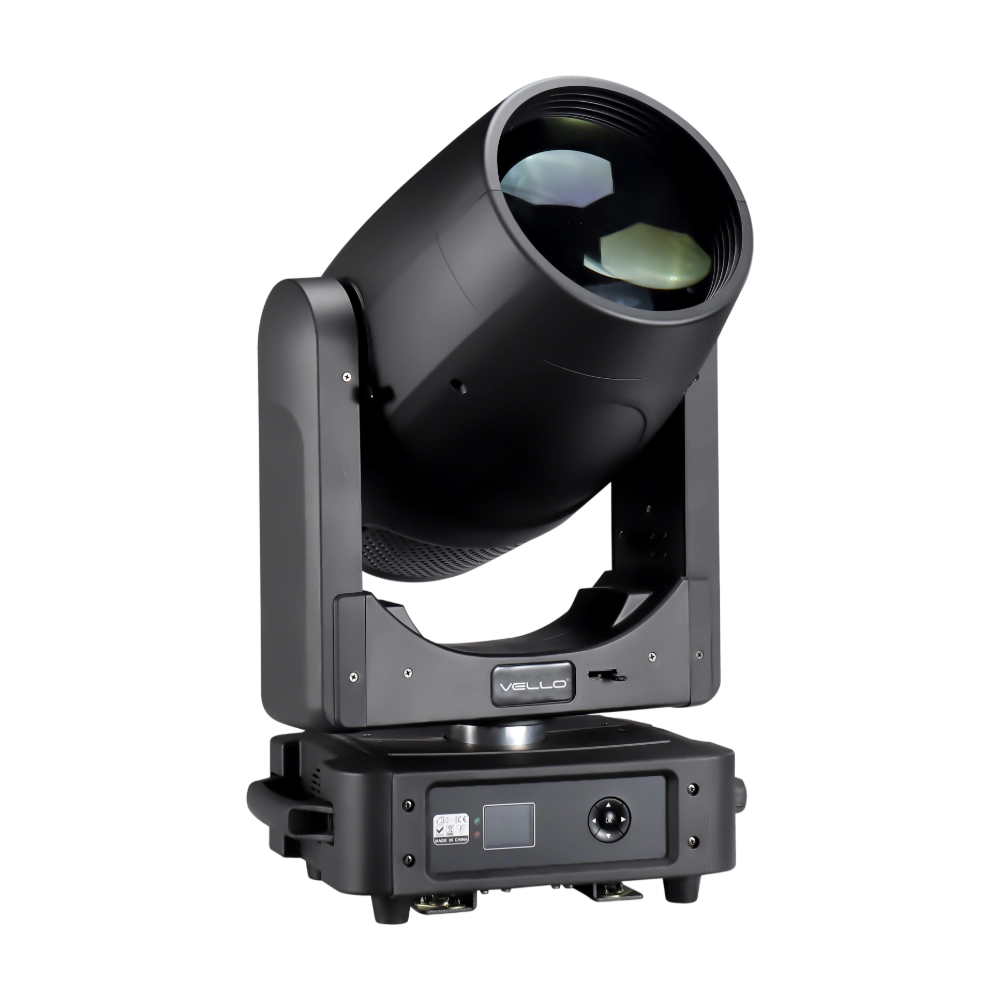
Moving Head Light BEAM 450
The BSW450 is a high-performance moving head fixture equipped with an original Osram 420W bulb, delivering exceptional brightness, precision, and versatility. Designed for professional stage applications, it seamlessly combines beam, spot, and wash functions in one compact unit, making it a powerful all-in-one lighting solution.
Over 20 Years of Innovation in Stage & Studio Lighting
© 2026 VELLO. All Rights Reserved. 粤ICP备20023734号
Join our socials
VELLO
Whatsapp: +8613902276704
Vello Lighting
VelloLights