




Choosing Beam Angle and Throw for Moving Heads
- How Beam Spread and Throw Distance Shape Spectacular Lighting
- Understanding moving head lights: fundamentals of beam angle and throw
- Key terms every buyer of moving head lights should know
- Basic geometry and calculation for moving head lights
- Choosing beam angle for different applications of moving head lights
- Practical table: beam angle, throw, beam diameter and common uses for moving head lights
- Estimating illuminance: what lux can you expect from moving head lights
- Variable-zoom moving head lights: flexibility vs performance trade-offs
- Gobos and beam edge quality on moving head lights
- Environmental factors affecting beam and throw for moving head lights
- Installation and rigging considerations for long-throw moving head lights
- Comparison: moving head lights optics and typical fixture categories
- Case study examples for selecting moving head lights by venue
- Budgeting and lifecycle considerations when choosing moving head lights
- Best practice checklist for selecting beam angle and throw for moving head lights
- Why choose VELLO moving head lights for demanding stage applications
- Final recommendations and next steps when planning moving head lights
- FAQ about beam angle and throw for moving head lights
- 1. What beam angle should I choose for strong aerial shafts with moving head lights?
- 2. How do I calculate beam diameter from beam angle for moving head lights?
- 3. Can I rely on zoom moving head lights to replace fixed-beam fixtures?
- 4. How does haze or smoke change my choice of moving head lights?
- 5. Where can I find accurate photometric data for moving head lights?
- 6. How far can moving head lights throw in outdoor events?
- References and sources
How Beam Spread and Throw Distance Shape Spectacular Lighting
Understanding moving head lights: fundamentals of beam angle and throw
When planning any event or installation with moving head lights, selecting the right beam angle and throw distance determines the visual quality, coverage, and control of light on stage, in studio, or in outdoor applications. The two parameters are closely related: beam angle describes how wide the light cone is as it leaves the fixture, while throw distance describes how far that cone travels before striking a surface. Together they define beam diameter, edge softness, and illuminance (lux) at the target. This section lays the conceptual groundwork every lighting designer and rental house should know.
Key terms every buyer of moving head lights should know
- Beam angle: nominal angle where direct beam intensity drops to 50% of peak (often called FWHM in optics).
- Field angle: broader angle where intensity drops to 10% of peak; useful for wash/coverage expectations.
- Throw distance: the distance from fixture to target surface (stage, cyclorama, screen).
- Beam diameter: the width of the light cone at the target; computed from beam angle and throw.
- Lux (illuminance): luminous flux per unit area at the target; inversely proportional to the square of distance for point-source approximations.
Basic geometry and calculation for moving head lights
For practical planning you can use a simple geometric formula. Given beam angle (θ in degrees) and throw distance (D), the approximate beam radius R at the target is:
R = D * tan(θ/2)
So beam diameter = 2 * D * tan(θ/2). Example: a 3 degree beam at 30 m produces a diameter of roughly 2 * 30 * tan(1.5deg) ≈ 1.57 m. This calculation helps you choose whether a fixture will produce a tight shaft or broad wash at a given distance.
Choosing beam angle for different applications of moving head lights
Different production types demand different beam characteristics. Use the following guidance when selecting moving head lights based on venue and visual intent:
- Concerts and arena rigs: narrow beams (1.5 to 6 degrees) for shafts and aerial effects; medium beams (6 to 15 degrees) for highlights; wider beams for washes when paired with wide optics.
- Theatre and drama: medium beams (6 to 20 degrees) for front light and specials, wider beams (20–40 degrees) for broad coverage with soft edges.
- Houses of worship and corporate: versatility is key; fixtures with zoom (variable beam) or separate spot/wash heads allow mixed needs.
- Studios and broadcast: controlled beam and sharp cut-offs preferred; narrow to medium beam optics combined with gobo projection and iris control.
Practical table: beam angle, throw, beam diameter and common uses for moving head lights
| Beam angle | Throw distance (typical) | Beam diameter at target | Common moving head lights use |
|---|---|---|---|
| 1.5° - 3° | 20–60 m | 0.5–3.1 m | Strong aerial shafts, long-throw spot effects, arena centerpieces |
| 6° - 15° | 10–30 m | 1.0–8.0 m | Spot specials, mid-throw highlights, gobos with defined edges |
| 20° - 40° | 5–20 m | 1.8–27.2 m | Broad front light, medium washes, cyclorama fills |
| 60°+ | 1–10 m | 1.0–10.4 m | Wide washes, audience lighting, short-throw ambient fill |
Estimating illuminance: what lux can you expect from moving head lights
Illuminance at the target depends on fixture lumen output, optical efficiency, beam angle, and distance. As a rule of thumb for a point-like source, lux scales roughly with 1/D^2 and with the fraction of the sphere covered by the beam. Use manufacturer photometric data (candela or lumens) to compute lux precisely. Example quick estimate: a fixture with peak output 100,000 cd aimed at 20 m gives illuminance around 100,000 / (20^2) = 250 lux at center, before accounting for beam spreading and filter losses. Always rely on manufacturer photometric files (.ldt/IES) for precise planning in lighting software such as Vectorworks, WYSIWYG, or DIALux.
Variable-zoom moving head lights: flexibility vs performance trade-offs
Many modern moving head lights feature motorized zoom, allowing beam angle to change from narrow to wide. This versatility is valuable for rental firms and versatile venues. However, zoom mechanisms add complexity, weight, and potential compromises in optical purity; fixed, high-quality narrow-beam optics usually yield crisper gobos and higher center lux. When selecting fixtures, consider whether you prioritize sharp gobos and long-throw shafts (favor fixed narrow optics or High Quality zooms) or operational flexibility (multi-range zoom heads).
Gobos and beam edge quality on moving head lights
Small beam angles concentrate gobo detail but also magnify imperfections. If gobo projection is a central creative element, choose fixtures with matched optics and high lumen density. Note that very narrow beams produce harder edges and visible rays in haze, while wider beams soften edges and reduce gobo contrast. Testing a fixture with your chosen gobo and haze density is essential for predictable results.
Environmental factors affecting beam and throw for moving head lights
Aerosol, haze, smoke, and atmospheric absorption change perceived beam quality. Haze enhances beam visibility; the same fixture at identical throw will look dramatically different in a foggy arena versus a clean theatre. Outdoor conditions (humidity, rain, particulate matter) also reduce effective throw and lux. When planning outdoor rigs, allow margin in fixture power and choose IP-rated fixtures for reliability.
Installation and rigging considerations for long-throw moving head lights
Long-throw applications (stadiums, arenas) often require higher mounting points and heavier lifting hardware. Make sure truss load calculations include the fixture weight plus accessories like gobos, shutters, and weather protection. Also confirm power distribution and DMX/ART-Net network reach or use local nodes for large venues. For touring, prioritize fixtures with robust mechanics and accessible service panels to minimize downtime.
Comparison: moving head lights optics and typical fixture categories
| Fixture type | Typical beam angle | Strengths | Weaknesses |
|---|---|---|---|
| Beam moving head | 1.5° - 6° | Long throw, strong aerial shafts, excellent for haze | Not ideal for wide washes; narrower coverage |
| Spot moving head (with gobos) | 4° - 20° | Gobo projection, sharp edges, good specials | Limited wide wash capability |
| Wash moving head | 20° - 60°+ | Broad even coverage, soft edges, color mixing | Less suitable for long-throw sharp effects |
Case study examples for selecting moving head lights by venue
Example 1: Medium theatre (proscenium 12 m to stage) — Use spot/zoom moving head lights with 6–20° zoom range for specials and mid-throw gobos; add 20–40° wash heads for front light and cyc. Example 2: Large arena (truss 25–40 m above floor) — Deploy true beam fixtures (1.5–4°) for aerial shafts visible at distance plus high-output spot heads for key lighting. Example 3: Corporate ballroom (10–15 m height) — Versatile zoom fixtures (8–40°) let one fixture perform center stage specials and room washes for different event formats.
Budgeting and lifecycle considerations when choosing moving head lights
High-output narrow-beam fixtures and High Quality optics cost more but deliver superior performance and longer useful life in demanding touring contexts. Consider total cost of ownership: initial price, shipping, power consumption, maintenance, bulb/LED engine life, and spare parts availability. For rental companies, versatility (zoom, multiple effects) increases utilization rate; for fixed installs, prioritize reliability and optimized optics for the venue's dominant use case.
Best practice checklist for selecting beam angle and throw for moving head lights
- Measure your key throw distances (fixture positions to target surfaces) precisely.
- Define the visual intent: sharp shafts, gobo projection, soft wash, or mixed.
- Consult manufacturer photometrics (.IES/.LDT) and run a lighting plot in design software.
- If using haze or smoke, plan for enhanced beam visibility; reduce required lumen output accordingly.
- Choose fixtures with optics that match your priority: fixed High Quality lenses for best image quality; zooms for flexibility.
Why choose VELLO moving head lights for demanding stage applications
Vello Light Co., Ltd., established in 2003, is a comprehensive technology enterprise integrating R&D, manufacturing, and sales. Over the years, Vello Light has consistently adhered to the principles of quality first and sincere service. With the support and help of numerous customers both domestically and internationally, we have continued to grow and develop, gradually becoming a unique and outstanding team in our field.
In recent years, with the rapid development of the LED lighting market, Vello Light has gathered a large number of professional talents to provide comprehensive and systematic services, including product R&D, manufacturing, marketing, engineering installation, and product maintenance. Through the joint efforts of Vello people, we remain true to our original aspirations and persevere in innovation, leveraging our unique advantages to stand out in the fierce competition. Currently, our products are exported both domestically and internationally and have a strong brand reputation, especially in overseas markets. VELLO is our registered brand, specializing in moving headlights, LED wash lights, and theatrical lights. Our products are highly praised and loved by many customers for their professional technology, unique style, high-quality materials, and durability.
VELLO's competitive strengths include focused optical engineering for moving head stage lights, in-house LED engine optimization to ensure consistent color and lumen maintenance, and a product range that covers moving head stage lights, studio lights, LED effect light, Led Bar Lights, Led Par Light, and outdoor stage lighting. Our engineering team emphasizes durability, serviceability, and photometric performance, making VELLO products suited to touring, rental houses, fixed installs, and broadcast environments. Our vision is to become a world-leading stage lighting manufacturer.
Final recommendations and next steps when planning moving head lights
Always start with measurements and a clear creative brief. Use photometric files and design software to simulate fixture placement and expected illuminance. For new purchases, request sample photometrics and, if possible, test fixtures on-site with the venue's haze and sightlines. Balance flexibility with optical quality: for productions where image sharpness matters most, prioritize fixtures with dedicated optics; for multi-purpose venues, prioritize zoom capability and serviceability.
FAQ about beam angle and throw for moving head lights
1. What beam angle should I choose for strong aerial shafts with moving head lights?
Choose narrow beam angles between 1.5° and 6° for pronounced aerial shafts, especially in large venues and arenas. Use haze to reveal beams. Verify manufacturer candela and lumen numbers to ensure enough center lux at your throw distance.
2. How do I calculate beam diameter from beam angle for moving head lights?
Use the formula beam diameter = 2 * D * tan(θ/2), where D is throw distance and θ is beam angle in degrees. This gives an approximate geometric diameter at the target.
3. Can I rely on zoom moving head lights to replace fixed-beam fixtures?
Zoom fixtures offer flexibility and can replace multiple fixed-beam types in many contexts, but high-end fixed optics often outperform zooms in terms of sharpness, lumen density, and gobo clarity. Choose based on priorities: flexibility versus optical High Quality.
4. How does haze or smoke change my choice of moving head lights?
Haze increases beam visibility, making shafts appear stronger. If you plan to use haze regularly, you can often use lower lumen fixtures or wider beams to achieve similar perceived density. Conversely, without haze, you may need higher output or narrower beams to get visible aerial effects.
5. Where can I find accurate photometric data for moving head lights?
Obtain manufacturer-provided photometric files (.IES or .LDT) and spec sheets. Use lighting design software (WYSIWYG, Vectorworks, DIALux) to simulate the fixtures in your venue accurately. Always request data for the exact model, lens setting, and any accessories used.
6. How far can moving head lights throw in outdoor events?
Long-throw capabilities depend on fixture optics and lumen output. Many beam moving heads can project effective shafts 30 m or more. For outdoor events, factor weather, ambient light, and the need for IP-rated fixtures. Always test under expected conditions when possible.
Need help selecting the right moving head lights for your venue or event? Contact VELLO Light Co., Ltd. for photometric data, product demos, and specification support. Check our product catalog or request a consultation to match beam angle and throw to your exact stage and creative needs.
References and sources
- Chauvet Professional Support - Beam angle vs Field angle. Accessed 2025-12-23. https://support.chauvetprofessional.com/hc/en-us/articles/360013950300-Beam-angle-vs-Field-angle
- Illuminating Engineering Society (IES) - Lighting Handbook concepts and photometry overview. Accessed 2025-12-23. https://www.ies.org/
- Lighting design software resources: Vectorworks, WYSIWYG, DIALux product pages for photometric simulation. Accessed 2025-12-23. https://www.vectorworks.net/ https://cast-soft.com/ https://www.dialux.com/
- General optics and photometry concepts - Wikipedia (Lighting). Accessed 2025-12-23. https://en.wikipedia.org/wiki/Lighting
- Manufacturer photometric best practices and IES file usage - example: Robe Lighting and Claypaky technical notes. Accessed 2025-12-23. https://www.robe.cz/ https://www.claypaky.com/
How to Choose Reliable Stage Lighting Suppliers and Manufacturers
Creative Stage Light Effects: Gobo, Strobe, and Beam Tips
LED Stage Lighting Maintenance and Care
Certifications and Compliance for Outdoor LED Lighting
Major categories
Do you offer samples?
Samples are available for certain models. Please confirm with our sales team for details.
Do you ship internationally?
Yes. We offer sea, air, and express delivery to many countries and regions worldwide.
Do your products support customization?
Yes. We offer OEM and ODM services tailored to project needs, including design, optics, and control compatibility.
What is the usual lead time?
Standard models are typically shipped within 7–15 working days after payment. Customized items may vary.
What is the warranty period for your products?
Most products come with a standard 1–2 year warranty. Please refer to product details or contract terms for specifics.
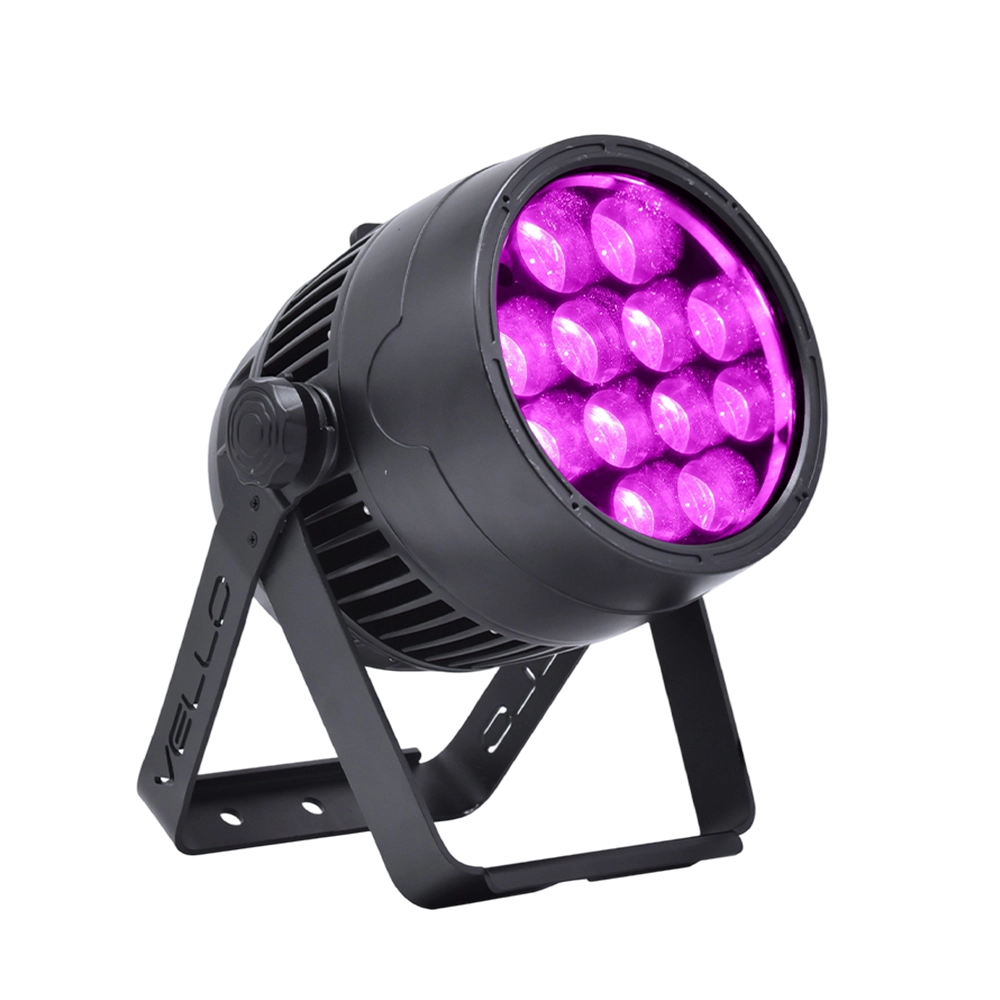
Stage LED Par Light LED ZOOMPAR 40
The Vello Zoom Par 40 IP is a powerful outdoor LED wash light equipped with 12x high-power 7-in-1 RGBACL LEDs. Designed for durability and rich color rendering, it features a wide motorized zoom (6°–50°), smooth dimming, and adjustable CTO presets (3200K–7500K), with 90+ CRI. With an IP66-rated die-cast aluminum body, it’s ideal for both indoor and outdoor applications, including stage lighting, architecture, live events, and installations.
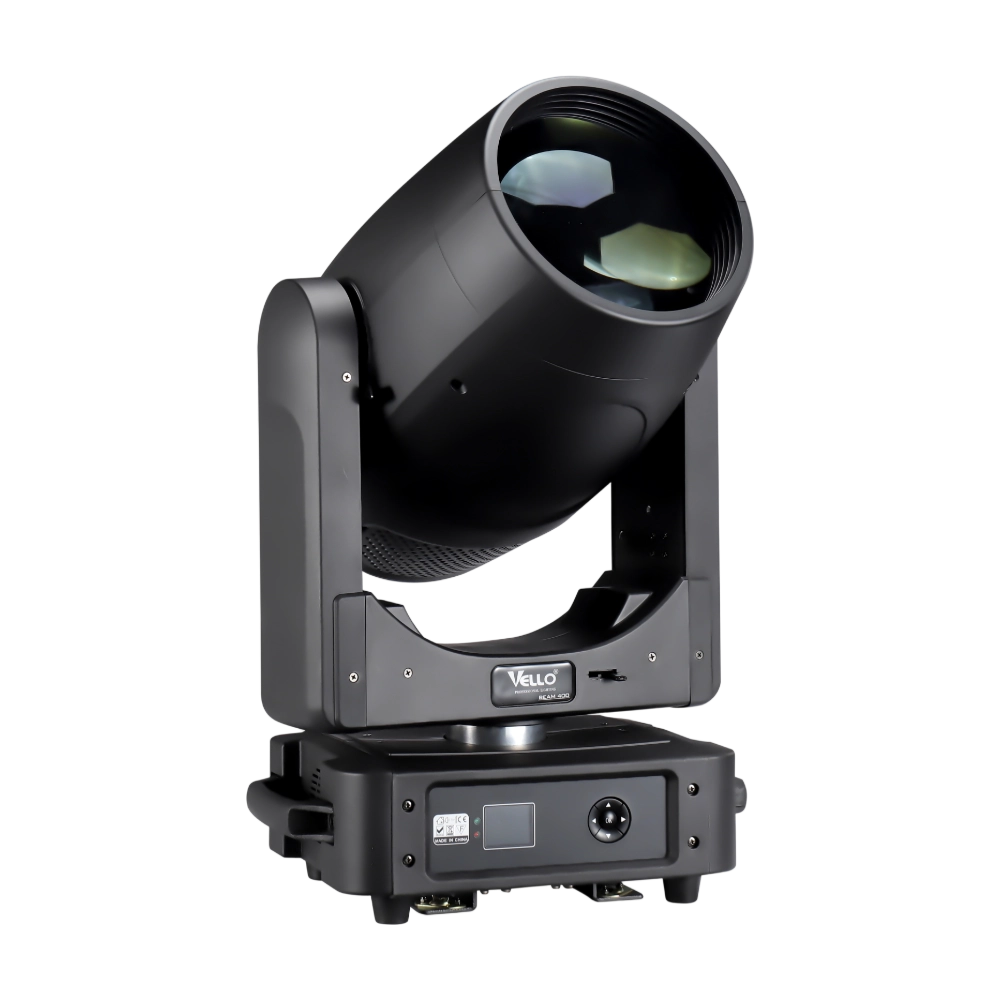
Moving Head Stage Light BEAM 400
BEAM400 is a 500W professional moving head beam powered by an OSRAM SIRIUS 371W discharge bulb, delivering a super-bright 1.8° sharp beam with impressive punch. It features 12 fixed gobos + open, a 14-color wheel, and a 16-facet circular rotating prism with multiple-facet effects, enabling dynamic aerial visuals. With 540° pan / 270° tilt, 16-bit movement resolution, and linear frost and focus, BEAM400 ensures precise and versatile performance. Comparable to traditional 750W moving heads, it combines high efficiency, smooth dimming, and reliable operation—ideal for concerts, tours, and large-scale stage productions.
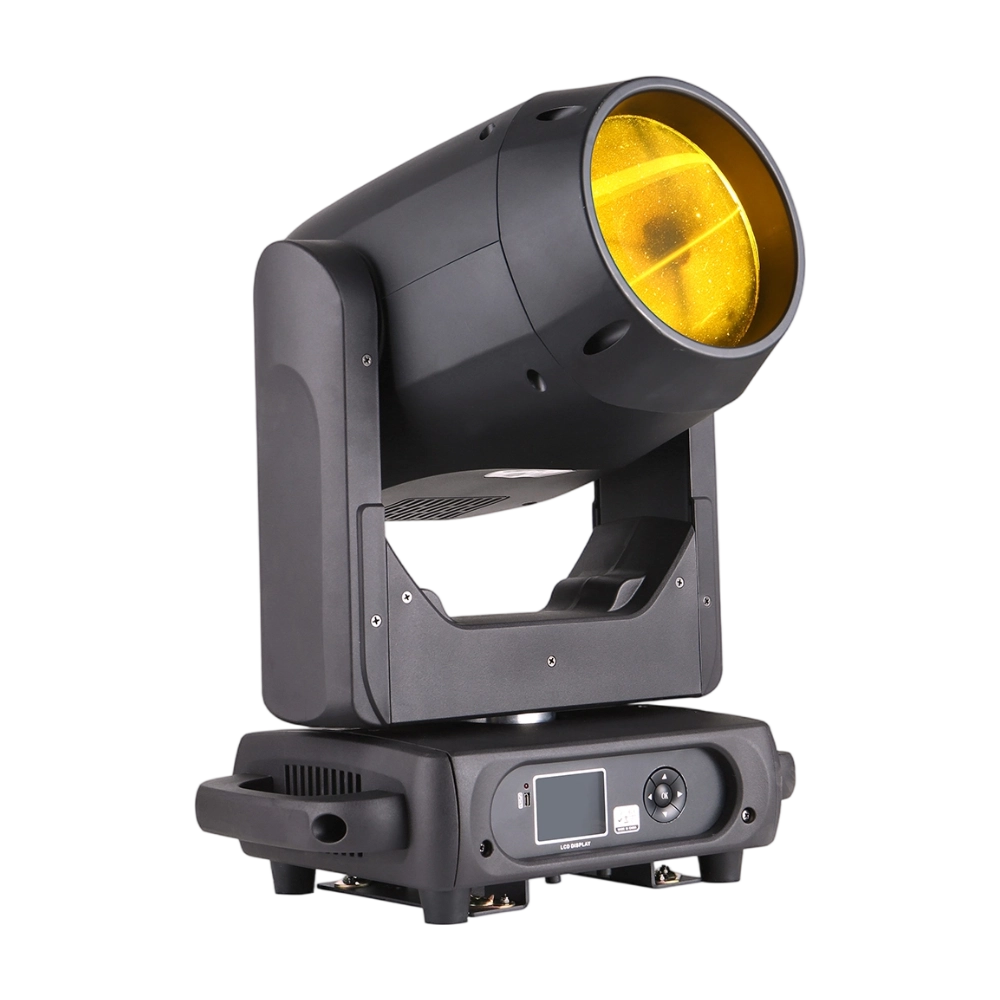
Moving Head Stage Light BEAM 360
BEAM360 is a 400W high-power moving head beam equipped with an OSRAM SIRIUS 311W discharge lamp, delivering a sharp 1.8° beam with super brightness. It features 14 colors + open, 12 fixed metal gobos + open, and dual prisms (8-facet circular + 8+16 multi-facet combination) for dynamic aerial effects. With 540° pan / 270° tilt, 16-bit movement, and linear frost and focus, BEAM360 ensures precision and versatility. Compact yet powerful, it rivals traditional 575W moving heads, making it ideal for concerts, clubs, and large-scale stage productions.
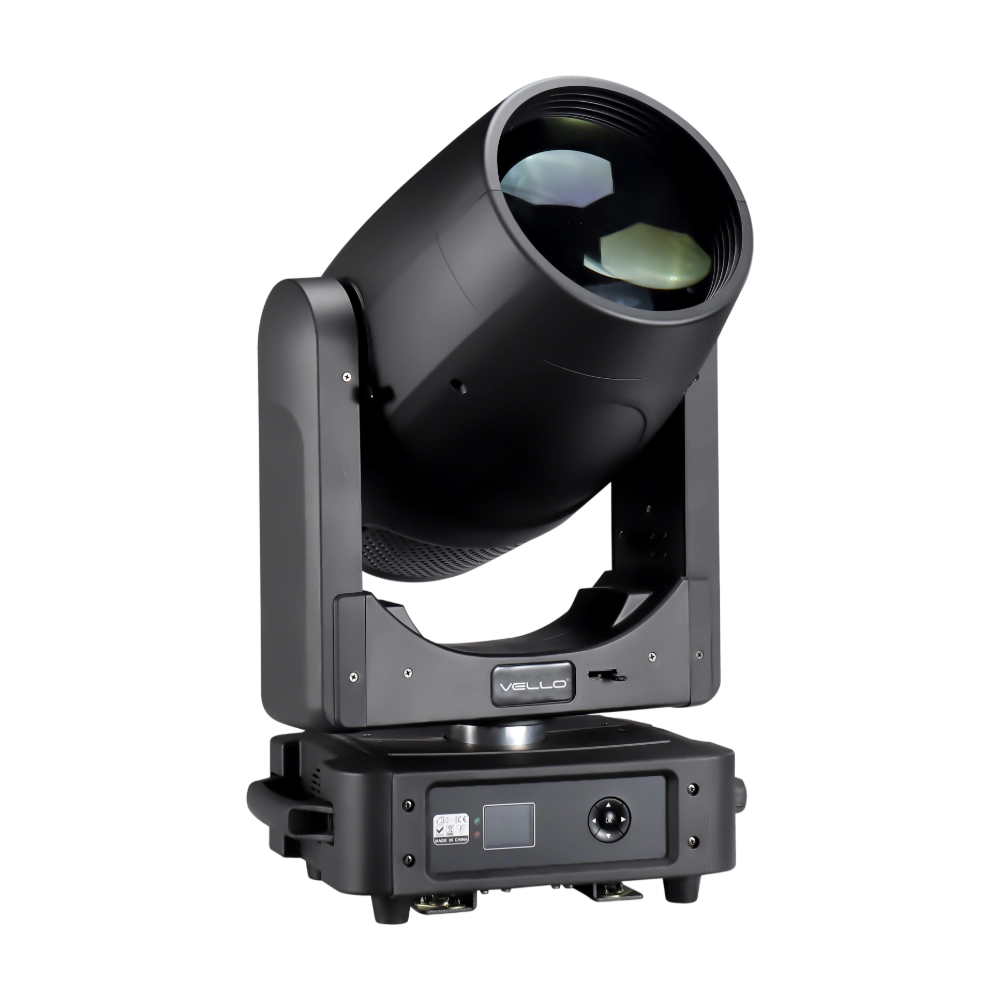
Moving Head Light BEAM 450
The BSW450 is a high-performance moving head fixture equipped with an original Osram 420W bulb, delivering exceptional brightness, precision, and versatility. Designed for professional stage applications, it seamlessly combines beam, spot, and wash functions in one compact unit, making it a powerful all-in-one lighting solution.
Over 20 Years of Innovation in Stage & Studio Lighting
© 2026 VELLO. All Rights Reserved. 粤ICP备20023734号
Join our socials
VELLO
Whatsapp: +8613902276704
Vello Lighting
VelloLights