





Beam Angle and Lens Selection for Stage Lighting
- Understanding Light Behavior on Stage
- What Is Beam Angle and Why It Matters in Stage Lighting
- Common Beam Angle Categories for Stage Lighting (embed: stage lighting)
- Lens Types and How They Affect Beam Quality in Stage Lighting
- How to Calculate Beam Diameter and Required Beam Angle
- Practical Intensity Consideration (embed: stage lighting)
- Comparing Moving Head Beam Fixtures vs. Fixed-Lens Fixtures
- Real-World Selection Guide: Matching Beam Angle to Application
- Lens Modifiers and Accessories That Affect Beam
- Case Study: Choosing Fixtures for a 10 m x 6 m Stage (embed: stage lighting)
- Vello Light: Manufacturing Strength and Product Focus (Brand Integration)
- Checklist for Procurement and Rigging (embed: stage lighting)
- Frequently Asked Questions (FAQ)
- 1. What beam angle should I use for a followspot in stage lighting?
- 2. How does beam angle affect perceived brightness on camera?
- 3. Can I use a zoom wash instead of multiple fixed-angle fixtures?
- 4. How do I measure beam angle for LED fixtures?
- 5. Does changing lens or adding diffuser change color temperature?
- 6. How do I decide between ellipsoidal and Fresnel for a small theatre?
- Contact and Product Inquiry CTA
- References and Further Reading
Understanding Light Behavior on Stage
Selecting the right beam angle and lens for stage lighting is a combination of physics, design intent, and equipment constraints. Whether you are lighting a concert, theatre production, corporate event, or broadcast studio, the beam angle determines coverage, edge quality, intensity, and visual impact — all central to effective stage lighting. This article unpacks beam angle fundamentals, compares lens technologies, provides practical calculations, and gives application-driven recommendations for professional stage lighting.
What Is Beam Angle and Why It Matters in Stage Lighting
Beam angle is the angle at which a light source emits at 50% of its maximum intensity (the full-width half-maximum, FWHM). In stage lighting, beam angle directly affects:
- Coverage area: wider beam = larger coverage at the same distance;
- Intensity: narrower beam concentrates light, increasing lux on target;
- Edge quality: sharp-edged profiles vs. soft-edged washes;
- Atmospheric effects: narrow beams show shafts in haze/fog more distinctly.
Understanding beam angle helps you choose fixtures and lenses that meet creative and functional goals while optimizing power and rigging constraints.
Common Beam Angle Categories for Stage Lighting (embed: stage lighting)
Typical categories used by lighting designers and manufacturers:
| Category | Beam Angle (°) | Typical Use in Stage Lighting |
|---|---|---|
| Very Narrow / Beam | 1°–6° | Impact beams, aerial effects, long-throw concerts |
| Narrow Spot | 6°–18° | Profile spotlights, highlight performers, followspots |
| Medium Spot / Zoom | 18°–35° | General purpose spots, front light for small groups |
| Wash | 35°–60° | Area washes, backlight, cyc-lighting |
| Wide Wash / Flood | >60° | Large cyclorama illumination, soft background fills |
Sources for angle classification include manufacturer datasheets and lighting practice guides (see references).
Lens Types and How They Affect Beam Quality in Stage Lighting
Lens design controls how light is shaped and distributed. Below is a practical comparison of common lens types used in stage lighting and their trade-offs.
| Lens / Instrument | Beam Characteristics | Typical Beam Angle Range (°) | Stage Lighting Use Cases |
|---|---|---|---|
| Ellipsoidal (Profile / Leko) | Sharp field edge, shutters, gobo capability | 5°–60° (fixed or zoom) | Precise shaping, specials, front light |
| Fresnel | Soft edge, smooth falloff | 20°–60°+ | General wash, cyclorama, backlight |
| PAR (Parabolic Aluminized Reflector) | Round beam, variable lenses (narrow to wide), simple optics | 8°–60°+ | Concert washes, footlights, inexpensive fixtures |
| TIR (Total Internal Reflection) / Collimated LED | Very high optical efficiency, tight control | 6°–40° | LED spots, moving heads where efficiency and consistency matter |
| Zoom Lens (Variable) | Adjustable beam from narrow to wide; versatile | 6°–60° (depends on model) | Multi-purpose rigs, touring where reconfigurations are frequent |
Choosing a lens is a balance between desired edge quality, intensity, and flexibility. For example, ellipsoidal profiles are preferred when gobos or hard shuttering are needed, whereas Fresnels are ideal for soft washes.
How to Calculate Beam Diameter and Required Beam Angle
Basic geometry gives you the beam diameter at a given distance: diameter = 2 × distance × tan(beam_angle / 2). This simple formula helps you estimate coverage on stage and decide which lens or fixture will achieve that coverage.
Example: You need to cover a 4 m wide downstage area from a truss 8 m away. Solve for beam angle θ such that diameter = 4 m.
Rearrange: θ = 2 × arctan(diameter / (2 × distance)) = 2 × arctan(4 / (2 × 8)) = 2 × arctan(0.25) ≈ 28.6°.
So a fixture with a 25°–30° beam angle (medium spot) is appropriate. Use the formula to compare zoom ranges or fixed beam options when planning rigging and selecting fixtures.
Practical Intensity Consideration (embed: stage lighting)
Lux drops with area. For a given fixture lumens, narrowing beam angle increases lux (intensity) on target approximately inversely to the area illuminated. That means choosing a narrower beam can let you use fewer fixtures or lower fixture power to get the same on-stage illuminance — important in venues with limited rigging or power.
Comparing Moving Head Beam Fixtures vs. Fixed-Lens Fixtures
Moving head fixtures (beam, spot, wash) give dynamic control of position, beam angle (if zoomed), and effects. Fixed-lens fixtures (Fresnels, PARs, profiles) are simpler and often more efficient for static designs.
| Characteristic | Moving Head (LED) | Fixed Lens Fixture |
|---|---|---|
| Flexibility | High (pan/tilt, gobos, zoom) | Low to medium |
| Power / Efficiency | Varies (electronics add draw) | Often higher optical efficiency |
| Cost | Higher capex, reduces lamp replacements | Lower initial cost, sometimes higher maintenance |
| Maintenance | Complex (motors, DMX, LEDs) | Simple (lamps/LED arrays) |
For touring events, moving heads are often preferred despite higher cost because they reduce the number of fixtures needed and increase design flexibility. For theatre repertory or fixed installs, a mix of fixed lenses and a smaller number of moving heads can be more economical.
Real-World Selection Guide: Matching Beam Angle to Application
Recommendations based on typical stage lighting scenarios:
- Small theatre (proscenium, 8–12 m grid): ellipsoidal 19°–26° for principals, Fresnel 25°–50° for washes.
- Large theatre / opera house (12–20 m): narrow spot 10°–20° for downstage and mid-stage; fresnels/LED washes 40°–60° for backgrounds.
- Concerts / Festivals (long throw): beam fixtures 1°–6° for aerial effects and narrow spots; wash moving heads 15°–40° for band coverage.
- Corporate AV / TV broadcast: zoom profiles 15°–40° for on-camera key and fill, prefer soft edges for presenters unless crisp shaping is required.
Always test fixtures on-site or in a demo to confirm the real-world beam quality and edge behaviour; manufacturer beam-angle specs are measured at 50% intensity and can differ by optics or LED array construction.
Lens Modifiers and Accessories That Affect Beam
Accessories change beam quality without changing the fixture: gobos, iris, lenses (diffusers, beam extenders), barndoors, and shutters. For LED fixtures, add-on lenses and optional zoom modules can alter beam angle, but each accessory introduces loss — typically quoted as percentage lumens reduction on product datasheets. Factor these losses into lux calculations.
Case Study: Choosing Fixtures for a 10 m x 6 m Stage (embed: stage lighting)
Scenario: Medium-sized black-box stage, truss at 7 m distance. Requirement: Even front wash for a 6 m wide acting area and a narrow fill for solos.
Calculation for wash: target diameter 6 m at 7 m distance → θ = 2 × arctan(6 / (2 × 7)) ≈ 46°. Choose Fresnel/LED wash with 40°–50° lens or a wash moving head zoomed to that angle.
For solo spots: choose 10°–18° profiles or small moving head spots to maintain intensity and allow shaping with shutters/gobos.
Vello Light: Manufacturing Strength and Product Focus (Brand Integration)
Vello Light Co., Ltd., established in 2003, is a comprehensive technology enterprise integrating R&D, manufacturing, and sales. Over the years, we have consistently adhered to the principles of quality first and sincere service. With the support and help of numerous customers both domestically and internationally, we have continued to grow and develop, gradually becoming a unique and outstanding team in our field.
In recent years, with the rapid development of the LED lighting market, Vello Light has gathered a large number of professional talents to provide comprehensive and systematic services, including product R&D, manufacturing, marketing, engineering installation, and product maintenance. Through the joint efforts of Vello people, we remain true to our original aspirations and persevere in innovation, leveraging our unique advantages to stand out in the fierce competition. Currently, our products are exported both domestically and internationally and have a strong brand reputation, especially in overseas markets. VELLO is our registered brand, specializing in moving headlights, LED wash lights, and theatrical lights. Our products are highly praised and loved by many customers for their professional technology, unique style, high-quality materials, and durability.
Vello Light's competitive strengths for stage lighting include:
- Deep R&D and manufacturing capability since 2003, enabling custom lens and optical solutions;
- Product range covering moving head stage lights, studio lights, LED effect lights, LED bar lights, LED par lights, and outdoor stage lighting;
- Focus on durability and high-quality materials for touring and rental markets;
- Technical support for rig planning, lens selection, and on-site commissioning consistent with professional lighting practice.
For projects that require precise beam control, Vello's moving head and profile product lines offer narrow-beam optics, TIR lens options, and zoom variants to match the beam-angle and lens-selection strategies described above.
Checklist for Procurement and Rigging (embed: stage lighting)
Before purchasing or specifying fixtures, confirm:
- Required beam angles and whether variable zoom is needed;
- Intensity/lumen or lux target at performance distance;
- Edge quality (hard vs. soft) and gobo/shutter needs;
- Power, weight, and rigging constraints for moving heads or heavy profiles;
- Accessory availability (snoots, gels, barn doors) and expected lumen loss.
Frequently Asked Questions (FAQ)
1. What beam angle should I use for a followspot in stage lighting?
Followspots typically use narrow to medium beam angles between 5° and 18°, depending on stage depth and distance from the operator to the subject. Use the diameter formula to calculate exact needs.
2. How does beam angle affect perceived brightness on camera?
Narrower beam angles concentrate light on a smaller area, increasing lux and perceived brightness. On camera, this can help create contrast and model faces, but beware of hot spots and specular highlights.
3. Can I use a zoom wash instead of multiple fixed-angle fixtures?
Yes. Zoom washes provide flexibility and can reduce fixture count, but you should balance that against added complexity, cost, and slightly lower optical efficiency than purpose-built fixed optics.
4. How do I measure beam angle for LED fixtures?
Manufacturers report beam angle at 50% intensity (FWHM). In practice, measure lux across a plane at a known distance and use the points where intensity reaches 50% of peak to determine the beam spread.
5. Does changing lens or adding diffuser change color temperature?
High-quality lenses and diffusers should not materially change color temperature, although some diffusers can slightly alter perceived color by filtering or scattering. Always check manufacturer data for CRI and CCT changes after accessories are applied.
6. How do I decide between ellipsoidal and Fresnel for a small theatre?
If you require sharp edges, gobos, and shuttering for specials, choose ellipsoidal (profile). If you need smooth, even washes and softer edges, Fresnel or soft LED washes are better.
Contact and Product Inquiry CTA
If you need help specifying beam angles, lens types, or selecting fixtures for a venue or tour, contact Vello Light's technical sales team for a consultation. View our product range including moving head stage lights, studio lights, LED effect lights, LED bar lights, LED par lights, and outdoor stage lighting, or request a demo to evaluate beam behavior in your space.
References and Further Reading
- Illuminating Engineering Society (IES). Official website. https://www.ies.org/ (accessed 2025-12-17).
- ETC Knowledge Base — Lighting Basics. Electronic Theatre Controls. https://www.etcconnect.com/Support/Knowledge-Base/ (accessed 2025-12-17).
- Chauvet Professional — Understanding Beam Angles and Optics. https://www.chauvetprofessional.com/ (accessed 2025-12-17).
- Wikipedia — Lighting. https://en.wikipedia.org/wiki/Lighting (accessed 2025-12-17).
- Robe Lighting — Product Optics and Beam Specifications. https://www.robe.cz/ (accessed 2025-12-17).
Data and practical recommendations in this article are based on industry-standard measurement practices (FWHM), manufacturer datasheets, and practical experience in lighting design and equipment selection.
Best LED Moving Head Lights for Nightclubs and DJs
OEM Custom LED Fixtures: Manufacturing & MOQ Guide
Stage Lighting Basics: Beginner's Guide to LED Fixtures
Energy-Efficient Custom LED Stage Lighting for Theaters
Major categories
What is the usual lead time?
Standard models are typically shipped within 7–15 working days after payment. Customized items may vary.
Do you ship internationally?
Yes. We offer sea, air, and express delivery to many countries and regions worldwide.
What is the warranty period for your products?
Most products come with a standard 1–2 year warranty. Please refer to product details or contract terms for specifics.
Do you offer samples?
Samples are available for certain models. Please confirm with our sales team for details.
Do your products support customization?
Yes. We offer OEM and ODM services tailored to project needs, including design, optics, and control compatibility.
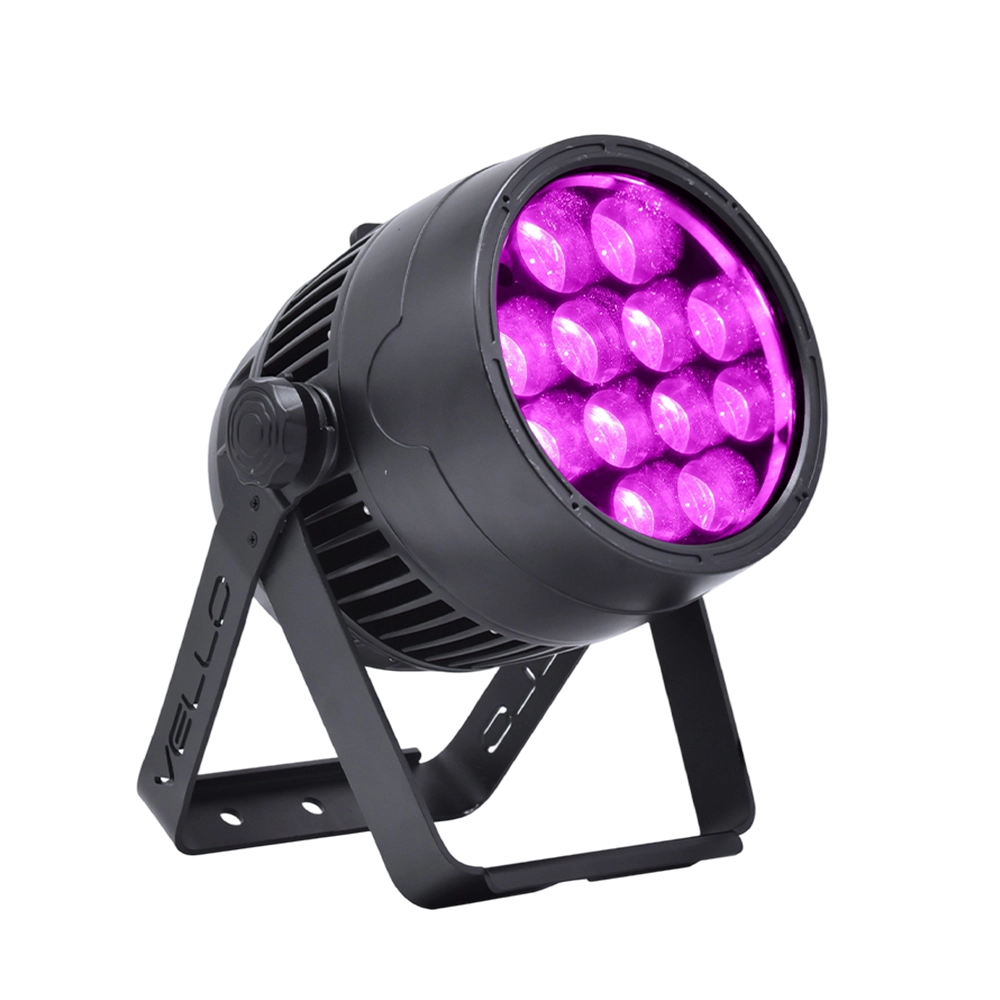
Stage LED Par Light LED ZOOMPAR 40
The Vello Zoom Par 40 IP is a powerful outdoor LED wash light equipped with 12x high-power 7-in-1 RGBACL LEDs. Designed for durability and rich color rendering, it features a wide motorized zoom (6°–50°), smooth dimming, and adjustable CTO presets (3200K–7500K), with 90+ CRI. With an IP66-rated die-cast aluminum body, it’s ideal for both indoor and outdoor applications, including stage lighting, architecture, live events, and installations.
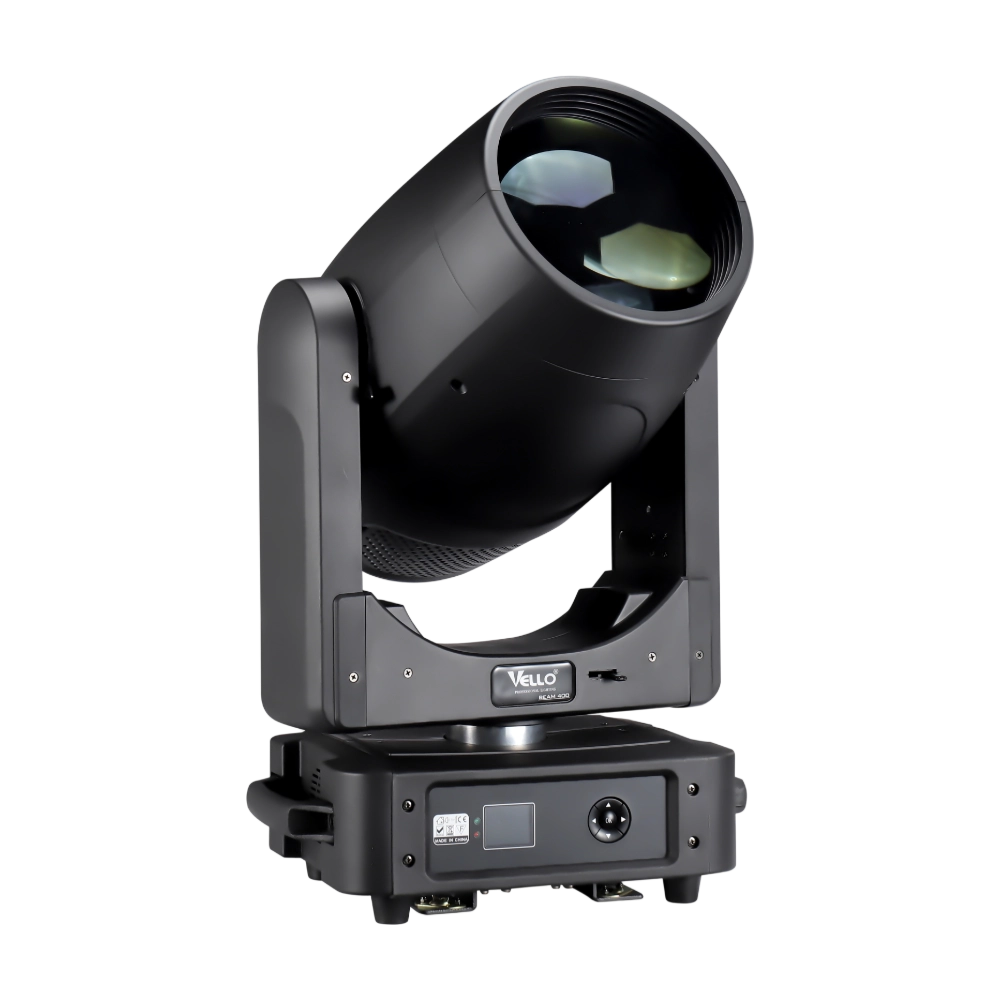
Moving Head Stage Light BEAM 400
BEAM400 is a 500W professional moving head beam powered by an OSRAM SIRIUS 371W discharge bulb, delivering a super-bright 1.8° sharp beam with impressive punch. It features 12 fixed gobos + open, a 14-color wheel, and a 16-facet circular rotating prism with multiple-facet effects, enabling dynamic aerial visuals. With 540° pan / 270° tilt, 16-bit movement resolution, and linear frost and focus, BEAM400 ensures precise and versatile performance. Comparable to traditional 750W moving heads, it combines high efficiency, smooth dimming, and reliable operation—ideal for concerts, tours, and large-scale stage productions.
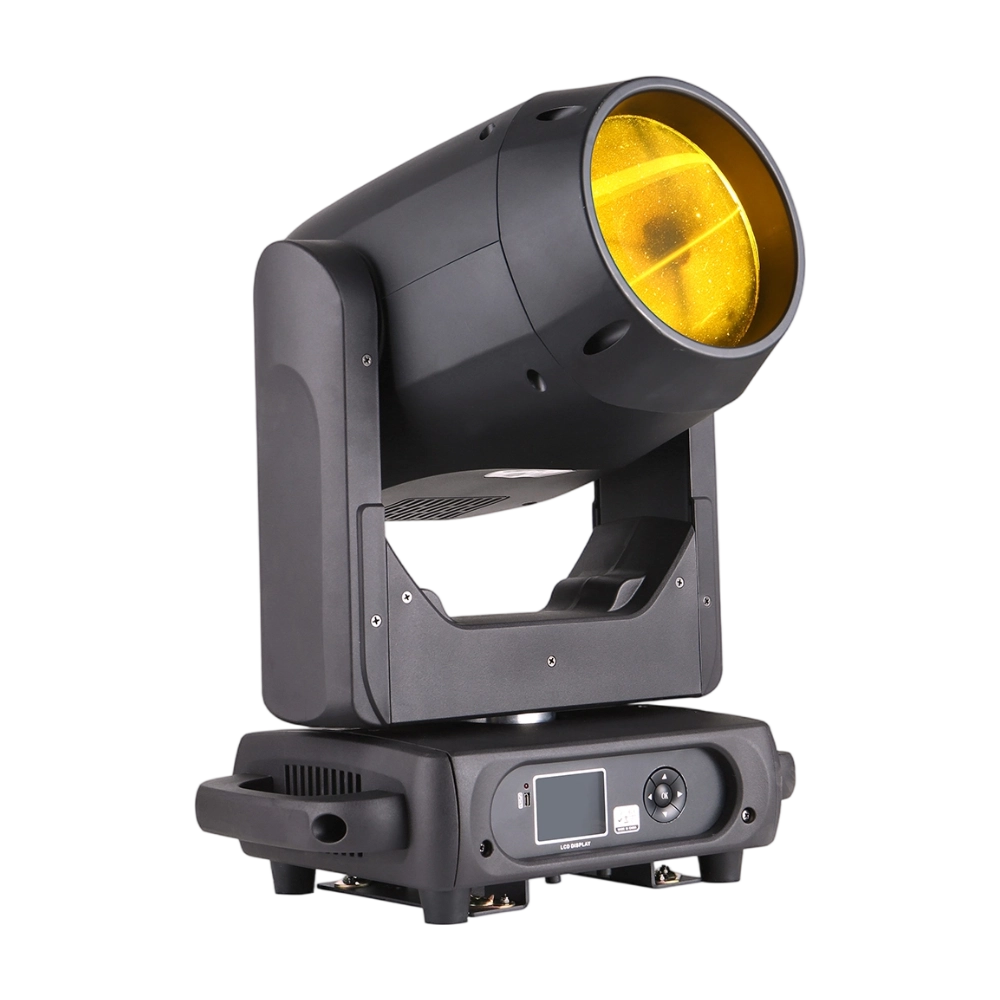
Moving Head Stage Light BEAM 360
BEAM360 is a 400W high-power moving head beam equipped with an OSRAM SIRIUS 311W discharge lamp, delivering a sharp 1.8° beam with super brightness. It features 14 colors + open, 12 fixed metal gobos + open, and dual prisms (8-facet circular + 8+16 multi-facet combination) for dynamic aerial effects. With 540° pan / 270° tilt, 16-bit movement, and linear frost and focus, BEAM360 ensures precision and versatility. Compact yet powerful, it rivals traditional 575W moving heads, making it ideal for concerts, clubs, and large-scale stage productions.
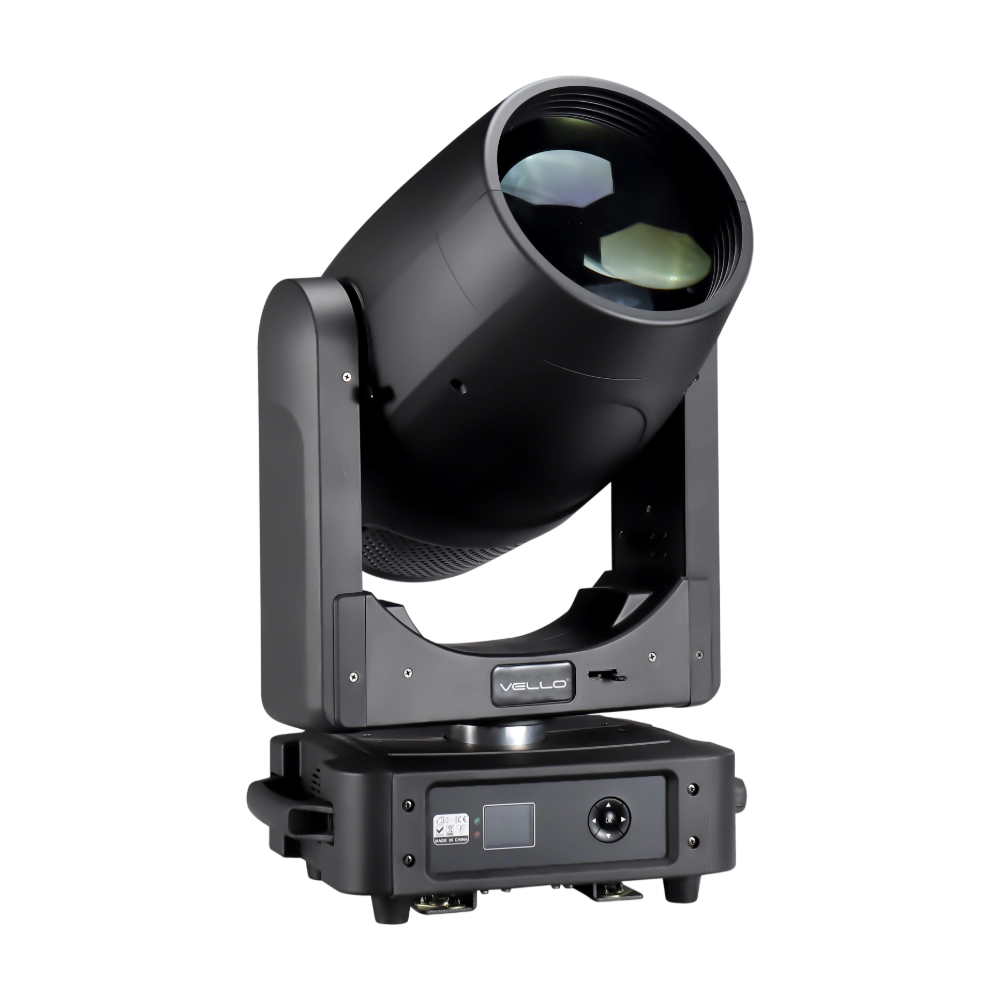
Moving Head Light BEAM 450
The BSW450 is a high-performance moving head fixture equipped with an original Osram 420W bulb, delivering exceptional brightness, precision, and versatility. Designed for professional stage applications, it seamlessly combines beam, spot, and wash functions in one compact unit, making it a powerful all-in-one lighting solution.
Over 20 Years of Innovation in Stage & Studio Lighting
© 2026 VELLO. All Rights Reserved. 粤ICP备20023734号
Join our socials
VELLO
Whatsapp: +8613902276704
Vello Lighting
VelloLights