





What is followspot operation and how to master it?
- How do I calculate followspot beam size and required intensity for a 20m throw using a 10° followspot?
- How can I master manual iris and edge-softening techniques on an LED followspot without motorized shutters?
- How do I avoid flicker and rolling shutter artifacts when using LED followspots with modern digital cameras?
- What DMX/RDM and cueing workflows prevent operator errors in multi-spot followspot setups?
- How do I maintain accurate skin tones under LED followspots—what CRI/CCT/TM-30 specs and on-site calibration steps matter?
- How do I select an LED followspot for purchase—what photometric and lifecycle specs should I prioritize (lumens, beam quality, flicker specs, thermal life)?
How do I calculate followspot beam size and required intensity for a 20m throw using a 10° followspot?
Answer:Start with the beam size (diameter) formula: beam diameter = 2 × distance × tan(beam_angle/2). Use degrees converted to radians in a calculator, or use the degree form: diameter (m) = 2 × D × tan(θ/2). Example: with D = 20 m and θ = 10°: diameter = 2 × 20 × tan(5°) ≈ 40 × 0.08749 ≈ 3.5 m. That gives the spot footprint on stage.
To estimate illuminance (lux) on that footprint, use lumens distributed over the area: lux ≈ lumens / area. Calculate the illuminated area as A = π × (r^2) where r = diameter/2. For the example, r ≈ 1.75 m, area ≈ 9.62 m2. If the followspot spec lists luminous flux (lm) rather than candela, divide lumens by area. Many LED followspots list both lumens and beam candlepower; if you have candela (cd), lux at surface ≈ candela / distance^2. Practical ranges: modern LED followspots deliver from ~8,000 lm for compact units to 30–40,000 lm for high-power models; a 20 m throw with a 10° optic typically needs a fixture rated 12,000–30,000 lm (or equivalent candela) to achieve 750–2,000 lux depending on desired brightness and contrast with house lights.
Practical checklist:
- Confirm manufacturer photometric IES file and candela distribution curve for your exact lens option.
- Use the beam diameter formula to map mark positions on stage and sightlines for the operator.
- Account for losses: gel/color filters (~5–35% depending on color), aging/dirty optics, and L70 lumen depreciation over life (see maintenance below).
- For critical scenes, measure on-site with a lux meter and allow a 15–25% safety margin when specifying fixtures.
Keywords used: beam angle, luminous flux, photometric IES file, throw distance, lumen output.
How can I master manual iris and edge-softening techniques on an LED followspot without motorized shutters?
Answer:Many venues still use manual followspots or compact LED followspots without mechanical shutters/gobos. Mastery focuses on smooth size control, edge quality, and recovery during cues.
Technique and training steps:1) Two-handed ergonomics: operate iris (or intensity) with your dominant hand and pan/tilt with the other. Keep wrist motion minimal; use forearm for pan/tilt to reduce tremor.2) Pre-focus & marks: pre-focus key performer positions during rehearsal. Use tape marks on floor or mark lens angles on followspot rail. This reduces frantic adjustments and ensures consistent edge placement.3) Iris simulation using dimmer: If no iris, use intensity to adjust apparent spot size—close intensity slightly to tighten visible edge, then re-open for soft edges. Combine with slight focus pull if the fixture has a manual focus ring to smooth edges.4) Edge-softening by angle and distance: softer edge = longer throw or slightly defocused lens. If the fixture has focus/zoom, increase zoom a small amount to soften the edge—test incremental moves of 0.2–0.5°.5) Smooth transitions: practice ramped movements for iris and focus; sudden changes read as mistakes on stage. If the console supports it, program a slow fade curve for the followspot channel for exact cues.6) Avoid thermal focus shift: LED followspots often have less thermal drift than discharge lamps, but warm housings can move mechanical focus. Re-verify focus after long cues.
Maintenance/optical notes:
- Keep front glass and lenses clean; dust or fingerprints cause hard edges or haloing.
- If you need crisp shutters/gobos, select followspots with motorized shutter/iris or ellipsoidal fixtures for profile work in future purchases.
Keywords used: followspot operator, focus, zoom, intensity curve, manual iris, lens quality.
How do I avoid flicker and rolling shutter artifacts when using LED followspots with modern digital cameras?
Answer:Camera flicker and banding are a top pain point. LEDs can be dimmed via PWM or direct current regulation; both can cause visible flicker when PWM frequency interacts with camera frame rates.
What to request from manufacturers/spec sheets:
- Explicit “flicker-free” rating at relevant frame rates (24/25/30/50/60/120 fps).
- Stated PWM frequency or DC dimming capability. For broadcast/film, ask for continuous dimming or PWM > 25 kHz; for many live broadcast setups, fixtures that support flicker-free operation across 24–120 fps are required.
- Photometric measurements showing no modulation at shutter speeds used by your camera systems.
Operational steps to mitigate flicker:1) Use fixtures advertised as “camera-friendly / flicker-free” and request SPD (spectral power distribution) and dimming response graphs.2) Match fixture PWM/dimming profile to camera frame rates: test each lamp on-site with actual cameras (phones are NOT reliable detectors for professional use) and test at each common shutter speed and ISO.3) Prefer fixtures offering high-frequency PWM or linear (DC) dimming modes; confirm these modes via RDM/DMX or onboard menus.4) For touring: maintain a camera test checklist on every load-in. Log firmware versions and pixel frequencies. If issues appear, try changing dimming curve on console or switching fixtures to a different dimming mode.
Keywords used: flicker-free, PWM frequency, camera-friendly, dimming curve, spectral power distribution.
What DMX/RDM and cueing workflows prevent operator errors in multi-spot followspot setups?
Answer:Beginners often lack reliable workflows for multi-spot shows. Integrate console programming, RDM addressing, and operator cue discipline.
Recommended workflow:1) Addressing and RDM: Assign fixed DMX addresses and use RDM during tech to verify addresses and firmware. Lock addresses once confirmed to avoid accidental re-addressing on site.2) Channel mapping: Keep followspot channels grouped and documented (e.g., channels 201–204 = followspot 1 controls: intensity, iris, color, shutter). Use patch notes and label physical fixtures and cables.3) Cue stacks & operator cues: Program ‘followspot pre-cues’ on the lighting console that send preset intensity, color boomerang, or zoom positions to motorized followspots used as references. For manual spots, use a cue sheet with timecode and verbal cues; use a spot-operator headset tied into stage management.4) Safety nets: Program blackouts and global intensity faders accessible to stage manager. Use submasters for immediate ‘pull’ back if an operator misses a mark.5) Training & rehearsal discipline: Rehearse with the followspot operators from day 1. Mark head positions and hand-off points clearly: use marked sightlines on the followspot rail and in headset calling.6) Backup plan: If possible, set a redundant profile (ellipsoidal or gated LED) as an automated fallback on DMX in case a manual operator is unavailable.
Keywords used: DMX512, RDM, cueing, console programming, submaster.
How do I maintain accurate skin tones under LED followspots—what CRI/CCT/TM-30 specs and on-site calibration steps matter?
Answer:Accurate skin tone rendering is crucial for theatre and live events. Don’t rely on CRI alone—use full spectral data and TM-30 if available.
Specification priorities when buying:
- CRI (Ra): look for CRI ≥ 90 for reliable skin rendering, but note that CRI can mask spectral gaps.
- TM-30: prefer fixtures with TM-30 fidelity (Rf) and gamut (Rg) reports—Rf > 90 gives a better fidelity metric than CRI alone.
- Spectral Power Distribution (SPD): request SPD curves from the manufacturer to verify continuous visible spectrum around key skin-tone wavelengths (580–700 nm).
- Color temperature (CCT): choose the CCT appropriate to the show—3200 K (warm) for traditional theatre skin tones or 4000–4300 K for more neutral looks. Many LED followspots support adjustable CCT and HSI controls.
On-site calibration steps:1) Set white point using a calibrated color meter or console color picker. Match followspots to house fixture white point within ±200 K to keep continuity.2) Use real-person tests across a range of skin tones under final stage makeup to judge; adjust CCT and tint rather than relying solely on numbers.3) If the console supports LUTs or color calibration, store a calibration preset per fixture type. For mixed fixture rigs, apply a global color balance to match profile/LED fixtures.4) If color gels are required, verify spectral impact on skin tones—deep saturated gels can clip mid-to-high wavelengths and degrade perceived skin tone.5) Document presets: store calibration presets in the console and in a shared digital tech book for future runs.
Keywords used: CRI, TM-30, CCT, spectral power distribution, white point calibration, color rendering.
How do I select an LED followspot for purchase—what photometric and lifecycle specs should I prioritize (lumens, beam quality, flicker specs, thermal life)?
Answer:A buyer-focused spec checklist prevents costly mistakes. Here are prioritized specs and what they mean in practice.
Essential photometric specs:
- Luminous flux (lm) and candela (cd): ask for both; lumens tell overall output, candela + beam angle show intensity at distance. For medium theatres, target 12,000–25,000 lm; for large arenas, 25,000–40,000 lm or higher.
- Beam angles and interchangeable lens options: choose fixtures with 8°–30° optics or motorized zoom for flexible throw distances.
- IES files: require manufacturer IES photometric files for your rig software to generate plots and rig checks.
Color & camera specs:
- CRI ≥ 90 and TM-30 Rf value if available.
- Flicker-free certification usable for broadcast frame rates; request test data at 24–120 fps.
Control & integration:
- DMX512 and RDM support for addressing and remote diagnostics; Art-Net/sACN if network control is used.
- Onboard presets for color, zoom, and iris, plus remote control via console.
Thermal & lifecycle:
- Rated L70 lifetime: 50,000–100,000 hours is typical; verify the environment (higher ambient temps reduce lifetime).
- Thermal management design: active cooling with temperature sensors is preferable to passive-only for high-output units.
Build & safety:
- IP rating: IP20 indoor, IP65+ for outdoor followspots. Specify IP for touring and outdoor venues.
- Certifications: CE, ETL/UL or equivalent depending on regional requirements.
Practical purchase steps:1) Gather on-site requirements: throw distance, desired lux at performer positions, camera frame rates used, color temperature preference.2) Request photometric IES files, SPD charts, TM-30/Rf values, PWM/dimming graphs, I/O (DMX/RDM/ArtNet), and a sample unit for an on-site camera test.3) Compare total cost of ownership: power draw (watts), maintenance (replaceable LED modules vs sealed engines), and replacement part availability.4) Include a warranty and firmware update policy; ask about spare parts lead times.
Keywords used: LED lumen output, IES photometric files, L70 lifetime, IP rating, DMX512, RDM.
Concluding summary:
LED stage lights and modern followspots deliver superior energy efficiency, precise color control, lower fixture heat, and longer operating lifetimes (typical L70: 50,000–100,000 hours) compared with legacy discharge followspots. When buying, prioritize verified photometric data (IES), camera-friendly flicker specs, CRI/TM-30 fidelity for skin tones, and strong thermal design with RDM/DMX integration for easier installation and diagnostics. Proper operator training—especially mastering iris/focus technique, cue discipline, and on-site camera testing—turns good fixtures into great results.
For a personalized quote on LED stage lights and followspots, contact us at www.vellolight.com or info@vellolight.com.
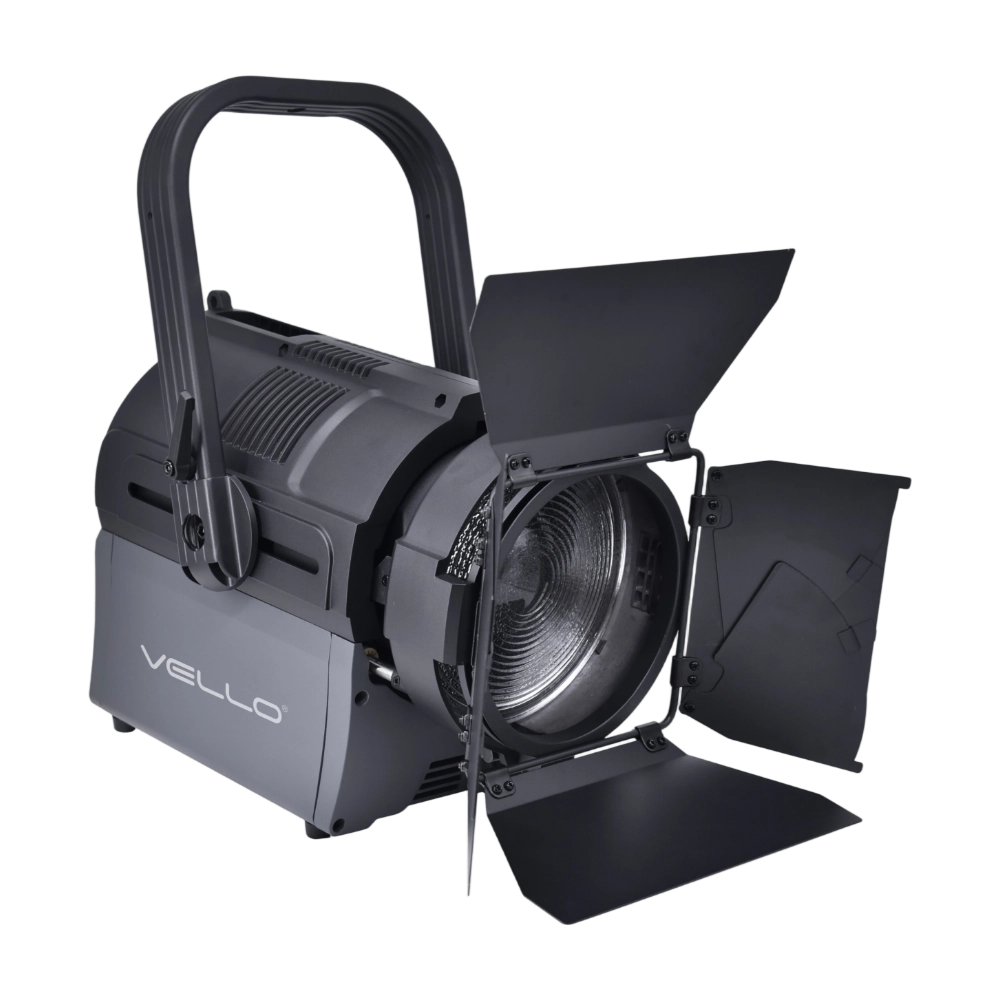
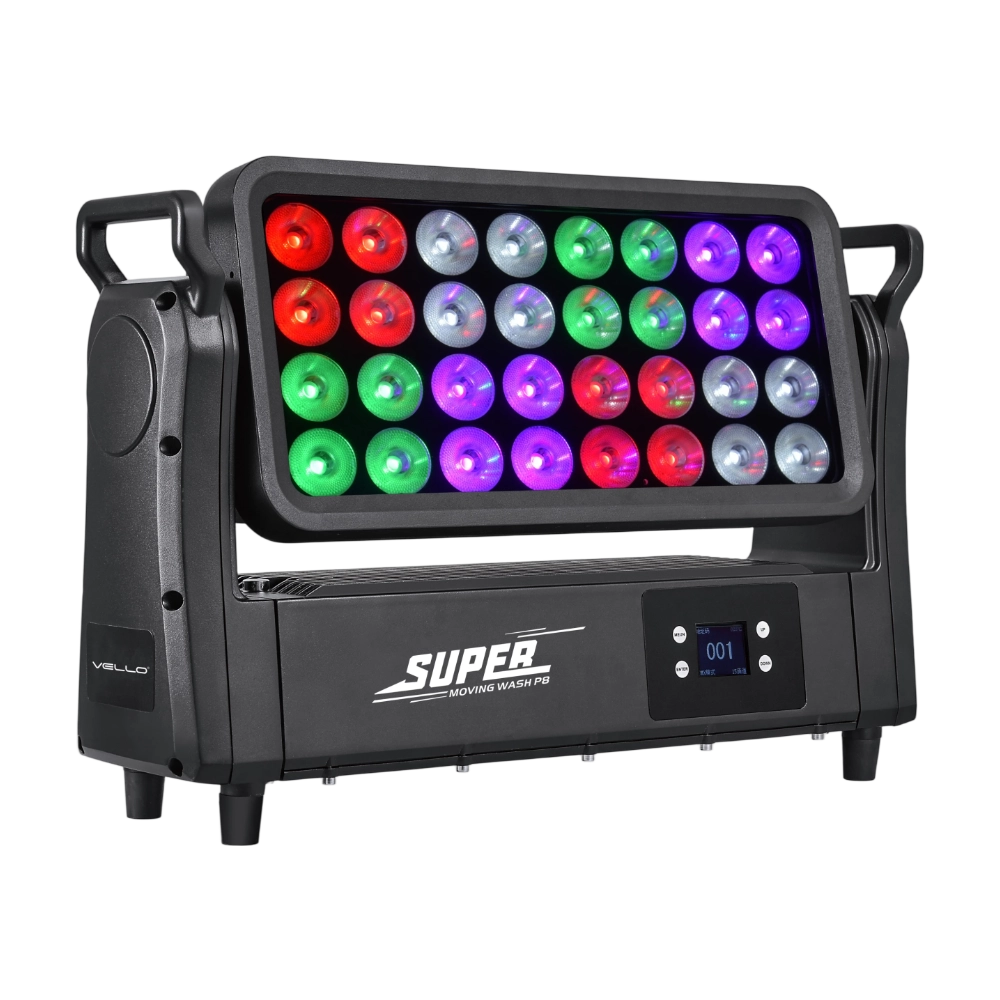
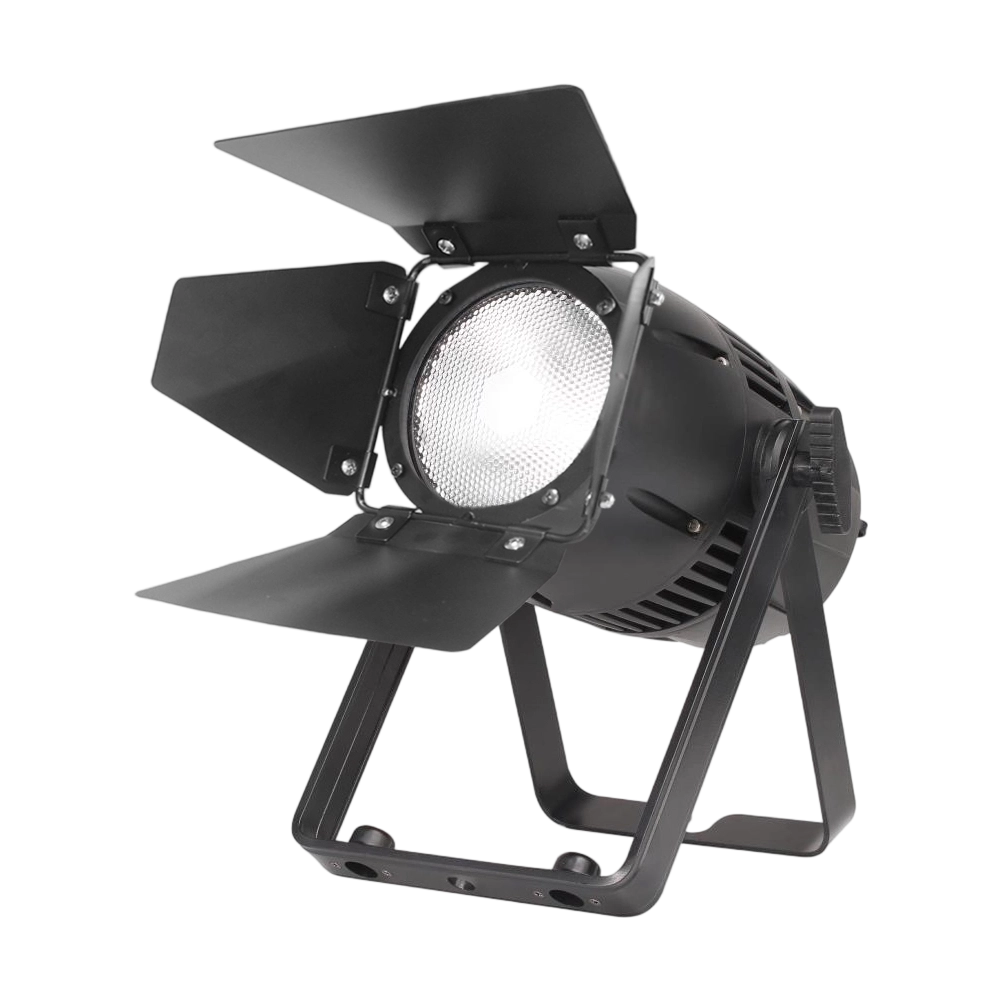
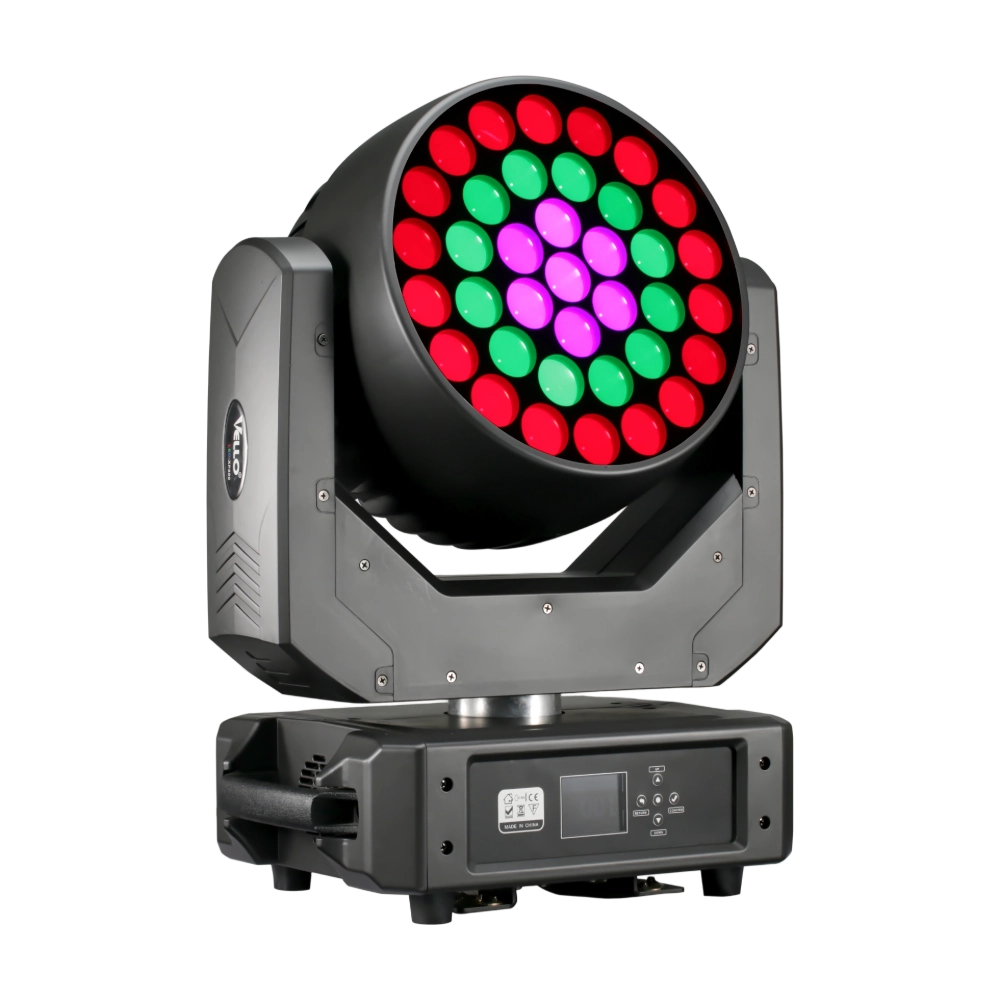
Major categories
What is the usual lead time?
Standard models are typically shipped within 7–15 working days after payment. Customized items may vary.
Do your products support customization?
Yes. We offer OEM and ODM services tailored to project needs, including design, optics, and control compatibility.
Do you offer samples?
Samples are available for certain models. Please confirm with our sales team for details.
Do you ship internationally?
Yes. We offer sea, air, and express delivery to many countries and regions worldwide.
What is the warranty period for your products?
Most products come with a standard 1–2 year warranty. Please refer to product details or contract terms for specifics.
You may also like
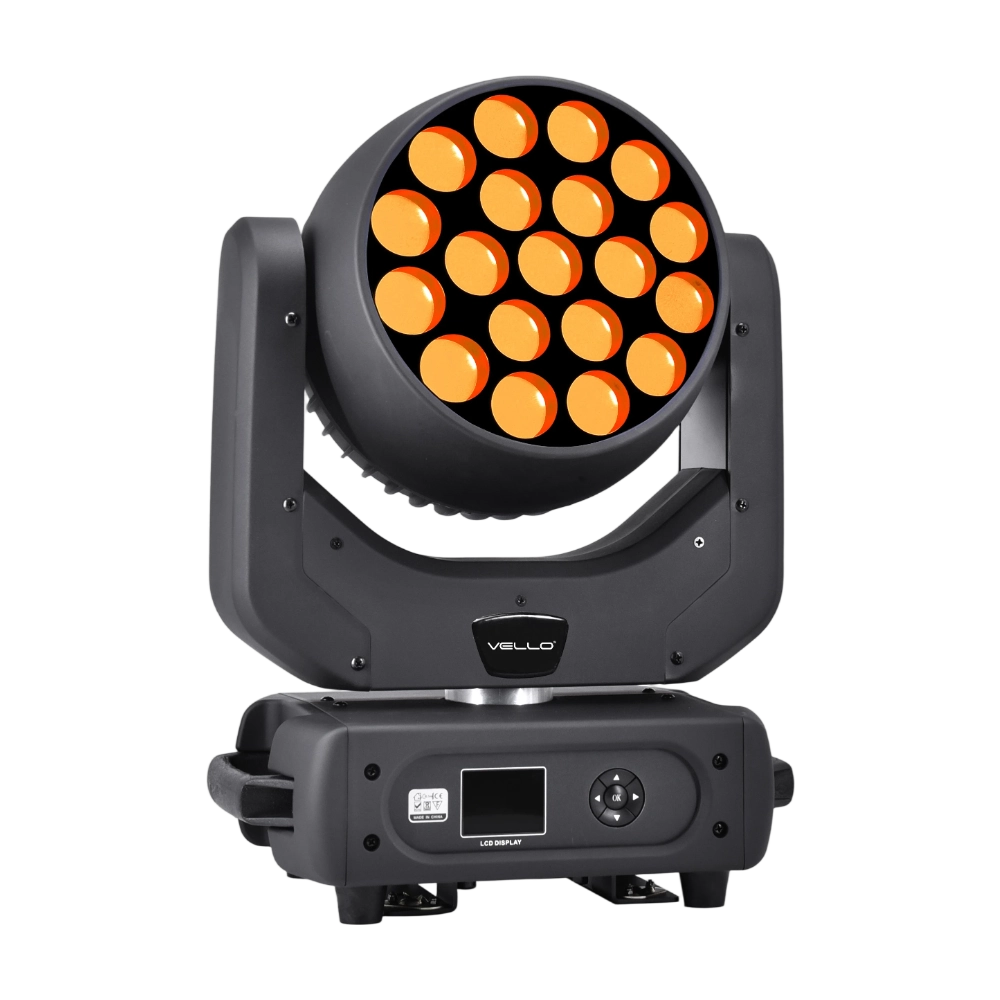
Max Wash X7 is a 750W super moving head wash fixture, equipped with 19 × 40W 7-in-1 RGB+A+C+L LEDs delivering rich colors, high brightness, and a super high CRI ≥95. With a wide 6.1°–50° electronic zoom and advanced 3-ring pixel control, it creates both powerful beams and smooth washes. The fixture supports CTO adjustment (3200K, 4200K, 5600K, 6800K) across four presets for versatile color temperature control. Featuring 540° pan / 310° tilt, high-speed motors, multiple DMX channel modes, and a durable heat-proof housing, Max Wash X-7 is designed for concerts, TV studios, and large productions demanding next-level wash performance with precision and creativity.
Top Wash P8 is a 1200W high-power IP65 LED wash light, equipped with 32 × 40W RGBW 4-in-1 LEDs for vibrant color mixing and powerful output. With 8 pixel sections (4 LEDs per group), selectable lens angles of 6° / 25° / 45°, and optional extra filters, it offers flexibility for both narrow beams and wide washes. The fixture supports strong RGBW strobe effects, smooth 0–100% linear dimming, and precise pixel control. Featuring a 220° tilt range, silent flicker-free performance, and multiple DMX modes, Top Wash P8 is built for large-scale concerts, outdoor events, and architectural lighting where high brightness and reliability are essential.
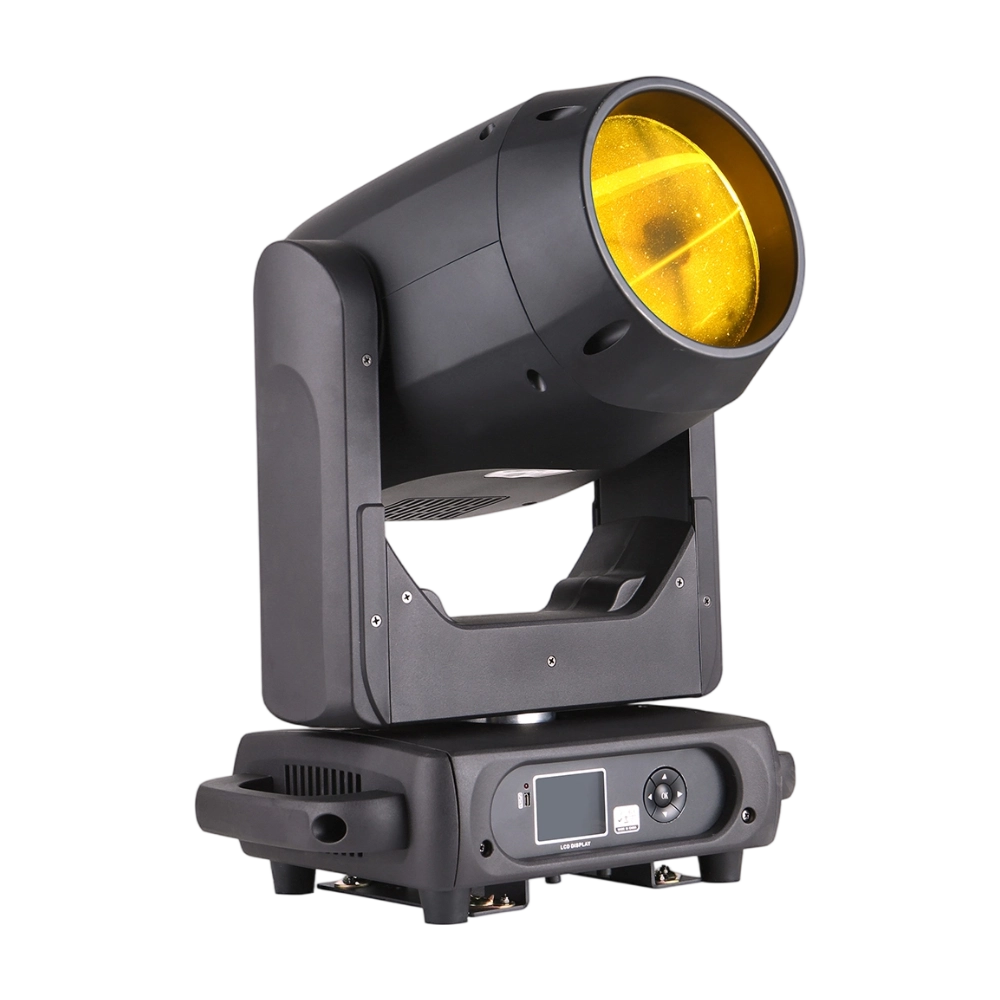
BEAM360 is a 400W high-power moving head beam equipped with an OSRAM SIRIUS 311W discharge lamp, delivering a sharp 1.8° beam with super brightness. It features 14 colors + open, 12 fixed metal gobos + open, and dual prisms (8-facet circular + 8+16 multi-facet combination) for dynamic aerial effects. With 540° pan / 270° tilt, 16-bit movement, and linear frost and focus, BEAM360 ensures precision and versatility. Compact yet powerful, it rivals traditional 575W moving heads, making it ideal for concerts, clubs, and large-scale stage productions.
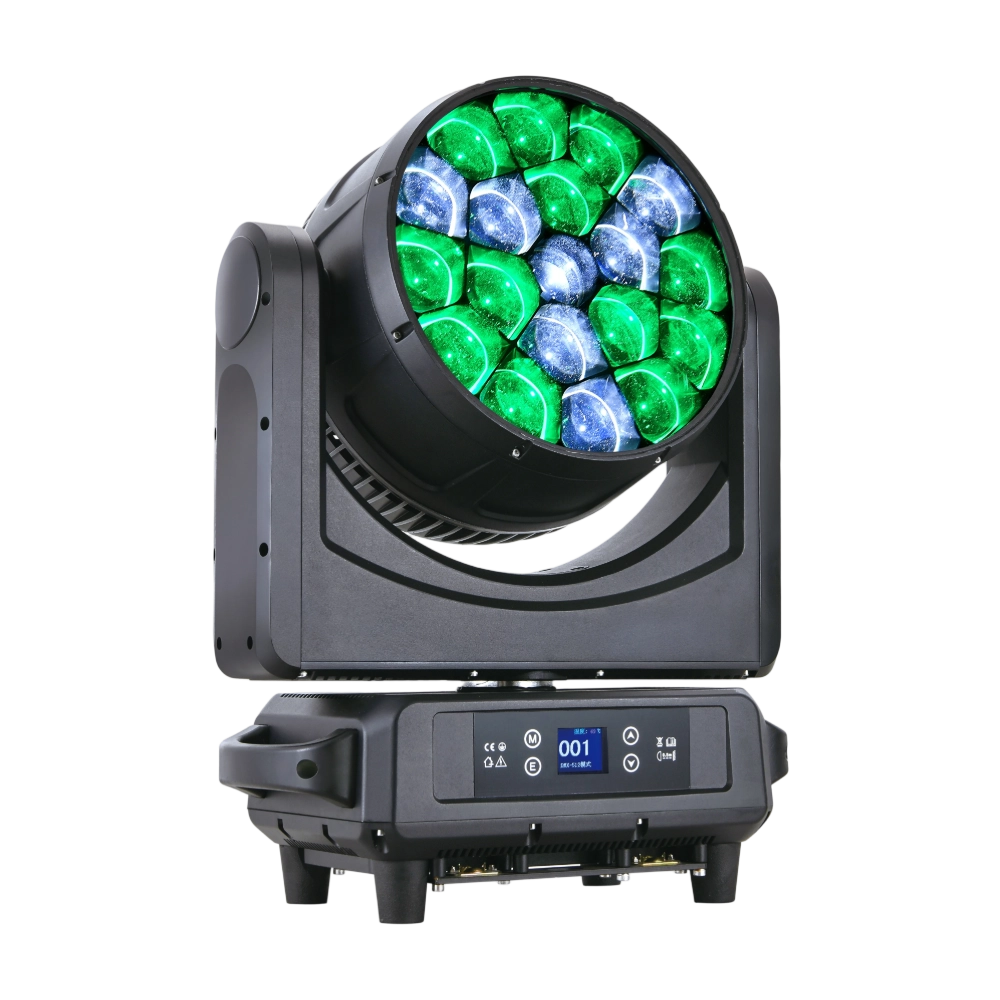
The LED Bee Eyes K19 IP is a 750W IP65-rated moving head wash, powered by 19 × 40W Osram RGBW LEDs for stunning brightness and vibrant colors. With a 4°–45° electronic zoom, wide CTO range (2700K–8000K), and a rotating lens wheel for dynamic visual effects, it delivers both powerful beams and smooth washes. Each LED can be controlled individually, enabling advanced pixel mapping and creative effects. Featuring 540° pan / 270° tilt, multiple DMX channel modes, and robust die-cast aluminum housing with excellent heat dissipation, the K19 IP is built for high-output performance in demanding outdoor and indoor productions.
◌ Let Us Support Your Project
Request a Custom Quote and Technical Support
Fill out the form below, and our sales team will contact you shortly with product details, pricing, and customer service options.
Rest assured that your privacy is important to us, and all information provided will be handled with the utmost confidentiality.
By clicking "Send your message," I agree to your processing my personal data.
To see how to withdraw your consent, how to control your personal data, and how we process it, please see our Privacy Policy and Terms of Use.
Over 20 Years of Innovation in Stage & Studio Lighting
© 2026 VELLO. All Rights Reserved. 粤ICP备20023734号
Join our socials
VELLO
Whatsapp: +8613902276704
Vello Lighting
VelloLights